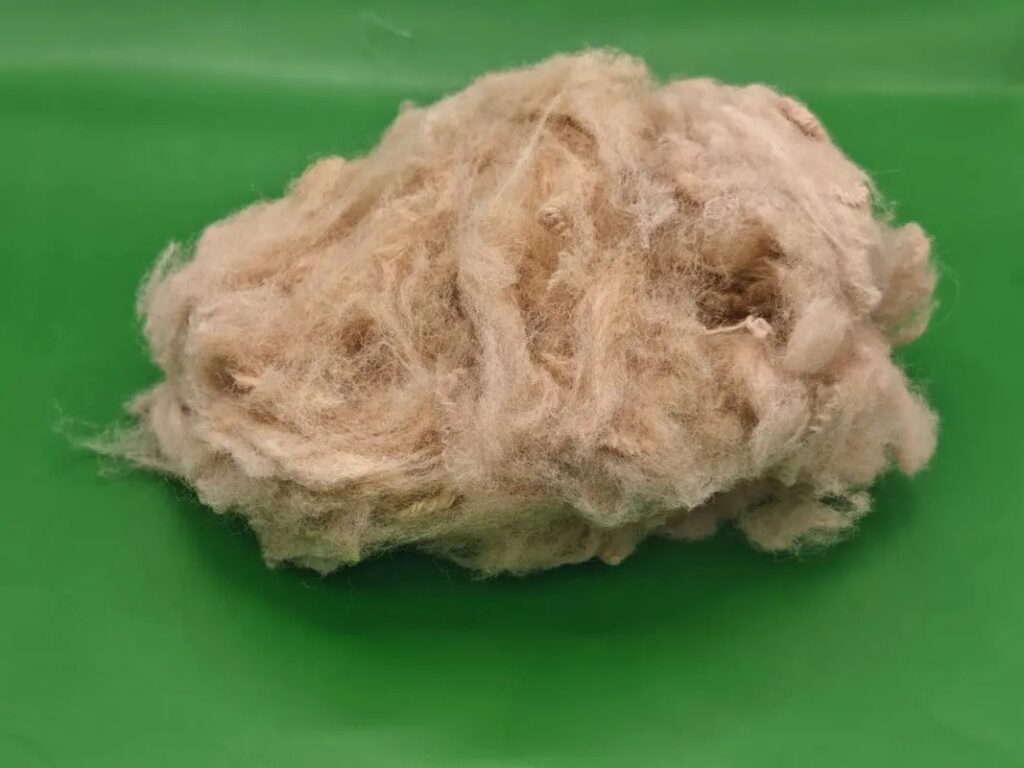
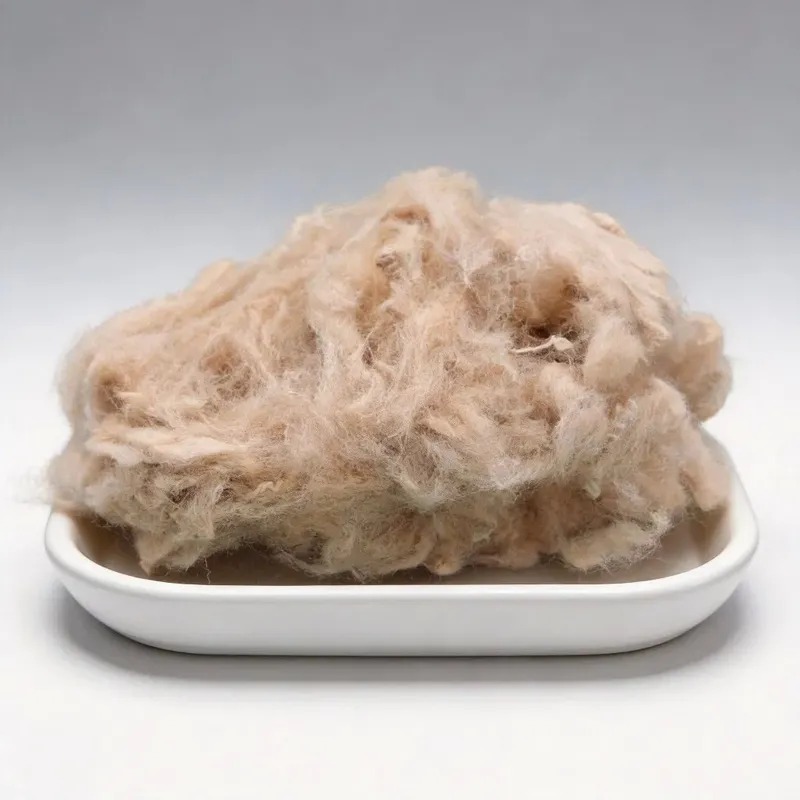
High-Tenacity PSF — Reinforced Solid Fiber for Structural Nonwoven and Geotextile
- High-tenacity (HT) polyester staple fiber is engineered with higher draw ratios to achieve significantly greater tensile strength than standard PSF, making it suitable for structural nonwoven and geotextile applications.
- It enables either lower fabric basis weight with the same strength or higher tensile performance at the same weight, despite carrying a modest cost premium.
- The key trade-off is reduced elongation, so finished fabrics must be tested carefully against EN geotextile standards when switching from standard PSF to HT fiber.
PRODUCT DETAIL
High-Tenacity PSF — Reinforced Solid Fiber for Structural Nonwoven and Geotextile
What High-Tenacity PSF Is and How It Is Produced
High-tenacity (HT) polyester staple fiber is produced at significantly higher draw ratios than standard PSF during the fiber drawing process. Drawing — the controlled stretching of the as-spun fiber — aligns the polymer chains parallel to the fiber axis and increases the degree of crystallinity in the fiber’s microstructure. The higher the draw ratio, the greater the chain alignment and crystallinity, and the higher the resulting fiber tenacity (force per unit linear density).
Standard PSF draw ratio: approximately 3.0–4.0×. Tenacity result: 4.5–5.5 cN/dtex. High-tenacity PSF draw ratio: approximately 5.0–6.5×. Tenacity result: 6.0–8.0 cN/dtex. This represents a 20–60% increase in tenacity per unit of fiber weight — translating directly to higher tensile strength in the finished nonwoven fabric at equivalent basis weight.
The trade-off: higher draw ratio produces higher tenacity but lower elongation at break. Standard PSF elongation: 30–50%. HT PSF elongation: 15–25%. For geotextile applications, EN 13249 and related standards require minimum elongation values alongside minimum tensile strength — both must be specified and verified when switching from standard to HT fiber. For filter bag applications where elongation is less critical than tensile strength, HT fiber’s lower elongation is typically acceptable.
The Commercial Value Proposition of HT Fiber
The business case for specifying HT fiber instead of standard PSF comes down to the relationship between tensile strength requirement, basis weight, and material cost:
- Scenario 1 — Achieving higher tensile strength at same basis weight: A geotextile specification requires 12 kN/m MD tensile strength. With standard PSF (4.5 cN/dtex), achieving 12 kN/m requires 350 gsm basis weight. With HT PSF (6.5 cN/dtex), the same 12 kN/m can be achieved at approximately 250–280 gsm. The basis weight reduction of 70–100 gsm reduces fiber consumption per square metre by 20–29% — a significant material cost saving when multiplied across millions of square metres of geotextile production.
- Scenario 2 — Meeting higher tensile specifications at same basis weight: A premium geotextile EN specification requires 18 kN/m MD tensile. Standard PSF at 350 gsm achieves approximately 12 kN/m — insufficient. HT PSF at 350 gsm achieves approximately 16–18 kN/m — meeting the higher specification without increasing fabric weight. HT fiber enables access to premium product specifications that standard fiber physically cannot meet.
- The HT fiber cost premium: HT PSF carries a 10–20% cost premium per kg over equivalent standard PSF, reflecting the higher draw ratio processing (slower production speed, more precise tension control, higher energy) and tighter quality control. This premium is typically recovered through the basis weight reduction it enables — using 20–25% less fiber per square metre while meeting the same specification.
Elongation Specification: Managing the Tenacity-Elongation Trade-Off
The inverse relationship between tenacity and elongation in HT fiber requires careful specification management. EN 13249 and related geotextile standards typically specify both minimum tensile strength AND minimum elongation — because both properties contribute to the geotextile’s function:
- Why elongation matters for geotextile: Geotextile must accommodate differential settlement of the soil or aggregate layers it separates or reinforces. If the geotextile has very low elongation, differential settlement can cause tearing before the soil stabilizes. EN 13249 typically requires 30–45% elongation minimum for separation and filtration functions.
- HT PSF elongation: typically 15–25%. This is below the 30–45% minimum required by EN 13249 for some application classes. When specifying HT geotextile fiber, verify that the specific EN 13249 class applicable to your product allows the lower elongation achievable with HT fiber. For steep slope reinforcement (EN 13251) and landfill protection (EN 13254) where higher tensile strength is critical, lower elongation requirements are typically specified.
- For filter bag applications: EN filter bag standards do not typically specify minimum elongation for the filter fabric — tensile strength and air permeability are the primary structural parameters. HT fiber’s lower elongation is not a compliance concern for filter bag applications.
Applications
- High-load geotextile, steep slope reinforcement: HT 10D UV-stabilized. EN 13251 high-tensile class. Road embankment reinforcement.
- Retaining wall drainage composite: HT 10D 400–600 gsm. High tensile and elongation specification. EN 13251.
- Heavy-duty pulse-jet filter bags: HT 6D 500–700 gsm. High MD tensile for cleaning cycle stress resistance.
- Synthetic leather substrate (needlepunched): HT 4D 300–600 gsm. Dense needling, smooth face. PU coating compatible surface.
- Technical composite substrate nonwoven: HT fiber for resin-impregnated composite structural nonwoven — automotive body panels, construction boards.
- Railway trackbed reinforcement: HT 8D–10D UV-stabilized. EN 13250. High dynamic loading from train traffic.
Elongation verification when switching to HT fiber: if you are transitioning from standard PSF to HT PSF for a geotextile application, always verify the finished fabric elongation against the applicable EN standard minimum before committing to production. The higher tenacity of HT fiber produces stronger fabric, but the lower elongation may fail the minimum elongation requirement if not verified. VNPOLYFIBER provides fiber tenacity and elongation data per grade; verify translation to fabric elongation by testing the finished needlepunched construction at the target basis weight with your needling configuration.
Frequently Asked Questions
Q: How much stronger is HT fiber compared to standard PSF in a finished geotextile?
At identical basis weight (gsm), HT PSF at 6.5 cN/dtex produces approximately 30–40% higher tensile strength in finished needlepunched geotextile compared to standard PSF at 4.5 cN/dtex. This allows achieving a higher EN 13249 strength class at the same basis weight, or achieving the same strength class at 20–25% lower basis weight. For a geotextile specification requiring 12 kN/m MD tensile: standard PSF may require 350 gsm; HT fiber achieves this at 250–280 gsm — a 70–100 gsm basis weight reduction per square metre.
Q: Is HT recycled (GRS certified) PSF available?
HT recycled PSF is available in limited grades. The higher draw ratio processing requires very consistent input material intrinsic viscosity (IV) — IV variation in the recycled feedstock can cause drawing instability and tenacity variation. For this reason, most HT specification uses virgin feedstock where IV consistency is more easily controlled. For applications requiring both HT performance and GRS recycled content, contact VNPOLYFIBER with your specification for feasibility assessment — some HT recycled grades are commercially available but at higher minimum order volumes and longer lead times than standard HT grades.
Q: What quality data should I require with each HT PSF shipment?
For HT PSF, the standard certificate of analysis should include: denier (measured), tenacity (cN/dtex), elongation at break (%), staple length (mm), moisture content (%), and — for geotextile grades — UV stabilization confirmation. The tenacity value is the critical quality parameter distinguishing HT from standard fiber: request the actual measured value per production lot (not just ‘meets specification’) because HT fiber production requires tighter process control than standard grades and lot-to-lot tenacity variation is more significant. Reject any shipment where the COA tenacity falls below your specified minimum.
Q: Can HT PSF be used in thermal bonding wadding production alongside standard LMF?
HT PSF can be used as the structural fiber in thermal bonding wadding production blended with standard LMF bicomponent. The HT fiber’s higher tenacity does not affect its behavior in through-air bonding — the LMF sheath melts and bonds HCS or HT structural fibers at their contact points regardless of the structural fiber’s tenacity specification. For wadding applications where high tensile strength of the finished wadding sheet is required (automotive insulation, industrial wadding), HT solid PSF + LMF blends can achieve higher fabric tensile strength than standard HCS + LMF at equivalent basis weight.
Technical Parameter
Product Specifications
| Grade | Specification | Application and Notes |
| Economy hotel (budget) | 7D×64mm Hollow Slick (non-siliconized) | Budget tier. Acceptable initial loft. Shake after washing. Price-driven procurement. |
| Standard hotel — dominant spec | 7D×64mm HCS siliconized | The global hotel standard. Medium-firm. 60°C commercial laundering rated. 800–1,000g / 50×75cm. |
| Upscale hotel (soft) | 4D×64mm HCS siliconized | Softer feel. 5-star and upscale positioning. Same laundering durability as 7D. |
| Luxury hotel | 3D–4D×51mm HCS siliconized | Maximum softness. Ultra-luxury suite specification. Some properties offer both soft and firm. |
| Healthcare / hospital pillow | 7D×64mm HCS siliconized + silver-ion antimicrobial | Odor control and bacterial inhibition. ISO 20743 SAV >2.0 documented. |
| GRS sustainable hotel | 7D×64mm rHCS siliconized | GRS certified. Hotel sustainability program guest communication and ESG reporting. |
FAQ
1. What do you offer?
We supply a comprehensive range of fibers, including recycled hollow conjugated (both siliconized and non-siliconized) polyester staple fiber, hollow fiber, microfiber, virgin polyester staple fiber, and low-melt fiber.
2. What is it used for?
Our fibers are versatile and widely utilized across both the filling and non-woven industries, providing essential loft, durability, and texture for various consumer and industrial applications.
3. Are you a factory or a trading company?
We are primarily a manufacturer specializing in polyester staple fiber with years of industry expertise. To better serve our clients, we also operate a dedicated trading division that allows us to act as a one-stop solution provider.
In addition to our own fiber production, we source high-quality textile components (such as yarn and low-melt fibers) and finished goods (including foam, pillows, cushions, toys, and down/feather products) to ensure our customers have access to a comprehensive supply chain.
4. Where is your factory location?
To maintain a robust and flexible global supply chain, our manufacturing facilities are strategically located throughout Asia, specifically in Vietnam, China, Malaysia, Thailand, and Indonesia. If you would like to visit one of our sites, please contact your sales representative, and we will be happy to arrange transportation for you.
5. Can you accept free sample?
Yes, we provide free hand samples for quantities under 1 kilogram. Once a price is confirmed, we can prepare and dispatch your sample within 2–3 business days. Please note that while the sample is free, the freight costs are the responsibility of the client.
6. Can you provide ODM service?
Absolutely. We specialize in ODM (Original Design Manufacturing). This means we can customize the material composition, dimensions, quantity, packaging, and branding to meet your specific requirements. Your logo and unique specifications will be integrated into the final product.
7. How about your quality? What’s the minimum order Quantity (MOQ)?
We invite you to place a trial order to experience our quality firsthand. Our standard MOQ is 23,000 kilograms per order.
Regarding pricing, we maintain a no-bargain policy. We believe in transparency and efficiency, so we provide our most competitive offer upfront to save you time and ensure a straightforward procurement process.
8. Can I mix different items in one order?
Yes, for your convenience, we allow for a maximum of two different items to be mixed within a single container.
9. How can you guarantee the product quality?
Quality is the cornerstone of our business. We employ an experienced QC team that monitors every stage of production, from raw material inspection to the final manufacturing process. We utilize a range of advanced testing instruments to ensure our fibers meet strict industry standards.
Our business philosophy is simple: We aim to serve one customer 1,000 times, rather than 1,000 customers once. We prioritize long-term partnerships built on consistent excellence.
10. What’s the payment terms?
L/C at sight, 30% TT in advance are mostly accepted; other terms shall be negotiable by both sides
For more information, please feel free to contact :
Tony Tan
Mobile number: +84 90 466 5251 (Whatsapp/Wechat/Viber/Signal)