PRODUCT DETAIL
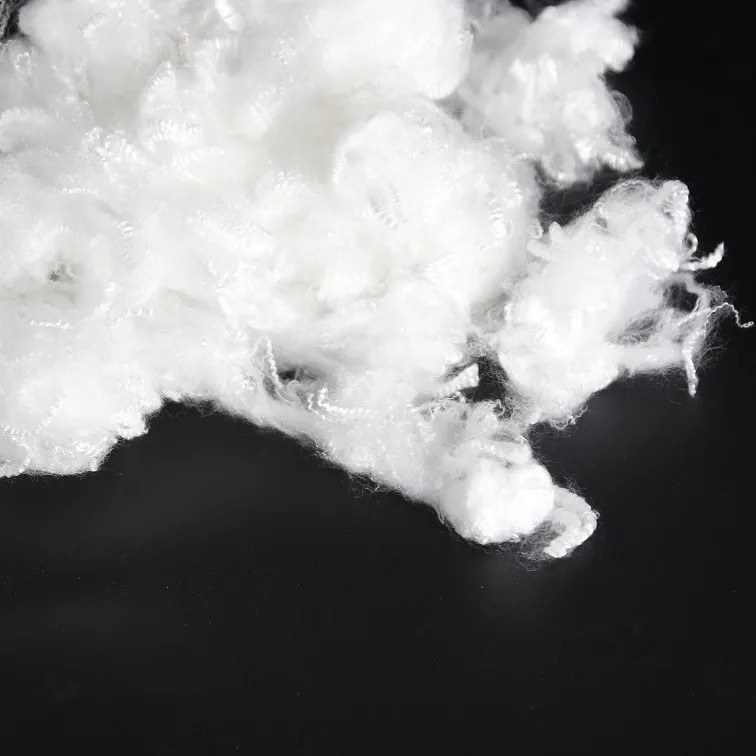
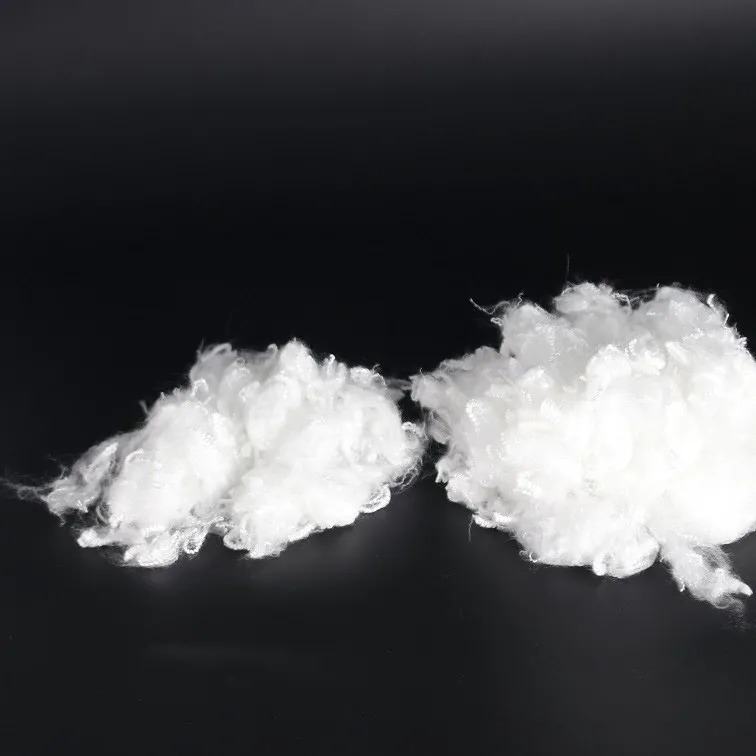
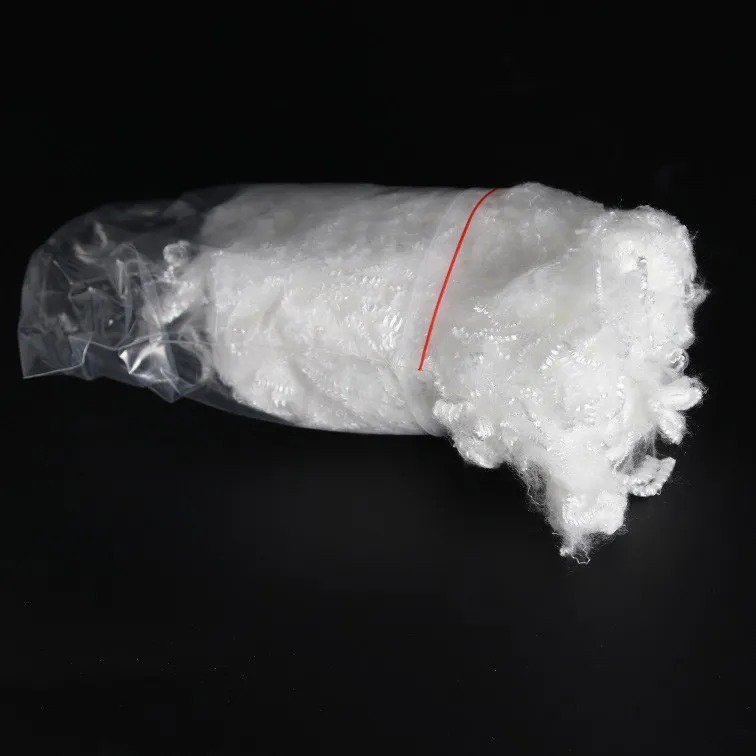
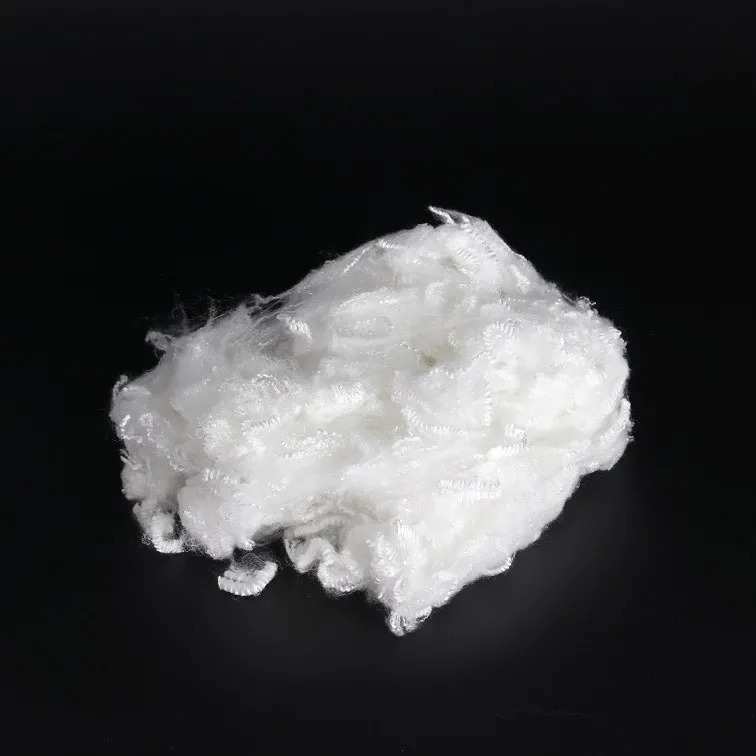
Filter Bag Fiber — High-Tenacity Solid PSF for Industrial Filtration Nonwoven
Why Filter Bag Applications Need High-Tenacity PSF
Industrial filter bags for pulse-jet dust collection are among the most mechanically demanding needlepunch applications. The pulse-jet cleaning mechanism — a high-pressure compressed-air pulse that reverses airflow through the bag to dislodge collected dust cake — subjects the fabric to repeated impact stress each time it fires. A standard pulse-jet filter bag may experience 500,000–2,000,000 cleaning pulses over its service life. The fabric must survive all of them without tensile failure, structural distortion, or increased air leakage.
- High tenacity requirement: Standard PSF tenacity is 4.5–5.5 cN/dtex — adequate for many textile applications. Filter bag PSF requires a minimum of 5.5 cN/dtex and ideally 6.0–7.0 cN/dtex (high-tenacity grade). In a finished needlepunched nonwoven at identical basis weight, HT fiber produces 20–40% higher tensile strength than standard PSF — directly reducing fabric tear failure rate under pulse-jet stress.
- Temperature stability: Standard PET PSF is suitable for continuous operating temperatures up to 130–140°C. Above this range, filter bags require specialty fiber — PPS (polyphenylene sulfide) for continuous service to 190°C, P84 polyimide or glass fiber for temperatures above 200°C. The vast majority of industrial dust collection (cement, grain, metalworking, power plant) operates below 130°C where PET is the correct specification.
- Dimensional stability under heat cycling: Filter bags expand and contract with temperature changes as processes start and stop. PET fiber maintains dimensional stability through these cycles, preventing bag distortion that would compromise the bag-to-cage fit and create air leakage pathways around the seal.
Surface Treatment Options for Filter Bags
- Singeing: Burning off surface fiber ends by passing the needlepunched fabric over an open flame or heated surface. Produces a smooth, uniform face that reduces dust cake adhesion and improves cake release during pulse-jet cleaning. Compatible with VNPOLYFIBER standard solid PSF.
- Calendering: Heat and pressure treatment between smooth rollers that partially melts and fuses the fabric surface into a dense, smooth layer. Provides excellent surface smoothness and reduced permeability. Standard for many dust collection applications.
- PTFE membrane lamination: A microporous PTFE (polytetrafluoroethylene) membrane is laminated to the fabric face after needlepunching. The membrane captures dust particles on its surface before they penetrate the fiber matrix — enabling ‘surface filtration’ with collection efficiency >99.9% for particles above 1 micron. VNPOLYFIBER solid PSF in 6D is compatible with standard PTFE lamination processes.
Applications
- Cement plant dust collection: High dust cake load, abrasive fly ash and clinker dust. HT 6D–10D PSF, 400–600 gsm, pulse-jet.
- Grain and food processing dust: Lower temperature (below 80°C). Food-grade processing chemistry option available.
- Metalworking fume and grinding dust: Fine particle. PTFE membrane lamination typically specified. HT 6D 400–500 gsm.
- Power plant fly ash collection: Verify operating temperature against PET 130°C limit. Standard coal fly ash below 120°C is within PET range.
- Chemical processing filtration: Chemical resistance verification required for each specific process stream. PP available for acidic or oxidizing environments.
- Woodworking and timber dust: Moderate temperature. Fine sawdust requires tighter opening size. 300–500 gsm standard.
Temperature verification is critical: before specifying standard PET PSF for any filter bag application, verify the continuous operating temperature of the gas stream entering the filter. Standard PET: safe to 130°C continuous. Above 130°C, even briefly, can cause PET fiber shrinkage and bag distortion that permanently compromises fit and filtration efficiency. For applications approaching or exceeding 130°C, consider PPS fiber or ensure adequate cooling of the gas stream before the filter.
Frequently Asked Questions
Q: What tensile strength should I specify for pulse-jet filter bags?
Standard specification for pulse-jet filter bags: MD tensile strength >1,500 N/5cm, CD tensile strength >900 N/5cm (EN 29073-3 strip method). For high-frequency pulse-jet cleaning (more than 6 pulses per bag per hour), increase specification to MD >2,000 N/5cm. VNPOLYFIBER HT grades achieve 6.0–7.0 cN/dtex tenacity — confirm the N/5cm values at your specific basis weight with our technical team before specifying.
Q: What air permeability should I specify for industrial filter bags?
Air permeability for standard industrial pulse-jet filter bags: 150–350 L/dm²/min at 200 Pa test pressure (EN ISO 9237). Lower permeability improves filtration efficiency and dust cake release but increases pressure drop and energy consumption. Higher permeability reduces pressure drop but may allow fine particle breakthrough. Match to your process engineer’s maximum allowable pressure drop across the filter.
Q: Is PTFE membrane on PSF needlepunch compatible with my specification?
PTFE membrane lamination requires a smooth, dimensionally stable PSF substrate. Specify singeing treatment after needlepunching to improve surface quality before lamination. For PTFE membrane applications, 6D × 51mm HT solid PSF produces the ideal substrate — fine enough for a uniform membrane bond surface, coarse enough for adequate substrate tensile strength. VNPOLYFIBER can supply the substrate fiber specification to your PTFE membrane laminator’s requirements.
Technical Parameter
Product Specifications
| Grade | Specification | Application and Notes |
| Standard filter bag fiber | 6D–10D×51–64mm solid, HT 5.5–6.0 cN/dtex | PET to 130°C. Standard pulse-jet filter bag. 300–600 gsm. |
| Heavy-duty filter fiber | 10D–12D×51–64mm solid, HT 6.0–7.0 cN/dtex | 500–800 gsm heavy filter bags. Maximum mechanical durability. |
| Surface-finish grade | 6D×51mm solid, singeing-compatible | For singed, calendered, or PTFE membrane laminated filter bags. |
| Felt filter media | 4D–6D×38–51mm solid, HT grade | Denser felt structure. Lower air permeability. Fine particulate filtration. |
FAQ
1. What do you offer?
We supply a comprehensive range of fibers, including recycled hollow conjugated (both siliconized and non-siliconized) polyester staple fiber, hollow fiber, microfiber, virgin polyester staple fiber, and low-melt fiber.
2. What is it used for?
Our fibers are versatile and widely utilized across both the filling and non-woven industries, providing essential loft, durability, and texture for various consumer and industrial applications.
3. Are you a factory or a trading company?
We are primarily a manufacturer specializing in polyester staple fiber with years of industry expertise. To better serve our clients, we also operate a dedicated trading division that allows us to act as a one-stop solution provider.
In addition to our own fiber production, we source high-quality textile components (such as yarn and low-melt fibers) and finished goods (including foam, pillows, cushions, toys, and down/feather products) to ensure our customers have access to a comprehensive supply chain.
4. Where is your factory location?
To maintain a robust and flexible global supply chain, our manufacturing facilities are strategically located throughout Asia, specifically in Vietnam, China, Malaysia, Thailand, and Indonesia. If you would like to visit one of our sites, please contact your sales representative, and we will be happy to arrange transportation for you.
5. Can you accept free sample?
Yes, we provide free hand samples for quantities under 1 kilogram. Once a price is confirmed, we can prepare and dispatch your sample within 2–3 business days. Please note that while the sample is free, the freight costs are the responsibility of the client.
6. Can you provide ODM service?
Absolutely. We specialize in ODM (Original Design Manufacturing). This means we can customize the material composition, dimensions, quantity, packaging, and branding to meet your specific requirements. Your logo and unique specifications will be integrated into the final product.
7. How about your quality? What’s the minimum order Quantity (MOQ)?
We invite you to place a trial order to experience our quality firsthand. Our standard MOQ is 23,000 kilograms per order.
Regarding pricing, we maintain a no-bargain policy. We believe in transparency and efficiency, so we provide our most competitive offer upfront to save you time and ensure a straightforward procurement process.
8. Can I mix different items in one order?
Yes, for your convenience, we allow for a maximum of two different items to be mixed within a single container.
9. How can you guarantee the product quality?
Quality is the cornerstone of our business. We employ an experienced QC team that monitors every stage of production, from raw material inspection to the final manufacturing process. We utilize a range of advanced testing instruments to ensure our fibers meet strict industry standards.
Our business philosophy is simple: We aim to serve one customer 1,000 times, rather than 1,000 customers once. We prioritize long-term partnerships built on consistent excellence.
10. What’s the payment terms?
L/C at sight, 30% TT in advance are mostly accepted; other terms shall be negotiable by both sides
For more information, please feel free to contact :
Tony Tan
Mobile number: +84 90 466 5251 (Whatsapp/Wechat/Viber/Signal)