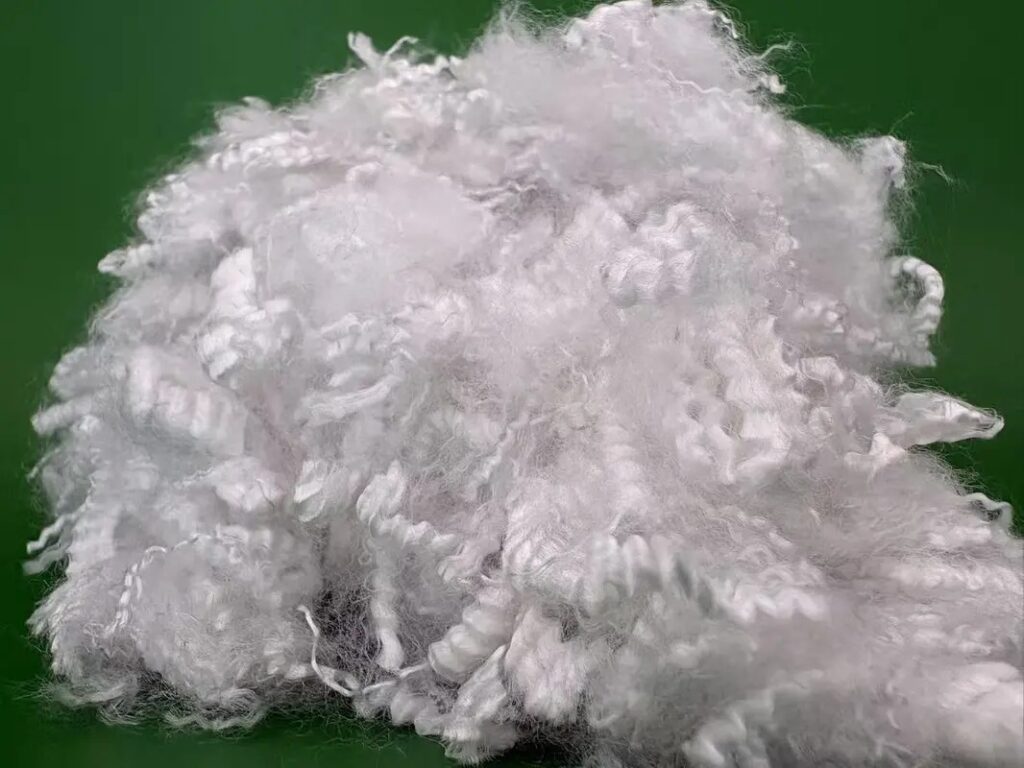
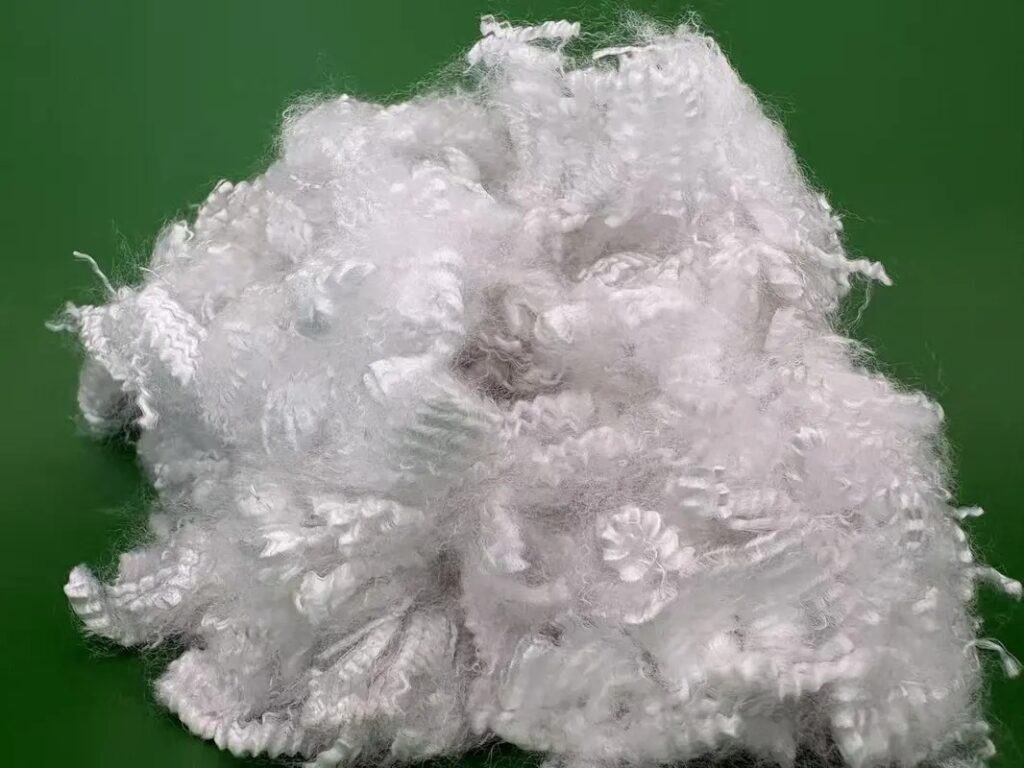
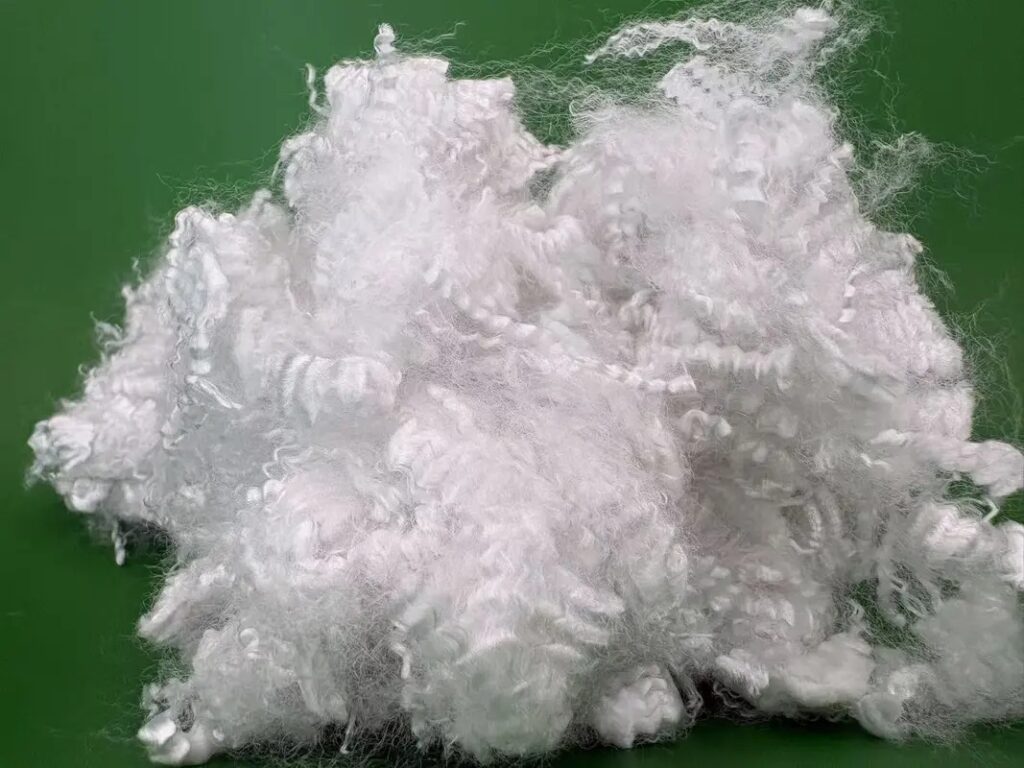
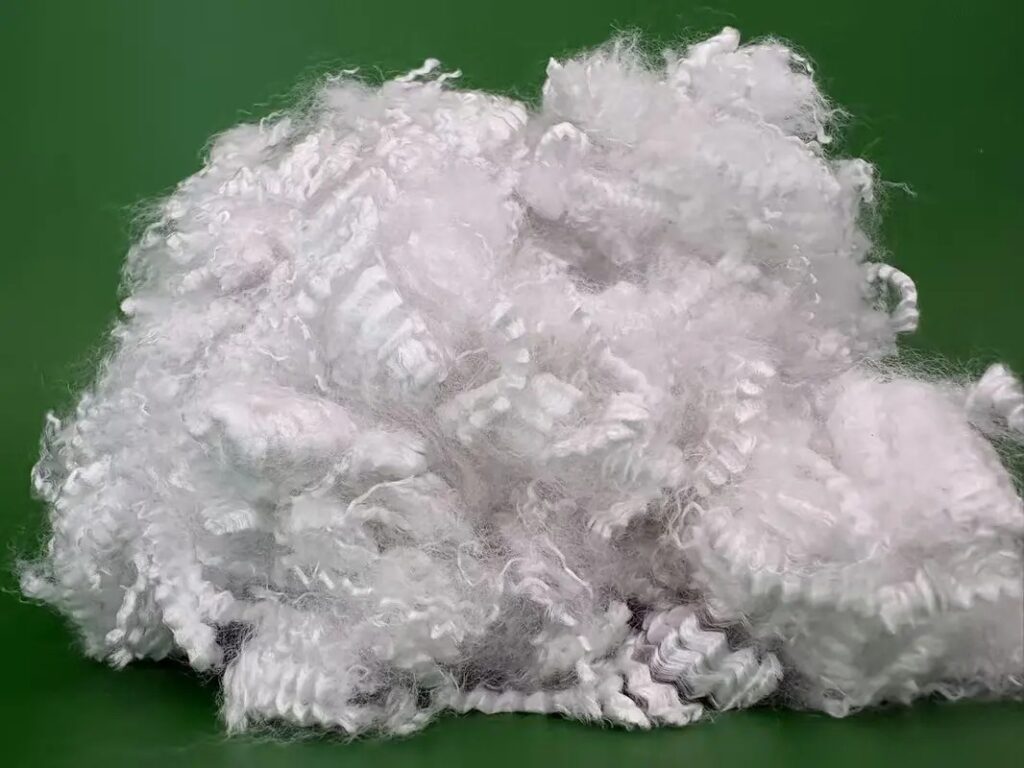
Automotive Nonwoven Fiber — FR and Dope-Dyed Solid PSF for Car Interior Components
PRODUCT DETAIL
Automotive Nonwoven Fiber — FR and Dope-Dyed Solid PSF for Car Interior Components
Automotive Nonwoven Standards: What Fiber Must Deliver
Automotive nonwoven components — trunk liners, door panel substrates, headliner backing, acoustic insulation, boot mat, wheel arch liner, under-carpet padding — are subject to some of the most comprehensive material qualification standards in any industrial application. Before any nonwoven component is approved for vehicle production, it must pass OEM-specific qualification testing across multiple dimensions.
- FMVSS 302 / ISO 3795 flammability: The fabric must not burn faster than 100mm/min in a horizontal burn test. This applies to all materials in the passenger compartment. FR-treated solid PSF meets this standard; standard untreated PSF may also pass in many needlepunched constructions due to polyester’s self-extinguishing behavior, but FR treatment provides a wider safety margin and is specified for all passenger compartment components by most tier-1 suppliers.
- VDA 278 VOC emissions: The German Automotive Association standard measures total volatile organic compound and fogging emissions at elevated temperature (120°C for VOC, 100°C for fogging). Volkswagen PV3015 and other OEM-specific standards follow similar methodology. Fiber processing chemistry must be selected to minimize VOC contribution from the fiber itself.
- UV stability and color permanence: Visible interior components — trunk liners, door panels, boot mats — are exposed to UV through vehicle windows. Dope-dyed (solution-dyed) fiber with color built into the polymer melt provides UV-stable, wash-proof color that does not fade over the vehicle’s service life. Surface-dyed alternatives fade within 12–18 months under vehicle interior UV exposure.
- VDA 270 odor rating: Automotive interior components must pass odor testing — typically rated on a scale of 1–6, with 1 (odorless) to 6 (intolerably strong odor). Fiber processing chemistry including spin finishes, binders, and treatments must be selected for low-odor performance.
Dope-Dyed vs Piece-Dyed Black: Why It Matters for Automotive
The color specification for automotive trunk liners and door panel fabric is not merely aesthetic — it is a durability requirement. Vehicle interiors are exposed to UV radiation through glass for the entire service life. A surface-dyed or piece-dyed black nonwoven will visibly fade from jet black to grey-brown within 12–18 months of UV exposure in a vehicle interior. Dope-dyed fiber, where the carbon black pigment is distributed uniformly throughout the polymer cross-section, cannot fade — the color is inside the material, not on its surface.
- Dope-dyed (solution-dyed): Pigment inside fiber cross-section. UV fastness Grey Scale 4–5 after 500 hours Xenon arc. Wash fastness Grade 5 (maximum). Zero color change possible through service life.
- Piece-dyed (surface-dyed): Dye molecules bonded to fiber surface. UV fastness typically Grey Scale 3–4 after 500 hours. Wash fastness Grade 4. Visible fading in 12–18 months under vehicle interior UV exposure.
Applications
- Trunk / boot liner: Dope-dyed black mandatory for UV stability. Needlepunched, calendered face. 200–350 gsm.
- Door panel substrate fabric: Needlepunched nonwoven. FR treatment for passenger compartment. 150–300 gsm.
- Headliner backing nonwoven: Bonded HCS+LMF 80–200 gsm. Thermoformable for moulded headliner shape.
- Hood liner (engine bay insulator): Heavy solid 200–500 gsm. Temperature resistance to 150°C+. Non-dyed acceptable.
- Under-carpet acoustic padding: Solid 200–400 gsm. NRC (Noise Reduction Coefficient) value specified by OEM.
- Wheel arch liner: PP solid for chemical resistance to road salt and washing fluid exposure.
OEM qualification process: automotive nonwoven components require OEM-specific material qualification (typically PPAP — Production Part Approval Process) before production supply begins. This includes material test reports covering all applicable standards (FMVSS 302, VDA 278, VDA 270, UV fastness, dimensional stability), initial sample submission, and ongoing production lot inspection. VNPOLYFIBER provides fiber-level test data as part of the material qualification documentation package.
Frequently Asked Questions
Q: What VOC standard applies and how should fiber be specified?
VDA 278 is the dominant test — it measures total VOC and semi-volatile organic compound (SVOC) emissions at 120°C using thermal desorption GC-MS. Volkswagen PV3015, BMW GS97014, and similar OEM standards use comparable methodology. VNPOLYFIBER automotive-grade PSF uses processing chemistry selected to minimize fiber VOC contribution. Request VDA 278 test data for any grade specified for passenger compartment applications.
Q: Is dope-dyed black required for all automotive nonwoven?
Only for visible components — trunk liners, door panels, boot mats where the nonwoven surface is seen by vehicle occupants or exposed to window UV. Hidden acoustic and structural components (hood liner, under-carpet layer) are typically produced with undyed or grey fiber where color permanence is not a requirement. Dope-dyed is specified where the nonwoven surface is part of the finished vehicle interior appearance.
Q: What carbon black content is standard for dope-dyed black PSF?
Standard commercial dope-dyed black PSF uses 2.0–2.5% carbon black masterbatch by fiber weight. This produces deep, opaque jet black. Higher content (3%) produces marginally darker color but increases risk of speck defects if masterbatch dispersion is incomplete. VNPOLYFIBER uses high-dispersion carbon black masterbatch formulated for speck-free spinning at 2.0–2.5% loading.
Q: Can dope-dyed PSF be specified in colors other than black?
Yes — dark navy, charcoal, dark green, burgundy, and dark grey are available using organic pigment masterbatch. Very light colors (beige, light grey, light blue) are less practical in dope-dyed and are typically achieved by piece-dyeing. For automotive applications, black and dark grey account for the majority of dope-dyed specification. Contact VNPOLYFIBER with your Pantone or RAL reference for color availability confirmation.
Technical Parameter
Product Specifications
| Grade | Specification | Application and Notes |
| Standard automotive solid | 6D–10D×51–64mm, UV-stabilized | Trunk liner, door panel backing, boot mat. Base grade. |
| FR automotive grade | 6D–10D×51–64mm, FR-treated | FMVSS 302 / ISO 3795 passenger compartment rated. |
| Dope-dyed black solid | 6D–10D×51–64mm, carbon black masterbatch | Visible components. Permanent UV-stable black. No fade, no bleed. |
| Acoustic insulation fiber | 10D–15D×64–76mm solid | Hood liner and under-body acoustic. Higher denier for density. |
| Headliner backing (bonded) | 4D–7D HCS + 4D LMF (80/20) | Thermally bonded 80–200 gsm. Lightweight, thermoformable. |
| Wheel arch liner fiber | PP 6D–12D×64mm, UV-stabilized | Chemical resistance to road washing fluids and de-icing salts. |
FAQ
1. What do you offer?
We supply a comprehensive range of fibers, including recycled hollow conjugated (both siliconized and non-siliconized) polyester staple fiber, hollow fiber, microfiber, virgin polyester staple fiber, and low-melt fiber.
2. What is it used for?
Our fibers are versatile and widely utilized across both the filling and non-woven industries, providing essential loft, durability, and texture for various consumer and industrial applications.
3. Are you a factory or a trading company?
We are primarily a manufacturer specializing in polyester staple fiber with years of industry expertise. To better serve our clients, we also operate a dedicated trading division that allows us to act as a one-stop solution provider.
In addition to our own fiber production, we source high-quality textile components (such as yarn and low-melt fibers) and finished goods (including foam, pillows, cushions, toys, and down/feather products) to ensure our customers have access to a comprehensive supply chain.
4. Where is your factory location?
To maintain a robust and flexible global supply chain, our manufacturing facilities are strategically located throughout Asia, specifically in Vietnam, China, Malaysia, Thailand, and Indonesia. If you would like to visit one of our sites, please contact your sales representative, and we will be happy to arrange transportation for you.
5. Can you accept free sample?
Yes, we provide free hand samples for quantities under 1 kilogram. Once a price is confirmed, we can prepare and dispatch your sample within 2–3 business days. Please note that while the sample is free, the freight costs are the responsibility of the client.
6. Can you provide ODM service?
Absolutely. We specialize in ODM (Original Design Manufacturing). This means we can customize the material composition, dimensions, quantity, packaging, and branding to meet your specific requirements. Your logo and unique specifications will be integrated into the final product.
7. How about your quality? What’s the minimum order Quantity (MOQ)?
We invite you to place a trial order to experience our quality firsthand. Our standard MOQ is 23,000 kilograms per order.
Regarding pricing, we maintain a no-bargain policy. We believe in transparency and efficiency, so we provide our most competitive offer upfront to save you time and ensure a straightforward procurement process.
8. Can I mix different items in one order?
Yes, for your convenience, we allow for a maximum of two different items to be mixed within a single container.
9. How can you guarantee the product quality?
Quality is the cornerstone of our business. We employ an experienced QC team that monitors every stage of production, from raw material inspection to the final manufacturing process. We utilize a range of advanced testing instruments to ensure our fibers meet strict industry standards.
Our business philosophy is simple: We aim to serve one customer 1,000 times, rather than 1,000 customers once. We prioritize long-term partnerships built on consistent excellence.
10. What’s the payment terms?
L/C at sight, 30% TT in advance are mostly accepted; other terms shall be negotiable by both sides
For more information, please feel free to contact :
Tony Tan
Mobile number: +84 90 466 5251 (Whatsapp/Wechat/Viber/Signal)