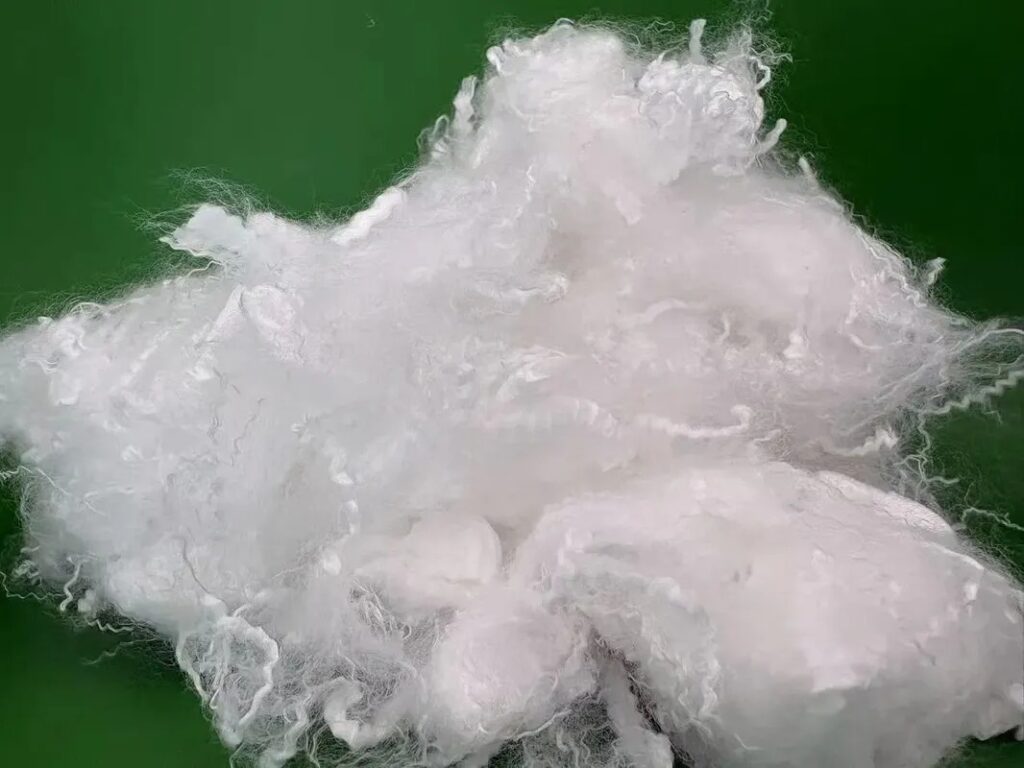
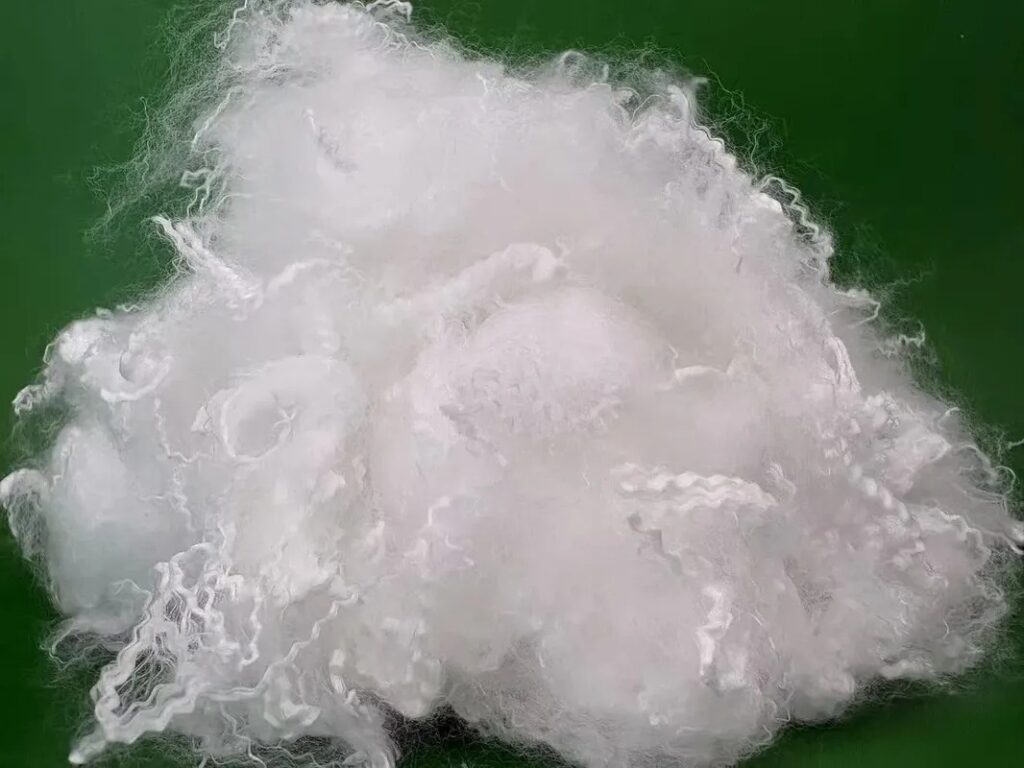
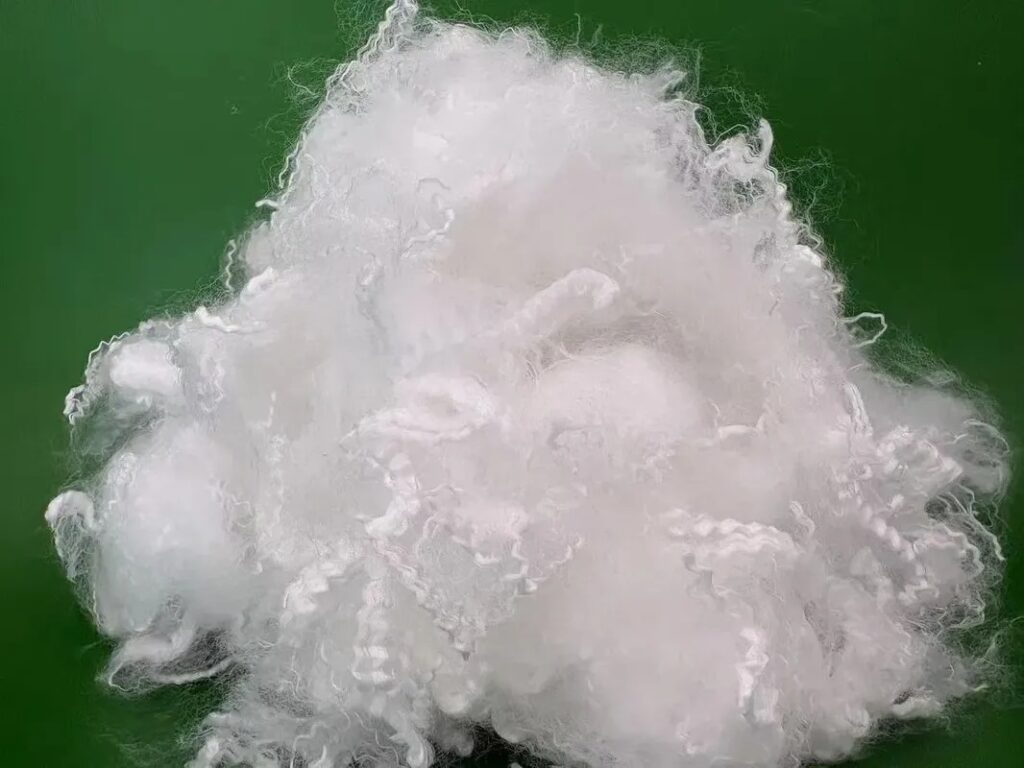
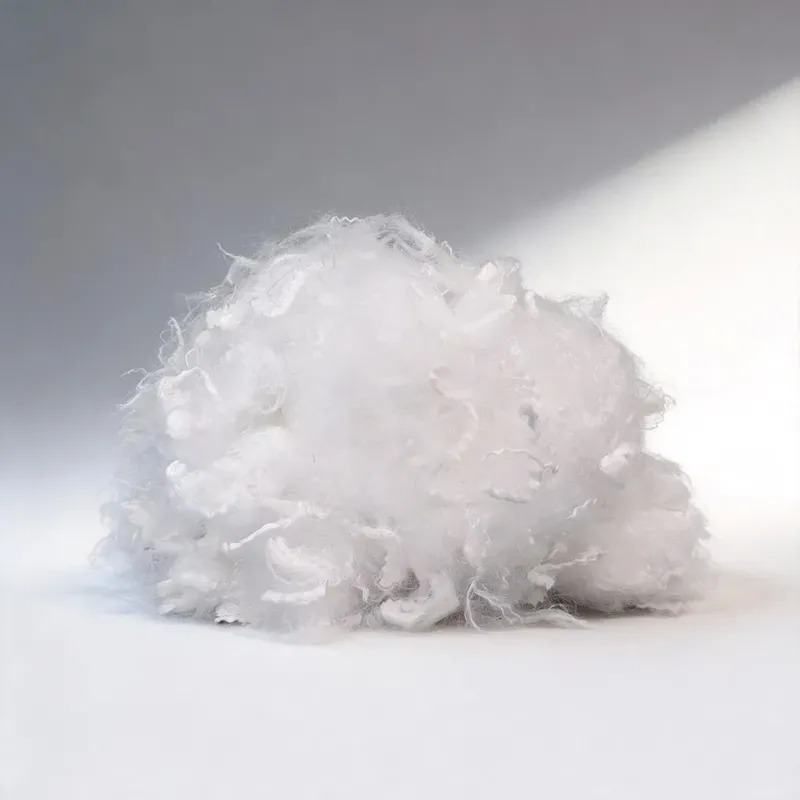
Flame Retardant PSF — Inherent FR Fiber for Furniture, Mattress and Contract Upholstery
PRODUCT DETAIL
Flame Retardant PSF — Inherent FR Fiber for Furniture, Mattress and Contract Upholstery
Inherent FR vs Topical FR: The Performance Difference That Defines Compliance
Flame retardant polyester fill fiber is a mandatory specification for upholstered furniture, mattresses, and contract upholstery in markets with active fire safety legislation — the UK (BS 5852), the United States (California Title 19 and TB 117, Federal 16 CFR Part 1633), the European Union (EN 597 for mattresses), Australia (AS/NZS 8124), and most other developed markets. The compliance requirement is clear; what varies between suppliers is whether the FR performance is permanent or temporary.
There are two fundamentally different approaches to producing flame retardant PSF:
- Inherent FR (IFR) — the permanent approach: A phosphorus-based comonomer (typically a phosphonate or phosphinate compound) is incorporated into the PET polymer backbone during polymerization — it becomes part of the polymer molecule itself. The resulting IFR fiber has a Limiting Oxygen Index (LOI) of 28–34% versus standard PET’s 21–22%. This flame retardance cannot be removed by washing, UV exposure, abrasion, or mechanical wear — because the FR agent is the polymer, not a treatment applied to it. LOI remains constant throughout the fiber’s entire service life.
- Topical FR (treated FR) — the temporary approach: A flame retardant chemical (typically a phosphorus or halogen-based compound) is applied to the surface of standard PET fiber after spinning, by spray, padding, or bath application. Initial LOI may meet the specification requirement. However, the surface treatment degrades with washing — typically losing 20–40% of its FR efficacy per laundering cycle. By 30–50 wash cycles, topically treated FR fiber has usually fallen below the LOI specification level it was initially supplied at. For consumer furniture and mattresses that will be used for 10–20 years, topical FR treatment cannot maintain compliance throughout the product’s life.
The commercial consequence: for any application where BS 5852, TB 117, or EN 597 compliance must be maintained throughout the product’s service life — not just at the point of manufacture — inherent FR fiber (IFR) is the only compliant specification. VNPOLYFIBER supplies inherently flame retardant polyester fill fiber: the phosphorus comonomer is in the polymer, not on the surface.
Understanding Limiting Oxygen Index (LOI)
LOI (Limiting Oxygen Index) is the most widely used single measurement for polymer flammability. It measures the minimum oxygen concentration (as a percentage of an oxygen-nitrogen gas mixture) required to sustain combustion of a material burning downward in a standardized test.
- Normal air is 21% oxygen. A material with LOI of 21% burns in normal air — it will sustain combustion without requiring an oxygen-enriched environment.
- Standard PET: LOI 21–22%. Burns in normal air. When ignited, standard PET will continue burning unless the ignition source is removed quickly.
- Inherent FR PET: LOI 28–34%. Requires an oxygen concentration of 28–34% to sustain combustion — significantly above normal air’s 21%. When the ignition source is removed, IFR polyester self-extinguishes because normal air cannot sustain its combustion.
- LOI >28% as specification baseline: Most furniture FR standards implicitly or explicitly require LOI above 26–28%. VNPOLYFIBER’s IFR fill fiber grades have LOI of 28–34% — confirmed by DSC thermal analysis and LOI test per ASTM D2863 or ISO 4589-2.
Regulatory Standard Guide by Market
- UK — BS 5852: The Furniture and Furnishings (Fire)(Safety) Regulations 1988 (as amended) require upholstered domestic furniture to resist ignition from cigarettes (Source 0) and matches (Source 1). Fill materials must pass the appropriate BS 5852 test. IFR fill fiber with LOI >28% supports compliance with these requirements — final compliance determination is by testing the complete furniture assembly.
- USA — California TB 117: California Technical Bulletin 117-2013 (TB 117-2013) requires upholstered furniture cover fabrics to resist open flame ignition. The fill material requirement under TB 117 applies specifically to certain constructions — confirm applicability to your product with a US regulatory consultant. Federal 16 CFR Part 1633 applies to mattresses with specific open flame resistance requirements.
- EU — EN 597: EN 597-1 (cigarette ignition) and EN 597-2 (match ignition) apply to mattresses in the EU. These standards test the complete mattress assembly; IFR fill fiber contributes to — but does not independently determine — EN 597 compliance.
- Transport seating — EN 45545 (rail) / BS AU 177 (automotive): Railway seating and public transport vehicle interiors have stricter FR requirements than domestic furniture. LOI >30% is typically required for rail applications under EN 45545. Verify the specific hazard level classification applicable to your transport application.
Applications
- Upholstered domestic furniture (sofas, chairs, cushions): UK BS 5852 and CA TB 117 compliance. IFR fill mandatory for UK market domestic furniture.
- Mattress comfort layer: EU EN 597 and US 16 CFR Part 1633. Inherent FR preferred for permanent compliance throughout mattress service life.
- Contract furniture (hospitality, office, education): Commercial environments typically have stricter FR requirements than domestic — verify applicable standard for each commercial building type.
- Children’s furniture: Children’s upholstered furniture has the strictest FR standards in most markets. Verify specific market requirements — UK and US standards differ.
- Caravan and motorhome upholstery: EN 45545-2 applies to rail vehicles; BS AU 177 to UK road vehicles. Both require higher LOI than domestic furniture standards.
- Aircraft and marine seating: Aviation (FAR 25.853) and marine (SOLAS) FR requirements are stricter than domestic or transport ground vehicle standards. Verify IFR fiber compatibility with these extreme specifications.
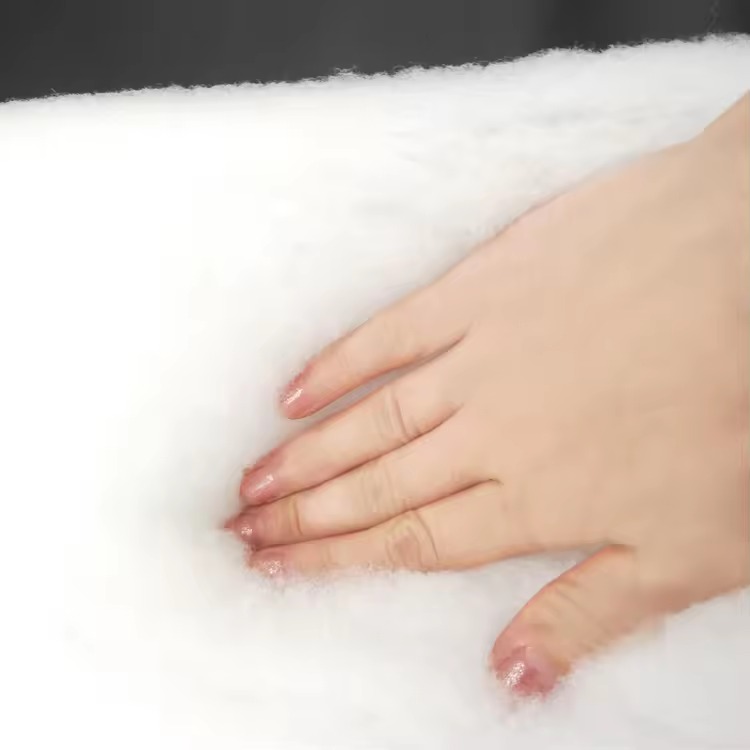
Does IFR treatment affect fill softness? Inherent FR HCS fill fiber has very similar tactile properties to standard HCS fill. The phosphorus comonomer modification changes the polymer chemistry but does not significantly alter the spun fiber’s softness, loft, or processing behavior. The conjugate crimp specification, silicone finish, and hollow cross-section of IFR-HCS are produced to the same parameters as standard HCS. LOI specification (28–34%) and DSC thermal analysis confirming IFR comonomer incorporation are the key quality parameters to verify alongside standard fill fiber quality parameters (denier, silicone level, loft, crimp).
Frequently Asked Questions
Q: How do I test whether my current fill fiber is inherent FR or topically treated FR?
The most practical test: wash a sample of fill fiber 30 times at 60°C with standard detergent, then test LOI (ASTM D2863 or ISO 4589-2) on the washed fiber. Inherent FR fiber will show the same LOI before and after washing — the phosphorus is in the polymer. Topically treated FR fiber will show measurably lower LOI after 30 wash cycles — the surface treatment has been partially or fully removed. Ask your current supplier for LOI data after 30 wash cycles — the inability to provide this data is itself informative.
Q: Can I use IFR fill fiber alongside standard HCS in the same pillow or cushion?
Yes — IFR-HCS and standard HCS can be blended in any ratio. However, the FR performance of the blended fill will be proportional to the IFR content. For applications where FR compliance is required for the fill material specifically (not just the cover fabric), the fill should be 100% IFR or the blend ratio and resulting LOI should be verified against the applicable standard by testing the finished product assembly. Do not assume that a partial IFR blend meets a specific LOI requirement without testing.
Q: Is IFR fill fiber more expensive than standard HCS fill?
IFR-HCS fill fiber carries a 15–30% cost premium over equivalent standard HCS fill, reflecting the higher cost of the phosphorus comonomer and the more demanding polymer process control required to maintain consistent LOI across production batches. For markets where FR compliance is mandatory (UK domestic furniture, US mattress), this premium is not optional — it is the cost of legal market access. For markets where FR compliance is not required, standard HCS is the appropriate and lower-cost specification.
Q: How does VNPOLYFIBER verify LOI consistency batch to batch?
VNPOLYFIBER’s IFR fiber supply is backed by LOI testing per production batch — not just per grade qualification. Each shipment is accompanied by a certificate of analysis that includes the LOI test result (ASTM D2863 or ISO 4589-2) for that specific production lot. We do not rely on grade-level qualification alone. If the LOI of a production lot falls below the specified minimum (28% standard, 30% premium), the lot is rejected before shipment. Request COA with LOI data for every IFR fiber shipment.
Technical Parameter
Product Specifications
| Grade | Specification | Regulatory Standard Reference |
| IFR HCS fill — standard | IFR-HCS 4D×51mm siliconized, LOI 28–30% | BS 5852 and CA TB 117 compatible. Furniture and upholstery fill. |
| IFR HCS fill — premium | IFR-HCS 4D×51mm siliconized, LOI 30–34% | Higher LOI for demanding standards. EN 597 mattress. Transport seating. |
| IFR HCS fill — fine | IFR-HCS 3D×51mm siliconized, LOI 28–30% | Softer feel. Premium FR furniture and mattress topper fill. |
| IFR solid — nonwoven | IFR solid 6D–10D×51–64mm, LOI 28–30% | FR furniture backing nonwoven and mattress border fabric. |
| IFR wadding | IFR-HCS 4D + IFR-LMF 4D (80/20), LOI 28%+ | Thermally bonded FR wadding. Furniture and mattress comfort layer. |
FAQ
1. What do you offer?
We supply a comprehensive range of fibers, including recycled hollow conjugated (both siliconized and non-siliconized) polyester staple fiber, hollow fiber, microfiber, virgin polyester staple fiber, and low-melt fiber.
2. What is it used for?
Our fibers are versatile and widely utilized across both the filling and non-woven industries, providing essential loft, durability, and texture for various consumer and industrial applications.
3. Are you a factory or a trading company?
We are primarily a manufacturer specializing in polyester staple fiber with years of industry expertise. To better serve our clients, we also operate a dedicated trading division that allows us to act as a one-stop solution provider.
In addition to our own fiber production, we source high-quality textile components (such as yarn and low-melt fibers) and finished goods (including foam, pillows, cushions, toys, and down/feather products) to ensure our customers have access to a comprehensive supply chain.
4. Where is your factory location?
To maintain a robust and flexible global supply chain, our manufacturing facilities are strategically located throughout Asia, specifically in Vietnam, China, Malaysia, Thailand, and Indonesia. If you would like to visit one of our sites, please contact your sales representative, and we will be happy to arrange transportation for you.
5. Can you accept free sample?
Yes, we provide free hand samples for quantities under 1 kilogram. Once a price is confirmed, we can prepare and dispatch your sample within 2–3 business days. Please note that while the sample is free, the freight costs are the responsibility of the client.
6. Can you provide ODM service?
Absolutely. We specialize in ODM (Original Design Manufacturing). This means we can customize the material composition, dimensions, quantity, packaging, and branding to meet your specific requirements. Your logo and unique specifications will be integrated into the final product.
7. How about your quality? What’s the minimum order Quantity (MOQ)?
We invite you to place a trial order to experience our quality firsthand. Our standard MOQ is 23,000 kilograms per order.
Regarding pricing, we maintain a no-bargain policy. We believe in transparency and efficiency, so we provide our most competitive offer upfront to save you time and ensure a straightforward procurement process.
8. Can I mix different items in one order?
Yes, for your convenience, we allow for a maximum of two different items to be mixed within a single container.
9. How can you guarantee the product quality?
Quality is the cornerstone of our business. We employ an experienced QC team that monitors every stage of production, from raw material inspection to the final manufacturing process. We utilize a range of advanced testing instruments to ensure our fibers meet strict industry standards.
Our business philosophy is simple: We aim to serve one customer 1,000 times, rather than 1,000 customers once. We prioritize long-term partnerships built on consistent excellence.
10. What’s the payment terms?
L/C at sight, 30% TT in advance are mostly accepted; other terms shall be negotiable by both sides
For more information, please feel free to contact :
Tony Tan
Mobile number: +84 90 466 5251 (Whatsapp/Wechat/Viber/Signal)