When you see a product labeled as flame-retardant polyester, it’s natural to wonder: what is actually happening inside the fiber when it’s exposed to fire? Understanding the science behind FR polyester not only helps you make better purchasing decisions—it also explains why not all flame retardant fibers perform the same way in real fire conditions.
This article breaks down the two core mechanisms that make flame-retardant polyester fiber work and explains why the chemistry matters as much as the label.
Why standard polyester is a fire hazard
Before diving into how FR polyester works, it helps to understand the problem it solves. Standard polyester fiber is a thermoplastic material—meaning it softens, melts, and burns when exposed to heat. In a fire scenario, untreated polyester can ignite quickly, drip burning molten material onto the skin, and sustain a flame even after the heat source is removed. This makes it unsuitable for any application where fire exposure is a realistic risk.
Flame retardant polyester fiber is engineered specifically to overcome these dangerous characteristics.
Mechanism 1 — Chemical interruption of combustion
The first way FR polyester resists fire is through chemical interference with the combustion process itself. Burning is a chain reaction—heat breaks down the fiber into combustible gases, those gases ignite, and the resulting flame produces more heat that continues breaking down the fiber. FR additives disrupt this cycle at the molecular level.
This can happen in two phases. In the gas phase, FR compounds release free radical inhibitors into the flame zone that neutralize the reactive species sustaining combustion—effectively starving the flame of the chemistry it needs to keep burning. In the solid phase, FR additives promote the formation of a carbonized char layer on the fiber surface, which acts as a physical and chemical barrier slowing further decomposition.
The result is a fiber that either doesn’t sustain a flame when the ignition source is removed or burns so slowly that the fire risk is dramatically reduced.
Mechanism 2 — Physical barrier and char formation
The second mechanism is physical rather than chemical. Certain FR treatments — particularly phosphorus-based and intumescent systems — cause the surface of the fiber to swell and form a dense, insulating char layer when exposed to high heat. This carbonized layer does three things simultaneously: it insulates the underlying material from further heat penetration, it cuts off the oxygen supply the flame needs to sustain itself, and it physically prevents combustible gases from escaping the fiber to feed the flame above.
This intumescent char mechanism is especially effective in textile applications where layers of fabric or fiber fill are involved, such as mattress batting, upholstery padding, and insulation products.
Why the type of FR chemistry matters
Not all flame retardant chemistries work the same way, and the performance difference is significant in real fire conditions. Halogen-based FR systems (historically using bromine or chlorine compounds) were effective but have largely been phased out in many markets due to environmental and health concerns—they can release toxic gases when burned and persist as pollutants in ecosystems.
Modern FR polyester fiber typically uses phosphorus-based or non-halogenated FR systems, which offer comparable fire performance with a much more favorable environmental profile. When evaluating FR polyester for sensitive applications—such as children’s products, healthcare bedding, or consumer upholstery—always look for OEKO-TEX Standard 100 certification or REACH compliance, which confirms the FR chemistry used is within approved safety limits.
The bottom line
Flame retardant polyester fiber works by combining chemical interruption of the combustion chain reaction with physical char barrier formation—two complementary mechanisms that together prevent easy ignition, limit flame spread, and encourage self-extinguishing behavior when a fire source is removed.
One of the most important—and most frequently misunderstood—distinctions in the flame retardant fiber industry is the difference between inherently flame retardant polyester and treated flame retardant polyester. Both carry FR labels, but their performance, longevity, and ideal use cases differ significantly. Choosing the wrong type for your application can mean investing in a product that loses its fire resistance far sooner than expected.
This article explains exactly what sets these two types apart and gives you a clear framework for deciding which one your project requires.
What is inherently flame-retardant (IFR) polyester fiber?
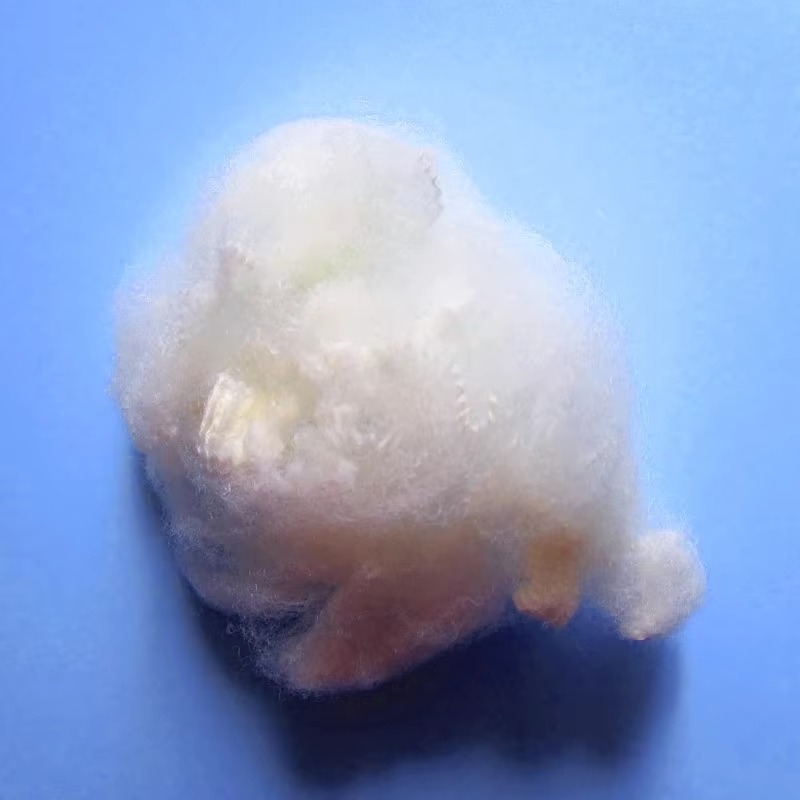
Inherently flame retardant polyester fiber—commonly abbreviated as IFR polyester—has fire resistance built directly into the polymer chain during the fiber manufacturing process. The FR properties are a permanent, structural part of the fiber itself. No matter how many times the product is washed, abraded, or subjected to wear, the fire resistance remains intact because it is chemically inseparable from the fiber.
This permanence is the defining advantage of IFR polyester. It is the specification of choice for applications where fire protection must be guaranteed over the entire service life of the product—including aircraft and rail seating, hospital and care home bedding, high-performance industrial workwear, and public-space contract upholstery.
What is treated (topically applied) FR polyester fiber?
Treated FR polyester starts life as standard conventional polyester fibers. After the fiber is produced, it is coated, padded, or impregnated with flame retardant chemicals as a finishing step. This finishing process is more flexible and cost-efficient than modifying the polymer itself, which is why treated FR polyester is widely available and competitively priced.
The trade-off is durability. The FR chemicals sit on or near the surface of the fiber rather than being part of its molecular structure. Over time — particularly with repeated laundering, dry cleaning, or mechanical abrasion — those FR chemicals can be removed or degraded, reducing the product’s fire resistance below the original certified level.
How wash durability affects your choice
Wash durability is the critical performance metric that separates IFR from treated FR polyester in practical use. IFR polyester offers effectively unlimited wash durability — the fire resistance does not diminish regardless of laundering frequency. Treated FR polyester, by contrast, is typically rated to a specific number of wash cycles (commonly 25, 50, or 100 cycles depending on the treatment system) before fire resistance can no longer be guaranteed.
For products that are laundered infrequently or replaced on a regular cycle—commercial drapery, decorative cushions, seasonal bedding—treated FR polyester is a perfectly appropriate and cost-effective choice. For products that are washed frequently or expected to provide continuous fire protection over years of use—workwear, healthcare bedding, children’s products—IFR polyester is the safer long-term specification.
Care instructions for treated FR polyester
If you are working with treated FR polyester, following the correct care instructions is essential to maintaining fire resistance for as long as possible. Avoid fabric softeners entirely — they leave a residue on fibers that can impair the FR finish and accelerate its degradation. Use cool or warm water rather than hot. Avoid bleach and harsh detergents. Tumble dry on low heat rather than high. Always check the product’s care label for its certified wash cycle limit.
Which type should you specify?
Use inherently flame retardant polyester when the product will be laundered regularly; fire protection must be maintained for the entire service life; the application is safety-critical (aviation, rail, healthcare, or high-hazard workwear); or regulatory compliance must be demonstrated consistently over time.
Use treated flame retardant polyester when the product has predictable replacement cycles, laundering frequency is low, cost is a primary consideration, or the application requires FR compliance but not permanent, long-term fire resistance (decorative textiles, construction insulation, single-use or short-lifecycle products).
Flame retardant polyester fiber is one of several FR fiber options used across protective clothing, home furnishings, transportation, and construction. Each fiber type brings a different combination of fire performance, comfort, durability, and cost—and selecting the wrong one for your application can mean either overspending on performance you don’t need or underspecifying for a safety-critical environment.
This guide compares FR polyester against the four most common alternatives so you can make an informed decision.
FR polyester fiber
FR polyester sits in the practical middle ground of the flame retardant fiber market. It is significantly more affordable than high-performance options like aramid, available in both inherent and treated forms, processable on standard textile machinery, and suitable for a wide range of applications from upholstery to insulation to general workwear. Its main limitations are heat retention (it is less breathable than cotton) and the fact that treated versions can lose FR performance over time.
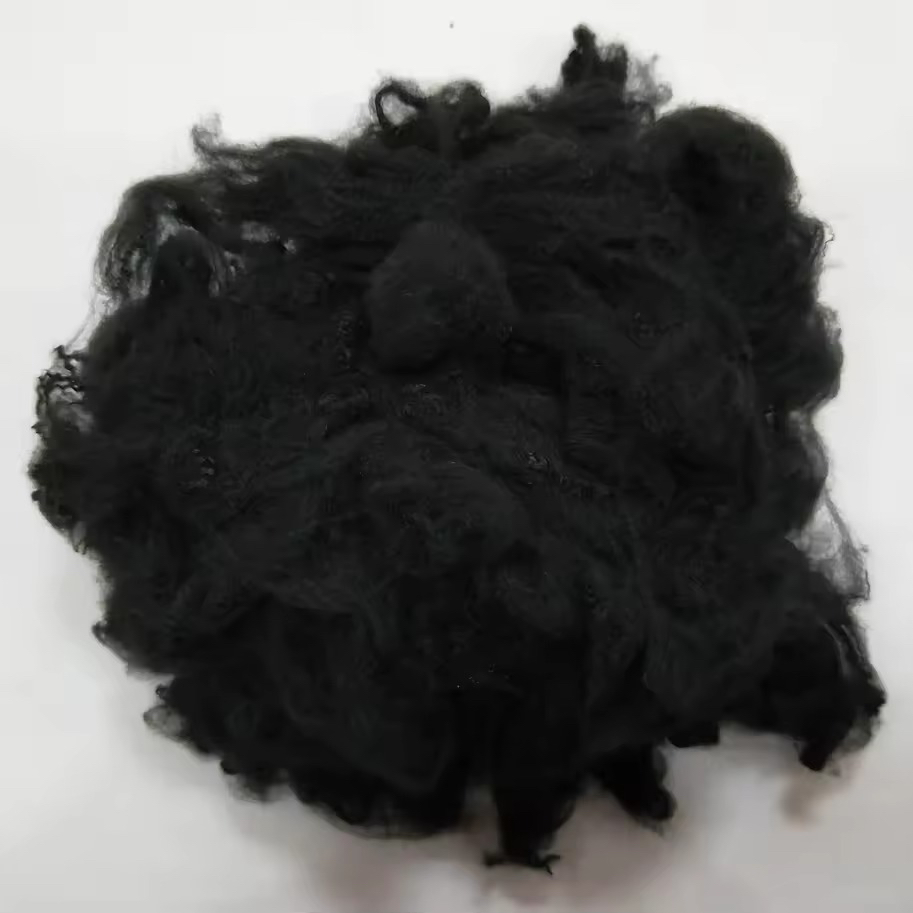
Best for: Upholstery, mattress and pillow filling, acoustic insulation, building insulation, general industrial workwear, automotive interiors, and drapery.
Aramid fibers—Nomex and Kevlar
Aramid fibers—most commonly Nomex (manufactured by DuPont for thermal protection) and Kevlar (best known for cut and ballistic resistance)—are inherently flame-retardant synthetic fibers that offer the highest level of heat and flame protection available in commercial textiles. They do not melt, do not drip burning material, and continue to provide protection even after extended flame exposure. This performance comes at a significant cost premium — aramid fiber can be five to ten times more expensive than FR polyester.
Best for: Structural firefighting gear, military combat uniforms, racing driver suits, high-voltage electrical protection, and any application where extreme heat exposure is a realistic risk.
FR cotton
FR cotton is the most direct competitor to FR polyester in the workwear segment. Its primary advantage is breathability and comfort—cotton fibers allow moisture vapor to pass through far more effectively than polyester, which is important for workers in hot environments. FR cotton can be either inherently treated through fiber modification or topically treated. It chars rather than melts when exposed to flame, which prevents the dripping burn hazard associated with untreated synthetics.
The trade-off versus FR polyester is durability—cotton fibers are generally less abrasion-resistant and less durable in demanding industrial environments. Many workwear manufacturers blend FR polyester and FR cotton to balance comfort and durability.
Best for: Arc flash protective clothing, oil and gas workwear, general industrial garments where comfort is a priority, and environments where workers wear FR clothing for extended shifts.
Modacrylic fiber
Modacrylic is an inherently flame retardant synthetic fiber made from modified acrylic polymer. It is notably soft and comfortable against the skin, making it a popular choice for applications where the fiber is in direct contact with the body—children’s sleepwear, protective underwear, and soft furnishing fabrics. Modacrylic is frequently blended with cotton, FR cotton, or other fibers to combine its inherent flame resistance with the comfort and durability properties of the blend partner.
It is more expensive than FR polyester and less widely available, but for applications requiring softness and inherent FR properties together, it is difficult to match.
Best for: Children’s sleepwear, protective base layers, soft furnishing fabrics, and blended FR workwear fabrics where skin comfort is essential.
FR wool
Wool is naturally and inherently flame resistant — it has a high ignition temperature, self-extinguishes readily, and chars rather than melts. These properties have made it a traditional material in military uniforms and high-end interior textiles for centuries. FR wool is wool that has been additionally treated to enhance these natural properties for applications with formal fire safety certification requirements.
Its disadvantages are cost, availability at scale, and the fact that its natural properties vary depending on fiber quality and origin. For most commercial FR applications, the cost of wool makes it impractical compared to FR polyester.
Best for: military dress uniforms, high-end aircraft and marine interior fabrics, and premium upholstery where natural fiber aesthetics are required alongside fire compliance.
Choosing the right FR fiber
The right choice depends on three primary factors: the level of fire hazard in the application, the comfort and durability requirements, and the budget available. For most commercial applications — furniture, insulation, automotive interiors, and general workwear — FR polyester offers the best balance of performance, versatility, and cost. For extreme hazard environments, aramid is the appropriate specification regardless of cost. For comfort-critical workwear, a blend of FR polyester and FR cotton is often the practical optimum.
Specifying flame retardant polyester fiber for a commercial or consumer product is only half the task. The other half is confirming that the fiber — and the finished product — meets the specific fire safety standard required for its intended application and target market. The landscape of FR standards is fragmented across industries and regions, which makes this more complex than it might initially appear.
This guide explains the most important FR textile standards, what they test, and which applications they apply to.
Why Flame retardant FR standards matter
A product labeled “flame retardant” without any standard reference is essentially unverifiable. FR standards provide a common, independently tested benchmark that buyers, specifiers, regulators, and insurers can rely on. They define exactly what conditions a material must survive — the type of ignition source, the duration of exposure, the acceptable rate of burning, and the self-extinguishing requirement — so that “flame retardant” means the same thing across suppliers and markets.
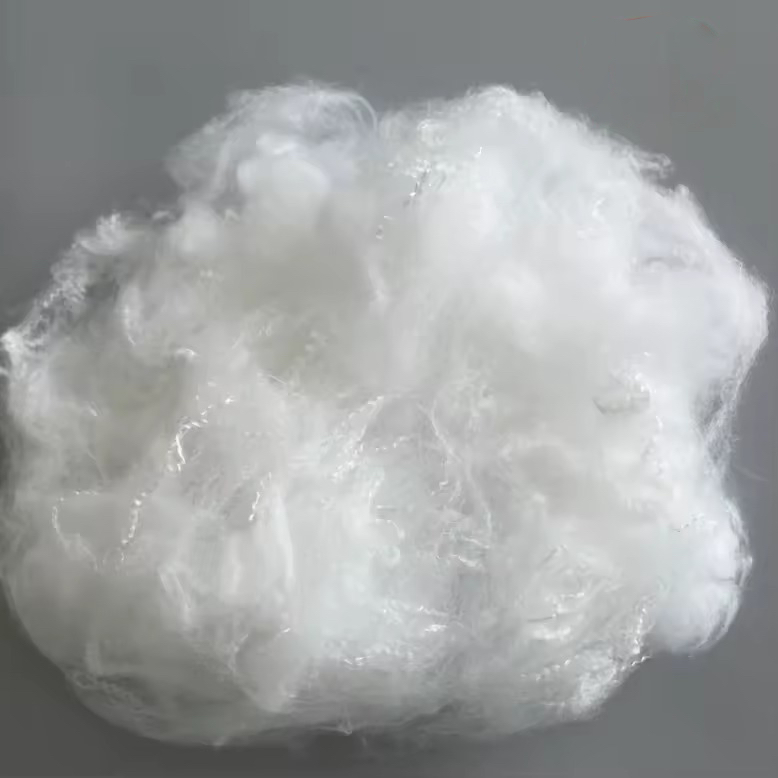
When sourcing FR polyester fiber, always ask for the specific standard certification, not just the FR claim.
NFPA 701 — USA, textiles in public spaces
NFPA 701 is published by the National Fire Protection Association and is the primary US standard for flame resistance testing of textiles used as draperies, curtains, and other hanging textile materials in public buildings—including theaters, hotels, convention centers, schools, and event venues. It defines small-scale and large-scale test methods that assess flame spread and char length after a defined ignition exposure. Compliance with NFPA 701 is typically required by local fire codes for any textile used in these environments.
UL 94—USA, plastics and synthetic materials
UL 94 is published by Underwriters Laboratories and classifies the flammability of plastic and synthetic materials used in device and appliance housings, as well as components in transportation, electronics, and industrial equipment. It rates materials from V-0 (highest performance — self-extinguishes within 10 seconds, no dripping) down to V-2 (self-extinguishes within 30 seconds, dripping is permitted). FR polyester fiber used in automotive and electronic applications is commonly evaluated against UL 94.
EN 13501 — Europe, construction products
EN 13501 is the European fire classification system for construction products and building elements. It classifies materials from A1 (non-combustible) through F (no performance determined) using reaction-to-fire test methods. FR polyester insulation batts, acoustic panels, and underlays used in commercial construction across European Union member states typically need to be classified under EN 13501 to comply with building regulations.
BS 5852 — UK, upholstered furniture
BS 5852 is the British Standard for fire resistance testing of upholstered furniture—primarily sofas, chairs, and bed bases. It uses cigarette and match ignition sources (and, in higher test levels, open flame sources) to assess how well upholstered composites resist ignition and limit flame spread. FR polyester fiber used as filling or batting in residential and contract furniture manufactured for the UK market must meet BS 5852 requirements. This is one of the most commercially significant standards for FR fiber in the home furnishings sector.
ISO 15025—International, protective clothing
ISO 15025 defines test methods for protective clothing against heat and flame—specifically evaluating limited flame spread performance. It is an internationally recognized standard used by manufacturers of FR workwear and occupational protective garments to demonstrate compliance with the personal protective equipment (PPE) requirements in markets around the world.
OEKO-TEX Standard 100 — International, chemical safety
OEKO-TEX Standard 100 is not a fire safety standard—it is a product safety certification that tests finished textiles for the presence of harmful substances, including certain flame retardant chemicals. This is particularly important because some older FR chemical systems (particularly halogenated compounds) have been identified as health hazards. OEKO-TEX certification confirms that the FR chemistry used in the fiber is within approved limits for direct skin contact products. For FR polyester used in bedding, childcare products, and workwear, OEKO-TEX certification alongside fire performance certification gives buyers confidence in both fire safety and chemical safety.
REACH — Europe, chemical regulation
REACH (Registration, Evaluation, Authorisation and Restriction of Chemicals) is the European Union’s primary chemicals regulation framework. It restricts the use of certain harmful FR chemicals—particularly specific brominated flame retardants—in products sold in the EU market. FR polyester fiber sold into Europe should comply with REACH restrictions, and buyers should confirm this with their fiber supplier.
Choosing the right standard for your application
The correct standard depends on your product type, end market, and regulatory environment. Drapery for a US hotel requires NFPA 701. Upholstered furniture for the UK market requires BS 5852. Construction insulation for European buildings requires EN 13501. Workwear for international markets may require ISO 15025. And for any FR product going into sensitive applications, OEKO-TEX and REACH compliance add an important layer of chemical safety assurance.
Always consult with your FR fiber supplier about the specific certifications held by the fiber you are purchasing, and verify that those certifications cover the test method and performance level required by your application.
Flame retardant polyester fiber is one of the most versatile and widely used fire-safe materials in textiles and construction. Its combination of affordability, durability, and broad regulatory compliance makes it the practical choice for a huge range of applications. But like every material, it has limitations—and understanding those limitations before you specify FR polyester is essential for choosing the right solution for your project.
This article covers the four most important limitations of FR polyester fiber and explains how each one should influence your material selection.
1. Heat retention and breathability
All polyester fiber — FR or otherwise — retains more body heat than natural fibers like cotton or wool. Polyester is hydrophobic: it repels moisture rather than absorbing it, which means sweat cannot be wicked away from the body effectively. In protective workwear, this heat retention can be a meaningful comfort issue, particularly for workers in hot climates or physically demanding roles who wear FR garments for full shifts.
This limitation is well understood by the industry, and the most common solution is blending. FR polyester is frequently combined with FR cotton or other breathable fibers in workwear fabrics to balance the durability and cost advantages of polyester with the moisture management and comfort of cotton. If your application involves garments worn against the skin in warm or demanding conditions, a blend is almost always preferable to 100% FR polyester.
For non-clothing applications—upholstery filling, insulation, mattress batting—breathability is less of a concern, and FR polyester’s heat retention characteristics are largely irrelevant to performance.
2. Wash durability in treated FR polyester
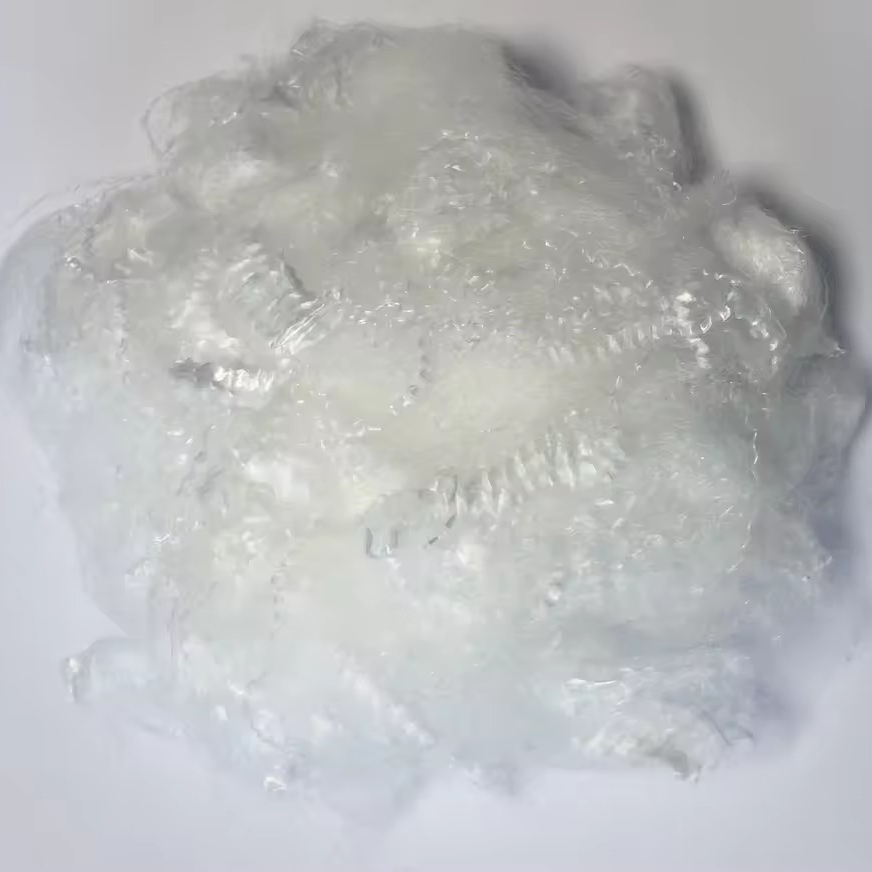
This limitation applies specifically to topically treated FR polyester rather than inherently FR (IFR) polyester. When FR chemicals are applied as a surface treatment rather than built into the polymer, they can be gradually removed through repeated laundering. The rate of degradation depends on the specific FR chemistry, the treatment method, water temperature, detergent type, and mechanical agitation.
Most treated FR polyester products are certified to a specific number of wash cycles — commonly 25, 50, or 100 — after which fire resistance can no longer be guaranteed without retesting or retreatment. Several factors accelerate this degradation: fabric softeners leave residues that impair FR finishes, hot water temperatures stress the treatment, and harsh detergents strip the fiber surface more aggressively than gentle alternatives.
For products that will be washed frequently and are expected to maintain certified fire resistance throughout their service life, inherently FR polyester is the appropriate specification. For products with predictable replacement cycles or low laundering frequency, treated FR polyester remains a practical and cost-effective choice.
3. Smoke and combustion by products
FR polyester is engineered to resist ignition and limit flame spread—but it is not fireproof. When FR polyester does combust, it produces smoke and combustion gases. Polyester in general can generate dense smoke and carbon monoxide, as well as other potentially toxic compounds depending on the specific FR chemistry and the temperature of combustion. This is a meaningful consideration in enclosed, high-occupancy environments such as aircraft cabins, rail carriages, underground transit stations, and high-rise buildings where smoke inhalation is a primary cause of fire fatalities.
For applications in these environments, it is important to evaluate not just the ignition and flame spread performance of the FR fiber, but also its smoke density and toxicity characteristics. Some FR standards and regulatory frameworks — particularly those governing aviation and rail — include smoke density and toxicity requirements in addition to basic flame resistance testing. Confirm that your FR polyester meets all relevant requirements for your specific application environment, not just the flame performance criteria.
4. Environmental and chemical safety considerations
The environmental profile of FR polyester depends heavily on the type of FR chemistry used. Older halogen-based FR systems — particularly certain brominated flame retardants — have been identified as persistent environmental pollutants and potential endocrine disruptors. Several of these compounds have been restricted or banned under European REACH regulations and are subject to increasing scrutiny in other markets.
The textile industry has substantially transitioned toward phosphorus-based and non-halogenated FR systems in recent years, which offer comparable fire performance with a significantly more favorable environmental and toxicological profile. However, the transition is not universal, and some lower-cost FR polyester products — particularly from certain manufacturing origins — may still use older chemistry systems.
For applications where product safety for sensitive users is a priority—children’s products, healthcare textiles, skin-contact workwear—always verify that the FR polyester you are sourcing uses a non-halogenated FR system and holds OEKO-TEX Standard 100 certification. For products entering the European market, confirm REACH compliance with your supplier as a minimum requirement.
Putting it in perspective
These limitations are real, but they are also manageable with informed material selection. Blend FR polyester with breathable fibers for comfort-critical garments. Specify IFR polyester where wash durability is essential. Evaluate smoke characteristics for enclosed-environment applications. And verify FR chemistry compliance for sensitive or regulated end uses.
FR polyester remains one of the most practical and cost-effective flame retardant materials available across a wide range of applications—understanding its limitations simply helps you deploy it in the right contexts.