Synthetic Fibers and Fabrics: The Complete Guide to Types, Properties, Uses & Sustainability
Look at the label on the clothes you are wearing right now — and there is a better than even chance you will find polyester, nylon, acrylic, or spandex listed. Synthetic fibers account for approximately 65% of all textile fiber produced globally. They are in the shirt on your back, the carpet under your feet, the seat of your car, the filter in your air conditioning unit, and the insulation in the walls of your home. They are woven into the fabric of modern life so completely that their removal would be genuinely disruptive to how the world functions.
Yet synthetic fibers are also at the center of one of the textile industry’s most significant environmental challenges — from microplastic ocean pollution to fossil fuel dependence to the generation of non-biodegradable waste at unprecedented scale. Understanding synthetic fibers means understanding both their remarkable engineering achievements and their genuine environmental costs.
This complete guide covers what synthetic fibers are, how they are made, the major types and their properties, their applications across industries, how they compare to natural fibers, their environmental impact, and the growing innovations in recycled and bio-based synthetics that are reshaping the industry’s sustainability story.
What Are Synthetic Fibers? A Clear Definition
Synthetic fibers are man-made textile fibers produced from chemical compounds — predominantly polymers derived from petrochemicals (crude oil, natural gas, and coal). Unlike natural fibers, which grow in nature (cotton, wool, silk, linen), synthetic fibers are engineered in laboratories and manufactured in industrial facilities through chemical polymerization and fiber extrusion processes.
The term ‘synthetic’ is sometimes used interchangeably with ‘man-made’ or ‘manufactured’ fibers, but there is a technical distinction. Man-made fibers include both synthetic fibers (made entirely from synthetic polymers, such as polyester and nylon) and regenerated fibers (made by dissolving and re-spinning natural cellulosic materials, such as viscose rayon and lyocell). This guide focuses primarily on true synthetic fibers — those produced from petrochemical or chemical feedstocks.
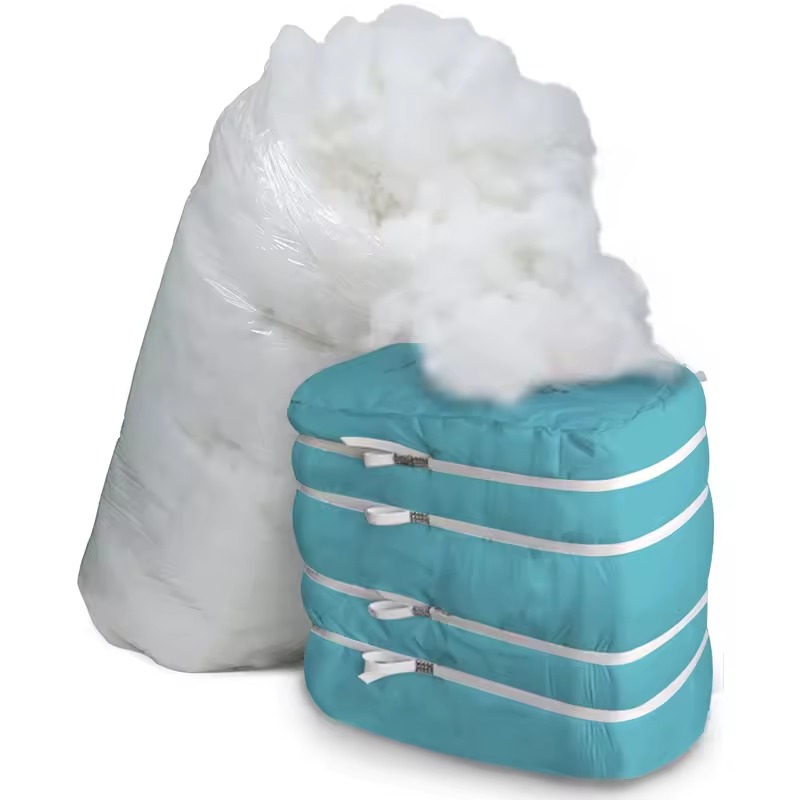
Synthetic fibers now account for approximately 65% of all fiber produced globally — up from less than 20% in 1960. Polyester alone represents over 50% of global fiber production, making it the single most used textile fiber on earth.
How Synthetic Fibers Are Made
Despite their diversity in properties and performance, all synthetic fibers are produced through a broadly similar manufacturing process: chemical synthesis of a polymer, conversion of that polymer into a spinnable form, and extrusion of the polymer through spinnerets to create fiber filaments.
Step 1: Polymer Synthesis
The starting materials for synthetic fiber production are chemical monomers — small molecules that can be linked together in long repeating chains (polymers) through chemical reactions. For polyester, the monomers are purified terephthalic acid (PTA) and monoethylene glycol (MEG), both derived from petroleum. For nylon 6,6, the monomers are adipic acid and hexamethylene diamine. For acrylic, the primary monomer is acrylonitrile. These monomers react under controlled temperature, pressure, and catalyst conditions to form the high-molecular-weight polymers that will become fibers.
Step 2: Polymer Preparation for Spinning
The synthesized polymer must be converted into a form suitable for extrusion through a spinneret. For most synthetic fibers, this means melting the polymer into a viscous liquid (melt spinning — used for polyester, nylon, and polypropylene) or dissolving it in a solvent (solution spinning — used for acrylic and spandex). The polymer solution or melt is filtered and de-aerated to remove impurities and gas bubbles that would cause fiber defects.
Step 3: Extrusion Through Spinnerets
The prepared polymer is pumped under pressure through a spinneret — a metal plate containing many tiny, precisely shaped holes. The diameter and shape of these holes determine the denier (fineness) and cross-sectional shape of the resulting fibers. Round holes produce round fibers; trilobal holes produce three-lobed fibers with silk-like light reflection; hollow holes produce fibers with air channels for insulation.
As the extruded filaments emerge from the spinneret, they are solidified — either by cooling in an air stream (melt spinning) or by immersion in a coagulation bath (wet spinning for solution-spun fibers). The solidified filaments are collected and drawn to develop their final tensile properties.
Step 4: Drawing and Finishing
As-spun synthetic fiber has limited strength. Drawing — stretching the fiber between rollers at controlled temperature — orients the polymer chain molecules along the fiber axis, dramatically increasing tensile strength and modulus. Finishing processes — including crimping (to add texture and processability), heat-setting (to lock in dimensional stability), and surface treatment (to control friction and static) — complete the fiber before it is cut to staple length or wound as continuous filament.
The Major Types of Synthetic Fiber
1. Polyester (PET — Polyethylene Terephthalate)
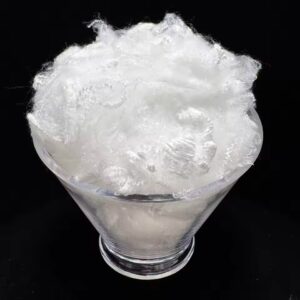
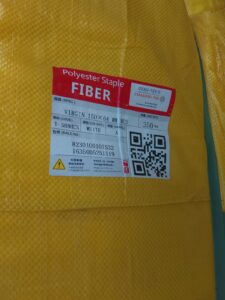
Polyester is the world’s most produced synthetic fiber and the most used textile fiber of any kind — natural or synthetic. It is produced by polymerizing purified terephthalic acid (PTA) and monoethylene glycol (MEG) into polyethylene terephthalate (PET), then melt-spinning through spinnerets into continuous filament or staple fiber.
Polyester was commercialized in the early 1950s by ICI (as Terylene) and DuPont (as Dacron) and has grown continuously to dominate the global fiber market. Its combination of durability, wrinkle resistance, dimensional stability, low moisture absorption, and cost-effectiveness makes it the preferred fiber for apparel, home textiles, nonwovens, technical textiles, and industrial applications.
- Key properties: High tensile strength, excellent wrinkle resistance, low moisture absorption (hydrophobic), good chemical resistance, dimensional stability, colorfastness, recyclability
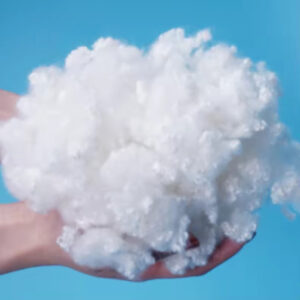
- Key applications: Apparel (shirts, dresses, sportswear, outerwear), home textiles (bedding, curtains, upholstery), nonwovens (hygiene, medical, filtration, automotive), industrial textiles (geotextiles, ropes, belts), bottle fiber fill (pillows, duvets, stuffed toys)
- Variants: Hollow conjugated fiber (HCS) for insulation fill; microfiber for soft-touch textiles; high-tenacity for industrial applications; flame-retardant grades; recycled PET (rPET) from post-consumer bottles
2. Nylon (Polyamide)
Nylon was the world’s first fully synthetic fiber, developed by DuPont chemist Wallace Carothers and first commercialized in 1938 as a replacement for silk in women’s stockings. It is produced from petrochemical monomers through condensation polymerization to form polyamide polymers — most commonly nylon 6 (polycaprolactam) and nylon 6,6 (polyhexamethylene adipamide).

Nylon is characterized by exceptional mechanical properties: it is one of the strongest synthetic fibers, with outstanding resistance to abrasion, impact, and repeated flexing. It absorbs slightly more moisture than polyester (making it more comfortable against skin in some applications) and has a smooth, silk-like surface and lustrous appearance. Nylon was originally developed to replace silk — and in many applications, it succeeds.
- Key properties: Very high tensile strength, outstanding abrasion resistance, flexibility and toughness, moderate moisture absorption, inherent elasticity, good dyeability
- Key applications: Hosiery and lingerie (the original application), activewear and sportswear, swimwear, outdoor and technical apparel, bags and luggage, ropes and cordage, carpet, automotive components, industrial filtration
- Environmental note: Nylon production generates nitrous oxide (N₂O) — a potent greenhouse gas — as a byproduct of adipic acid synthesis. Recycled nylon (from fishing nets, carpet, and industrial waste) significantly reduces this impact
3. Acrylic
Acrylic fiber is produced from polyacrylonitrile (PAN) — a polymer of acrylonitrile — and was developed commercially in the 1950s as a synthetic alternative to wool. Its soft, warm, woolly texture and excellent dyeability at low cost made it enormously successful as a substitute for wool in knitwear, carpets, and blankets.
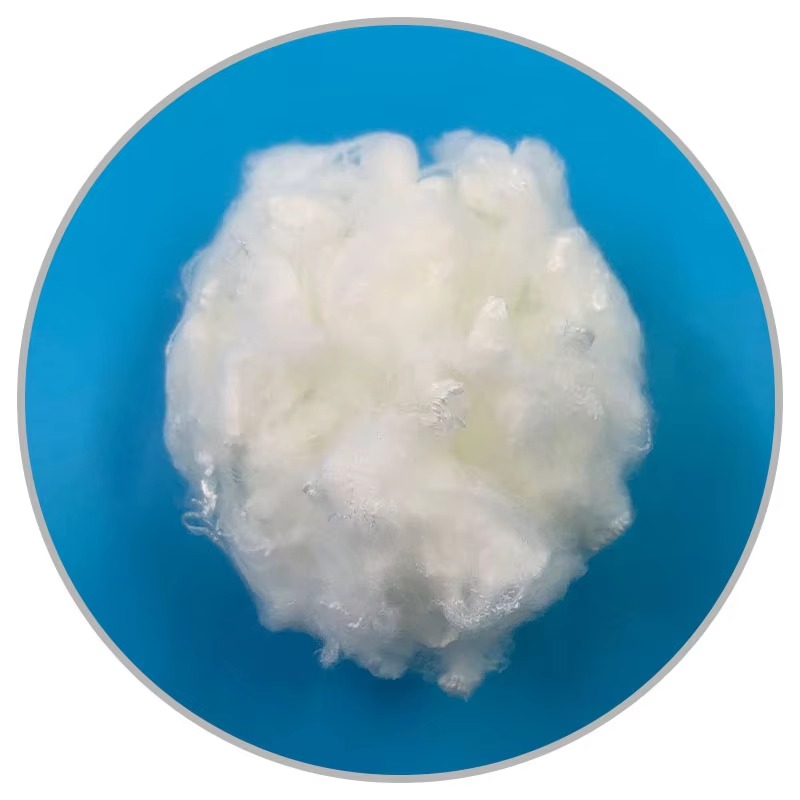
Acrylic is solution-spun (dissolved in a solvent before extrusion) rather than melt-spun, which gives it its characteristic soft, fluffy texture. It can be produced in a wide range of fiber diameters and can be processed into bulked continuous filament (BCF) for carpets or staple fiber for knitwear, mimicking the bulkiness and warmth of wool at significantly lower cost.
- Key properties: Wool-like softness and warmth, very good color retention (excellent dyeability), lightweight, soft to touch, resistant to sunlight and weathering, low moisture absorption
- Key applications: Knitwear (sweaters, socks, scarves), carpets and rugs, outdoor fabrics and awnings, blankets and fleece fabrics, craft yarns, as a fiber precursor for carbon fiber production
- Limitation: Acrylic is not recyclable in the conventional polymer recycling stream and has limited biodegradability — it is one of the more environmentally challenging synthetic fibers
4. Spandex / Elastane (Lycra)
Spandex — also known as elastane (in Europe) and sold under the well-known brand name Lycra (by Invista) — is a synthetic fiber with extraordinary elastic stretch. It can be stretched to 4–7 times its original length and returns almost perfectly to its original dimensions when released. This unique property makes spandex indispensable in any application requiring stretch and shape recovery.
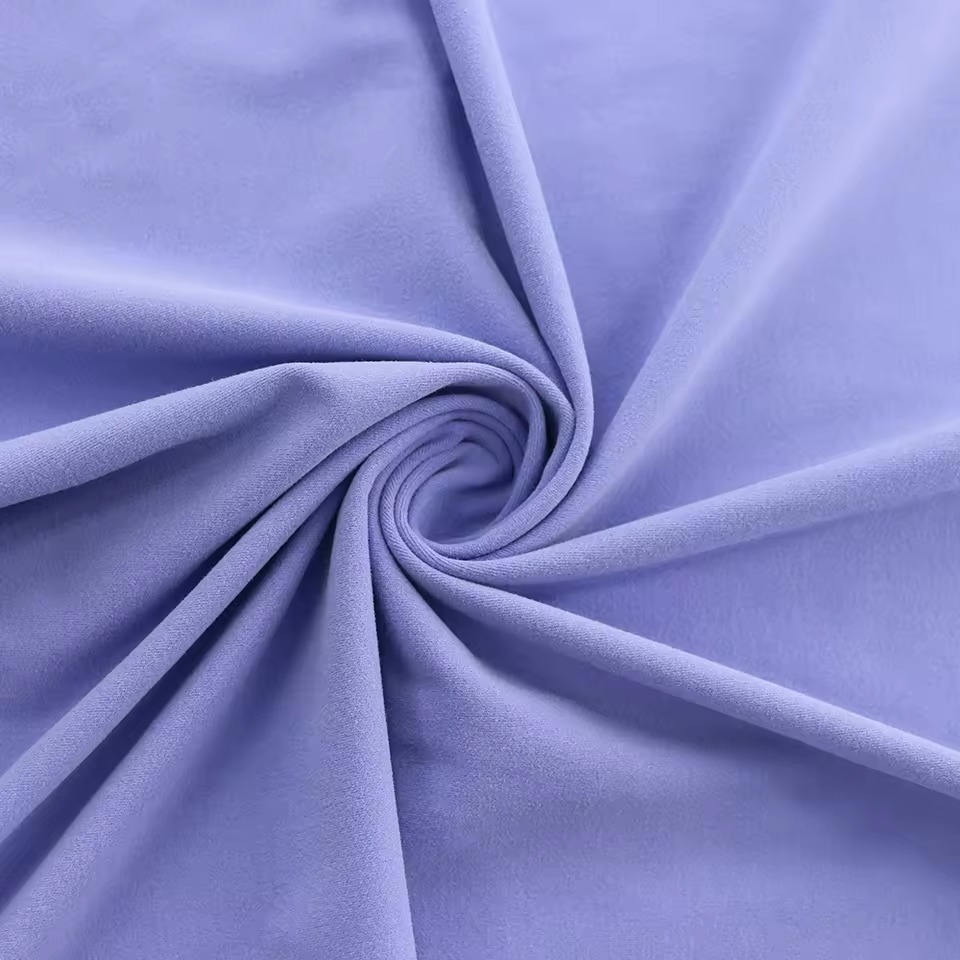
Spandex is produced from segmented polyurethane copolymers — a chemical structure that alternates between rigid (hard) and flexible (soft) polymer segments, giving the fiber its combination of strength and elasticity. It is almost always used in blends (typically 2–20% spandex with cotton, polyester, or nylon) rather than as a 100% spandex fabric, because pure spandex lacks the surface texture and absorbency needed for most apparel.
- Key properties: Exceptional elasticity (400–700% elongation at break), excellent shape recovery, lightweight, resistant to sweat and body oils, smooth surface
- Key applications: Athletic and performance apparel, swimwear, form-fitting fashion, underwear and lingerie, medical compression garments, hosiery, dancewear
- Environmental note: Spandex is not currently recyclable in most standard recycling streams, and its presence in blended fabrics makes those fabrics harder to recycle
5. Polypropylene (PP)
Polypropylene fiber is produced by melt spinning polypropylene resin — a polyolefin polymer with extremely low density (lighter than water) and excellent chemical resistance. PP fiber has very low moisture absorption — making it naturally hydrophobic — and excellent resistance to most acids, alkalis, and solvents. These properties make it valuable in technical and industrial applications.
- Key properties: Extremely light weight (lowest density of all major synthetic fibers), excellent chemical resistance, hydrophobic (wicks moisture), good abrasion resistance, very affordable
- Key applications: Nonwoven fabrics (hygiene products, medical textiles, geotextiles), industrial filtration, rope and cordage, carpet backing, agricultural fabrics, packaging
6. Aramid Fibers (Kevlar, Nomex)
Aramid fibers are high-performance synthetic fibers with exceptional strength, heat resistance, and cut resistance — properties far beyond those of standard textile synthetics. Para-aramid fibers (such as DuPont’s Kevlar) are among the strongest fibers known — often cited as five times stronger than steel by weight. Meta-aramid fibers (such as DuPont’s Nomex) have outstanding thermal stability and flame resistance.
- Para-aramid applications: Bulletproof vests and body armor, cut-resistant gloves, tire reinforcement, aerospace composites, ropes and cables for heavy lifting
- Meta-aramid applications: Protective clothing for firefighters and racing drivers, electrical insulation, aircraft interior panels, industrial safety apparel
7. Polyurethane / Neoprene Technical Fabrics
Polyurethane (PU) and polychloroprene (neoprene) are synthetic rubber-based materials used in technical textile applications where waterproofing, flexibility, and durability are required. Neoprene (polychloroprene) is the standard material for wetsuits and scuba diving equipment, providing thermal insulation in cold water while maintaining flexibility. Polyurethane coatings are applied to textile substrates to create waterproof, breathable membranes — the technology behind performance outerwear fabrics.
8. Carbon Fiber
Carbon fiber is a high-performance technical fiber produced by controlled pyrolysis (high-temperature oxidation) of polyacrylonitrile (PAN) precursor fiber. The process converts the PAN polymer into a nearly pure carbon structure, producing a fiber of exceptional stiffness, strength, and lightness. Carbon fiber is not a textile fiber in the traditional sense — it is a structural material used in composite applications where maximum stiffness and minimal weight are required.
- Key applications: Aerospace components, high-performance automotive bodies and chassis, sports equipment (bicycles, tennis rackets, ski poles), wind turbine blades, marine hull construction
Key Properties of Synthetic Fibers: Advantages and Limitations
Property Dimension | Advantages of Synthetic Fibers | Limitations of Synthetic Fibers |
Durability & Strength | Generally stronger and more abrasion-resistant than most natural fibers; maintain strength through repeated use and washing | Some synthetics degrade under UV exposure over time without stabilizers |
Moisture | Most synthetics dry quickly; many are hydrophobic and moisture-resistant — ideal for outdoor and active use | Low moisture absorption reduces breathability and skin comfort in warm conditions |
Wrinkle resistance | Most synthetic fabrics resist wrinkling far better than cotton, linen, or wool — easy care and low iron requirements | Lower breathability due to tighter weave structures often used to achieve wrinkle resistance |
Dimensional stability | Synthetics resist shrinkage, stretching, and distortion in washing — maintain shape reliably | Some synthetics (nylon) can lose shape under sustained heat |
Cost | Generally cheaper to produce than natural fibers — petrochemical feedstocks and industrial scale keep costs low | Raw material cost tied to oil price volatility |
Versatility | Can be engineered with precise properties; wide range of textures, weights, and performance profiles | Performance characteristics determined at production — harder to modify afterward |
Dyeability | Most synthetics accept synthetic dyes well; some (polyester) require disperse dyes at high temperature | Energy-intensive dyeing processes; some dyes contain restricted substances |
Environmental end-of-life | Technically recyclable (polyester to rPET is commercially established) | Not biodegradable; shed microplastics during washing; most end up in landfill |
Fire behavior | Can be engineered for flame retardance; some synthetics self-extinguish | Standard synthetics melt and drip when burned — a burn hazard risk |
Synthetic Fibers vs. Natural Fibers: A Direct Comparison
The synthetic-vs-natural debate is not a simple one — each category has genuine advantages in specific contexts, and the ‘better’ choice depends entirely on the application, the performance requirements, and the values priorities of the buyer or specifier.
Dimension | Synthetic Fibers | Natural Fibers |
Breathability | Generally lower — most synthetics trap heat and moisture | Generally higher — cotton, linen, wool allow better air circulation |
Moisture absorption | Low — most are hydrophobic (quick-drying) | High — cotton absorbs up to 27% moisture; linen and wool are highly absorptive |
Durability | Higher in most cases — resist abrasion, repeat washing | Variable — some natural fibers (linen, hemp) are very durable; cotton wears faster |
Cost | Generally lower — industrial-scale petrochemical production | Variable — cotton is affordable; linen, wool, silk are premium-priced |
Biodegradability | Not biodegradable — persist in environment for decades to centuries | Fully biodegradable — decompose safely at end of life |
Microplastics | Shed synthetic microfibers during washing — major ocean pollutant | Do not shed persistent microplastic particles |
Carbon footprint | Production generates significant CO₂; oil extraction adds environmental burden | Variable — cotton requires heavy water and pesticide use; linen and hemp are excellent |
Comfort against skin | Many feel hot and clammy in warm weather — lower moisture wicking | Generally comfortable against skin, especially cotton, merino wool, linen |
Wrinkle resistance | Excellent — most synthetics stay smooth with minimal care | Poor to moderate — most natural fibers wrinkle easily |
Recyclability | Polyester technically recyclable (rPET); nylon recyclable; mixed results | Limited mechanical recycling options; natural fiber recycling less developed |
The practical answer for most applications is that blended fabrics — combining natural and synthetic fibers — offer the best balance. A cotton-polyester blend, for example, combines cotton’s breathability and skin comfort with polyester’s wrinkle resistance and durability. A wool-nylon blend for hosiery combines wool’s natural comfort with nylon’s strength and abrasion resistance.
Applications of Synthetic Fibers Across Industries
Apparel and Fashion
The apparel industry is the largest consumer of synthetic fiber globally. Polyester dominates everyday casual and fast-fashion garments for its affordability, wrinkle resistance, and color retention. Nylon is the standard for hosiery, swimwear, and activewear. Spandex/elastane is blended into virtually all form-fitting and performance apparel. Acrylic appears in affordable knitwear and sweaters as a wool substitute. Microfiber polyester produces luxury soft-touch fabrics that simulate cashmere or suede at a fraction of the cost.
Home Textiles
Synthetic fibers dominate home textiles where durability, easy care, and cost are priorities. Polyester fiber batting fills pillows, duvets, mattress toppers, and upholstered furniture. Polyester-cotton blend fabrics are the standard for everyday bedding. Acrylic carpet fiber dominates the residential and commercial carpet market. Polypropylene is the dominant backing material for carpets and rugs. Polyester and nylon nonwoven fabrics are used in furniture linings, fabric stiffeners, and interlinings.
Nonwoven Fabrics and Technical Textiles
Synthetic fibers — particularly polyester and polypropylene — are the foundation of the global nonwoven fabric industry. Nonwoven fabrics made from synthetic fibers are used in hygiene products (diapers, feminine care, wet wipes), medical textiles (surgical gowns, masks, drapes), filtration media (air and liquid filters), automotive interiors (headliners, door panels, trunk liners, carpet), construction (roofing underlays, house wrap), geotextiles (road construction, erosion control, drainage), and packaging.
Automotive
Modern vehicles contain substantial quantities of synthetic fiber — in seat fabrics, headliners, door panel covers, carpet, trunk liners, acoustic insulation nonwovens, underbody shields, and composite structural components. The automotive industry’s relentless demand for lighter components — driven by fuel economy and electric vehicle range requirements — has accelerated the use of high-performance synthetic fiber composites (carbon fiber, glass fiber, aramid) alongside conventional polyester and polypropylene nonwoven components.
Industrial and Technical Applications
Beyond textiles, synthetic fibers serve critical functions across industry: high-tenacity polyester in conveyor belts, ropes, and tire reinforcement; nylon gears and bearings in machinery; aramid in bulletproof armor and heat-resistant protective clothing; carbon fiber in aerospace and automotive composite structures; polypropylene in geotextile and filtration applications; and glass fiber in electrical insulation and composite reinforcement.
Outdoor, Sports, and Performance Textiles
The outdoor and performance apparel sector is one of the most technically sophisticated applications of synthetic fiber. Gore-Tex and similar waterproof-breathable membranes use expanded polytetrafluoroethylene (ePTFE) laminates bonded to synthetic fabric backings. Fleece fabrics — made from polyester — provide exceptional warmth at low weight. Hollow conjugated polyester fill replaces down in synthetic insulated jackets. High-tenacity nylon and polyester are used in ropes, harnesses, tents, and technical packs where failure under load is genuinely dangerous.
The Environmental Impact of Synthetic Fibers
Understanding the environmental impact of synthetic fibers requires an honest assessment across the full lifecycle — from raw material extraction through production, use, and end-of-life disposal.
Raw Material Dependence on Fossil Fuels
The dominant synthetic fibers — polyester, nylon, acrylic, and polypropylene — are all derived from petrochemicals: compounds sourced from crude oil and natural gas. This creates a direct dependency on fossil fuel extraction, with all the associated greenhouse gas emissions and environmental disruption. As long as these fibers are produced from virgin petrochemical feedstocks, their carbon footprint will remain significant.
Microplastic Pollution
One of the most serious environmental concerns associated with synthetic fiber textiles is the shedding of microplastics during washing. Every wash cycle releases hundreds of thousands of tiny synthetic fiber fragments — typically 0.1–5 mm long — that pass through wastewater treatment systems and enter waterways, lakes, and oceans. Studies have found synthetic microfibers in deep ocean sediments, Arctic ice, drinking water, and the bodies of fish, marine mammals, and humans. Estimates suggest that up to one million tonnes of synthetic microfibers enter the oceans annually from textile washing globally.
Addressing the microplastic problem from synthetic textiles is an active area of research and product development — approaches include washing bags that capture shed fibers, filter systems for washing machines, fabric engineering to reduce fiber shedding, and regulatory pressure on microfiber release standards.
Non-Biodegradability and Landfill
Standard synthetic fibers do not biodegrade under natural conditions. A polyester shirt discarded in a landfill will remain structurally intact for decades to centuries. As global textile consumption has grown — driven largely by growth in synthetic fiber use — so has the volume of non-biodegradable textile waste entering landfills and the broader environment.
Energy and Water in Production
Synthetic fiber production is energy-intensive — particularly the polymerization and fiber spinning stages. In 2015, polyester produced for clothing emitted approximately 282 billion kg of CO₂ — nearly three times more than cotton production in the same year. However, synthetic fiber production typically uses significantly less water than cotton cultivation, which requires intensive irrigation in most growing regions. The environmental comparison between synthetics and natural fibers is genuinely complex and depends heavily on what impact dimension is prioritized.
The Path Forward: Recycled and Bio-Based Synthetics
The synthetic fiber industry is actively developing solutions to its environmental challenges — driven by regulatory pressure, brand sustainability commitments, and growing consumer awareness.
Recycled Synthetic Fibers
The most commercially mature sustainable innovation in synthetic fiber is recycled polyester (rPET) — produced from post-consumer PET plastic bottles and other recycled PET waste. rPET fiber delivers equivalent performance to virgin polyester while reducing energy consumption by approximately 30–50% and greenhouse gas emissions by a similar margin. GRS (Global Recycled Standard) certification provides third-party verification of recycled content claims.
Recycled nylon — produced from waste fishing nets (a significant source of ocean plastic pollution), carpet waste, and industrial nylon scrap — is growing rapidly, with Econyl (by Aquafil) being the most recognized commercial brand. Recycled acrylic and recycled spandex remain technically challenging and are in earlier stages of commercial development.
Mechanical recycling — shredding and re-melting existing synthetic textiles into new fiber — is technically feasible for polyester but remains limited by fiber quality degradation over successive recycle cycles. Chemical recycling — depolymerizing used polyester back to monomers for re-polymerization into virgin-equivalent fiber — is being scaled commercially and offers a pathway to a truly circular polyester economy.
Bio-Based Synthetic Fibers
Bio-based synthetics — produced from renewable biological feedstocks rather than fossil fuels — represent the next frontier for reducing synthetic fiber’s carbon footprint. Bio-based polyester (using bio-derived PTA and MEG from plant sugars) can deliver the same performance as petroleum-based polyester with a significantly lower carbon footprint and reduced fossil resource dependence. Bio-based nylon, using castor oil-derived monomers, is already commercially available. PLA (polylactic acid) fiber — derived from corn starch or sugarcane — is biodegradable and commercially available for lower-performance applications.
Biodegradable Synthetics
Addressing the biodegradability gap in synthetic fibers — creating fibers that provide synthetic performance during use but safely biodegrade at end of life — is an active area of fiber innovation. PHA (polyhydroxyalkanoate) fibers produced by bacterial fermentation are biodegradable in soil and marine environments. Modified polyester fibers designed to biodegrade in active composting conditions are in development. These innovations address what may be the most critical environmental limitation of conventional synthetic fibers.
Synthetic Fiber Quick Reference Guide
Fiber | Chemistry | Key Strength | Primary Uses | Sustainability Note |
Polyester | PET polymer | Versatile, durable, affordable | Apparel, home textiles, nonwovens, fill | Recyclable (rPET); most commercially mature recycled synthetic |
Nylon | Polyamide | Strength and abrasion resistance | Hosiery, activewear, ropes, carpet, bags | Recyclable nylon from fishing nets (Econyl); N₂O byproduct of production |
Acrylic | Polyacrylonitrile | Wool-like warmth and softness | Knitwear, carpet, outdoor fabrics | Not currently recyclable; limited sustainability options |
Spandex/Elastane | Polyurethane | Exceptional stretch and recovery | Activewear, swimwear, form-fit garments | Not recyclable in blended fabrics; challenges recycling of blends |
Polypropylene | Polyolefin | Chemical resistance, lightness | Nonwovens, geotextiles, filtration, rope | Technically recyclable; lower production impact than PET |
Aramid | Polyaramid | Extreme strength and heat resistance | Body armor, protective clothing, aerospace | Specialist; energy-intensive production; long lifespan offsets impact |
Carbon fiber | Carbonized PAN | Stiffness and ultra-light weight | Aerospace, automotive, sports equipment | Very energy-intensive production; longevity and lightweighting benefits |
Conclusion: Synthetic Fibers — Essential, Impactful, and Evolving
Synthetic fibers are one of the defining material innovations of the 20th century — enabling the global textile industry to produce affordable clothing, functional technical textiles, life-saving protective equipment, and the nonwoven materials that underpin modern hygiene, healthcare, and industrial infrastructure at a scale that no combination of natural fibers could achieve.
Their environmental impact — fossil fuel dependence, microplastic pollution, non-biodegradability, and greenhouse gas emissions — is real and significant, and cannot be ignored or minimized. But the synthetic fiber industry is not static: recycled polyester from post-consumer bottles is a commercially mature, cost-competitive, and meaningful sustainability improvement; recycled nylon is growing rapidly; bio-based synthetics are emerging; and chemical recycling technologies promise a genuinely circular polyester economy within this decade.
For manufacturers, brands, and buyers working with synthetic fibers, the most impactful choices available today are: specifying recycled content where performance requirements are met (GRS-certified rPET for polyester; recycled nylon for nylon applications); supporting supply chains that invest in wastewater treatment and microfiber capture; and designing products for recyclability and longevity rather than disposability. These are not aspirational ideals — they are commercially available, technically validated choices that are already reshaping the global synthetic fiber industry.
At VNPOLYFIBER, we specialize in recycled polyester staple fiber — including hollow conjugated siliconized (HCS) fiber, solid fiber, dope-dyed fiber, and low melt fiber — produced to GRS certification standards and Oeko-Tex Standard 100. We supply manufacturers across the bedding, automotive, nonwoven, and textile industries who are committed to building quality products with reduced environmental footprint. Contact us to discuss how recycled polyester fiber can meet your performance requirements while supporting your sustainability goals.
Read more:
https://vnpolyfiber.com/classification-of-textile-fibers/
https://vnpolyfiber.com/all-about-synthetic-fibers-and-fabrics/
https://vnpolyfiber.com/synthetic-fibers-vs-man-made-fibers-definitions-and-classifications/
https://vnpolyfiber.com/what-is-natural-fibers/
https://vnpolyfiber.com/all-about-fibers-definition-types-and-applications/