Cotton Fiber: The Complete Guide to Types, Quality Grades, Properties and Applications
Cotton is the most important natural textile fiber in the world—and has been for at least 7,000 years. It clothed ancient civilizations in the Indus Valley and Mesoamerica, fueled the Industrial Revolution’s textile mills in Lancashire and Massachusetts, and today remains the world’s most consumed natural fiber, accounting for roughly 25% of all fiber used globally. Despite strong competition from polyester and other synthetics, cotton’s combination of comfort, breathability, natural feel, dyeability, and biodegradability keeps it the preferred fiber for most skin-contact applications.
Yet ‘cotton’ is not a single fiber—it is a family of varieties with dramatically different quality profiles. The difference between standard Upland cotton (used in everyday T-shirts) and extra-long staple Egyptian cotton (used in luxury bedding) is not superficial marketing — it is measurable in fiber length, fineness, strength, and the resulting fabric quality. Understanding cotton types, their quality metrics, and their appropriate applications is essential knowledge for any textile professional, sourcing team, or buyer working with this foundational fiber.
This complete guide covers what cotton fiber is at the structural and molecular level, the major cotton varieties and species with their distinguishing properties, the five key quality metrics used to grade and specify cotton, the complete properties profile, all major application sectors, cotton’s environmental profile, and how to read and specify cotton for your application.
What Is Cotton Fiber? Structure and Origin
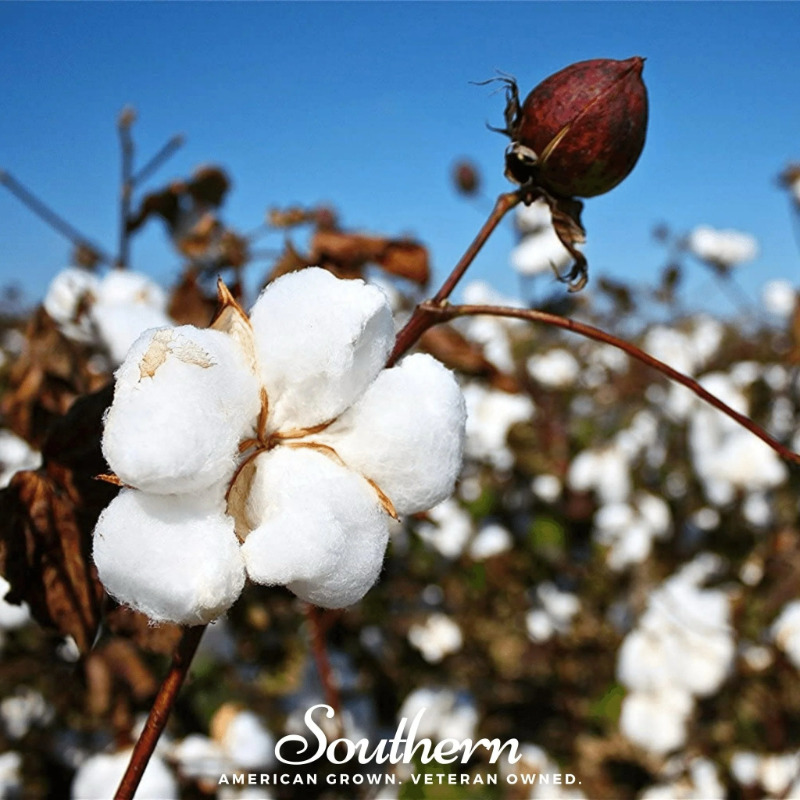
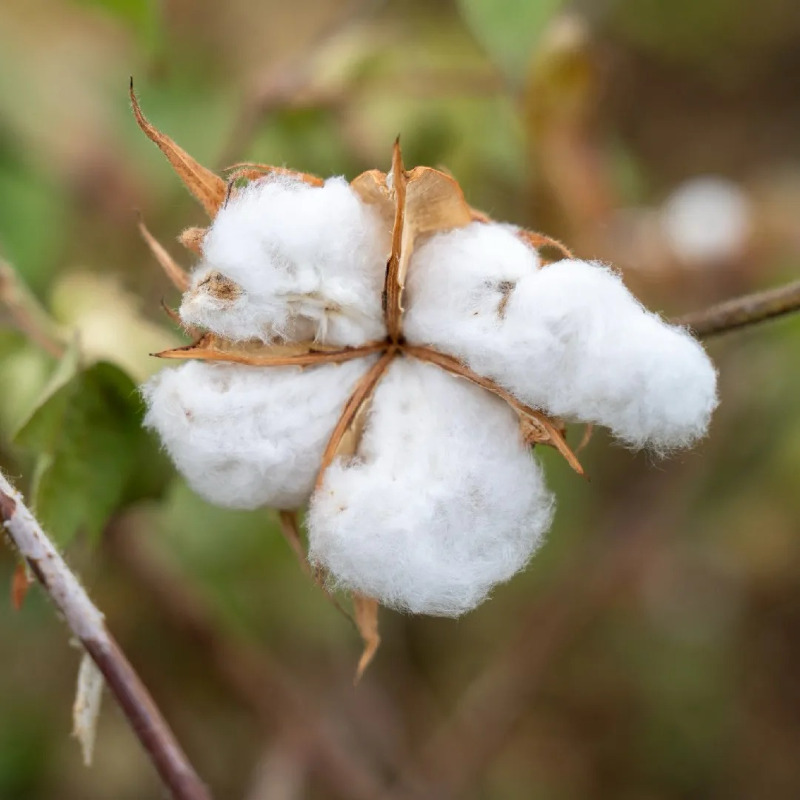
Cotton fiber is the seed hair of plants in the genus Gossypium, family Malvaceae. When the cotton boll (the seed capsule) matures and opens, the fluffy white fibers—each one a single elongated plant cell—are exposed for harvest. Each cotton fiber is essentially a very long, narrow cell with a thick cell wall of almost pure cellulose (approximately 90% cellulose in mature fiber, with the remainder being waxes, proteins, and pectin).
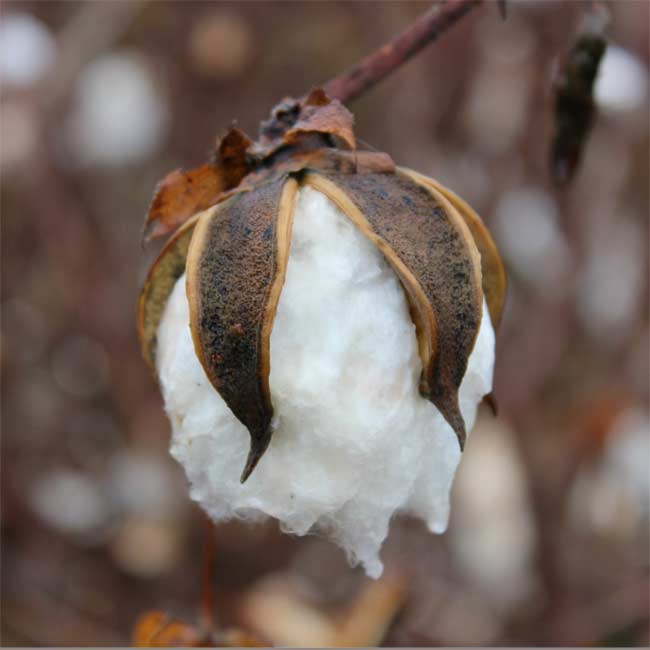
The distinctive kidney-shaped cross-section of cotton fiber—with its characteristic internal hollow channel called the lumen—is central to understanding cotton’s properties. In the immature cotton boll, the lumen is filled with cellular fluid. As the boll ripens and the fiber desiccates, the lumen collapses and the fiber twists along its length. This natural twist — called convolution — is what gives cotton fibers their ability to interlock during spinning, producing cohesive yarns without additional mechanical treatment. It is also responsible for cotton’s characteristic matte surface appearance, as the irregular twisted surface scatters light diffusely rather than reflecting it directionally.
At the molecular level, cotton cellulose is organized in a hierarchical structure: glucose monomers → cellulose polymer chains → elementary fibrils → microfibrils → fibrils → the complete fiber cell wall. This hierarchical crystalline/amorphous structure gives cotton its combination of tensile strength, flexibility, and — critically — its hydrophilicity. The abundant free hydroxyl (OH) groups in the cellulose molecule form hydrogen bonds with water molecules, giving cotton its 8% moisture regain under standard conditions and its characteristic comfort against skin.
The Four Cotton Species: Botanical Classification
Four species of Gossypium are commercially cultivated for fiber, each with distinct fiber characteristics that directly determine quality and appropriate applications:
Species | Common Name | Global Share | Key Fiber Characteristics |
G. hirsutum | Upland Cotton | ~90% | Medium staple (22–32 mm); the workhorse of global cotton supply. Versatile, available, and cost-competitive. Used in the vast majority of everyday apparel, home textiles, and industrial cotton applications. |
G. barbadense | Egyptian, Pima, Sea Island | ~8% | Extra-long staple (35–60+ mm); the premium luxury cotton family. Finer, stronger, smoother, and more lustrous than Upland. The basis of luxury bedding, premium shirting, and high-end apparel. |
G. arboreum | Tree Cotton (Asian) | ~1% | Short to medium staple; grown primarily in South Asia. Lower quality than G. hirsutum for most textile applications; historically important but declining in commercial significance. |
G. herbaceum | Levant Cotton | <1% | Short staple; grows in arid conditions in South Asia and Africa. Coarser than G. hirsutum; limited commercial use in premium textiles. |
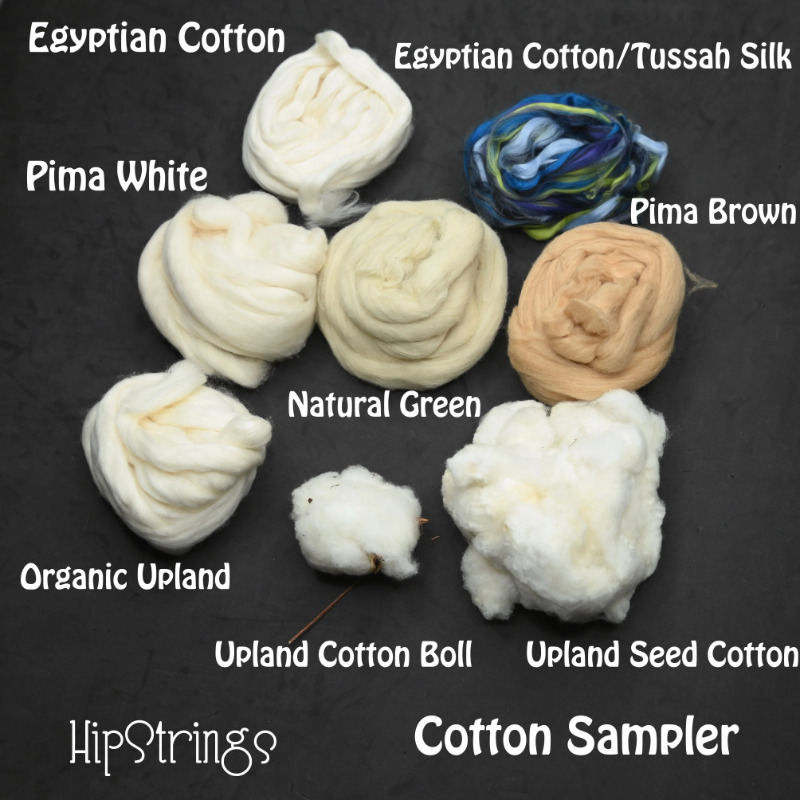
Cotton Types by Variety and Staple Length: The Quality Hierarchy
Within and across the commercial cotton species, a hierarchy of quality varieties exists that is defined primarily by fiber length (staple) and fineness. Understanding this hierarchy is essential for accurate specification and sourcing:
Upland Cotton — The Global Workhorse
Gossypium hirsutum, or upland cotton, accounts for approximately 90% of all cotton produced globally—grown primarily in the United States, China, India, Brazil, Pakistan, and West Africa. Its staple length ranges from 22 to 32 mm (7/8 to 1-1/4 inches), and it is graded as short-staple, medium-staple, or medium-long-staple depending on the specific cultivar and growing conditions.
Upland cotton’s broad availability, reliable performance on standard ring-spinning and open-end spinning equipment, and competitive pricing make it the default fiber for the global cotton textile industry. It produces fabrics that are comfortable, absorbent, and durable—adequate for virtually all mainstream apparel, home textile, and industrial applications. Its limitations are apparent only in comparison with premium long-staple varieties: slightly coarser handle, lower luster, and somewhat less resistance to pilling than ELS cotton.
Egyptian Cotton—The Prestige Benchmark
Grown in the Nile River Valley of Egypt, where unique soil conditions, a long growing season, and an ideal climate produce consistently exceptional fiber, Egyptian cotton (G. barbadense) is extra-long staple (ELS) with fiber lengths typically from 35 to 45 mm and above. The specific cultivars grown in Egypt — primarily Giza varieties (Giza 45, Giza 70, Giza 88, and others) — are characterized by exceptional fineness (low micronaire), high strength, and the characteristic sheen that makes Egyptian cotton fabrics particularly lustrous.
The Cotton Egypt Association (CEA) provides certification for authentic Egyptian cotton — an important distinction, since ‘Egyptian cotton’ labeling has historically been applied to cotton of non-Egyptian origin by some manufacturers. Genuine CEA-certified Egyptian cotton is among the finest available anywhere, commanding a significant premium over Upland cotton and used in luxury bedding, premium dress shirts, and fine apparel where maximum softness, strength, and luster are the design objectives.
A critical property of genuine Egyptian cotton: it becomes progressively softer and more lustrous with each washing as the surface of the long fiber develops through repeated laundering. This is the opposite of lower-quality shorter-staple cotton, which tends to pill and degrade with repeated washing.
Pima Cotton — The American ELS Premium
Pima cotton (G. barbadense) is grown primarily in the southwestern United States (Arizona, California, New Mexico, and Texas), as well as in Peru, Israel, and Australia. Like Egyptian cotton, Pima is extra-long staple, with fiber lengths typically 35–51 mm. It shares the fundamental quality characteristics of ELS cotton — fineness, strength, softness, and luster — and is often considered the American equivalent of Egyptian cotton in quality positioning.
Supima is a registered trademark of the Supima Association of America, certifying 100% American Pima cotton. Supima certification guarantees that the cotton was grown in the USA from certified Pima (G. barbadense) seed and meets minimum fiber length standards (typically 1-3/8 inches / 34.9 mm or longer). Supima-labeled products carry a certification that protects buyers from mislabeling—an issue that has been particularly prevalent in the premium cotton market, where ‘Pima’ and ‘Egyptian’ claims are sometimes applied to standard Upland cotton.
Sea Island Cotton — The Rarest Premium
Sea Island cotton (G. barbadense) was originally cultivated on the Sea Islands of South Carolina, Georgia, and Florida, producing the world’s longest and finest cotton fibers at staple lengths of 45–60+ mm. After largely disappearing from commercial cultivation in the 20th century, Sea Island cotton is experiencing a niche revival through the West Indian Sea Island Cotton Association in Barbados, Antigua, and neighboring islands. It commands the highest price of any cotton variety and is used exclusively in the most rarefied luxury textile applications.
Recycled Cotton — The Growing Sustainable Option
Recycled cotton is produced from post-consumer garment waste or pre-consumer manufacturing offcuts through mechanical recycling (garnetting/shredding of textile waste back to fiber) or chemical recycling (enzymatic dissolution and regeneration). Mechanical recycling shortens fiber length significantly — recycled cotton fibers are typically much shorter than virgin cotton and must usually be blended with virgin cotton or polyester to produce yarn with adequate strength and spinning performance. Chemical recycling preserves cellulose quality better but is currently at a limited commercial scale. Recycled cotton reduces water consumption by up to 20,000 liters per kilogram compared to virgin conventional cotton — one of its most compelling sustainability credentials.
The Five Key Quality Metrics for Cotton Fiber
Cotton fiber quality is measured along five principal dimensions that directly determine spinning performance and fabric quality. Understanding these metrics enables accurate specification and informed sourcing decisions:
Metric | Measurement Range | Why It Matters — Commercial Significance |
Staple Length | Short: <26 mm Medium: 26–32 mm Long: 32–38 mm Extra-Long: 38+ mm | The most important single quality indicator. Longer fibers produce finer, stronger, smoother yarns with less hairiness and better pilling resistance. ELS cotton (Egyptian, Pima) can be spun into yarn approximately twice as fine as short-staple Upland cotton. Luxury bedding and premium shirting specify a 40+ mm staple for the finest, smoothest result. |
Fineness (Micronaire) | Ultra-fine: <2.5 Fine: 2.5–3.6 Mid: 3.7–4.2 Coarse: 4.3–5.0 Very Coarse: >5.0 | Micronaire measures the airflow resistance of a fiber sample—a combined measure of fiber fineness and maturity. Lower micronaire = finer, more mature fiber = softer, smoother yarn potential. Luxury applications specify a micronaire of 3.5–4.2; coarser fibers (micronaire 4.3+) are better suited to industrial and heavy-weight applications. |
Fiber Strength | Weak: <24 g/tex Average: 24–28 g/tex Strong: 29–32 g/tex Very Strong: >32 g/tex | Fiber strength directly determines yarn strength and fabric durability. Higher-strength cotton produces fabrics that withstand more wash cycles, more abrasion, and more mechanical stress before degrading. ELS cottons typically have higher inherent strength than short-staple Upland. |
Length Uniformity | Poor: <77% Fair: 77–79.9% Average: 80–82.9% Good: 83–85.9% Excellent: >86% | Uniformity measures consistency of fiber length within a sample. Higher uniformity means fewer short fibers (neppers) that create defects in yarn and fabric. High-uniformity cotton produces more even yarns and cleaner fabric surfaces. |
Color / Reflectance | Grade Rd. (reflectance) and +b (yellowness) measured by HVI | Color affects dyeability and the appearance of undyed and white fabrics. The whitest, most reflective cotton commands the highest price in white fabric applications. Yellowness is undesirable and increases with field weathering, insect damage, or storage problems. |
Cotton Types Compared: The Buyer’s Reference Table
Variety | Species | Staple | Micronaire | Price Tier | Best Applications |
Upland (standard) | G. hirsutum | 22–32 mm | 3.7–5.0 | Budget–Mid | Everyday apparel, T-shirts, workwear, denim, home textiles, industrial |
Upland (premium grade) | G. hirsutum | 28–32 mm | 3.7–4.2 | Mid | Quality apparel, better home textiles, uniform fabric |
Egyptian (certified) | G. barbadense | 35–45+ mm | 2.5–3.5 | Premium | Luxury bedding (800+ TC sheets), premium dress shirts, fine apparel, hosiery |
Pima | G. barbadense | 35–51 mm | 2.5–3.5 | Premium | Premium T-shirts, luxury bedding, bath towels, high-end apparel |
Supima (certified US Pima) | G. barbadense | 35+ mm | 2.5–3.5 | Premium+ | Same as Pima but with verified US origin and brand-certifiable for marketing |
Sea Island | G. barbadense | 45–60+ mm | <2.5 | Ultra-premium | Finest luxury apparel and accessories; rarefied niche market |
Organic (GOTS certified) | Any species | Varies | Varies | Premium over equivalent. | Children’s products, skin-sensitive applications, premium sustainable fashion |
Recycled cotton | Post-consumer textile | Short (blended) | Varies | Competitive | Blended yarns, nonwoven, industrial; sustainability-driven sourcing |
Key Properties of Cotton Fiber
Property | Detail and Commercial Significance |
Moisture absorption (hygroscopicity) | Cotton absorbs 8% of its weight in moisture under standard conditions — far more than polyester (0.4%), nylon (2.5%), or acrylic. This hydrophilicity is the foundation of cotton’s comfort in warm conditions: absorbed perspiration is transported away from skin through the fiber, enabling evaporative cooling. It is also the reason cotton is the preferred fiber for towels, facecloths, and any application where absorption is the primary functional requirement. |
Strength — wet and dry | Standard upland cotton has a dry tensile strength of approximately 3–5 cN/dtex. A distinctive and commercially valuable property: cotton is approximately 10–20% stronger when wet than when dry—the crystalline cellulose swells and the hydrogen bonding between chains increases with moisture. This wet strength advantage enables cotton to withstand vigorous machine washing without the fiber degradation that wet exposure causes in some other fibers. |
Thermal comfort | Cotton’s combination of moisture absorption, natural fiber texture, and thermal conductivity gives it superior thermal comfort in warm conditions over synthetic alternatives. The fiber does not trap air to the same degree as wool or down, but its moisture management and breathable woven structures make cotton the overwhelming choice for warm-weather and skin-contact apparel. |
Softness | Cotton’s softness varies significantly by variety (Egyptian and Pima ELS cotton is noticeably softer than standard Upland), yarn construction (combed and carded ring-spun is softer than open-end spun), and fabric finishing. Mercerization — treating cotton with concentrated sodium hydroxide — permanently increases the fiber’s luster and dye uptake while also improving softness by swelling the fiber and reducing the natural twist convolution. |
Dyeability | Cotton accepts the broadest range of dye classes of any common textile fiber—reactive dyes (standard for bright, wash-fast colors), vat dyes (for deep, exceptionally fade-resistant colors), direct dyes, and pigment application. The abundant hydroxyl groups in cellulose provide reactive sites for dye molecules, and cotton’s hydrophilicity allows good dye penetration. This broad dye compatibility gives cotton textiles their characteristic color vibrancy and the ability to achieve both bright fashion colors and deep, stable technical dye requirements. |
Wrinkle resistance | Cotton’s low resilience is its most significant practical limitation. Cotton fiber has poor elastic recovery from deformation — when creased by compression, it retains the crease rather than springing back. This is why 100% cotton clothing wrinkles readily and requires ironing. Wrinkle-resist finishing (using crosslinking resins) and polyester blending are the two primary commercial solutions to this limitation. |
Shrinkage | Cotton fabric shrinks — typically 3–10% in the first wash — because the spinning and weaving tension is relaxed when moisture allows the fibers to relax to their natural length. Pre-shrinking (Sanforization) controls but does not eliminate shrinkage. Cotton-polyester blending significantly reduces shrinkage because polyester’s dimensional stability restrains the cotton component from contracting. |
Biodegradability | 100% cotton (without synthetic finishing or blending) is fully biodegradable — it decomposes through microbial action in soil, returning to carbon dioxide, water, and biomass. This end-of-life property distinguishes cotton from synthetic fibers (polyester, nylon, and acrylic) that persist in the environment for decades to centuries and contribute to microplastic accumulation. |
Heat tolerance | Cotton tolerates higher temperatures than synthetic fibers—it can be ironed at the high cotton setting (200°C) and washed at 60°C+ without melting or distorting, which makes it suitable for high-temperature commercial laundering in hospitality and healthcare applications. It chars rather than melting at very high temperatures, making it inherently safer around heat than thermoplastic synthetics. |
From Fiber to Fabric: Cotton Processing Overview
Understanding the processing stages cotton undergoes from raw boll to finished fabric is important for understanding how processing decisions affect final quality:
Ginning: Separating Fiber from Seed
After harvesting—by hand in most of South and Southeast Asia, by mechanical picker or stripper in the US, Australia, and Brazil—seed cotton (cotton fiber still attached to seeds) is transported to gins for separation. Saw gins (used for most upland cotton) use rotating saw teeth to pull fiber away from seeds. Roller gins (preferred for ELS cotton) are gentler and preserve longer fiber integrity — an important distinction for premium cotton varieties where fiber length is critical and saw ginning would reduce staple length. The output of ginning is cotton lint (the clean fiber, packaged into bales) and cottonseed (a valuable co-product used for cottonseed oil, animal feed, and cosmetics).
Opening, Cleaning, Carding, and Combing
At the spinning mill, cotton bales are opened and blended (mixing fiber from multiple bales to average out quality variation). The fiber is cleaned of remaining trash, short fibers, and neps (small fiber tangles) through a series of mechanical processes. Carding — passing fiber through rotating wire-covered rollers — aligns fibers into a continuous web and removes remaining impurities, producing a sliver (a continuous rope of loosely assembled fiber). For premium applications, an additional combing step removes all fibers below a minimum length threshold and further aligns remaining fibers—producing a noticeably more even, smoother, and stronger yarn. Combed cotton yarn is significantly higher quality (and more expensive) than carded-only yarn.
Spinning: Fiber to Yarn
Ring spinning — drawing the carded or combed sliver into a thin strand and twisting it — is the dominant yarn production method for cotton and produces the highest quality yarn with the best strength, smoothness, and hand feel. Open-end (rotor) spinning is faster and cheaper but produces a slightly less even, coarser yarn with lower strength—suitable for mainstream applications but not for premium products. The resulting yarn count (fineness expressed in Ne, Nm, or tex) determines the maximum achievable fabric thread count and fineness: higher-count yarns from longer, finer cotton fibers produce finer, smoother, more expensive fabrics.
Weaving and Knitting
Cotton yarn is converted to fabric by weaving (interlacing warp and weft yarns at right angles on a loom) or knitting (forming interlocking yarn loops). Woven cotton fabrics include plain-weave shirting and sheeting, twill-weave denim and chino, satin-weave luxury bedding, and Oxford-weave structured shirting. Thread count in woven cotton bedding (the number of warp and weft yarns per square inch) is a quality indicator for premium bedding—though meaningful thread count comparisons require that the cotton be the same staple length and yarn count; high thread counts achieved with coarser, lower-count yarns or multi-ply yarns may not reflect superior quality. Knitted cotton—from jersey T-shirts to terry toweling—forms the other major category of cotton fabric construction.
Applications of Cotton Fiber by Sector
Apparel — Cotton’s Home Territory
Cotton is the preferred fiber for the skin-contact apparel categories where breathability and natural comfort are the primary purchase drivers—underwear, base layers, T-shirts, dress shirts, children’s clothing, and casual wear. Denim—one of the world’s most produced fabric categories—is almost universally made from cotton or cotton-dominant blends. Premium dress shirting uses Egyptian or Pima ELS cotton for its softness and luster. Workwear and uniforms use cotton-polyester blends (65/35 or 50/50) to combine cotton’s comfort with polyester’s durability and easy care.
Home Textiles — Bedding and Towelling
Cotton dominates premium bedding fabric—the percale and sateen sheets that consumers associate with quality sleep use combed ring-spun cotton (Upland for mid-market, ELS Egyptian or Pima for premium) with thread counts from 200 to 800+. Terry toweling—the looped-pile construction that gives bath towels their absorbency—is almost exclusively cotton, exploiting the fiber’s hydrophilicity and the loop structure’s high surface area for moisture capture. High-quality bath towels specify long-staple or ELS cotton for exceptional softness and absorbency.
Medical and Hygiene
Cotton’s combination of absorbency, breathability, biodegradability, and skin compatibility makes it the fiber of choice for medical applications where synthetic alternatives would be inadequate: wound dressings and gauze, bandages, surgical swabs and pads, and cotton wool for cleansing and medical use. OEKO-TEX Standard 100 and medical-grade specifications ensure chemical purity. The biodegradability of cotton is particularly important in disposable medical applications where environmental persistence of synthetic alternatives raises disposal concerns.
Industrial Applications
Cotton’s chemical resistance (particularly alkali resistance), high temperature tolerance, and natural fiber properties make it useful in industrial contexts: cotton canvas for heavy-duty bags, covers, and tents; cotton webbing and twine; cotton batting and wadding for heat insulation applications; cotton nonwovens for industrial wiping cloths; and cotton-based paper for currency, archival documents, and technical papers requiring exceptional durability.
Cotton’s Environmental Profile: An Honest Assessment
Cotton’s environmental profile is more complex than simple ‘natural = sustainable’ framing suggests. The key dimensions:
- Water: Conventional cotton requires 10,000–25,000 liters of water per kilogram of fiber, among the highest water demands of any commodity crop. This is particularly problematic in water-stressed growing regions. Organic cotton farming improves water efficiency through better soil management, and organic cotton can use significantly less water in well-managed systems.
- Pesticides: Conventional cotton uses approximately 4% of global insecticide use from roughly 3% of agricultural land—a disproportionate chemical burden with documented impacts on farmworker health, soil ecology, and waterway contamination. Organic and BCI cotton programs significantly reduce but require different approaches to manage this.
- Land use: Cotton requires fertile agricultural land that competes with food production. This is a genuine resource constraint, though well-managed cotton can be part of sustainable mixed farming systems.
- Biodegradability advantage: Unlike polyester and other synthetics, 100% cotton products biodegrade fully at end of life and do not shed persistent microplastics during laundering—a significant environmental advantage over synthetics for consumer applications.
- Recycled cotton potential: Post-consumer cotton recycling is a rapidly developing field. Mechanical recycling is commercially established for some categories; chemical recycling (enzymatic dissolution and regeneration to produce new cellulosic fiber) is advancing toward commercial scale and promises genuine cotton fiber circularity.
How to Specify Cotton: A Buyer’s Checklist
When sourcing cotton fiber, yarn, or fabric for specific applications, these are the specification parameters that matter:
- Botanical species: G. hirsutum (Upland) or G. barbadense (ELS—Egyptian, Pima, Sea Island)? Specify the species for premium applications.
- Staple length: In millimeters. Standard: 25–28 mm. Long staple: 28–34 mm. ELS: 35 mm+. Match to intended yarn count and application.
- Micronaire range: Fine (3.5–4.2) for premium apparel and bedding; mid to coarse (4.3–5.0) for industrial and heavy-weight applications.
- Certification: Organic (GOTS or OCS)? BCI Better Cotton? Supima (verified US Pima)? CEA (verified Egyptian)? Recycled (GRS or RCS)? Specify required certifications in your purchase contract.
- Yarn construction (for yarn specification): Ring-spun or open-end? Combed or carded? Yarn count (Ne)? These determine final fabric quality and price.
- Fabric construction (for fabric specification): Weave type (plain, twill, satin, or Oxford)? Thread count (for woven bedding)? Weight in g/m²? Finishing (mercerized, preshrunk, wrinkle-resistant, brushed)?
Conclusion: Cotton Remains Irreplaceable — For the Right Applications
After more than 7,000 years of cultivation and 200+ years of industrial textile production, cotton remains the world’s most important natural textile fiber—not because of tradition, but because its combination of properties (breathability, moisture absorption, soft natural hand, dyeability, biodegradability, and skin compatibility) is simply not replicated by any synthetic alternative in the applications that matter most to human comfort and health.
The remarkable diversity of cotton varieties—from commodity Upland cotton used in billions of everyday garments to ultra-premium Sea Island cotton used in the world’s finest luxury textiles—means that ‘cotton’ as a specification term is only a starting point. Staple length, micronaire, strength, uniformity, and certification together determine which cotton is actually right for a given application and price point.
The future of cotton includes both the sustainability challenges of conventional production (water, pesticides, and land competition) and the expanding sustainable alternatives that address them: GOTS-certified organic cotton; BCI Better Cotton at scale; Supima and CEA certification protecting premium quality claims from mislabeling; and emerging chemical recycling technology that promises genuine cotton fiber circularity from textile waste. Understanding the full cotton landscape — from botanical variety to quality metrics to sustainability certification — is the foundation for working with this essential fiber intelligently and responsibly.