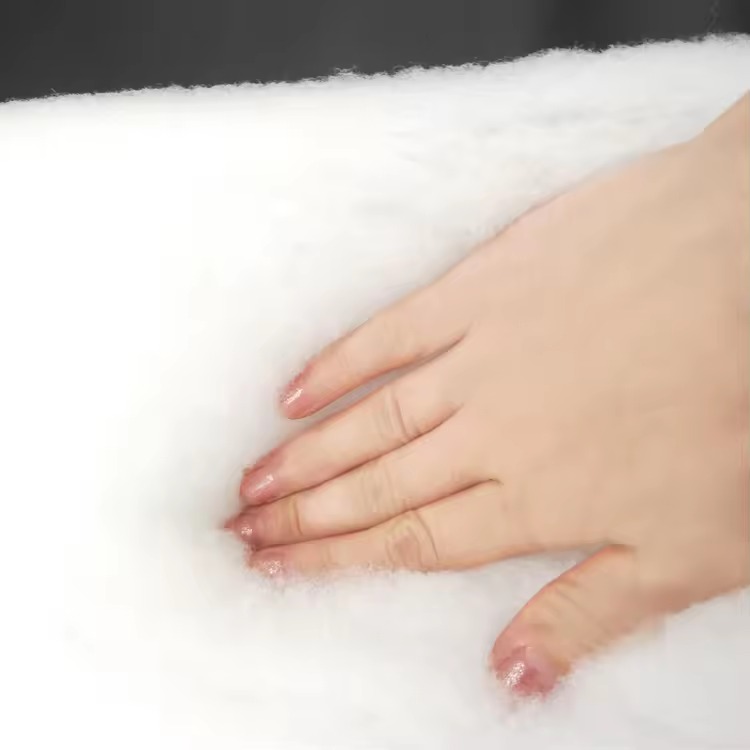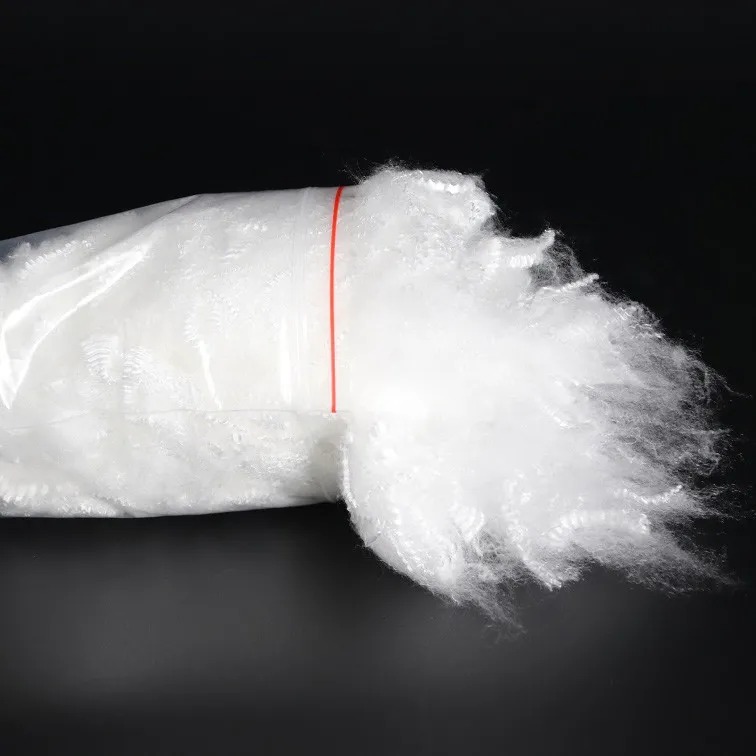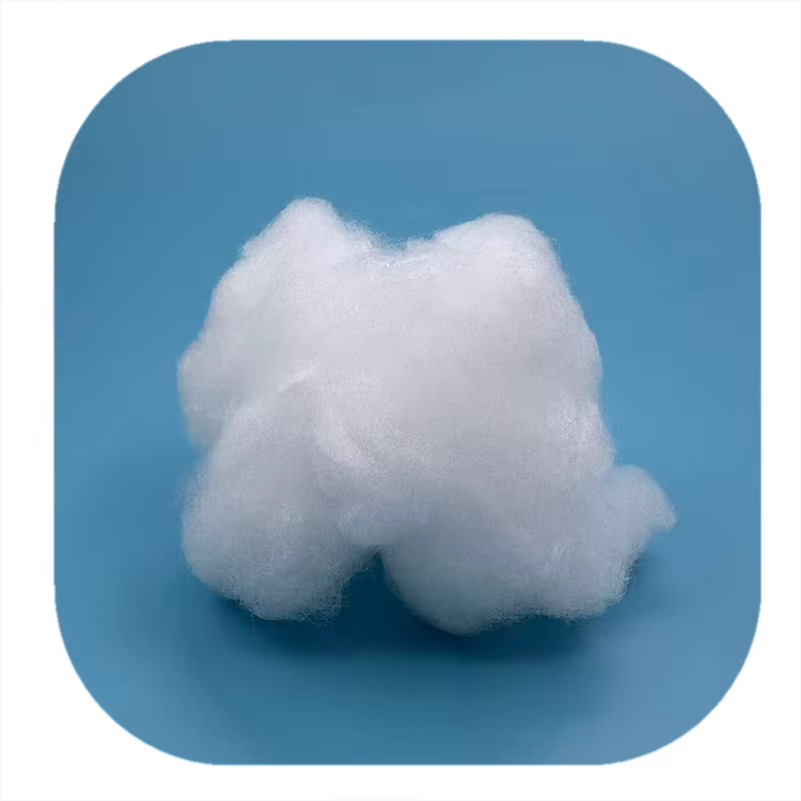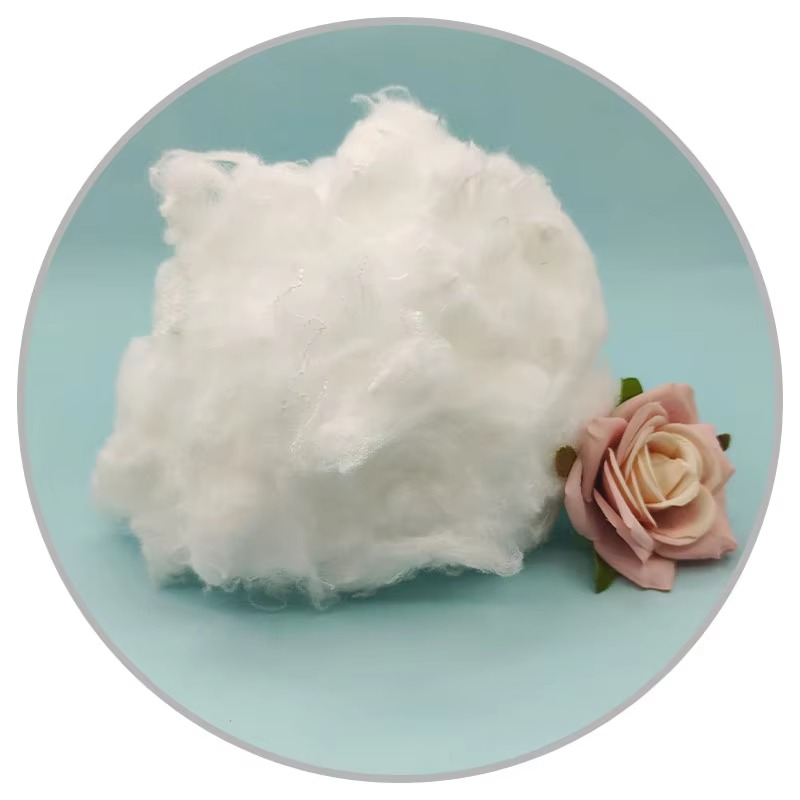
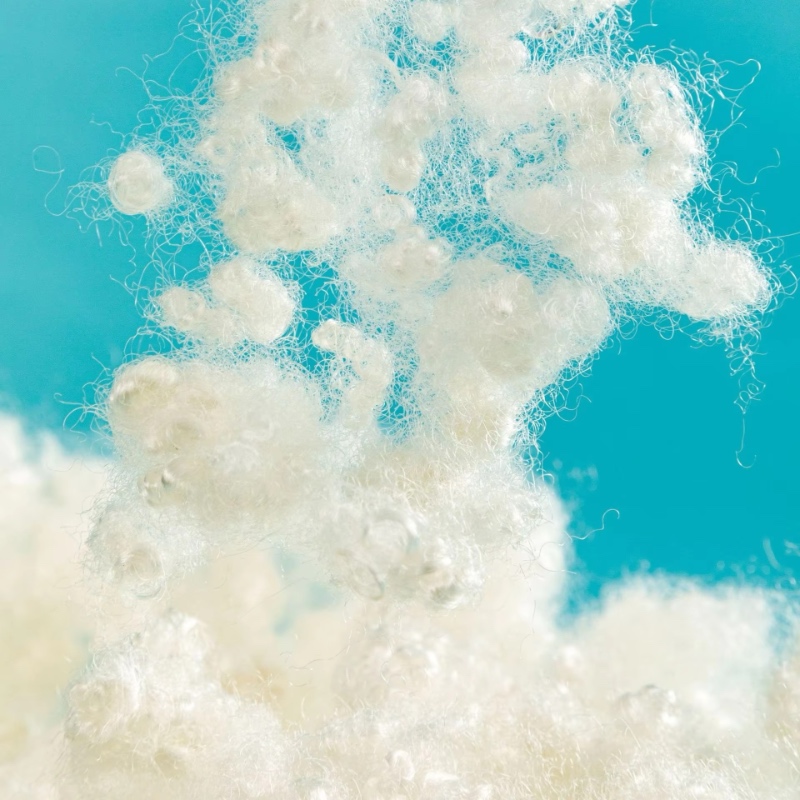
Recycled HCS with OEKO-TEX Class I — Dual-Certified Fill for Children’s Products
PRODUCT DETAIL
Recycled HCS with OEKO-TEX Class I — Dual-Certified Fill for Children’s Products
The Dual Certification Challenge — and Why VNPOLYFIBER Solves It
The combination of GRS recycled content certification and OEKO-TEX Standard 100 Class I chemical safety certification represents the most demanding dual credential in the fill fiber industry. Each certification independently requires significant manufacturing process control and third-party audits. Together, they serve two entirely distinct compliance needs that sustainable children’s brands cannot treat as alternatives to each other.
- GRS certification answers the environmental question: Where did this fiber come from? Is the recycled content claim verified by an independent chain-of-custody audit? Can I make a credible ‘made from recycled materials’ claim on my children’s product? GRS answers yes to all three — with per-shipment Transaction Certificate documentation that holds up to retail buyer audit and consumer scrutiny.
- OEKO-TEX Class I answers the safety question: Is this fiber safe for children under 36 months? Does it meet the strictest restricted substance limits — for heavy metals, formaldehyde, allergenic dyes, phthalates, biocides, and pesticide residues — that apply to products babies may put in their mouths? OEKO-TEX Class I answers yes — with annual re-testing by an accredited laboratory.
- Why both are required: A children’s product that is sustainable but chemically unsafe causes harm. A children’s product that claims recycled content it cannot document exposes the brand to regulatory and reputational risk. The only fully defensible position for a sustainable children’s brand is both certifications, both verified, both current.
VNPOLYFIBER supplies OEKO-TEX Standard 100 Class I certified HCS fill fiber in GRS-certified recycled grades as a standard product — not a custom order, not a minimum volume special run. Both certificates are provided with every shipment.
Understanding OEKO-TEX Class I — What It Tests and Why Class II Is Not Sufficient
OEKO-TEX Standard 100 has four certification classes based on the intended use of the product and the level of human contact:
- Class I (babies and children under 36 months): The strictest class. Required for all products used by babies and young children — stuffed toys, infants’ bedding, children’s clothing. Tests for the most comprehensive list of restricted substances at the strictest limits, because children’s bodies are more vulnerable to harmful substances and because children may ingest them through mouthing.
- Class II (products with direct skin contact): Adult underwear, T-shirts, bedding. Stricter than Class III but significantly less stringent than Class I for many substances.
- Class III (products without direct skin contact): Jacket linings, outerwear, curtains.
- Class IV (decorative materials): Wall coverings, furniture fabrics, curtains.
For any fill fiber used in stuffed toys, children’s pillows, or infants’ bedding: Class I is the legally and commercially required class. Class II is not an acceptable substitute — it does not meet the restricted substance limits required for products used by children under 36 months. Always verify that your fiber supplier’s certificate specifies Class I, not just ‘OEKO-TEX Standard 100’ without the class designation.
How to Verify OEKO-TEX Class I Certification
- Step 1: Request the OEKO-TEX Standard 100 certificate from VNPOLYFIBER. The certificate specifies the certificate number, product category, and OEKO-TEX class.
- Step 2: Verify at oeko-tex.com/en/our-standards/oeko-tex-standard-100 using the certificate number. The public database shows the certificate holder, product category, OEKO-TEX class, and expiry date.
- Step 3: Confirm the certificate has not expired. OEKO-TEX Standard 100 certificates are valid for one year — an expired certificate does not provide current chemical safety assurance. VNPOLYFIBER maintains current certifications; always request the current certificate (not a prior year’s) at the time of ordering.
- Step 4: Confirm the product category covers ‘fiber/fill/stuffing material’ — not just ‘textile product’ generically. The certificate scope must cover the specific product type you are purchasing.
Applications
- Sustainable plush toys and stuffed animals: GRS + Class I. Eco toy brand positioning. Retail sustainability compliance requirement.
- Children’s pillow (age 3+): GRS + Class I. Lighter fill weight per EU child safety guidance.
- Baby comforter and taggy blanket: GRS + Class I. For 0–36 months. Strictest chemical safety standards apply.
- Sustainable children’s bedding brand: Full dual certification package supporting brand-level GRS Scope Certificate.
- Licensed sustainable toy program: Major toy brands increasingly require dual certification for eco product lines.
- Organic and natural baby product brands expanding into fill: GRS recycled fill with Class I allows expansion into fill products while maintaining the brand’s safety credentials.
Communicating dual certification to retail buyers and consumers: GRS label (Textile Exchange licensed logo) with certificate number on hang tag communicates recycled content. OEKO-TEX TESTED FOR HARMFUL SUBSTANCES label with certificate number communicates chemical safety. Both can appear on the same product hang tag. Certificate numbers for both certifications should appear on the product specification sheet provided to retail buyers, enabling independent verification without requesting full certificate documents each time.
Frequently Asked Questions
Q: Can GRS and OEKO-TEX Class I appear on the same product?
Yes — they are completely independent certification systems that can and should both appear on the same sustainable children’s product. The GRS label and certificate number on the hang tag or packaging communicates the recycled content claim. The OEKO-TEX TESTED FOR HARMFUL SUBSTANCES label with certificate number communicates chemical safety. Many sustainable toy and children’s bedding brands carry both labels on the same product as a dual-credential quality signal to consumers.
Q: Does OEKO-TEX Class I cover all the substances tested under EU Toy Safety Directive EN 71?
OEKO-TEX Class I and EN 71-3 (migration of chemical elements from toy materials) test overlapping but not identical substance lists, and they use different test methodologies. OEKO-TEX Class I tests fiber total content of restricted substances. EN 71-3 tests migration of chemical elements from finished toy materials under simulated saliva and gastric extraction conditions. Both may be required by your retail buyer — OEKO-TEX Class I for the fill fiber, EN 71-3 testing for the finished stuffed toy. Check your specific retail buyer’s product compliance documentation requirements for the full list of required tests.
Q: Is the GRS recycled fill genuinely post-consumer recycled — not manufacturing waste?
Yes. VNPOLYFIBER’s GRS-certified recycled fill fiber is sourced from post-consumer PET bottle feedstock — bottles collected from household waste streams after consumer use, not pre-consumer manufacturing offcuts. The GRS Transaction Certificate specifies ‘post-consumer recycled content’ — this designation carries more credibility with consumers, sustainability-focused retailers, and NGOs than pre-consumer claims. It is the more impactful circular economy story: material genuinely rescued from landfill or incineration and given a second life.
Q: What annual re-certification schedule should I plan for?
OEKO-TEX Standard 100 certificates are valid for one year and require annual renewal through re-testing. GRS Scope Certificates for your supplier (VNPOLYFIBER) are also annual. Your brand’s own GRS Scope Certificate (obtained through your certification body) is also annual. Build a certification calendar with renewal dates for all three — your fiber supplier’s OEKO-TEX and GRS certificates, and your own brand’s GRS Scope Certificate — to ensure continuous certification without gaps that would interrupt your ability to make certified claims on products in market.
Internal links to add:
| Stuffed Toy Fill Product | Post-Consumer Recycled PSF
Technical Parameter
Product Specifications
| Grade | Specification | Product Application |
| Baby fill (0–36 months) | rHCS 3D×51mm siliconized | GRS post-consumer + OEKO-TEX Class I. Finest grade. Strictest standards. |
| Standard children’s fill (3+) | rHCS 4D×51mm siliconized | GRS post-consumer + OEKO-TEX Class I. Stuffed toys and children’s pillow. |
| Firm children’s fill | rHCS 6D×51mm siliconized | GRS + OEKO-TEX Class I. Larger structured toys. Cost-efficient dual-certified. |
| Premium sustainable fill | rHCS 3D×51mm siliconized | GRS + OEKO-TEX Class I. Premium sustainable children’s bedding. |
FAQ
1. What do you offer?
We supply a comprehensive range of fibers, including recycled hollow conjugated (both siliconized and non-siliconized) polyester staple fiber, hollow fiber, microfiber, virgin polyester staple fiber, and low-melt fiber.
2. What is it used for?
Our fibers are versatile and widely utilized across both the filling and non-woven industries, providing essential loft, durability, and texture for various consumer and industrial applications.
3. Are you a factory or a trading company?
We are primarily a manufacturer specializing in polyester staple fiber with years of industry expertise. To better serve our clients, we also operate a dedicated trading division that allows us to act as a one-stop solution provider.
In addition to our own fiber production, we source high-quality textile components (such as yarn and low-melt fibers) and finished goods (including foam, pillows, cushions, toys, and down/feather products) to ensure our customers have access to a comprehensive supply chain.
4. Where is your factory location?
To maintain a robust and flexible global supply chain, our manufacturing facilities are strategically located throughout Asia, specifically in Vietnam, China, Malaysia, Thailand, and Indonesia. If you would like to visit one of our sites, please contact your sales representative, and we will be happy to arrange transportation for you.
5. Can you accept free sample?
Yes, we provide free hand samples for quantities under 1 kilogram. Once a price is confirmed, we can prepare and dispatch your sample within 2–3 business days. Please note that while the sample is free, the freight costs are the responsibility of the client.
6. Can you provide ODM service?
Absolutely. We specialize in ODM (Original Design Manufacturing). This means we can customize the material composition, dimensions, quantity, packaging, and branding to meet your specific requirements. Your logo and unique specifications will be integrated into the final product.
7. How about your quality? What’s the minimum order Quantity (MOQ)?
We invite you to place a trial order to experience our quality firsthand. Our standard MOQ is 23,000 kilograms per order.
Regarding pricing, we maintain a no-bargain policy. We believe in transparency and efficiency, so we provide our most competitive offer upfront to save you time and ensure a straightforward procurement process.
8. Can I mix different items in one order?
Yes, for your convenience, we allow for a maximum of two different items to be mixed within a single container.
9. How can you guarantee the product quality?
Quality is the cornerstone of our business. We employ an experienced QC team that monitors every stage of production, from raw material inspection to the final manufacturing process. We utilize a range of advanced testing instruments to ensure our fibers meet strict industry standards.
Our business philosophy is simple: We aim to serve one customer 1,000 times, rather than 1,000 customers once. We prioritize long-term partnerships built on consistent excellence.
10. What’s the payment terms?
L/C at sight, 30% TT in advance are mostly accepted; other terms shall be negotiable by both sides
For more information, please feel free to contact :
Tony Tan
Mobile number: +84 90 466 5251 (Whatsapp/Wechat/Viber/Signal)