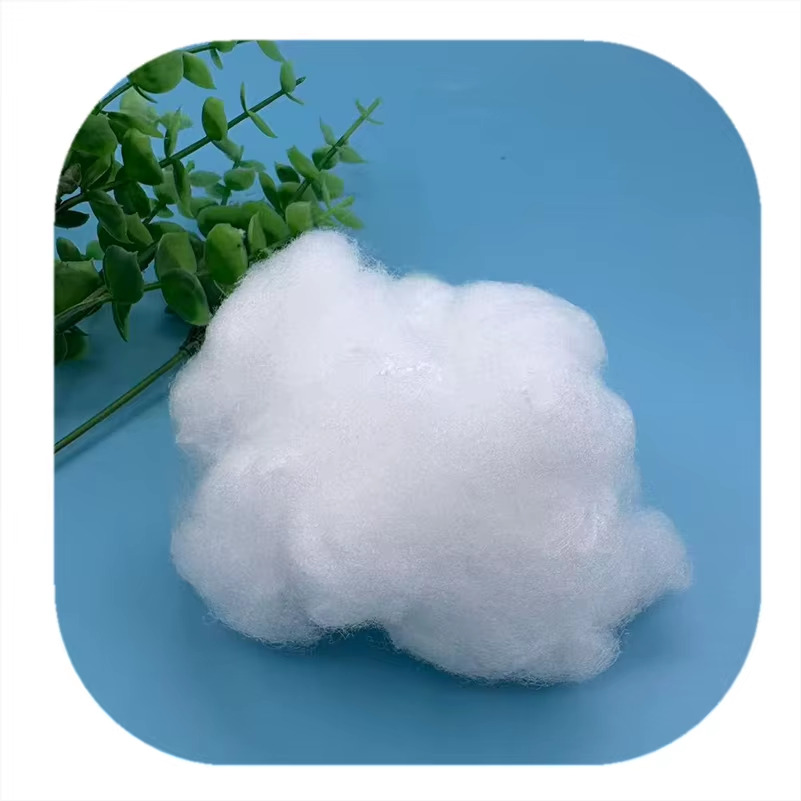
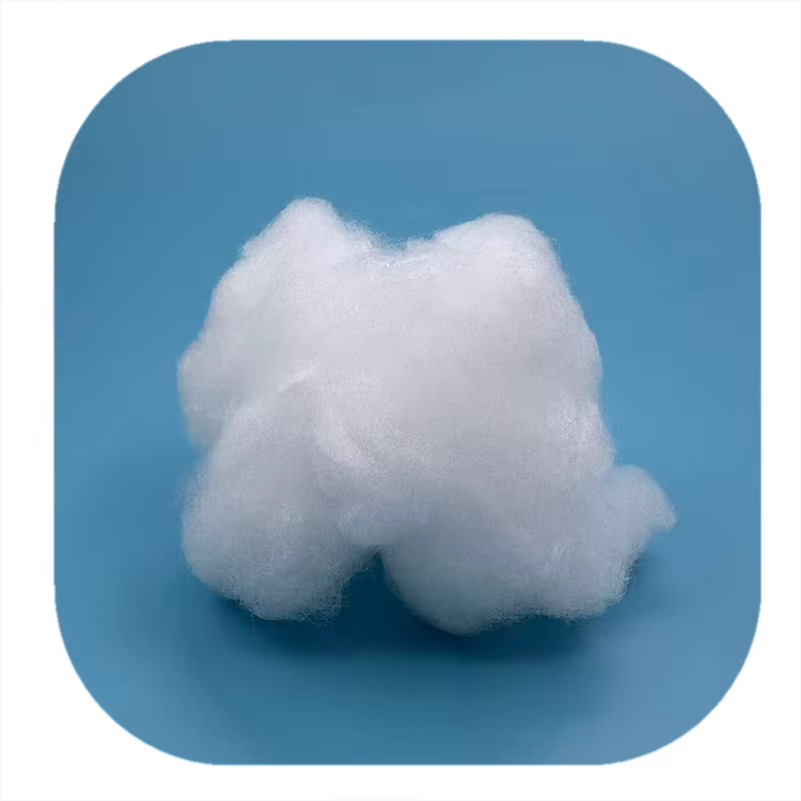
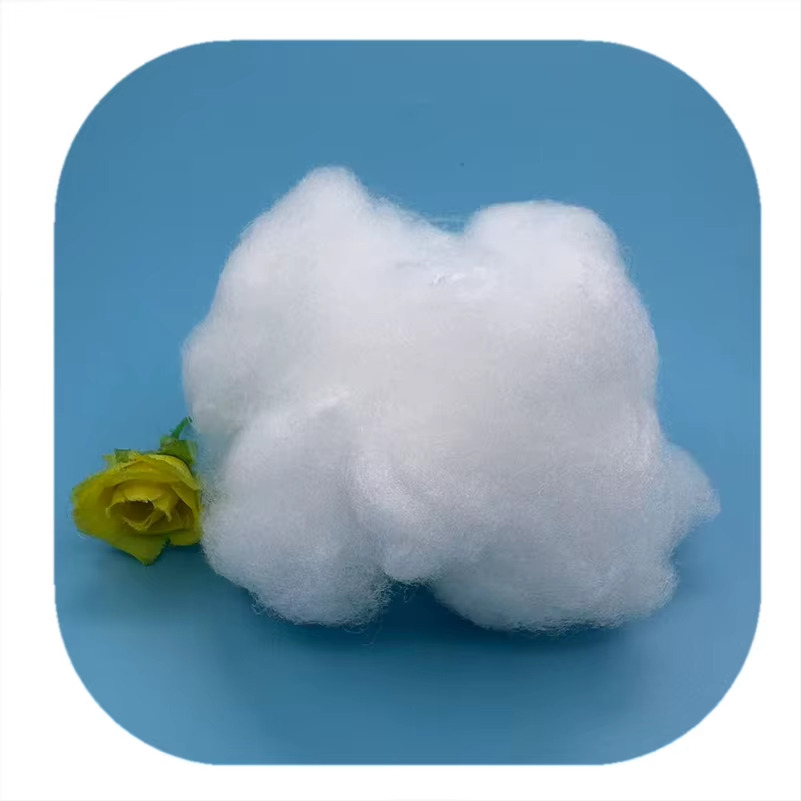
Nylon Staple Fiber — PA6 and PA66 for Technical Nonwoven and Blended Spinning
- Nylon staple fiber offers superior abrasion resistance, elasticity recovery, moisture absorption, and dyeability compared to polyester, making it ideal for demanding textile and technical nonwoven applications.
- PA6 is the standard, lower-cost nylon for most uses, while PA66 provides higher heat resistance for automotive and industrial environments.
- Nylon is commonly blended with polyester to improve durability and flexibility while maintaining cost efficiency and structural stability.
PRODUCT DETAIL
Nylon Staple Fiber — PA6 and PA66 for Technical Nonwoven and Blended Spinning
When Nylon Outperforms Polyester — The Key Property Differences
Nylon (polyamide, PA) staple fiber is not a substitute for polyester staple fiber — it is a different fiber with a distinctly different property profile that makes it the correct specification for specific applications where polyester’s properties are insufficient. Understanding when nylon’s advantages justify its higher cost is the foundation of correct fiber specification in technical nonwoven and blended spinning.
- Abrasion resistance: Nylon’s most commercially important advantage over polyester. Nylon fiber resists surface wear from abrasion 5–10× better than polyester at equivalent linear density. In applications where the nonwoven or yarn must resist repeated mechanical contact — carpet traffic areas, industrial conveyor belt facing, abrasive work surface contact — nylon’s superior abrasion resistance translates directly to longer service life.
- Elasticity recovery: Nylon fiber deforms under stress and recovers more fully and rapidly than polyester. At 10% elongation: nylon recovers approximately 99% of its original length; polyester recovers approximately 95%. At 30% elongation: nylon recovers approximately 89%; polyester approximately 70%. For applications requiring stretch-and-recover performance — hosiery, compression garments, stretch woven blends — nylon’s elasticity recovery is superior.
- Moisture absorption: Nylon absorbs approximately 4% moisture at standard conditions (65% RH, 21°C); polyester absorbs approximately 0.4%. This 10× difference affects comfort in skin-contact applications (nylon feels less clammy in high-sweat conditions than polyester) and affects dyeing behavior (nylon dyes at lower temperature than polyester).
- Acid dye compatibility: Nylon is dyeable with acid dyes across the full color spectrum — including very deep, rich colors and very bright fluorescents that are difficult or impossible to achieve on standard PET with disperse dyes. This full-spectrum dyeability makes nylon the fiber of choice for applications requiring specific color performance that disperse-dyed polyester cannot deliver.
PA6 vs PA66: The Two Main Nylon Fiber Variants
- PA6 (Nylon 6): Produced from caprolactam. Melting point approximately 220°C. Lower melting point than PA66. More widely available globally. Lower cost than PA66. Standard specification for most textile and general nonwoven applications. Slightly higher moisture absorption and slightly better dye uptake than PA66.
- PA66 (Nylon 6,6): Produced from hexamethylenediamine and adipic acid. Melting point approximately 265°C — 45°C higher than PA6. This higher melting point is PA66’s defining advantage: better heat resistance for automotive under-hood applications, industrial high-temperature environments, and applications where dimensional stability at elevated temperature is required. Slightly better chemical resistance than PA6 in some specific chemical environments. Higher cost than PA6.
- Selection guide: For most textile and standard nonwoven applications (carpet, filtration, blended spun yarn) below 150°C: PA6 is the correct and lower-cost specification. For automotive under-hood components, industrial filtration at elevated temperatures, and applications requiring maximum chemical resistance: PA66 is specified.
Blending Nylon with Polyester: What Each Fiber Contributes
- In spun yarn blends (PA/PET): Nylon contributes abrasion resistance and elasticity; polyester contributes dimensional stability, wrinkle resistance, and lower cost. A 30/70 PA/PET blend produces yarn with significantly better abrasion resistance than 100% PET at marginal cost increase. Common in sock yarn, work uniform fabric, and activewear.
- In needlepunch nonwoven blends: Nylon contributes abrasion resistance and surface durability; polyester provides the bulk of the structural fabric strength and cost efficiency. Nylon/PET blended needlepunch is used in premium carpet underlay and industrial floor matting where the nylon surface fibers resist traffic abrasion while the PET provides the structural fabric base.
- In spunlace nonwoven: Fine PA6 (1.5D) blended with fine PET or viscose in spunlace produces a substrate with higher tensile strength than equivalent 100% PET or viscose spunlace, while maintaining the fine, soft surface texture of spunlace fabrics. Used in premium technical wipes and medical nonwoven.
Applications
- Blended PA/PET spun yarn (30–50% PA6): Improved abrasion resistance over pure polyester yarn. Sock yarn, activewear, work uniform fabric.
- Carpet fiber blends (high traffic areas): PA6 for abrasion resistance in traffic areas. Premium appearance retention.
- Technical filtration nonwoven: Nylon’s chemical resistance for specific filtration environments where PET is not compatible.
- Hosiery and compression garment yarn: PA6 fine staple for elasticity recovery and moisture absorption in hosiery blends.
- Spunlace nonwoven substrate (PA6 1.5D): Higher strength than equivalent PET spunlace for premium wipes and medical draping.
- Automotive carpet and floor mat: PA6/PET blend for traffic-area abrasion resistance in vehicle interiors.
Processing note: nylon staple fiber can be carded and processed on standard cotton-system or nonwoven carding equipment without modification. In blended processing with PET, the two fibers mix and card together readily. For thermal bonding of PA/PET blended nonwoven: standard LMF (co-PET sheath, 130°C melt) will bond the PET structural fibers but will not melt the PA fibers (PA6 melt 220°C, PA66 melt 265°C) — the PA fibers are held by the PET/LMF bond network, contributing their abrasion resistance to the bonded structure without themselves melting.
Frequently Asked Questions
Q: What is the key practical difference between PA6 and PA66 for standard nonwoven applications?
For standard nonwoven applications — carpet underlay, filtration, blended spun yarn, spunlace — below 150°C continuous operating temperature and in neutral pH environments, the practical difference between PA6 and PA66 is small. Both perform comparably for abrasion resistance, elasticity, and dyeability. The cost difference (PA66 is typically 15–25% more expensive than PA6) is the primary selection driver in these applications — PA6 is specified unless the application specifically requires PA66’s higher melting point or chemical resistance. For automotive under-hood, rail filtration, or other elevated-temperature applications, PA66 is the correct specification.
Q: Can nylon staple fiber achieve OEKO-TEX Standard 100 certification?
Yes. PA6 and PA66 staple fiber can be OEKO-TEX Standard 100 certified at Class I (babies) or Class II (adults), provided the production process chemistry — including any finishing agents applied to the fiber — is within OEKO-TEX restricted substance limits. Standard nylon fiber production chemistry is generally OEKO-TEX compatible. For skin-contact and children’s product applications, always request and verify the OEKO-TEX certificate for the specific nylon grade.
Q: Is dope-dyed nylon available in colors beyond black?
Yes — dope-dyed PA6 staple fiber is available in black, dark navy, charcoal, dark green, burgundy, and other commercial colors. Color matching to Pantone or RAL reference is available for specialty colors at minimum order volumes. Dope-dyed nylon has excellent UV fastness (Grey Scale 4–5 after 500 hours Xenon arc) and wash fastness (Grade 4–5) — comparable to or slightly better than dope-dyed polyester due to nylon’s lower UV degradation susceptibility. Contact VNPOLYFIBER with your target color reference for feasibility confirmation.
Q: What minimum order applies to nylon staple fiber grades?
VNPOLYFIBER’s minimum order for PA6 and PA66 standard staple grades is one 20-foot container, approximately 15–17 MT depending on grade and packing (nylon is lighter than equivalent denier PET). For specialty grades (dope-dyed colors, high-tenacity specification, very fine denier), minimum orders may be higher due to production run requirements. Pre-production samples of up to 500 kg are available against confirmed commercial orders for new grade qualifications.
Technical Parameter
Product Specifications
| Grade | Specification | Application |
| PA6 standard staple | PA6 1.5D–6D×38–64mm | General textile and nonwoven. Full acid dye color range available. |
| PA66 standard staple | PA66 2D–6D×38–64mm | Higher melting point (265°C). Heat and chemical resistance applications. |
| Colored PA6 (dope-dyed) | PA6 2D–4D×38–51mm, solution-dyed colors | Colorfast, UV-stable. Black, navy, charcoal, red, other colors available. |
| Fine PA6 for spunlace | PA6 1.5D×38mm | Spunlace nonwoven blends. Fine denier for soft, strong substrate. |
| PA6 high-tenacity | PA6 3D–6D×51–64mm, HT grade | For demanding technical nonwoven. Higher tensile specification. |
FAQ
1. What do you offer?
We supply a comprehensive range of fibers, including recycled hollow conjugated (both siliconized and non-siliconized) polyester staple fiber, hollow fiber, microfiber, virgin polyester staple fiber, and low-melt fiber.
2. What is it used for?
Our fibers are versatile and widely utilized across both the filling and non-woven industries, providing essential loft, durability, and texture for various consumer and industrial applications.
3. Are you a factory or a trading company?
We are primarily a manufacturer specializing in polyester staple fiber with years of industry expertise. To better serve our clients, we also operate a dedicated trading division that allows us to act as a one-stop solution provider.
In addition to our own fiber production, we source high-quality textile components (such as yarn and low-melt fibers) and finished goods (including foam, pillows, cushions, toys, and down/feather products) to ensure our customers have access to a comprehensive supply chain.
4. Where is your factory location?
To maintain a robust and flexible global supply chain, our manufacturing facilities are strategically located throughout Asia, specifically in Vietnam, China, Malaysia, Thailand, and Indonesia. If you would like to visit one of our sites, please contact your sales representative, and we will be happy to arrange transportation for you.
5. Can you accept free sample?
Yes, we provide free hand samples for quantities under 1 kilogram. Once a price is confirmed, we can prepare and dispatch your sample within 2–3 business days. Please note that while the sample is free, the freight costs are the responsibility of the client.
6. Can you provide ODM service?
Absolutely. We specialize in ODM (Original Design Manufacturing). This means we can customize the material composition, dimensions, quantity, packaging, and branding to meet your specific requirements. Your logo and unique specifications will be integrated into the final product.
7. How about your quality? What’s the minimum order Quantity (MOQ)?
We invite you to place a trial order to experience our quality firsthand. Our standard MOQ is 23,000 kilograms per order.
Regarding pricing, we maintain a no-bargain policy. We believe in transparency and efficiency, so we provide our most competitive offer upfront to save you time and ensure a straightforward procurement process.
8. Can I mix different items in one order?
Yes, for your convenience, we allow for a maximum of two different items to be mixed within a single container.
9. How can you guarantee the product quality?
Quality is the cornerstone of our business. We employ an experienced QC team that monitors every stage of production, from raw material inspection to the final manufacturing process. We utilize a range of advanced testing instruments to ensure our fibers meet strict industry standards.
Our business philosophy is simple: We aim to serve one customer 1,000 times, rather than 1,000 customers once. We prioritize long-term partnerships built on consistent excellence.
10. What’s the payment terms?
L/C at sight, 30% TT in advance are mostly accepted; other terms shall be negotiable by both sides
For more information, please feel free to contact :
Tony Tan
Mobile number: +84 90 466 5251 (Whatsapp/Wechat/Viber/Signal)