PRODUCT DETAIL
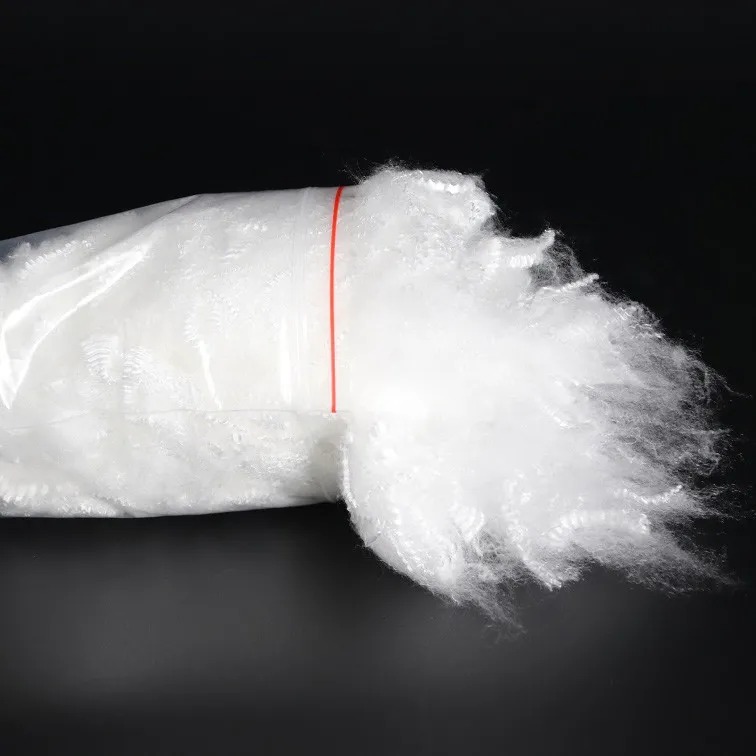
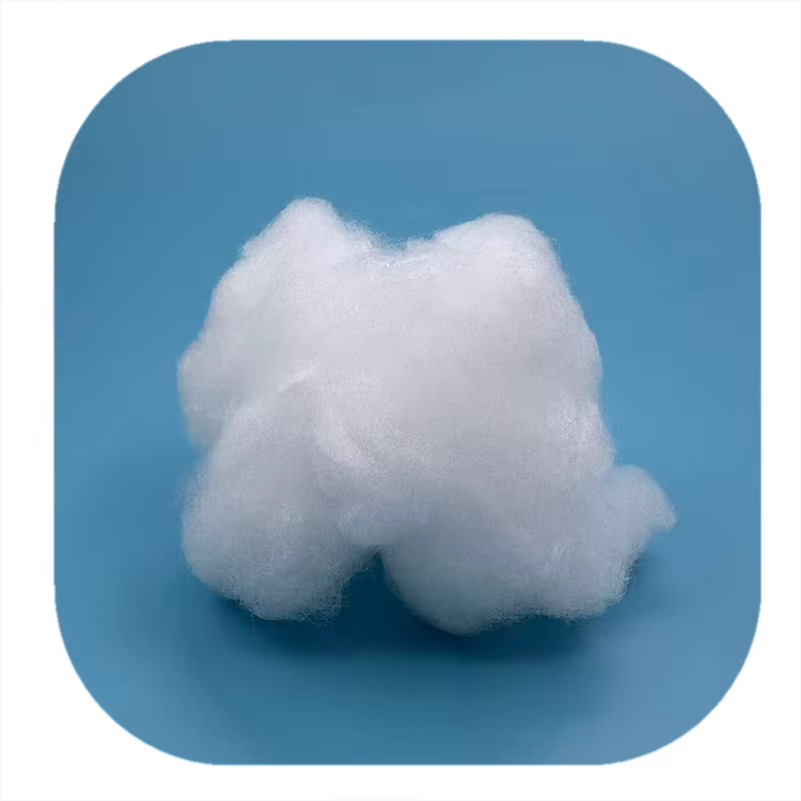
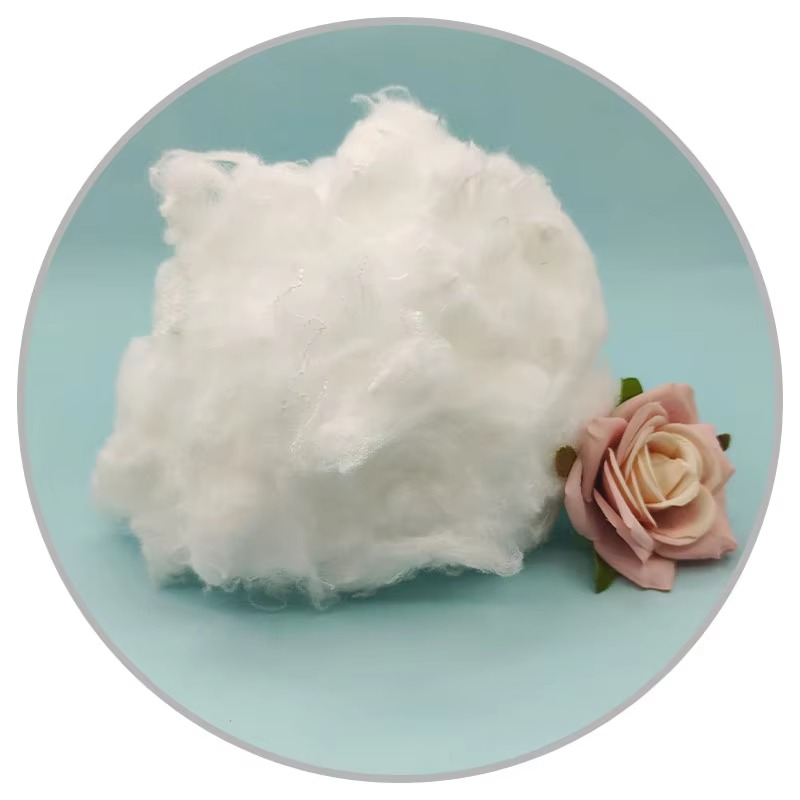
Wadding Production Fiber Package — HCS + LMF Matched for Thermal Bonding Lines
Why the Fiber-Machine Match Matters in Thermal Bonding Wadding Production
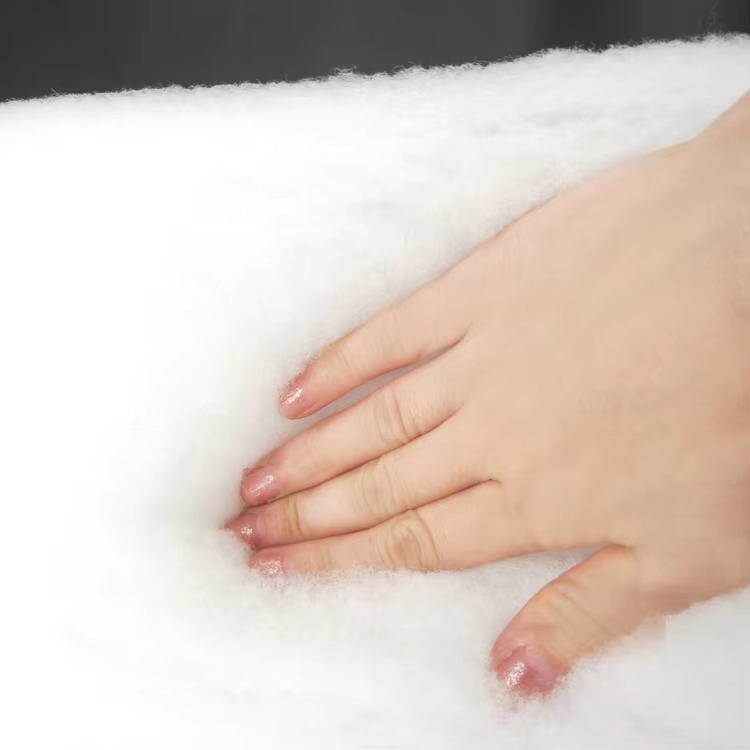
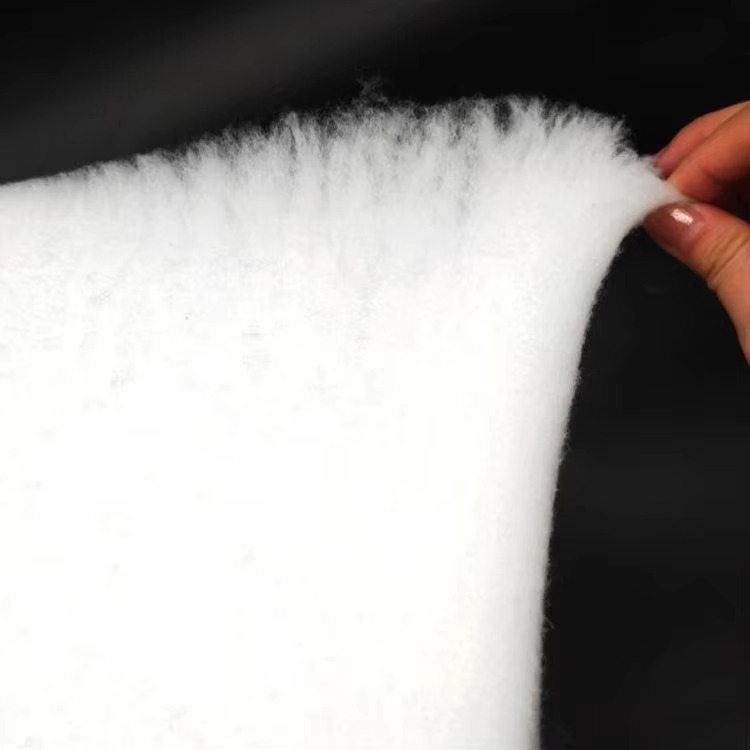
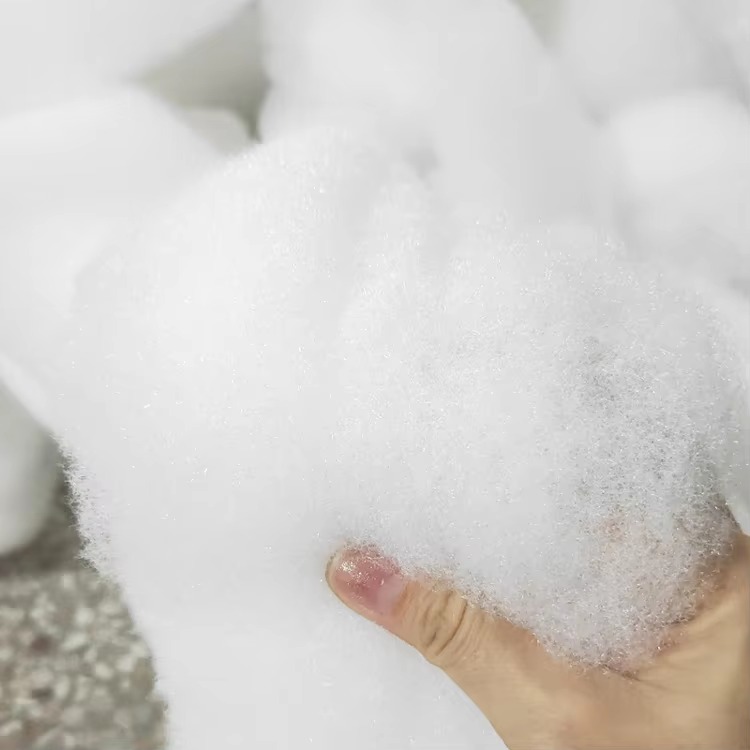
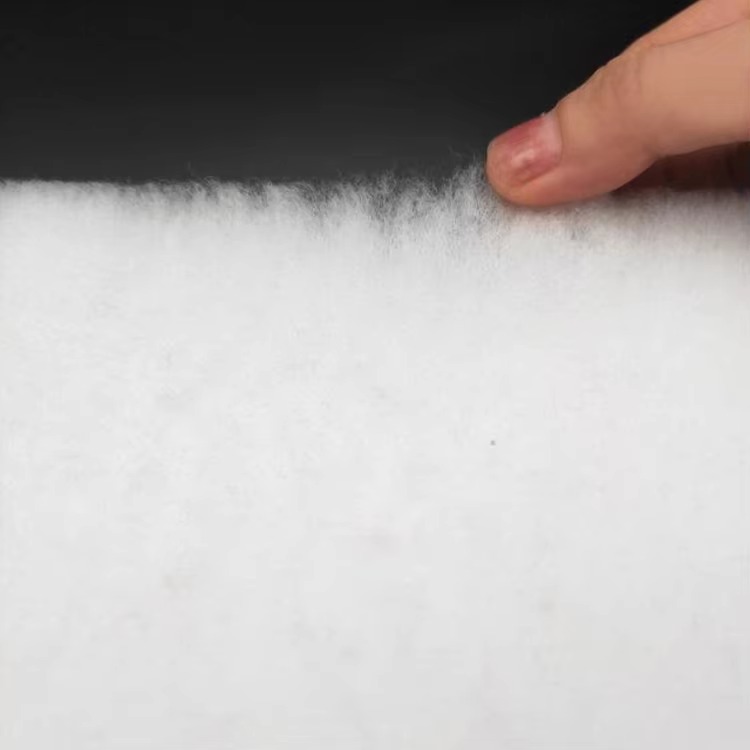
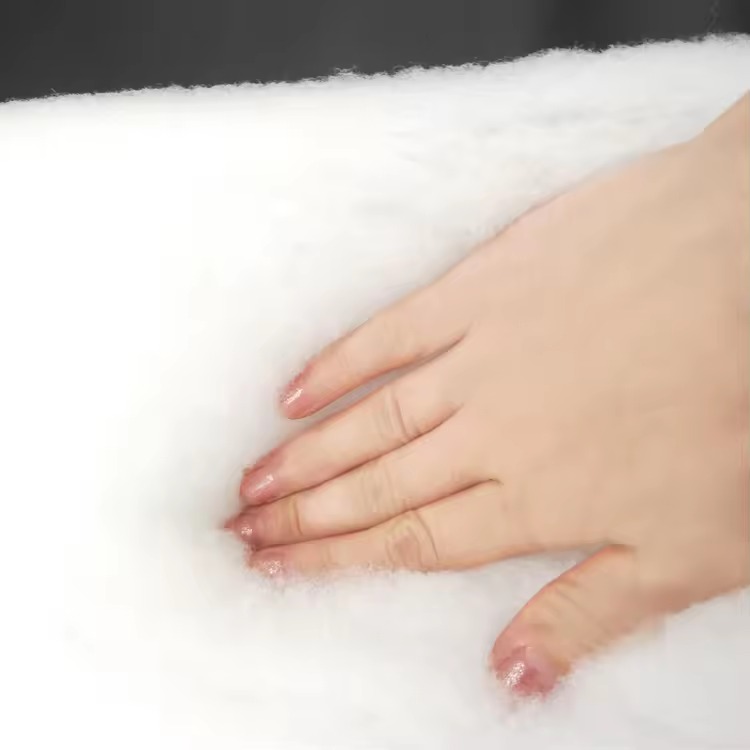
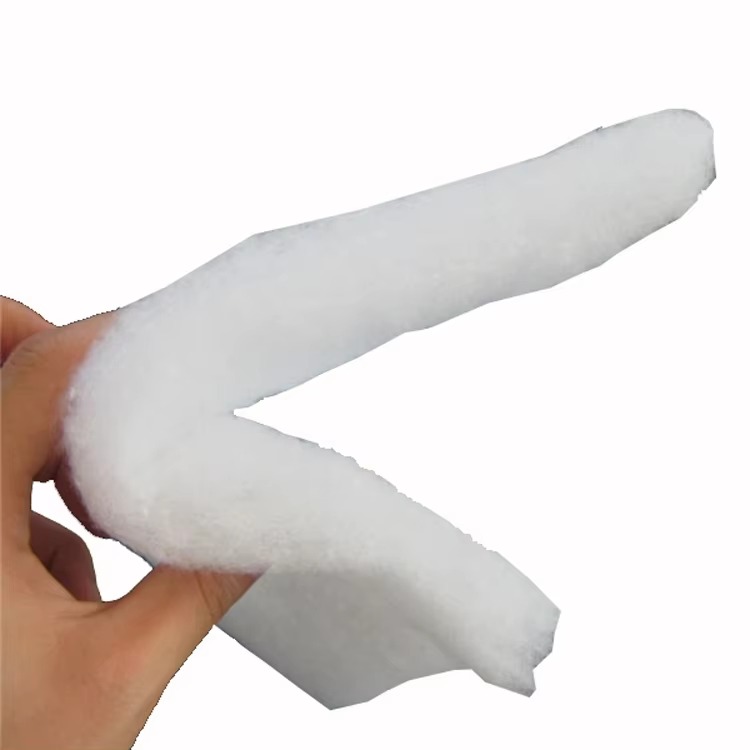
Thermal bonding wadding production requires two fiber types — structural HCS fill fiber and LMF bicomponent binder fiber — that must be matched to each other and to your through-air bonding oven’s temperature parameters. The three-way relationship between HCS specification, LMF sheath melt point, and oven temperature is the critical process variable that determines whether your wadding achieves the right balance of softness, loft, and structural integrity.
- Too low oven temperature (below LMF sheath melt point): LMF sheath does not melt. Bonds are incomplete or absent. Wadding pulls apart easily and sheds fiber when handled. The fabric has no coherent structure — it cannot be quilted or processed. Fix: increase oven temperature in 10°C increments until bonds are complete, or reduce line speed to increase fiber dwell time in the oven.
- Too high oven temperature (above HCS core melt point): HCS fiber begins to melt along with the LMF sheath. The result is a dense, stiff, boardy wadding that has lost its loft entirely — the hollow cross-section collapses, the conjugate crimp is destroyed, and the product is unusable for fill applications. Fix: reduce oven temperature or increase line speed.
- Correct oven temperature window: Optimal through-air bonding operates in the window between the LMF sheath melt point and the HCS core melt point. For 130°C sheath melt LMF + standard PET HCS (core melt ~255°C): optimal oven air temperature is 145–185°C — a 40°C process window. VNPOLYFIBER specifies oven temperature guidance matched to each LMF grade we supply.
LMF Sheath Melt Point Selection Guide
- 110°C sheath melt: For production lines with lower-temperature ovens or where energy reduction is a priority. Oven target: 125–150°C. Narrower process window — requires precise temperature control.
- 120°C sheath melt: Intermediate option. Oven target: 135–160°C. Good process window.
- 130°C sheath melt (standard): The most widely available LMF grade. Widest choice of suppliers. Oven target: 145–185°C. The recommended starting specification for new lines.
- 150°C sheath melt: For ovens running at higher temperatures or where a wider margin below HCS core melt is needed. Oven target: 165–200°C.
Blend Ratio Guide by Application
- 15–20% LMF: Lightweight wadding 30–100 gsm. Outerwear insulation. Soft, lofty. Minimum bonds for structural integrity.
- 20–25% LMF: Standard wadding 100–300 gsm. Bedding batting, mattress comfort layer. Good balance of softness and structural stability.
- 25–30% LMF: Heavy or firm wadding 300+ gsm. Automotive insulation, mattress topper. More bonds = firmer, less lofty product.
Applications
- Outerwear insulation wadding: HCS+LMF 30–150 gsm. Jacket, coat, ski suit insulation layer.
- Duvet batting (pre-bonded): HCS+LMF 150–350 gsm. Stable in duvet shell. No fill migration in use or washing.
- Mattress topper wadding: HCS+LMF 200–500 gsm. Conjugate crimp essential for sustained loft recovery.
- Automotive door panel insulation: 7D HCS+LMF 100–400 gsm. FR treatment available on request.
- Stuffed toy wadding fill: 4D HCS+LMF OEKO-TEX Class I. Pre-bonded sheet cut and injection-filled into toy body.
- Hygiene product coverstock: PE/PP ES bicomponent 100% through-air bonded. Diaper and feminine hygiene top sheet.
Combined order advantage: VNPOLYFIBER coordinates both HCS and LMF components on one purchase order with one set of shipping documentation. We confirm the fiber grades are specification-matched — sheath melt point verified by DSC testing, oven temperature range matched to your equipment — before shipment. You have one commercial relationship managing both fiber types instead of two separate supplier relationships.
Frequently Asked Questions
Q: What oven temperature for 130°C sheath melt LMF with standard HCS?
Optimal through-air bonding oven air temperature for 130°C sheath melt LMF: 145–185°C. The oven must be at least 15–20°C above the sheath melt point for complete bonding, but well below the HCS core melt point (approximately 255°C for standard PET). The 40°C process window for standard 130°C LMF is forgiving — this is why it is the most widely specified grade for new production lines.
Q: Can I source both HCS and LMF from VNPOLYFIBER in one container?
Yes — both components can be combined on one purchase order, one commercial invoice, and one set of shipping documentation. We coordinate production scheduling to ensure both components are available for the same shipment. This simplifies your procurement logistics and guarantees specification matching between the two fiber types.
Q: What happens if my wadding is too stiff after bonding?
Stiff, boardy wadding with low loft indicates over-bonding: oven temperature too high, line speed too low (too much dwell time), or LMF % too high. Diagnosis: reduce oven temperature by 10°C and re-test. If still too stiff, reduce LMF blend ratio by 5% and re-test. If still stiff, confirm the LMF sheath melt point by DSC — incorrect grade specification is the most common cause of consistent over-bonding across temperature adjustments.
Q: Is GRS certified recycled LMF available?
Yes — VNPOLYFIBER supplies GRS-certified recycled LMF bicomponent fiber alongside GRS-certified rHCS. Both components in the recycled wadding package carry GRS chain-of-custody certification, allowing you to supply bonded wadding sheet with documented recycled content for brands with GRS certification programs.
Technical Parameter
Product Specifications — Matched Fiber Packages
| Package | Fiber Specification | Application and Oven Temperature |
| Standard garment package | HCS 4D×51mm + LMF 4D×51mm 130°C (80/20) | Jacket and outerwear insulation. Oven 150–175°C. |
| Fine luxury package | HCS 3D×51mm + LMF 4D×51mm 120°C (80/20) | Luxury wadding. Very soft. Oven 140–165°C. |
| Duvet batting package | HCS 4D×51mm + LMF 4D×51mm 130°C (80/20) | Pre-bonded duvet batt. No fill migration. 150–350 gsm. |
| Mattress topper package | HCS 7D×64mm + LMF 4D×51mm 130°C (75/25) | Firm, durable. 200–500 gsm. Oven 155–180°C. |
| Recycled sustainable package | rHCS 4D×51mm + rLMF 4D×51mm 130°C (80/20) | GRS certified both components. Sustainable wadding brand. |
| Hygiene coverstock package | PE/PP ES 2D×38mm (100%) | Diaper and hygiene top sheet. OEKO-TEX Class I. Oven 135–145°C. |
FAQ
1. What do you offer?
We supply a comprehensive range of fibers, including recycled hollow conjugated (both siliconized and non-siliconized) polyester staple fiber, hollow fiber, microfiber, virgin polyester staple fiber, and low-melt fiber.
2. What is it used for?
Our fibers are versatile and widely utilized across both the filling and non-woven industries, providing essential loft, durability, and texture for various consumer and industrial applications.
3. Are you a factory or a trading company?
We are primarily a manufacturer specializing in polyester staple fiber with years of industry expertise. To better serve our clients, we also operate a dedicated trading division that allows us to act as a one-stop solution provider.
In addition to our own fiber production, we source high-quality textile components (such as yarn and low-melt fibers) and finished goods (including foam, pillows, cushions, toys, and down/feather products) to ensure our customers have access to a comprehensive supply chain.
4. Where is your factory location?
To maintain a robust and flexible global supply chain, our manufacturing facilities are strategically located throughout Asia, specifically in Vietnam, China, Malaysia, Thailand, and Indonesia. If you would like to visit one of our sites, please contact your sales representative, and we will be happy to arrange transportation for you.
5. Can you accept free sample?
Yes, we provide free hand samples for quantities under 1 kilogram. Once a price is confirmed, we can prepare and dispatch your sample within 2–3 business days. Please note that while the sample is free, the freight costs are the responsibility of the client.
6. Can you provide ODM service?
Absolutely. We specialize in ODM (Original Design Manufacturing). This means we can customize the material composition, dimensions, quantity, packaging, and branding to meet your specific requirements. Your logo and unique specifications will be integrated into the final product.
7. How about your quality? What’s the minimum order Quantity (MOQ)?
We invite you to place a trial order to experience our quality firsthand. Our standard MOQ is 23,000 kilograms per order.
Regarding pricing, we maintain a no-bargain policy. We believe in transparency and efficiency, so we provide our most competitive offer upfront to save you time and ensure a straightforward procurement process.
8. Can I mix different items in one order?
Yes, for your convenience, we allow for a maximum of two different items to be mixed within a single container.
9. How can you guarantee the product quality?
Quality is the cornerstone of our business. We employ an experienced QC team that monitors every stage of production, from raw material inspection to the final manufacturing process. We utilize a range of advanced testing instruments to ensure our fibers meet strict industry standards.
Our business philosophy is simple: We aim to serve one customer 1,000 times, rather than 1,000 customers once. We prioritize long-term partnerships built on consistent excellence.
10. What’s the payment terms?
L/C at sight, 30% TT in advance are mostly accepted; other terms shall be negotiable by both sides
For more information, please feel free to contact :
Tony Tan
Mobile number: +84 90 466 5251 (Whatsapp/Wechat/Viber/Signal)