News

Synthetic Fibers vs Man-made Fibers: Definitions and Classifications

What are synthetic fibers? 

Synthetic fibers are artificial fibers; they are made from synthetic polymers, which come from oil, coal, and other petroleum-based chemicals (monomers). The process of joining these monomers is known as polymerization, is petroleum-based, and then the mixed polymers are spun (twisted) into yarn.

Synthetic fibers, like acrylic, nylon, and polyester, are grouped by the polymer used. There are others you may be aware of, such as nylon and elastane (Lycra), polyvinyl chloride (PVC) and polypropylene (used in carpets). Companies around the world make synthetic fibers in chemical plants and give them trade names. DuPont produces elastane fibers under the trade name Lycra, and it invented the polyamide known as nylon in 1938.

Microfibers are thin hair-like fibers made from polyamide or polyester. These fibers can be made up to 60 times thinner than human hair, which makes them lightweight; they are strong and water-repellent but also absorbent and breathable, and they have an excellent handle or feel. The most common products made from microfibers are underwear, sportswear, hosiery, and water-repellent outdoor wear, but designers are using these fibers more and more in their fashion collections. Tactel Micro is often seen today as a label on sportswear or underwear; Meryl Micro is used in active sportswear.

Tactel Aquator was designed by DuPont for its moisture management properties. It is a non-absorbent fiber, Lycra, that takes moisture away from the body.

Hi-tech, durable fibers such as Kevlar and Cordura were developed for industrial use, but they are now being used for active outerwear for many extreme sports and activities that require a high degree of resistance to abrasion.

Main properties of Synthetic fibers and fabrics

Synthetic fibers can be developed to have many different appearances and properties. They can be filament or staple fibers, bulked or composted for more volume, made as microfibers, or encapsulated with chemicals for antibacterial or scenting purposes.

Because synthetic fibers are plastics based, they have thermosetting and thermoplastic properties. These allow the fibers to be manipulated using heat to create permanent pleats in fabrics and add textures, similar to some listed below:

Man-made fibers are fibers in which either the basic chemical units have been formed by chemical synthesis followed by fiber formation or the polymers from natural sources have been dissolved and regenerated after passage through a spinneret to form fibers. These heat-to-fibers were successful when the researchers obtained a product through condensation. These are molecules presenting two reactive aminic groups with molecules characterized by the condensation of two reactive carboxylic groups.

The fiber achieved success when the researchers obtained a product (polymerized amide, from which the name “polyamide” is derived) characterized by the condensation of molecules presenting two reactive aminic groups (hexamethylenediamine) with molecules characterized by two reactive carboxylic groups (adipic acid). To be differentiated from other polymers belonging to the same chemical class, this polymer was marked with the acronym “6.6,” the condensation of which indicates the number of carbon atoms (that is, “6.6” or 6) in the two molecules forming the repetitive polymer unit.

Man-made Fibers

The history of man-made fibers is less than a century old; until 1910, there were no synthetic or chemical fibers. Today, by mixing different components, manufacturers can take the basic fibers listed below and make them more waterproof or more absorbent, warmer or cooler, thicker or thinner, or stiffer or more supple. Some, like polyester and spandex, combine well with natural fibers, making fabrics that wrinkle less or are more form-fitting.

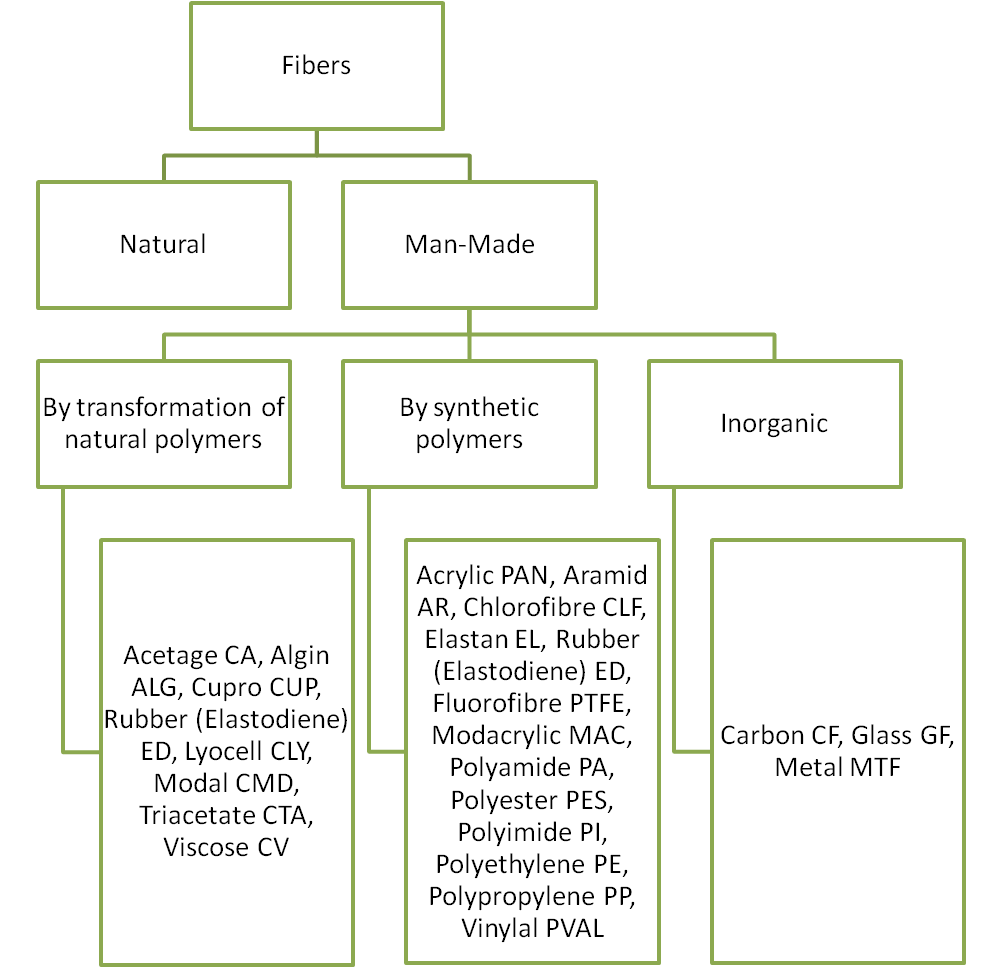
Man-made Fiber Classification

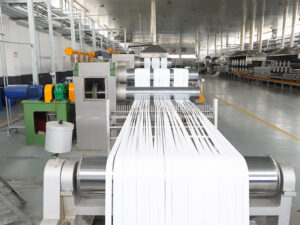
Manmade Fiber Production
Man-made Fiber Production

By Chemical Composition

According to the chemical composition of synthetic fibers, they can be divided into two categories: inorganic synthetic fibers and organic synthetic fibers. Examples of inorganic synthetic fibers are carbon fibers, glass fibers, boron fibers, etc. Examples of organic synthetic fibers are aramid fibers, polyester fibers, polyamide fibers, acrylic fibers, and so on.

By Aspect Ratio

According to the aspect ratio, it is divided into short fiber and long fiber. Aspect ratio is defined as the ratio of fiber length to diameter. Short fibers, also called discontinuous fibers, have an aspect ratio between 20 and 60. Long fibers, also called continuous fibers, have an aspect ratio between 200 and 500.

Novel Synthetic Fibers

With the development of fiber manufacturing technology, some novel synthetic fibers have also received extensive attention, such as easily dyeable synthetic fibers, microfibers, high-performance fibers, nanofibers, etc. Dyeable synthetic fibers mainly include cationic dyeable polyester fibers, cationic deep-dyed polyamide fibers, and acid dyeable polyacrylonitrile fibers and polypropylene fibers. The linear density of ultra-fine fiber is 0.11-0.55 dtex, and it can be produced by the two-component composite splitting method, sea-island method, and melt-blown method. High-performance fibers are usually distinguished by their special properties, such as high strength and high modulus; high adsorption; high elasticity; high temperature resistance and flame retardancy; light guide; electrical conductivity; high efficiency separation; radiation protection; reverse osmosis; corrosion resistance; medical and drug fibers; and other fiber materials. “Nanofibers” generally refer to fibers less than 100 nm in diameter, which may have surface effects, small size effects, or quantum size effects.

Advantages And Disadvantages

Synthetic fibers generally have the following advantages and disadvantages compared to natural fibers.

Advantages

  • Long-lasting
  • Readily pick-up to various dyes
  • Stretchable
  • Waterproofing
  • Non-biodegradability
  • Moisture resistance
  • Strain and wear resistance

Disadvantages

  • Flammable
  • Prone to heat damage
  • Melt easily
  • Not eco-friendly
  • Cause for microplastic pollution
  • Not suitable for hot washing
  • Poor insulation capacity

Properties

Here are some performance references for common synthetic fibers.

Fiber typeFiber Diameter (0.001 in)Specific GravityTensile Strength (Ksi)Elasticity Modulus (Ksi)Elongation at Break (%)Water Absorption (%)Melting Point (°C)Maximum Working Temp (°C)
Steel4-407.870-38030,0000.5-3.5nil1370760
Glass0.3-0.82.5220-58010,400-11,6002-4N/A13001000
Carbon0.3-0.350.90260-38033,400-55,1000.5-1.5nil3652-3697N/A
Nylon0.91.1414075020-302.8-5.0220-265199
Acrylics0.2-0.71.14-1.1839-1452,500-2,80020-401.0-2.5Decomp180
Aramid0.4-0.51.38-1.45300-4509,000-17,0002-121.2-4.3Decomp450
Polyester0.4-3.01.3840-1702,5008-300.4260170
Polypropylene0.8-8.00.965-100500-75010-20nil165100
Polyethylene
Low
High
1.0-40.00.92
0.95
11-17
50-71
72525-50
20-30
nil
nil
110
135
55
65

Characteristics and usage of Man-made Fibers

TypeCharacteristicMajor Uses
ACETATE
  • Luxurious feel and appearance
  • A wide range of colors and lusters
  • Excellent drapability and softness
  • Relatively fast-drying
  • Shrink-, moth-, and mildew-resistant
  • Apparel: Blouses, dresses, and foundation garments. Lingerie, linings, shirts, slacks, and sportswear.
  • Fabrics: Brocade, crepe, double knits, faille, knitted jerseys, lace, satin, taffeta, tricot.
    Home Furnishings: Draperies and upholstery.
  • Other: Cigarette filters, fiberfill for pillows, quilted products
ACRYLIC
  • Soft and warm
  • Wool-like
  • Retains shape
  • Resilient
  • Quick-drying
  • Resistant to moths, sunlight, oil, and chemicals
  • Apparel: Dresses, infant wear, knitted garments, ski wear, socks, sportswear, sweaters.
  • Fabrics: Fleece and pile fabrics, face fabrics in bonded fabrics, simulated furs, jerseys.
  • Home Furnishings: Blankets, carpets, draperies, upholstery.
  • Other: Auto tops, awnings, hand-knitting and craft yarns, and industrial and geotextile fabrics.
ARAMID
  • Does not melt
  • Highly flame-resistant
  • High strength
  • High resistance to stretch
  • Maintains its shape and form at high temperatures
  • Hot-gas filtration fabrics, protective clothing, military helmets, protective vests, structural composites for aircraft and boats, sailcloth, tires, ropes and cables, mechanical rubber goods, and marine and sporting goods.
BICOMPONENT
  • Thermal bonding
  • Self-bulking
  • Very fine fibers
  • Unique cross sections
  • The functionality of special polymers or additives at reduced cost
  • Uniform distribution of adhesive and fiber remains a part of the structure and adds integrity; customized sheath materials bond various materials; a wide range of bonding temperatures, cleaner and environmentally friendly (no effluent) and recyclable processes; and lamination/molding/densification of composites are used.
LYOCELL
  • Soft, strong, absorbent
  • Good dyeability
  • Fibrillates during wet processing to produce special textures
  • Dresses, slacks, and coats.
MELAMINE
  • White and dyeable
  • Flame resistance and low thermal conductivity
  • High-heat dimensional stability
  • Processable on standard textile equipment
  • Fire Blocking Fabrics: Aircraft seating, fire blockers for upholstered furniture in high-risk occupancies (e.g., to meet California TB 133 requirements)
  • Protective Clothing: Firefighters’ turnout gear, insulating thermal liners, knit hoods, molten metal splash apparel, and heat-resistant gloves.
  • Filter Media: High capacity, high efficiency, high-temperature baghouse air filters.
MODACRYLIC
  • Soft
  • Resilient
  • Abrasion- and flame-resistant
  • Quick-drying
  • Resists acids and alkalies
  • Retains shape
  • Apparel: Deep pile coats, trims, linings, simulated fur, wigs, and hairpieces.
  • Fabrics: Fleece fabrics, industrial fabrics, knit-pile fabric backings, non-woven fabrics.
  • Home Furnishings: Awnings and blankets. Carpets, flame-resistant draperies and curtains, and scatter rugs.
  • Other: Filters, paint rollers, stuffed toys.
NYLON
  • Exceptionally strong
  • Supple
  • Abrasion-resistant
  • Lustrous
  • Easy to wash
  • Resists damage from oil and many chemicals
  • Resilient
  • Low in moisture absorbency
  • Apparel: Blouses, dresses, foundation garments, hosiery, lingerie and underwear, raincoats, ski and snow apparel, suits, and windbreakers.
  • Home Furnishings: Bedspreads, carpets, draperies, curtains, upholstery.
  • Other: air hoses, conveyor and seat belts, parachutes, racket strings, ropes and nets, sleeping bags, tarpaulins, tents, thread, tire cords, and geotextiles.
OLEFIN
  • Unique wicking properties that make it very comfortable
  • Abrasion-resistant
  • Quick-drying
  • Resistant to deterioration from chemicals, mildew, perspiration, rot, and weather
  • Sensitive to heat
  • Soil-resistant
  • Strong; very lightweight
  • Excellent colorfastness
  • Apparel: Pantyhose, underwear, knitted sports shirts, men’s half hose, men’s knitted sportswear, sweaters.
  • Home Furnishings: Carpet and carpet backing, slipcovers, and upholstery.
  • Other: dye nets, filter fabrics, laundry and sandbags, geotextiles, automotive interiors, cordage, doll hair, and industrial sewing thread.
POLYESTER
  • Strong
  • Resistant to stretching and shrinking
  • Resistant to most chemicals
  • Quick-drying
  • Crisp and resilient when wet or dry
  • Wrinkle- and abrasion-resistant
  • Retains heat-set pleats and creases
  • Easy to wash
  • Apparel: Blouses, shirts, career apparel, children’s wear, dresses, half hose, insulated garments, ties, lingerie and underwear, permanent press garments, slacks, and suits.
  • Home Furnishings: Carpets, curtains, draperies, sheets and pillowcases.
  • Other: Fiberfill for various products, fire hose, power belting, ropes and nets, tire cord, sails, and V-belts.
PBI
  • Highly flame resistant
  • Outstanding comfort factor combined with thermal and chemical stability properties
  • Will not burn or melt
  • Low shrinkage, when exposed to flame.
  • Suitable for high-performance protective apparel such as firemen’s turnout coats, astronaut space suits, and applications where fire resistance is important.
RAYON
  • Highly absorbent
  • Soft and comfortable
  • Easy to dye
  • Versatile
  • Good drapeability
  • Apparel: Blouses, coats, dresses, jackets, lingerie, linings, millinery. Rainwear, slacks, sports shirts, sportswear, suits, ties, and work clothes.
  • Home Furnishings: Bedspreads, blankets, carpets, curtains, draperies, sheets, slipcovers, tablecloths, and upholstery.
  • Other: Industrial products, medical and surgical products, non-woven products, and tire cord.
SPANDEX
  • Can be stretched 500 percent without breaking
  • Can be stretched repeatedly and recover original length
  • Light-weight
  • Stronger and more durable than rubber
  • Resistant to body oils
  • Articles (where stretch is desired): Athletic apparel, bathing suits, delicate laces, foundation garments, golf jackets, ski pants, slacks, support and surgical hose

Leave a Reply


Comment on Facebook

VNPOLYFIBER - Polyester Fiber Partners from Asia

We are a leading exporter of recycled polyester staple fiber—including hollow conjugated fiber, hollow slick fiber, solid fiber, low melting fiber, and many other polymer fibers since 2017. With a wide-reaching network of trusted suppliers across China, Vietnam, Malaysia, Thailand, and Indonesia, we have successfully exported to over 30 countries, serving more than 200 clients, many of whom have a strong presence in North America, South America, and the EU. We provide One Stop Solution for Polyester Staple Fiber, Nonwoven Fabric and Home Textile Materials
Hollow Conjugated Siliconized Polyester Staple Fiber 1231411