Woven, Knit and Nonwoven Fabric: The Complete Comparison Guide to Fabric Construction Methods
Every textile product you encounter — from the T-shirt you wear to work to the filter bag in an industrial dust collector, from the cotton bedsheet to the disposable surgical gown — is made from one of three fundamental fabric construction categories: woven, knit, or nonwoven. These three categories are not just different names for similar things. They represent genuinely different manufacturing processes, different structural principles, and completely different performance profiles that determine what applications each fabric type can and cannot serve.
For anyone working in textile manufacturing, product development, fiber supply, or procurement, understanding these three categories with precision — their production methods, structural characteristics, property profiles, specific subtypes, and appropriate applications — is foundational knowledge. This guide provides that understanding in full, covering all three categories from first principles, with a particular focus on nonwoven fabrics because they represent the most commercially dynamic and technically diverse category and the one most directly linked to polyester staple fiber supply.
The Three Construction Categories: An Overview
The fundamental distinction: Woven and knit fabrics both require fibers to first be formed into yarn—a continuous twisted strand—before the yarn can be formed into fabric. Nonwoven fabrics bypass the yarn stage entirely, bonding fibers directly into fabric. This difference in process determines most of the differences in cost, properties, and appropriate applications.
Feature | Woven | Knit | Nonwoven |
Construction principle | Two sets of yarns interlaced at right angles (warp and weft) | Single yarn or multiple yarns formed into interlocking loops | Fibers bonded directly into fabric — no yarn required |
Raw material input | Yarn (spun or filament) | Yarn (spun or filament) | Staple fiber or direct extrusion (meltblown/spunbond) |
Production speed | Low — 0.5–6 m/min on modern looms | Medium — 2–16 m/min on knitting machines | Very high—10–200+ m/min depending on process |
Structural stability | A high, rigid, interlaced structure holds shape under stress | Moderate—loop structure provides flexibility but less dimensional stability | Varies by process—from very stable (spunbond) to fragile (meltblown) |
Stretch | Low — minimal stretch except on diagonal bias | High—loops can extend significantly before reaching yarn limit | Low—most nonwovens have limited stretch; needlepunch has some |
Strength | A high-perpendicular yarn system distributes load efficiently | Moderate—loops provide flexibility but lower tensile strength per weight | Variable—spunbond strong, meltblown delicate, needlepunch moderate |
Durability / launderability | Excellent—most wovens withstand many wash cycles | Good—pre-shrunk knits launder well; some pilling tendency | Poor to none—most nonwovens are single-use or limited wash |
Cost to produce | Highest — most processing steps; slowest production | Medium — faster than weaving; moderate processing | Lowest — fewest steps; highest speed |
Typical end uses | Apparel, bedding, upholstery, technical textiles | Sportswear, knitwear, T-shirts, hosiery, blankets | Hygiene, medical, filtration, geotextiles, insulation, bags |
Woven Fabrics: Structure, Types and Properties
Weaving is the oldest industrial textile process—evidence of woven cloth exists from at least 6,000 BCE, and the basic principle has not changed in millennia: two perpendicular sets of yarn (warp running lengthwise, weft running crosswise) are interlaced according to a repeat pattern to create a stable fabric sheet.
The Warp and Weft System
In a woven fabric, warp yarns are stretched under tension along the length of the loom, while weft yarns are inserted across the loom width perpendicular to the warp. The loom raises selected warp yarns and allows others to remain down, creating a shed (a triangular opening) through which the weft yarn is passed. When the shed closes, the warp yarns trap the weft, and the process repeats with a different warp yarn selection to create the next row.
The pattern of which warp yarns are raised on each weft insertion determines the weave structure and the resulting fabric’s appearance and properties. Three weave structures account for the vast majority of commercial production:
- Plain weave: The weft passes over one warp and under the next alternately—the maximum interlacing frequency of any weave. Produces the most stable, most resistant-to-slippage, and most durable weave structure but also the stiffest. Examples: muslin, percale, taffeta, canvas, poplin.
- Twill weave: Weft passes over two or more warps before passing under, with each row offset to create a diagonal rib. Less interlacing than plain weave gives twill better drape and a diagonal visual texture. Higher durability than plain weave of equivalent weight because of more warp coverage. Examples: denim, chino, tweed, gabardine.
- Satin weave: Weft floats over four or more warps (or vice versa) with minimum interlacing. The long float yarns reflect light uniformly, creating the characteristic high-sheen satin surface. Least durable of the three basic weaves due to low interlacing frequency. Examples: satin, sateen bedding, and charmeuse.
Key Properties of Woven Fabric
- Dimensional stability: The perpendicular yarn system creates a fabric that resists stretching along the warp or weft directions. Wovens maintain their dimensions through repeated laundering and mechanical stress — a fundamental reason why woven fabrics dominate structured garments, upholstery, and technical textiles.
- Fraying at cut edges: The individual warp and weft yarns are only held in place by the interlacing—when a woven fabric is cut, yarns at the cut edge are free to unravel. All sewn woven garments require seam finishing to prevent fraying: serging, zigzag stitch, French seams, or bound edges.
- Grain directionality: Wovens have three distinct directional properties. Warp direction: maximum tensile strength, minimum stretch. Weft direction: slightly more stretch than warp. Bias (45-degree diagonal): maximum drape and stretch in woven fabrics, though still limited compared to knits. A garment cut on the bias produces more fluid drape.
- Face and back: Most woven fabrics have distinct face (outer, finished, publicly shown) and back (inner, unfinished) sides. Plain weave is fully reversible; satin weave has dramatically different face (sheen) and back (dull) sides; twill can be made reversible or have distinct faces.
Common Woven Fabric Examples
Fabric | Weave | Key Properties and Applications |
Denim | Twill (3×1) | Heavy cotton or cotton-blend twill with distinctive diagonal rib; indigo warp, white weft. Durable, stiff, and improves with wear. Jeans and jackets. |
Canvas | Plain | Heavy, tightly woven plain weave. Rigid and durable, weatherproof when treated. Bags, tents, shoes, awnings, workwear. |
Chiffon | Plain | Ultra-light, sheer, finely twisted yarns. Flowing drape, slightly rough texture. Evening wear, blouses, and scarves. |
Sateen / Percale | Satin / Plain | Sateen: smooth, high-sheen, 4-over-1 satin-weave cotton. Percale: crisp, matte, balanced plain weave. Premium bedding. |
Taffeta | Plain | Filament yarn plain weave with a crisp hand and slight rustle. Linings, formal wear, bags, ribbons. |
Tweed | Twill variants | Woolen twill, often with color mixtures; textured, durable. Traditional tailoring, jackets, and outerwear. |
Ripstop | Plain + reinforcement ribs | Grid-reinforced plain weave; tears stop at reinforcement ribs. Outdoor gear, flags, kites, and military applications. |
Knit Fabrics: Structure, Types and Properties
Knitting forms fabric by creating successive rows of interlocking yarn loops using needles—either by hand or, commercially, by machines with hundreds to thousands of needles. Unlike weaving, where two perpendicular yarn systems are required, knitting uses a single yarn (or multiple yarns running in parallel) to create the entire fabric structure through continuous loop formation.
The loop structure is the key to knit fabric’s distinguishing characteristic: stretch. When tension is applied to a knit fabric, the loops elongate before the yarn itself is stressed—giving knits the ability to stretch significantly (often 50–150% in the crosswise direction) and recover, properties that woven fabrics simply cannot match without the addition of elastomeric yarns.
Weft Knit vs. Warp Knit
- Weft knitting: Loops are formed across the fabric width, one course at a time. The defining characteristic: pulling a single yarn causes the entire knit to unravel along that course (the familiar ‘run’ in hosiery). Weft knits are the most common knit construction: jersey, rib, interlock, piqué, and fleece are all weft-knit structures. They offer the highest stretch and are processed on circular or flat-bed knitting machines.
- Warp knitting: Multiple yarns run in the warp (lengthwise) direction, each needle forming loops from its own dedicated yarn. Pulling a single yarn does not cause the fabric to unravel completely. Warp knits are more dimensionally stable than weft knits, less stretchy, and more resistant to runs. Tricot (used in linings and lingerie), raschel lace (decorative openwork), and technical mesh are warp-knit constructions.
Key Properties of Knit Fabric
- Stretch and recovery: The loop structure provides significant inherent stretch without requiring added elastomeric yarn. Adding elastane (Lycra/spandex) at 2–20% dramatically increases stretch and improves recovery for form-fitting applications.
- Comfort: The combination of stretch, soft surface, and moisture management (in synthetic knits) makes knit fabrics the dominant choice for garments worn directly against skin for extended periods: underwear, T-shirts, sportswear, and socks.
- No fraying at cut edges: Unlike woven fabrics, knit edges do not fray when cut—the loop structure holds at cut edges without unraveling (though weft knits can develop runs if loops are broken). This simplifies manufacturing: knit garments can use simpler seam finishes than wovens.
- Shrinkage tendency: The loop structure relaxes under washing agitation and heat, causing knits to shrink more than equivalent woven fabrics. Most commercial knits are pre-shrunk before garment manufacture to control this. Consumer garments should be washed per care label to minimize shrinkage.
Common Knit Fabric Types
Knit Type | Structure | Properties and Applications |
Jersey (single knit) | Single weft knit | One smooth face, one textured back; moderate stretch; curls at edges when cut. T-shirts, casual tops, and dresses. |
Interlock (double knit) | Double-weft knit | Two interlocked jersey layers; both faces smooth; stable, minimal curl. Premium T-shirts, polo shirts, and sports tops. |
Rib knit | Alternating columns of knit and purl | Pronounced vertical ribs; high crosswise stretch and recovery. Cuffs, collars, waistbands, and fitted tops. |
Piqué | Textured weft knit | Raised geometric texture (honeycomb or waffle pattern). Polo shirts are formal sportswear. |
Fleece | Single knit with raised nap | Napped (brushed) surface for warmth and softness. Outerwear, casual sweatshirts, and blankets. |
Velvet / velour | Knit with cut pile | Cut loop pile creates a soft plush surface. Loungewear, upholstery, fashion accessories. |
Tricot | Warp knit | Stable, fine, slightly stretchy; both sides smooth. Linings, lingerie, and swimwear backing. |
Mesh / net | Open warp or weft knit | Defined open holes; maximum ventilation. Sportswear panels, footwear uppers, bags. |
Nonwoven Fabrics: The High-Speed, High-Volume Category
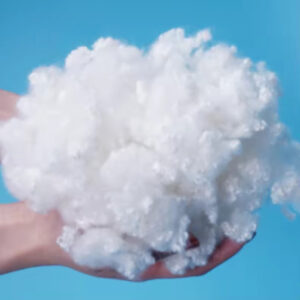
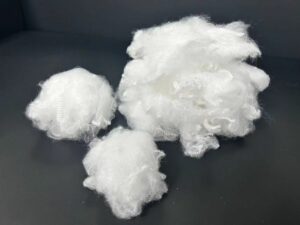
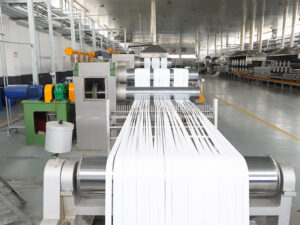
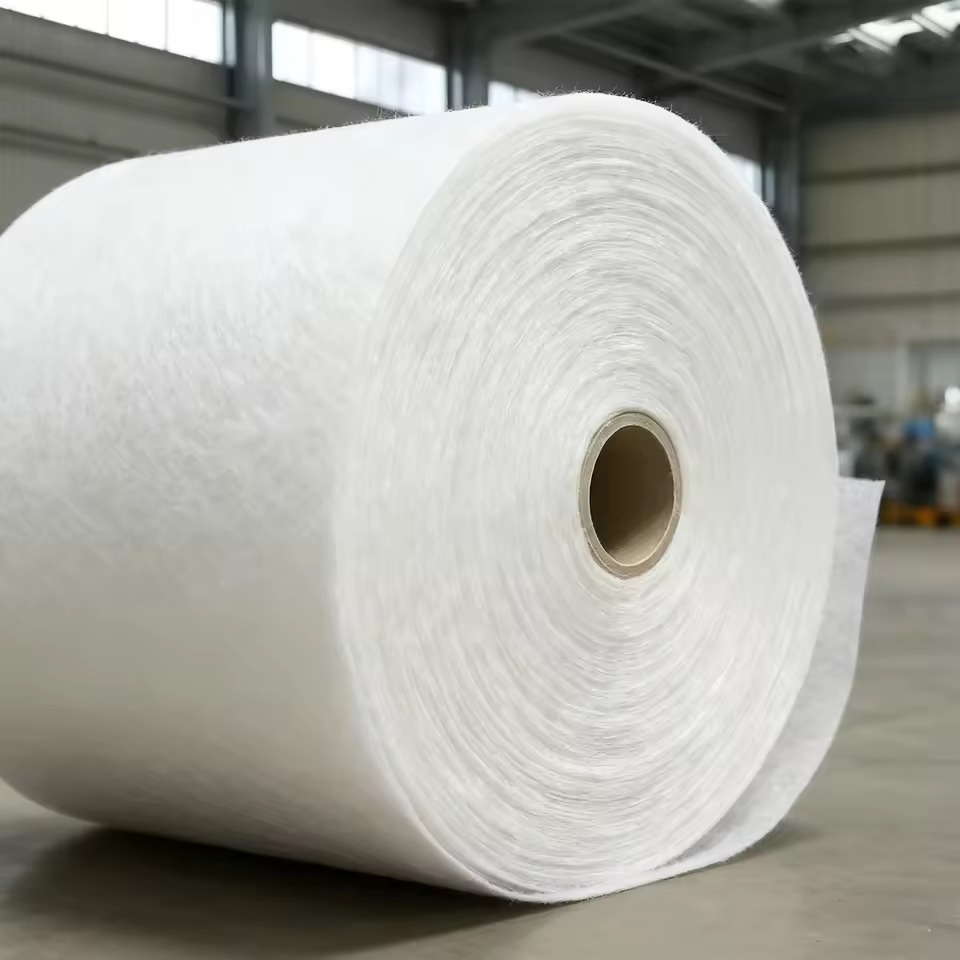
Nonwoven fabrics are the most commercially dynamic segment of the three fabric construction categories—and the one with the most direct connection to polyester staple fiber (PSF) supply. Unlike woven and knit fabrics, which require fiber to be first spun into yarn before fabric formation, nonwoven processes bond fibers (usually staple fiber) or extrude filaments directly into fabric in a single production step. This dramatically reduces manufacturing time, energy, and cost—and enables production speeds that woven and knit manufacturing cannot approach.
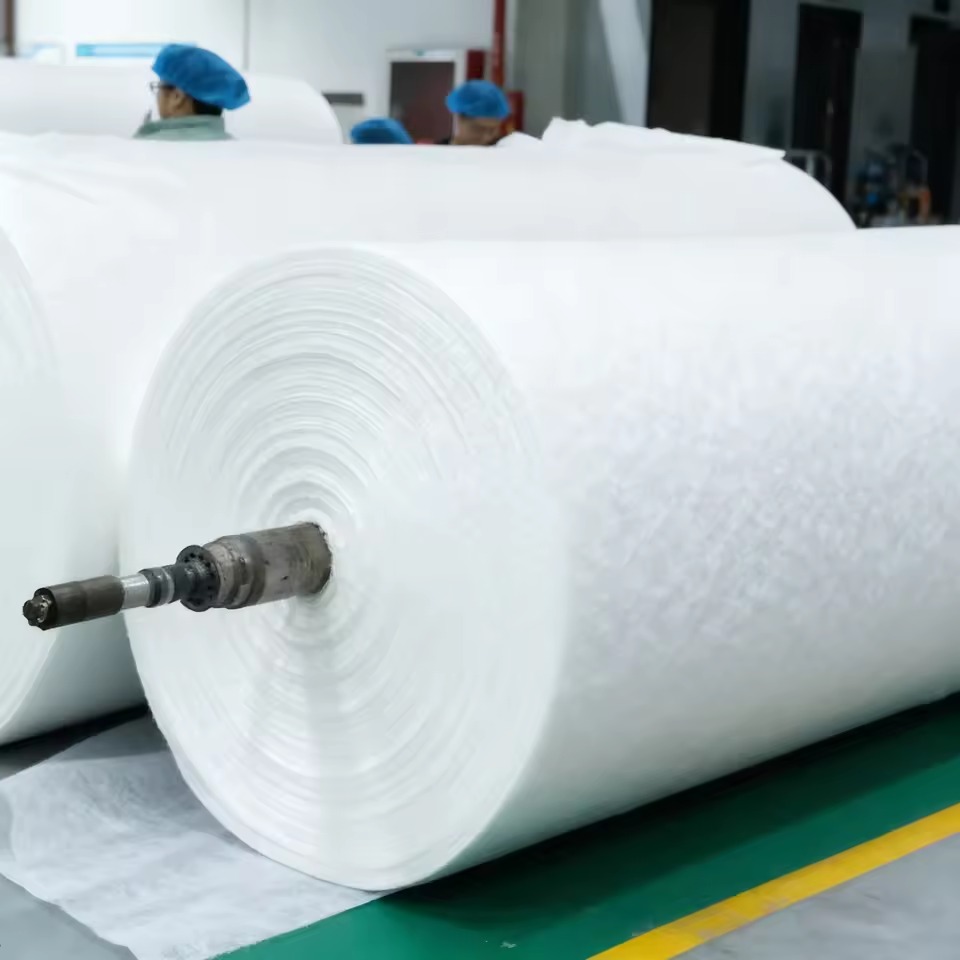
Nonwovens represent approximately 8–10% of total global textile consumption by weight but are growing faster than either woven or knit fabrics, driven by hygiene, medical, filtration, and geotextile demand. Polyester staple fiber (PSF) is the dominant feedstock for thermally bonded nonwovens, needle-punched geotextiles, and wadding—making PSF supply chain knowledge directly relevant to understanding nonwoven fabric.
Nonwoven Bonding Methods: Six Commercial Processes
1. Thermal Bonding — The PSF-Driven Process
Polyester staple fiber is opened, cleaned, and formed into a uniform fiber web (batt) by a carding machine. The web then passes through a heated oven or between heated calender rollers, where low-melt bicomponent fiber (LMF—typically 15–30% of the blend, with a lower-melting sheath surrounding a higher-melting core) melts and bonds the standard PSF fibers at their contact points. The result is a coherent, consistent fabric with controllable basis weight (gsm), thickness, and mechanical properties.
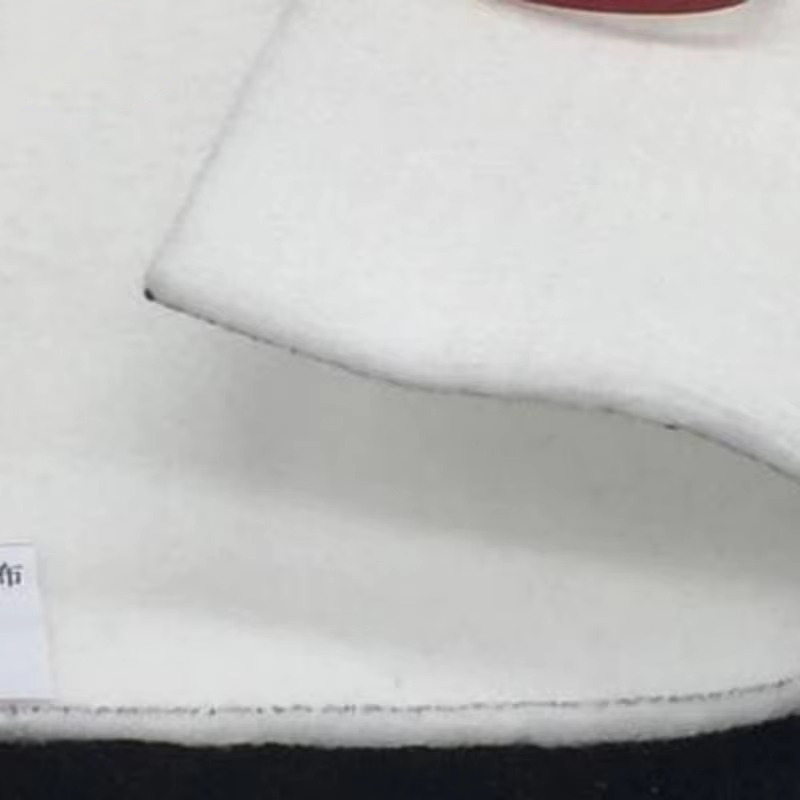
Thermal bonding produces the wadding and batting used in quilted jackets, sleeping bags, mattress toppers, pillows, toys, and upholstered furniture. The process produces no chemical waste, uses no binders, and can be precisely controlled for basis weight, density, and thermal resistance. VNPOLYFIBER’s hollow conjugated siliconized (HCS) PSF is the preferred fill fiber for thermally bonded wadding—the conjugate crimp and hollow cross-section provide maximum loft and resilience at minimum fiber weight.
2. Needlepunching — The Mechanical Entanglement Process
A fiber web is passed through a machine equipped with thousands of barbed needles arranged in a board that punches repeatedly through the web. The barbs mechanically interlock the fibers as they pass through, creating entanglement without any thermal or chemical bonding agent. The result is a durable nonwoven with isotropic (equal in all directions) tensile properties, moderate stretch, and good tear resistance.
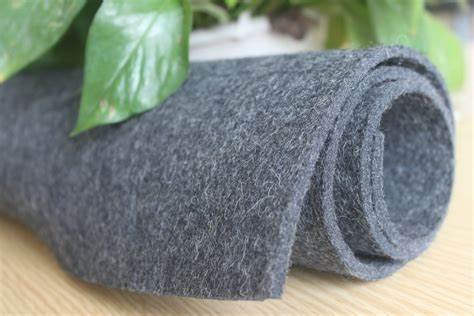
Needlepunched polyester nonwovens are the standard construction for geotextiles (road construction sub-base stabilization, slope erosion control, drainage filtration, and landfill liners), carpet underlay; automotive trunk liner and hood insulator fabrics; filter bags for industrial dust collection and liquid filtration; and the substrate layer for synthetic leather (which is needlepunched polyester impregnated with PU resin). The process can achieve basis weights from 100 g/m² to over 2,000 g/m² by controlling fiber input and needle penetration depth.
3. Spunbond — Direct Extrusion to Fabric
Molten polyester polymer is extruded through spinnerets into continuous filaments, which are drawn by high-velocity air jets and randomly deposited on a moving belt to form a uniform web. The filaments are then thermally bonded by calendar rollers. Because this process produces filament directly from polymer without first making staple fiber, it eliminates several processing steps. Spunbond polyester is defined by basis weight, filament diameter, tensile strength, and pore size distribution.
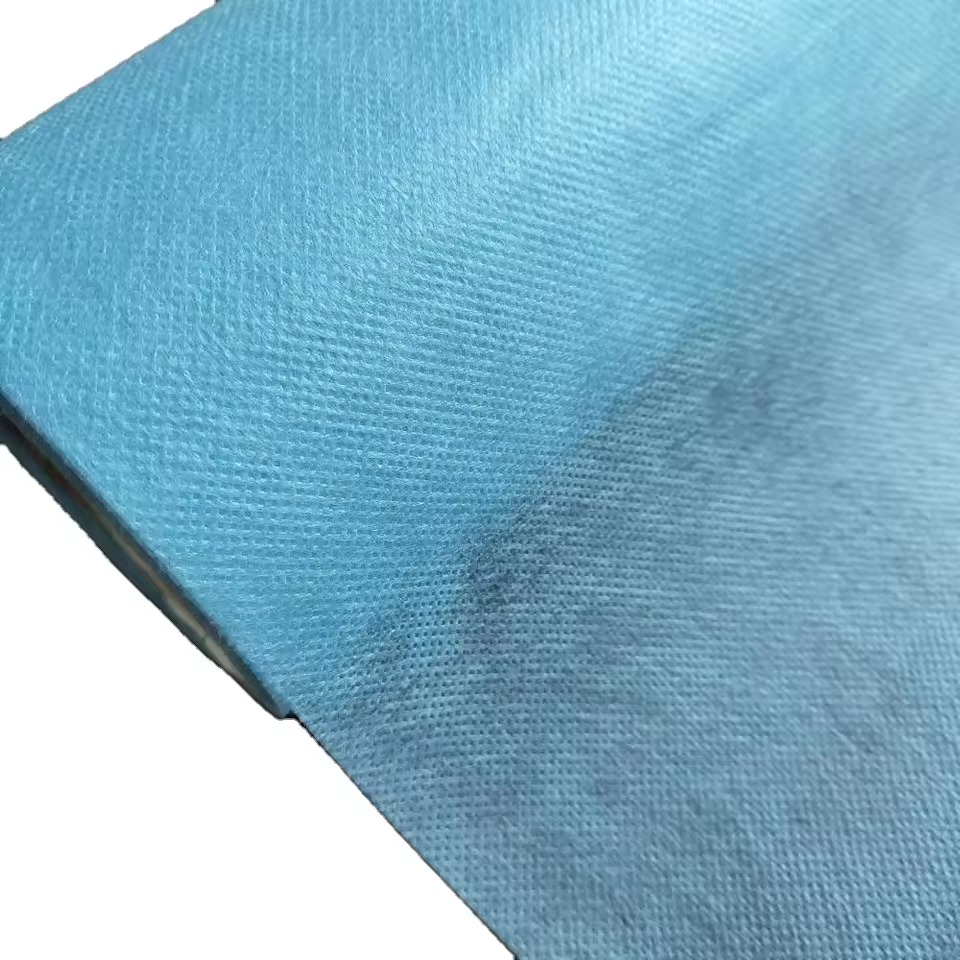
Spunbond polyester is the construction used for disposable medical garments (surgical gowns, caps, and boot covers); crop cover and row cover agricultural films; the carrier fabric layer in composite geomembranes; diaper top sheets and back sheets (in combination with other layers); and furniture dust covers and mattress bases. The smooth, uniform surface and controlled pore size make it ideal for barrier applications where breathability and fluid management must be balanced.
4. Meltblown — Ultra-Fine Fiber Filtration Media
Molten polymer is extruded through very fine nozzles while high-velocity heated air streams shear the melt into an extremely fine fiber web—with fiber diameters typically in the 1–10 micron range, far finer than any staple fiber or conventional filament. The ultrafine fibers are deposited randomly on a collector to form a web with very high surface area, small pore size, and excellent particle capture efficiency through both mechanical sieving and electrostatic effects.
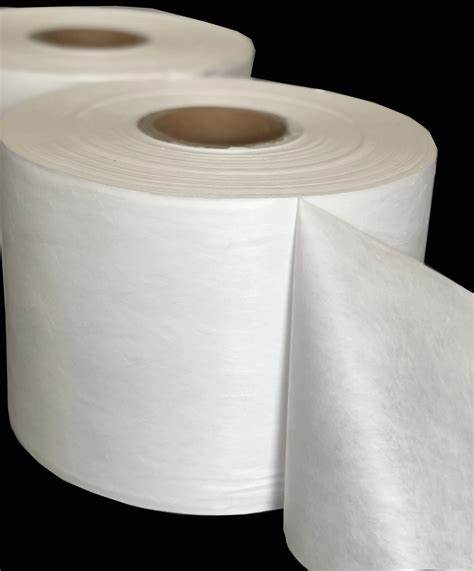
Meltblown is the critical performance layer in N95 and FFP2/3 respirator masks—the electrostatically charged meltblown layer is responsible for capturing submicron particles, including aerosol droplets that carry airborne pathogens. The same meltblown technology produces HVAC filter media (achieving MERV 13–16 ratings), surgical mask filtration layers, oil sorbent pads (meltblown polypropylene absorbs oil while repelling water), and precision liquid filtration cartridges.
5. Hydroentanglement (Spunlace) — High-Strength Flexible Nonwovens
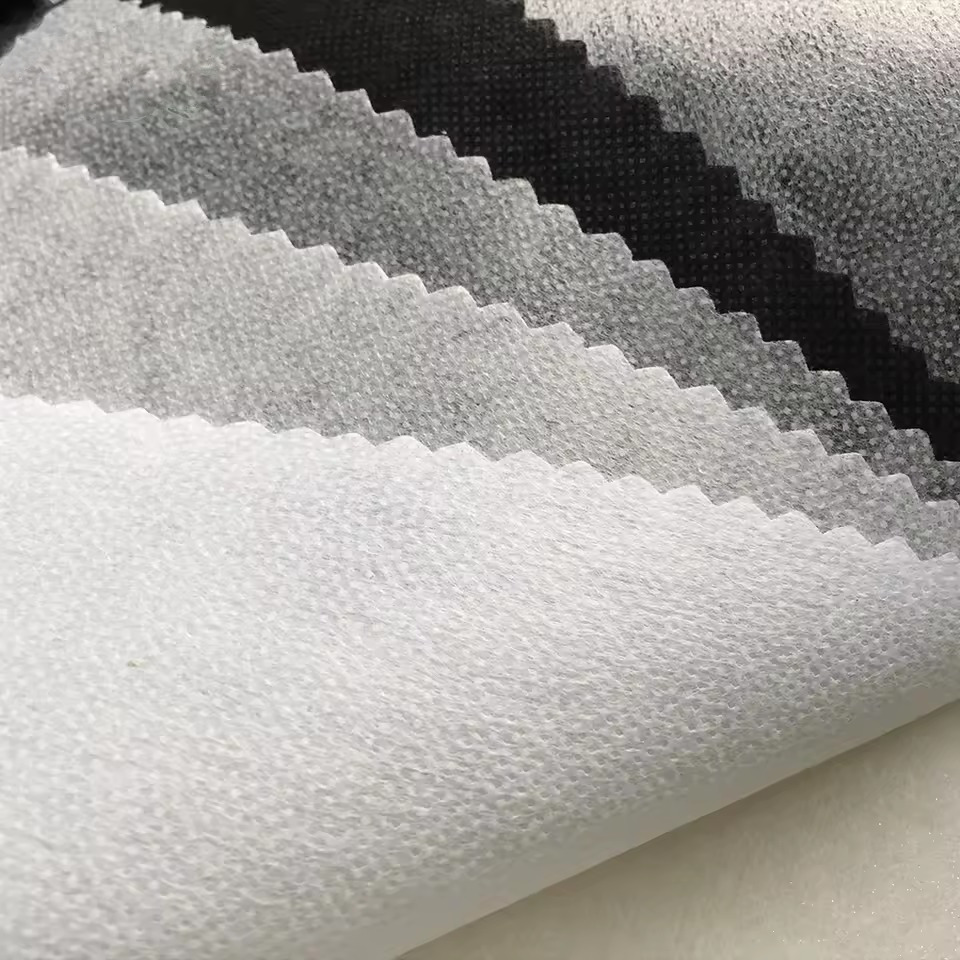
A pre-formed fiber web is supported on a permeable belt and subjected to high-pressure water jets that entangle the fibers without any chemical or thermal binder. The water pressure — typically 30–100 bar — drives fibers from the jet impact through the web, mechanically interlocking with fibers below. Spunlace produces the softest, most fabric-like of all nonwoven constructions — flexible, strong in wet conditions, and with a surface texture approaching woven fabric.
Spunlace nonwovens are used in wet wipes (the dominant application by volume—baby wipes, household cleaning wipes, and personal hygiene wipes), medical wound dressings and bandages, cosmetic and facial cleansing pads, industrial cleaning cloths, and high-performance synthetic leather substrates. Cotton spunlace is preferred for skin-contact applications; polyester spunlace is for industrial and medical where durability and resistance to chemicals are required.
6. Chemical Bonding — Binder-Stabilized Webs
A fiber web is impregnated or coated with a liquid chemical binder (acrylic latex, SBR, or polyvinyl alcohol) that bonds fibers at contact points when dried and cured. Chemical bonding was historically the most common nonwoven process before thermal and mechanical methods became commercially dominant. It remains important for applications requiring specific chemical resistance or adhesion properties not achievable with thermal bonding, including specialty filter media, roofing membranes, and geosynthetic materials requiring specific chemical resistance.
Nonwoven Fabric Types and Applications Summary
Nonwoven Type | Key Fiber | Primary Applications |
Thermally bonded wadding | PSF (HCS) + LMF | Quilted jacket insulation, sleeping bags, pillows, mattress toppers, stuffed toys, furniture padding |
Needlepunched felt | PSF (solid or HCS) | Geotextiles (road, slope, drainage), carpet underlay, filter bags, automotive interior, synthetic leather substrate |
Spunbond PET | PET filament (direct extrusion) | Medical disposables, crop covers, diaper components, geomembrane backing, furniture dust covers |
Meltblown PP/PET | Ultra-fine fibers <10 micron | Respirator masks (N95/FFP2), HVAC filters, surgical mask layers, liquid filtration cartridges, oil sorbents |
Spunlace (hydroentangled) | Viscose, cotton, or polyester | Wet wipes, medical dressings, cosmetic pads, industrial cleaning cloths, premium synthetic leather |
Chemically bonded | Various | Specialty filtration, roofing underlays, specialty geosynthetics |
Electrospun nanofiber | PAN, PET, PA | Air purification HEPA media, battery separators, wound healing dressings, specialty filtration |
The Complete Three-Way Comparison
Property | Woven | Knit | Nonwoven |
Strength (tensile) | ★★★★★ | ★★★ | ★★ to ★★★★ (process-dependent) |
Stretch / elasticity | ★ (none without elastane) | ★★★★★ | ★ (very limited) |
Drape quality | ★★★★ | ★★★★★ | ★★ (most) to ★★★ (spunlace) |
Comfort (skin contact) | ★★★★ | ★★★★★ | ★ to ★★★ (varies greatly) |
Wash durability | ★★★★★ | ★★★★ | ★ (most single-use or limited) |
Dimensional stability | ★★★★★ | ★★★ | ★★★ (spunbond) to ★★ (needlepunch) |
Production speed | ★ (slowest) | ★★★ | ★★★★★ (fastest) |
Production cost | ★ (highest) | ★★★ | ★★★★★ (lowest) |
Pore size control | Limited by weave | Limited by knit structure | ★★★★★ (very precise in spunbond/meltblown) |
Filtration capability | Poor | Poor | ★★★★★ (meltblown especially) |
Barrier properties | ★★ to ★★★ | ★★ | ★★★★ (spunbond/laminated) |
Biodegradability | Depends on fiber | Depends on fiber | It depends on the fiber—polyester versions are not biodegradable |
Recycled content options | Yes (rPET yarn) | Yes (rPET yarn) | Yes (GRS-certified rPET staple fiber) |
How to Identify Fabric Construction Type
A practical identification guide for textile professionals:
- Stretch test: Pull the fabric firmly in the crosswise direction. Strong stretch with recovery = weft knit. Minimal stretch = woven. If the stretch is moderate and even in all directions = nonwoven (needlepunch).
- Unravel test: Try to pull a single yarn from the edge. In wovens, individual yarns will pull out cleanly along the warp or weft direction. In weft knits, a single yarn unravels the entire course—loops come apart. In nonwovens, there are no yarn structures to unravel; the fabric pulls apart into fibers.
- Magnification: Under low magnification (5–10x), the construction type is immediately apparent. Wovens show an ordered grid of interlaced yarns. Knits show rows of interlocking loops. Nonwovens show a tangled or bonded mass of fibers without defined structure.
- Cut edge behavior: Cut a straight edge across the fabric. Wovens fray—individual yarns unravel from the cut edge. Knit edges do not fray, but weft knits may run. Nonwovens have a clean-cut edge with no fraying or running.
- Wrinkle test: Crumple a section firmly in your fist and release. Wovens retain creases (especially plain weave cotton). Knits spring back with minimal creasing. Nonwovens vary—thin spunbond may crease permanently; thick needlepunch resists.
Fabric Construction and PSF: The VNPOLYFIBER Connection
Polyester staple fiber (PSF) is the primary raw material feedstock for two of the three fabric construction categories and a key component of the third:
- Nonwoven production (direct): PSF is the dominant input to thermally bonded wadding, needlepunched geotextile, and spunlace production. HCS fiber (hollow conjugated siliconized) is the standard specification for thermally bonded insulation wadding; solid or specialty PSF is for needlepunch and spunlace.
- Knit fabric production (via yarn spinning): Polyester staple fiber is spun into yarn on cotton-system ring spinners or open-end rotors, then knit into jersey, fleece, interlock, and other knit fabrics. Spun polyester yarn gives knit fabrics their characteristic soft, slightly matte, natural-feeling surface that filament yarn cannot produce.
- Woven fabric production (via yarn spinning): Polyester staple fiber spun into yarn can be woven into plain, twill, or other woven constructions—producing the spun polyester fabrics used in apparel, home textiles, and some technical applications where the soft, matte surface of spun yarn is preferred over the smooth surface of filament yarn.
VNPOLYFIBER’s full PSF product range—HCS siliconized, hollow slick, solid fiber, low-melt bicomponent fiber, solid dyed, and specialty grades—covers the complete requirements of both nonwoven manufacturers and spinning mills producing yarn for knit and woven fabric applications. Our GRS-certified recycled PSF grades provide the verified recycled content that nonwoven manufacturers, fabric mills, and brands require for sustainable product claims. Contact us with your fiber specification requirements for technical and commercial quotations.
Conclusion: Choosing the Right Fabric Construction
The woven versus knit versus nonwoven decision is not a question of which construction type is ‘better’—it is a question of which construction’s fundamental property profile matches the application requirements. Wovens for structural stability, precise property control, and durability. Knits for comfort, stretch, and body-conforming fit. Nonwovens for high-volume, cost-effective production of technically specified fabrics for filtration, hygiene, geotechnical, and disposable applications.
For a fiber supplier, understanding these three construction categories is equally important: PSF that performs well in thermally bonded wadding (fine-denier HCS with good loft retention) has different requirements from PSF used for spinning into knit jersey yarn (longer staple, consistent fineness, and good spinnability) or PSF for needlepunch geotextile (coarser denier, high tenacity, and UV stabilized). The construction method that the fiber will enter determines the specification that matters.