What Is Silk? The Complete Guide to Silk Fiber, Types, Properties & Sustainability
Silk is the only natural fiber that exists as a continuous filament—a single unbroken thread that can stretch up to 1,500 meters from a single silkworm cocoon. This remarkable origin gives silk its defining properties: an unparalleled natural luster that has fascinated humans for 5,000 years, a smooth, cool-to-the-touch surface that has made it the luxury textile standard across every culture that has encountered it, and a combination of strength, breathability, and drape that modern manufacturing has never fully replicated.
Yet silk remains the smallest segment of the global fiber market—less than 0.2% by volume—because it is genuinely difficult and labor-intensive to produce. A unit price for raw silk is roughly 20 times that of raw cotton. Understanding what silk is, how it is made, what makes it perform the way it does, and how to evaluate its sustainability story honestly is essential for anyone making purchasing decisions, sourcing fabric, or simply wanting to understand the material they are wearing or sleeping on.
What Is Silk? Definition and Biological Origin
Silk is a natural protein fiber produced by the larvae of certain insects as they spin their cocoons. The vast majority of commercial silk comes from the cocoons of the domesticated mulberry silkworm, Bombyx mori—a moth larva that feeds exclusively on mulberry leaves. The silkworm spins its cocoon from a single continuous protein filament, secreted from two glands in its head, cemented together by a second protein called sericin.
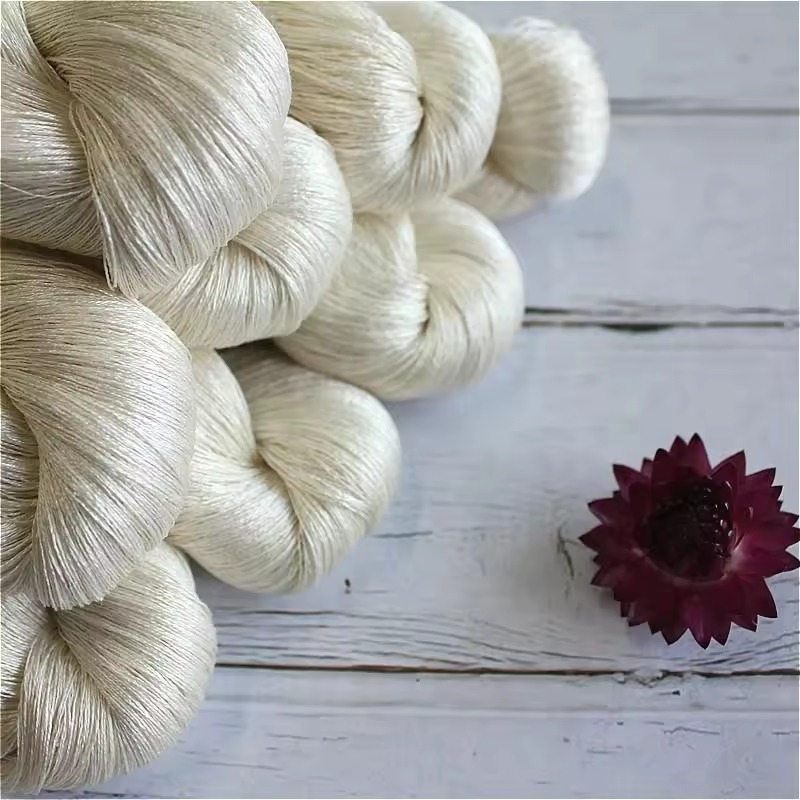
The silk thread consists of two primary proteins: fibroin forms the core structural filament — strong, elastic, and responsible for silk’s characteristic luster and drape — and sericin forms the sticky outer gum coating that bonds the fibroin threads together in the cocoon. During textile processing, sericin is typically removed through degumming (boiling in soapy water), leaving the pure fibroin filaments that become commercial silk fabric. The triangular cross-sectional shape of silk fibroin filaments is the structural source of silk’s unique optical property — it reflects light at multiple angles simultaneously, producing the characteristic shimmer that no other natural fiber replicates.
Silk fibroin is a protein fiber composed of amino acids—the same building blocks as human hair and skin proteins. This biological similarity is the basis of silk’s documented skin compatibility and its emerging applications in medical biomaterials.
A Brief History of Silk
Silk production—sericulture—originated in China around 2,700 BCE, according to Chinese legend, when Empress Leizu discovered that cocoons submerged in hot water could be unwound into continuous threads. For centuries, China maintained a total monopoly on silk production, with knowledge of sericulture protected by laws that prescribed death for anyone caught smuggling silkworm eggs or mulberry seeds out of the empire.
The Silk Road — the network of overland and maritime trade routes connecting China to Central Asia, India, Persia, Arabia, and eventually Europe — was so named because silk was its most prized commodity. Traded for spices, glassware, gold, and horses, silk traveled thousands of miles and became the defining luxury fabric of the ancient world. By the 6th century AD, Byzantine monks reportedly smuggled silkworm eggs to Constantinople hidden in hollow staffs, breaking China’s monopoly. Sericulture gradually spread to India, Japan, Persia, and eventually Western Europe—with Italy, France, and Spain becoming centers of European silk weaving by the medieval period.
Today, China remains the world’s dominant silk producer—accounting for approximately 80% of global output, six times larger than the second-biggest producer, India. Uzbekistan, Thailand, and Brazil round out the top five producing nations, which together account for over 99% of world silk production.
How Is Silk Made? From Silkworm to Fabric
Sericulture: Raising the Silkworms
Silkworm eggs are hatched in controlled conditions, and the larvae are fed exclusively on fresh mulberry leaves for approximately 35 days, during which they molt four times and increase their body weight roughly 10,000 times. When ready to spin their cocoon, the silkworm secretes its silk filament in a figure-eight pattern, building up layer upon layer of the continuous thread over 2–3 days. A single cocoon may contain 300–1,500 meters of usable silk filament, though the average usable length is approximately 600 meters.
Stifling and Sorting
In conventional silk production, the pupae inside the cocoons are killed — typically by steam or dry heat — before they can develop into moths and break through the cocoon wall. A moth emerging from the cocoon severs the continuous filament, making the thread impossible to reel as a single strand. The killed cocoons are sorted for quality—damaged, double, or thin cocoons are set aside for different processing.
Reeling: Unwinding the Continuous Filament
Sorted cocoons are softened in hot water to loosen the sericin and allow the continuous filament to be unwound. Multiple cocoon filaments (typically 5–8) are reeled together simultaneously onto a reel, the sericin acting as a natural adhesive to bind them into a single raw silk thread (called a bave). This raw silk thread is the primary commercial product of the reeling stage. The delicate, labor-intensive nature of reeling is a primary reason for silk’s high cost relative to other natural fibers.
Throwing, Dyeing, and Weaving
Raw silk threads are twisted together in a process called throwing to produce yarns of defined twist level and weight. The yarns are degummed (sericin removed), bleached to a pure white base, and then dyed—silk’s protein structure accepts dyes with exceptional affinity, producing colors of unusual vibrancy and depth. The dyed yarn is then woven or knitted into fabric on specialized looms, with weave construction determining the final fabric type — from the heavy, structured weight of dupion to the airy lightness of chiffon.
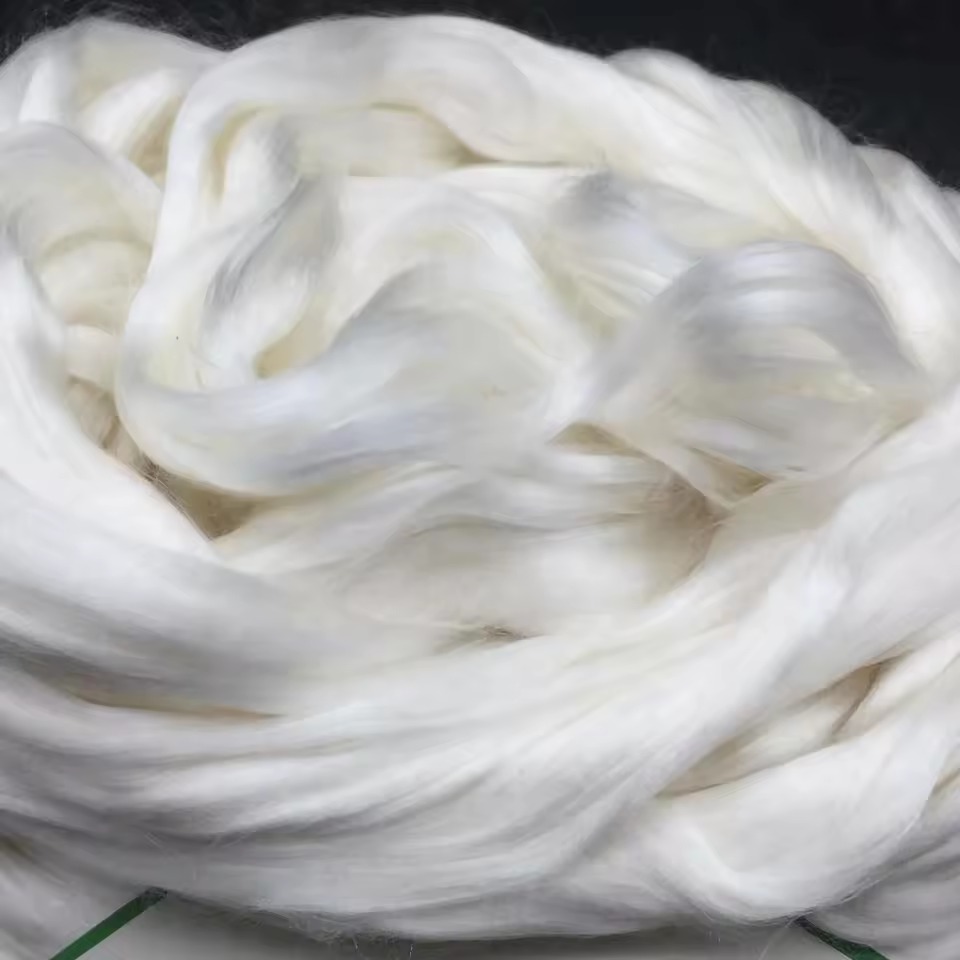
Key Properties of Silk Fabric
Property | What It Means in Practice |
Natural Luster | Silk’s triangular fibroin cross-section reflects light from multiple angles simultaneously, producing the incomparable luminosity and shimmer that distinguishes genuine silk from every synthetic imitation. |
Strength | Silk is the strongest natural fiber — stronger than a steel filament of equivalent diameter when dry. Despite its delicate appearance, silk fabric resists tearing and maintains integrity under significant tensile stress. Note: Wet silk loses about 20% of its strength. |
Temperature Regulation | Silk has low thermal conductivity — it insulates in cool conditions and dissipates heat in warm ones, making it comfortable across a wide range of temperatures. This bidirectional thermal regulation distinguishes silk from most other fibers. |
Moisture Absorption | Silk can absorb up to 30% of its weight in moisture without feeling damp, wicking perspiration away from skin efficiently. This absorbency, combined with fast evaporation, keeps silk comfortable in both warm and cool conditions. |
Hypoallergenic | Silk’s protein structure is biocompatible — it rarely causes skin irritation and naturally resists dust mites, mold, and fungal growth, making it suitable for people with allergies or sensitive skin. Its natural antibacterial properties also inhibit odor-causing bacterial growth. |
Smooth Drape | The long, continuous filament structure of silk produces a fabric with incomparable drape—it flows and conforms to body contours with a fluid grace that staple fibers like cotton or wool cannot replicate. |
Dyeability | Silk’s protein fiber structure accepts dyes with exceptional affinity, producing colors of unusual depth, vibrancy, and luminosity. The same dye on silk will appear richer and more complex than on cotton or polyester. |
Elasticity | Silk has a moderate degree of natural elasticity—it can stretch slightly and return to its original shape, giving silk garments good shape retention and comfort of movement. |
Biodegradability | As a natural protein fiber, silk is fully biodegradable — it decomposes through microbial action without leaving persistent synthetic residues. |
Care Sensitivity | Silk requires careful handling — it can shrink in hot water, weaken in direct sunlight with prolonged exposure, and be damaged by harsh detergents or chlorine bleach. Hand washing or dry cleaning is recommended for most silk garments. |
Types of Silk: A Complete Guide
Silk is not a single fabric—it is produced in dozens of distinct constructions, each with different weights, textures, sheens, and applications:
By Silkworm Source
- Mulberry silk: The most refined and widely produced silk, from Bombyx mori silkworms fed exclusively on white mulberry leaves. Produces the finest, most uniform, and most lustrous filaments. The standard for luxury apparel and bedding.
- Tussar (Tussah) silk: Produced by wild silkworms (Antheraea species) that feed on oak, juniper, and other plants rather than mulberry. Has a naturally tan or golden color, coarser texture, and richer, earthier character than mulberry silk. Valued for its organic aesthetic and used in ethnic fashion and home textiles.
- Eri silk: Produced by the Samia ricini silkworm feeding on castor plants. The cocoon cannot be reeled as a continuous filament (the structure is open-ended), so eri silk is spun like cotton, producing a heavier, matte, cotton-like fabric. Importantly, eri silk can be harvested without killing the silkworm.
- Muga silk: Produced only in the Assam region of India by Antheraea assamensis silkworms. It has a natural golden-yellow color and exceptional durability—Muga silk garments are said to last generations and grow more lustrous with washing.
By Fabric Construction
- Charmeuse: A lightweight, satin-weave fabric with a glossy front and matte back — the classic silk used in lingerie, blouses, and luxury bedding. Drapes beautifully.
- Chiffon: Sheer, lightweight, plain-woven silk with a slightly rough texture from the high-twist yarns used in its production. Floaty and transparent — used in evening wear, scarves, and layering.
- Crepe de Chine: A smooth, lightweight fabric with a subtle crinkle texture from alternating left-twist and right-twist yarns. More matte and fluid than charmeuse—widely used in dresses, blouses, and scarves.
- Dupioni (Dupion): A crisp, medium-to-heavy weight silk woven from irregular double cocoons, producing characteristic slubs and an iridescent finish. Used in structured garments, bridal wear, and home decor.
- Organza: Very sheer, plain-woven silk with a crisp, stiff hand—produced from highly twisted yarns. Used in structured bridal and evening wear and as an interlining fabric.
- Silk noil: Produced from the short waste fibers left after reeling—has a matte, slubby, cotton-like appearance rather than the luster of traditional silk. More affordable and casual in character.
- Peace silk (Ahimsa silk): Produced using processes that allow the moth to emerge from the cocoon before the fiber is harvested—breaking the continuous filament into shorter pieces. The resulting silk is slightly rougher and less uniform than conventional silk but is produced without killing the silkworm.
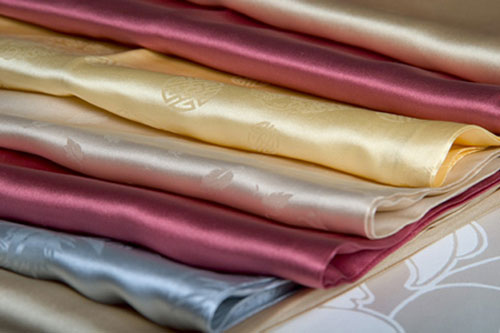
Applications of Silk
Luxury Apparel and Fashion
Silk’s primary application remains luxury apparel—bridal gowns, evening wear, fine blouses, dresses, scarves, ties, and lingerie. Its combination of natural luster, perfect drape, temperature comfort, and skin feel places it in a category no other material can challenge for formal and special occasion wear. High-end ties in heavy silk allow for the tightly woven patterns and rich colors that represent the pinnacle of menswear accessories.
Bedding and Sleep Textiles
Silk bedding—pillowcases, duvet covers, and sheets—occupies a premium niche where silk’s temperature regulation, hypoallergenic properties, and smooth surface against skin and hair (silk is valued for causing less hair friction and fewer facial creases than cotton) justify its significant price premium over other luxury bedding materials.
Home Textiles and Decoration
Silk’s luster and drapability make it a premium choice for curtains, wall coverings, cushion covers, and decorative textiles. Dupioni silk—with its characteristic iridescence and structured body—is particularly popular for home decor applications.
Medical and Technical Applications
Silk’s biocompatibility and biodegradability are driving growing interest in medical applications, including sutures, wound dressings, tissue engineering scaffolds, and drug delivery systems. Silk fibroin dissolves predictably in the body over defined timeframes—making it useful for temporary implants and biodegradable medical devices that do not require surgical removal.
Silk Sustainability: An Honest Assessment
Environmental Advantages
- Renewable and biodegradable: Silk is produced from renewable biological inputs—silkworms and mulberry leaves—and fully biodegrades at end of life.
- Mulberry cultivation is relatively low-impact: Mulberry trees require few pesticides or synthetic fertilizers, can be grown organically, and are relatively water-efficient compared to cotton.
- Longevity: High-quality silk garments last decades with proper care—reducing the replacement frequency and total resource consumption of a wardrobe.
Environmental Concerns
- High global warming potential in processing: The Higg Materials Sustainability Index (MSI) ranks silk among the highest-impact fibers for global warming potential—primarily due to energy-intensive reeling and processing stages, which in many producing regions rely on fossil fuels.
- Conventional silk kills silkworms: The killing of pupae to preserve the continuous filament is a significant animal welfare concern for many consumers. Peace silk, eri silk, and Ahimsa silk alternatives address this by allowing the moth to emerge before harvesting.
- Labor and social concerns: Human Rights Watch documented child labor in India’s silk production supply chain, with children as young as five working in filature and weaving. While the situation has improved with increased awareness and regulation, supply chain transparency in silk remains a genuine concern for ethical buyers.
- Chemical processing: Degumming, bleaching, and dyeing of silk involve chemical inputs that must be properly managed to prevent water pollution. Organic silk certification (GOTS) covers processing standards.
Certifications to Look For
- GOTS (Global Organic Textile Standard): Covers the processing of silk from fiber to fabric, prohibiting hazardous chemicals and covering labor standards. For organic mulberry cultivation.
- OEKO-TEX Standard 100: Certifies the absence of harmful chemical residues in finished silk products—important for skin-contact applications.
- Peace Silk / Ahimsa certification: Various independent certifications verify that silk was produced without killing silkworms.
How to Care for Silk
- Hand wash gently: Most silk should be hand washed in cool water (30°C maximum) with a pH-neutral, silk-specific detergent. Avoid soaking for extended periods.
- Never wring: Squeeze water out gently — never twist or wring silk, which can damage the fiber structure and distort the weave permanently.
- Dry flat or hang in shade: Dry away from direct sunlight (which yellows and weakens silk over time) and away from heat sources. Roll in a clean towel to remove excess moisture, then lay flat or hang carefully.
- Iron inside out on low heat: Iron silk while slightly damp with a cool iron—always on the reverse side to protect the luster surface.
- Store carefully: Store silk cleanly, wrapped in acid-free tissue paper, away from light and moths. Never store silk in plastic bags, which can trap moisture and cause yellowing.
Conclusion: Silk’s Incomparable Luxury and Evolving Sustainability
Silk occupies a unique position in the material world—genuinely beautiful, genuinely functional, and genuinely challenging to produce responsibly. Its luster, drape, temperature regulation, and skin compatibility remain unmatched by any natural or synthetic alternative. Its cost reflects a labor-intensive, biologically complex production process that cannot be shortcut without compromising quality.
The sustainability story of silk is nuanced: its renewable and biodegradable character are genuine advantages, but its energy-intensive processing, silkworm welfare implications, and historically documented labor concerns require honest attention from brands and buyers. Choosing certified organic, GOTS-processed, or peace silk where available is the most direct path to the best available combination of silk’s extraordinary properties and responsible sourcing.