What Is Hollow Conjugated Fiber? The Complete Guide to HCS Polyester Fill
Pull apart a high-quality pillow, open a premium winter jacket, or examine the fill inside a plush stuffed toy—and you will most likely find hollow conjugated fiber at work. It is one of the most widely used fill and insulation materials in the world, yet few people outside the textile industry know it by name. They know the end result: warmth that does not add weight, softness that springs back, a pillow that keeps its shape through years of use.
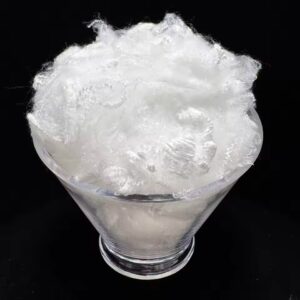
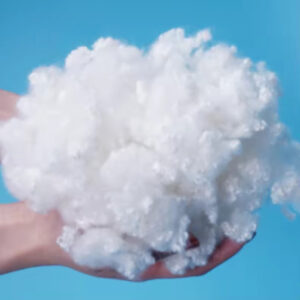
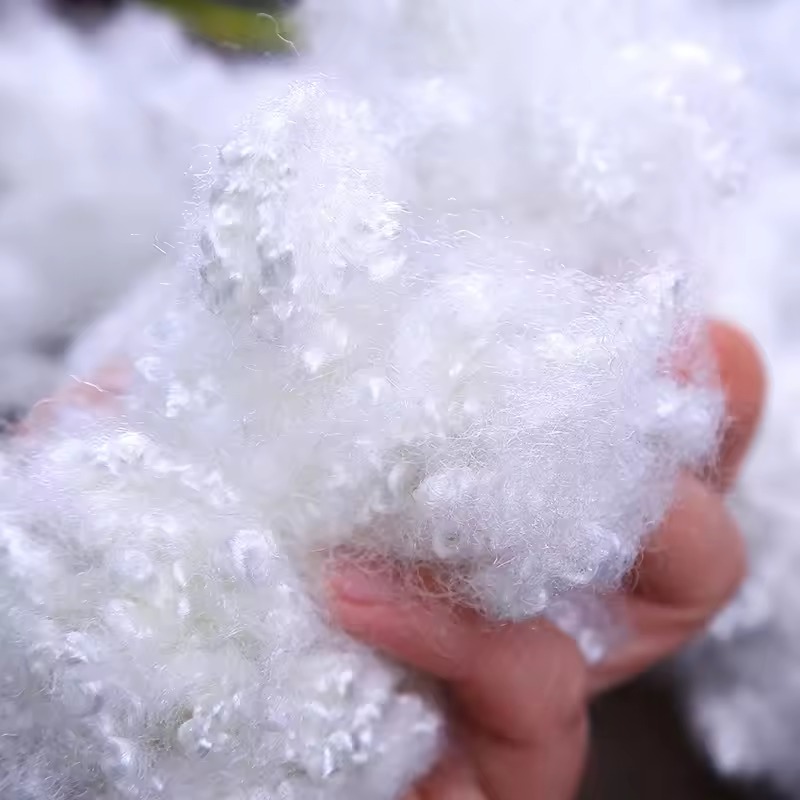
Hollow conjugated fiber—also called hollow conjugated polyester fiber, HCS fiber (Hollow Conjugated Siliconized), or conjugate fiber fill—is a precisely engineered polyester staple fiber that combines a hollow cross-section with a three-dimensional conjugate crimp and, in its most common form, a silicone surface finish. Each of these three design elements works together to deliver performance that standard solid fiber simply cannot match.
This complete guide explains exactly what hollow conjugated fiber is, the science behind its structure, the different types and grades available, all key applications, how it compares to natural alternatives like down and feather, and how to select the right grade for your specific manufacturing or product development needs.
What Is Hollow Conjugated Fiber? A Clear Definition
Hollow conjugated fiber is a polyester staple fiber manufactured with three distinct engineered characteristics built into a single fiber strand:
- Hollow cross-section: Unlike standard solid polyester fiber, hollow conjugated fiber contains one or more continuous air channels running the full length of the fiber. This hollow structure is created during melt spinning using specialized annular (ring-shaped) spinneret orifices that form a tube of polymer rather than a solid rod.
- Conjugate crimp (3D spiral crimp): The fiber has a three-dimensional helical crimp — a spiral wave pattern that wraps around the fiber’s axis like a coiled spring. This is fundamentally different from the two-dimensional zig-zag mechanical crimp of standard staple fiber. Conjugate crimp is generated by asymmetric cooling during spinning or by using two slightly different polymer configurations—causing the fiber to self-crimp into a stable 3D structure.
- Silicone finish (in siliconized variants): The outer surface of the fiber is coated with a silicone polymer, typically polydimethylsiloxane (PDMS). This silicone coating dramatically reduces fiber-to-fiber friction, giving the fill a smooth, free-flowing character and contributing to the soft, luxurious hand feel of finished products.
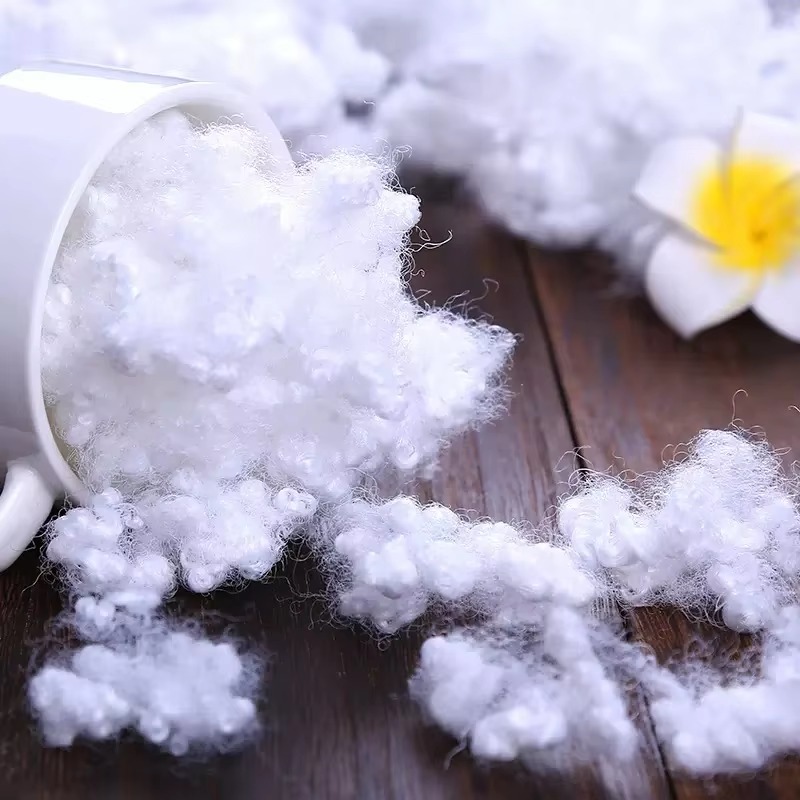
Hollow-clad fiber is sometimes confused with HCS fiber—they are the same material. HCS stands for Hollow Conjugated Siliconized, describing all three structural features in one abbreviation. Non-siliconized variants are called Hollow Conjugated Dry fiber, or HC Non-Sil.
The result of these three combined design elements is a fill fiber that is significantly lighter per unit volume than solid fiber, more thermally insulating, more resilient under compression, softer against skin, and more durable in its loft retention than any single-feature fiber alternative.
The Science: Why Each Design Element Matters
The Hollow Core — Light, Warm, Resilient
The hollow channel running through the center of each fiber is the most immediately important structural feature. By replacing a portion of the solid polymer cross-section with air, the hollow design achieves several simultaneous performance benefits:
- Reduced weight: The fiber contains less polymer per unit length than a solid fiber of equivalent outer diameter. This reduces the weight of the fill mass needed to achieve a given loft—making products lighter without sacrificing warmth or bulk.
- Enhanced thermal insulation: The hollow channel traps a column of still air inside the fiber itself, in addition to the air trapped between fibers in the fill mass. Since still air is one of the most effective thermal insulators, this internal air reservoir significantly improves the warmth-per-gram performance of hollow fiber compared to solid fiber.
- Improved compressibility and recovery: The hollow fiber wall can flex inward under compression—like a tube being squeezed—and recover when the pressure is released. This spring-like elastic behavior contributes to the fill’s overall resilience and loft recovery after being compressed in use.
Hollowness—the percentage of the fiber’s cross-sectional area occupied by the hollow channel—typically ranges from 15% to 30% in commercial grades. Higher hollowness (25–30%) produces lighter, more insulating fiber; lower hollowness (15–20%) produces a denser, more durable fiber with more polymer in the wall.
The 3D Conjugate Crimp — Loft, Resilience, and Fill Power
The three-dimensional spiral crimp of hollow conjugated fiber is what gives it its distinctive bulky, cloud-like character and its ability to recover its loft repeatedly after compression. Unlike a standard mechanically crimped fiber — which has a flat, zig-zag crimp that can be permanently flattened over time — the 3D conjugate crimp is structurally integrated into the fiber.
Because the spiral crimp is self-generated by the fiber’s own polymer structure (rather than mechanically imposed from the outside), it is inherently more durable and recovers more completely from compression. When you compress a hollow conjugated fiber fill and release it, the individual fibers’ spring-like spiral crimp drives the expansion—producing the characteristic loft recovery that is the hallmark of quality fiberfill products.
The crimp also serves a processing function: the interlocking spiral structure of neighboring fibers creates natural cohesion within the fill mass, preventing the fibers from separating into clumps or migrating to one corner of a pillow or cushion during use.
The Silicone Finish — Smoothness, Anti-Clumping, and Washability
The silicone surface coating applied to siliconized hollow conjugated fiber serves multiple functions simultaneously. The silicone dramatically reduces fiber-to-fiber friction—giving the fill its characteristic smooth, free-flowing behavior. When you handle siliconized hollow conjugated fiber, the individual fibers slide past each other easily rather than tangling or matting.
This low friction has important consequences for finished products: siliconized fill distributes evenly within a pillow or cushion cover during manufacturing and use, resists clumping and matting over years of use, and flows freely through filling machine nozzles without bridging or jamming. The silicone coating also contributes to the soft, luxurious hand feel of finished products and is durable through repeated laundering—maintaining the fill’s smoothness and performance through the washing cycles that pillows and bedding products regularly experience.
Non-siliconized (dry) hollow conjugated fiber has a higher friction surface that is specifically valuable in applications requiring fiber-to-fiber bonding—thermal bonding wadding, needle-punch nonwovens, and automotive padding—where the fiber needs to grip and bond rather than slide.
Types of Hollow Conjugated Fiber: A Complete Breakdown
Hollow conjugated fiber is not a single product but a family of variants, each engineered for specific applications. The main classification dimensions are the following:
By Surface Finish
- Hollow Conjugated Siliconized (HCS): The most widely used variant. Silicone-coated for maximum softness, smoothness, and anti-clumping performance. The standard for premium pillow fill, duvet fill, stuffed toys, and high-quality cushion applications.
- Hollow Conjugated Non-Siliconized / Dry: A higher friction surface without a silicone coating. Used where fiber bonding, grip, or thermal bonding performance is required—automotive padding, thermal-bonded wadding, and needle-punch nonwoven applications where fibers must bond rather than slide.
- Hollow Slick Fiber: An enhanced siliconized variant with an even smoother, more slippery surface than standard HCS. Used in premium down-alternative applications and fiber ball production where maximum fiber flowability is required.
By Crimp Dimension
- 2D Hollow Conjugated Fiber: Standard two-dimensional zig-zag crimp applied mechanically. Produces good bulk and processability at lower cost than 3D variants. Used in mid-range fiberfill applications.
- 3D Hollow Conjugated Fiber: Three-dimensional spiral crimp — the premium standard. Superior loft, resilience, and fill power compared to 2D. The go-to choice for premium pillow fill, high-quality duvets, and down-alternative jackets where long-term loft retention is critical.
- 7D, 15D (High Denier 3D): Coarser denier 3D conjugated variants for applications requiring firmer, heavier fill—mattress toppers, sofa cushions, automotive seat padding, and high-density fiberfill products.
By Hollow Channel Count
- Single-hole (1-hole): One central hollow channel. Standard configuration for most pillow fill applications. Good balance of hollowness (15–20%), warmth, and fiber wall strength.
- 4-hole hollow fiber: Four hollow channels distributed across the fiber cross-section. Achieves higher total hollowness (25–30%) while maintaining fiber wall integrity through the distribution of multiple smaller channels rather than one large central void. Superior warmth-per-gram and lighter weight than single-hole. Used in premium down-alternative and outdoor insulation applications.
By Raw Material
- Virgin hollow conjugated fiber: Produced from new PTA and MEG petrochemical feedstocks or virgin PET chips. Highest consistency and purity. Preferred for medical, food-contact, and premium consumer applications.
- Recycled hollow conjugated fiber (rHCS): Produced from post-consumer PET bottles (rPET), processed into clean flake and re-spun through hollow spinnerets with silicone finishing. Delivers equivalent fill performance to virgin material with 30–60% lower carbon footprint and GRS (Global Recycled Standard) certification available. Increasingly specified by sustainability-committed brands in bedding, apparel, and home textile applications.
Specification | Standard Range | Notes |
Denier | 6D, 7D, 10D, 12D, 15D | 6–7D for soft fill; 10–15D for firmer/heavier applications |
Staple Length | 32 mm / 51 mm / 64 mm | 32 mm for fine carding; 51–64 mm for standard filling machines |
Hollowness | 15–20% (single hole); 20–30% (4-hole) | Higher hollowness = lighter, warmer; lower = more durable wall |
Crimp Type | 2D mechanical / 3D conjugate spiral | 3D preferred for premium fill applications |
Silicone Finish | Siliconized / Non-siliconized / Slick | Siliconized for pillows/duvets; Dry for bonding/automotive |
Hollowness Check | Permanent — does not collapse with use | Verified by cross-section microscopy in quality testing |
Raw Material | Virgin (PTA+MEG or PET chips) / Recycled (rPET) | GRS certification available for recycled grades |
Color | Bright white (standard); optical brightener variants | White essential for most bedding and toy applications |
Key Performance Properties of Hollow Conjugated Fiber
Property | Performance & Commercial Significance |
Warmth-to-Weight Ratio | Hollow fiber is approximately 20% lighter than solid fiber at equivalent outer diameters while delivering superior warmth through internal air entrapment. This makes it the most efficient synthetic fill for warmth-per-gram performance in bedding and apparel. |
Loft and Fill Power | The 3D spiral crimp creates a highly open, three-dimensional fiber structure that traps large volumes of air between fibers. This high fill power—the volume of space one gram of fiber occupies—is what gives hollow conjugated fill its characteristic fluffy, lofty character. |
Loft Recovery | After compression (sleeping on a pillow, sitting on a cushion), hollow conjugated fiber springs back to its original loft through the elastic energy stored in the 3D spiral crimp. High-quality HCS fiber maintains this loft recovery through years of use and repeated washing. |
Thermal Insulation | The combination of internal air channels (trapped inside the fiber) and the open inter-fiber air spaces (created by the 3D crimp) provides a multi-layered insulation system that outperforms solid fiber of equivalent weight for warmth retention. |
Hypoallergenic | Polyester hollow conjugated fiber does not support the growth of dust mites, mold, or bacteria and does not contain the animal proteins that trigger feather/down allergies. This makes it the standard recommendation for allergy-sensitive sleepers as a down alternative. |
Moisture Management | Polyester is naturally hydrophobic—hollow conjugated fiber does not absorb moisture. This means HCS-filled products dry quickly after washing, resist mildew, and maintain their loft even in humid conditions—a significant practical advantage over natural fill materials. |
Washability | HCS-filled pillows, duvets, and cushions are machine washable and tumble-dryer safe—a major practical advantage over natural down fill, which requires specialized care to prevent clumping and mildew. The silicone finish maintains the fill’s smoothness and loft recovery through repeated laundering. |
Anti-Pilling | The hollow conjugated fiber’s crimp structure resists fiber extraction from the fill mass—the fibers interlock three-dimensionally rather than lying flat and migrating. This reduces pilling and fiber leakage in finished products. |
Antistatic | Unlike some synthetic fibers, siliconized hollow conjugated fiber does not accumulate problematic levels of static electricity—an advantage in both manufacturing (reduces fiber clinging to equipment) and end-use (reduces clinging of bedding and clothing to skin). |
Applications of Hollow Conjugated Fiber
Pillows — The Primary Application
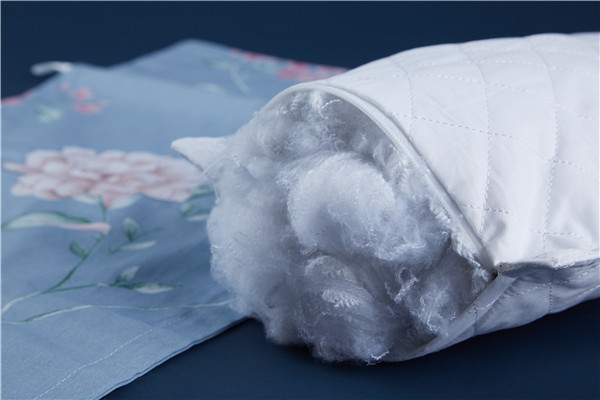
Hollow conjugated siliconized fiber is the dominant fill material for polyester pillows globally. Its combination of loft, softness, resilience, washability, and hypoallergenic safety makes it the natural choice across every pillow tier from budget to premium. The siliconized finish ensures even fill distribution within the pillow cover, easy refluffing after use, and resistance to the clumping and matting that degrades lower-quality fill over time.
Pillow manufacturers select HCS fiber grades based on denier and silicone level to achieve target firmness profiles: finer denier (6–7D) produces a softer, lighter pillow; coarser denier (12–15D) produces a firmer, more supportive feel. Many premium pillow brands use proprietary blends of multiple denier grades to achieve comfort profiles unavailable from a single fiber specification.
Duvets, Comforters, and Quilts
HCS fiber is the primary synthetic alternative to natural down in duvets and comforters. Its high loft-per-gram ratio, air-trapping hollow structure, and warmth-to-weight performance approach those of quality duck down while offering the significant practical advantages of machine washability, allergen-free content, consistent quality, and lower cost. The fill weight of hollow conjugated fiber in a duvet directly controls its thermal rating—more fill per square meter produces a warmer product.
Winter Jackets and Outdoor Apparel
Fine-denier hollow conjugated fiber (6–7D) is widely used as synthetic insulation in winter jackets, puffer coats, sleeping bag liners, and outdoor apparel. The fiber’s combination of warmth, lightweight, and—critically—the maintenance of insulating performance when wet (polyester does not lose loft when wet, unlike down) makes it the preferred synthetic insulation for wet-weather outdoor garments and budget-to-mid-tier winter apparel.
Stuffed Toys and Soft Goods
Safety is paramount in toy-filling applications—fill materials must be certified free of harmful substances for children’s products. HCS fiber produced to Oeko-Tex Standard 100 (Class I for baby and children’s products) is the standard fill material for stuffed toys, plush animals, and soft play products. The siliconized fiber’s free-flowing character makes it easy to fill complex toy forms to consistent weights in automated filling operations.
Cushions and Furniture Upholstery
Sofa cushions, scatter cushions, and furniture seat backs use hollow conjugated fiber for fill, with the coarser denier grades (10–15D, 3D conjugate crimp) preferred for the firmer, more supportive feel required in furniture applications. The 3D conjugate crimp’s long-term loft recovery is particularly valued in furniture fill—cushions that are compressed repeatedly through years of use must recover reliably. Non-siliconized dry variants are used where the fill must bond within a wadding structure rather than flow freely.
Mattress Toppers and Quilting Layers
HCS fiber batting—produced by thermally bonding hollow conjugated fiber with low melt (LMF) bicomponent fiber—is used in mattress toppers, quilted mattress covers, and comfort layers in both spring and foam mattress constructions. The fiber provides surface softness, pressure relief, and resilience in the uppermost layers of the mattress’s sleep surface.
Down Alternative and Fiber Ball Fill
A premium and fast-growing application for hollow conjugated fiber is fiber ball fill—where the fiber is processed through a fiber ball machine that rolls individual fibers into small spherical clusters (typically 8–20 mm diameter). Fiber balls behave like individual down clusters, flowing freely and distributing evenly within a shell for a genuinely down-like fill experience. Siliconized fine-denier HCS fiber (6–7D) is the standard raw material for fiber ball production. The silicone finish is critical — it provides the low friction needed for the fiber to roll into compact, stable balls during processing and maintain its free-flowing character in the finished product.
Hollow Conjugated Fiber vs. Key Alternatives
Property | Hollow Conjugated (HCS) | Solid PSF | Natural Down | Memory Foam |
Loft / Bulk | ★★★★★ | ★★★☆☆ | ★★★★★ | ★★★☆☆ |
Warmth / Weight | ★★★★★ | ★★★☆☆ | ★★★★★ | ★★☆☆☆ |
Loft Recovery | ★★★★☆ | ★★★☆☆ | ★★★★★ | ★★★★☆ |
Washability | ★★★★★ | ★★★★☆ | ★★☆☆☆ | ★☆☆☆☆ |
Hypoallergenic | ★★★★★ | ★★★★★ | ★★☆☆☆ | ★★★★★ |
Wet Performance | ★★★★★ | ★★★★★ | ★☆☆☆☆ | ★★★★★ |
Cost | ★★★★☆ | ★★★★★ | ★☆☆☆☆ | ★★★☆☆ |
Sustainability (recycled) | ★★★★☆ | ★★★☆☆ | ★★★☆☆ | ★★☆☆☆ |
Best for | Pillows, duvets, jackets, toys | Geotextile, carpet, acoustic fill | Premium duvets, luxury jackets | Mattress support layers |
★★★★★ = Excellent ★★★★☆ = Very Good ★★★☆☆ = Good ★★☆☆☆ = Fair ★☆☆☆☆ = Poor
Sustainability: Recycled Hollow Conjugated Fiber
Like all standard polyester fiber, hollow conjugated fiber is produced from PET, a petroleum-derived polymer that is not biodegradable. This is a genuine environmental limitation that must be acknowledged. However, the sustainability story of hollow conjugated fiber has an important positive dimension: it can be produced from recycled PET feedstock, and the performance of recycled hollow conjugated fiber is equivalent to virgin material for all standard fill applications.
Recycled HCS fiber (rHCS) is produced from post-consumer PET bottles — the same recycled PET chain that produces rPET polyester yarn and recycled solid polyester fiber. Clean, sorted bottle flake is melted, filtered, and extruded through hollow annular spinnerets with the same process used for virgin fiber. Carbon black or pigment masterbatch can be added for colored grades. The finished recycled hollow conjugated fiber is then siliconized and cut to the target staple length.
- Carbon footprint reduction: Producing HCS fiber from recycled PET rather than virgin petrochemicals reduces energy consumption by approximately 50–70% and greenhouse gas emissions by 30–60% per kilogram of fiber.
- Plastic waste diversion: Approximately 25 standard 500 ml PET bottles are required to produce one kilogram of recycled polyester fiber. Recycled HCS production creates industrial demand for post-consumer bottle collection — directly reducing plastic waste in landfills and ocean environments.
- GRS certification: Global Recycled Standard (GRS) certification provides third-party verified, auditable proof of recycled content from bottle collection through fiber production—enabling brands to make substantiated recycled content claims for sustainability reporting and consumer communication.
- Performance equivalence: Recycled hollow conjugated fiber delivers the same loft, resilience, warmth, and washability as virgin HCS across all standard pillow, duvet, jacket, and toy fill applications. The sustainability upgrade is zero-compromise for the vast majority of applications.
At VNPOLYFIBER, we supply both virgin and GRS-certified recycled hollow conjugated siliconized fiber across a range of deniers, staple lengths, and hollowness specifications. Our recycled HCS fiber is an increasingly popular choice for bedding brands, apparel manufacturers, and home textile producers committed to verified sustainability improvement in their raw material sourcing.
How to Specify Hollow Conjugated Fiber: A Buyer’s Guide
When sourcing hollow conjugated fiber, these are the key technical parameters to specify clearly to your supplier:
- Denier: The most important single specification for fill applications. 6D for ultra-soft, lightweight pillow fill and down-alternative apparel; 7–10D for standard pillow and cushion fill; 12–15D for firmer furniture cushions and mattress applications. Use the lowest denier that meets your firmness and weight targets.
- Staple length: 32 mm for fine carding and fiber ball production; 51 mm for standard pillow filling machines; 64 mm for coarse filling equipment and heavy-duty applications. Match to your filling machine specification.
- 2D vs. 3D crimp: 3D conjugate crimp for premium loft recovery and superior long-term performance; 2D for cost-sensitive mid-range applications where some loft reduction over time is acceptable.
- Hollowness percentage: 15–20% for durable standard fill; 20–30% (4-hole) for maximum warmth-per-gram and lightest weight. Specify based on your warmth and weight targets.
- Siliconized or Dry: Siliconized (HCS) for pillow, duvet, toy, and apparel fill; dry (non-sil) for automotive padding, thermal bonding wadding, and needle-punch nonwoven applications.
- Virgin or recycled: Specify recycled (rPET) with GRS certification if sustainability documentation is required for your supply chain. Confirm performance equivalence for your specific application before committing to production.
- Certifications: Oeko-Tex Standard 100 Class I for baby and children’s toys; Class II for adult bedding and apparel. GRS for recycled content. ISO 9001 for quality management system assurance.
Conclusion: Why Hollow Conjugated Fiber Is the Fill Standard
Hollow conjugated fiber has earned its dominant position in the global fill and insulation fiber market through a combination of performance advantages that no competing material can match across the full range of comfort, durability, safety, and cost requirements of modern bedding, apparel, and home textile applications.
Its hollow core traps air for superior warmth and lightness. Its 3D spiral crimp delivers loft recovery that outlasts the products it fills. Its silicone finish provides the smoothness, anti-clumping, and washability that end users experience directly as quality. And its availability in certified recycled grades—delivering equivalent performance with substantially lower environmental footprint—positions it as the sustainable default for synthetic fill materials as the global textile industry transitions toward responsible sourcing.
Whether you are a pillow manufacturer specifying fill for a new product line, a bedding brand evaluating down alternatives, an outdoor apparel producer comparing insulation options, or a toy manufacturer ensuring your fill meets the highest safety standards, hollow conjugated fiber offers a proven, versatile, and continuously improving solution.
Contact VNPOLYFIBER to request samples, technical data sheets, and specifications for our full range of virgin and GRS-certified recycled hollow conjugated fiber grades. We supply 6D through 15D in 32 mm, 51 mm, and 64 mm staple lengths, with siliconized, non-siliconized, and slick-finish variants available from trusted manufacturing partners across Asia.