What Is Felt? The Complete Guide to Polyester Felt, Recycled Felt & Industrial Felt Applications
Felt is one of the oldest and most versatile engineered materials in human history — yet today it sits at the cutting edge of sustainable manufacturing, acoustic engineering, and high-performance insulation. From the padded headliner of a modern automobile to the thermal insulation board behind your wall panel, from the cushioning beneath a mattress to the noise-absorbing layer inside an air conditioning unit, felt is quietly doing essential work across industries worldwide.
Modern industrial felt has evolved far beyond its traditional wool and craft origins. Today’s felt is an engineered nonwoven material — produced from polyester, recycled fibers, cotton, wool, or blended combinations — through precise manufacturing processes that allow its density, thickness, stiffness, acoustic performance, and thermal properties to be tuned for specific applications. The result is a material that is simultaneously simple in concept and remarkably sophisticated in practice.
This guide covers everything you need to know about felt: what it is, how it is made, the different types available, and the full range of industrial applications where felt delivers real and measurable performance benefits.
What Is Felt? A Clear Definition
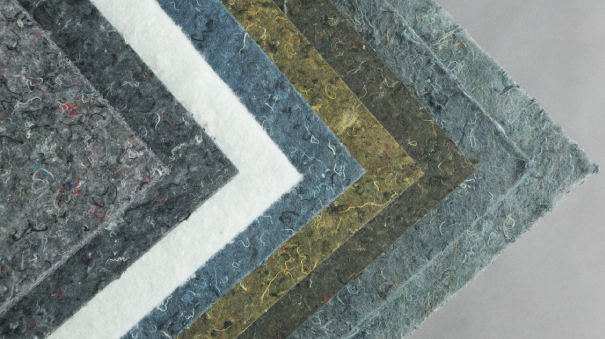
Felt is a nonwoven textile material created by matting, compressing, and bonding staple fibers together — without weaving or knitting — to form a cohesive, dense sheet structure. Unlike woven fabrics, felt has no organized interlacing of yarns; instead, its fibers are entangled and locked together through mechanical, thermal, or chemical bonding processes to create a unified material.
The defining characteristics that make felt unique among textile materials are:
- Isotropic structure: Because felt has no warp or weft direction — fibers are randomly oriented — it has similar properties in all directions, making it uniformly strong, stable, and resistant to fraying or unraveling at cut edges.
- Adjustable density and thickness: Felt can be manufactured across a very wide range of densities (from loose, lofty batting to hard, compressed boards) and thicknesses (from thin sheets of 2–3 mm to thick panels of 50 mm or more), making it adaptable to diverse application requirements.
- Sound and vibration absorption: The entangled fiber structure of felt is inherently effective at converting sound wave energy into heat through fiber friction — giving felt excellent acoustic absorption and vibration dampening properties.
- Thermal insulation: The air trapped within felt’s fiber matrix provides thermal resistance — slowing the transfer of heat between one surface and another.
- Cushioning and compression resistance: Felt distributes pressure evenly across its surface and absorbs mechanical energy, making it effective as a cushioning, padding, and vibration isolation material.
- Dimensional stability: Properly manufactured industrial felt maintains its shape and dimensions under mechanical load, temperature variation, and humidity — unlike looser fill materials.
How Felt Is Made: Three Bonding Methods
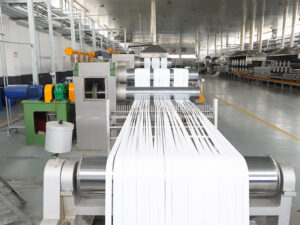
The manufacturing process for felt always begins the same way: staple fibers are opened, blended, and carded (combed) into a uniform web of loosely aligned fibers. This fiber web — called a batt — is then bonded together using one of three primary bonding methods, each producing a felt with distinct characteristics suited to different applications.
1. Mechanical Bonding — Needle Punch Felt
Needle punch felt — also called needled felt or needlepunched nonwoven — is produced by repeatedly driving thousands of barbed needles through the fiber web at high speed. The barbs on the needles catch and entangle individual fibers as the needles penetrate and retract, physically interlocking the fibers into a cohesive structure without any adhesive or heat.
The degree of entanglement — and therefore the density, strength, and stiffness of the felt — is controlled by the needle density (needles per square centimeter), stroke depth, and the number of needle punch passes the fabric receives. Additional passes produce denser, more compact felt; fewer passes produce a softer, more open structure.
Needle punch felt is characterized by:
- High mechanical strength and durability — the physical fiber entanglement produces a robust structure resistant to tearing and delamination
- Excellent dimensional stability — needled felt holds its shape under load and temperature variation
- Good acoustic and thermal performance — the dense, entangled structure efficiently absorbs sound and traps insulating air
- Versatility — virtually any combination of staple fibers (polyester, recycled fiber, cotton, wool, or blends) can be needled
- No chemical inputs — a clean, adhesive-free manufacturing process
Needle punch felt is the dominant type for automotive, geotextile, flooring, and heavy industrial applications where mechanical robustness is a priority.
2. Heat Bonding — Thermally Bonded Felt
Thermally bonded felt — also called thermoplastic felt or heat-bonded felt — is produced by blending the matrix fiber (typically polyester or recycled polyester) with a proportion of low melt fiber (LMF) or bicomponent fiber. When the fiber web passes through a hot-air oven or calendar press, the low-melting sheath of the bicomponent fiber melts and flows to the contact points between fibers, bonding them together as it cools and solidifies.
Because the bonding is achieved by the fiber itself melting — rather than by needles or adhesives — thermally bonded felt can be precisely controlled by adjusting:
- The percentage of LMF blended with the matrix fiber (typically 15–40%)
- The processing temperature and dwell time in the hot-air oven
- The pressure applied during bonding (for calendar-bonded variants)
Thermally bonded felt offers unique properties not achievable with needle punch:
- Excellent loft and softness — because fibers are bonded at point contacts rather than mechanically compressed throughout, thermally bonded felt can maintain a much higher loft and softer hand feel than needled felt of equivalent weight
- Precise thickness and density control — bonding parameters can be adjusted with great precision to produce felt of exact target specifications
- Moldability — thermally bonded felt containing LMF can be reheated and molded into three-dimensional shapes — a critical capability for automotive interior components, acoustic panels, and shaped insulation parts
- Smooth, clean surfaces — thermally bonded felt has smooth, uniform surfaces free from the needle tracks visible in needled felt
- No adhesives — elimination of chemical binders reduces VOC emissions and improves recyclability
Thermally bonded felt is the primary type used in automotive headliners, door panels, acoustic insulation components, mattress layers, and other applications requiring precise comfort and acoustic performance.
3. Chemical Bonding — Resinated Felt
Resinated felt — also called chemically bonded felt or resin-bonded felt — is produced by impregnating or saturating the fiber web with a liquid chemical binder (typically a latex or thermosetting resin), then curing the binder with heat to create a rigid, bonded fiber structure.
The resin binder coats the fibers and forms adhesive bonds at fiber crossover points throughout the web. The type and concentration of resin, and the curing conditions, control the stiffness, hardness, and surface finish of the finished felt.
Resinated felt is characterized by:
- High stiffness and rigidity — resinated felt can be produced in board-like forms with sufficient rigidity to be self-supporting in structural applications
- Excellent dimensional stability — resin binders resist creep and deformation under sustained load
- Good acoustic performance — the rigid, dense structure efficiently reflects and absorbs mid- and high-frequency sound
- Thermoformability — thermosetting resin felts can be heated and pressed into complex three-dimensional shapes — widely used for molded automotive interior parts
- Surface finishing capability — resinated felt can be laminated with facing fabrics, films, or foams to create composite panels with combined aesthetic and functional performance
Resinated felt is extensively used in automotive interior molding, ceiling board panels, construction insulation boards, and other applications where a rigid, moldable, acoustically performing material is required.
Property | Needle Punch Felt | Thermally Bonded Felt | Resinated Felt |
Bonding Method | Mechanical (needles) | Heat (LMF/bicomponent) | Chemical (resin/latex) |
Stiffness | Medium–High | Low–Medium (adjustable) | High–Very High |
Softness / Loft | Low–Medium | High | Low |
Moldability | Limited | Excellent (re-heatable) | Excellent (thermoset) |
Acoustic Performance | Very Good | Good–Very Good | Very Good |
Chemical Inputs | None | None (LMF only) | Resin binder required |
Recyclability | Good | Good (compatible polymers) | Limited (resin cross-linking) |
Key Applications | Automotive, flooring, geo | Automotive, mattress, fill | Automotive molding, ceiling board |
Types of Fiber Used in Felt Manufacturing
The fiber composition of felt is one of the most important determinants of its performance, sustainability profile, and cost. Modern industrial felt is produced from a wide range of fiber types, selected and blended to achieve specific application requirements.
Polyester Felt
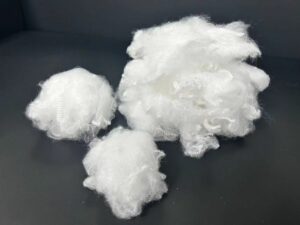
Polyester felt — made from virgin or recycled polyester staple fiber — is the most widely used type of industrial felt globally. Polyester’s excellent mechanical strength, dimensional stability, chemical resistance, moisture resistance, and colorfastness make it the fiber of choice for automotive, construction, filtration, and technical textile applications. Polyester felt is available in needle punch, thermally bonded, and resinated variants across a very wide range of densities and thicknesses.
The key performance advantages of polyester felt include durability under mechanical stress, resistance to mold and mildew (polyester does not absorb moisture), excellent acoustic and thermal performance, and suitability for a wide range of bonding and finishing treatments.
Recycled Felt — A Sustainable Choice
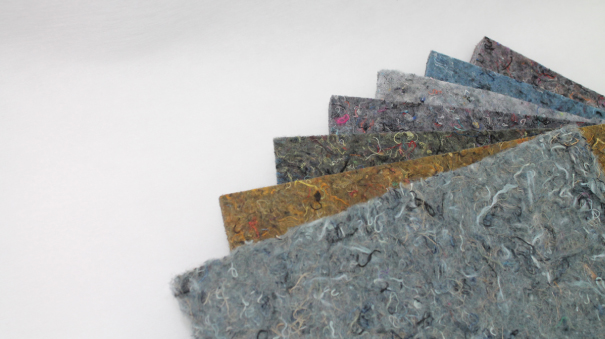
Recycled felt is manufactured using post-consumer or post-industrial recycled fibers — primarily recycled polyester (from PET bottles or textile waste), recycled cotton (from garment cutting waste or pre-consumer textile scraps), or blends of both. Recycled felt delivers equivalent performance to virgin fiber felt in many applications while dramatically reducing the material’s environmental footprint.
Recycled felt made from post-consumer PET bottles (rPET) carries GRS (Global Recycled Standard) certification, providing verifiable proof of recycled content for brands and buyers with sustainability commitments. Recycled cotton felt — often incorporating up to 80% recycled cotton content — offers excellent acoustic absorption, natural fiber aesthetics, and a compelling circular economy story for building, furniture, and automotive applications.
The environmental advantages of recycled felt are significant: producing fiber from recycled PET rather than virgin petrochemical feedstocks reduces energy consumption by approximately 30–50% and CO2 emissions by a similar margin. Using recycled cotton fiber diverts textile waste from landfill and incineration, creating genuine circular value from material that would otherwise be a disposal burden.
Cotton Felt
Cotton felt — produced from natural cotton or recycled cotton fibers — offers a naturally soft hand feel, good moisture absorption, and excellent acoustic performance. Cotton felt is particularly valued in ceiling boards, partition walls, and other building insulation applications where natural fiber content is preferred. Recycled cotton felt can incorporate a very high proportion of recycled content (up to 80% or more), making it one of the most sustainable felt options available.
Wool Felt
Traditional wool felt — still produced and used for premium applications — offers natural flame resistance, excellent sound absorption, natural moisture management, and biodegradability. Wool felt is used in premium automotive interiors, piano hammer felt, high-performance acoustic panels, and luxury seating applications where its natural aesthetics and performance are valued above cost considerations.
Blended Fiber Felt
Many industrial felt products use blended fiber compositions — combining two or more fiber types to achieve performance profiles not possible with a single fiber. Common blends include polyester/recycled cotton (combining polyester’s strength with cotton’s softness and acoustic performance), polyester/wool (combining polyester’s durability with wool’s natural fire resistance and moisture management), and virgin/recycled polyester (balancing performance consistency with sustainability).
Industrial Applications of Felt
The combination of acoustic performance, thermal insulation, cushioning, and structural adaptability makes felt one of the most widely used engineering materials in modern manufacturing. Here are the major application sectors where felt delivers essential performance.
Automotive — Sound, Heat, and Weight
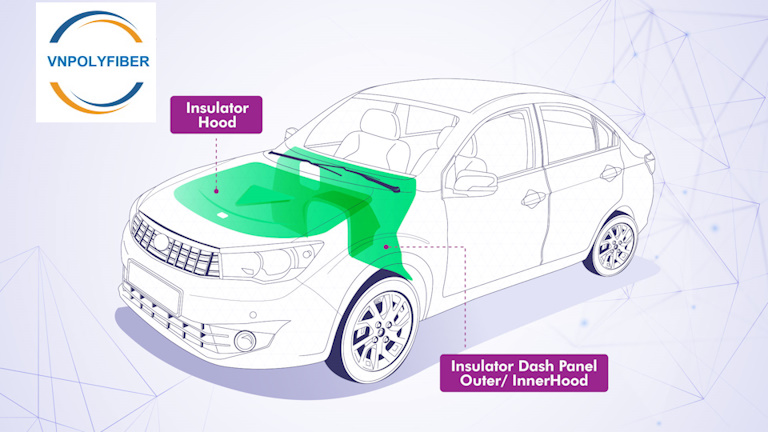
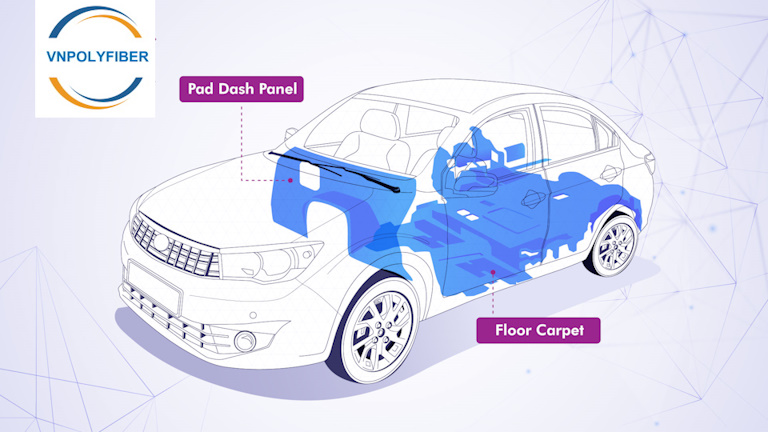
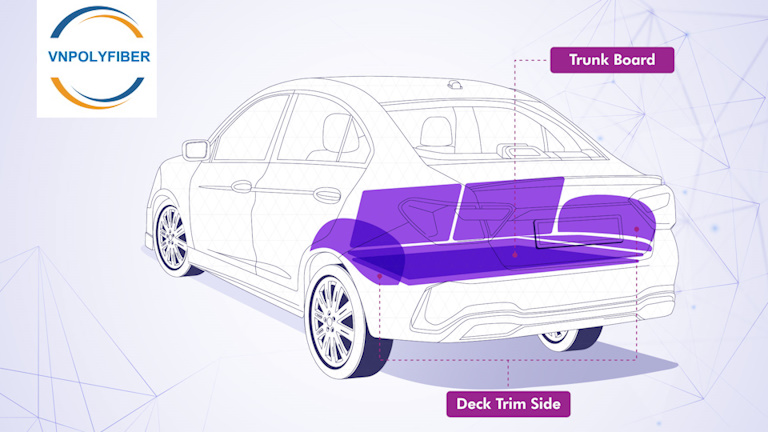
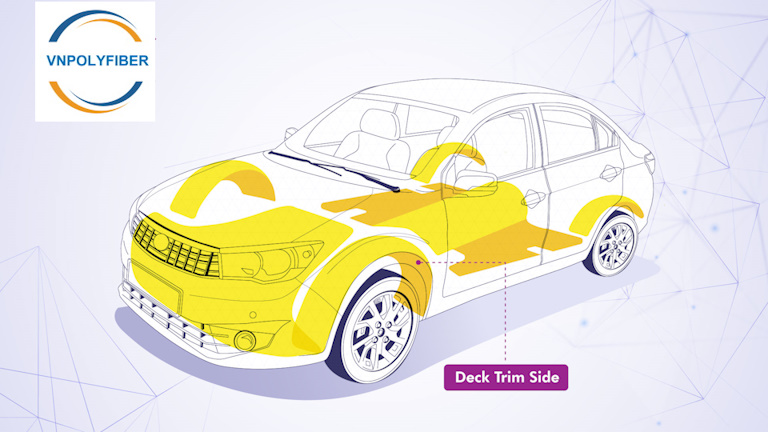
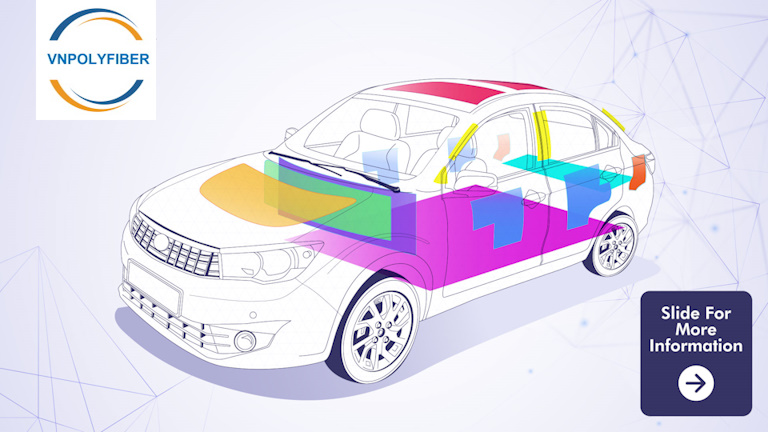
The automotive industry is the single largest consumer of industrial felt, using it across a wide array of interior and exterior components. The primary drivers are noise, vibration, and harshness (NVH) reduction, thermal management, and lightweighting — all of which felt addresses effectively.
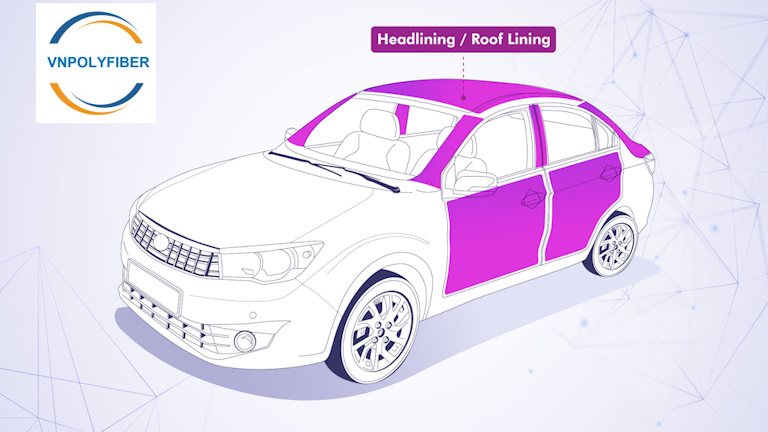
- Headliners: Thermally bonded polyester felt provides the substrate and acoustic layer in automotive headliners, bonding to the fabric facing without adhesives and absorbing cabin noise from road, wind, and powertrain sources.
- Door panels: Resinated and thermally bonded felt components are molded into door panel substrates, providing structural form, acoustic absorption, and thermal insulation.
- Floor carpets and underpads: Heavy needle punch felt is used as the underpad beneath molded floor carpets, absorbing road noise transmitted through the vehicle floor.
- Trunk liners and wheel arch covers: Molded resinated felt provides rigid, acoustically absorbing surfaces in luggage compartments and around wheel arches — reducing tire and road noise transmitted into the vehicle.
- Engine compartment insulation: High-density felt with flame retardant treatment is used to insulate the engine compartment from heat and to absorb powertrain noise.
- Acoustic package components: Dash insulators, firewall pads, and body cavity fills use felt in combination with foam to create multi-layer acoustic management systems throughout the vehicle structure.
For electric vehicles, acoustic felt is becoming even more critical — without the masking effect of an internal combustion engine, road noise, tire noise, and HVAC system sounds are far more perceptible to occupants, driving demand for more and better acoustic insulation across the vehicle.
Building and Construction — Thermal and Acoustic Insulation
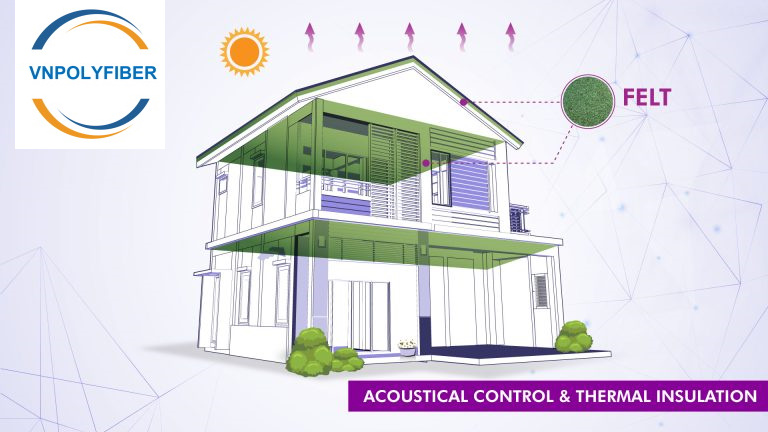
Felt plays a vital role in building insulation applications, providing thermal resistance, sound absorption, and moisture management in roofs, walls, ceilings, and floors.
- Ceiling boards and ceiling panels: Polyester and recycled cotton felt boards are used in dropped ceilings and suspended ceiling systems to absorb mid- and high-frequency sound, reducing reverberation and improving speech intelligibility in offices, schools, and public spaces. High recycled-content ceiling felt boards (up to 80% recycled cotton) are an increasingly popular choice for sustainable building projects.
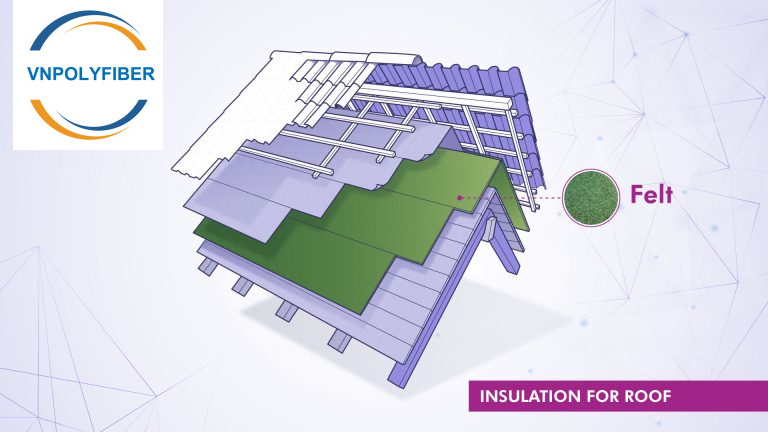
- Roof underlayments: Needle punch polyester felt is used as a roofing underlay — providing a secondary weather barrier, thermal resistance, and impact sound insulation beneath roof tiles and metal roofing systems.
- Wall and partition insulation: Felt batts and panels are used within wall cavities and partition wall systems to provide both thermal insulation (reducing heat loss) and acoustic insulation (reducing sound transmission between rooms and spaces).
- Floor underlays: Felt underlayment beneath hard flooring (laminate, engineered wood, ceramic tile) provides impact sound insulation, thermal comfort underfoot, and leveling for minor floor surface irregularities.
Air Conditioning — Acoustic Isolation
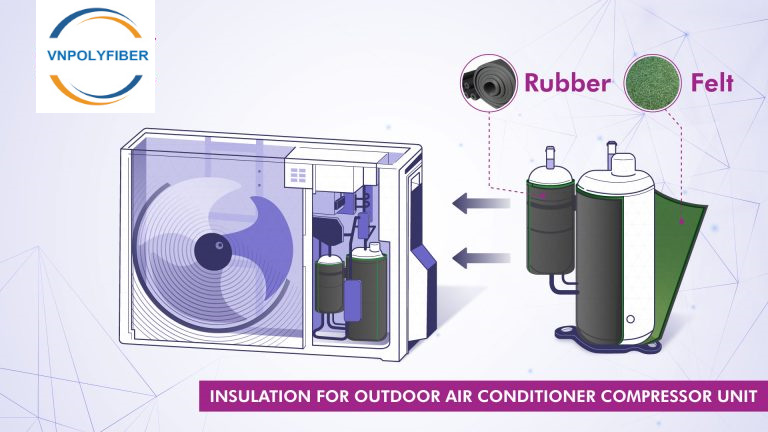
Air conditioning compressors and fan units generate significant vibration and structure-borne noise that can be transmitted into the building structure and surrounding spaces. High-density felt pads and mounts are used as acoustic isolation absorbers beneath compressor units — decoupling the vibrating machinery from the floor or mounting surface and preventing vibration energy from entering the building structure.
Felt used in air conditioning applications can be treated with flame retardant chemicals to meet fire safety standards applicable to HVAC installations. The combination of acoustic isolation performance, fire safety compliance, and durability under continuous vibration makes treated felt the material of choice for this demanding application.
Mattresses and Bedding
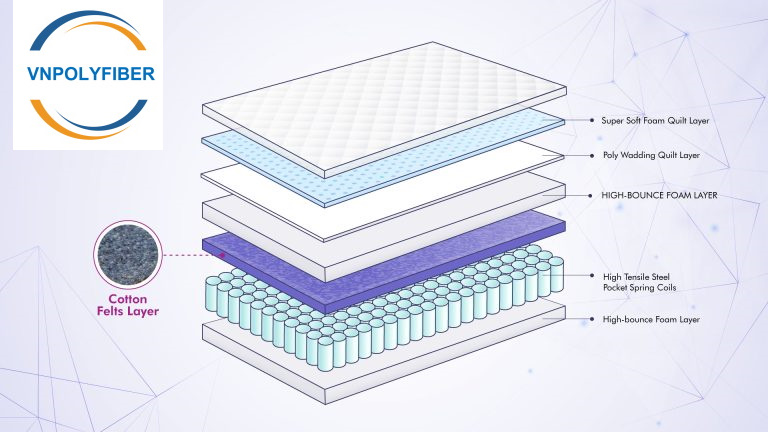
Felt has a long history in mattress manufacturing, where it is used as a comfort layer, an insulator pad, and a quilting layer in both traditional spring mattresses and modern foam constructions.
- Insulator pads: Felt pads placed between the spring unit and the comfort layers of a mattress prevent springs from being felt through the comfort materials — providing a smooth, uniform sleeping surface.
- Comfort layers: Soft thermally bonded polyester or wool felt batting provides comfort, pressure relief, and loft in the upper layers of a mattress.
- Quilting layers: Felt batting is stitched into the quilted fabric cover of a mattress, providing surface softness, resilience, and a luxurious sleep surface appearance.
Premium mattress felt is produced from polyester, wool, cotton, or carefully selected blends of these fibers, with density and thickness specifications precisely calibrated to deliver the target comfort feel and durability profile. Felt’s noise-reducing properties are also an advantage in mattresses — felt layers muffle the sounds of spring movement that can disturb sleep.
Home Décor and Furniture
Beyond its technical applications, felt serves important roles in home décor and furniture manufacturing. Furniture makers use felt pads, strips, and sheets to protect floor surfaces from scratches and marks caused by furniture legs and bases. Felt lining is applied inside drawers, jewelry boxes, and display cases to protect delicate surfaces and create a premium presentation.
In upholstered furniture, felt batting layers provide shape, surface softness, and resilience in seats, backs, and arms. Felt is also used as an underlining material beneath woven fabrics on chair seats and furniture panels, adding body and stability to the outer fabric.
Industrial and Technical Applications
The combination of density, dimensional stability, and surface uniformity makes felt a critical material in various precision industrial applications:
- Filtration: Dense, fine-fiber polyester felt is used as filter media in industrial dust collection systems, HVAC air filtration, liquid filtration, and chemical processing applications.
- Gaskets and seals: Hard, compressed felt is used as a gasketing material in mechanical assemblies where a compressible, conforming, lubricant-retaining seal is needed.
- Polishing and buffing: Wool and polyester felt polishing wheels and pads are used in precision surface finishing applications in metalworking, optical lens production, and semiconductor manufacturing.
- Vibration isolation: Felt pads, strips, and mounts are used throughout machinery and industrial equipment to isolate vibration and prevent structure-borne noise transmission.
Key Performance Properties of Industrial Felt
Property | How It Is Achieved & Why It Matters |
Acoustic Absorption | The entangled fiber structure converts sound wave energy to heat through fiber friction. Denser felt absorbs higher frequencies; lofty, thick felt absorbs lower frequencies. Adjusting density, thickness, and fiber type allows precise tuning of acoustic performance. |
Thermal Insulation | Air trapped within the fiber matrix resists heat transfer. Loftier felt with higher air content provides better thermal insulation per unit weight; denser felt provides better insulation per unit thickness. |
Vibration Dampening | The viscoelastic character of fibrous felt structures absorbs and dissipates mechanical vibration energy, making felt effective as an isolation pad between vibrating machinery and mounting surfaces. |
Cushioning & Compression | Felt distributes compressive loads evenly across its surface, reducing peak pressures and protecting the surfaces it contacts. Resilient felt recovers its thickness after compression. |
Dimensional Stability | Properly bonded felt maintains its dimensions under mechanical load and temperature variation. Resinated and needled felts are particularly stable; thermally bonded felt is somewhat more deformable. |
Flame Retardancy | Felt can be treated with FR (flame retardant) chemical finishes or produced with inherently FR fiber (e.g., modacrylic blends) to meet fire safety requirements in automotive, building, and transportation applications. |
Water Repellency | Felt can be treated with water-repellent finishes (e.g., fluorocarbon or silicone based) for applications requiring resistance to moisture penetration, such as automotive exterior components and roofing underlayments. |
Moldability | Thermally bonded and resinated felt can be heated and pressed into complex three-dimensional shapes, enabling the production of molded automotive parts, shaped acoustic panels, and formed insulation components. |
Recycled Felt: Sustainability at the Core
One of the most important developments in the modern felt industry is the shift toward recycled fiber content — using post-consumer PET bottles, pre-consumer textile waste, and recycled cotton as the raw material for felt production rather than virgin petrochemical fiber.
Recycled felt is not a performance compromise — it is a genuine performance-equivalent material that simultaneously delivers the acoustic, thermal, and mechanical properties of virgin felt while dramatically reducing the material’s environmental footprint. Leading felt producers, including VNPOLYFIBER, have invested in the capability to produce felt with up to 80% recycled fiber content without sacrificing product quality.
Environmental Benefits of Recycled Felt
- Reduced carbon footprint: Manufacturing fiber from recycled PET bottles instead of virgin petrochemical feedstocks reduces energy consumption and CO2 emissions by approximately 30–60% per kilogram of fiber produced.
- Waste diversion: Using post-consumer PET bottles and pre-consumer textile cutting waste as fiber feedstocks diverts materials from landfill and incineration, creating value from what would otherwise be a waste burden.
- Lower resource consumption: Recycled fiber production requires significantly less water and energy than virgin fiber production, reducing the manufacturing process’s total resource intensity.
- Circular economy contribution: Recycled felt products — particularly those made from a single polymer type (e.g., 100% recycled polyester) — can themselves be recycled at end of life, contributing to a circular material economy.
- GRS certification: Global Recycled Standard (GRS) certification provides third-party verified proof of recycled content claims, enabling buyers and brands to make substantiated sustainability statements about recycled felt products.
Recycled Felt in Practice: VNPOLYFIBER’s Approach
At VNPOLYFIBER, sustainability is embedded in our felt manufacturing philosophy. Our felt products are engineered with up to 80% recycled fiber content — drawn from post-consumer PET bottle flake and pre-consumer textile recycling streams — while delivering the precision acoustic and thermal performance specifications demanded by automotive, building, and mattress industry customers.
Our commitment to recycled content does not mean compromise on quality. Each batch of recycled felt is produced under the same quality management protocols as our virgin fiber products, with full traceability from fiber feedstock through to finished felt, and backed by GRS certification for customers requiring verified recycled content documentation.
How to Choose the Right Felt for Your Application
With such a wide range of felt types, fiber compositions, densities, and bonding methods available, selecting the right felt for a specific application requires clear thinking about the performance requirements. Key questions to answer:
- What is the primary function? Acoustic absorption, thermal insulation, cushioning, vibration isolation, structural support, or a combination? The answer determines the required density, thickness, and bonding method.
- What are the environmental conditions? Temperature range, moisture exposure, UV exposure, and chemical contact all influence fiber type selection. Polyester outperforms cotton in wet or high-humidity environments; wool adds natural flame resistance; recycled fiber blends offer sustainability without performance sacrifice in most conditions.
- Does the felt need to be molded? If the application requires a three-dimensional shape, thermally bonded felt (with LMF content) or resinated felt is required. If flat sheet form is sufficient, needle punch felt may be the most cost-effective solution.
- Are there fire safety requirements? Automotive, building, and transportation applications often have mandatory fire safety standards. Specify felt with appropriate flame retardant treatment or inherent FR fiber content.
- What are the sustainability requirements? If recycled content, GRS certification, or specific sustainability documentation is required, specify recycled felt with the appropriate certification.
- What are the density and thickness requirements? Provide the target density (gsm — grams per square meter) and thickness (mm) for your application. Your felt supplier can recommend the appropriate combination of fiber type, bonding method, and processing parameters to meet your specification.
Why Choose VNPOLYFIBER for Your Felt Needs?
As a leading producer and supplier of industrial felt in Southeast Asia, VNPOLYFIBER brings together deep fiber expertise, precision manufacturing capability, and a genuine commitment to sustainability to deliver felt solutions that perform exactly as required — in automotive, building, air conditioning, mattress, and industrial applications.
- Full product range: Needle punch felt, thermally bonded felt, and resinated felt in polyester, recycled polyester, recycled cotton, and blended fiber compositions.
- Custom specifications: Density, thickness, fiber blend, bonding method, and surface treatment customized to your exact requirements — including water-repellent, flame-retardant, and special-finish variants.
- Up to 80% recycled fiber content: GRS-certifiable recycled felt for customers with sustainability commitments and verified recycled content requirements.
- Automotive expertise: Proven experience supplying resinated and thermally bonded felt for automotive interior applications, with the precision dimensional tolerances and material consistency that automotive supply chains demand.
- Technical support: Our team of fiber and felt specialists is available to support application development, sample evaluation, and specification optimization for new projects.
Conclusion: Felt Is a Foundation Material for Modern Industry
Felt — in its modern polyester, recycled, and technically engineered forms — is far more than a traditional craft material. It is a precision-engineered, multi-functional industrial material that underpins the acoustic comfort of modern vehicles, the thermal efficiency of buildings, the insulation performance of HVAC systems, and the comfort of the mattresses we sleep on.
The shift toward recycled felt — using post-consumer PET and recycled cotton as fiber feedstocks — is transforming the felt industry into a genuinely circular, sustainable part of the manufacturing economy. High recycled content, GRS certification, and equivalent performance to virgin fiber felt are no longer aspirational goals — they are commercially available realities from producers committed to the transition.
Whether you need standard polyester felt for a filtration application, a custom recycled felt board for a sustainable building project, or a precisely specified moldable resinated felt for an automotive interior component, the right felt solution exists — and choosing the right supplier with the expertise to deliver it consistently is the most important decision in the process.
Contact VNPOLYFIBER today to discuss your felt requirements and request samples for evaluation. We look forward to supporting your project with the right felt solution.