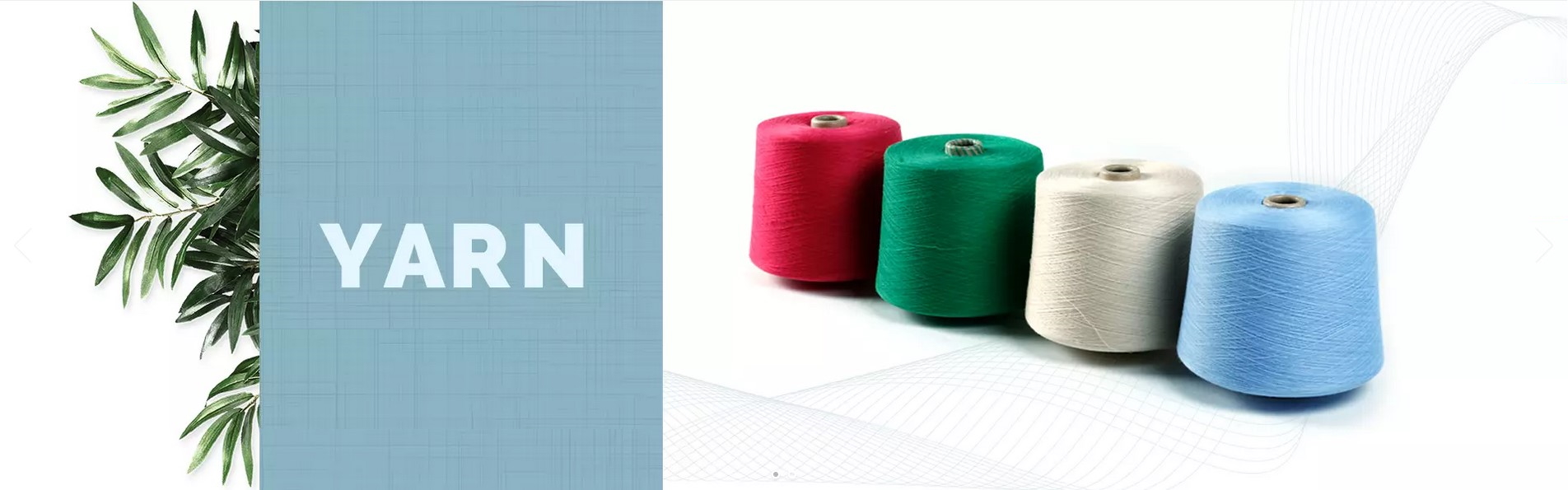
What is fully drawn yarn (FDY)?
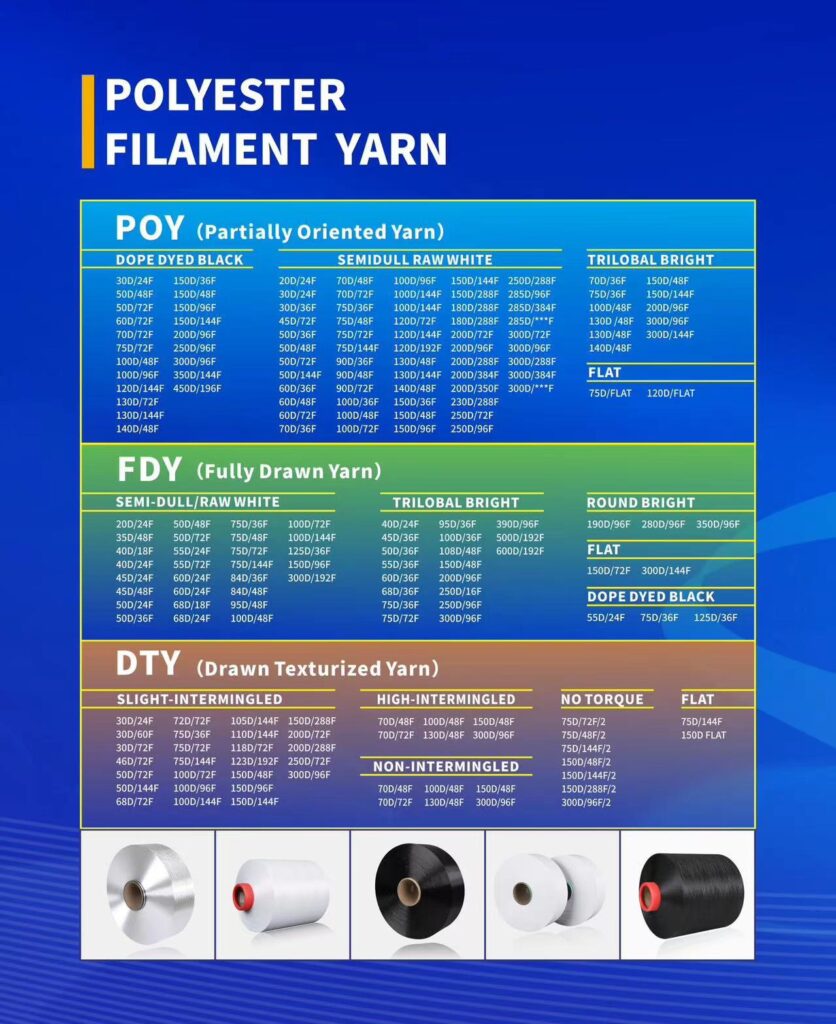
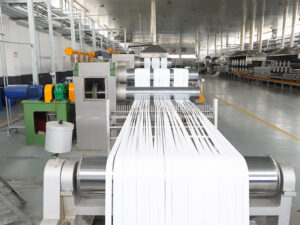
FDY, also known as FOY, is a type of highly drawn polyester filament yarn that can be used to produce high-strength fabrics and textiles. The fabrics and textiles made from bright FDY have a bright luster. FDY is typically used to produce fabrics and textiles for high-end undergarments, high-end sportswear and sports shoes, and home furnishings. FOY/FDY is produced by a process similar to POY manufacturing except that the yarn is produced at even higher spinning speeds coupled with intermediate drawing integrated in the process itself. FDY can be used directly in weaving and knitting, especially for warp weaving.
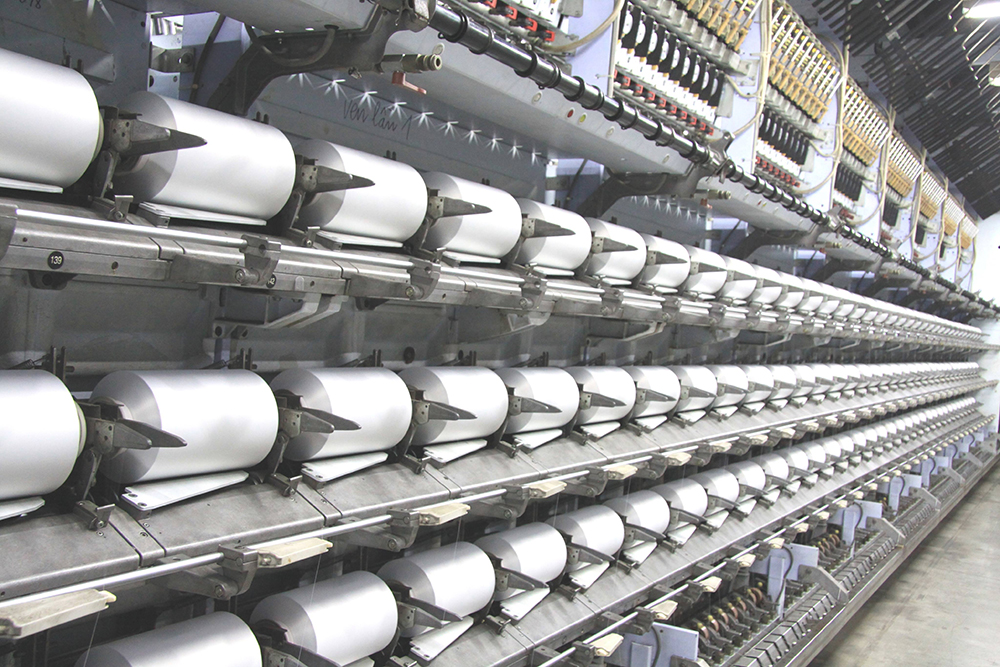
Polyester Partially oriented yarns (Polyester POY)
POY is a type of partially drawn polyester filament yarn, it is the primary form of polyester filament yarn directly made through polymerizing and spinning processes. It is primarily used as a main raw material for DTY.
We primarily use our POY as raw materials for DTY production through twisting, and we also partially use it directly in weaving and knitting. To the extent our POY was not consumed by our DTY production capacity, it had been sold separately as end products.
Draw-textured yarns (DTY)
DTY is a type of polyester filament yarn produced by processing POY through a texturing process. This process disperses, curls, and entangles the filaments composing the POY yarn, which gives DTY a fluffy appearance and provides it the properties of both natural fiber and synthetic fiber. DTY is typically used to produce fabrics and textiles for high-end apparel, high-end sportswear, high-end sports shoes, high-end sports bags, home furnishings, and zipper tapes.
DTY is a finished product from POY, simultaneously twisted & drawn. It is widely used in knitting and weaving.
Draw Texturised Yarn (DTY) is manufactured by texturizing partially oriented yarn using texturizing machines. Polyester DTY yarn is a continuous filament yarn that has been processed to introduce durable crimps,, twists, interlaces, and loops. Yarns made from thermoplastic materials can be textured by heat setting in a twisted condition, which results in polyester DTY yarn of greater bulk, higher stretch, and more pleasing aesthetics. DTY is available in semi-dull, full-dull, and bright DTY finishes.
- From 30D To 600D
- Recycle
- PTT
- Flame-retardant
- Anti-bacteria
- UV-cut
- Sea-island
- Low-Melt Yarn
- Hollow
- Cationic & CD and SD
- RW – RAW WHITE
- DDB – DOPE DYED BLACK
- SD – SEMI DULL
- TBR—TRILOBAL BRIGHT
- FD – Full Dull
Polyester staple fiber (PSF)
PSF is a material formed by continuous or discontinuous threads, and it plays an important role in maintaining the tissue of animals or plants. Fiber is used to make threads, thrums, or the fibrous layer for paper or felt and to create other materials or composites.
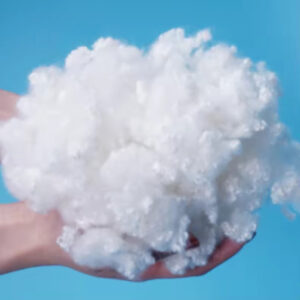
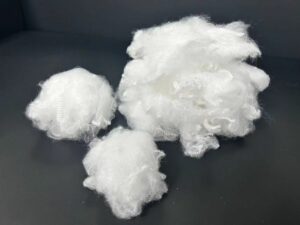
Polyester staple fiber is a short, curly fiber suitable for mixing with cotton or other fibers such as rayon, acrylic, nylon, wool, ramie, etc. in spinning yarns for weaving and knitting. It is also an essential component for non-woven products and filling. Through spinning, weaving, knitting, and various non-woven processes, staple fiber can be transformed into the various textile and non-textile products commonly used in our daily life.
PTA
PTA has the form of a white, crystalline powder and looks like powdered sugar. It is quite inert, which means that, for example, it is difficult to dissolve in water or other liquids. PTA is an aromatic acid, primarily applied in the production of polyester. The main raw material for PTA is paraxylene (PX).
PTA is the downstream product of petroleum. Light gasoline, also known as “petroleum naphtha,” can be produced from petroleum through a specific process. MX (mixed xylene) can be extracted from petroleum naphtha, and then PX (paraxylene) is extracted. With PX (accounting for 65%-67% in the formula) as raw material and acetic acid as solvent, PTA produces crude terephthalic acid by air oxidation (with 35%-33% oxygen) under the action of the catalyst. Then, crude terephthalic acid is hydroformed to remove impurities, followed by crystallization, separation, and drying to produce pure terephthalic acid products, specifically finished PTA products. Synthetic Resin.
Polyester chips (PET chips)
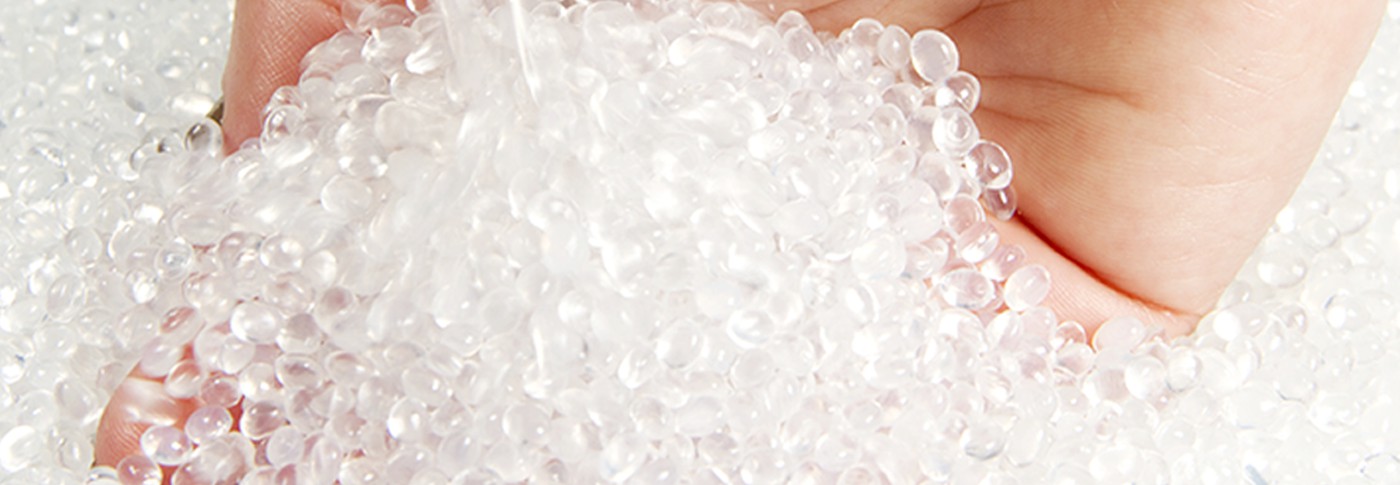
Polyester chips are the raw material used in the production of polyester fiber, filament yarn, and other polyester products.
PET (polyethylene terephthalate) chips are produced by granulating polyester formed in a polycondensation reaction of pure terephthalic acid and monoethylene glycol. They are manufactured for textile applications and supplied to the yarn-producing industry in semi-dull and super-bright finishes.
The balancing stream of the polymer melt from the polycondensation section is discharged through metering pumps to the casting head. The molten ribbons that come out of the casting head are taken to the cooling chambers of the chip cutter, where they are cooled by a chilled DM water system. The solidified polymer ribbons are then cut in a chip cutter and dried in the dryer. The dried chips are then passed through the classifier. The properly cut chips are stored in a chip silo. The chips are conveyed to the bagging silo for bagging.
What is a polyester chip?
Polyester chips are made by mixing TEREPHTHALIC ACID and ETHYLENE GLYCOL, which are the main materials, at a certain ratio.
Polyester chips are made by melting the above two materials to make a POLYMER, then drying and cutting them again.
When polyester chips are melted, polyester filament yarns and short fibers are made.
For Textile Grade
PET chips used in the textile industry are also known as fiber-grade PET chips, filament-grade PET chips, or textile-grade PET chips. Textile-grade PET chips are used for making polyester filament yarn like POY, FDY, and staple fiber used widely in the textile industry.
The yarn grade or textile grade chips are available in super bright (BR chips), semi-dull (SD chips), cationic semi-dull, and cationic super bright PET chips (CD chips). The process of making PET chips consists of mixing a thermoplastic polyester-resin material with an alumina trihydrate (ATH) filler and with a pigment, if desired, in a heated extruder to produce a continuous stream of the thermoplastic agglomerate. This product is allowed to cool, then it is cut, ground, and screened to a predetermined size, as required to meet the size characteristics of the desired resin-chip product.
PET chips used in the textile industry are also known as fiber-grade PET chips, filament-grade PET chips, or textile-grade PET chips. Textile-grade PET chips are used for making polyester filament yarn like POY, FDY, and staple fiber used widely in the textile industry.
They have the following characteristics:
- High Reaction speed— low thermal degradation, bright whiteness, and resistance to yellowing and deterioration.
- High Degree of Polymerization – high crystalline regions, concentrated molecular weight distribution.
- Diversified Packaging – Can be packaged and shipped according to customers’ specific requirements.
For Bottle Grade
The end use of bottle-grade chips mainly depends on the intrinsic viscosity (IV). PET chips with an IV of 0.80 are mainly used for drinking water bottles and mineral water bottles. PET chips with an IV of 0.82 are primarily used to make bottles for carbonated drinks, small bottles for edible oil, liquor, and medicines, as well as PET sheets, because they require better strength and a high finished product rate. PET chips with an IV of 0.85 are mainly used for making big packing bottles for carbonated drinks & 3-5 gallon water bottles, as these bottles should have excellent strength & resistance against high pressure.
Features of bottle-grade PET chips include low processing temperature, wide processing scope, excellent transparency, and a high finished product rate. We can supply the best quality, bottle-grade polyester chips from manufacturers & suppliers in China, Taiwan, & Korea.
For Film Grade
PET chips, also known as polyester chips or polyethylene terephthalate chips, are the base of any type of plastic & polymer. Depending on the processing, PET may exist both as an amorphous (transparent) material commonly known as “Bright” or “Super Bright” chips and as a semi-crystalline material commonly known as “PET Semi-Dull” chips. PET chips are also used to make PET films. High-quality chips without silica & SiO₂ contents are used to make PET films.
The film-grade polyester chips are commonly available in super-bright and additive (silica) varieties. Film-grade PET chips are characterized by excellent clarity, as they are produced in very thin specifications, and even the slightest mistake in the raw material can harm the film quality. The film is available in two types, viz., 1. Plain (both side untreated (UT)) 2. One-sided Corona-treated film (CT) applications of film-grade PET chips include printing & lamination, metallization, embossing, holograms, and thermal lamination.
We can supply you with the best-quality, film-grade polyester chips from manufacturers and suppliers in China, Taiwan, Malaysia, and Korea.
PET CHIP FOR TEXTILE FIBER
Properties
– Heat-resistant, high-IV
– Clear and transparent
– Excellent resistance to shock
APPLICATION
– Heat-resistant containers for juice, tea, and sports drinks
– Packaging sheet
TECHNICAL SPECS:
| Property | Units | Specification |
| Intrinsic Viscosity | dl / g | 0.80 ± 0.02 |
| Color Value | L | 81.5 ± 5.0 |
| Color Value | b | Max 0.0 |
| -COOH | eq/ton | Max 40 |
| D-EG | wt% | Max 1.5 |
| Melting Point | ℃ | 252.0 ± 2.0 |
| Density | kg / ㎥ | 1.400 ± 0.003 |
Bright CHIP / Semi-Dull CHIP
FEATURES
– Good mechanical properties and consistent quality
– Uniform properties
APPLICATION
– Polyester filament
– Polyester staple fiber
– PET Sheet, film
SPEC – SD
| Property | Units | Specification |
| Intrinsic Viscosity | dl / g | 0.650 ± 0.007 |
| Color Value | L | 75.0 ± 3.0 |
| Color Value | b | 6.0 ± 1.5 |
| -COOH | eq/ton | Max 55 |
| D-EG | wt% | Max 1.2 |
| Melting Point | ℃ | 254.0 ± 2.0 |
SPEC – SBR
| Property | Units | Specification |
| Intrinsic Viscosity | dl / g | 0.660 ± 0.015 |
| Color Value | L | 57.5 ± 5.0 |
| Color Value | b | -5.0 ~ 0.0 |
| -COOH | eq/ton | Max 55 |
| D-EG | wt% | Max 1.2 |
| Melting Point | ℃ | 254.0 ± 2.0 |
RECYCLE CHIP
FEATURES
– Competitive cost and various applications
APPLICATION
– Regenerated Polyester staple fiber
What is Polyester filament yarn?
Polyester filament yarn is a thin yarn produced by spinning a liquid polymer through a fine nozzle.
Polyester is the most used artificial fiber as clothing material with excellent elasticity, resilience, and heat processability, and it is easy to manage.
It is also processed into fibers that have similar or better performance than natural fibers such as cotton, wool, and linen. It is also being developed into quick-drying, cold-feeling, and antibacterial yarn.
As the demand for sustainable textiles increases, we at VNPOLYFIBER have decided to contribute by producing polyester fibers from PET flakes and PET chips made from recycled waste bottles. We endeavor to contribute to the new world’s efforts toward reducing, Reusing and recycling sustainable fabrics.
We use recyclable waste PET bottles to produce fiber for bedding and the nonwoven industry.
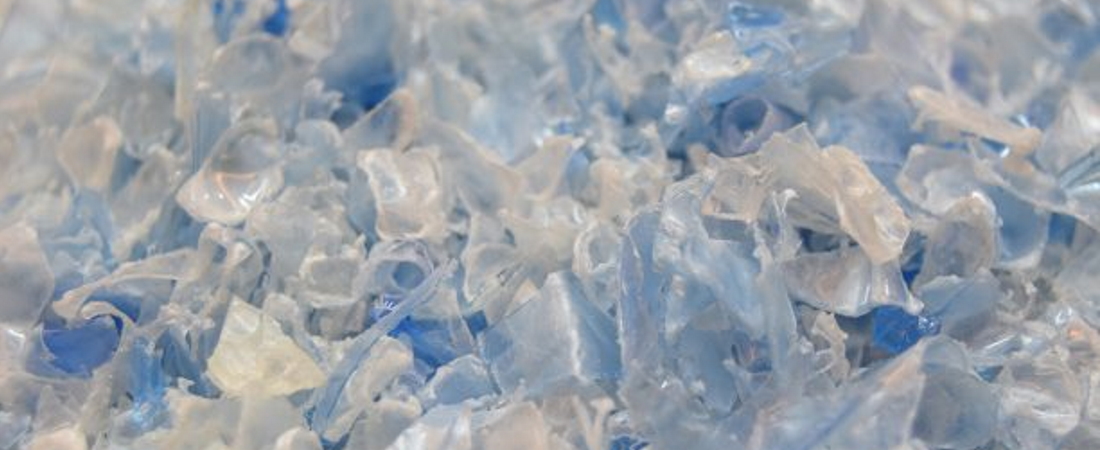
Waste PET bottles are thoroughly cleaned, sorted, de-capped and processed into flakes
Polyester chips are turned into high-grade flakes and are further made into fiber filament polyester yarn
The resulting fiber is ready to be made into fiberfill or OE yarn or ring-spun yarn.
All of our products are certified by the Global Recycle Standard (GRS).
Recycling one plastic bottle saves energy to power a light bulb for an hour
We can reduce PET bottles in oceans to make clothes, shoes, and bags instead of just throwing them away.
By recycling waste PET bottles to make polyester fibers, we use 90% less water, 66% less energy, and emit 26% fewer greenhouse gases.
We ensure that all our fiber product ranges meet the international recycle standard norms and receive certification from the Global Recycle Standard (GRS).
Strict quality checks meet the necessary quality requirements of the sportswear and knit industry.
Due to consistency in raw material and production hardware, we ensure uniformity in quality within the batch and from batch to batch.
We will reply to your inquiry within 24 working hours. Thank you for your cooperation!
Our business partner is one of the largest and best manufacturers in China’s polyester industry, specialized in PTA with an annual capacity of 5 million metric tons, polyester staple fiber (PSF) with an annual capacity of 1.2 million metric tons, and polyester filament yarns, including partially oriented yarn (POY), fully drawn yarn (FDY), and drawn texturized yarn (DTY) with an annual capacity of 6.3 million metric tons. The total annual capacity is 12.5 million MTS.
It is equipped with the world’s state-of-the-art technology and machines, including Dupont, TMT, Neumag, and Barmag.
It has been exporting to more than 90 countries and regions since the year 2004 with excellent quality and customer service.