What Are Recycled Synthetics? A Complete Guide to rPET, Recycled Nylon & Sustainable Fibers in 2026
The textile and fashion industries are under increasing pressure to reduce their environmental footprint. Recycled synthetics offer one of the most practical solutions by transforming plastic waste and textile scraps into high-quality fibers for clothing, carpets, blankets, and industrial applications.
In this guide, we’ll explain exactly what recycled synthetics are, how they’re made, the differences between recycled polyester (rPET) and recycled nylon, recycling methods, current market statistics, and the key standards that ensure credibility.
What Are Recycled Synthetics?
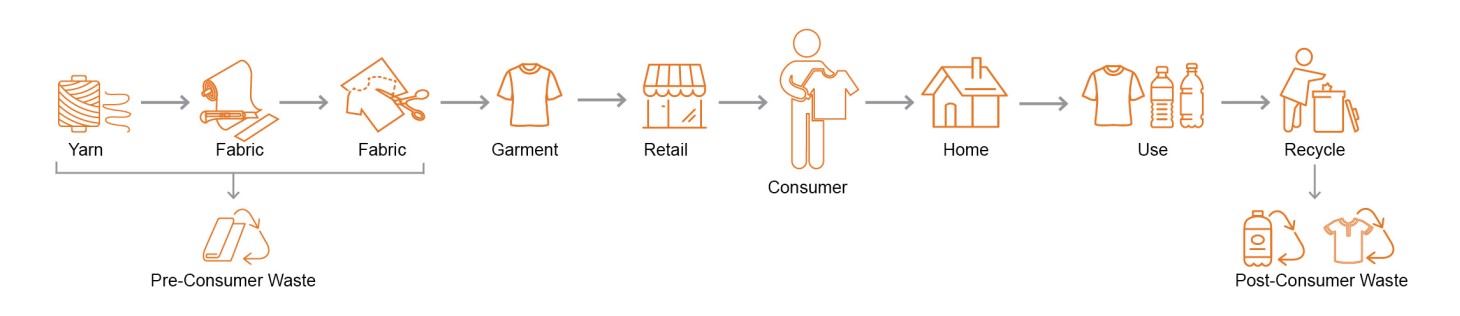
Recycled synthetics are fibers produced from pre-consumer or post-consumer synthetic waste instead of virgin petroleum-based raw materials. The two most common types are recycled polyester and recycled nylon (polyamide).
- Pre-consumer waste includes manufacturing scraps such as yarn spinning waste, fabric cutting remnants, or rejected materials.
- Post-consumer waste comes from items already used by consumers, such as plastic PET bottles, fishing nets, and discarded clothing.
By recycling these materials, brands and manufacturers reduce reliance on fossil fuels, divert waste from landfills and oceans, and lower overall carbon emissions.
Recycled Polyester (rPET): The Most Common Recycled Synthetic
Recycled polyester, often called rPET, dominates the recycled synthetics market. It is primarily made from post-consumer PET bottles, though pre-consumer polyester waste from spinning and garment cutting is also used.
Sources of rPET:
- Post-consumer: Plastic PET bottles (the largest source), industrial fishing nets, and used clothing.
- Pre-consumer: Waste generated during yarn spinning or fabric production.
How Recycled Polyester Is Made
There are two main recycling methods:
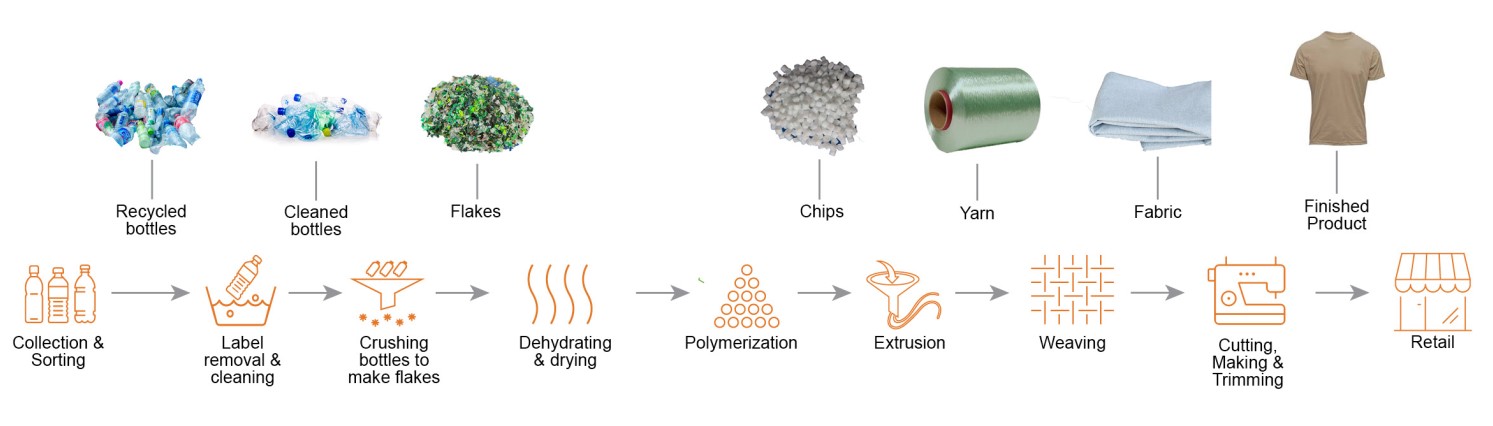
- Mechanical Recycling The most widely used and cost-effective process. Plastic bottles or textile waste are sorted, cleaned, shredded into flakes, melted, and extruded into new fibers or yarn.
- Advantages: Lower energy use, simpler process.
- Limitations: Fibers can be slightly shorter or weaker, so they are often blended with virgin polyester for strength.
- Chemical Recycling The material is broken down to its monomer or polymer level (e.g., via glycolysis or methanolysis), purified, and then repolymerized into new polyester.
- Advantages: Produces higher-quality, virgin-like fibers suitable for more demanding applications.
- Can handle more contaminated or blended feedstocks.
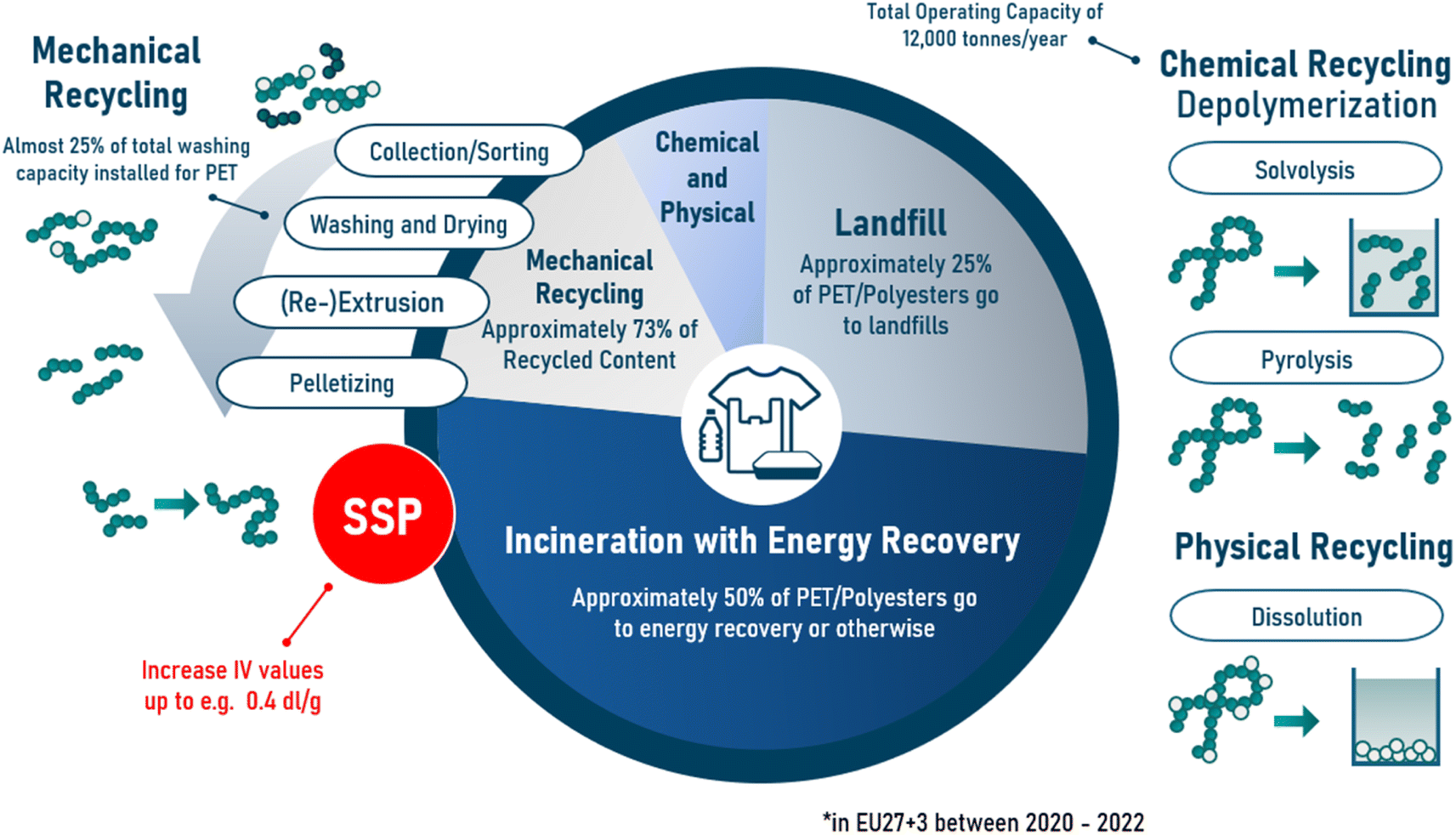
Most rPET today still comes from mechanical recycling of bottles, but chemical recycling is growing rapidly to enable true fiber-to-fiber closed-loop recycling.
Recycled Nylon (Recycled Polyamide)
Recycled nylon is another important recycled synthetic, though produced in smaller volumes than rPET. It is typically made through chemical recycling processes due to the complexity of nylon polymers.
Common sources include:
- Pre-consumer spinning and fabric waste
- Post-consumer industrial fishing nets and some apparel
Recycled nylon offers excellent strength, durability, and elasticity, making it ideal for activewear, hosiery, carpets, and automotive applications. Companies like Aquafil (Econyl) and BASF have pioneered systems that recycle nylon 6 from fishing nets and textile waste back into high-performance yarn.
How Much Polyester Is Recycled? Latest Statistics (2026 Update)
Global polyester fiber production continues to grow, but recycled content remains a small yet expanding share.
- In 2024, recycled polyester production reached approximately 9.3 million tonnes, up from 8.9 million tonnes in 2023. However, because virgin polyester grew faster, its share of total polyester slightly declined to around 12%.
- Recycled polyester from bottles accounts for the vast majority (about 98%) of recycled polyester fiber.
- Overall recycled fibers (including all types) make up roughly 7.6% of global fiber production, with recycled polyester being the dominant portion (around 6.9%).
Market forecasts show strong growth:
- The global recycled polyester market is projected to expand at a CAGR of 8.5–9.25% through 2030–2032, driven by brand commitments, regulations, and consumer demand.
- Key producing regions: China, India, Japan, and the United States lead in both production and adoption.
Despite progress, only about 1% of polyester textiles are currently recycled back into new textiles — most end up downcycled, incinerated, or landfilled. This highlights the urgent need for better collection systems and fiber-to-fiber technologies.
Benefits of Using Recycled Synthetics
Choosing recycled synthetics delivers multiple advantages:
- Environmental — Reduces landfill waste, lowers energy consumption (mechanical rPET often uses 30–50% less energy than virgin polyester), and cuts CO₂ emissions.
- Resource Conservation — Diverts millions of plastic bottles from oceans and landfills every year.
- Performance — Modern recycled polyester and nylon can match virgin quality, especially when chemically recycled or properly blended.
- Economic — Often more cost-competitive as virgin fossil fuel prices fluctuate and recycling infrastructure scales.
- Brand & Consumer Appeal — Meets growing demand for sustainable products and helps companies meet ESG targets.
Recycled Synthetics Supply Chain & Traceability
The journey from waste to finished garment involves collection, sorting, processing (mechanical or chemical), spinning into yarn, weaving/knitting, dyeing, finishing, cutting, and sewing.
Traceability is critical. Unlike virgin materials, recycled content must be verified at every step to prevent greenwashing.
Key Standards for Recycled Synthetics
Third-party certifications provide credibility and transparency:
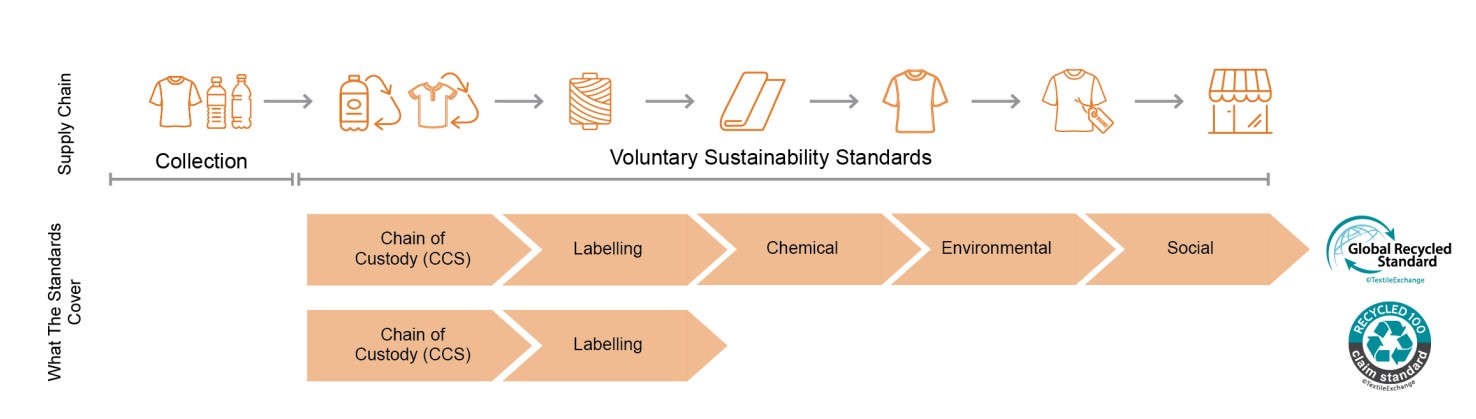
- Recycled Claim Standard (RCS) — Focuses on verifying recycled content (minimum 5% for claims). It tracks the material through the supply chain but does not include broad social or environmental processing criteria.
- Global Recycled Standard (GRS) — More comprehensive. Requires at least 20% recycled content (50% for full GRS labeling in many cases) and adds strict criteria for social responsibility, environmental management, and chemical use. GRS is widely recognized for higher accountability.
Other certifications include SCS Global Services’ Recycled Content Certification. Note that Textile Exchange is transitioning standards toward a unified Materials Matter Standard (effective late 2026–2027), which will further harmonize recycled material claims.
When shopping or sourcing, look for GRS or RCS logos to ensure genuine recycled content.
Challenges and Future Outlook for Recycled Synthetics
While growth is encouraging, challenges remain:
- Limited fiber-to-fiber recycling (most rPET still comes from bottles)
- Quality degradation in repeated mechanical recycling
- Collection and sorting infrastructure gaps
- Higher costs for chemical recycling at scale
Innovations in chemical recycling, AI-assisted sorting, and brand commitments (such as the former 2025 Recycled Polyester Challenge) are helping close the loop. By 2030, recycled synthetics are expected to play an even larger role in circular fashion.
Conclusion
Recycled synthetics — especially recycled polyester (rPET) and recycled nylon — represent a practical bridge toward a more sustainable textile industry. By turning plastic bottles, fishing nets, and manufacturing waste into new yarns and fabrics, we reduce pollution, conserve resources, and meet consumer demand for eco-friendly products.
Whether you’re a brand looking to increase recycled content, a manufacturer exploring rPET yarn, or a consumer wanting to make greener choices, understanding mechanical vs chemical recycling and certifications like GRS and RCS is essential.
Ready to incorporate recycled synthetics into your products or supply chain? Contact our team for expert guidance on sourcing certified rPET, recycled nylon, and custom spinning solutions that meet the highest sustainability standards.
Frequently Asked Questions (FAQs)
What is the difference between recycled polyester and rPET? rPET specifically refers to recycled polyethylene terephthalate (from PET bottles or polyester waste). It is the most common form of recycled polyester.
Is recycled nylon better than recycled polyester? It depends on the application. Recycled nylon offers superior strength and elasticity (great for activewear), while recycled polyester is more versatile, affordable, and widely available for general apparel and home textiles.
Can recycled polyester be recycled again? Yes, but mechanical recycling eventually shortens fibers. Chemical recycling helps maintain quality for multiple cycles.
What does GRS certification mean? It verifies both the recycled content and responsible social/environmental practices throughout processing — stricter than basic RCS.
How can I tell if a product truly contains recycled synthetics? Look for third-party certifications such as Global Recycled Standard (GRS) or Recycled Claim Standard (RCS) on labels or product documentation.