Spunbond Nonwoven Fabric: PP vs PET — Complete Guide to Properties, Specifications and Applications
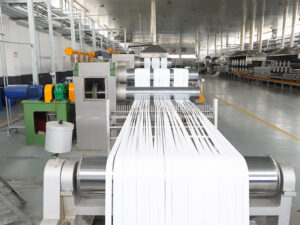
Spunbond nonwoven fabric is one of the two most commercially important nonwoven constructions — produced by extruding polymer directly from melt through spinnerets into continuous filaments, depositing them in a random orientation on a moving belt, and thermally bonding the resulting web. The result is a dimensionally stable, uniform, strong fabric produced at very high speed directly from polymer chips without any intermediate fiber or yarn stage.
Two polymers dominate commercial spunbond production: polypropylene (PP) and polyester (PET). They use the same fundamental spunbond process but produce fabrics with meaningfully different property profiles that make each the preferred choice for distinct application categories. This guide covers both polymers in depth — their properties, specifications, applications, and the SMS (spunbond-meltblown-spunbond) composite laminate that extends spunbond’s capabilities into high-performance filtration and barrier applications.
VNPOLYFIBER supplies spunbond nonwoven fabric — PP spunbond, PET spunbond, and SMS laminates — from our manufacturing network in Asia. Basis weights from 8 gsm to 200 gsm, widths to 320 cm, in hydrophilic, hydrophobic, UV-stabilized, anti-static, and FR-treated grades.
The Spunbond Production Process
Spunbond fabric is produced in an integrated, continuous process from polymer chip to bonded fabric:
- Polymer melting and filtering: PP or PET chips are dried (PET especially — moisture causes IV degradation during melt processing) and fed to a screw extruder that melts the polymer at controlled temperatures (PP: 230–280°C; PET: 270–290°C). The melt is filtered to remove solid contaminants before reaching the spinneret.
- Extrusion and quenching: The polymer melt is extruded through spinnerets — plates with thousands of precisely drilled holes (typically 0.3–0.6 mm diameter). The emerging filaments are quenched by cooling air streams directed at the filament curtain, solidifying the polymer structure.
- Drawing and attenuation: Solidified filaments are drawn by high-velocity air jets (or mechanical drawing rollers in some systems) to achieve the target filament fineness and develop molecular orientation that gives the filament its tensile properties. Drawing determines the final denier of the spunbond filament — typically 1.5D to 3D for most commercial spunbond.
- Web laydown: Drawn filaments are deposited onto a moving porous belt in a randomized orientation controlled by oscillating deflectors. The randomized laydown creates the isotropic (equal MD and CD) property profile that distinguishes spunbond from carded webs which have predominantly machine-direction fiber orientation.
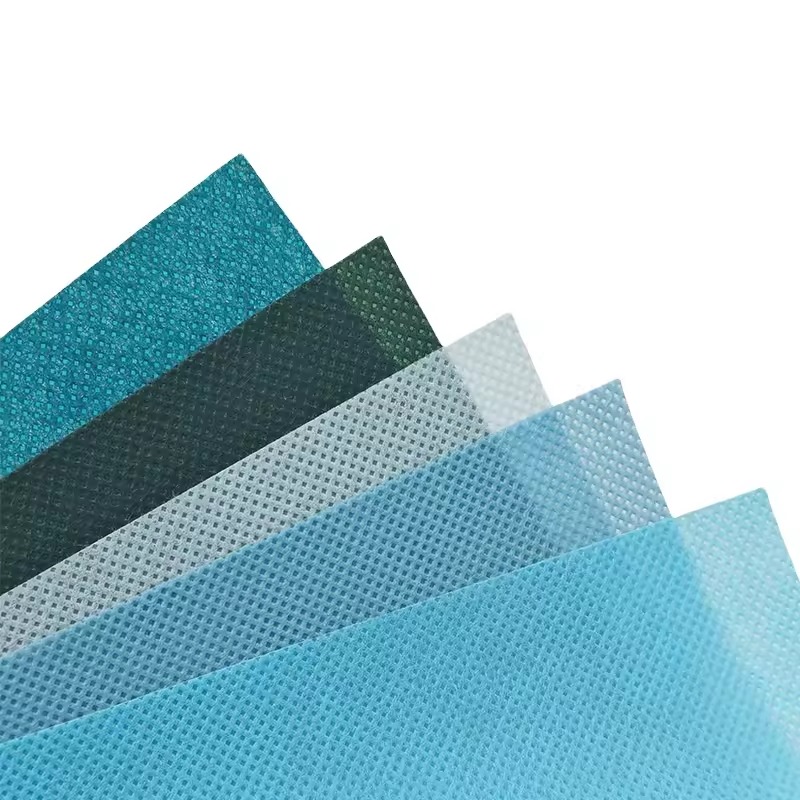
- Thermal calendar bonding: The filament web is passed between heated calendar rollers — one smooth, one engraved with a regular pattern of raised points (typically 18–25% bond area). The raised points compress and melt the filament web at regular intervals, creating the characteristic patterned bond points that give spunbond fabric its strength. The remaining unbonded area provides the fabric’s softness and permeability.
- Winding: Bonded fabric is wound onto jumbo rolls (typically 1,000–2,000 kg), then slit and re-wound to customer roll widths and lengths.
PP vs PET Spunbond: The Complete Comparison
| Property | PP Spunbond | PET Spunbond |
| Density | 0.91 g/cm³ — lightest polymer; fabric is lighter per gsm than PET | 1.38 g/cm³ — heavier per unit volume; more structural for given thickness |
| Melting point | ~165°C — low; limits high-temperature applications | ~255–265°C — much higher heat resistance |
| UV resistance | Poor without stabilizer — degrades rapidly outdoors | Good — inherently more UV-stable than PP for equivalent applications |
| Chemical resistance | Excellent — resists both strong acids and strong alkalis | Good — resists acids and most solvents; limited alkali resistance |
| Moisture absorption | ~0.01% — essentially zero; ideal for moisture barrier applications | ~0.4% — low but higher than PP; affects some hygiene applications |
| Softness | Very soft — ideal for skin-contact hygiene applications | Slightly less soft at equivalent gsm — but very good in fine grades |
| Tensile strength | Good — adequate for most applications | Higher — superior for geotextile and structural applications |
| Dyeability | Cannot be conventionally dyed — solution-dyed only | Good — full colour range with disperse dyes |
| Cost | Lower — PP chips typically cheaper than PET | Higher — PET chips more expensive; processing more demanding |
| Recyclability | PP recycling infrastructure limited vs PET | GRS-certified recycled PET (rPET) spunbond commercially available |
| Bonding temperature | 120–150°C calendar bonding | 180–220°C calendar bonding — requires more energy |
| Primary markets | Hygiene, medical, agricultural, packaging | Geotextile, automotive, filtration, home textile |
SMS and SMMS Laminates: Beyond Plain Spunbond
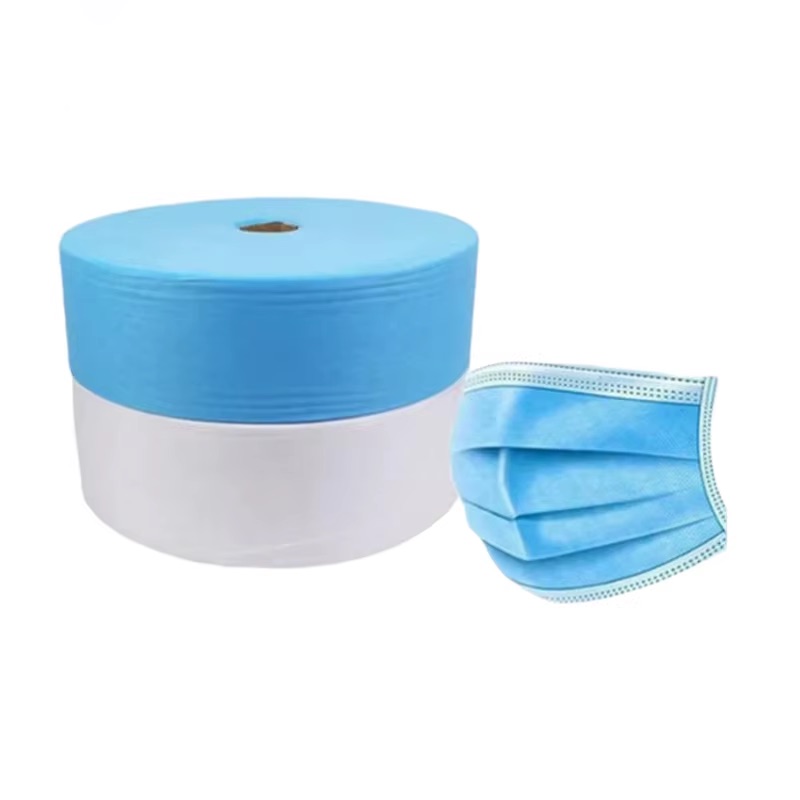
The SMS (spunbond-meltblown-spunbond) laminate is the most commercially important engineered nonwoven construction — combining the structural strength and fabric integrity of spunbond with the filtration efficiency and barrier properties of meltblown in a single integrated web. The S layers provide the tensile strength and abrasion resistance; the M layer provides barrier against liquid penetration and particle filtration.
SMMS adds a second meltblown layer for enhanced barrier performance. SSMS and other configurations exist for specific application requirements. All are produced on integrated spunbond-meltblown production lines where all layers are formed sequentially on the same belt and thermally bonded in one pass.
- Hydrostatic head (water barrier): The key performance parameter for SMS in medical and hygiene applications — the pressure of water column (cm H₂O or mm Hg) that the fabric resists before leakage. Medical gown standards typically require >100 cm H₂O; surgical drape standards >150 cm H₂O.
- Bacterial filtration efficiency (BFE): Critical for surgical mask and gown applications — the percentage of bacteria-carrying aerosol particles retained by the fabric. BFE >98% is the standard for medical-grade SMS.
- Common SMS specifications: 20 gsm SMS for basic medical gowns; 30–40 gsm for surgical drapes and gowns; 50–70 gsm for high-barrier coverall fabric; 15–25 gsm for hygiene backsheet applications.
PP Spunbond Applications in Depth
Hygiene — The Dominant Market
PP spunbond is the standard fabric for the outer layers of disposable hygiene products — diapers, sanitary napkins, adult incontinence products, and panty liners. The specific grades used:
- Diaper top sheet (coverstock): Ultra-soft, hydrophilic-treated PP spunbond, typically 10–18 gsm; must be very soft (for infant skin), hydrophilic (to allow rapid fluid transfer into the absorbent core), and produce low rewet (the fluid should not wick back up through the top sheet onto the skin).
- Diaper back sheet: Hydrophobic PP spunbond or SMS laminate, typically 15–22 gsm; must be impermeable to liquid while maintaining breathability (water vapor transmission rate — WVTR).
- Adult incontinence: Similar to infant diaper but with stricter wet strength requirements and often larger dimensions; SMS laminates used for high barrier requirements.
Medical and Protective Apparel
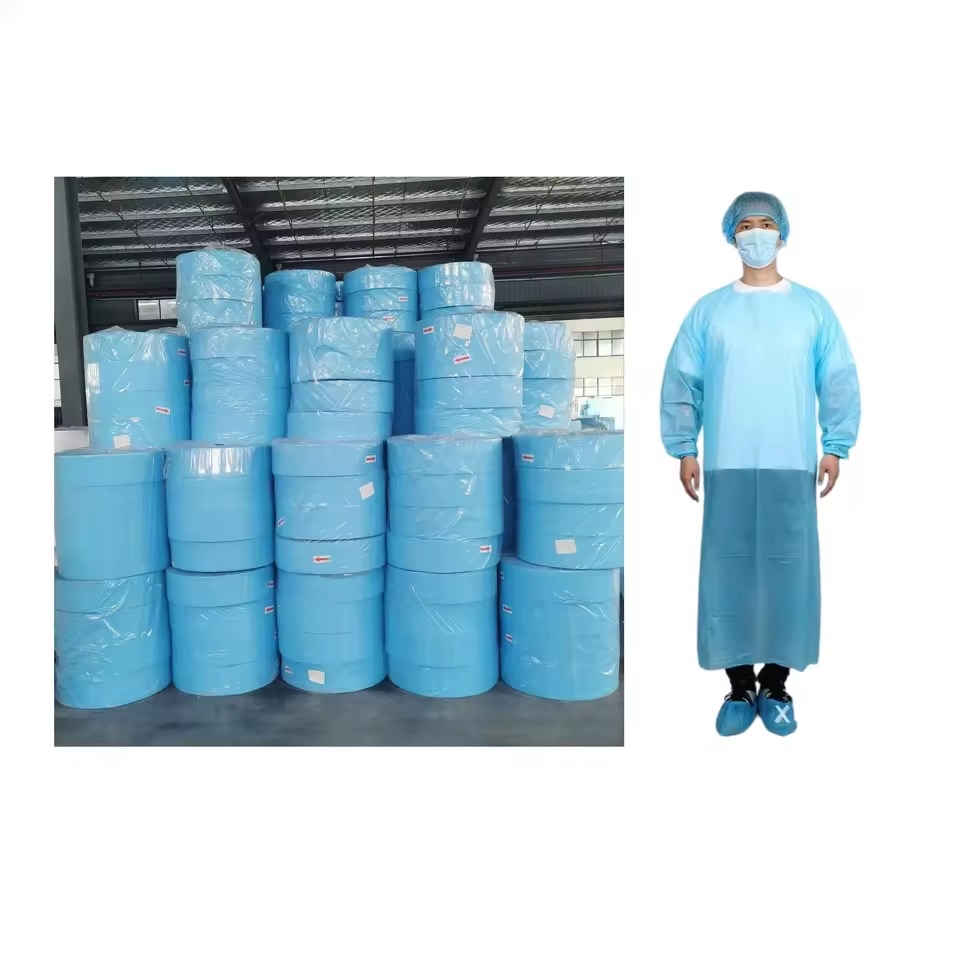
PP SMS nonwoven is the standard for disposable medical protective garments — surgical gowns, isolation gowns, coveralls, caps, masks, and shoe covers. The SMS construction provides the combination of breathable comfort (for wearer) and liquid and particle barrier protection that medical applications require. Key grades:
- Basic isolation gown: 20–30 gsm SMS; AAMI Level 1 or 2 barrier performance
- Surgical gown: 40–60 gsm SMS; AAMI Level 3 or 4; critical zones may use 4-layer laminate
- Surgical mask outer layer: 20–25 gsm PP spunbond; provides structure and outer face of mask
Agriculture
UV-stabilized PP spunbond is the standard crop cover and row cover material for protected horticulture globally. The fabric provides protection from frost, insect pests, hail, and wind while transmitting sufficient light and allowing rain penetration and transpiration. Key specifications:
- Frost protection: 17–30 gsm; typically provides 2–4°C frost protection depending on gsm
- Insect exclusion: 17–30 gsm; pore size small enough to exclude most flying pests while maintaining air circulation
- UV stabilization: HALS (hindered amine light stabilizers) added to polymer; minimum 18–24 months outdoor life specification
PET Spunbond Applications in Depth
Geotextile and Civil Engineering
PET spunbond (typically 80–200 gsm) is used in geotextile applications requiring better UV resistance, higher dimensional stability at elevated temperatures, and higher tensile strength than PP spunbond can provide. Applications include road construction separation layers, drainage filtration, erosion control on steep slopes, and as the protective layer over geomembranes.
Home Textiles and Furniture
PET spunbond from 30–80 gsm is widely used as a backing fabric for carpets, a mattress base cover (the fabric on the underside of a mattress spring unit), furniture dust cover for upholstered pieces, and as the interlining layer in quilted bedding. PET’s dimensional stability through laundering at 60°C is an advantage over PP for home textile applications.
Technical and Automotive
PET spunbond is used in automotive applications including engine compartment insulation backing fabric (the higher heat tolerance of PET vs PP is critical here), acoustic insulation, and roofing underlays where fire resistance regulations require higher-melting-point materials.
Spunbond Nonwoven Specification Guide
| Grade | GSM | Polymer | Application and Key Spec |
| Ultra-light hygiene | 8–15 gsm | PP | Diaper coverstock; very soft; hydrophilic finish; ≤0.3N/5cm stiffness |
| Standard hygiene | 15–25 gsm | PP | Diaper/napkin coverstock and backsheet; hydrophilic or hydrophobic grade |
| SMS medical | 20–60 gsm | PP | Surgical gown and drape; BFE >98%; hydrostatic head >100 cm H₂O |
| Agricultural | 17–30 gsm | PP | Crop cover; UV-stabilized; 18–24 month outdoor life rating |
| Geotextile (PET) | 80–200 gsm | PET | Road and drainage; EN 13249; high UV and temperature resistance |
| Furniture/mattress base | 40–80 gsm | PET | Dimensional stability; 60°C washable; available in white and black |
| Automotive backing | 80–120 gsm | PET | Temperature resistance; bonding surface for adhesive application |
| Premium recycled | Any above | rPET | GRS-certified; same properties; verified sustainable claim |
Conclusion
PP spunbond and PET spunbond share the same elegant manufacturing principle — polymer directly to fabric — but serve distinct markets driven by their different polymer properties. PP’s softness, chemical resistance, and low cost make it the dominant choice for hygiene, medical, and agricultural applications. PET’s heat resistance, UV stability, higher strength, and recyclability into GRS-certified grades make it the preferred choice for geotextile, home textile, and technical applications.
Understanding the PP vs PET decision for spunbond is the foundation for accurate fabric specification, and understanding the SMS laminate extends the possibilities of spunbond into high-barrier and high-filtration applications that neither polymer achieves as plain spunbond. VNPOLYFIBER supplies both PP and PET spunbond, SMS laminates, and meltblown-layer fabrics from our manufacturing network. Contact us with your gsm requirement, polymer specification, surface treatment needs, and certification requirements for quotations.