Recycled Solid Polyester Fiber: The Complete Guide to Sustainable Solid Fiberfill
In an era where sustainability and performance can no longer be treated as opposing forces, recycled solid polyester fiber has emerged as one of the most compelling materials in the global textile and nonwoven industry. Derived from post-consumer PET plastic — primarily discarded water bottles and food packaging — recycled solid fiber delivers the mechanical performance, comfort, and durability of virgin polyester while dramatically reducing the environmental footprint of fiber production.
From pillow filling and stuffed toys to geotextiles, automotive interiors, exhibition carpets, and acoustic insulation, recycled solid polyester fiber is quietly underpinning a broad range of everyday and industrial products. This comprehensive guide explains what solid polyester fiber is, how its recycled variant is produced, what makes it perform so well across such different applications, and why demand for recycled solid fiber is growing rapidly across the globe.
What Is Solid Polyester Fiber?
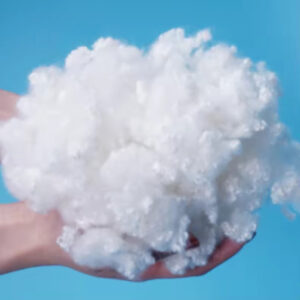
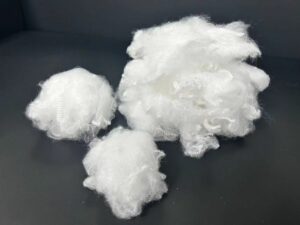
Solid polyester fiber is a polyethylene terephthalate (PET) staple fiber with a solid, uniform cross-section—as opposed to hollow fiber variants such as hollow conjugated siliconized (HCS) fiber, which contain an air channel running through their length. The solid cross-section gives this fiber a denser, more compact character per unit volume compared to hollow fiber, translating into specific performance advantages in applications where weight, firmness, acoustic density, or surface coverage are priorities over maximum loft.
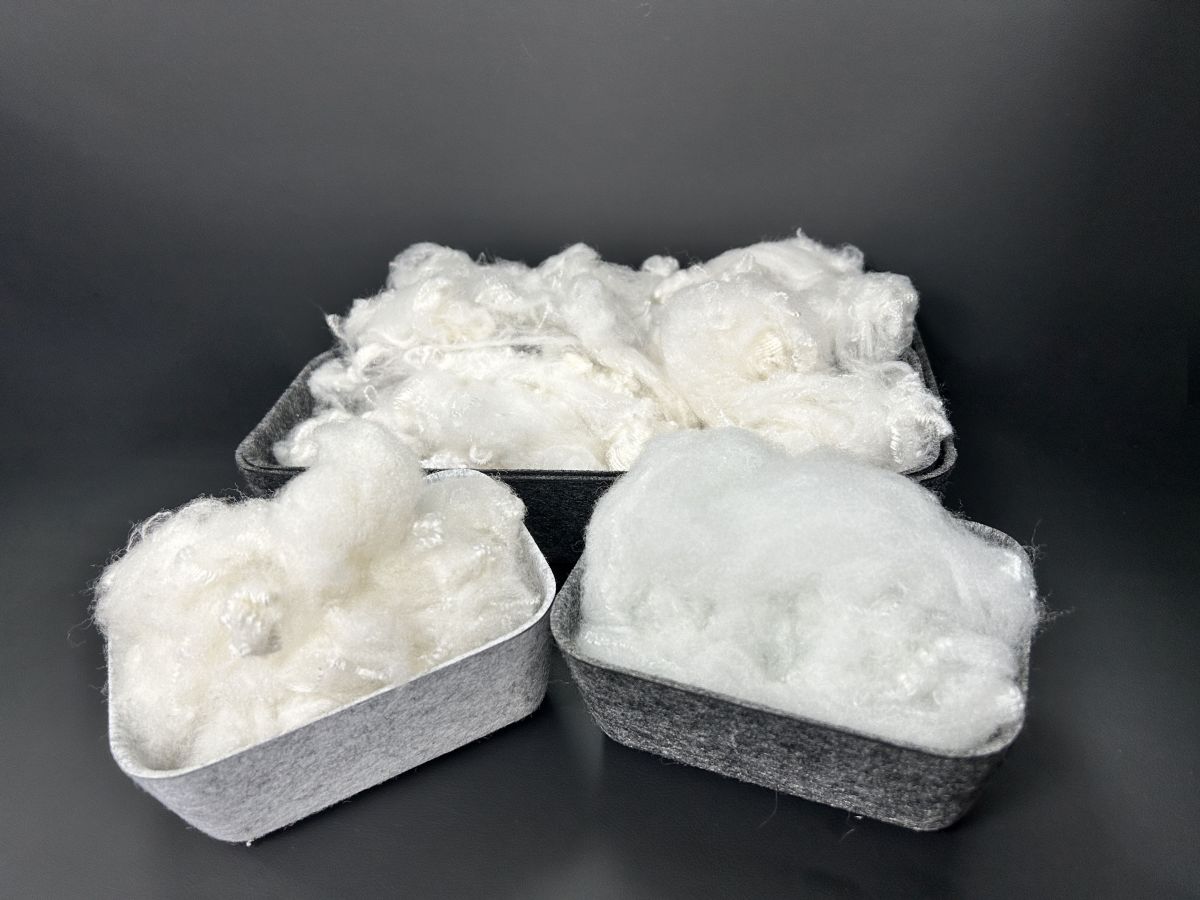
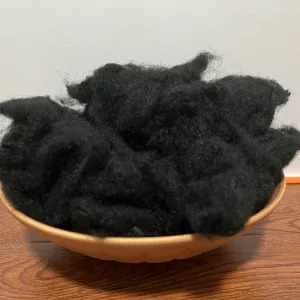
Solid polyester fiber is produced in a wide range of deniers (fiber fineness), staple lengths, and functional variants — including standard white, black (carbon black pigmented), and dope-dyed colors — and can be engineered with various surface finishes, crimp levels, and tensile properties to match specific application requirements.
When produced from recycled PET feedstock — recovered from post-consumer bottles, industrial PET waste, or pre-consumer fiber scraps — solid polyester fiber becomes recycled solid polyester fiber (recycled PSF), carrying all the performance characteristics of the virgin equivalent while contributing to a circular materials economy.
How Recycled Solid Polyester Fiber Is Made
The production of recycled solid polyester fiber begins not at a chemical plant but at a collection point—a bottle bank, a recycling facility, or an industrial waste stream. Understanding this production process helps explain both the sustainability credentials and the performance characteristics of the finished fiber.
Step 1: Collection and Sorting
Post-consumer PET plastic — primarily beverage bottles — is collected through municipal recycling programs and sorted by polymer type and color. Clear and light-blue bottles are preferred for producing bright white fiber; mixed or colored bottles are more suitable for producing black or colored fiber grades. Effective sorting is critical: contamination with other polymers (PVC, HDPE) at this stage can cause quality issues in the finished fiber.
Step 2: Cleaning and Shredding
Sorted PET bottles are thoroughly washed to remove labels, adhesives, food residues, and surface contamination. The cleaned bottles are then shredded into small flakes — typically 8–12 mm in size — using industrial shredder equipment. These PET flakes are washed again and dried to remove residual moisture before further processing.
Step 3: Melting and Filtering
The clean, dry PET flakes are melted in an extruder and passed through fine filtration screens to remove any remaining solid contaminants — unmelted particles, pigment agglomerates, or residual non-PET material. This filtration step is critical for producing high-quality fiber with consistent properties and no defects.
Step 4: Melt Spinning
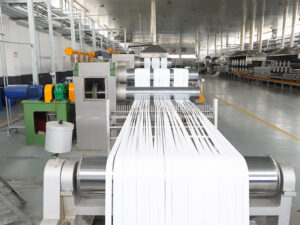
The filtered PET melt is pumped through spinneret plates containing thousands of precision-bored circular holes. For solid fiber, the holes are fully circular—producing a solid round filament as the polymer solidifies in a cross-flow quench air stream. The diameter of the holes determines the fiber’s denier (linear density). The solidified filaments are collected into a large tow bundle for further processing.
Step 5: Drawing, Crimping, Finishing, and Cutting
The as-spun tow is drawn (stretched) between heated rollers to develop tensile strength and polymer chain orientation, then mechanically crimped to add cohesion and processability, finished with a surface oil treatment, and cut to the target staple length. The finished fiber is baled and ready for use in downstream textile and nonwoven manufacturing.
Recycled Solid Fiber vs. Virgin Solid Fiber: Key Differences
Dimension | Virgin Solid Polyester Fiber | Recycled Solid Polyester Fiber |
Raw Material | Petrochemical PTA + MEG (new fossil resources) | Post-consumer PET bottles & industrial PET scrap (circular) |
Carbon Footprint | Higher — primary polymer production required | 30–60% lower—recycled feedstock avoids primary production |
Energy Consumption | Higher | Significantly lower |
Performance / Quality | Highest consistency; widest specification range | Equivalent for most applications, with slight limits in ultra-fine grades |
Color | Bright white, optically brightened; any color possible | Bright white (from clear bottles); black; standard colors (dope dyed) |
Certification | Oeko-Tex Standard 100 | GRS (Global Recycled Standard) + Oeko-Tex Standard 100 |
Cost | Generally lower for standard grades | Comparable; premium for GRS-certified grades |
Best Applications | Medical, hygiene, ultra-fine filtration | Automotive, geotextiles, carpets, cushioning, acoustic insulation, fiberfill |
Key Properties and Advantages of Solid Polyester Fiberfill
Whether produced from virgin or recycled feedstock, solid polyester fiber delivers a specific set of performance properties that make it uniquely suitable for its major applications:
Durability and Long-Term Shape Retention
Solid fiberfill is renowned for maintaining its shape and consistency over extended periods of regular use. Unlike lower-quality fill materials that clump, shift, or compress permanently over time, properly specified solid polyester fiber retains its structure and distribution within a pillow, cushion, or toy—even through years of use and repeated washing. The solid cross-section’s inherent density and rigidity resist the fiber matting and clumping that degrades comfort and appearance in inferior fill materials.
Comfort and Pressure Conformity
While hollow fiber is favored for maximum loft and lightness, solid fiberfill offers a distinctively different comfort character — denser, more supportive, and more pressure-conforming. Solid fill compresses more evenly under load and provides a firmer, more supportive feel than hollow alternatives, making it the preferred choice for cushions, dolls, toys, and firm pillow products where support rather than maximum loft is the priority.
Hygienic and Hypoallergenic Performance
Polyester fiber — solid or hollow — is inherently hydrophobic: it does not absorb moisture or provide a hospitable environment for dust mites, mold, mildew, or bacteria. This makes solid polyester fiberfill naturally hygienic and hypoallergenic — an important attribute for pillows, stuffed toys, and bedding products used by children or allergy-sensitive individuals. The non-absorbent character also makes solid fill products easy to wash and quick to dry, maintaining their hygiene throughout a long product life.
Acoustic Density
The solid, dense cross-section of solid polyester fiber gives it superior acoustic mass compared to hollow fiber. In acoustic insulation applications—automotive door panels, floor underlays, ceiling boards, and industrial noise barriers—solid fiber’s density contributes to sound absorption and transmission loss performance that hollow fiber cannot match at equivalent weight. This makes solid fiber the preferred choice when acoustic density, rather than maximum loft, is the design priority.
Surface Coverage and Abrasion Resistance
In surface textile applications—needle punch carpets, exhibition felts, trunk liners, and geotextiles—the solid cross-section of solid fiber provides denser surface coverage and better abrasion resistance than hollow alternatives. The solid fiber’s mass per unit length creates a more robust fiber-to-fiber contact network within the needled or bonded structure, resisting fiber extraction and pilling under mechanical stress.
Applications of Recycled Solid Polyester Fiber
Geotextile Industry
Recycled solid polyester fiber is a primary raw material for needle-punch geotextile nonwovens—one of the most technically demanding applications for polyester fiber. Geotextiles must deliver high tensile strength, long-term dimensional stability under sustained load, resistance to soil chemistry and UV exposure, and reliable hydraulic performance (filtration and drainage) over multi-decade service lives in demanding civil engineering environments.
Solid polyester fiber’s inherent mechanical robustness—high tenacity, good elongation, and excellent creep resistance—makes it ideally suited for geotextile applications, including road subbase separation, embankment reinforcement, slope erosion control, drainage filtration, and land reclamation. Recycled solid fiber delivers equivalent geotechnical performance to virgin fiber at reduced environmental cost and is increasingly specified by infrastructure projects with sustainability requirements.

Automotive Interior — Carpets, Trunk Liners, and Door Panels
The automotive interior is one of the largest and most technically demanding markets for recycled solid polyester fiber. Key applications include:
- Exhibition and molded carpets: Needle punch carpets for vehicle floors use solid polyester fiber to deliver durable, abrasion-resistant, easily dyed surface coverage. The solid fiber’s density provides the loop-free, close-shorn carpet surface preferred for automotive interiors.
- Trunk liners and trunk nonwovens: Solid polyester fiber nonwovens provide the durable, aesthetically consistent lining of vehicle luggage compartments—combining mechanical resilience with a clean, finished appearance.
- Door panel substrates: Needle punch solid fiber nonwovens are used as substrate materials in door panel constructions, providing a dimensionally stable base for thermally bonded or resinated composite panels.
- Acoustic underlay: Dense solid fiber nonwovens used as floor carpet underlays and firewall insulators deliver acoustic mass and thermal insulation critical for NVH (noise, vibration, harshness) performance.
The use of recycled solid fiber in automotive applications — particularly black fiber, which eliminates the need for dyeing in dark-colored interior components — is growing rapidly as automotive manufacturers pursue supply chain sustainability targets and reduce VOC emissions from production processes.
Exhibition Carpet and Needle Felt
Exhibition and event carpets — the temporary floor coverings used in trade show halls, conference centers, event venues, and retail pop-ups — are a major application for recycled solid polyester fiber, particularly in black and colored variants. Exhibition carpets must deliver acceptable foot comfort and visual quality during short-term events while being cost-effective enough for single or limited-use deployment.
Solid polyester fiber’s combination of processability on needle punch lines, good abrasion resistance, and excellent colorability make it the dominant fiber for exhibition carpet production. Black solid fiber (carbon black-pigmented) is particularly valued for producing the deep, uniform black carpets widely used in premium exhibition and event contexts, eliminating dyeing cost and water usage while delivering a colorfast, consistent black surface.
Pillow and Cushion Fill
While hollow conjugated siliconized fiber (HCS) dominates the premium pillow fill market, solid fiberfill occupies an important segment—particularly for firmer, more supportive pillow types; furniture cushions; back support pillows; and applications where cost-efficiency is a priority alongside acceptable comfort performance.
Solid polyester fiberfill offers excellent clump resistance, good washability, and reliable allergen resistance at a cost point accessible to a broad range of product categories. For stuffed toys, decorative cushions, and novelty filled products, solid fiberfill provides the combination of softness, shape retention, and hygienic performance needed for safe and durable children’s products.
Acoustic and Thermal Insulation
Recycled solid polyester fiber is widely used in thermal and acoustic insulation products — both as a loose fill and as the raw material for needle punch and thermally bonded insulation panels. Its acoustic density and thermal resistance make it effective in building wall cavities, ceiling systems, HVAC duct lining, and industrial noise barriers. The use of recycled fiber in insulation applications is particularly compelling from a lifecycle perspective—the energy saved in building operations by effective insulation far exceeds the energy embodied in fiber production, even for virgin fiber. Using recycled fiber amplifies this lifecycle benefit further.
Solid Black Fiber — Special Applications
Black solid polyester fiber—produced by incorporating carbon black pigment during the melt spinning process or through dope dyeing—deserves specific mention as a distinct product variant with its own application niche. Unlike fiber that is dyed after production, carbon-black solid fiber carries its color uniformly throughout its cross-section—providing excellent UV resistance, superior colorfastness, and a permanently deep black appearance that does not fade, bleed, or require after-treatment.
Key applications for black solid fiber include automotive trunk liners, exhibition carpets, geotextile products where UV resistance is critical, and agricultural shade nets. The elimination of the dyeing process also removes a significant source of water consumption, chemical use, and wastewater generation from the production chain—a meaningful sustainability advantage.
Sustainability: Why Recycled Solid Fiber Matters
The environmental case for recycled solid polyester fiber rests on three interconnected benefits: resource conservation, waste reduction, and carbon footprint reduction.
- Resource conservation: Every kilogram of recycled PET fiber produced from post-consumer bottles is a kilogram of new petroleum that is not extracted, refined, and polymerized. Producing PET fiber from recycled feedstock uses approximately 50–70% less energy than producing it from virgin petrochemicals.
- Waste diversion: Approximately 25 standard 500 ml PET bottles are required to produce one kilogram of recycled polyester fiber. By creating demand for post-consumer PET as a valued feedstock, recycled fiber production directly incentivizes bottle collection and diverts plastic from landfill and ocean pollution.
- Carbon footprint reduction: The reduced energy intensity of recycled PET fiber production translates directly into lower greenhouse gas emissions per kilogram of fiber — typically 30–60% lower than virgin PSF, depending on the specific production process and energy mix.
- GRS certification: Global Recycled Standard (GRS) certification provides third-party verified proof of recycled content and chain-of-custody traceability from bottle collection through to finished fiber — enabling buyers and brands to make substantiated, auditable recycled content claims.
- Compatibility with further recycling: Recycled solid polyester fiber, like virgin polyester, is itself recyclable through the PET recycling stream—supporting the progression toward a truly circular polyester economy where fiber is repeatedly recovered and reprocessed rather than sent to landfill at end of life.
How to Specify Recycled Solid Polyester Fiber
When sourcing recycled solid polyester fiber, the following technical specifications should be clearly defined:
- Denier: Fiber fineness — finer denier (1.5–3d) for soft fill and fine nonwovens; coarser denier (6–15d) for geotextiles, carpets, and acoustic insulation.
- Staple length: 32–38 mm for fine carding and wet-lay; 51–64 mm for standard dry-lay and needle punch processing.
- Color: Bright white, optical brightener treated, raw white, black (carbon black), or specific dope-dyed colors.
- Tenacity: Standard or high-tenacity grades depending on mechanical performance requirements of the end product.
- Crimp level: Higher crimp for fill applications requiring cohesion and loft; lower crimp for geotextile and carpet applications where a more compact, dense structure is required.
- Recycled content certification: Specify GRS (Global Recycled Standard) certification if verified recycled content documentation is required for your supply chain.
- Chemical safety certification: Specify Oeko-Tex Standard 100 for applications involving skin contact (pillows, toys, bedding) or requiring chemical safety assurance.
Conclusion: Recycled Solid Polyester Fiber Is a Material for the Future
Recycled solid polyester fiber represents one of the clearest examples of circular economy thinking applied to industrial materials—taking the plastic waste that is one of the defining environmental challenges of our time and converting it into a high-performance, durable, versatile fiber that serves real needs across real industries.
Its combination of mechanical performance, acoustic density, hygienic properties, and design versatility — together with a dramatically reduced environmental footprint compared to virgin alternatives — positions recycled solid polyester fiber as a material whose importance will only grow as sustainability requirements become more stringent across the automotive, construction, textile, and consumer goods supply chains.
Whether you are sourcing solid fiberfill for pillows and toys, solid fiber for geotextile production, black solid fiber for automotive trunk liners and exhibition carpets, or recycled PSF for acoustic insulation applications, we invite you to contact our team to discuss specifications, samples, and GRS certification documentation.