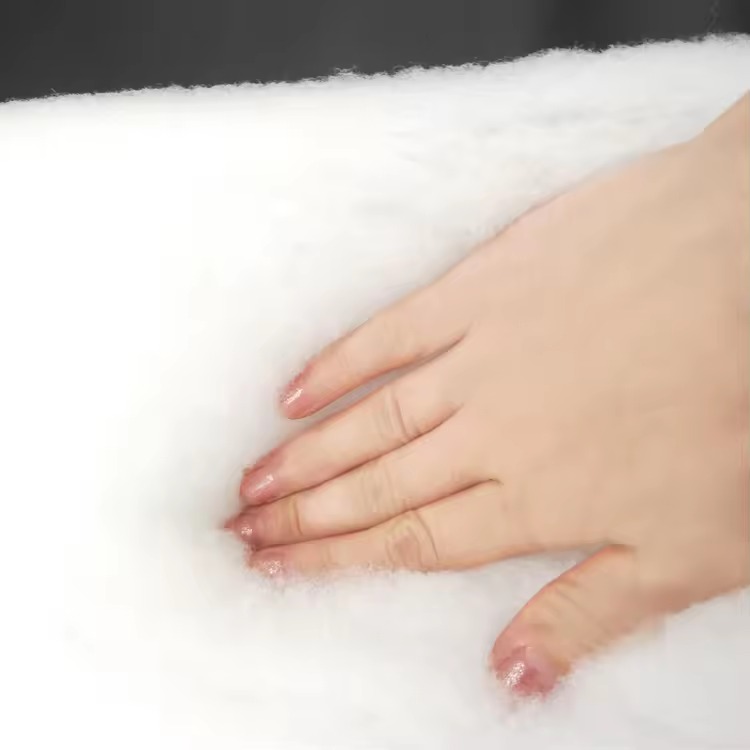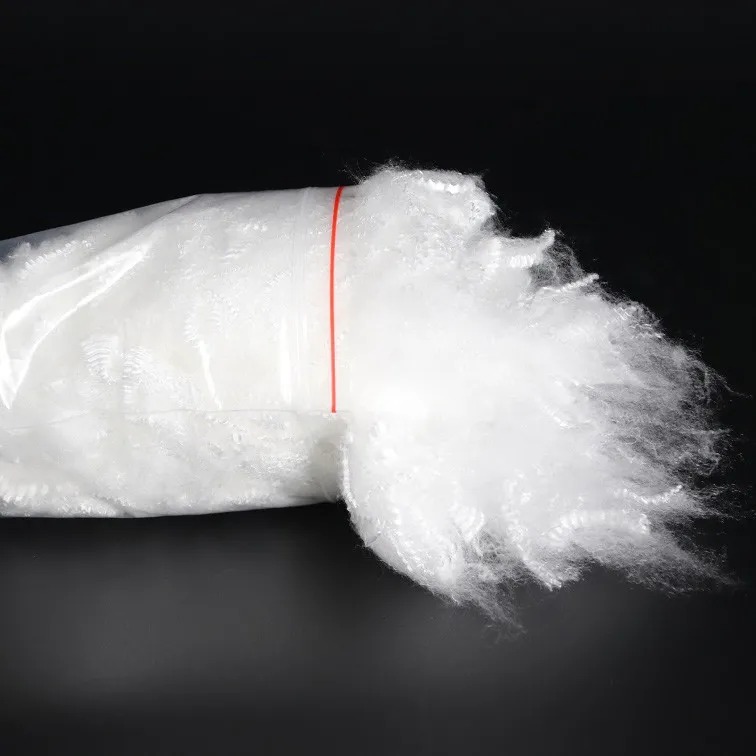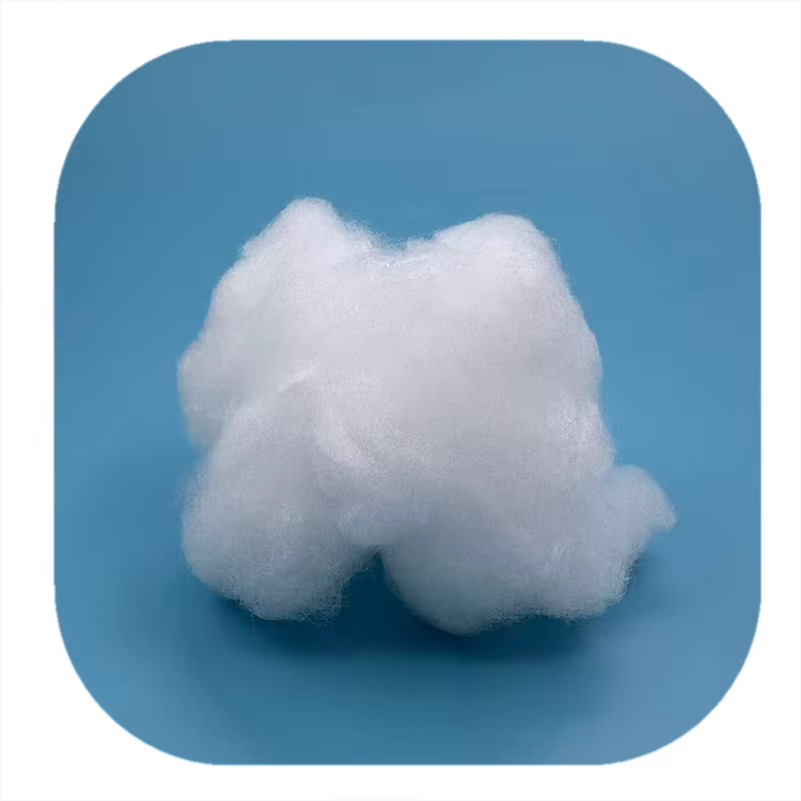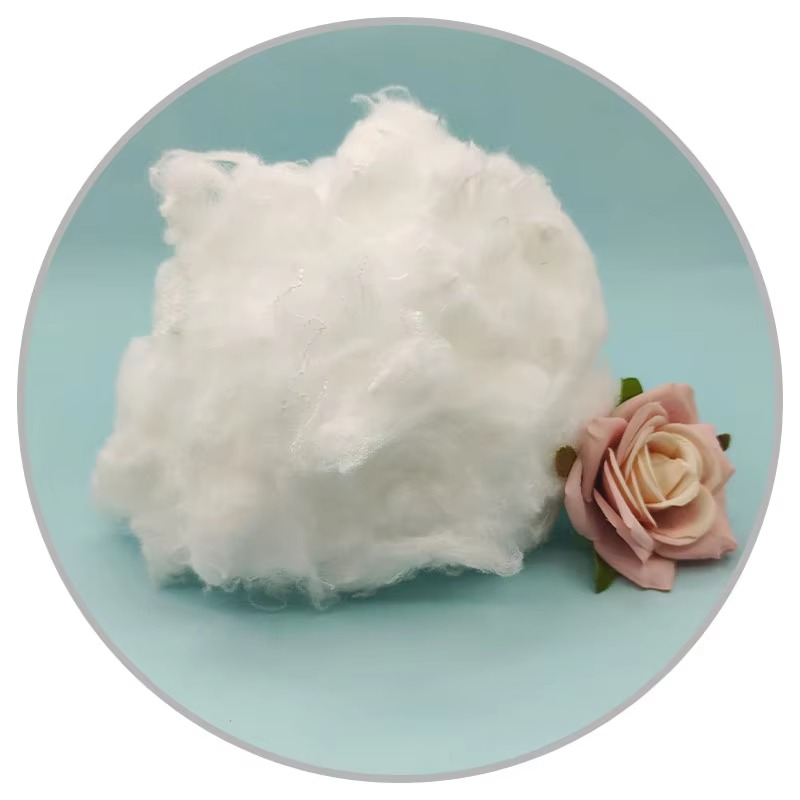
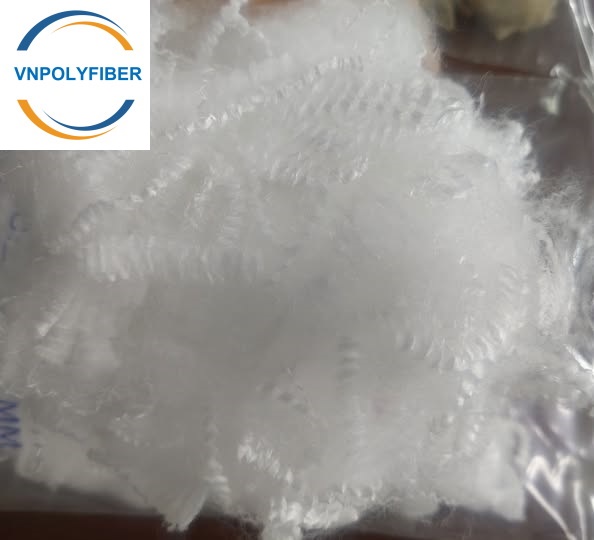
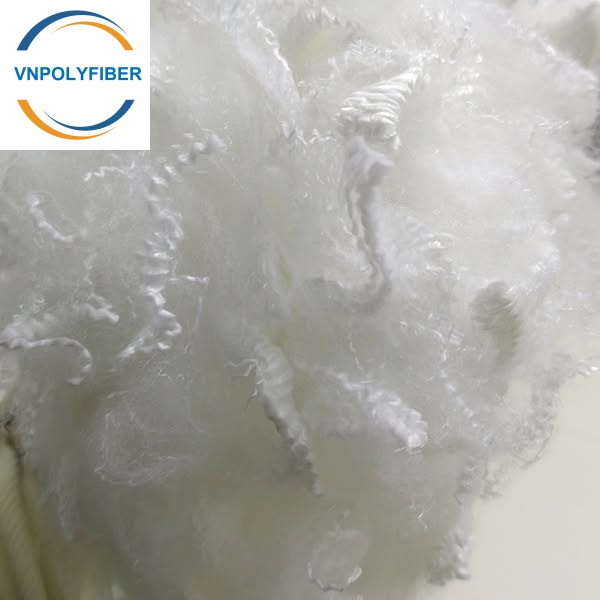
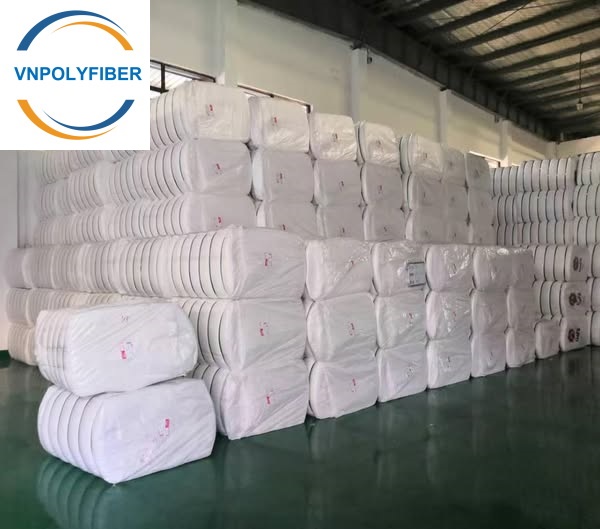
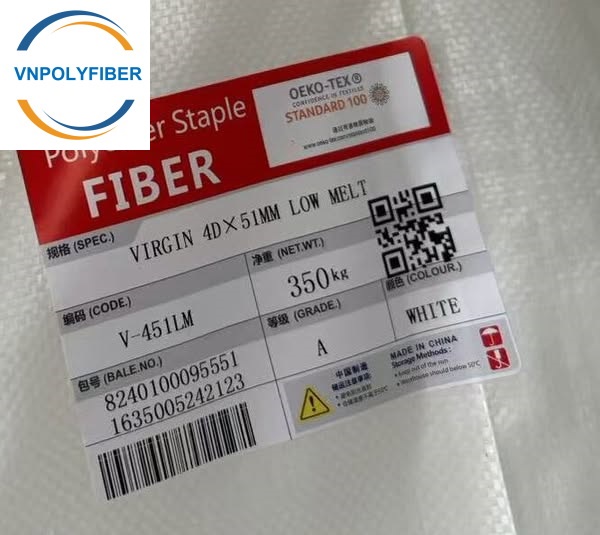
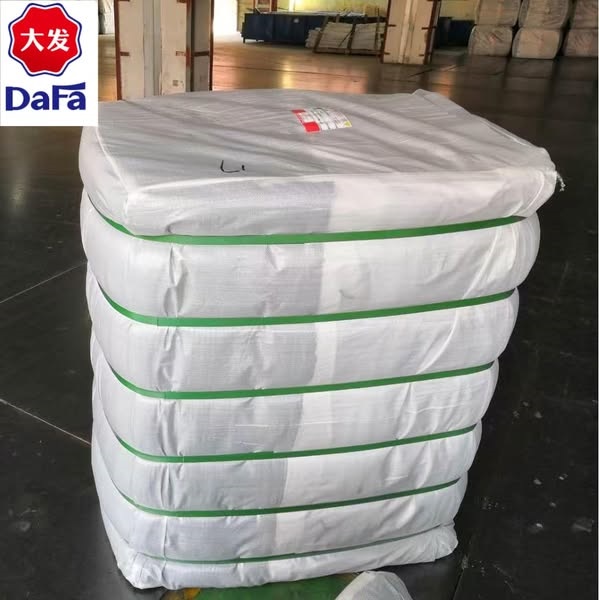
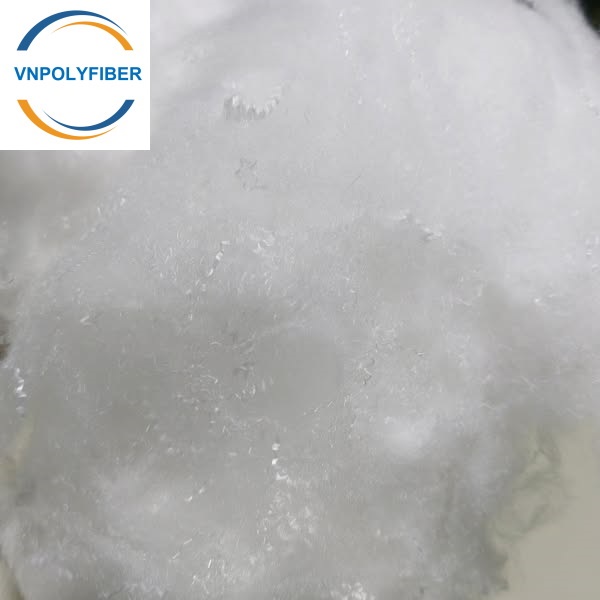
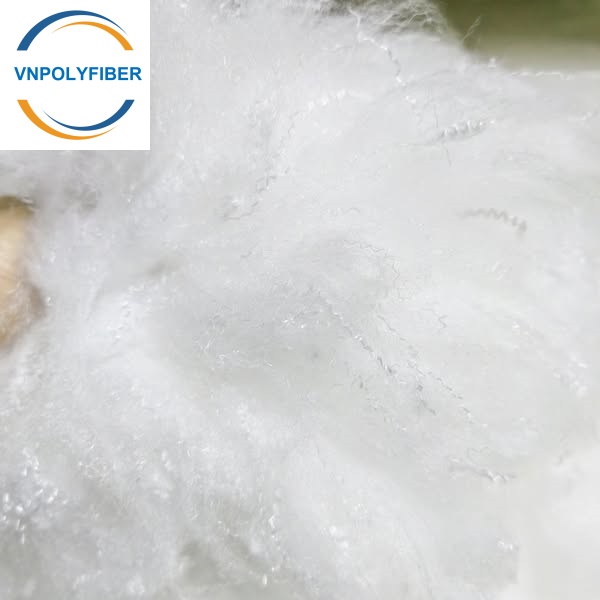
Virgin Low Melting Fiber White 4D x 51MM
- Low-melt or fusible fibers are synthetic materials engineered to liquefy at much lower temperatures than standard polyester.
- They act as a thermal bonding agent, allowing materials to fuse together without the need for traditional adhesives.
- This process eliminates chemical binders, resulting in a cleaner and more sustainable manufacturing method.
PRODUCT DETAIL
Low Melt Fiber (LMF): The Ultimate Guide to Bi-Component Thermal Bonding Fibers
Whether you’re designing automotive interiors, manufacturing furniture, or engineering industrial nonwoven fabrics, one material quietly underpins much of what holds it all together: low melt fiber (LMF). Also widely known as fusible fiber or thermal bonding fiber, LMF is a specialty synthetic fiber engineered to bond at much lower temperatures than conventional fibers — eliminating the need for chemical adhesives while delivering superior durability, cleaner manufacturing, and greener outcomes.
In this comprehensive guide, we break down everything you need to know about low melt fiber: what it is, how bi-component fiber technology works, where LMF is applied across industries, and why it is becoming an essential material for sustainable manufacturing.
What Is Low Melt Fiber (LMF)?
Low melt fiber, or LMF, is a type of synthetic fiber specifically engineered to melt at significantly lower temperatures than standard polyester. While conventional polyester fiber melts at above 280°C, low melt fiber has a sheath that melts in the range of 100–200°C, depending on its polymer composition.
This low melting point is not a weakness — it is the defining feature that makes LMF so valuable. When heat is applied during manufacturing, the outer layer of the LMF melts and flows around neighboring fibers, fusing them into a unified structure. Once cooled, the bond is strong, durable, and free of chemical adhesives. The result is a cleaner, more sustainable bonding solution used across automotive, furniture, construction, hygiene, and medical industries worldwide.
Low melt fiber is sometimes called:
- Fusible fiber
- Thermal bonding fiber
- LMF (abbreviation)
- Low melting point fiber
- Binder fiber
The Science: How Bi-Component Fiber Technology Works
The secret to low melt fiber’s performance lies in its bi-component fiber structure — a sophisticated engineering approach that combines two different polymers within a single fiber strand.
Sheath-Core Architecture
Most LMF products use a sheath/core configuration. Two polymers are extruded simultaneously: the core polymer has a high melting point and maintains the fiber’s structural integrity throughout processing; the sheath polymer has a much lower melting point and acts as the thermally activated adhesive.
When heat is applied — whether through a hot-air oven, a calendar press, or an infrared heater — the sheath melts and flows around adjacent fibers. The core remains intact, preserving fiber length and mechanical strength. As the material cools, the melted sheath solidifies to form a permanent, adhesive-free bond.
Common Polymer Combinations in LMF
The two most widely used polymer pairings in bi-component fiber for LMF are:
- Co-polyester / Polyester (CoPET/PET): The most common combination for general-purpose LMF. CoPET forms the low-melting sheath while standard PET forms the high-melting core. This pairing delivers excellent bonding strength, dimensional stability, and durability across a wide range of applications.
- Polypropylene / Polyethylene (PP/PE): Preferred where flexibility, moisture resistance, and chemical resistance are priorities. This combination is common in hygiene products, geotextiles, and applications where PE’s flexibility is an advantage.
The precise melting temperature of the sheath polymer is carefully controlled during manufacturing, allowing for highly tailored bonding characteristics. By blending two kinds of polymers, the resulting bi-component fiber inherits the beneficial characteristics of both — creating a material that is greater than the sum of its parts.
How LMF Is Processed in Manufacturing
Understanding how low melt fiber is activated during production helps explain why it has become the preferred bonding method for nonwoven fabric manufacturing. There are three primary thermal bonding methods used with LMF:
- Hot-Air Oven: The fiber web is conveyed through a heated oven where circulating hot air activates the LMF sheath. This method is ideal for high-loft nonwovens and is the primary bonding method for products such as acoustic insulation, mattress padding, and furniture fill.
- Calendar Pressing: The fiber web passes between heated rollers (calendar rolls). This provides a more compact, uniform structure and is used for products requiring precise thickness control.
- Infrared Heater: Infrared radiation heats the fiber web from above or below, triggering the sheath melt. This method offers energy efficiency and is often used as a secondary bonding step for needled nonwovens that need additional strength.
In all three processes, the low melt fiber acts as the “glue” within the fiber matrix — flowing when heated and locking when cooled — creating a stable, cohesive nonwoven structure without a single drop of liquid adhesive.
Applications of Low Melt Fiber in Automotive Interiors
The automotive industry is one of the largest consumers of LMF, driven by the sector’s relentless push for lightweighting, VOC reduction, and high-quality aesthetics. Low melt fiber is embedded throughout the modern vehicle interior:
Headliners
LMF bonds the fabric facing to the foam backing of headliners, eliminating adhesive sprays that release volatile organic compounds (VOCs). The result is a headliner that is lighter, more dimensionally stable, more resistant to delamination, and better for cabin air quality.
Door Panels
Fabric or leather coverings are bonded to molded door panel substrates using LMF, creating seamless, high-quality interior surfaces. The adhesive-free bond enhances both the visual quality and long-term durability of the panel.
Carpets and Floor Mats
LMF bonds carpet pile to its backing, producing a strong, wear-resistant floor covering. For molded carpets — where the carpet conforms to the complex shape of the vehicle floor — LMF enables precise forming without adhesive waste or uneven bonding.
Acoustic and Thermal Insulation
Low melt fiber is blended with solid recycled polyester or virgin PET fiber to form thick, sturdy nonwoven structures used as acoustic insulation. These materials are used in wheel arches, engine compartments, underbody panels, and behind door panels to reduce noise transmission and thermal transfer.
Seat Cover Backings
LMF is incorporated into nonwoven fabrics used as seat cover backings, providing added dimensional stability and helping maintain the precise shape of the seat cover over years of use.
Key automotive benefits of LMF at a glance: lightweighting that improves fuel efficiency; elimination of adhesive VOC emissions; improved durability and resistance to delamination; compatibility with recycling streams when monomaterial designs are used.
Low Melt Fiber in the Furniture Industry
Furniture manufacturers around the world are turning to LMF as a sustainable, cost-effective bonding and padding solution that improves both production efficiency and end-product quality.
Upholstery
LMF bonds fabric to foam or other padding materials in upholstery, creating a smooth, wrinkle-free surface without adhesive chemicals. This improves finished quality while simplifying production.
Mattress Ticking and Padding
In mattress manufacturing, LMF is used to bond ticking fabric to quilting layers, creating a stable, comfortable sleep surface. LMF-blended nonwovens also form the padding layers within the mattress, providing shape, resilience, and support. The high elasticity of LMF-bonded structures makes them ideal for high-quality mattress applications.
Furniture Padding and Interlinings
LMF-blended nonwovens provide structural padding and shape retention in sofas, chairs, and cushions. Nonwoven interlinings bonded with LMF add stability to fabric structures without adding significant weight or bulk.
Furniture benefits: improved comfort through uniform surface bonding; reduced production costs from eliminating adhesives; longer product lifespan; reduced VOC emissions for healthier indoor air quality.
Applications in Nonwoven Fabrics
LMF is arguably most critical in the nonwoven fabric industry, where it serves as the fundamental bonding mechanism that holds fiber webs together into finished products. The versatility of bi-component fiber thermal bonding means LMF can be found across an extraordinary range of nonwoven products:
- Filtration Media: LMF creates dimensionally stable, high-efficiency filtration media for air filtration (HVAC filters, face masks) and liquid filtration (water treatment, industrial processes). The thermal bond creates a uniform pore structure that maximizes filtration efficiency.
- Geotextiles: In civil engineering, LMF-bonded nonwovens are used for soil stabilization, erosion control, drainage management, and road subbase separation. The strong thermal bond ensures durability in demanding outdoor environments.
- Hygiene Products: LMF is an essential component in diapers, feminine hygiene products, and adult incontinence products. It creates the soft, gentle nonwoven layers that contact skin directly, while maintaining the structural integrity of the product.
- Medical Textiles: Surgical gowns, wound dressings, drapes, and sterile packaging all rely on LMF-bonded nonwovens. The absence of adhesives is especially important in medical applications where chemical contamination must be avoided.
- Construction: Roof underlayments, housewrap, and thermal insulation batts all use LMF-bonded nonwovens for their durability, moisture management, and dimensional stability.
- Industrial Wipers and Protective Apparel: LMF creates robust, durable nonwovens for industrial cleaning and protective clothing applications.
Key Advantages of Low Melt Fiber Over Traditional Adhesive Bonding
Why are so many industries switching to LMF? The advantages are compelling across manufacturing performance, end-product quality, and sustainability:
Advantage | Detail |
No Chemical Adhesives | Eliminates toxic glues and solvents from the production environment, reducing worker exposure to harmful chemicals. |
Lower VOC Emissions | Products bonded with LMF off-gas significantly less than adhesive-bonded equivalents — critical for car interiors and indoor furniture. |
Energy Efficiency | Thermal bonding with LMF requires less energy than conventional adhesive application and curing processes. |
Superior Durability | Thermal bonds are integral to the fiber structure — they resist delamination, peeling, and mechanical stress better than surface-applied adhesives. |
Lightweighting | LMF enables lightweight composite structures — a key advantage in automotive applications where every gram matters. |
Design Flexibility | LMF can be blended with virtually any staple fiber (PET, PP, natural fibers) to create materials with highly customized properties. |
Recyclability | When LMF and the matrix fiber share compatible polymer families, end-of-life recycling is significantly simpler than adhesive-bonded multi-material composites. |
Process Simplicity | Thermal bonding is a clean, continuous, high-speed process — faster and more consistent than manual adhesive application. |
Environmental Impact and Sustainability
As global industry accelerates its transition toward greener manufacturing, low melt fiber stands out as a material aligned with sustainability goals across multiple dimensions.
Compared to normal polyester fiber melted at 280°C or above, LMF’s activation temperature of 100–200°C means significantly less energy is required during thermal bonding. Lower processing temperatures also mean less carbon dioxide generation per unit of production — a meaningful contribution to reducing manufacturing’s carbon footprint.
By eliminating chemical binders and liquid adhesives, LMF-based manufacturing also avoids the VOC emissions and solvent waste associated with traditional bonding methods. This is particularly important for indoor applications (car interiors, furniture, mattresses) where human exposure to off-gassing chemicals is a legitimate health concern.
Recyclability is another strong environmental point for LMF. When bi-component fiber uses polymers from the same family — for instance, a CoPET sheath bonding PET matrix fibers — the resulting composite is monomaterial and compatible with existing PET recycling streams. This is a significant advantage over adhesive-bonded products, which are often impossible to separate and recycle effectively.
Looking further ahead, the development of bio-based low melt fibers — derived from renewable feedstocks rather than petroleum — promises to extend LMF’s sustainability story even further, reducing reliance on fossil-derived polymers.
Biodegradable and Bio-Based Fibers: The Next Frontier
While most commercially used LMF products today are petroleum-based, the industry is actively exploring biodegradable fiber alternatives. Biodegradable materials are those that can be completely decomposed by microorganisms — bacteria, fungi, and algae — under appropriate environmental conditions, breaking down into low-molecular compounds that return safely to the natural environment.
The urgency of this development is clear: traditional synthetic fibers that are not biodegradable persist in soil and oceans for centuries. Discarded fishing nets, agricultural films, and single-use plastic products create environmental contamination that is difficult to reverse. Biodegradable low melt fiber — especially in hygiene, agricultural, and medical applications — could substantially reduce end-of-life environmental burden.
Bio-based PLA (polylactic acid) fibers are among the most promising materials in this space, as they can be engineered for lower melting points suitable for LMF applications while being derived from renewable plant-based feedstocks. As material science advances, the convergence of LMF functionality with biodegradability is an exciting and rapidly evolving area of innovation.
How to Choose the Right Low Melt Fiber for Your Application
Selecting the correct LMF specification for your production process requires careful consideration of several technical parameters:
- Activation Temperature: Choose a sheath melting point that is compatible with your thermal bonding process and safe for the matrix fibers or substrates you are bonding.
- Polymer Compatibility: Ensure the LMF sheath polymer is compatible with your matrix fibers for optimal bonding strength and — if recyclability is a goal — end-of-life polymer separation.
- Fiber Denier and Staple Length: Match the denier and length of the LMF to the matrix fiber blend for optimal carding, web formation, and distribution of binder fiber throughout the web.
- LMF Blend Ratio: The percentage of LMF in the blend determines bond strength, fabric stiffness, and loft. Higher LMF content generally increases bond strength but may reduce softness — a balance must be struck for each application.
- End-Use Performance Requirements: Consider the temperature, moisture, mechanical stress, and chemical exposure the finished product will face in use.
Consulting with your LMF supplier early in the product development process is strongly recommended. Supplier technical teams can help optimize fiber selection, blend ratios, and thermal bonding parameters for your specific machinery and end-use requirements.
The Global Market for Low Melt Fiber
The global demand for low melt fiber is on a sustained growth trajectory. Key demand drivers include:
- Automotive lightweighting mandates driven by fuel economy and EV range requirements
- Tightening VOC and indoor air quality regulations in automotive and building industries
- Growing hygiene product markets across Asia and emerging economies
- Infrastructure investment driving geotextile and construction nonwoven demand
- Sustainability mandates pushing manufacturers away from solvent-based adhesive systems
- The premium mattress and bedding sector’s growth in both developed and developing markets
The various advantages of low-melting fiber — including its versatility, sustainability profile, and excellent bonding characteristics — are expected to increase demand worldwide in the coming years. Asia-Pacific, and particularly China, Vietnam, and India, continue to be among the fastest-growing markets for LMF given their large and growing nonwoven, automotive, and furniture manufacturing sectors.
Conclusion: Low Melt Fiber Is Shaping the Future of Bonding Technology
Low melt fiber (LMF) is far more than a niche industrial material — it is a foundational technology enabling cleaner, stronger, lighter, and more sustainable products across some of the world’s largest industries. From the headliner above you in your car to the mattress you sleep on, from the face mask protecting healthcare workers to the geotextile stabilizing a highway embankment, LMF’s thermal bonding capability is quietly at work.
The bi-component fiber architecture that makes LMF possible is a masterpiece of polymer engineering — two materials, one fiber, a perfect balance of function and practicality. As environmental expectations intensify and manufacturing standards rise, the advantages of LMF — no adhesives, lower energy consumption, VOC-free processing, improved recyclability — position it as a material of choice for the decades ahead.
If you are looking to incorporate low melt fiber into your products or production process, we invite you to explore our range of LMF solutions and speak with our technical team to find the right specification for your needs.
Technical Parameter
PET/COPET Low Melt Fiber
- Before Heating

- After Heating

- ES fiber is a bi-component fiber composed of low melt PE and hydrophobic PP which has excellent adhesion through core-sheath spinnerets.
- The fibers are widely applied for non-woven applied to mask, protective clothing, sanitary pad, diapers.
Video
FAQ
1. What do you offer?
We supply a comprehensive range of fibers, including recycled hollow conjugated (both siliconized and non-siliconized) polyester staple fiber, hollow fiber, microfiber, virgin polyester staple fiber, and low-melt fiber.
2. What is it used for?
Our fibers are versatile and widely utilized across both the filling and non-woven industries, providing essential loft, durability, and texture for various consumer and industrial applications.
3. Are you a factory or a trading company?
We are primarily a manufacturer specializing in polyester staple fiber with years of industry expertise. To better serve our clients, we also operate a dedicated trading division that allows us to act as a one-stop solution provider.
In addition to our own fiber production, we source high-quality textile components (such as yarn and low-melt fibers) and finished goods (including foam, pillows, cushions, toys, and down/feather products) to ensure our customers have access to a comprehensive supply chain.
4. Where is your factory location?
To maintain a robust and flexible global supply chain, our manufacturing facilities are strategically located throughout Asia, specifically in Vietnam, China, Malaysia, Thailand, and Indonesia. If you would like to visit one of our sites, please contact your sales representative, and we will be happy to arrange transportation for you.
5. Can you accept free sample?
Yes, we provide free hand samples for quantities under 1 kilogram. Once a price is confirmed, we can prepare and dispatch your sample within 2–3 business days. Please note that while the sample is free, the freight costs are the responsibility of the client.
6. Can you provide ODM service?
Absolutely. We specialize in ODM (Original Design Manufacturing). This means we can customize the material composition, dimensions, quantity, packaging, and branding to meet your specific requirements. Your logo and unique specifications will be integrated into the final product.
7. How about your quality? What’s the minimum order Quantity (MOQ)?
We invite you to place a trial order to experience our quality firsthand. Our standard MOQ is 23,000 kilograms per order.
Regarding pricing, we maintain a no-bargain policy. We believe in transparency and efficiency, so we provide our most competitive offer upfront to save you time and ensure a straightforward procurement process.
8. Can I mix different items in one order?
Yes, for your convenience, we allow for a maximum of two different items to be mixed within a single container.
9. How can you guarantee the product quality?
Quality is the cornerstone of our business. We employ an experienced QC team that monitors every stage of production, from raw material inspection to the final manufacturing process. We utilize a range of advanced testing instruments to ensure our fibers meet strict industry standards.
Our business philosophy is simple: We aim to serve one customer 1,000 times, rather than 1,000 customers once. We prioritize long-term partnerships built on consistent excellence.
10. What’s the payment terms?
L/C at sight, 30% TT in advance are mostly accepted; other terms shall be negotiable by both sides
For more information, please feel free to contact :
Tony Tan
Mobile number: +84 90 466 5251 (Whatsapp/Wechat/Viber/Signal)