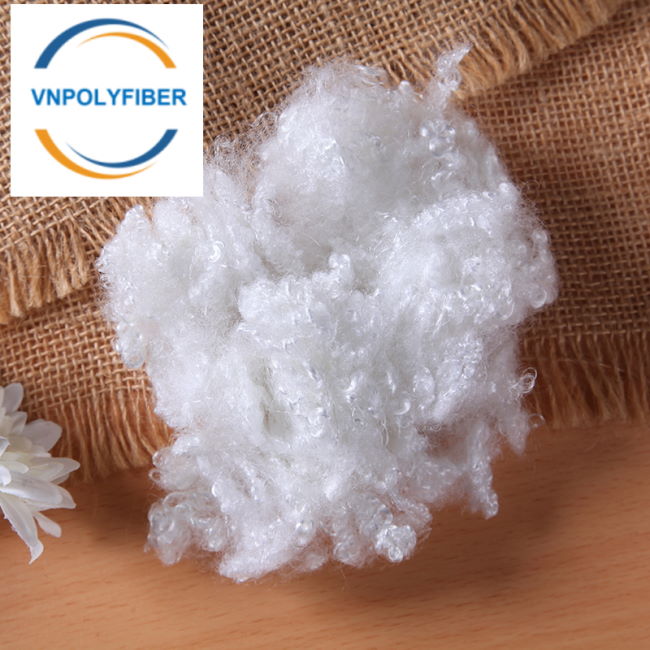
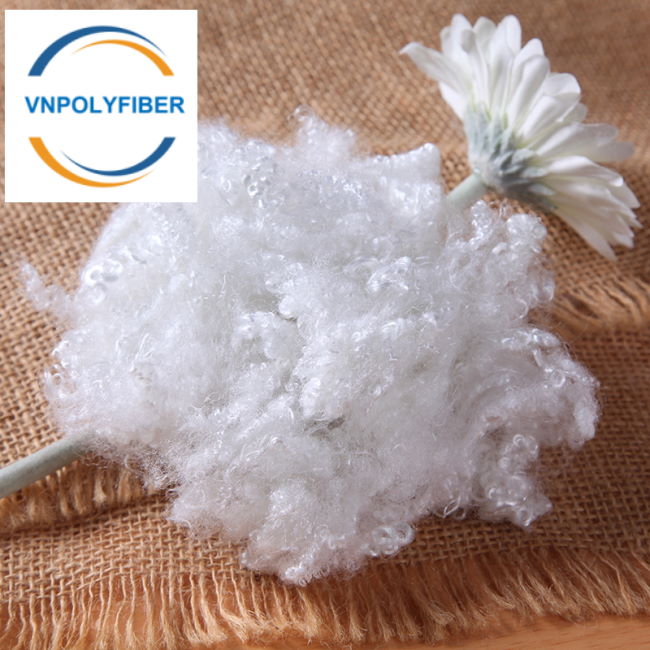
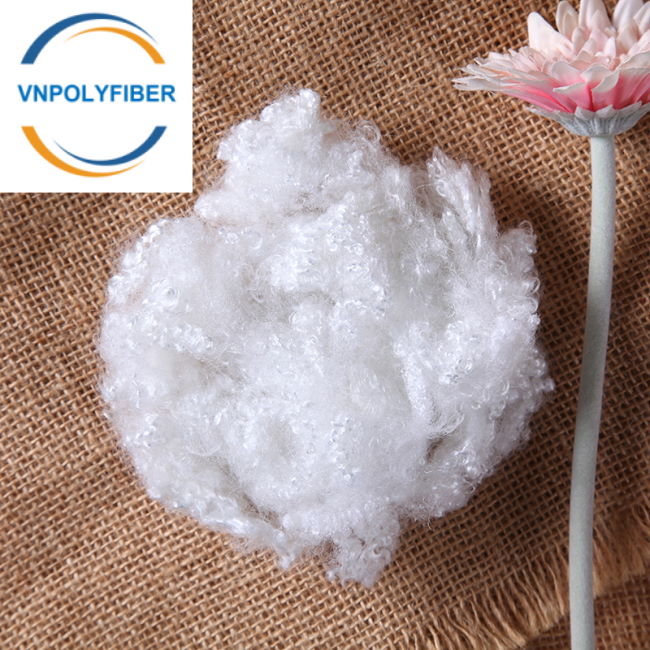
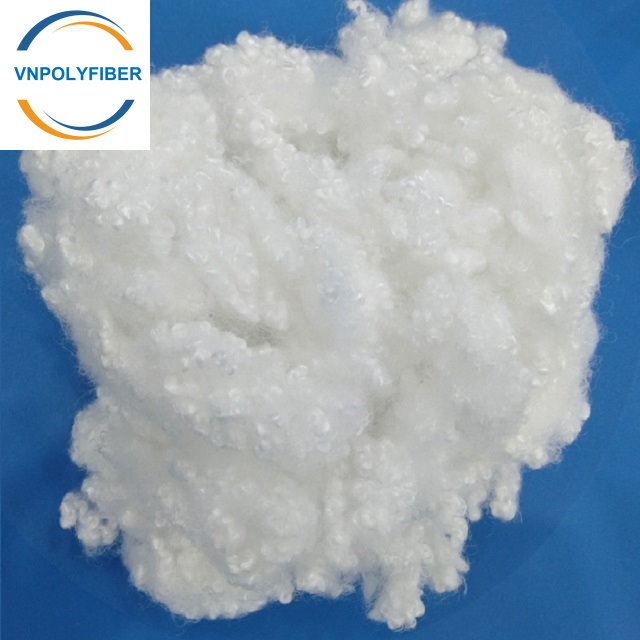
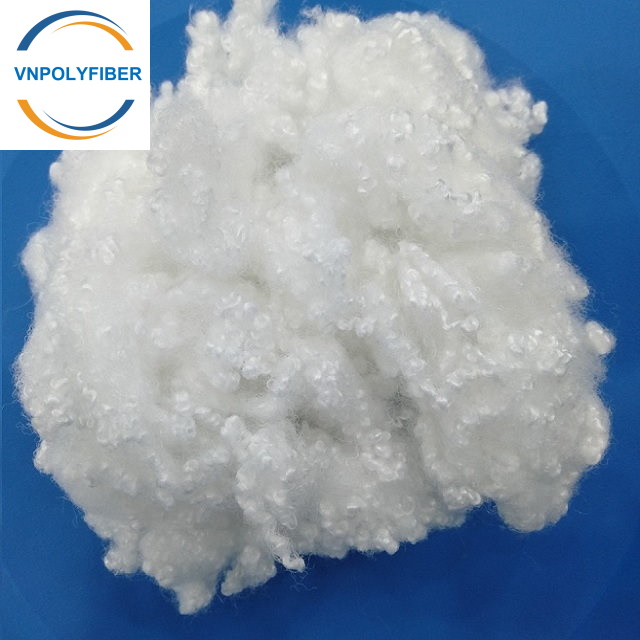
Virgin vs. Recycled Hollow Conjugated Siliconized (HCS) Fiber
Virgin HCS Fiber: The Standard of Uniformity
Recycled HCS Fiber: The Sustainable Innovation
PRODUCT DETAIL
As of February 2026, the global polyester staple fiber (PSF) market has reached a pivotal valuation of $36.18 billion, with the recycled segment growing at a rapid CAGR of 7.5%. For modern manufacturers, the choice between virgin and recycled feedstock is no longer just a price-point decision; it is a strategic maneuver involving regulatory compliance, supply chain resilience, and brand identity.
At VNPOLYFIBER, we support your sourcing by leveraging our multi-country supply chains across Vietnam, China, Malaysia, Thailand, and Indonesia. Our expert QC team ensures that whether you choose the pristine consistency of virgin fiber or the eco-certified performance of recycled materials, your production line remains optimized for the 2026 market.
Technical Profile: Virgin HCS vs. Recycled HCS
Understanding the molecular reality of your fiber is the first step in high-performance manufacturing.
Virgin HCS Fiber: The Standard of Uniformity
Virgin fiber is manufactured directly from petroleum-based PTA (Purified Terephthalic Acid) and MEG (Monoethylene Glycol). In 2026, virgin PSF still accounts for roughly 58% of global market share due to its unmatched molecular consistency.
Color Clarity: Achieving a “Pure White” or “Optical White” without batch variation.
Molecular Tenacity: Higher tensile strength per denier, making it ideal for high-speed industrial spinning and medical-grade textiles.
Consistency: Best suited for high-end luxury brands where a 0.5% deviation in “hand-feel” is unacceptable.
Recycled HCS Fiber: The Sustainable Innovation
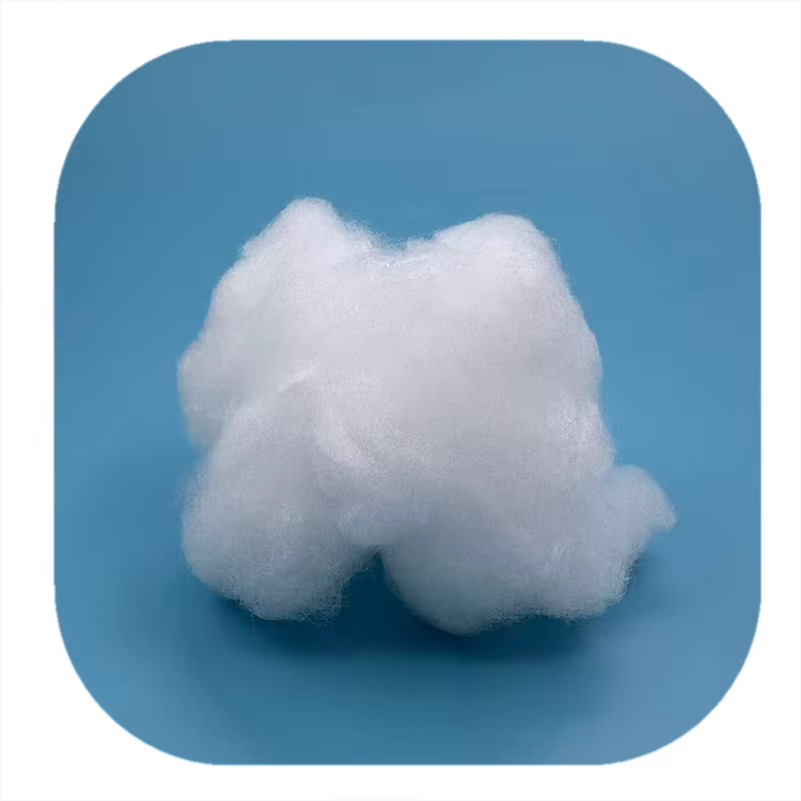
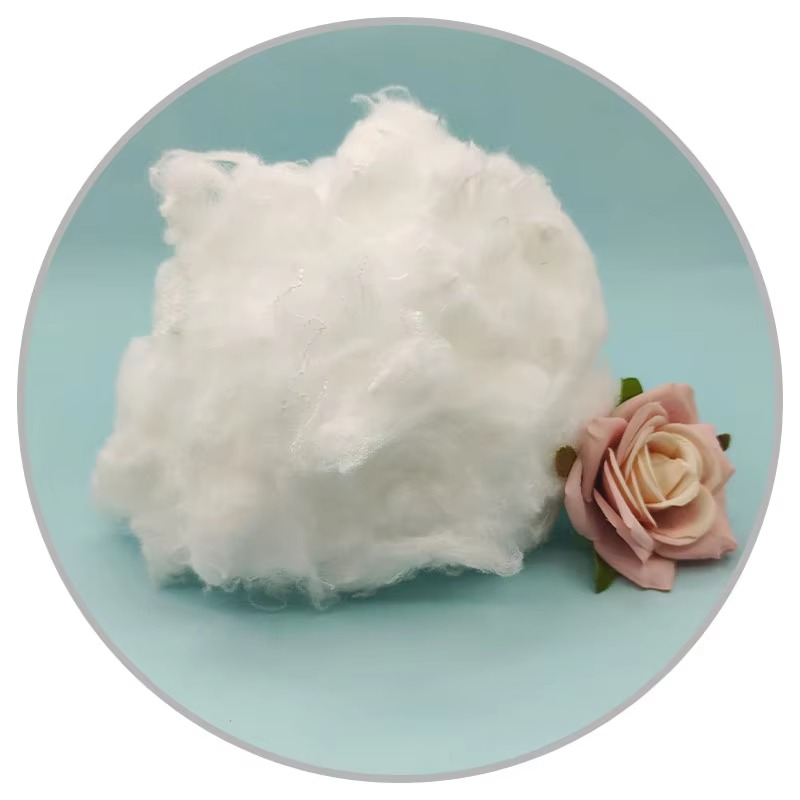
Made from PET/polyester waste and post-consumer PET bottles, recycled HCS is the fastest-growing segment in 2026.
The Regeneration Process: By using advanced washing and melting at high temperatures (250-300°C), dirt and other unwanted materials are taken out, creating a fiber that works almost as well as new
Industrial Resilience: Modern recycled HCS offers high bulkiness and excellent tenacity, making it the industrial standard for eco-conscious home textiles and stuffed toys.
The 5 Strategic Advantages of VNPOLYFIBER HCS Fiber
No matter the source material, the hollow conjugated siliconized structure has five key features that enhance its value in industry:
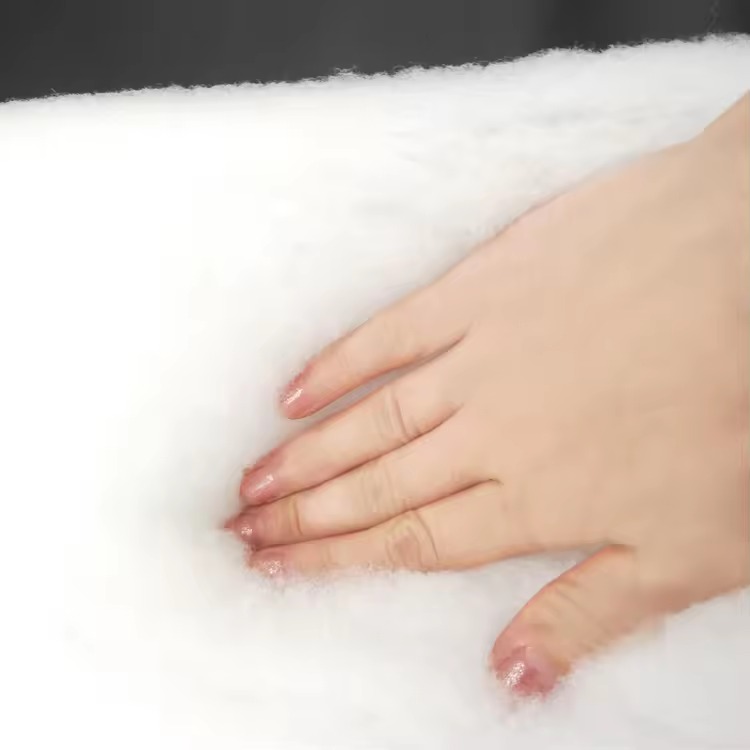
Permanent Shape Retention: HCS neither stretches nor shrinks. The 3D spiral conjugate structure acts as a microscopic spring, providing a “memory” that natural fibers lack. This ensures that pillows and furniture cushions maintain their loft even after thousands of compression cycles.
Material Synergy: VNPOLYFIBER HCS can be combined with rayon, cotton, wool, or nylon. This allows brands to offer “hybrid textiles”—combining the natural touch of organic fibers with the industrial durability of polyester.
Thermal Insulation (Lightweight Volume): The hollow core traps a permanent air pocket, making the fiber 20% lighter than solid alternatives. This “two-phase” structure wraps warm air and isolates cold air, making it perfect for winter casual wear and sportswear.
Hygroscopic & Microbial Protection: PSF absorbs less moisture, which allows it to repel fungus, mold, and bacteria. This inhibits the generation of bad odors—a critical quality for the personal care and hospitality sectors.
Aesthetic Longevity: Polyester fibers better absorb and retain inks. Your finished products maintain brighter, more durable colors that won’t fade after repeated washing.
5. Industrial Applications: Where to Use Which Fiber
Virgin HCS Applications
Hospitality & Medical: High-end hotel bedding and sanitary materials requiring high-temperature sterilization.
Luxury Apparel: Fine-denier padding for couture winter jackets where weight and silk touch are paramount.
Recycled HCS Applications
Home Furnishings: Filling material for sofa cushions, pillows, and mattress toppers.
Toys and Crafts: The “soul” of stuffed toys, providing a safe, hypoallergenic, and “cuddly” fill.
Automotive: Used in non-woven fabrics for cabin quietness and weight reduction in Electric Vehicles (EVs).
Sourcing & Supply Chain: The VNPOLYFIBER QC Advantage
In 2026, successful procurement directors utilize a “China + ASEAN” model. By diversifying your sourcing across these five powerhouses, you protect your brand from tariff shocks and logistical bottlenecks.
| Country | 2026 Strategic Advantage | Best For |
| Vietnam | ESG & FTA Hub: 19 active FTAs (CPTPP, EVFTA) allow for duty-free access to the EU and USA. | Export-oriented brands; ESG compliance. |
| China | Scale & Innovation: The undisputed leader in R&D and vertical integration (PTA/MEG refineries). | Massive volume; high-tech modifications. |
| Thailand | Automotive Precision: Leading the region in NVH (noise, vibration, and harshness) grades for EVs. | Automotive acoustics: high-precision specs. |
| Indonesia | Circular Economy King: Massive upcycling capacity and low-cost recycled fiber feedstock. | Large-scale recycled projects and cost-efficiency. |
| Malaysia | Luxury & Contract Standards: High automation and strict quality codes for the hospitality market. | Premium furnishings, high-trust engineering. |
2026 Regulatory Compliance: The GRS Mandate
The 2026 market is governed by the EU Strategy for Sustainable and Circular Textiles. Starting July 19, 2026, large enterprises face a ban on destroying unsold textiles. Furthermore, the Digital Product Passport (DPP) now mandates full traceability for recycled content.
We provide GRS (Global Recycled Standard) and OEKO-TEX-certified materials. This is no longer just a “green label”—it is your passport to the EU and US markets. Our QC team ensures that every bale comes with the necessary transaction certificates to pass a 2026 sustainability audit.
The 2026 polyester market belongs to those who can master the balance of performance, geography, and sustainability. Whether you require the absolute purity of virgin HCS from China or the market-leading sustainability of recycled HCS from SEA countries, VNP POLYFIBER provides the technical rigor and supply chain transparency you need.
We aim to serve one customer 1,000 times. Let us orchestrate your Pan-Asian fiber supply chain.
Technical Parameter
How to Choose the Right Denier for Your Production
Selecting the correct Denier is the most critical decision in fiber manufacturing. It determines the softness, strength, and “hand-feel” of your final product. Based on our latest technical specifications, here is a guide to choosing the perfect fiber for your industry.
1. Micro-Fibers (0.7D – 1.2D): The Premium Touch
These ultra-fine fibers are designed for products that require a luxurious, soft texture.
Best For: Premium fleece, high-end cleaning cloths, and thermal bonding applications.
Key Benefit: Provides a “silk-like” feel while maintaining excellent warmth-to-weight ratios.
2. Apparel & Performance Grades (1.4D – 3D)
This range is the “standard” for the clothing industry, balancing durability with comfort.
Best For: Sportswear, underwear, and casual wear.
Specialty Options:
1.4D Solid: Ideal for Flame Retardant (FR) clothing textiles.
1.5D – 3D Dope Dyed Black: Perfect for non-woven fabrics and dark apparel.
Anti-Pilling: Designed specifically to prevent “fuzz balls” on activewear.
3. Mid-Range Support (4D – 7D)
The “sweet spot” for items that need to be soft but also hold their shape.
Best For: High-end bedding, thermal socks (Bamboo Charcoal), and furniture arm-padding.
Key Benefit: Often available in Hollow Conjugate (7D) for better “spring-back” memory in cushions.
4. Industrial Heavyweights (8D – 15D)
These thick, high-tenacity fibers are built for maximum volume, structural support, and durability.
Best For: Furniture cushions, mattress padding, toy stuffing (High Void Conjugate), and resin bonding.
Key Benefit: The 15D hollow structure provides massive filling power and high resilience for heavy daily use.
Quick Reference: End-Use Matrix
| Denier Range | Material Type | Primary Applications |
| 0.7 – 1.2D | Micro-Fiber | Fleece, Cloth, Water Transport |
| 1.4 – 1.7D | Spinning Grade | Sportswear, Underwear, Casual Wear |
| 3.0 – 6.0D | Mid-Grade | Bedding, Shoe Pads, Thermal Socks |
| 7.0 – 15.0D | High-Void / Conjugate | Sofa Cushions, Toy Padding, Filters |
Solid vs. Hollow vs. Conjugate: Choosing the Right Fiber Section
In the non-woven and textile industries, the “cross-section” of a fiber is just as important as its thickness. Whether you are producing high-density filters or high-loft cushions, the internal structure of the fiber determines how the final product performs.
1. Solid Cross-Section: Strength & Density
Solid fibers are continuous and dense, providing maximum structural integrity.
How it works: These fibers have a completely filled core, making them heavier and more durable than hollow versions.
Best For: * Non-woven Interlinings: Provides the necessary stiffness for garment structures.
Needle-punching: Withstands the mechanical stress of industrial needles.
Geotextiles & Water Transport: High-tenacity 1.2D solid fibers are engineered for industrial durability.
Apparel: Used in 1.4D to 3D ranges for sportswear, underwear, and casual wear.
2. Hollow Non-Conjugated: Insulation & Moisture Management
Hollow fibers feature a central air-filled core, similar to a tube.
How it works: The trapped air acts as a thermal barrier, making the material 20% lighter than solid fiber while providing superior warmth.
Best For: * Bamboo Charcoal Products: Ideal for shoe pads and thermal socks that require odor absorption and heat retention.
Thermal Bonding: Used in 6D to 15D ranges to create lightweight padding.
Filtration: Coarser hollow grades are excellent for air and medical filters.
3. Hollow Conjugate: Maximum Loft & Bounce
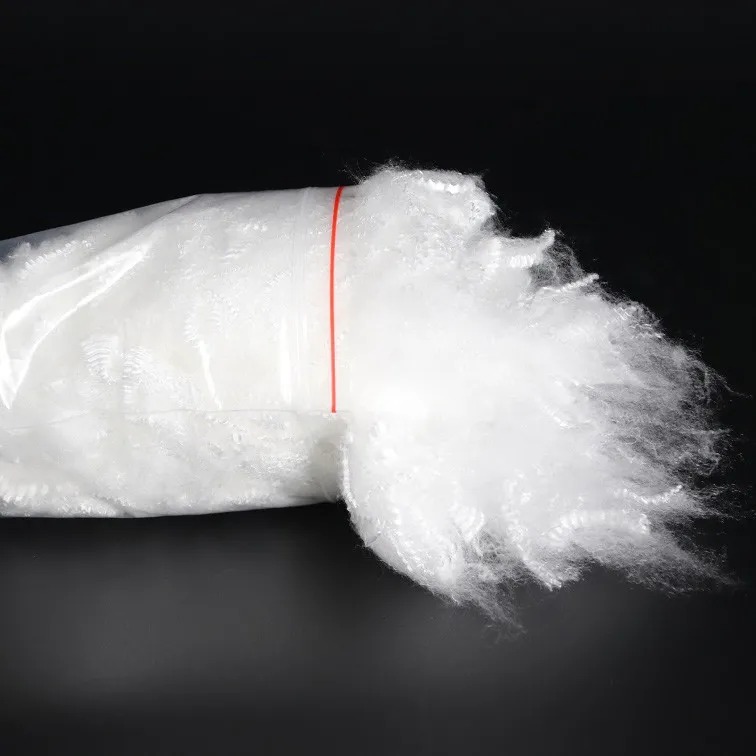
Conjugate fibers are engineered with a 3D spiral crimp, acting like a microscopic spring.
How it works: The “spring-back” memory allows the fiber to recover its shape instantly after compression.
Best For: * High-Void Filling: The premier choice for furniture cushions and luxury pillows (7D–15D).
Toy Padding: Provides a soft, safe, and durable fill for plush toys.
Resin Bonding: Ideal for creating high-loft wadding and batting sheets.
| Fiber Structure | Key Characteristic | Common End-Use |
| Solid | High Density & Tenacity | Interlinings, Geotextiles, Apparel |
| Hollow | Lightweight & Insulating | Thermal Socks, Filters, Bedding |
| Hollow Conjugate | 3D Spiral Bounce | Sofa Cushions, Toy Stuffing, Pillows |
FAQ
1. What do you offer?
We supply a comprehensive range of fibers, including recycled hollow conjugated (both siliconized and non-siliconized) polyester staple fiber, hollow fiber, microfiber, virgin polyester staple fiber, and low-melt fiber.
2. What is it used for?
Our fibers are versatile and widely utilized across both the filling and non-woven industries, providing essential loft, durability, and texture for various consumer and industrial applications.
3. Are you a factory or a trading company?
We are primarily a manufacturer specializing in polyester staple fiber with years of industry expertise. To better serve our clients, we also operate a dedicated trading division that allows us to act as a one-stop solution provider.
In addition to our own fiber production, we source high-quality textile components (such as yarn and low-melt fibers) and finished goods (including foam, pillows, cushions, toys, and down/feather products) to ensure our customers have access to a comprehensive supply chain.
4. Where is your factory location?
To maintain a robust and flexible global supply chain, our manufacturing facilities are strategically located throughout Asia, specifically in Vietnam, China, Malaysia, Thailand, and Indonesia. If you would like to visit one of our sites, please contact your sales representative, and we will be happy to arrange transportation for you.
5. Can you accept free sample?
Yes, we provide free hand samples for quantities under 1 kilogram. Once a price is confirmed, we can prepare and dispatch your sample within 2–3 business days. Please note that while the sample is free, the freight costs are the responsibility of the client.
6. Can you provide ODM service?
Absolutely. We specialize in ODM (Original Design Manufacturing). This means we can customize the material composition, dimensions, quantity, packaging, and branding to meet your specific requirements. Your logo and unique specifications will be integrated into the final product.
7. How about your quality? What’s the minimum order Quantity (MOQ)?
We invite you to place a trial order to experience our quality firsthand. Our standard MOQ is 23,000 kilograms per order.
Regarding pricing, we maintain a no-bargain policy. We believe in transparency and efficiency, so we provide our most competitive offer upfront to save you time and ensure a straightforward procurement process.
8. Can I mix different items in one order?
Yes, for your convenience, we allow for a maximum of two different items to be mixed within a single container.
9. How can you guarantee the product quality?
Quality is the cornerstone of our business. We employ an experienced QC team that monitors every stage of production, from raw material inspection to the final manufacturing process. We utilize a range of advanced testing instruments to ensure our fibers meet strict industry standards.
Our business philosophy is simple: We aim to serve one customer 1,000 times, rather than 1,000 customers once. We prioritize long-term partnerships built on consistent excellence.
10. What’s the payment terms?
L/C at sight, 30% TT in advance are mostly accepted; other terms shall be negotiable by both sides
For more information, please feel free to contact :
Tony Tan
Mobile number: +84 90 466 5251 (Whatsapp/Wechat/Viber/Signal)