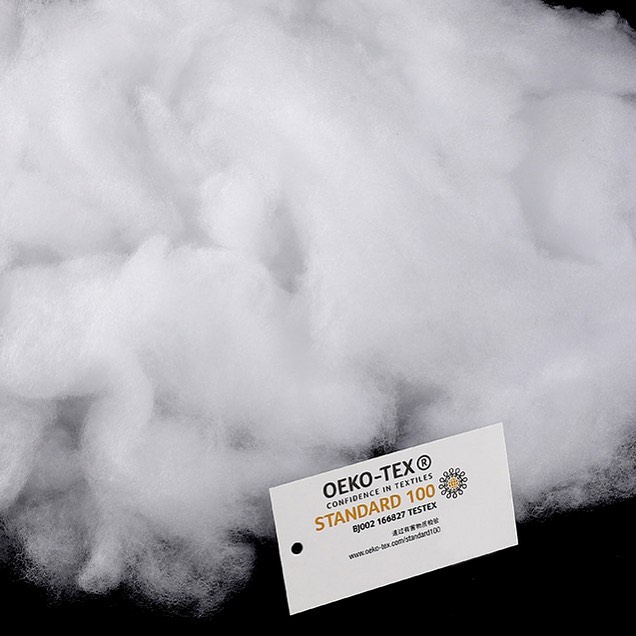
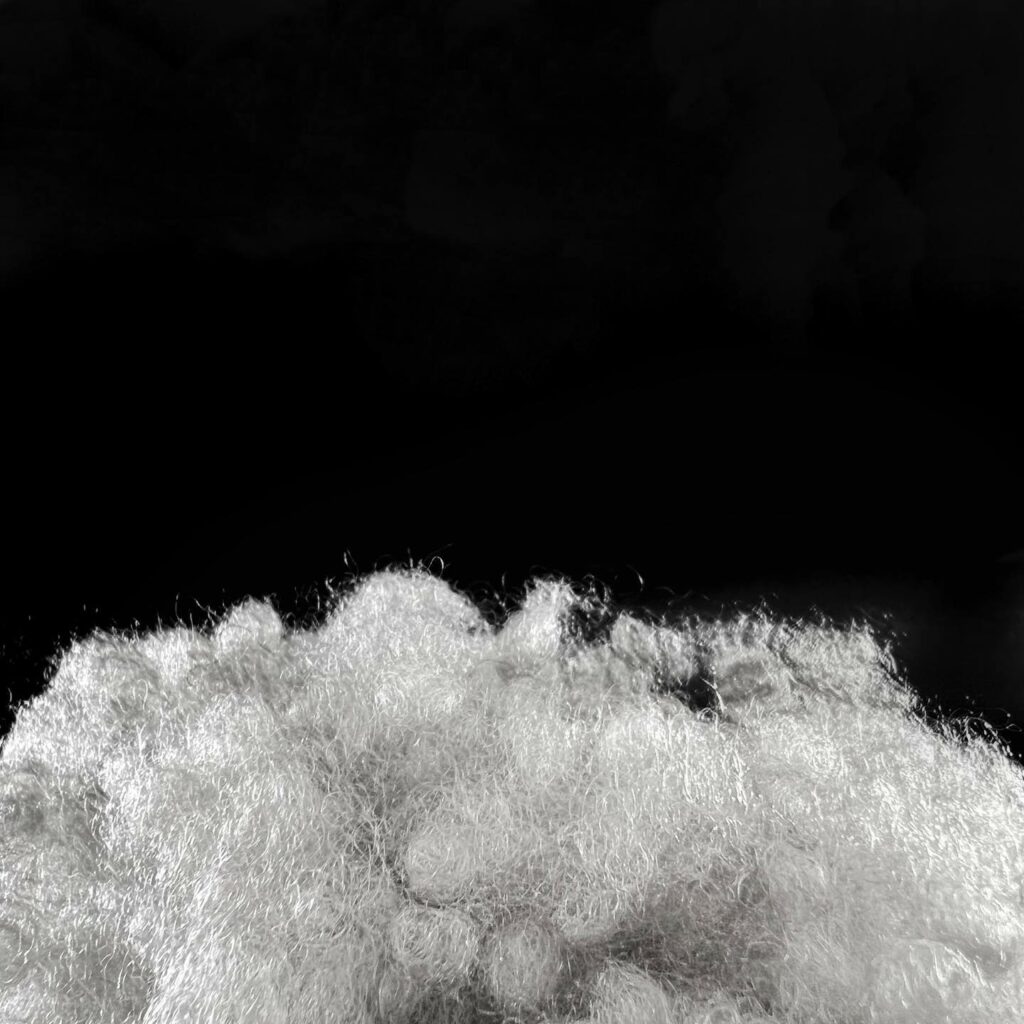
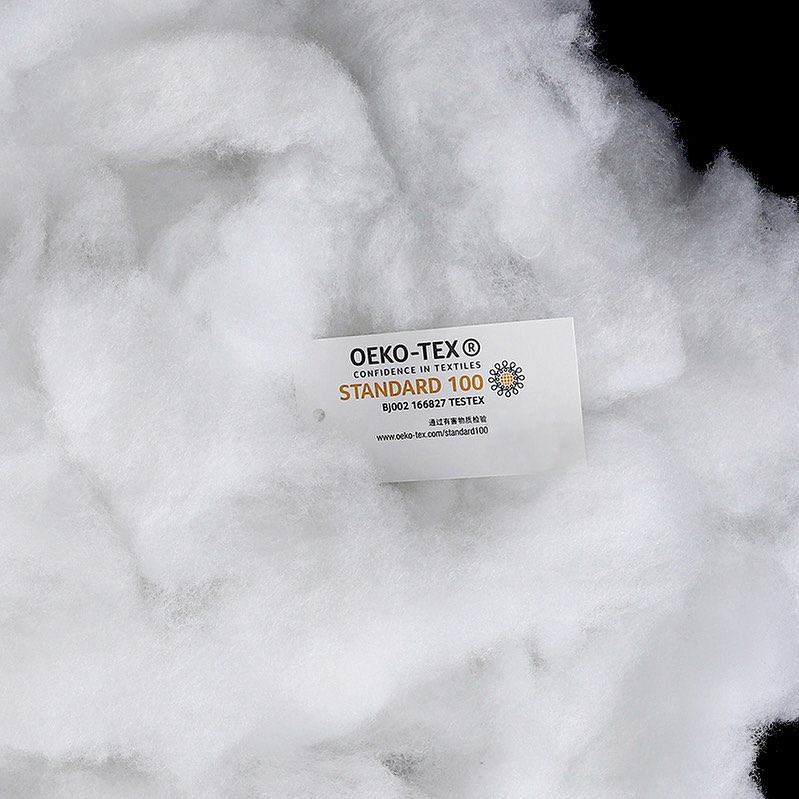
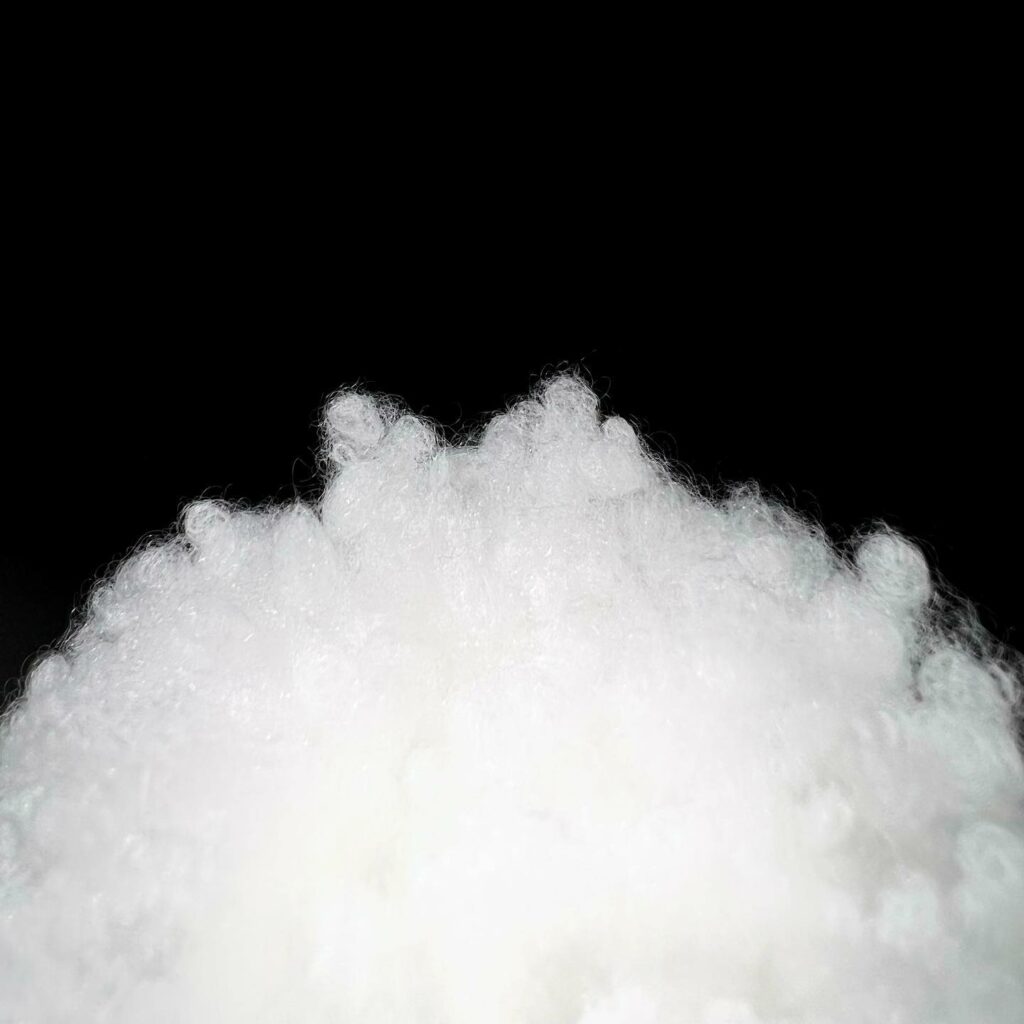
Hollow Conjugate Fiber for Stuffing, Filling Pillows and Nonwoven
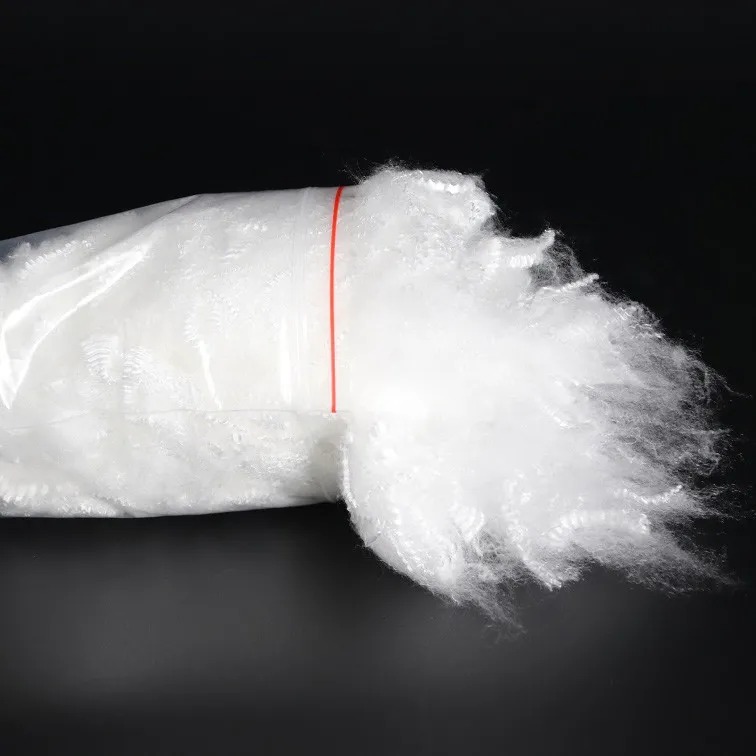
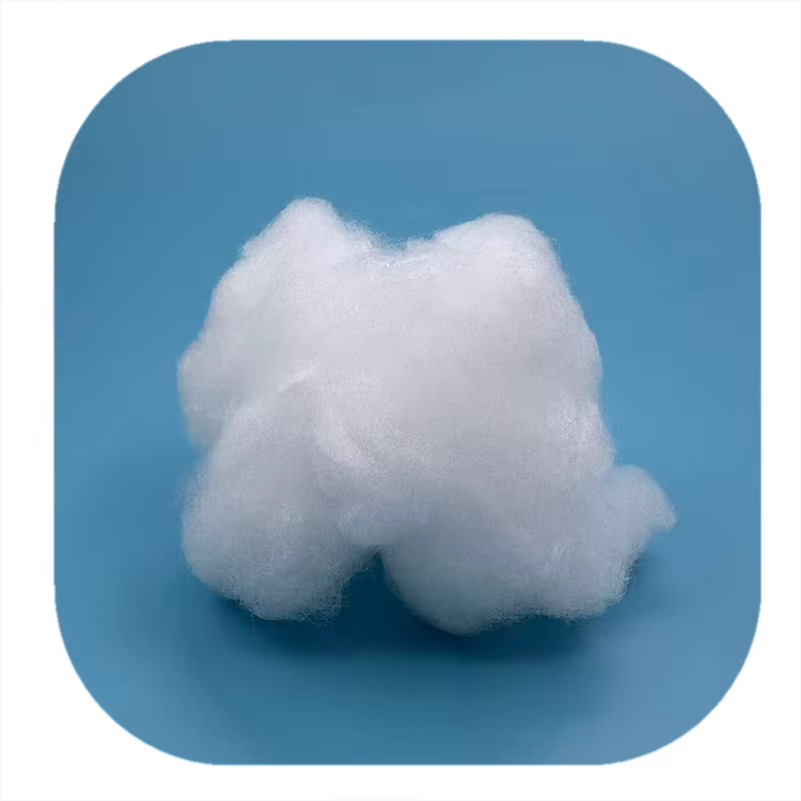
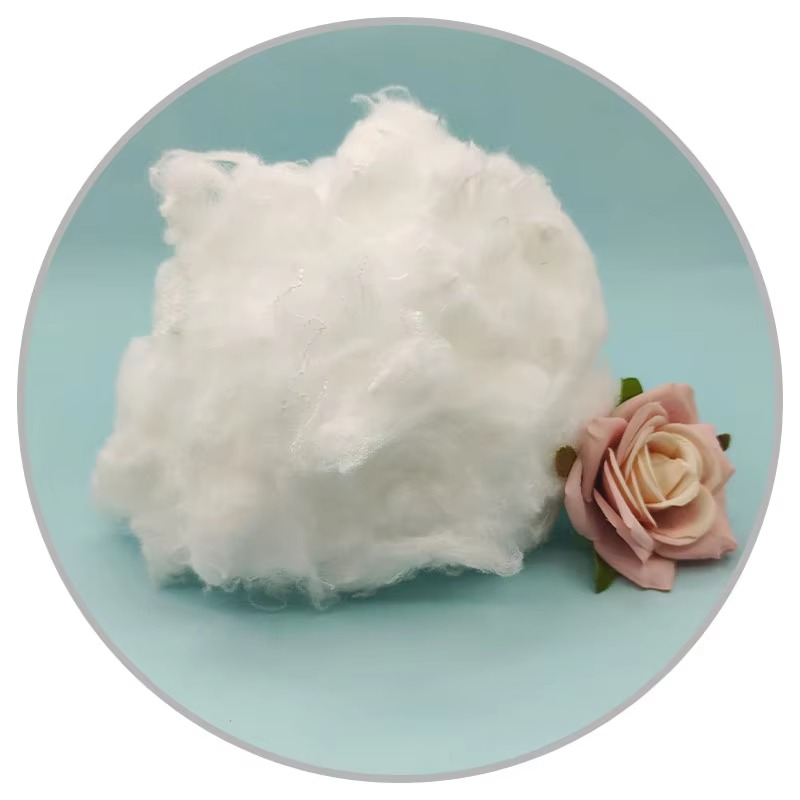
- Highly elastic with good raw white
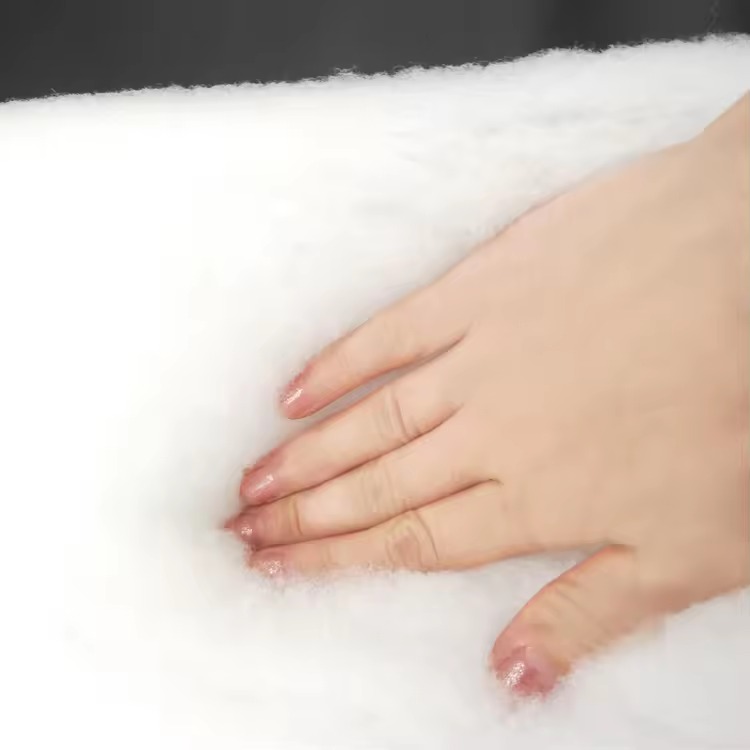
- Super soft hand feeling with silicon
- Less flaw and better warmth character
- Mainly used for filling material, non-woven fabric, polyester wadding ,polyester cotton, silk-like cotton,needle-punched cotton and so on.
PRODUCT DETAIL
Hollow Conjugate Siliconized Fiber (HCS): The Complete Guide to the World’s Premium Polyester Fiberfill
Reach into a high-quality pillow, a premium duvet, or a plush stuffed toy and what you feel — that soft, resilient, cloud-like fill — is almost certainly hollow conjugate siliconized fiber, better known in the industry as HCS fiber. It is one of the most refined and technically sophisticated forms of polyester fiber ever developed, and it has become the global benchmark for comfort fill in bedding, furniture, and beyond.
Hollow conjugate siliconized fiber combines three distinct engineering innovations in a single strand: a hollow channel that reduces weight and adds insulation, a conjugate (bicomponent-inspired) crimp that delivers outstanding loft and resilience, and a silicone finish that gives the fiber its signature silky smoothness and excellent loft recovery. The result is a filling material that outperforms conventional polyester fiber in every dimension that matters for comfort applications.
This complete guide covers everything you need to know about hollow conjugate siliconized fiber — the science behind each of its three defining features, how it is manufactured, its key technical properties, where it is used, how to choose the right grade, and how it compares to alternative fill materials.
What Is Hollow Conjugate Siliconized Fiber?
Hollow conjugate siliconized fiber — HCS fiber — is a specialty polyester staple fiber engineered specifically for premium filling and padding applications. Its name describes its three defining structural and surface characteristics:
- Hollow: The fiber contains one or more continuous air channels running along its full length. These hollow channels are created during the melt spinning process by using annular (ring-shaped) or multi-hole spinneret orifices that form a tube rather than a solid rod of polymer. The hollow structure reduces the fiber’s linear density (it contains less polymer per unit length), increases its volume-to-weight ratio, and traps additional air — enhancing both loft and thermal insulation.
- Conjugate: The fiber incorporates two slightly different polymer components or configurations that create an asymmetric, three-dimensional helical crimp when the fiber is relaxed or heat-treated. This conjugate crimp — sometimes called a spiral or helical crimp — is fundamentally different from the mechanical two-dimensional crimp applied to standard polyester staple fiber. Conjugate crimp is more durable, more resilient, and more uniformly distributed along the fiber length, giving HCS fiber its exceptional loft recovery and bounce-back after compression.
- Siliconized: The fiber is coated with a silicone-based finish — applied during or after the fiber production process. Silicone dramatically reduces fiber-to-fiber friction, giving the fill a slippery, free-flowing character that enables even distribution within a pillow or cushion cover, prevents fiber clumping and matting over time, and contributes to the soft, luxurious hand feel that distinguishes premium fill products. Silicone finishing is applied at carefully controlled add-on levels to achieve the desired balance of smoothness and processing behavior.
Together, these three features — hollow cross-section, conjugate crimp, and silicone surface — produce a fiber that is lighter, softer, more resilient, and more durable as a fill material than any single-feature polyester fiber can achieve. HCS fiber is the result of decades of incremental engineering refinement, and it remains the gold standard for premium polyester fiberfill worldwide.
HCS fiber is also commonly referred to as:
- Hollow conjugated siliconized polyester fiber
- Siliconized hollow conjugate fiber
- HCS polyester fiber / HCS fill fiber
- Spiral crimp hollow fiber
- Premium polyester fiberfill
- Ball fiber (when the fiber is processed into small fiber balls for use as loose fill)
The Science Behind HCS Fiber: Three Engineering Innovations
1. The Hollow Cross-Section: Less Weight, More Loft
In a standard solid polyester staple fiber, the entire cross-sectional area of the fiber is filled with PET polymer. In HCS fiber, a continuous hollow channel — or in some variants, multiple channels — runs along the full length of the fiber. This is achieved during melt spinning by using specially designed annular spinneret orifices that extrude polymer in a ring shape; surface tension draws the ring closed into a sealed tube as the fiber solidifies.
The hollow cross-section has several important consequences for fill performance:
- Reduced linear density: The fiber weighs less per unit length than a solid fiber of the same outer diameter, because it contains less polymer. This allows manufacturers to produce a given volume of fill with less fiber weight, improving the weight-to-loft ratio of the finished product.
- Increased air entrapment: The hollow channel traps a column of air inside the fiber itself, supplementing the air trapped between fibers in the fill mass. This air entrapment is the primary mechanism of thermal insulation — the more air trapped, the better the insulating performance. HCS fiber’s hollow structure gives it significantly better thermal insulation per unit weight than solid polyester fill.
- Improved compressibility and recovery: The hollow structure gives the fiber a slightly springier character under compression — the fiber wall can flex inward and recover — contributing to the overall resilience of the fill mass.
The hollow content — expressed as the percentage of the fiber’s cross-sectional area occupied by the hollow channel — typically ranges from 15% to 30% in commercial HCS fiber grades. Higher hollow content produces lighter, more insulating fiber; lower hollow content produces a denser, more durable fiber. The optimal hollow content depends on the end application and the required balance of softness, insulation, and durability.
2. Conjugate Crimp: Three-Dimensional Resilience
Crimp — the wave or curl pattern along a fiber’s length — is what gives staple fiber its cohesion, bulk, and resilience as a fill material. Without crimp, polyester fibers would lie flat and straight, producing a dense, flat, inelastic fill with no loft.
Standard polyester staple fiber is mechanically crimped by passing the fiber tow through a stuffer box crimper — a device that compresses the fiber bundle so it buckles into a two-dimensional zig-zag wave pattern. This mechanical crimp is effective but has a key limitation: it is a two-dimensional, planar crimp that can be flattened and does not recover perfectly after repeated compression.
Conjugate crimp in HCS fiber is fundamentally different. It is a self-generating, three-dimensional helical crimp — similar in principle to the crimp produced by eccentric sheath-core bicomponent fibers. In HCS fiber, the conjugate crimp arises from the asymmetric cooling and solidification of the hollow fiber during quenching after melt spinning, or from the use of a bicomponent polymer system with differential shrinkage. The result is a natural spiral crimp that wraps around the fiber’s axis, like a coiled spring.
The advantages of conjugate (spiral) crimp over conventional mechanical crimp are significant:
- Three-dimensional structure: Spiral crimp creates loft in all directions simultaneously, producing a fill mass that is uniformly bulky and resistant to flattening from any direction of compression.
- Superior resilience: The spring-like geometry of spiral crimp stores and releases elastic energy efficiently — the fill compresses under pressure and springs back fully when the pressure is removed. This is the key to long-term loft retention in pillows and cushions that are compressed nightly.
- Durability: Conjugate crimp is integrated into the fiber’s structure rather than mechanically imposed on its surface — it does not flatten permanently with repeated use the way mechanical crimp can.
- Even distribution: Spiral crimp causes individual fibers to interlock loosely with their neighbors in three dimensions, promoting even distribution of the fill mass within a cover and preventing clumping.
3. Silicone Finishing: Smoothness, Flow, and Durability
The silicone finish applied to HCS fiber is not a cosmetic treatment — it is a functional engineering component that plays a critical role in the fiber’s performance both during processing and in the finished product.
Silicone polymers — typically polydimethylsiloxane (PDMS) derivatives — are applied to the fiber surface as an aqueous emulsion during the finishing stage of fiber production, then dried and cured to create a uniform, durable coating on each individual fiber.
The silicone finish delivers several key performance benefits:
- Reduced fiber-to-fiber friction: Silicone’s exceptionally low surface energy dramatically reduces the friction between individual fiber surfaces. This gives the fill a characteristic slippery, free-flowing behavior — fibers slide easily past each other rather than tangling or clumping — allowing even distribution within a cover and easy refluffing after use.
- Clump and mat resistance: By preventing fibers from bonding or felting together through friction and surface adhesion, the silicone finish dramatically extends the useful life of the fill product. Siliconized fill remains lofty and evenly distributed through years of use and repeated washing; non-siliconized fill tends to mat into dense lumps that are uncomfortable and difficult to redistribute.
- Soft hand feel: Silicone gives the fill mass a distinctively soft, luxurious tactile quality — the signature ‘silky’ feel of high-quality pillow fill that consumers associate with premium comfort.
- Washability: The silicone coating is durable through repeated laundering, maintaining the fiber’s smoothness and loft recovery even after many wash cycles. This is critical for pillows and cushions that require regular washing for hygiene reasons.
- Processing benefits: In industrial filling machines, siliconized fiber flows freely through filling nozzles and distributes evenly into covers without bridging, clumping, or jamming — reducing production waste and improving fill consistency.
Silicone add-on levels — the amount of silicone applied per unit weight of fiber — are carefully specified and controlled. Higher add-on produces a slipperier, more fluid fill that is very soft but may be harder to contain within a cover; lower add-on produces a denser, more cohesive fill with better shape retention. The optimal level depends on the product type, cover fabric, and target performance specification.
How HCS Fiber Is Manufactured
The production of high-quality hollow conjugate siliconized fiber requires precision control across every stage of the manufacturing process. The key stages that distinguish HCS fiber production from standard polyester staple fiber are:
- PET polymerization: High-purity PTA and MEG are polymerized to produce PET chips of controlled molecular weight (intrinsic viscosity). The molecular weight specification is carefully chosen to balance melt viscosity (for spinning stability through hollow spinneret orifices) with mechanical properties of the finished fiber.
- Hollow melt spinning: PET chips are dried, melted, and extruded through specially designed hollow spinneret plates with annular or C-shaped orifice geometries. The precise orifice geometry, melt temperature, and quench air conditions are controlled to achieve the target hollow content percentage and consistent hollow channel dimensions along the entire fiber length. This is the most technically demanding stage of HCS production, as the hollow fiber is inherently less stable than solid fiber during quenching.
- Drawing and conjugate crimp development: The hollow filament tow is drawn to develop tensile strength and orient the polymer chains. The conjugate crimp is developed either through asymmetric quenching conditions (creating differential stress across the hollow fiber wall) or through a bicomponent polymer system. In either case, the three-dimensional helical crimp is generated without mechanical crimping equipment — it arises spontaneously from the fiber’s internal structure.
- Silicone finishing: Silicone emulsion is applied to the fiber tow at precisely controlled concentration and temperature through a kiss roll or spray applicator, ensuring uniform coating of every fiber surface. The silicone-treated tow is then dried (and in some systems, cured at elevated temperature) to fix the silicone coating.
- Cutting: The finished, siliconized, hollow conjugate tow is cut to the specified staple length. Standard lengths for HCS fiberfill applications are 32 mm, 51 mm, and 64 mm, selected based on the filling machine type and end product requirements.
- Quality control and baling: Finished HCS fiber is sampled and tested for denier, hollow content, crimp characteristics, silicone add-on level, tensile properties, and loft performance before being baled and released for shipment.
Key Technical Properties of HCS Fiber
Property | Typical Specification / Performance |
Denier range | 4–15 denier (most common pillow/cushion fill: 6–12 denier; fine grades for blending: 4–6 denier) |
Hollow content | 15–30% of cross-sectional area |
Crimp type | Three-dimensional helical (conjugate / spiral crimp) |
Crimp frequency | 4–8 crimps per cm (varies by grade and application) |
Silicone add-on | 0.2–0.6% by weight (grade-dependent) |
Tensile strength (tenacity) | 2.5–4.0 cN/dtex (sufficient for filling durability) |
Elongation at break | 40–60% |
Loft / bulk | High — significantly greater than solid fiber at equal weight |
Loft retention | Excellent — maintains loft after repeated compression and washing due to conjugate crimp and silicone finish |
Thermal insulation | High — hollow channel + air entrapment; higher CLO value per unit weight vs. solid fill |
Moisture absorption | <0.4% (inherent polyester hydrophobicity) |
Wash durability | Excellent — silicone coating durable through repeated laundering |
Color | Bright white (standard); optical brightener variants available |
Applications of Hollow Conjugate Siliconized Fiber
Pillows — The Flagship Application
HCS fiber is the dominant fill material for polyester pillows globally. Its combination of softness, loft, resilience, washability, and hypoallergenic properties makes it the natural choice for both mass-market and premium pillow products. The siliconized finish ensures that fill distributes evenly within the pillow cover and redistributes easily after use — the pillow can be refluffed to restore its original shape, a key quality indicator for consumers.
Pillow manufacturers select HCS fiber grades based on denier and silicone add-on level to achieve the target pillow firmness, loft, and weight. Coarser denier (10–15d) produces a firmer, heavier pillow; finer denier (4–7d) produces a softer, lighter pillow. Higher silicone add-on produces a softer, more fluid fill; lower add-on produces a denser, more supportive fill. Premium pillow brands use carefully specified blends of different HCS fiber grades to achieve proprietary comfort profiles.
Duvets and Comforters
In duvets and comforters, HCS fiber competes directly with natural down filling, offering comparable loft and thermal performance at significantly lower cost, with the additional advantages of washability, allergen-free content, and consistent quality. The hollow fiber’s air-trapping capability provides genuine warmth without excessive weight, and the conjugate crimp gives the duvet a lofty, ‘down-like’ cluster feel that premium consumers find highly appealing.
Tog rating (thermal resistance) in polyester duvets is directly controlled by the weight of HCS fill — more fill per unit area produces a higher tog rating. The hollow conjugate fiber’s high loft-per-gram ratio allows manufacturers to achieve target tog ratings with less fiber weight, producing lighter duvets with excellent warmth.
Cushions and Sofa Filling
Scatter cushions, decorative cushions, and sofa back cushions are major applications for HCS fiber fill. The conjugate crimp’s three-dimensional resilience is especially valued here — sofa cushions are compressed repeatedly during use and must recover their shape reliably over years of use. HCS fiber’s loft retention significantly outperforms solid or mechanically crimped fiber in long-term compression tests, translating to longer-lasting cushion appearance and comfort in demanding furniture applications.
Stuffed Toys and Soft Goods
The toy industry relies on HCS fiber for the fill in plush toys, stuffed animals, and soft play products. Safety certification is critical in this application — toy fill must meet strict chemical safety standards (REACH, EN 71, ASTM F963) to ensure safety for children. HCS fiber from reputable manufacturers is produced to Oeko-Tex Standard 100 certification, confirming the absence of harmful substances. The softness and free-flowing character of siliconized fiber also makes it easy to fill toy forms to consistent weights and shapes in automated filling operations.
Sleeping Bags and Outdoor Insulation
The insulation core of synthetic sleeping bags and outdoor jackets represents a technically demanding application for hollow conjugate fiber. Weight and warmth-per-gram (thermal efficiency) are critical specifications. HCS fiber’s hollow structure delivers among the highest warmth-to-weight ratios of any synthetic fill material — approaching the performance of down in moderate climate conditions — while offering the significant practical advantages of moisture resistance (polyester maintains insulating performance when wet, unlike down) and machine washability.
In sleeping bags, HCS fiber is often used as a batt (bonded fiber layer) rather than as loose fill, providing consistent thickness distribution and preventing fill migration within the bag construction.
Mattress Toppers and Quilting
Mattress toppers — removable comfort layers placed on top of a mattress — use HCS fiber batting to provide additional softness and pressure relief. The hollow fiber’s combination of softness, resilience, and washability makes it well-suited to this application. HCS fiber is also used in the quilted top panels of mattresses, where it provides the initial soft comfort feel before the sleeper contacts the mattress’s support core.
Fiber Ball Fill — A Specialty Format
A growing specialty segment for hollow conjugate siliconized fiber is fiber ball fill — where HCS staple fiber is processed through a fiber ball machine that rolls individual fibers into small, loose spherical clusters (fiber balls), typically 5–20 mm in diameter. Fiber balls behave like individual down clusters, flowing freely and distributing evenly within a shell — producing a fill with exceptional loft, lightweight character, and a ‘down-alternative’ tactile experience.
Fiber ball fill is used in premium down-alternative pillows, duvets, and jackets, and is increasingly favored by brands seeking a natural-fiber-like performance profile in a sustainable, washable, allergen-free synthetic format. The siliconized finish is critical for fiber ball applications — it provides the low inter-fiber friction needed for the fiber to roll into compact, stable balls during processing, and maintains the balls’ free-flowing character in the finished product.
Automotive and Furniture Padding
Coarser denier HCS fiber grades are used in automotive seat padding, headrest fill, and furniture cushion cores where bulk, resilience, and long-term shape retention are important. The hollow structure reduces the weight of padding components — a meaningful advantage in automotive applications where lightweighting is a continuous engineering priority.
HCS Fiber vs. Alternative Fill Materials
Understanding how hollow conjugate siliconized fiber compares to competing fill materials is essential for product developers and procurement teams evaluating fill options.
Property | HCS Fiber | Solid PSF | Natural Down | Memory Foam | Wool Fill |
Loft / Bulk | ★★★★★ | ★★★☆☆ | ★★★★★ | ★★☆☆☆ | ★★★☆☆ |
Resilience | ★★★★☆ | ★★★☆☆ | ★★★★★ | ★★★★☆ | ★★★☆☆ |
Warmth / Tog | ★★★★☆ | ★★★☆☆ | ★★★★★ | ★★☆☆☆ | ★★★★☆ |
Washability | ★★★★★ | ★★★★☆ | ★★☆☆☆ | ★☆☆☆☆ | ★★☆☆☆ |
Allergen-free | ★★★★★ | ★★★★★ | ★★☆☆☆ | ★★★★★ | ★★★☆☆ |
Weight (lightness) | ★★★★★ | ★★★☆☆ | ★★★★★ | ★★☆☆☆ | ★★★☆☆ |
Cost | ★★★★☆ | ★★★★★ | ★☆☆☆☆ | ★★★☆☆ | ★★☆☆☆ |
Wet performance | ★★★★★ | ★★★★★ | ★☆☆☆☆ | ★★★★★ | ★★★☆☆ |
Durability / Life | ★★★★☆ | ★★★☆☆ | ★★★☆☆ | ★★★★☆ | ★★★★☆ |
Sustainability | ★★★☆☆ | ★★☆☆☆ | ★★★☆☆ | ★★☆☆☆ | ★★★★☆ |
★★★★★ = Excellent ★★★★☆ = Very Good ★★★☆☆ = Good ★★☆☆☆ = Fair ★☆☆☆☆ = Poor
The comparison reveals HCS fiber’s clear strengths: it leads or matches natural down in loft and lightness while dramatically outperforming it in washability, allergen safety, wet performance, and cost. Against solid polyester fill, HCS fiber’s advantages in every comfort parameter are clear. Memory foam offers different performance characteristics (pressure relief, conforming support) rather than loft-based comfort — it occupies a complementary rather than competing position in the market.
Grades and Specifications: Choosing the Right HCS Fiber
HCS fiber is not a single product — it is a family of grades differentiated by multiple specifications, each optimized for different applications. The key parameters to specify when selecting HCS fiber are:
- Denier: The primary determinant of softness and weight. Finer denier (4–7d) for ultra-soft, lightweight pillows and toys; coarser denier (10–15d) for firmer, more supportive pillows and upholstery fill. Many premium pillow manufacturers blend two denier grades to achieve proprietary comfort profiles unavailable from a single grade.
- Hollow content (%): Higher hollow content (25–30%) for maximum loft-per-gram and insulation; lower hollow content (15–20%) for higher density and durability. Specifying hollow content is critical for duvets and sleeping bag insulation where warmth-per-gram is a key product claim.
- Silicone add-on level: Specify the silicone add-on percentage based on the required balance of softness, flowability, and fill consistency. Higher add-on (0.4–0.6%) for softer, more fluid fiber ball and premium pillow fill; lower add-on (0.2–0.3%) for cushion and toy fill requiring more shape retention.
- Staple length: 32–38 mm for fine filling machines and fiber ball production; 51–64 mm for conventional open-end filling machines. Match to your filling equipment specification.
- Crimp frequency: Higher crimp frequency for maximum inter-fiber cohesion and stable fill distribution; lower crimp for softer, more fluid fill. Specify based on the cover fabric porosity and filling method.
- Certifications required: Specify Oeko-Tex Standard 100 (mandatory for baby and children’s products), REACH compliance, and any market-specific safety certifications. For organic or sustainability-positioned products, specify GRS (Global Recycled Standard) if recycled content HCS is acceptable.
- Color / brightness: Standard bright white is the norm for most applications; optical brightener (OB) treated variants are available for the most demanding white appearance requirements.
Consulting with your fiber supplier’s technical team early in the product development process — ideally with fill trials on your production equipment — is strongly recommended. The interaction between fiber specification, cover fabric, filling machine type, and fill weight is complex, and small changes in fiber spec can have significant effects on finished product performance.
Quality Standards and Certifications for HCS Fiber
For products that contact skin or are used by children, third-party quality and safety certifications are essential. The most important certifications for HCS fiber are:
- Oeko-Tex Standard 100: Tests for harmful substances including heavy metals, pesticide residues, formaldehyde, pH, and colorants. Product Class I (for baby products) is the most stringent category and is the appropriate specification for toys and children’s bedding fill. Class II (direct skin contact) is standard for adult pillows and bedding.
- REACH Compliance: Conformance with EU regulations on chemicals — mandatory for products sold in the European market. Leading HCS fiber suppliers provide full REACH compliance documentation.
- ISO 9001 Quality Management: Certification of the fiber manufacturer’s quality management system — assurance of consistent production quality and traceability.
- Global Recycled Standard (GRS): If recycled-content HCS fiber is specified for sustainability positioning, GRS certification verifies the recycled content claim and supply chain integrity.
- EN 71 / ASTM F963: Toy safety standards (European and US respectively) applicable to the fill used in stuffed toys and children’s soft goods.
Sustainability of Hollow Conjugate Siliconized Fiber
Like all polyester fiber, standard HCS fiber is produced from petrochemical feedstocks and is not biodegradable. However, the sustainability profile of HCS fiber has several important nuances:
Durability as a Sustainability Advantage
HCS fiber’s exceptional durability — particularly its loft retention through years of use and repeated washing — means that HCS-filled products have significantly longer useful lives than those filled with lower-quality alternatives. A high-quality HCS pillow that lasts 5–7 years before losing loft may have a lower total environmental impact than a cheaper pillow that must be replaced every 18 months — even though the HCS fiber has a higher initial resource cost per unit weight.
Recycled Content HCS Fiber
Recycled hollow conjugate siliconized fiber — produced from post-consumer PET bottles (rPET) processed through hollow melt spinning with silicone finishing — is commercially available and certified to the Global Recycled Standard (GRS). Recycled HCS fiber delivers equivalent comfort performance to virgin fiber while reducing the carbon footprint of the fill material by approximately 30–50% compared to virgin polyester production. Leading bedding and apparel brands are increasingly specifying GRS-certified recycled HCS fiber for their sustainability-positioned product lines.
Bio-Based Polyester Fill
Early commercial development of bio-based PET — produced from bio-derived PTA and MEG rather than petroleum feedstocks — offers a longer-term pathway to HCS fiber with a renewable, lower-carbon feedstock. As bio-based PET production scales, bio-based HCS fiber will become available, combining the comfort performance of conventional HCS with the sustainability credentials of a bio-based, potentially recyclable material.
End-of-Life Recyclability
Standard HCS fiber is 100% polyester (PET) — a readily recyclable thermoplastic. Pillows and duvets filled with HCS fiber are technically recyclable through the PET recycling stream, provided the cover and fill are separated. Emerging take-back and recycling programs for bedding products — particularly in the European market — are creating pathways for end-of-life HCS fill to be recovered and recycled into new fiber or other PET products, rather than sent to landfill or incineration.
Market Outlook for Hollow Conjugate Siliconized Fiber
The global market for HCS fiber is on a sustained growth trajectory, driven by several powerful and mutually reinforcing demand trends:
- Rising standards of living across Asia, the Middle East, and Latin America are expanding the consumer base for premium bedding and home comfort products — the largest application segment for HCS fiber.
- The global down alternative market is growing rapidly as consumers seek the comfort of down without the ethical concerns (live plucking) and allergen issues associated with natural down. HCS fiber is the primary beneficiary of this trend.
- E-commerce growth is expanding access to premium bedding products in markets previously served only by value-tier options, driving up average quality specifications and HCS fiber content in pillow and duvet products.
- Sustainability mandates are accelerating the shift to GRS-certified recycled HCS fiber among global bedding and apparel brands, creating a premium segment within the HCS market that commands price premiums and customer loyalty.
- Outdoor and activewear brands are increasing their use of hollow conjugate fiber insulation as a synthetic alternative to down in jackets, sleeping bags, and technical apparel — driven by performance, washability, and animal welfare positioning.
- The fiber ball segment — fiber ball fill for premium pillows and duvets — is the fastest-growing specialty segment within the HCS market, driven by premiumization in the bedding sector and brands seeking differentiated ‘down-like’ comfort claims.
Conclusion: HCS Fiber Is the Gold Standard of Polyester Fill
Hollow conjugate siliconized fiber has earned its position as the world’s premium polyester fiberfill through decades of continuous engineering refinement, delivering a combination of lightness, loft, resilience, softness, and durability that no other synthetic fill material can match across the full range of bedding, cushioning, and insulation applications.
Its three defining innovations — the hollow cross-section that traps air and reduces weight, the conjugate spiral crimp that delivers three-dimensional resilience and long-term loft retention, and the silicone finish that provides smoothness, anti-clumping performance, and wash durability — work synergistically to create a fill material that is genuinely greater than the sum of its parts.
As global demand for premium comfort products continues to grow, as sustainability requirements push the market toward recycled and bio-based fiber variants, and as the fiber ball format expands the range of down-alternative products available to consumers, hollow conjugate siliconized fiber is exceptionally well positioned to remain the benchmark fill material of choice for the global bedding, furniture, and apparel industries.
To explore our full range of HCS fiber grades — from standard pillow fill to ultra-fine fiber ball grades to GRS-certified recycled variants — please contact our technical team for specifications, samples, and application guidance.
Converted to HTML with WordToHTML.net | Document Converter for Windows
Technical Parameter
Usually used as padding/filling material of cushions, bedding, sofas, etc.
Specification:
size(denier):3D 7D 15D 30D
length(mm):28mm -152mm
Category: Chemical Fiber
Usage: Garment, Industrial, Home Textile, Army, Bag, Shoes, Tent and Awning
Grade: Recycled
Transport Package: PP Bales
Fiber Type: Staple
Material: Pet
Feature: Heat-Resistant, Anti-Static, Anti-Distortion, Flame Retardant, Abrasion-Resistant, Anti-Pilling
Shape: Rayon
About Us:
We are a leading supplier of polyester staple fiber based in Viet Nam. With a strong presence in both the domestic and international markets, we can supply various types of PSF, both recycled and virgin grades.
Our product offerings include a range of hollow conjugated polyester staple fiber (white, brown, green), as well as solid, conjugate, and siliconized fibers ranging from 3D to 15D. We also have microfiber, with sizes ranging from 0.9D to 1.4D and cut lengths from 25mm to 32mm. Our fibers are primarily utilized in the production of non-woven fabrics and spinning yarns, and are in high demand in European and South American markets.
We adhere to international quality standards and pride ourselves on delivering products that are well-received across various global markets. Our state-of-the-art facilities and stringent quality control measures ensure that we consistently meet and exceed customer expectations.
If you are interested in knowing more about our products, please do not hesitate to reach out to us. We welcome the opportunity to establish mutually beneficial partnerships with new clients worldwide. Thank you for considering us.
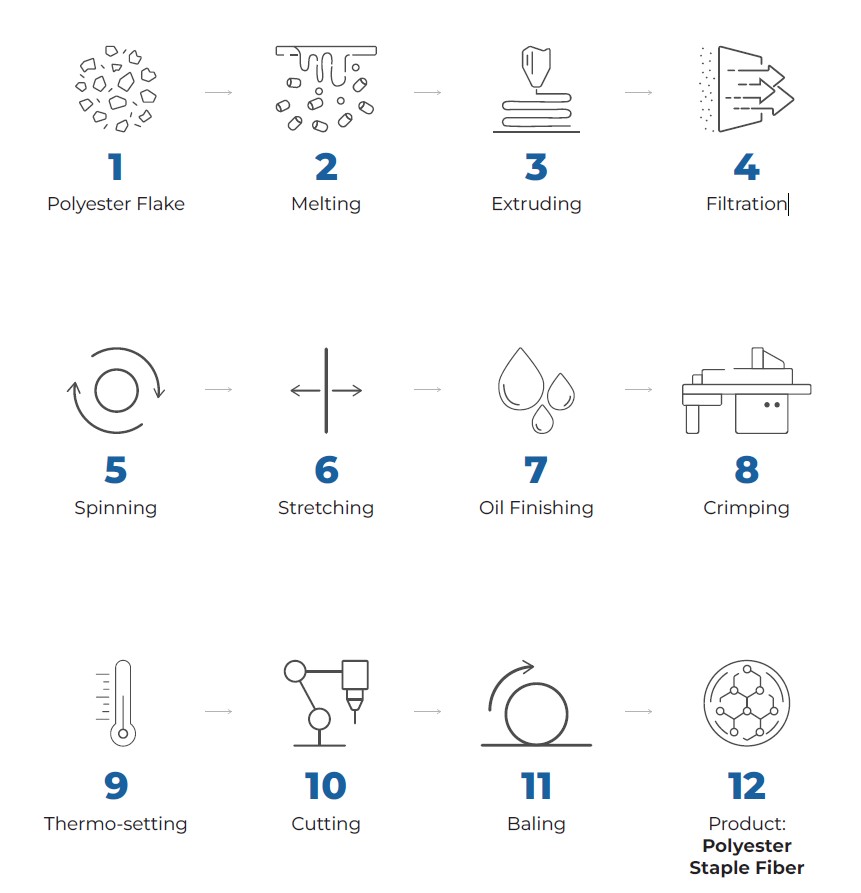
Staple fiber production process

The base material, which comes in chips, is melted in an extruder before being quantified in a gear pump and transferred to a nozzle. Polymers that pass through the nozzle are cooled and solidified in a spinning tank, and end up in a fiber form (semi-finished product). Fiber released from multiple spinning tanks is lubricated and gathered before being wound by a gear wheel and placed in cans. Fiber placed in cans is given various properties through a stretching process, in which fiber is stretched at various roller speeds designed to endow different degrees of rigidity and elasticity.
The fiber is again lubricated for enhanced quality and to facilitate the processes that follow. A crimping process takes place to give the fiber various properties, including bulk and mixability. Moisture and lubricant on the fiber is dried off in a heat dryer. The fiber is then cut into required lengths and end up in a bale form. The fiber is then compressed, packaged, and stored for factory release when ordered.
PRODUCTION PROCESS OF POLYESTER STAPLE FIBER
Video
FAQ
1. What do you offer?
We supply a comprehensive range of fibers, including recycled hollow conjugated (both siliconized and non-siliconized) polyester staple fiber, hollow fiber, microfiber, virgin polyester staple fiber, and low-melt fiber.
2. What is it used for?
Our fibers are versatile and widely utilized across both the filling and non-woven industries, providing essential loft, durability, and texture for various consumer and industrial applications.
3. Are you a factory or a trading company?
We are primarily a manufacturer specializing in polyester staple fiber with years of industry expertise. To better serve our clients, we also operate a dedicated trading division that allows us to act as a one-stop solution provider.
In addition to our own fiber production, we source high-quality textile components (such as yarn and low-melt fibers) and finished goods (including foam, pillows, cushions, toys, and down/feather products) to ensure our customers have access to a comprehensive supply chain.
4. Where is your factory location?
To maintain a robust and flexible global supply chain, our manufacturing facilities are strategically located throughout Asia, specifically in Vietnam, China, Malaysia, Thailand, and Indonesia. If you would like to visit one of our sites, please contact your sales representative, and we will be happy to arrange transportation for you.
5. Can you accept free sample?
Yes, we provide free hand samples for quantities under 1 kilogram. Once a price is confirmed, we can prepare and dispatch your sample within 2–3 business days. Please note that while the sample is free, the freight costs are the responsibility of the client.
6. Can you provide ODM service?
Absolutely. We specialize in ODM (Original Design Manufacturing). This means we can customize the material composition, dimensions, quantity, packaging, and branding to meet your specific requirements. Your logo and unique specifications will be integrated into the final product.
7. How about your quality? What’s the minimum order Quantity (MOQ)?
We invite you to place a trial order to experience our quality firsthand. Our standard MOQ is 23,000 kilograms per order.
Regarding pricing, we maintain a no-bargain policy. We believe in transparency and efficiency, so we provide our most competitive offer upfront to save you time and ensure a straightforward procurement process.
8. Can I mix different items in one order?
Yes, for your convenience, we allow for a maximum of two different items to be mixed within a single container.
9. How can you guarantee the product quality?
Quality is the cornerstone of our business. We employ an experienced QC team that monitors every stage of production, from raw material inspection to the final manufacturing process. We utilize a range of advanced testing instruments to ensure our fibers meet strict industry standards.
Our business philosophy is simple: We aim to serve one customer 1,000 times, rather than 1,000 customers once. We prioritize long-term partnerships built on consistent excellence.
10. What’s the payment terms?
L/C at sight, 30% TT in advance are mostly accepted; other terms shall be negotiable by both sides
For more information, please feel free to contact :
Tony Tan
Mobile number: +84 90 466 5251 (Whatsapp/Wechat/Viber/Signal)