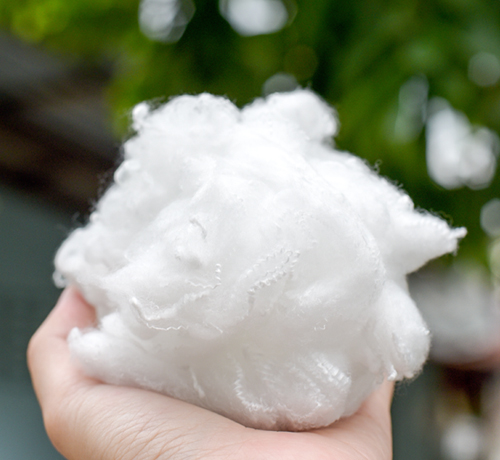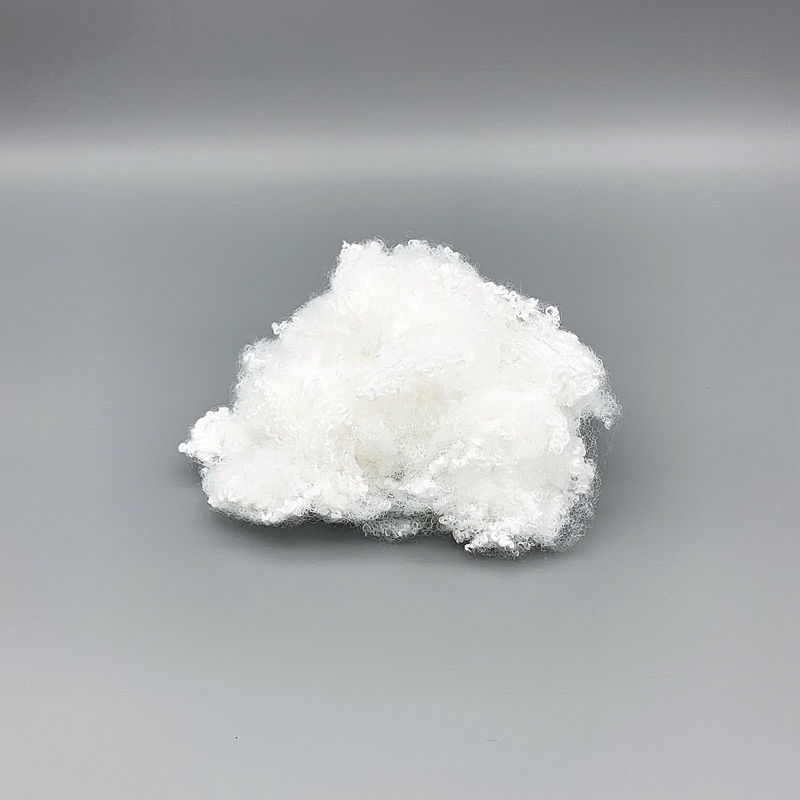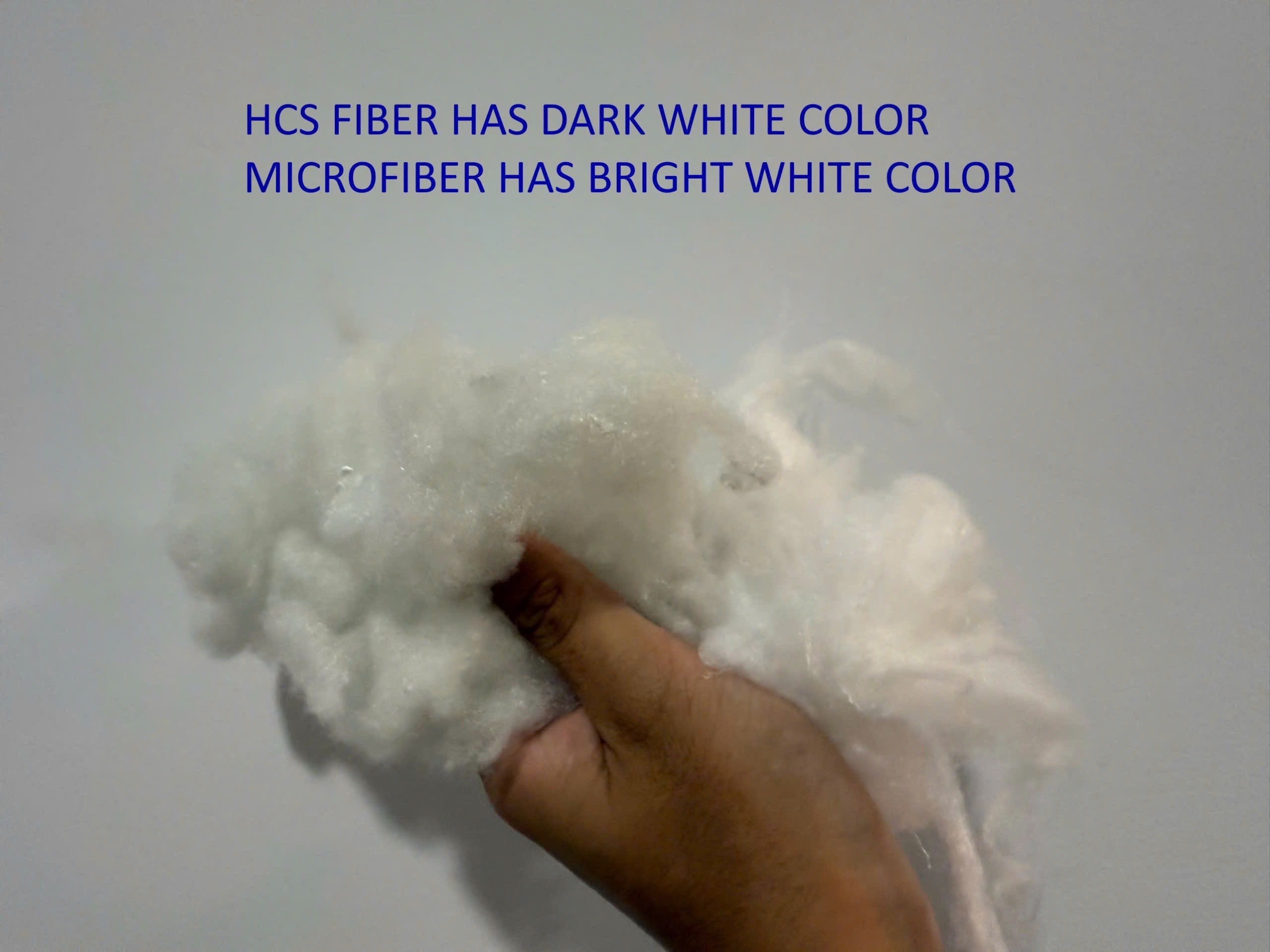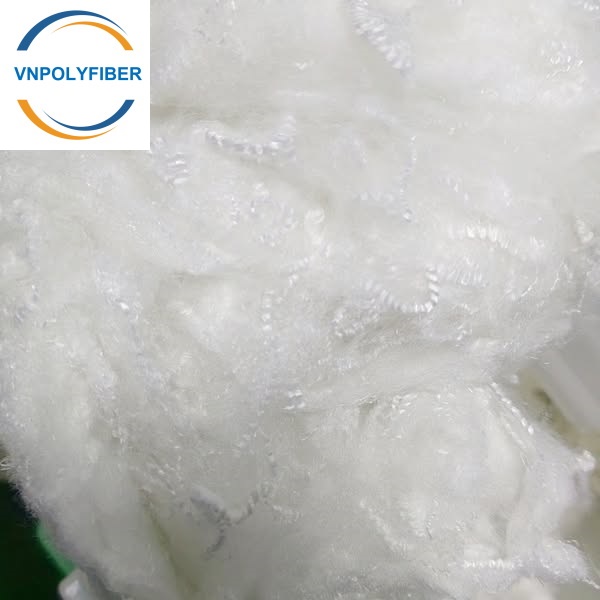
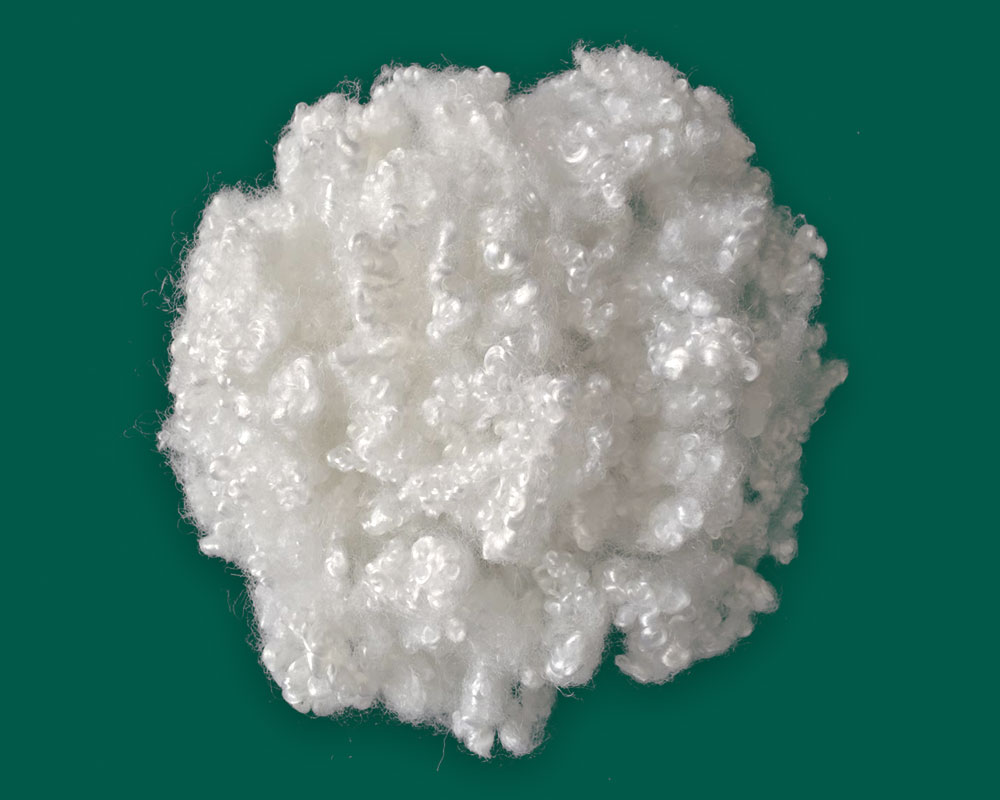
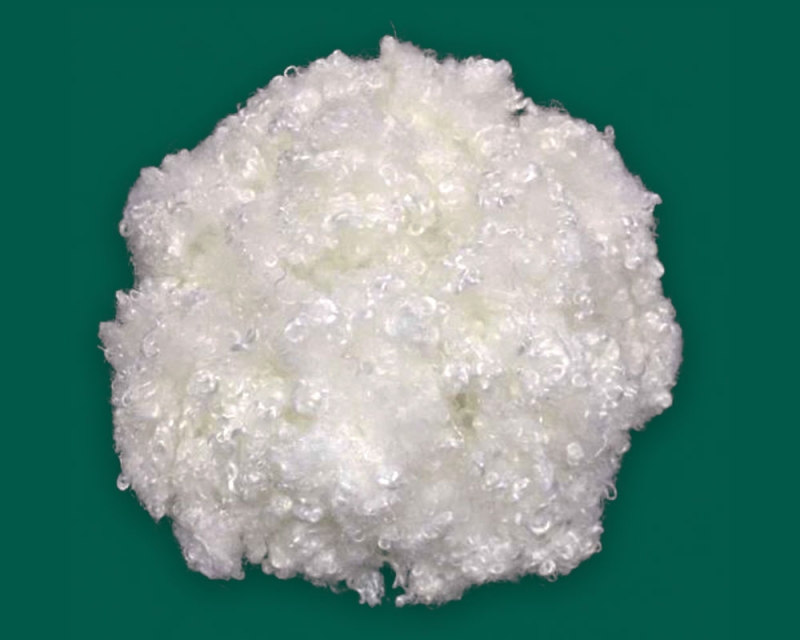
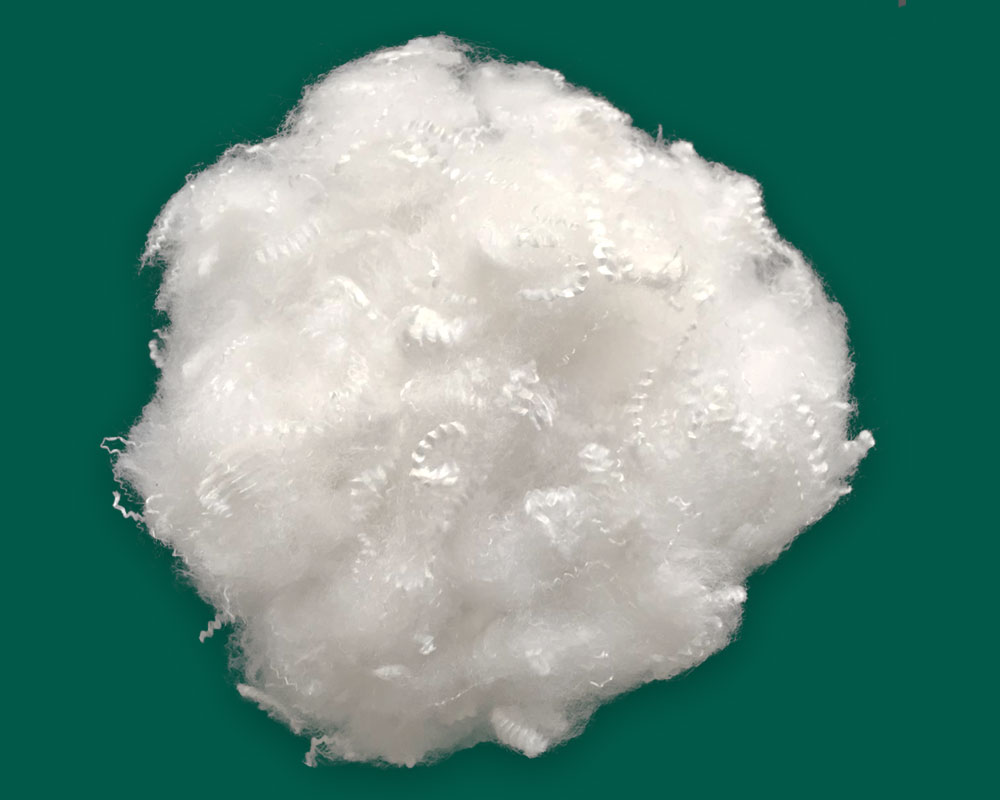
Fine Denier Polyfill for Comforters and Pillows
- GRS-Certified: Recycled quality that rivals virgin materials.
- Eco-Efficient: Reduced energy, petroleum, and $CO_2$ emissions.
- Ultra-Fine Fiber: Micro Denier tech (1/100th of a human hair).
- Custom Finishes: Tailored function and feel via expert chemistry.
PRODUCT DETAIL
Fine Denier Polyfill: Premium Siliconized Fiber for Comfort and Durability
When it comes to the “soul” of a comforter, pillow, or high-end piece of furniture, the secret lies in the filling. Not all polyester stuffing is created equal. Fine Denier Polyfill, particularly Siliconized Polyester Hollow Fiber, represents the pinnacle of synthetic filling technology.
By combining the lightweight nature of hollow fibers with a specialized silicone coating, manufacturers can achieve a “feather-like” touch that remains resilient, hygienic, and easy to maintain.
What is Siliconized Polyester Fiberfill?
Siliconized polyester filler is a synthetic fiber that has been treated with a thin layer of silicate material. This unique coating serves several critical functions that standard “dry” fibers cannot match:
1. The “Slick” Finish Advantage
The silicone coating makes the fibers incredibly slippery. This prevents the fibers from “grabbing” each other, which effectively:
Prevents Bunching: Your pillows and cushions maintain a smooth, uniform surface.
Enhances Rebound: The fibers slide past one another easily, allowing the filling to “spring back” to its original shape after use.
Improves Workability: For crafters and manufacturers, it is much easier to stuff into pre-sewn covers or pillow protectors.
2. Hypoallergenic and Antimicrobial Protection
Because the silicone creates a smooth, non-porous surface, it is difficult for dust mites, bacteria, and allergens to attach to the fiber.
Resistant to Molds and Mildew: This makes it a superior choice for humid environments or even outdoor seating.
Skin-Friendly: It is naturally non-allergenic, providing peace of mind for users with sensitive skin or respiratory issues.
Understanding Denier: From Micro Denier to 15D
The “Denier” (D) refers to the thickness of the fiber. In your sourcing and production, choosing the right denier is essential for the intended application:
Micro Denier (0.9D – 1.2D) – The Luxury Feel
At approximately 1/100th the thickness of a human hair, microdenier fibers are used to create “down-alternative” products.
Best for: High-end quilts, spinning cotton, and soft cloth linings.
The Feel: Extremely dense and soft, mimicking the warmth-to-weight ratio of natural goose down.
High-Loft 15 Denier – The Structural Support
Our 15D Hollow Conjugate Slick fiber is engineered for “Deep Seating” and heavy-duty comfort.
Best for: Pet beds, back cushions, and stuffed animal filling.
The Performance: Unlike standard toy fills, 15D fiber provides the structural integrity needed to support body weight without collapsing.
Why Choose Hollow Conjugate Fiber?
Our premium loose fill is not just siliconized; it is hollow.
Better Warmth: The hole in the center of the fiber traps air, providing a thermal barrier.
Superior Recovery: The “conjugate” (spiral) crimp acts like a microscopic spring. When you combine this 3D structure with a silicone finish, you get the highest possible recovery rate in the industry.
Sustainability: The GRS-Certified Difference
As a leader at Vnpolyfiber, we prioritize the planet without compromising on performance. Our recycled polyester fiber is GRS (Global Recycled Standard) certified.
Equivalent to Virgin: Our recycled fibers match the whiteness, strength, and softness of virgin products.
Carbon Reduction: By utilizing recycled PET flakes, we significantly minimize CO2 emissions and the consumption of petroleum resources compared to virgin production.
From Chips to Bales: The Production Process
Understanding the journey of a staple fiber ensures you know exactly what goes into your product:
Extrusion & Spinning: PET chips are melted and pushed through a nozzle (spinneret) to create filaments.
Stretching: The fibers are stretched across rollers at varying speeds to determine their final rigidity and elasticity.
Crimping: This critical step gives the fiber its “bulk” and ability to mix with other materials.
Siliconization: The slick finish is applied to ensure the fiber is antimicrobial and anti-bunching.
Drying & Cutting: Moisture is removed in a heat dryer before the fiber is cut to precision lengths (32mm to 76mm) and compressed into bales.
Applications and Maintenance
| Product Category | Recommended Specs | Key Benefit |
| Pillows & Comforters | 0.9D – 7D Siliconized | Softness and “down-like” drape. |
| Pet Beds & Toys | 15D Hollow Conjugate | Durability and washability. |
| Outdoor Cushions | 15D FR / Antibacterial | Mold and mildew resistance. |
| Industrial Felts | 15D Non-Siliconized | Grip and needle-punch stability. |
Care Instructions:
Our fiberfill is machine washable. While laundering may cause temporary bunching, the siliconized coating allows you to easily smooth the filling back into place by hand once dry, maintaining the integrity of the item for years.
Conclusion: Elevate Your Comfort Standards
Whether you are a manufacturer looking for first-quality recycled PSF or a brand manager seeking a hypoallergenic polyfill for a new line of comforters, our siliconized hollow fibers provide the resilience and soft touch your customers demand.
Technical Parameter
Specification
- Denier: 0.9D – 1.2D
- Type: Hollow Conjugate Slick
- Grade: Recycle, First quality
- Color: white, optical white,
- Cut Length: 32mm-76mm
- Finish: silicon, slick, dry, FR, antibacterial, low shrinkage
- Application.Filling Material: filling toys pillows (51/64)Spinning quilt/spinning cotton/cloth lining/slippers lining/(51/64)Needle-punched nonwoven/ polyester wadding/nonglue cotton/Filtering material/Hard mattress(51/64)
Staple fiber production process

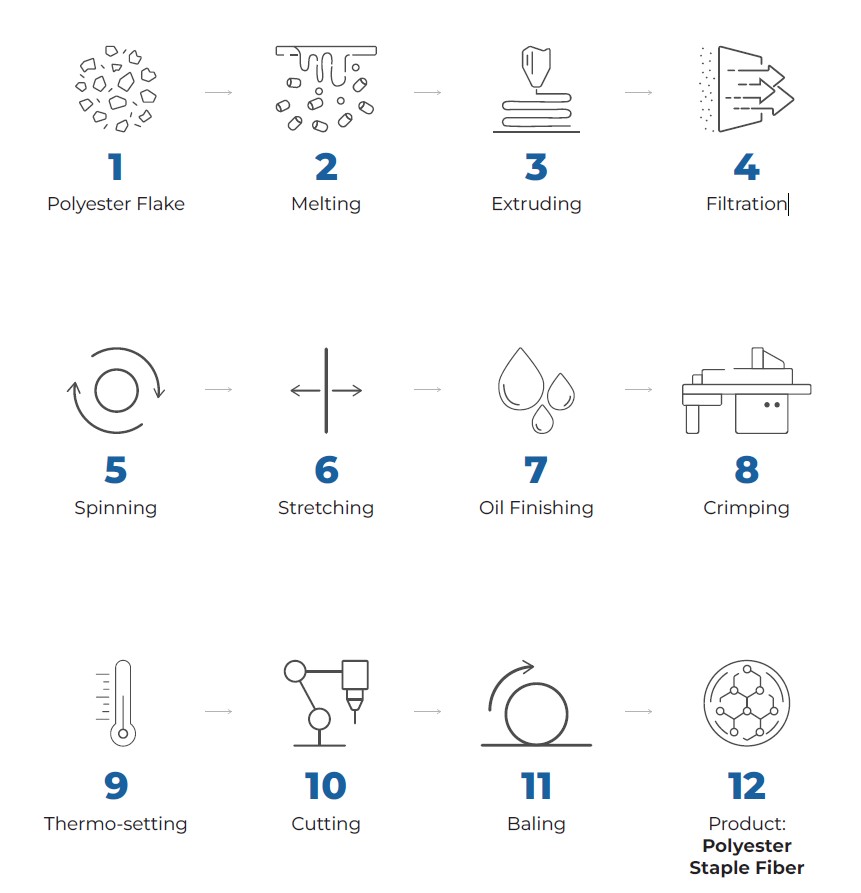
The base material, which comes in chips, is melted in an extruder before being quantified in a gear pump and transferred to a nozzle. Polymers that pass through the nozzle are cooled and solidified in a spinning tank, and end up in a fiber form (semi-finished product). Fiber released from multiple spinning tanks is lubricated and gathered before being wound by a gear wheel and placed in cans. Fiber placed in cans is given various properties through a stretching process, in which fiber is stretched at various roller speeds designed to endow different degrees of rigidity and elasticity.
The fiber is again lubricated for enhanced quality and to facilitate the processes that follow. A crimping process takes place to give the fiber various properties, including bulk and mixability. Moisture and lubricant on the fiber is dried off in a heat dryer. The fiber is then cut into required lengths and end up in a bale form. The fiber is then compressed, packaged, and stored for factory release when ordered.
PRODUCTION PROCESS OF POLYESTER STAPLE FIBER
FAQ
1. What do you offer?
We supply a comprehensive range of fibers, including recycled hollow conjugated (both siliconized and non-siliconized) polyester staple fiber, hollow fiber, microfiber, virgin polyester staple fiber, and low-melt fiber.
2. What is it used for?
Our fibers are versatile and widely utilized across both the filling and non-woven industries, providing essential loft, durability, and texture for various consumer and industrial applications.
3. Are you a factory or a trading company?
We are primarily a manufacturer specializing in polyester staple fiber with years of industry expertise. To better serve our clients, we also operate a dedicated trading division that allows us to act as a one-stop solution provider.
In addition to our own fiber production, we source high-quality textile components (such as yarn and low-melt fibers) and finished goods (including foam, pillows, cushions, toys, and down/feather products) to ensure our customers have access to a comprehensive supply chain.
4. Where is your factory location?
To maintain a robust and flexible global supply chain, our manufacturing facilities are strategically located throughout Asia, specifically in Vietnam, China, Malaysia, Thailand, and Indonesia. If you would like to visit one of our sites, please contact your sales representative, and we will be happy to arrange transportation for you.
5. Can you accept free sample?
Yes, we provide free hand samples for quantities under 1 kilogram. Once a price is confirmed, we can prepare and dispatch your sample within 2–3 business days. Please note that while the sample is free, the freight costs are the responsibility of the client.
6. Can you provide ODM service?
Absolutely. We specialize in ODM (Original Design Manufacturing). This means we can customize the material composition, dimensions, quantity, packaging, and branding to meet your specific requirements. Your logo and unique specifications will be integrated into the final product.
7. How about your quality? What’s the minimum order Quantity (MOQ)?
We invite you to place a trial order to experience our quality firsthand. Our standard MOQ is 23,000 kilograms per order.
Regarding pricing, we maintain a no-bargain policy. We believe in transparency and efficiency, so we provide our most competitive offer upfront to save you time and ensure a straightforward procurement process.
8. Can I mix different items in one order?
Yes, for your convenience, we allow for a maximum of two different items to be mixed within a single container.
9. How can you guarantee the product quality?
Quality is the cornerstone of our business. We employ an experienced QC team that monitors every stage of production, from raw material inspection to the final manufacturing process. We utilize a range of advanced testing instruments to ensure our fibers meet strict industry standards.
Our business philosophy is simple: We aim to serve one customer 1,000 times, rather than 1,000 customers once. We prioritize long-term partnerships built on consistent excellence.
10. What’s the payment terms?
L/C at sight, 30% TT in advance are mostly accepted; other terms shall be negotiable by both sides
For more information, please feel free to contact :
Tony Tan
Mobile number: +84 90 466 5251 (Whatsapp/Wechat/Viber/Signal)