Chemical Fiber Machine, PSF Production
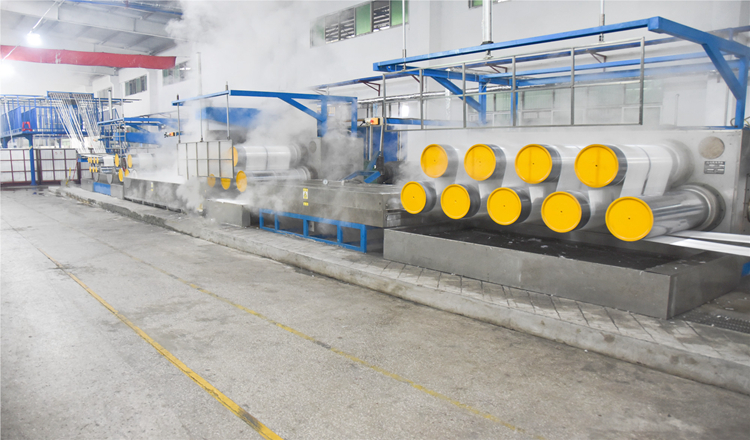
- This complete set of equipment takes polyester chip and bottle flakes and pet lumps as raw material,
- Adopt the melting spinning technology and the technology of variable-frequency drive after drafting, curling, cutting and packaging processing machine to produce polyester staple fiber products with high strength and good elongation.
PRODUCT DETAIL
What is chemical fiber?
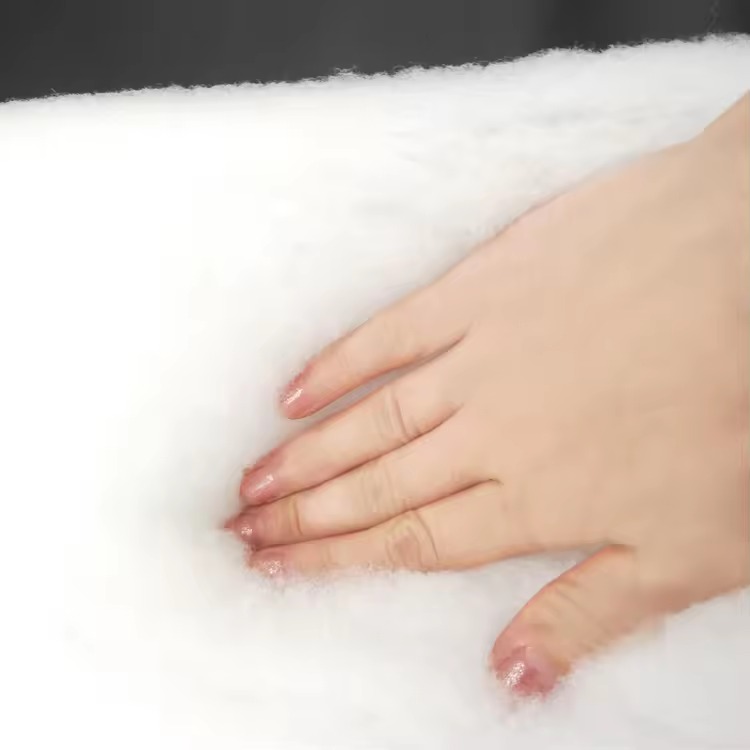
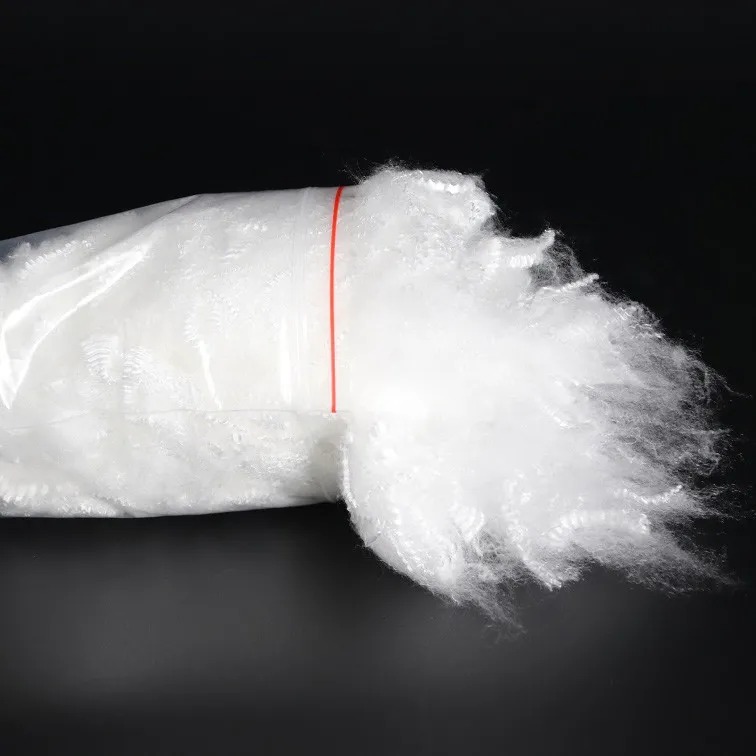
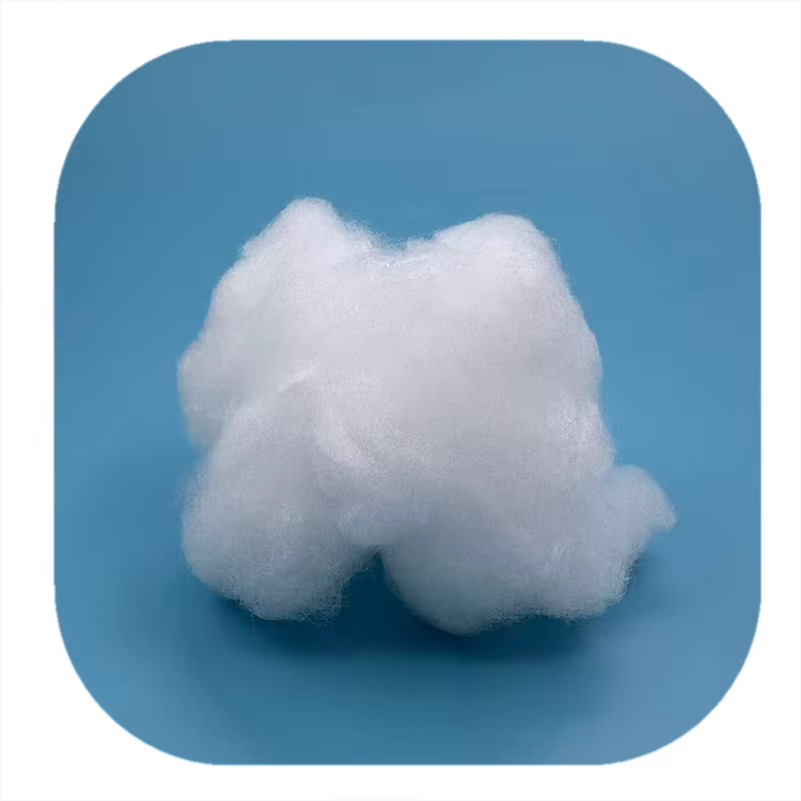
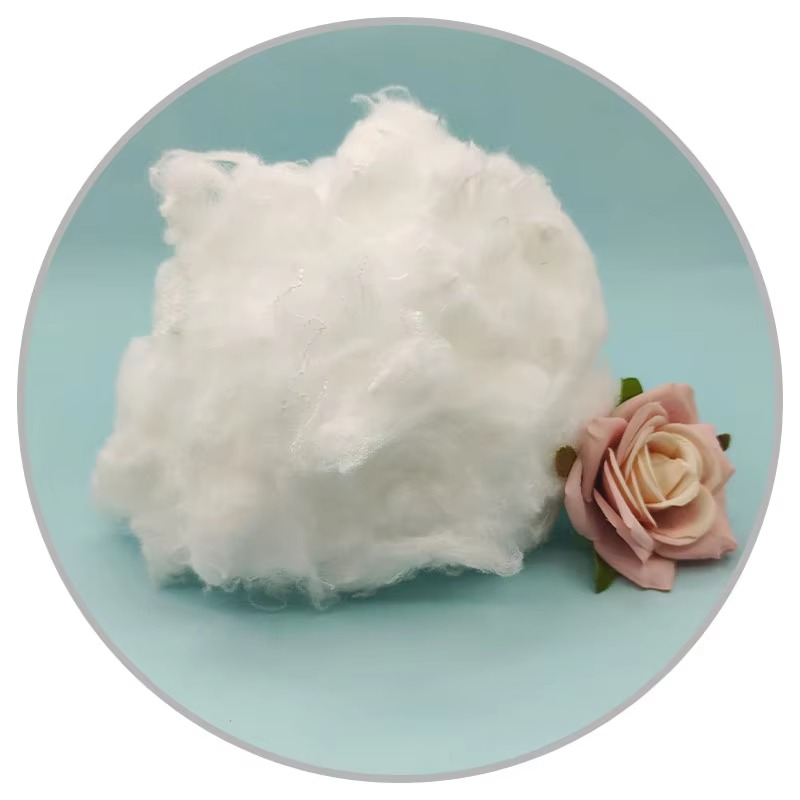
Chemical fiber is a synthetic man-made fiber made from PET/polyester waste and post-consumed PET bottles. It is used in the non-woven carpeting, wadding, and filtration industries as a polyfill for stuffing cushions, pillows, soft toys, and quilts. It’s also used for spinning yarns and making geotextiles. Hollow polyester staple fiber has good resilience properties and is used to make premium pillows, cushions and quilts.
Recycling PET/polyester waste and used PET bottles is essential to maintaining environmental cleanliness.
Worldwide, millions of PET bottles are consumed daily and thrown in the trash. PET is also called polyester. Polyester is a man-made material created from purified terephthalic acid (PTA) or its dimethyl ester dimethyl terephthalate (DMT).
Since PET bottles are practically non-biodegradable, it was very difficult to dispose of them. New technology was developed in Europe, Korea, and finally China, which helped recycle post-consumed PET bottles to make man-made fibers like Recycled Polyester Staple Fiber. These fibers are then used to make non-woven carpet for automobiles, making quilts, yarns, pillows, etc.
First, bottles arrived in a factory, collected from trash, in bale form. These bales are opened and manually sorted to remove contaminants such as iron, PVC, and stones. Once cleared, the PET bottles are crushed into 12-15 mm flakes and hot washed in a chemical solution containing 2% sodium hydroxide. This chemical helps in taking out glue from bottles and also cleaning them. The overall contamination in PET flakes should not be greater than 200 ppm.
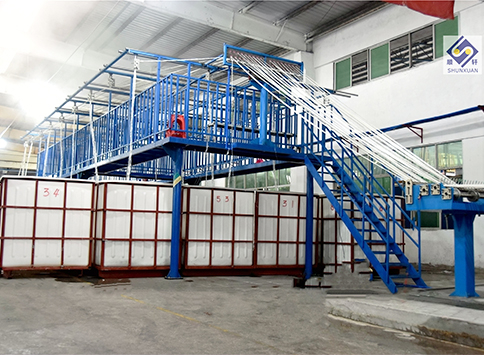
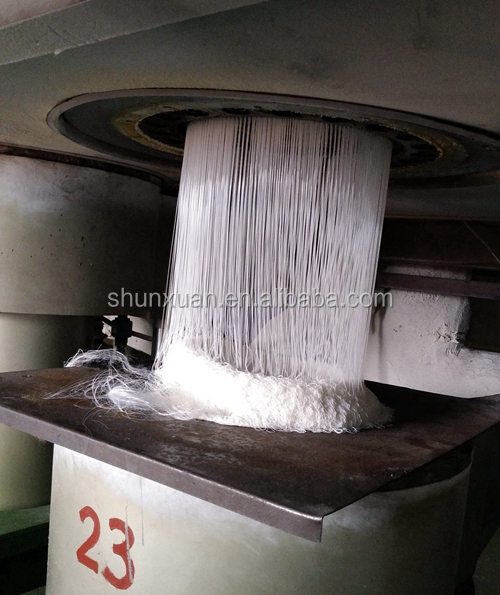
These dried flakes are then taken to the extruder for spinning. Spinnerets are available to produce either hollow or solid PSF with varying denier (1.2 Den to 33 Den). Filaments coming out of spinning are collected in cans or bobbins. This step completes the spinning. Hollow and solid PSF can be treated to make siliconized, conjugated, polyfill, harsh, bouncy, anti-static, and anti-fungal. In the second step, these cans are taken to the Creel area, where many cans or bobbins are combined to make tow and stretched several times in a chemically heated bath to make fiber. These fibers are then dried, relaxed in a relaxer, and cut to various lengths before being packed into bales.
VNPOLYFIBER has been providing polyester staple fiber production lines as our core business line. We have the capability to supply you with the required production line together with professional technology and after-sales service. Besides, we offer various spare parts related to the PSF production line at customer request.
1. Main production line for spinning
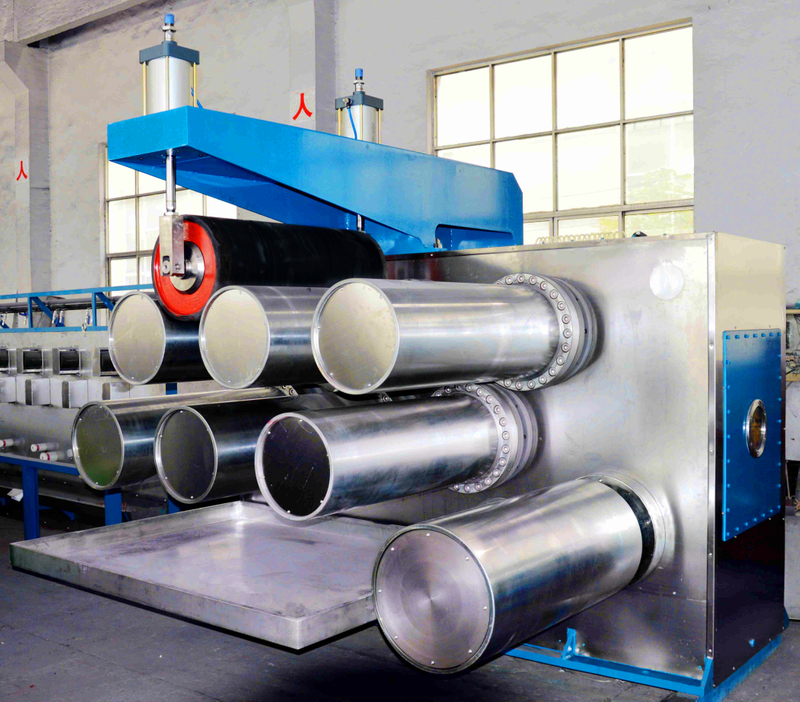
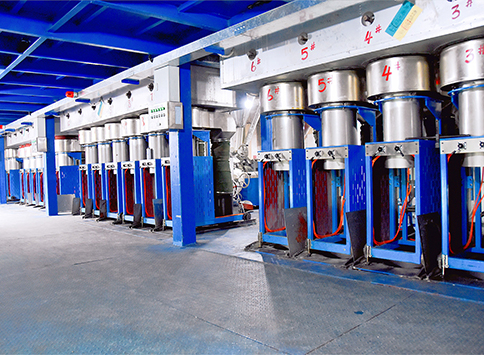
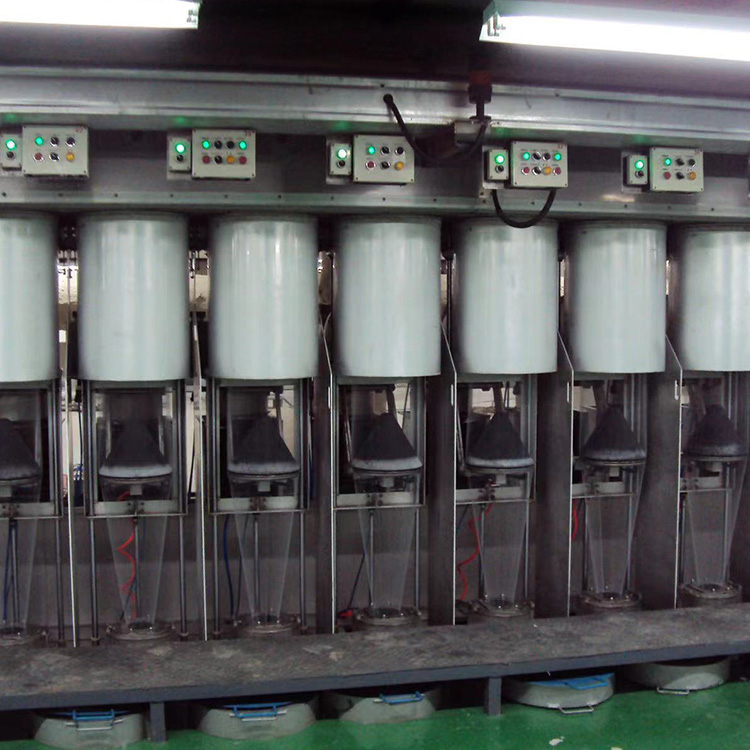
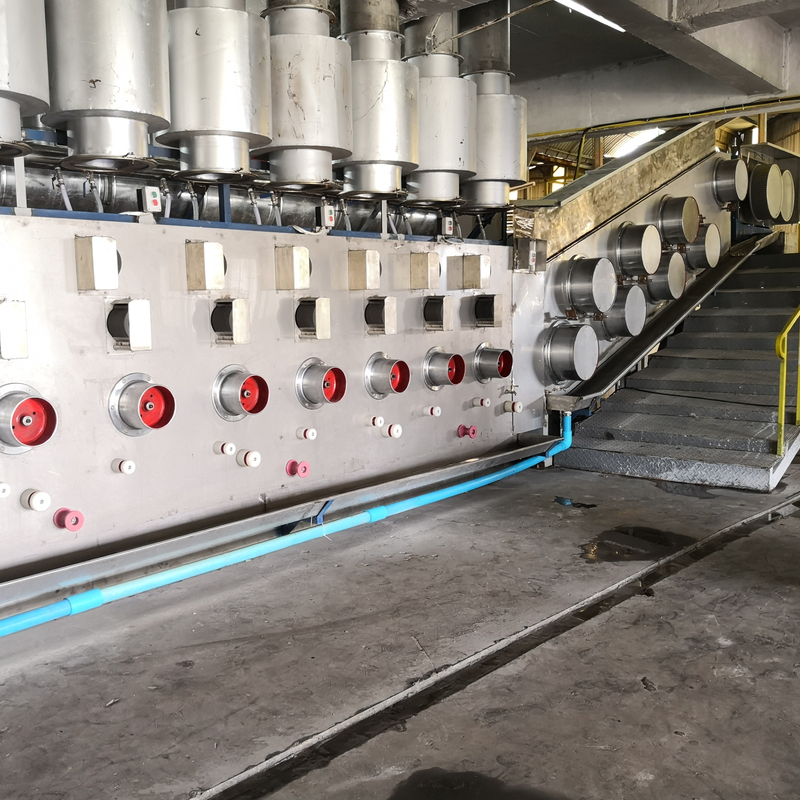
It mainly consists of an extruder, filter, spinning insulation beam, thermal agent circulation system, metering pump, pump driving system, spin pack, blasting device, winding machine and yarn can traverse system.
2 Auxiliary production units, including
Dissembling, cleaning, assembling, and preheating the spin pack; testing the spinneret and preparing the sand; preparing the finish oil; air conditioning and ventilation; and physical and chemical detection.
3 General facilities, including
Electric substations, water supplies, compressed air systems, and other comprehensive facilities.
Process flow of polyester staple fiber
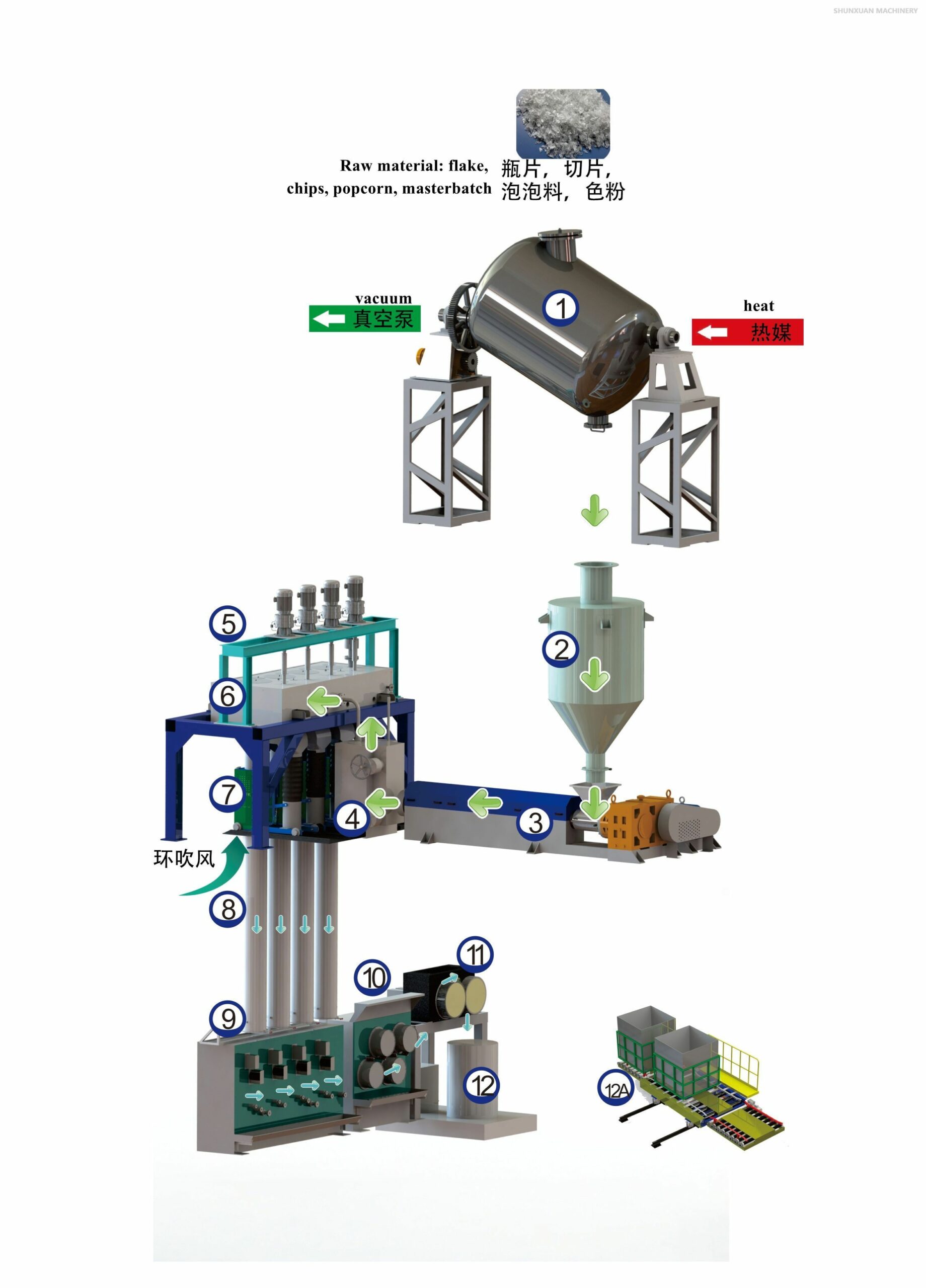
For the spinning line:
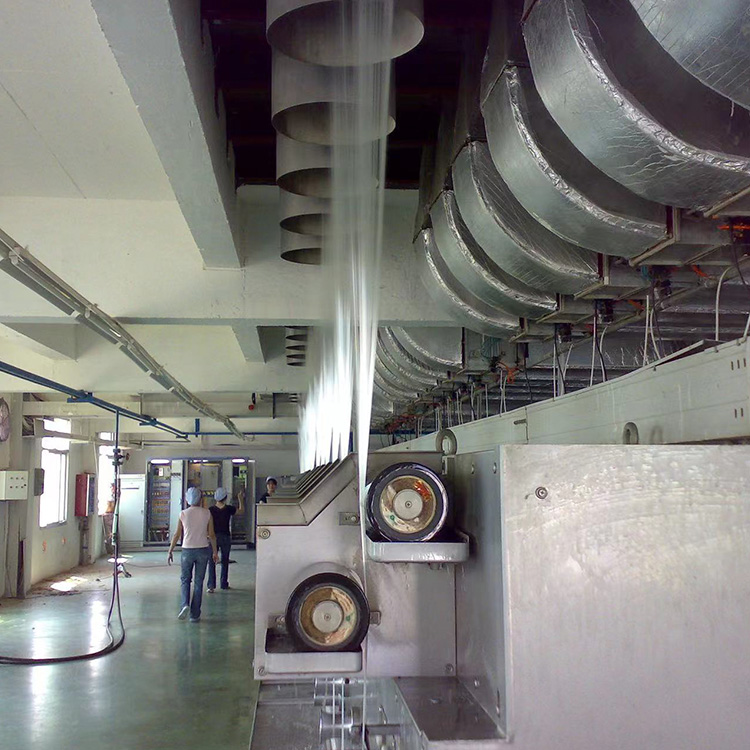
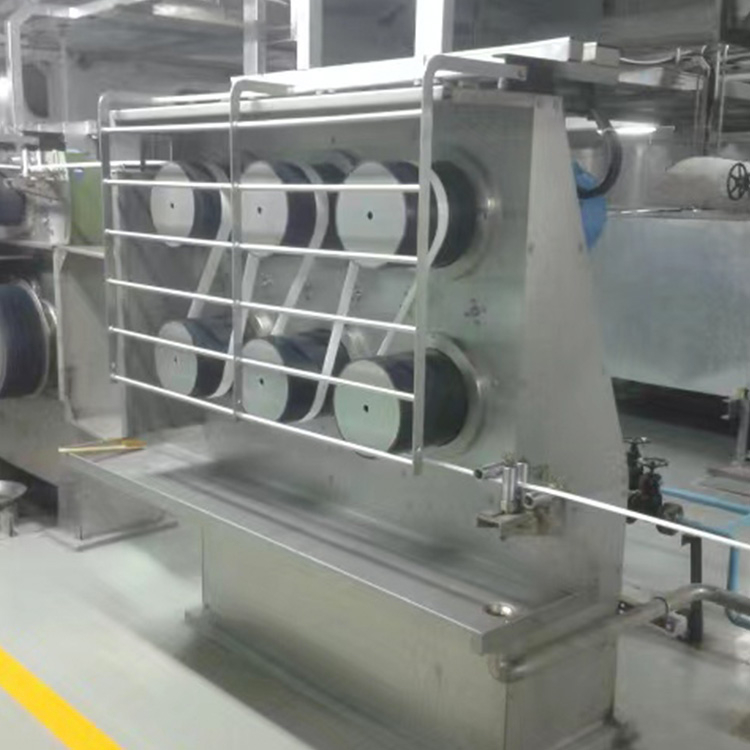
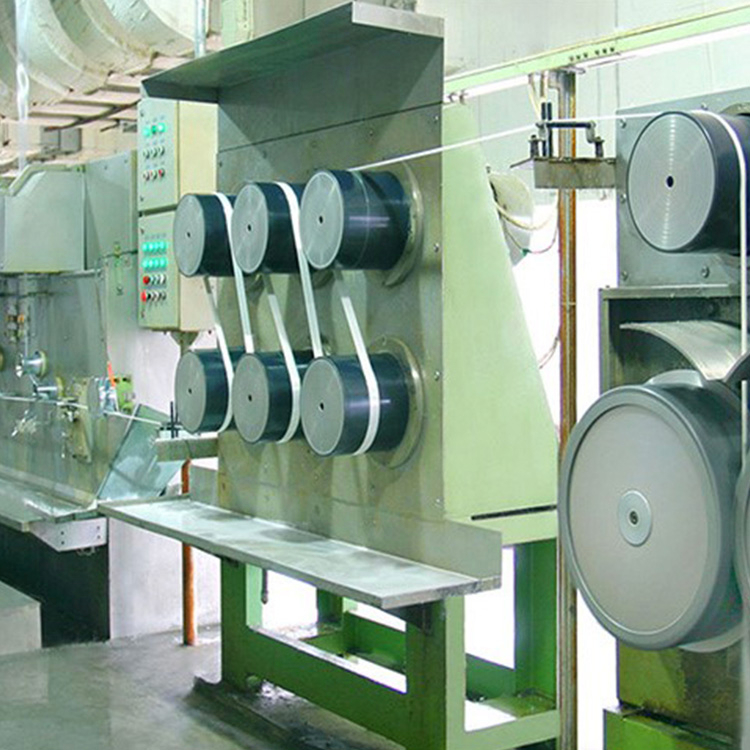
Vacuum Dryer -> Hopper -> Screw Extruder -> Filter -> Spin Beam (Meter Pump System, Spin Pack, Spinneret) -> Quenching Unit -> Interflow Duct -> Draw-off Wall -> Capstan Roller -> Sunflower Gearing unit -> fiber can traverse system
Pre-spinning Line:
Vacuum Drying Machine -> Storage Container -> Screw Extrusion Machine -> Sieve -> Spinning Apparatus (Metered Pump System, Spinning Pack, Spinneret) -> Cooling Unit -> Connecting Passage -> Withdrawal Wall -> Roller System -> Gear System for fiber movement.
Post-spinning Line:
According to the spinning process technology, the products are divided into solid recycled polyester staple fiber and hollow recycled polyester staple fiber.
Among them, solid recycled polyester staple fiber is divided into the following four categories:
- Cotton type: The linear density is 1.5-2.1dtex. It is divided into two types: high-tenacity cotton type and normal cotton type. High-tenacity cotton type varies according to its application.
- Medium length type: line density is 2.2-3.2 dtex.
- Wool type: divided into fine denier wool type and high denier wool type. The density of fine denier wool fiber is 3.3-6.0 dtex. The higher denier fiber density is 6.1-27.78 dtex.
- Polyester staple fiber for filling: linear density is 3.33 dtex-27.28 dtex.
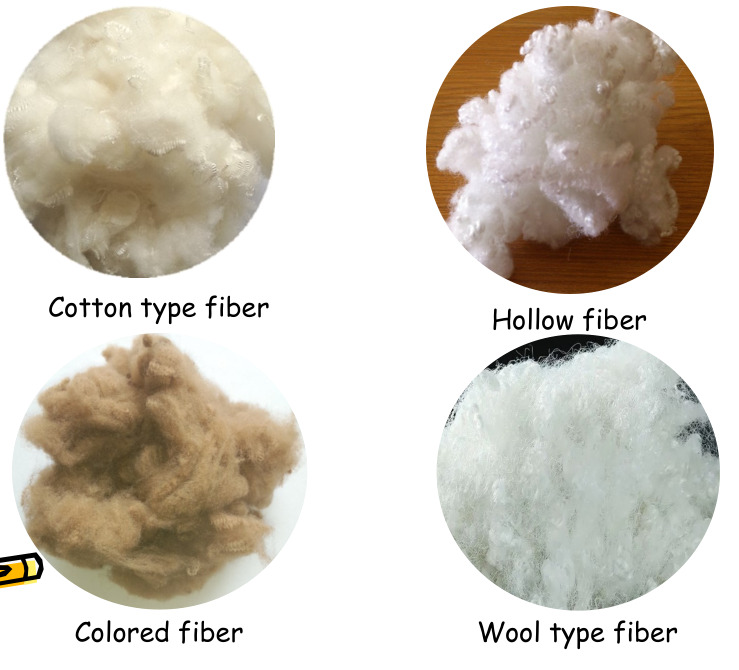
Hollow recycled polyester staple fiber is divided into two-dimensional hollow polyester staple fiber and three-dimensional hollow polyester staple fiber.
1.1 Two-Dimensional Hollow Fiber Production Line:
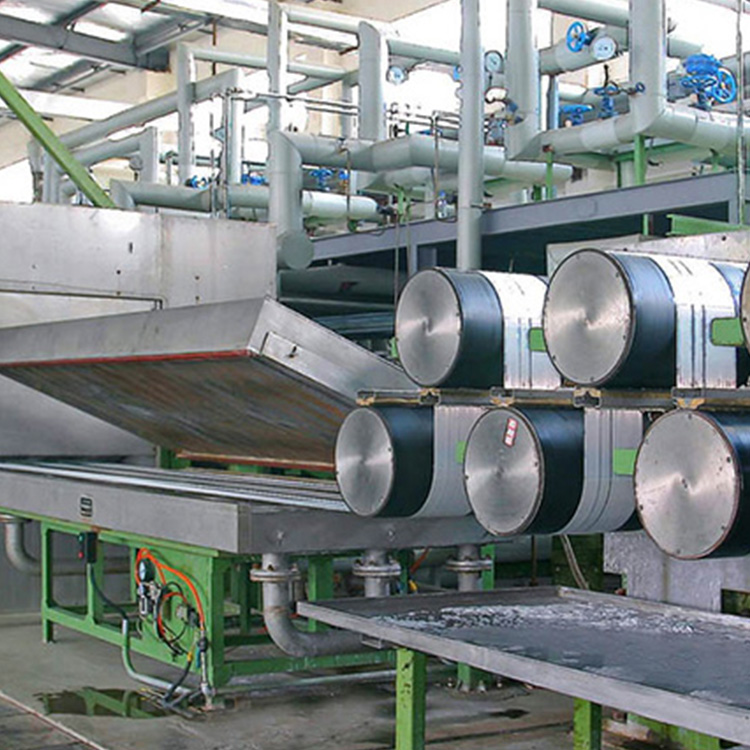
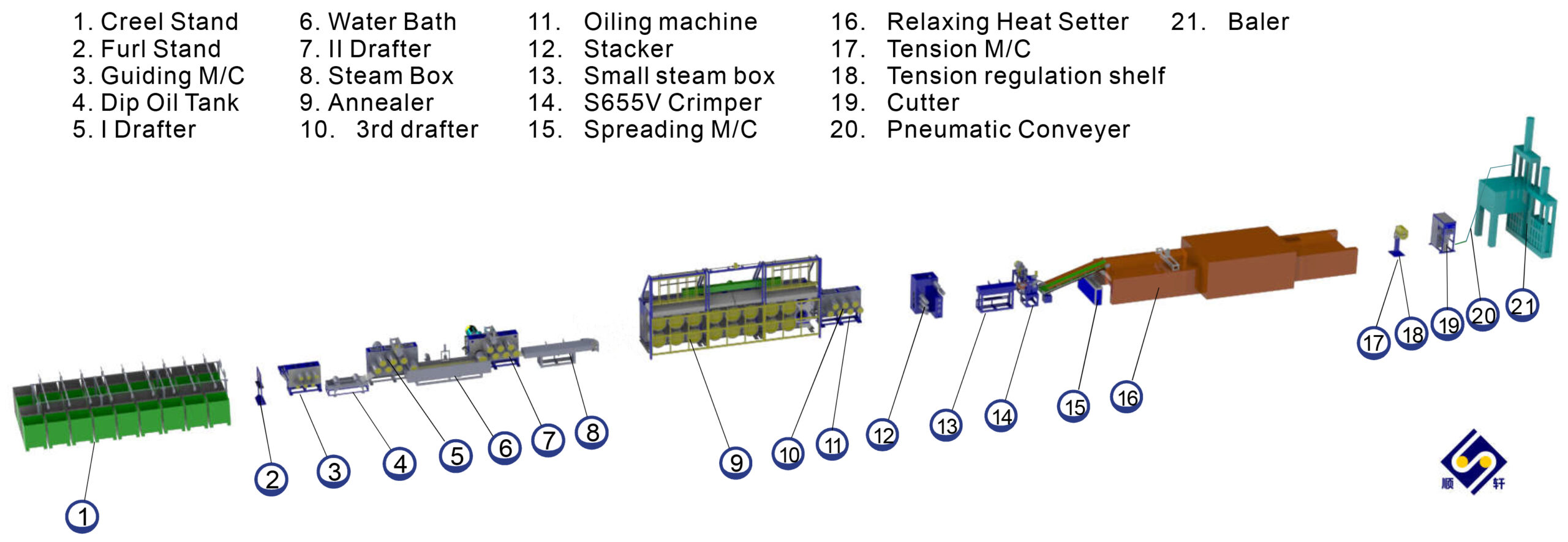
Starting from the can creel, the inlet thread guide leads to the tow guide stand. Next, the fibers go through the dipping bath and then the first draw stand. They continue through the draw bath and the second draw stand. The fibers then reach the draw steam chest and move on to the third draw stand. Thereafter, they pass through the tow stacker and enter the crimper steam box. The fibers are then processed by the crimper and conveyed by the tow conveyor. Next, they go through the relaxer and the two tension stands before reaching the cutter. Finally, they are transported by the chain plate conveyor and pressed into bales by the baling press. Can Creel -> Inlet Thread Guide -> Tow Guide Stand -> Dipping Bath -> 1st Draw Stand -> Draw Bath -> 2nd Draw Stand -> Draw Steam Chest -> 3rd Draw Stand -> Tow Stacker -> Crimper Steam Box -> Crimper -> Tow Conveyer -> Relaxer -> Tow Tension Stand -> Cutter -> Chain Plate Conveyor -> Baling Press
1.2 Three-Dimensional Hollow Fiber Production Line:
Similar to the two-dimensional line, the process starts with the can creel and the inlet thread guide. The fibers then pass through the tow guide stand and the dipping bath. Next, they go through the first draw stand and the draw bath, followed by the second draw stand. The fibers then reach the draw steam chest and move on to the third draw stand. Instead of a tow stacker, a tension control device is used in this line. The fibers then enter the crimper steam box and are processed by the crimper. Thereafter, they are sprayed with silicon oil by the silicon oil sprayer. Next, the fibers go through the tow tension stand and are cut by the cutter. They then pass through the fiber spreader and the fiber leveler before reaching the relaxer. The fibers are then transported by the chain plate conveyor and pressed into bales by the baling press.
Can Creel -> Inlet Thread Guide -> Tow Guide Stand -> Dipping Bath -> 1st Draw Stand -> Draw Bath -> 2nd Draw Stand -> Draw Steam Chest -> 3rd Draw Stand -> Tension Control Device -> Tow Stacker -> Crimper Steam Box -> Crimper -> Silicon Oil Sprayer -> Tow Tension Stand -> Cutter -> Fiber Spreader -> Fiber Leveler -> Relaxer -> Chain Plate Conveying system -> Baling Press
2. Spinning section:
2-1 Main production unit:
It is mainly composed of a drying system, a screw extruder, a filter, a spinning insulation box, a heat medium circulation system, a metering pump, a metering pump transmission device, a spinning pack, a quenching system, a take-up, a haul-off unit, a traction feeding and a traverse system for fiber cans and so on.
2-2 Design basis: Basic design of spinning production line
- Annual production capacity: 6000T
- Finished fiber size: 1.67 Dtex
- Spinning bits: 8 bits
- Spinning pitch: 650mm
- Spinneret specifications: φ 328mm
- Metering pump specifications: 70cc/R
- Spinning speed
- Mechanical speed: 500~1500m/min
- Process speed: 500–1350 m/min
- Specification of fiber cans: 1000×1500mm
Processing section
Precursor fiber tow → Creel & upper & lower guide frames → Oil immersion bath → 1st draw stand → bath draw chest → 2nd draw stand → steam draw chest → 3rd draw stand → stacker → tension frame → steam pre-heater → crimper → spreader → tensionless tow dryer → draw-off tension stand → cutter → baler for stapled fiber.
Recycled bottle flake gets dried first and goes into a screw extruder for melting, and then the melt will be purified by a filter. Melt gets distributed by the meter pump and goes into the spin beam for the second filtration and then becomes fiber tow after the spinneret and cooling system.
Key Features:
- The equipment has a straightforward and linear design, making it effortless to install and maintain.
- Utilizes top-quality components from renowned global brands for pneumatic, electric, and operational parts.
- Employs a high-pressure double-crank mechanism to efficiently control the opening and closing of the die.
- Operates with advanced automation and intelligence, ensuring a clean and pollution-free process.
- Incorporates a linker that seamlessly connects with the air conveyor, enabling direct integration with the filling machine.
Our Service:
- Quick delivery time.
- Round-the-clock online service.
- Guarantee: Key components covered for 1 year.
- Provide lifetime access to reasonably priced parts.
- Extend technical assistance and workshop layout guidance to buyers.
- Customize the layout as per the buyer’s requirements.
Packing & Delivery
- Packaging: Export packaging that meets standard requirements.
- Harbor: Any harbor located in China.
- Delivery Time: Within 30 to 40 business days after receiving the initial payment.
Technical Parameter
| Capacity | From 10TPD-300TPD |
| Products | Hollow Conjugate Silicone Fiber, Hollow Non-Conjugate Silicone Fiber, Solid Fiber Silicone/ non Silicone |
| Denier Size | 1.2Den,1.5Den, 3Den, 6Den, 10Den, 15Den, 18Den, 22Den, 25Den, 33Den |
| Cut length | 44, 51, 64, 76, 102 (As per customer requirement) |
| Feel | Siliconised or non siliconised soft as well as harsh feel |
| Tensile strength | 3.5 to 6.3 gm/Denier |
| Elongation: | 18 to 60% |
| Oil Pickup | Minimum 0.20% to 0.35% |
| Crimps | 3 to 5 per cm |
| Color Fastness | 4+ |
Application
Cushions – Pillows – Quilts – Toys – Jacket – Mattress – Non-woven carpet – Automotive felts, speaker felts, geo textiles, polyfill wadding, filter fabrics and other acoustics as well.
| Denier | Cut Length (In mm) | Type | Application |
| 1.2-1.4 | 32,38,51 | Solid High tenacity | Spinning |
| 1.4 | 32,38 | Solid | Spinning |
| 1.4 | 51,64 | Solid | Non-woven, interlining, felt |
| 3, 6, 15 | 32,38,51,64 | Solid Non Siliconized | Padding/ wadding, needle punching, Non-woven interlining, felt |
| 6, 15 | 32,38,51,64 | Solid Siliconized | Stuffing (Filling) plush toy, cushion, pillow, bolster, sofa |
| 7, 15 | 32,51,64 | Hollow, Hollow Conjugate Non Siliconized | Padding/wadding, felt, needle punching |
| 7, 15 | 32,51,64 | Hollow, Hollow Conjugate Siliconized | Stuffing (Filling): plush toy, cushion, pillow, bolster, sofa |
Video
FAQ
1. What do you offer?
We supply a comprehensive range of fibers, including recycled hollow conjugated (both siliconized and non-siliconized) polyester staple fiber, hollow fiber, microfiber, virgin polyester staple fiber, and low-melt fiber.
2. What is it used for?
Our fibers are versatile and widely utilized across both the filling and non-woven industries, providing essential loft, durability, and texture for various consumer and industrial applications.
3. Are you a factory or a trading company?
We are primarily a manufacturer specializing in polyester staple fiber with years of industry expertise. To better serve our clients, we also operate a dedicated trading division that allows us to act as a one-stop solution provider.
In addition to our own fiber production, we source high-quality textile components (such as yarn and low-melt fibers) and finished goods (including foam, pillows, cushions, toys, and down/feather products) to ensure our customers have access to a comprehensive supply chain.
4. Where is your factory location?
To maintain a robust and flexible global supply chain, our manufacturing facilities are strategically located throughout Asia, specifically in Vietnam, China, Malaysia, Thailand, and Indonesia. If you would like to visit one of our sites, please contact your sales representative, and we will be happy to arrange transportation for you.
5. Can you accept free sample?
Yes, we provide free hand samples for quantities under 1 kilogram. Once a price is confirmed, we can prepare and dispatch your sample within 2–3 business days. Please note that while the sample is free, the freight costs are the responsibility of the client.
6. Can you provide ODM service?
Absolutely. We specialize in ODM (Original Design Manufacturing). This means we can customize the material composition, dimensions, quantity, packaging, and branding to meet your specific requirements. Your logo and unique specifications will be integrated into the final product.
7. How about your quality? What’s the minimum order Quantity (MOQ)?
We invite you to place a trial order to experience our quality firsthand. Our standard MOQ is 23,000 kilograms per order.
Regarding pricing, we maintain a no-bargain policy. We believe in transparency and efficiency, so we provide our most competitive offer upfront to save you time and ensure a straightforward procurement process.
8. Can I mix different items in one order?
Yes, for your convenience, we allow for a maximum of two different items to be mixed within a single container.
9. How can you guarantee the product quality?
Quality is the cornerstone of our business. We employ an experienced QC team that monitors every stage of production, from raw material inspection to the final manufacturing process. We utilize a range of advanced testing instruments to ensure our fibers meet strict industry standards.
Our business philosophy is simple: We aim to serve one customer 1,000 times, rather than 1,000 customers once. We prioritize long-term partnerships built on consistent excellence.
10. What’s the payment terms?
L/C at sight, 30% TT in advance are mostly accepted; other terms shall be negotiable by both sides
For more information, please feel free to contact :
Tony Tan
Mobile number: +84 90 466 5251 (Whatsapp/Wechat/Viber/Signal)