Anti-dumping Investigation of Polyester Staple Fiber in Brazil
Brazil has initiated an anti-dumping investigation into imports of polyester staple fiber (PSF) originating from India, China, Vietnam, Malaysia and Thailand.
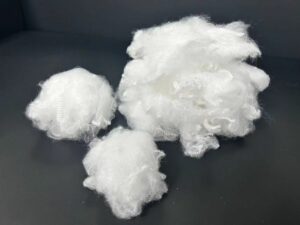
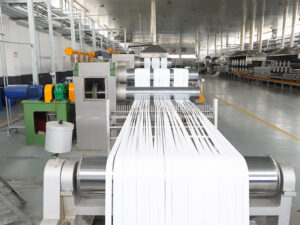
Polyester staple fibers (PSF) are widely used in the textile industry to produce a variety of products, such as general clothing, sheets, pillowcases, upholstery fabrics, carpets, ropes, tarpaulins, etc. Due to their strength, durability, and ability to hold their shape, they are also used in industrial applications such as conveyor belts and geotextiles for soil stabilization.
Polyester staple fiber (PSF), made from poly(ethylene) terephthalate, known as polyester or virgin polymer, can be obtained through two production routes: DMT (Dimethyl Terephthalate + MEG) or PTA (Pure Terephthalic Acid + MEG, Monoethylene Glycol). In the case of recycled bottles, the product is mainly made from post-consumer bottles.
SECEX (the Foreign Trade Secretariat of the Brazilian Ministry of Development, Industry, Trade, and Services) opened on March 21, 2024, a new antidumping investigation against Brazilian imports of polyester staple fiber (PSF) from China, India, Vietnam, Malaysia, and Thailand, commonly classified under the NCM code 5503.20.90.
This action was taken in response to a petition submitted by the Brazilian Association of Producers of Artificial and Synthetic Fibers (“ABRAFAS”), on behalf of two of its associates, Ecofabril and Indorama, who account for approximately 70% of the Brazilian production of polyester staple fiber.
Apart from virgin PSF, the investigation also includes recycled PSF under tax number 5503.20.90.
The period of the dumping investigation covers from July 2022 to June 2023, while the period of the damage investigation spans from July 2018 to June 2023.
The subject product of this investigation is synthetic polyester fibers, which include fibers of recycled or virgin origin.
According to the petitioner, the products are made from poly(ethylene) terephthalate polymer, known as polyester or virgin polymer, which can be obtained through two production routes: DMT (dimethyl terephthalate + MEG) or PTA (pure terephthalic acid + MEG: monoethylene glycol). In the case of recycled fibers, the product is mainly made from bottles post-consumption.
The petitioner clarified that the polyester fibers under investigation are unprocessed by carding and combing and are characterized as non-carded and non-combed.
Regarding the substitutability of synthetic polyester fiber of recycled origin for synthetic polyester fiber of virgin origin, the petitioner said that synthetic polyester fiber of recycled origin satisfactorily meets all the technical characteristics required by customers, without any demerits in relation to the characteristics presented by synthetic polyester fiber of virgin origin

Alleged Dumping Margins
| China | Vietnam | Thailand | |
| Normal Value, delivered (US$/t) | 1,506.01 | 1.365,69 | 1,360.31 |
| Export Price, FOB (US$/t) | 1.038,37 | 980.44 | 1,071.67 |
| Absolute Dumping Margin (US$/t) | 467.64 | 385.25 | 288.64 |
| Relative Dumping Margin (%) | 45.0% | 39.3% | 26.9% |
| Malaysia | India | |
| Normal Value, delivered (US$/t) | 1,395.74 | 1,505.92 |
| Export Price, FOB (US$/t) | 936.32 | 1,298.99 |
| Absolute Dumping Margin (US$/t) | 459.43 | 206.93 |
| Relative Dumping Margin (%) | 49.1% | 15.9% |
• Sampling: Due to the high number of Chinese, Vietnamese, Thai and Indian exporters, sampling has been announced by DECOM.
• Normal Value: Constructed value on the basis of reasonable production costs according to the petitioner’s cost structure + operational expenses + profit margin for each investigated origin:
* Although Far Eastern New Century is based in Chinese Taipei, the petitioner pointed out that it has several related parties operating (and producing polyester fibers) in Asia, including in the countries under investigation
Injury Details (based on public figures)
• Export Price: Brazilian imports of the subject product in P5, as provided in the official customs database.
• The volume of Brazilian imports of the subject product increased from P1 to P5, with a 39.9% raise between P4 and P5.
• There was an 8.3% decrease in import prices during the period under investigation.
• The domestic industry registered a 15.8% reduction in production volume between P1 and P5 and a 14.4% decrease in domestic sales.
• The petitioners’ financial and operational indicators were negatively impacted.
Deadlines
• The producer/exporter and importer questionnaire responses are due 30 days from the receipt of the questionnaire (approx. April 29, 2024), extendable to an additional 30 days (approx. May 29, 2024).
Active participation of importers, exporters, and any other interested parties in the investigation could be decisive in securing a more favorable outcome. Interested parties may request to be admitted to the process until 10 April 2024, provided they demonstrate the extent to which they could be affected by the imposition of the antidumping duty.
- Deadline for replying to the Importer’s Questionnaire: 30 days as of acknowledgement of receipt (presumed 3 days after the date of electronic transmission by the authority);
- Deadline for replying to the Exporter’s Questionnaire: 30 days as of acknowledgement of receipt (presumed 7 days after the date of electronic transmission by the authority).
• Other interested parties (i.e., consumers, associations, etc.) have a period of 20 days to request their participation in the investigation, i.e., April 10, 2024.
• Preliminary determinations are mandatory in original investigations and must be issued between 60 and 200 days from initiation (May 20, 2024 and October 07, 2024, respectively). Questionnaire responses submitted within the original deadline will be considered in the preliminary determination, which may result in the application of provisional measures.
• Legal representation must be regularized within 91 days after the initiation of the investigation, i.e., June 20, 2024, without possibility of extension.
• The following acts can be performed without a valid power of attorney (PoA): (i) (i) (i) request of extension for submission of questionnaire response; (ii) submission of questionnaire responses; (iii) submission of comments about product model codes proposed by the investigating authority; (iv) submission of proposal for an alternative third country for NME cases; and (v) submission of comments to the sampling performed by DECOM. Please note that a valid PoA (notarized, legalized and sworn translated) must be submitted afterwards in order to validate the acts performed on the company’s behalf before the investigating authority.
The full text of the SECEX Circular (in Portuguese) that opened the investigation can be accessed in this link.
Update: Developments Since Investigation Initiation (April 2024 – May 2025)
The anti-dumping investigation initiated in March 2024 has progressed significantly. Here is what has happened at each stage:
Questionnaire Phase (April–June 2024) All deadlines listed in the original investigation circular have passed. Questionnaire responses from mandatory respondents (major Chinese, Vietnamese, Thai, Malaysian, and Indian exporters) and importers were due by late May 2024. Exporters who did not respond to questionnaires risk being assigned the highest “all others” dumping rate in any final determination, rather than having an individual company-specific rate calculated.
Preliminary Determination — China (October 2024) On October 16, 2024, Brazil’s Ministry of Development, Industry, Trade and Services issued Announcement No. 56 of 2024 — an affirmative preliminary anti-dumping ruling on Chinese polyester staple fiber. This confirms that at the preliminary stage, Brazilian authorities found sufficient evidence of dumping and injury from Chinese imports to justify the investigation proceeding to final determination and potentially applying provisional measures.
Status for Vietnam, Malaysia, Thailand, and India As of May 2025, publicly available information does not confirm whether preliminary determinations for Vietnam, Malaysia, Thailand, and India have been issued separately or are being processed on a different timeline. Brazilian anti-dumping investigations can issue preliminary determinations by country on different schedules. VNPOLYFIBER is monitoring official SECEX publications for updates on the Vietnamese-origin determination specifically.
What This Means Commercially
For Vietnamese PSF exporters including VNPOLYFIBER’s supply network: the investigation remains active and Vietnamese-origin PSF faces an alleged dumping margin of 39.3%. Until a final determination is issued, Brazilian importers of Vietnamese PSF should:
- Monitor SECEX Diário Oficial announcements for any provisional measures applying to Vietnamese-origin PSF
- Consult with Brazilian customs attorneys if they are currently importing or planning to import Vietnamese PSF
- Note that participating in the investigation through questionnaire responses — if that window has not closed — gives exporters the best chance of obtaining a company-specific individual rate lower than the “all others” rate
Timeline to Watch
Brazil’s anti-dumping investigations typically conclude within 12–18 months of initiation. With initiation in March 2024, the final determination was originally expected in late 2025. The investigation may be extended. VNPOLYFIBER will update this page as SECEX publishes new developments.