Polyester Spun Yarn: The Complete Buyer’s Guide to PSY—Types, Counts, Applications and Sourcing
Polyester spun yarn (PSY) is one of the most commercially important yet least precisely understood products in the global textile supply chain. It sits at the intersection of the polyester staple fiber world and the yarn manufacturing world—produced by spinning polyester staple fiber (PSF) into yarn on the same ring spinning, open-end spinning, or vortex spinning systems used for cotton and other natural fibers. The result is a yarn that looks and behaves far more like cotton than like the smooth, lustrous filament yarns (FDY, DTY) that most people associate with polyester.
Polyester spun yarn is the material inside mainstream T-shirts and uniform shirts (when blended with cotton as polycotton), polyester sewing thread (the world’s most widely used sewing thread), polyester embroidery thread, and a wide range of home textile fabrics. Understanding PSY—its production, its count system, the difference between ring-spun and open-end grades, and how to specify it correctly—is essential knowledge for any textile buyer sourcing these products.
What Is Polyester Spun Yarn and How Is It Different from Filament Yarn?
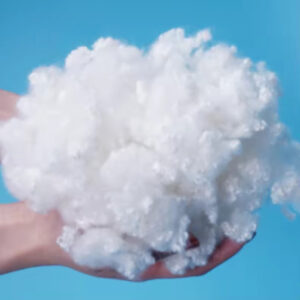
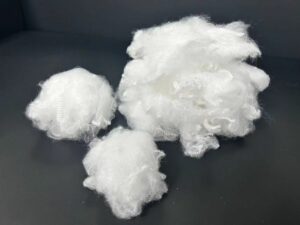
Polyester staple fiber and polyester filament yarn both start from the same PET polymer, but they diverge at the fiber formation stage. Filament yarn is produced as continuous unbroken strands; PSF is cut into short discrete lengths (staple) and must be spun into yarn using a process that twists the fibers together into a cohesive strand—exactly as cotton spinning works.
Characteristic | Polyester Spun Yarn (PSY) | Polyester Filament Yarn (FDY/DTY) |
Raw material input | Polyester staple fiber (PSF)—discrete cut fibers | Polymer melt extruded directly into continuous filaments |
Fiber length | 25–76 mm staple length (cut) | Continuous — unlimited length |
Yarn structure | Many short fibers twisted together—fiber ends create surface texture | One or many continuous filaments—no fiber ends |
Surface appearance | Matte, slightly fuzzy — similar to cotton | Smooth, can be lustrous (FDY) or soft/matte (DTY) |
Hand feel | Soft, natural, cotton-like | Smooth (FDY) or soft/bulky (DTY) |
Yarn count system | Ne (English cotton count)—higher = finer | Denier or dtex—higher = coarser |
Pilling tendency | Higher fiber ends are prone to pilling under abrasion | Lower (FDY); moderate (DTY) |
Spinning equipment | Cotton ring frame, open-end rotor, vortex spinner | Melt spinning machine (no separate spinning step) |
Applications | Woven and knit fabrics, sewing thread, embroidery thread | Woven and knit fabrics (different character) |
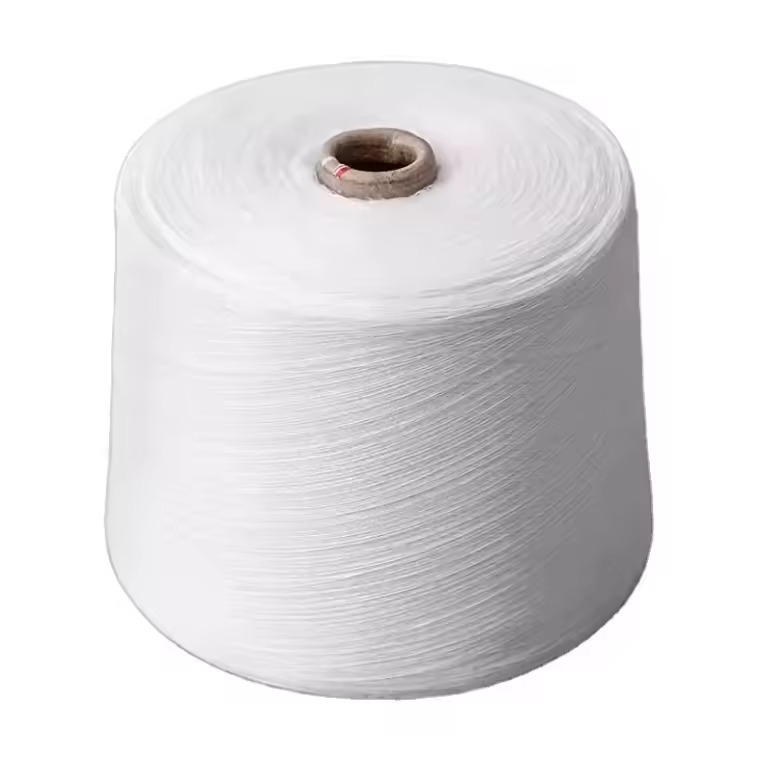
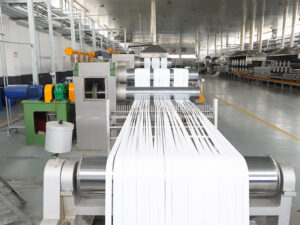
The Spinning Process: From PSF to Yarn
PSF Input Specification for Spinning
The PSF used for spun yarn production must be precisely specified to match the spinning system and target yarn count. The critical PSF parameters for spinning applications are the following:
- Staple length: Must match the spinning system’s processing range. Cotton ring spinning: 32–38 mm staple (matching cotton system machinery). Worsted/woollen spinning: 51–76 mm staple. Open-end rotor spinning: 32–38 mm. Using a PSF with the wrong staple length for the spinning system causes severe processing problems—fibers too short fall through the rollers; fibers too long wrap and cause machine stoppages.
- Denier: Determines achievable yarn count and fabric character. Fine-denier PSF (0.9D–2D) enables high-count fine yarns (Ne 40–80s) for quality shirting and apparel. Medium-denier PSF (2D–3D) for standard counts (Ne 20–40s) for mainstream apparel and home textiles. Coarser PSF (4D–6D) for lower counts (Ne 10–20s) for carpet yarn, denim blends, and industrial applications.
- Crimp: PSF must have an appropriate crimp to interlock during carding and drafting. Conjugate crimp (3D helical) gives better spinning performance than simple mechanical crimp. Crimp frequency (crimps per inch) affects draftability and yarn evenness.
- Finish (spin finish): PSF for spinning uses a spin finish that reduces static electricity and fiber-to-fiber and fiber-to-metal friction—essential for processing on high-speed ring frames. Different from the silicone finish used on fill fiber.
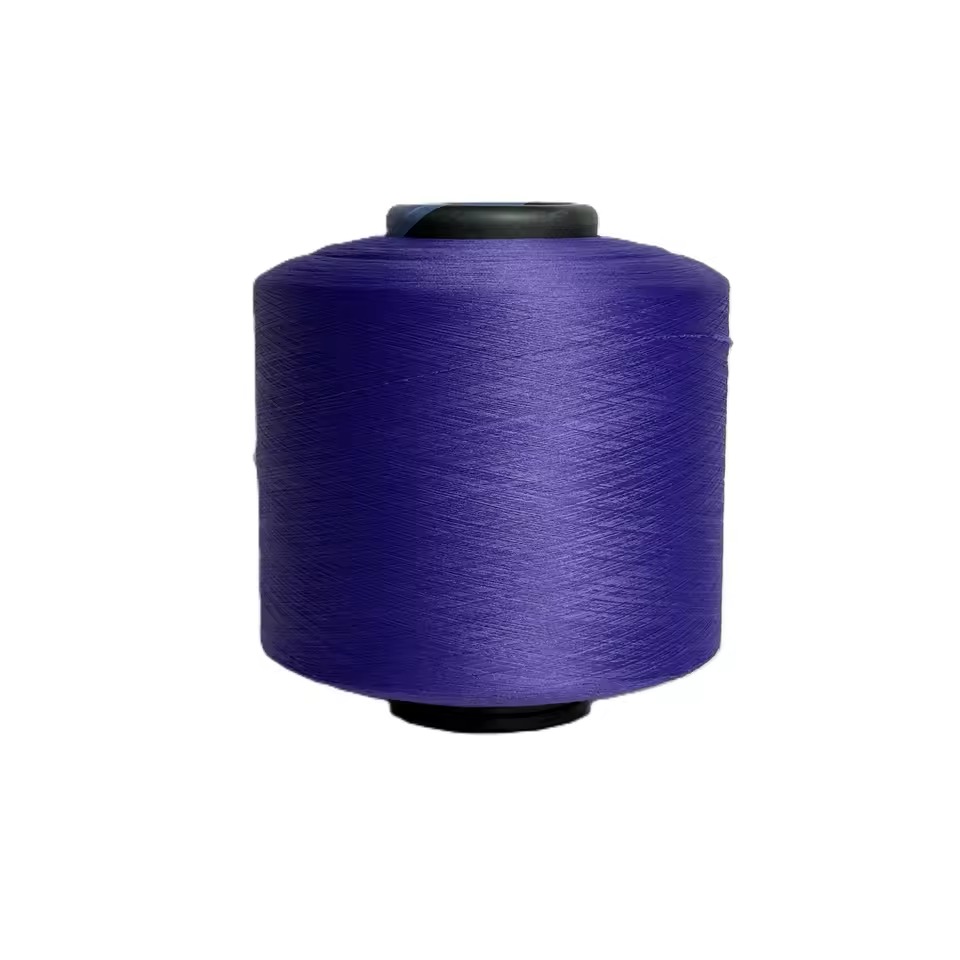
Ring Spinning vs Open-End Spinning: The Quality Divide
The two dominant spinning systems for polyester spun yarn produce meaningfully different yarn qualities for the same count:
Factor | Ring Spun (RS) | Open-End / Rotor Spun (OE) |
Yarn structure | Fibers twisted around each other in a tight helical structure—compact, strong | Fibers wrapped around a core—more open, slightly less even |
Yarn quality | Higher — more even, stronger, less pilling | Slightly lower — more irregular, more pilling potential |
Surface feel | Softer, smoother, more uniform | Slightly rougher, hairier |
Count range | Ne 6s to 120s (very wide range) | Ne 6s to 40s (limited to coarser counts) |
Production speed | Slower—15,000–25,000 RPM ring speed | Very fast — 100,000–150,000 RPM rotor speed |
Production cost | Higher—slower production | Lower—high-speed, lower labor input |
Preferred for | Premium quality—apparel, fine fabrics, sewing thread | Cost-driven—denim, workwear, coarser home textiles |
End-use examples | Shirts, quality knitwear, sewing thread, fine weaves | Denim-style fabrics, basic workwear, open-end carpet yarn |
Vortex spinning (Murata Vortex Spinning, MVS) is a third option increasingly used for polyester and polyester-cotton blends—it achieves speeds between ring and open-end, with yarn quality closer to ring-spun and good resistance to pilling. MVS yarn is particularly valued for applications requiring both quality and pilling resistance, such as sportswear fabrics.
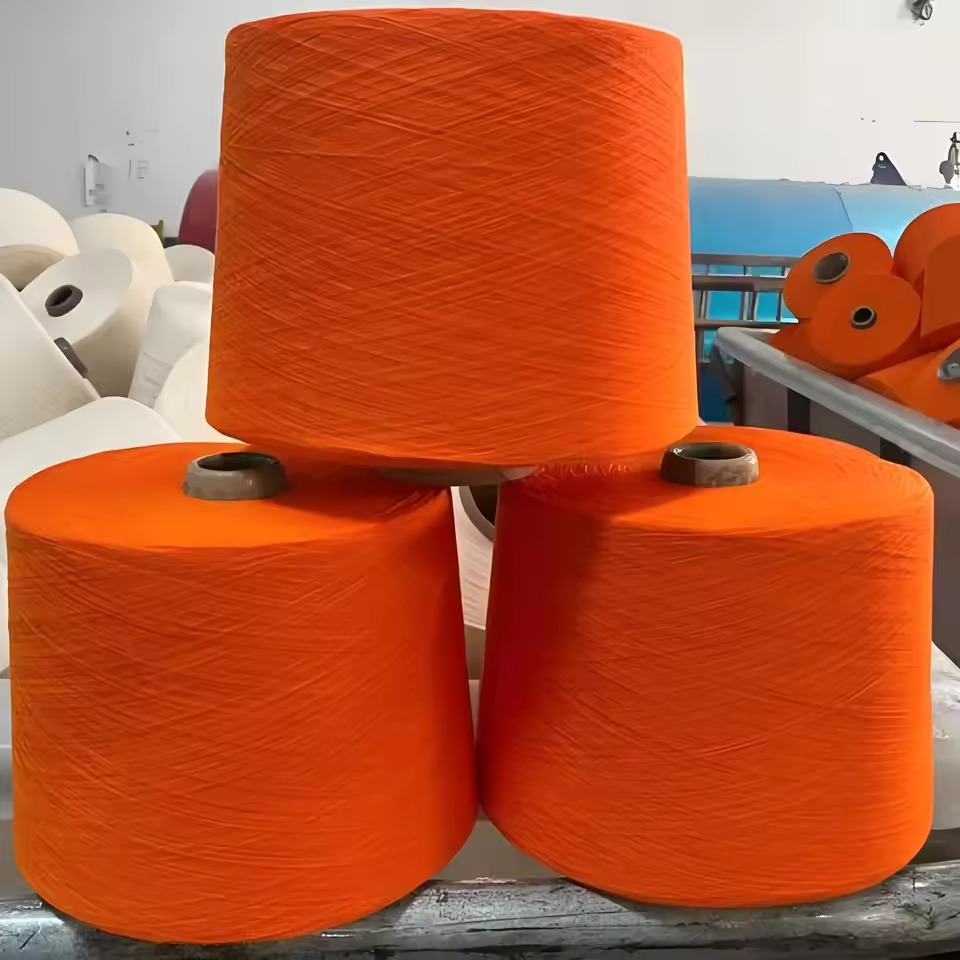
The Count System: Understanding Ne, Nm, and Tex
Yarn count—the measure of fineness—is specified differently for spun yarns versus filament yarns, and getting the system right is critical for accurate specification:
- Ne (English Cotton Count): The dominant count system for polyester spun yarn traded in global markets. Ne expresses the number of 840-yard (768 m) lengths per pound of yarn. Higher Ne = finer yarn. Ne 20/1 (coarser, heavier fabric) → Ne 40/1 (mainstream apparel) → Ne 60/1 (fine shirting) → Ne 80/1+ (luxury fine fabrics). The ‘/1’ indicates single ply; ‘/2’ indicates doubled yarn (two single yarns twisted together).
- Nm (metric count): Number of 1,000-meter lengths per kilogram of yarn. Higher Nm = finer. Common in European and some Asian markets. Conversion: Nm = Ne × 1.693.
- Tex: Mass in grams per 1,000 meters. Lower tex = finer. Tex = 590.5 / Ne. Used in technical specifications and some industrial markets.
Count specification example: ‘Ne 30/1 ring-spun polyester, semi-dull, raw white, waxed’ means English count 30 (fine enough for quality apparel), single ply, ring-spun quality, semi-dull luster (TiO₂ added to the PSF), raw white (will be dyed in fabric form), and waxed finish (for knitting machines—reduces tension and prevents breakage).
Net Count | Approx. Text | Typical Applications |
Ne 6–12 | 98–49 tex | Carpet yarn, industrial webbing, coarse knits, mop yarn |
Ne 16–20 | 37–30 tex | Denim, heavy fabrics, workwear, terry towels, blankets |
Ne 24–30 | 25–20 tex | Standard shirting, basic knitwear, home textile fabrics |
Ne 32–40 | 18–15 tex | Quality shirting, mainstream T-shirt fabric, polo shirts, bed linen |
Ne 45–60 | 13–10 tex | Fine shirting, quality apparel knits, sewing thread base |
Ne 60–80 | 10–7 tex | Fine fabric, premium sewing thread, quality embroidery base |
Ne 80–120 | 7–5 tex | Very fine-quality fabric, specialty sewing thread |
Single, Double, and Plied Yarns
Spun yarn can be supplied as single ply or twisted together into multi-ply constructions:
- Single (1-ply, denoted ‘/1’): One strand of spun yarn. Standard for most woven and knit fabric applications. Lower cost, lighter weight, adequate for most uses.
- Doubled (2-ply, denoted ‘/2’): Two single yarns twisted together — typically in the opposite twist direction from the single yarn. Significantly stronger and more even than equivalent single yarn. Standard for sewing thread (Ne 40/2, 42/2, 45/2) and embroidery thread (Ne 60/2, 80/2). Also used for high-strength industrial fabrics where maximum thread strength is required.
- 3-ply and higher: Three or more yarns twisted together. Used for industrial sewing thread (higher strength), specialty technical yarns, and carpet yarn where very high bulk or strength per thread is needed.
The Ne count designation always refers to the individual ply count, not the total yarn weight. Ne 40/2 means two strands of Ne 40 single twisted together—the resulting doubled yarn is equivalent to approximately Ne 20 in terms of weight per length but has the strength and evenness of Ne 40 single yarn.
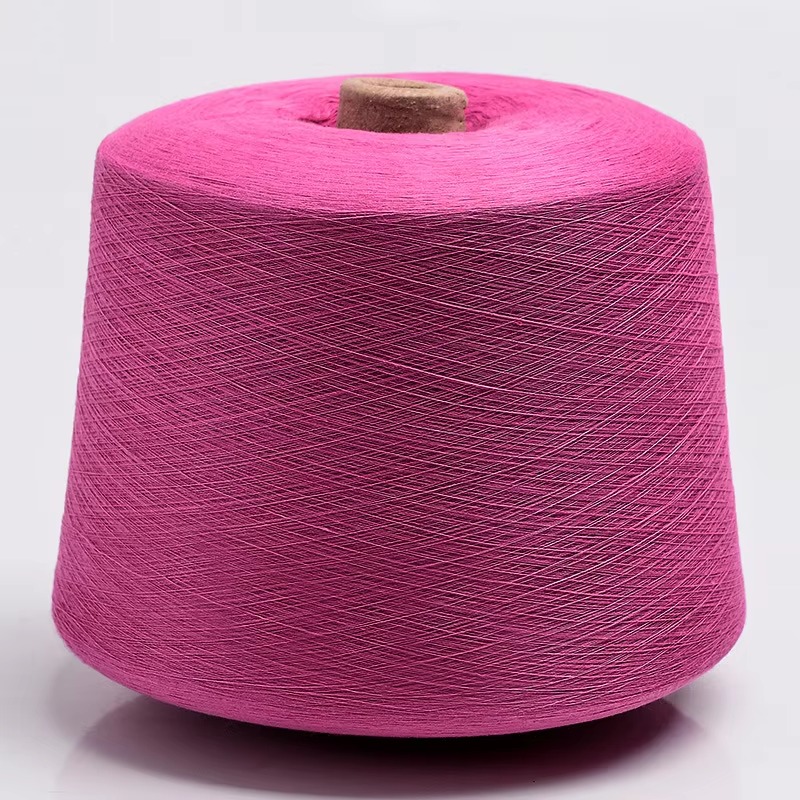
PSY Types and Grades
100% Polyester Spun Yarn
Pure polyester spun yarn from virgin PSF or recycled PSF. Available raw white (for subsequent piece-dyeing or yarn-dyeing) or dope-dyed (color integral to the fiber—superior wash and light fastness). The dominant yarn for polyester fabric applications where a cotton-like feel is desired without the cost or care requirements of cotton.
Polyester-Cotton Blended Yarn (PC Yarn)
Polyester staple fiber and cotton fiber blended together during carding and spun into a single intimate-blend yarn. The most commercially produced blended yarn globally is typically in 65/35 polyester/cotton (TC blend) or 50/50 or cotton-rich ratios (CVC). The polyester component contributes wrinkle resistance, strength, and dimensional stability; the cotton component contributes breathability, moisture absorption, and natural feel. PC blend yarns are the standard for polycotton shirt fabric, uniform fabric, and easy-care home textiles.
Polyester-Viscose Blended Yarn (PV Yarn)
Polyester and viscose (rayon) blended in typical ratios of 65/35 or 52/48 produce a fabric with better drape and moisture absorption than pure polyester, with better wrinkle resistance and strength than pure viscose. Used in apparel fabrics (suiting, dress material, and blouses) where the flowing drape of viscose and the easy care of polyester are both valued. PV blends dye more easily than PC blends because both polyester (disperse dye) and viscose (reactive/direct dye) have good dye affinity.
Recycled Polyester Spun Yarn (rPSY)
Produced from GRS-certified recycled PSF — manufactured from post-consumer PET bottle flakes or recycled textile waste. The resulting spun yarn is technically equivalent to virgin PSY but carries GRS chain-of-custody certification enabling verified recycled content claims. Increasingly required by brand buyers with sustainable sourcing commitments. Available in same count range and quality levels as virgin PSY.
Twist: The Parameter Buyers Often Overlook
Yarn twist—the number of twists per meter (TPM) or twists per inch (TPI)—significantly affects yarn properties and must be specified correctly for the end application:
- Low twist (soft twist, ~600–900 TPM for Ne 30): Softer hand, less strength, slightly lower dimensional stability. Used in knitting, where the flexible loop structure of the knit fabric provides structural integrity—waxed low-twist yarn runs easily through high-speed knitting machine needles.
- Standard twist (~1000–1200 TPM for Ne 30): Balanced strength and softness. The most common specification for weaving applications provides sufficient yarn strength and abrasion resistance for the shed opening and beating operations in weaving.
- High twist (~1500–2000 TPM for Ne 30): Higher strength, slightly harder feel, higher torque in the yarn. Used for warp yarn in weaving (warp faces more mechanical stress than weft), sewing thread (needs high twist for strength and reduced twist liveliness during sewing), and specialty crepe fabrics (high twist creates the crepe texture).
Sewing Thread: A Specialized PSY Application
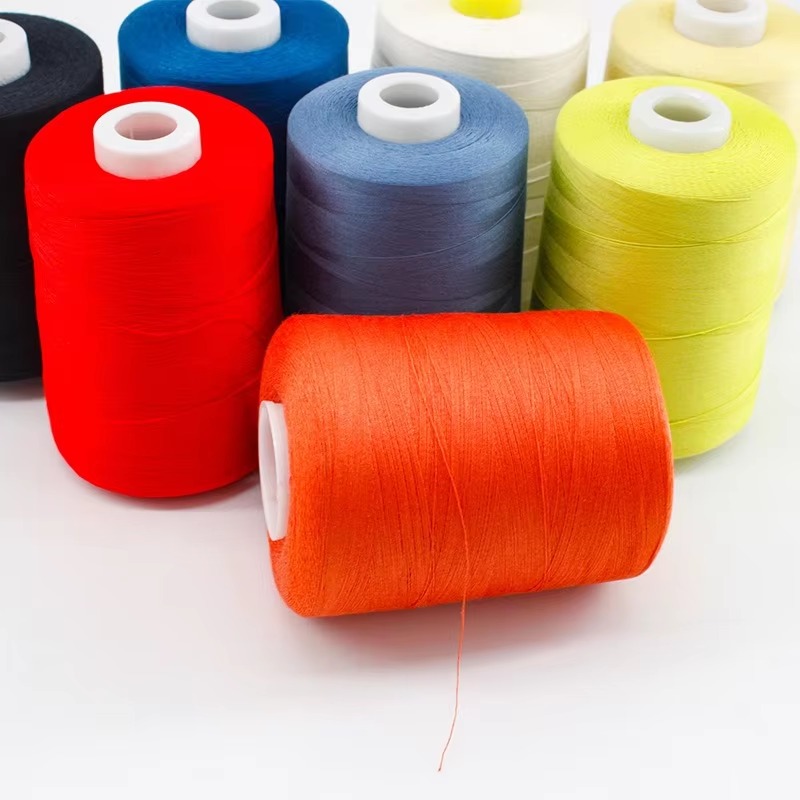
Polyester sewing thread is the world’s most widely used sewing thread — it has largely displaced cotton and nylon thread in industrial garment manufacture because it offers higher strength, better wash fastness (thread color does not run), and better durability through the thermal stresses of domestic and commercial laundering.
- Core composition: Polyester spun yarn, typically Ne 40/2, 42/2, or 45/2 — doubled yarn for strength and evenness. Some high-performance sewing threads use a core-spun construction with a filament (FDY or HTY) core wrapped with PSF for maximum strength.
- Twist direction: Critical — sewing thread must be twisted in the correct direction for the specific sewing machine (S or Z twist). Incorrect twist direction causes thread unwinding during sewing, creating loops and thread breakage.
- Ticket number: The sewing thread industry uses ‘ticket number’ as a coarseness designation—Tkt 40 is fine (for lightweight fabrics), Tkt 60 medium, and Tkt 120 coarse (for heavy-duty applications including denim and canvas). Ticket numbers relate inversely to count—a higher ticket number means coarser thread, despite the counterintuitive numbering.
Embroidery Thread: PSY and Filament Options
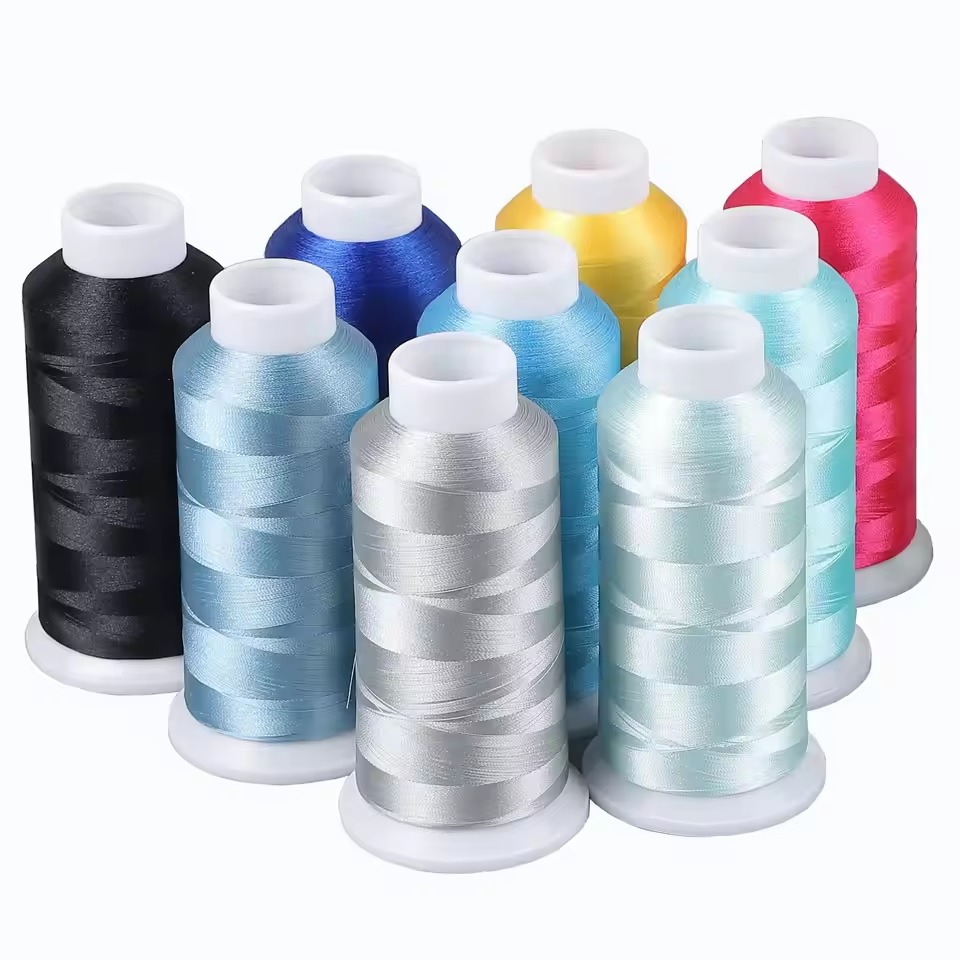
Polyester embroidery thread is used to replace viscose (rayon) embroidery thread in cost-sensitive applications. It is available in two constructions:
- Polyester-spun embroidery thread: From Ne 60/2 or 80/2 ring-spun polyester—the softest, most matte polyester embroidery option. Used where a natural, matte finish is desired and where washability is important.
- Polyester filament embroidery thread: From FDY twisted to fine deniers (120D/2, 150D/2, 300D/2) — the brighter, more lustrous option. Gives embroidery the shine and visual impact of viscose thread but with superior wash fastness and durability. Available in bright and semi-dull lusters and a wide color range.
Specification Checklist for Ordering Polyester Spun Yarn
- Count and ply: Ne (or Nm or Tex) and ply—e.g., ‘Ne 40/2’
- Fiber composition: 100% polyester, or blend ratio (e.g., ’65/35 polyester/cotton’)
- Spinning system: Ring-spun (RS) or open-end (OE) or vortex (MVS)
- Luster: Semi-dull (SD) or bright (BR) — determined by PSF used
- Color: Raw white (RW) for piece-dyeing; dyed color (specify shade or Pantone reference); dope-dyed (specify color)
- Twist direction: S or Z — important for sewing thread; usually specified for weaving warp
- Twist level: TPM or TPI — specify if non-standard; waxed or unwaxed for knitting
- Wax finish: Waxed (for knitting, reduces friction on needles) or unwaxed (for weaving, waxed causes oily marks in fabric)
- Packing: Cone weight (typically 1.5 kg, 3 kg, 5 kg cones) and carton weight
- Certification: GRS certificate for recycled content; OEKO-TEX Standard 100 for chemical safety
Conclusion
Polyester-spun yarn bridges the worlds of synthetic fiber and traditional yarn spinning—bringing polyester’s durability, easy care, and cost advantages into the cotton yarn format that the world’s textile manufacturing infrastructure is built around. From the Ne 20/1 open-end yarn in budget workwear to the Ne 60/2 ring-spun yarn in premium sewing thread, PSY covers an enormous range of quality levels, counts, and applications.
The keys to successful PSY sourcing are count and ply selection (matched to the fabric weight and application), spinning system (ring-spun for quality and open-end for cost), twist specification (critical for sewing thread and important for warp yarns), and certification (GRS for recycled content claims and OEKO-TEX for chemical safety). Getting these four parameters right from the specification stage eliminates the most common sourcing errors and ensures the yarn performs correctly in the final fabric.