Polyester Fabric: Complete Guide to Types, Weaves, Characteristics, Uses and Care
Polyester fabric is the world’s most produced textile — accounting for more than half of all global fiber output and appearing in applications from fast-fashion T-shirts to aerospace insulation, from filter bags in power plants to luxury microfiber bedsheets. Yet ‘polyester fabric’ is not a single material. It is a family of fabrics with dramatically different properties, appearances, and appropriate applications — all sharing a common polymer chemistry but diverging in construction, finish, yarn type, and performance profile.
The perception of polyester as a single, undifferentiated material is both commercially common and technically inaccurate. A woven polyester taffeta and a knit polyester fleece share their PET polymer origin but have almost nothing else in common — different yarn types, different fabric construction methods, different properties, different markets, and different care requirements. Understanding polyester fabric as a category requires understanding its full taxonomy.
This complete guide covers polyester fabric from polymer to product: the two fundamental yarn forms (filament and spun), the three fabric construction categories (woven, knit, nonwoven), all major polyester fabric types with their specific properties and best applications, a 12-property performance comparison, sustainability including the growing recycled polyester fabric market, and full care guidance.
The Polymer Foundation: What Makes Polyester
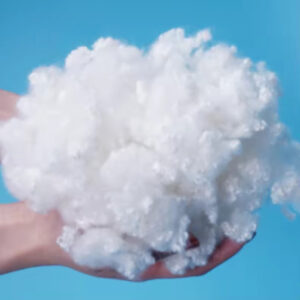
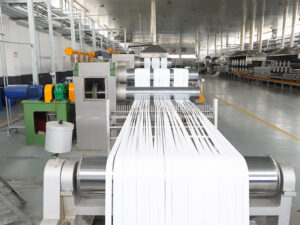
All polyester fabrics begin with the same base polymer: polyethylene terephthalate (PET), produced by condensation polymerization of purified terephthalic acid (PTA) and monoethylene glycol (MEG) — both petroleum-derived. The resulting PET polymer melt is extruded through spinnerets to form fibers, which are drawn (stretched) to develop tensile strength and molecular orientation before being converted into yarn and then fabric.
The critical branching point in polyester fabric taxonomy occurs at the yarn stage — specifically, whether the polyester is produced as continuous filament yarn or as staple fiber spun yarn. This single decision determines more about the fabric’s character than almost any other specification choice:
Characteristic | Filament Polyester Yarn | Spun Polyester Yarn (from PSF) |
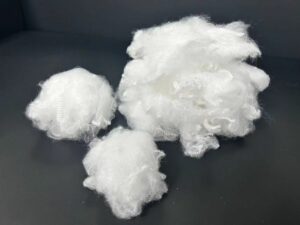
Yarn structure | Continuous unbroken fiber strand — one long filament or multiple filaments twisted together | Polyester staple fibers (short lengths, 25–76 mm) spun together into yarn — same process as cotton spinning |
Surface texture | Smooth, clean, even — minimal hairiness or texture | Soft, slightly fuzzy, matte surface — similar texture to cotton or wool yarns |
Luster | Bright to semi-dull depending on TiO₂ content — naturally lustrous | Matte — fibrous surface scatters light diffusely, reduces sheen |
Hand feel | Smooth, silky, slippery against skin | Soft, warm, natural feel — often mistaken for cotton in blends |
Fabric applications | Taffeta, chiffon, satin, microfiber, organza, lining, technical fabrics | Apparel fabrics (jersey, interlock, fleece), nonwovens, wadding, fill |
Key advantage | Strength, smooth surface, consistent properties | Soft hand feel, breathability, cotton-like comfort |
The Three Fabric Construction Categories
Beyond yarn type, the method of converting polyester yarn (or raw fiber) into fabric is the second major classification axis. Polyester appears in all three principal fabric construction categories, each producing fundamentally different structures:
- Woven polyester: Yarn interlaced at right angles — warp (lengthwise) over and under weft (crosswise) — on a loom. Produces stable, non-stretch fabrics with defined structure. Taffeta, chiffon, satin, twill, ripstop, canvas, and shirting are all woven constructions.
- Knit polyester: Yarn formed into interlocking loops by needles — either weft knit (loops run across fabric width) or warp knit (loops run fabric length). Produces stretchy, flexible fabrics. Jersey, fleece, interlock, mesh, tricot, and velvet are knit constructions.
- Nonwoven polyester: Raw polyester fiber (PSF) bonded directly into fabric without first forming yarn — through thermal bonding, needlepunching, chemical bonding, or meltblown extrusion. Produces fabrics without defined grain or stretch. Filter media, geotextiles, hygiene fabrics, wadding, and insulation are nonwoven constructions.
Major Polyester Fabric Types: The Complete Directory
Woven Polyester Fabrics
Polyester Taffeta
A plain-weave filament polyester with a characteristic crisp hand and rustling sound. The smooth, even surface is created by the continuous filament yarn and tight plain weave. Taffeta’s high thread count gives it dimensional stability and slight sheen. Used widely in linings (garments, bags, outdoor gear), bridal and evening wear, umbrella fabrics, and gift ribbon. Machine washable, wrinkle-resistant, holds shape well. A staple of the fashion and accessories industry.
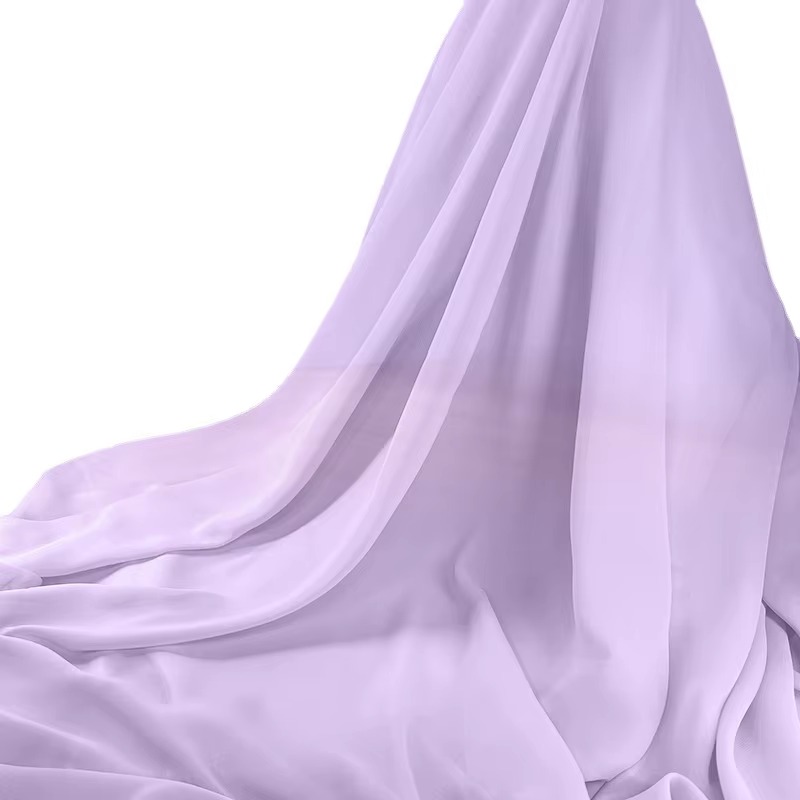
Polyester Chiffon
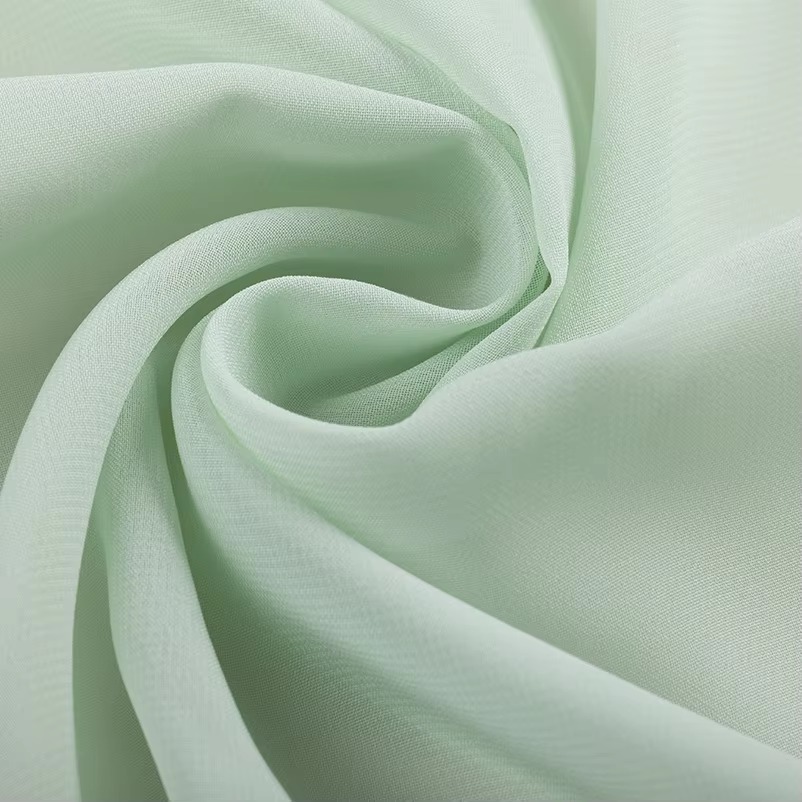
A sheer, lightweight plain-weave fabric made from fine twisted filament polyester yarns. The slight twist in the yarn gives chiffon its characteristic crinkly texture and semi-opaque, floating quality. Chiffon drapes beautifully and is used extensively in evening wear, blouses, overlays, scarves, and decorative applications. More delicate than taffeta and requires gentle care — hand wash or delicate machine cycle in cold water. The twist structure gives it a slightly rougher texture than satin despite using similar yarn types.
Polyester Satin / Charmeuse
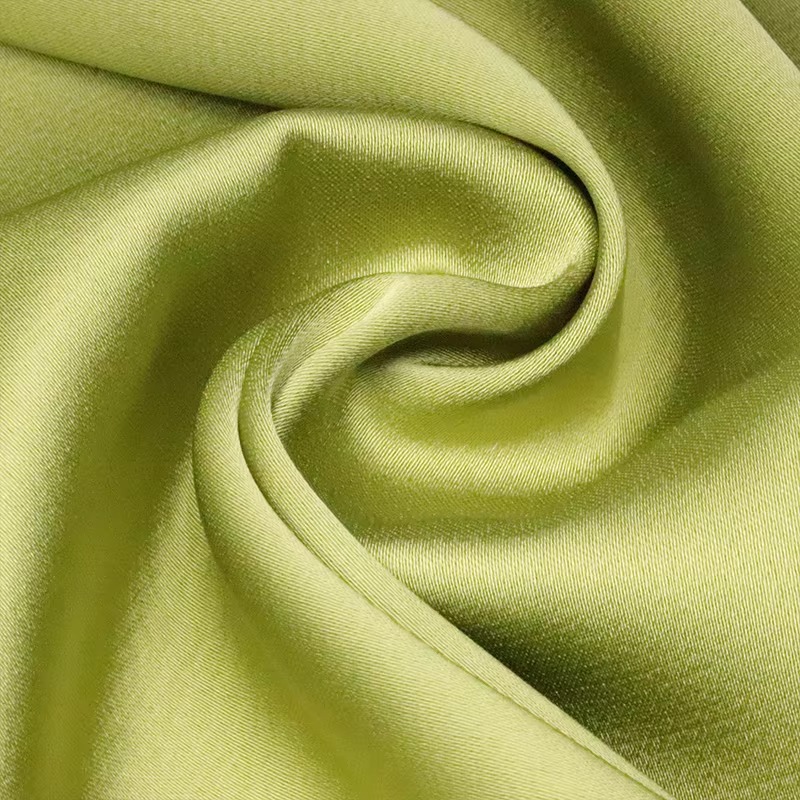
Produced by a satin weave — where warp threads float over multiple weft threads before interlacing — creating a fabric face dominated by long warp floats that reflect light uniformly, giving the characteristic high-sheen satin appearance. The back has a dull matte finish. Polyester satin offers the luxurious look of silk satin at dramatically lower cost. Uses include evening wear, lingerie, bridal wear, decorative bedding, linings, and accessories. Slippery and difficult to sew; requires careful pinning and handling.
Polyester Twill
A twill weave produces the characteristic diagonal rib pattern visible on fabrics like chino and denim. Polyester twill inherits the structural benefits of the twill construction — higher durability than plain weave, good drape, and inherent stain resistance — while adding polyester’s wrinkle resistance and dimensional stability. Used in workwear, uniforms, trousers, and bags. The diagonal structure gives polyester twill more drape and flexibility than equivalent plain weave polyester, making it more comfortable in structured garments.
Ripstop Polyester
A plain-weave polyester reinforced at regular intervals (typically 5–8 mm grid) with thicker yarns woven in a grid pattern that prevent tears from propagating. The reinforcement ribs are visible as a characteristic grid texture. Ripstop is the standard fabric for applications requiring lightweight tear resistance: outdoor gear (tents, sleeping bag shells, backpacks), kites, flags, wind sports equipment, military applications, and parachutes. Available in multiple finishes including DWR (durable water repellent) for water-resistant performance.
Polyester Oxford
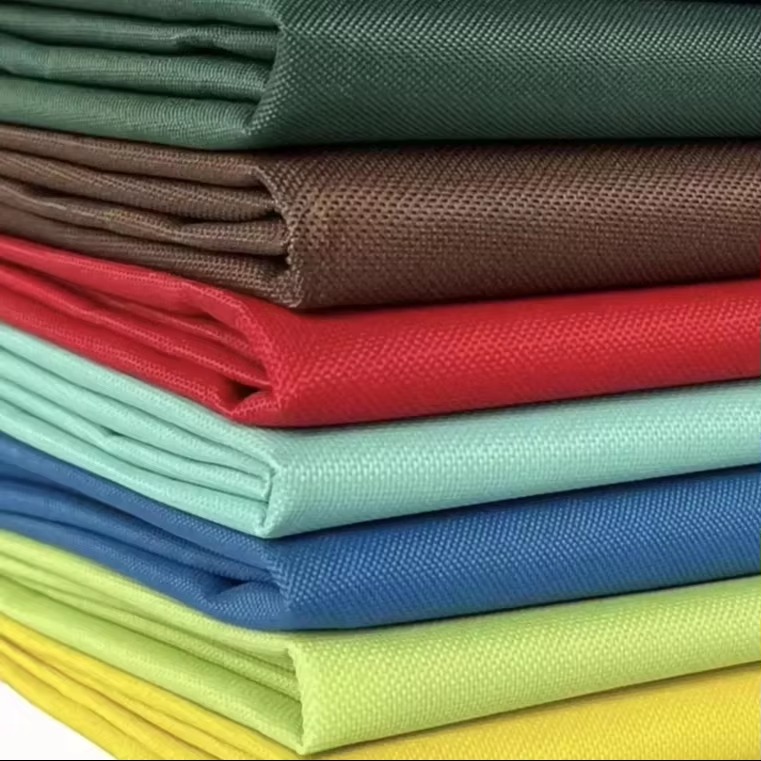
A basket weave variant producing a two-over-two or two-over-one pattern that creates a characteristic crosshatch texture with higher thread density than plain weave. Polyester Oxford cloth is valued for its durability, abrasion resistance, and clean appearance. Used in bags and luggage (600D Oxford is the standard bag fabric specification), tents, tarps, banners, and protective covers. The ‘D’ (denier) rating indicates yarn thickness: 210D is lightweight for backpacks; 600D is mid-weight for bags; 1680D is heavy-duty for industrial covers.
Polyester Georgette
Similar construction to chiffon but using higher-twist yarns in both warp and weft directions, producing a more textured, crinkled surface and slightly heavier drape. Georgette is less sheer than chiffon and has a grainy, pebbled texture from the high-twist yarns. Used in blouses, dresses, evening wear, and flowing fashion garments where more body than chiffon is required but lightweight drape is still desired. Holds its shape in flowing styles better than chiffon.
Knit Polyester Fabrics
Polyester Microfiber
Microfiber polyester uses filaments finer than 1 denier per filament — substantially finer than human hair. The ultra-fine filaments create a fabric surface with extremely high fiber density and large total surface area relative to fabric weight. This structure gives polyester microfiber its characteristic properties: exceptional softness that can approach or equal the feel of natural silk, excellent moisture-wicking performance (the small capillary spaces between microfilaments draw moisture away from skin), and extremely fine pore size suitable for high-performance applications.
Microfiber applications span apparel (sportswear, swimwear, moisture-wicking base layers), home textiles (ultra-soft bed sheets, towels, and cleaning cloths that trap dust and bacteria in their fine fiber structure), and technical cleaning products (automotive microfiber cloths that clean without scratching). Suede-effect microfiber fabric (split microfiber with a napped surface) is widely used in premium upholstery, bags, and footwear as a synthetic suede alternative.
Polyester Fleece
Knit polyester fabric with a napped (raised and brushed) surface creating a thick, insulating pile on one or both sides. Standard polyester fleece is produced from 100% polyester yarn; much of the market uses recycled polyester (rPET) from post-consumer bottles, making fleece one of the most commercially established sustainable polyester fabric categories. Fleece’s combination of warmth, light weight, moisture resistance, washability, and low cost makes it the standard fabric for mid-layer outdoor garments, casual sweatshirts, blankets, and soft home textiles.
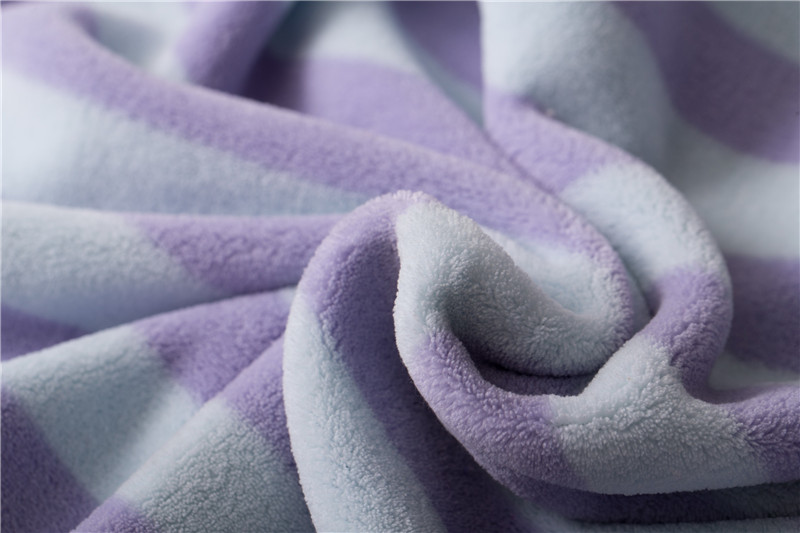
Polar fleece (double-napped) is the warmest grade. Anti-pill fleece uses modified yarn constructions to reduce the surface pilling that is a common quality problem in standard fleece. Sherpa fleece uses a looped pile structure on one side to mimic the texture of sheepskin. Grid fleece has a grid pattern in the base knit for improved moisture management and breathability. All fleece types are machine washable, quick-drying, and easy care — key practical advantages over wool for equivalent warmth.
Polyester Jersey
Single jersey knit from polyester or polyester-blend yarns is the fundamental fabric construction for T-shirts, sportswear, and knit apparel. The simple single-knit loop structure gives jersey fabric its characteristic moderate stretch in the crosswise direction and comfortable, breathable feel. Polyester jersey dominates performance sportswear, where its moisture-wicking properties (enhanced by the knit structure’s open pore spacing) and color vibrancy for sublimation printing make it the standard substrate. Double jersey (interlock) uses two interlocked courses of loops for a heavier, more stable fabric used in polo shirts, sweatshirts, and premium T-shirts.
Polyester Mesh
Open-knit construction with defined open spaces between yarn courses, creating a breathable, ventilated fabric. Polyester mesh provides maximum air circulation — making it the standard choice for sportswear ventilation panels, athletic footwear uppers, bag linings, and sports jerseys where cooling is the primary requirement. The open structure sacrifices wind resistance and coverage for breathability. Spacer fabric (double-layer mesh with a structured middle layer connecting the two faces) provides cushioning and air circulation combined, used in athletic footwear midsoles, protective gear padding, and medical support devices.
Polyester Velvet
Warp-knit construction with cut pile loops creating the distinctive soft, plush surface. Polyester velvet replaced silk velvet in most commercial applications because of its lower cost, better durability, and color vibrancy. The cut pile creates directional light reflection — fabric appears darker when pile is stroked against the light direction — the characteristic ‘crushing’ effect of velvet. Used in fashion garments, upholstery, curtains, and accessories. Velvet’s pile structure makes it susceptible to crushing and watermarking; should be stored and transported with pile facing the same direction.
Polyester Knit Lining
Lightweight warp-knit polyester fabric used as garment lining for its smooth surface that allows easy slip-on over other garments, reduces static clinging, and provides a clean interior finish. Tricot (a warp-knit construction with fine parallel ribs) is the most common lining knit, used extensively in jackets, skirts, and dresses. Polyester linings are superior to acetate for washability and superior to nylon for anti-static behavior in most applications.
Nonwoven Polyester Fabrics
Spunbond Polyester
Produced by extruding continuous polyester filaments directly onto a moving belt, bonding them into a web through thermal calendering (heat and pressure rollers) without spinning into yarn. Spunbond polyester produces a uniform, dimensionally stable nonwoven with good tensile strength. Used in geotextiles (road construction, erosion control), crop covers and row covers for agriculture, disposable medical garments and surgical wraps, and the top sheet of diapers and other hygiene products. Key specifications: basis weight (gsm), pore size, tensile strength, and elongation.
Meltblown Polyester
A high-precision process where molten polyester is extruded through very fine nozzles while high-velocity hot air streams shred the extrudate into extremely fine fibers (typically 1–10 microns diameter — finer than any staple fiber or filament yarn). The ultrafine fiber web provides exceptional filtration efficiency through mechanical and electrostatic capture of particles. Meltblown polyester is the key functional layer in N95 and FFP2 respirator masks (where the meltblown layer provides >95% filtration efficiency), HVAC filter media, industrial liquid filtration, and oil-absorbent nonwovens. Meltblown polyester cannot be woven or knitted — the fiber is too fine and fragile.
Needlepunched Polyester
Polyester staple fiber laid in a web and mechanically entangled by thousands of barbed needles that penetrate the web repeatedly, mechanically interlocking the fibers without any bonding agent. Needlepunch creates a durable, uniform nonwoven with good tensile strength in all directions. Used in carpet underlay, geotextile filters, automotive trunk liners and carpet backings, air and liquid filtration media, synthetic leather substrates, and thermal insulation batting. The needlepunch process can incorporate different fiber layers for gradient pore structures useful in filtration.
Thermally Bonded Polyester Wadding
Polyester staple fiber — often including low-melt fiber (LMF) as 15–30% of the blend — laid into a web and passed through an oven that melts the LMF, bonding the standard PSF at fiber crosspoints without chemical binders. The resulting wadding is used as insulation and padding in garments (quilted jackets, sleeping bags), home textiles (quilt batting, mattress toppers), furniture (seat cushions, back pads), and toy filling. Thermally bonded wadding offers consistent loft, excellent washability, and the ability to specify precise basis weight and thickness combinations.
Polyester Fabric Properties Comparison
Fabric Type | Strength | Stretch | Breathability | Drape | Cost | Best Use |
Taffeta | ★★★★ | None | ★★ | ★★★ | Low | Linings, formal wear |
Chiffon | ★★ | None | ★★★ | ★★★★★ | Low | Blouses, overlays |
Satin | ★★★ | None | ★★ | ★★★★ | Low-mid | Evening wear, bedding |
Twill | ★★★★ | Minimal | ★★★ | ★★★ | Low | Workwear, uniforms |
Ripstop | ★★★★★ | None | ★★★ | ★★ | Low-mid | Outdoor gear, flags |
Oxford cloth | ★★★★★ | None | ★★ | ★★ | Low | Bags, covers, tents |
Microfiber | ★★★★ | Varies | ★★★★ | ★★★★ | Mid | Sportswear, bedding, cleaning |
Fleece | ★★★ | Good | ★★★ | ★ | Low-mid | Outerwear, blankets |
Jersey / interlock | ★★★ | Good | ★★★★ | ★★★★ | Low-mid | Sportswear, T-shirts |
Mesh | ★★★ | Moderate | ★★★★★ | ★★★ | Low | Sportswear, footwear |
Velvet | ★★★ | Low | ★★ | ★★★ | Mid | Fashion, upholstery |
Spunbond NW | ★★★ | None | ★★★ | ★★ | Low | Geotextiles, medical |
Wadding/batting | ★★ | None | ★★★ | N/A | Low | Insulation, fill |
Polyester Fabric Finishes: Engineering the Surface
Polyester’s thermoplastic nature makes it highly receptive to functional surface finishes that add capabilities beyond what the base fiber and construction provide:
- Durable Water Repellent (DWR): Fluoropolymer or silicone treatment that causes water to bead and roll off the fabric surface. Standard for outdoor garments and gear. Degrades with washing and UV exposure; can be refreshed by tumble drying or re-application.
- Moisture-wicking / moisture management: Surface or fiber treatment that promotes capillary movement of moisture from the skin-contact surface to the outer face for evaporation. Often combined with anti-microbial finishes in sportswear.
- Anti-static finish: Reduces the static charge buildup inherent in polyester’s hydrophobic surface. Standard for linings, workwear in electronics environments, and medical garments.
- Flame retardant (FR): Chemical treatments (reactive or additive) or inherently FR fiber modifications that prevent or self-extinguish combustion. Required for children’s sleepwear, contract upholstery (California TB 117), public transport seating, and military/protective applications.
- Anti-microbial / odor control: Silver-ion, zinc pyrithione, or other biocidal treatments that inhibit bacterial and fungal growth on fabric surface. Standard in sportswear, healthcare textiles, and hospital linen where hygiene is critical.
- Calendering / lamination: Heat and pressure calendering creates a smooth, dense surface for technical applications. PU, PVC, and TPU lamination creates a fully waterproof fabric for rainwear, bags, and protective covers.
Recycled Polyester Fabric: The Sustainability Development
The most significant development in polyester fabric in recent years is the mainstream adoption of GRS-certified recycled polyester (rPET) fabric — produced from post-consumer PET bottles (or, increasingly, from used polyester garments through mechanical or chemical recycling). Recycled polyester fabric delivers identical performance to virgin polyester across all technical properties while offering approximately 60–70% lower GHG emissions per kilogram of fiber compared to virgin production.
Major brands including Patagonia, Nike, Adidas, H&M, and dozens of others have committed to minimum recycled polyester content percentages as part of their Scope 3 emissions reduction targets. The GRS (Global Recycled Standard) certification, administered by Textile Exchange, provides third-party chain-of-custody verification for recycled content claims — enabling brands to substantiate ‘made with recycled polyester’ marketing claims with independently auditable documentation.
Polyester fleece is the category with the longest commercial history in recycled polyester — Patagonia introduced PCR (post-consumer recycled) polyester fleece from PET bottles in 1993. Today, polyester microfiber bed sheets, performance sportswear, bags, and upholstery fabric are all available with GRS-certified recycled polyester content.
Polyester Fabric Care Guide
Care Step | Guidance for Polyester Fabric |
Washing temperature | 30–40°C for most polyester fabrics. Hot washing (60°C+) may cause dimensional distortion and heat-sets creases permanently. 60°C is safe for workwear polycotton blends but not for pure polyester fashion fabrics. |
Machine wash cycle | Normal cycle for durable polyester (taffeta, ripstop, workwear). Delicate/gentle cycle for fine polyester (chiffon, georgette, fine microfiber). Use mesh laundry bag for delicate items to prevent snags. |
Detergent | Standard laundry detergent. Liquid preferred over powder for synthetic fabrics. Avoid fabric softener on performance fabrics — it coats the fiber surface and degrades moisture-wicking and DWR finishes. |
Bleaching | Avoid chlorine bleach on polyester — it damages the fiber and may cause yellowing. Oxygen-based bleach is acceptable if needed. |
Drying | Low to medium heat tumble drying. High heat causes permanent distortion, melting, and fiber damage. Remove promptly from dryer. Air drying preferred for extending fabric lifespan. |
Ironing | Low to medium heat (polyester setting, 110–150°C). Never use cotton or linen heat setting — polyester melts and glazes irreversibly. Most polyester fabrics require little to no ironing. |
Dry cleaning | Not required for most polyester. Appropriate for structured garments (suit linings, formal gowns) where washing may distort the garment shape. |
Microplastic mitigation | Polyester fabrics shed synthetic microfibers during washing. Use Guppyfriend wash bag, Cora Ball, or in-machine microplastic filter. Wash at lower temperatures and reduce wash frequency. Full wash loads generate less microplastics per item than half loads. |
Stain treatment | Most stains can be treated with standard stain remover or gentle soap. Oil-based stains respond well to dish soap treatment before washing. Test any stain treatment on an inconspicuous area first. |
Conclusion: Polyester Fabric as a Platform, Not a Product
Polyester fabric’s commercial dominance is not an accident of marketing or economics alone — it reflects a genuinely versatile material platform that can be engineered into an extraordinary range of end products with widely different properties. The same PET polymer that produces an ultra-fine chiffon for an evening gown also produces the ripstop nylon-equivalent shell of a technical outdoor tent; the meltblown filtration media that captures virus particles in a respirator; the geotextile that stabilizes a road embankment; and the recycled fleece that insulates a sustainable outdoor jacket.
For fabric buyers, manufacturers, and product developers, the essential practice is to specify polyester fabric not as a generic category but as a precise construction: yarn type (filament or spun, denier), weave or knit construction, weight (gsm), finish, and certification requirements. A precise polyester fabric specification determines performance, cost, sustainability profile, and supply chain options — and getting these decisions right separates great products from mediocre ones at every market level.