How Is a Mattress Made? A Complete Guide to Mattress Manufacturing, Materials & Construction
You spend roughly a third of your life on a mattress—yet most people have little idea what is actually inside one or how those carefully engineered layers of materials come together to deliver a night’s sleep. Whether you are a mattress manufacturer, a materials supplier, a furniture retailer, or simply a curious consumer looking to make a better purchase decision, understanding how a mattress is made is both practically useful and genuinely fascinating.
Modern mattress manufacturing is a sophisticated industrial process that combines metalworking, textile engineering, foam chemistry, and precision assembly—all in service of a deceptively simple goal: giving a human body consistent, comfortable support for seven or eight hours every night, reliably, for a decade or more.
This complete guide covers the history of the mattress, every layer and material used in modern mattress construction, the step-by-step manufacturing process from spring unit to finished product, quality control, and the role of key fiber materials — including polyester, felt, and recycled fiber — in determining the comfort and durability of the finished mattress.
A Brief History of the Mattress
The story of the mattress begins with our earliest ancestors and their instinct to sleep on something softer than bare ground. Archaeological evidence suggests that as far back as 77,000 years ago, early humans were gathering plant material — leaves, grasses, and sedge — into sleeping layers, sometimes mixed with insect-repelling plants to make them more hygienic.
As human societies transitioned from nomadic hunter-gatherer lifestyles to settled agricultural communities, sleeping surfaces became more elaborate. In ancient Egypt and Rome, elevated bed frames—raised off the cold ground—were status symbols, stuffed with wool, reeds, or feathers for the wealthy and with straw or agricultural waste for the poor. Throughout medieval Europe, beds were among the most valuable pieces of furniture a household owned, and mattresses remained crude sacks of ticking fabric filled with whatever soft material was available locally.
For centuries, mattress filling materials barely changed: horsehair, cotton waste, straw, and wool were the standards, compressed and lumpy, difficult to clean, and hospitable to insects and vermin. The single most transformative moment in mattress history came in the mid-19th century with the invention of the coil spring. In 1865, the first coil-spring mattress was patented, and by the early 20th century, the innerspring mattress—with its standardized array of steel coils providing consistent, resilient support—had begun to displace the old stuffed-sack construction.
It was Zalmon Simmons Jr. who brought the innerspring mattress to the mass market after World War I, pioneering the concept of marketing the quality of sleep rather than just the product itself—a marketing philosophy that shapes the mattress industry to this day. The mid-20th century brought polyurethane foam, latex, and eventually memory foam to mattress construction, expanding the range of comfort options dramatically. Today’s mattress industry offers an enormous variety of constructions, comfort profiles, and price points, but the fundamental engineering challenge — supporting a sleeping body comfortably and consistently — remains exactly what it has always been.
What Is Inside a Mattress? The Anatomy of Modern Mattress Construction
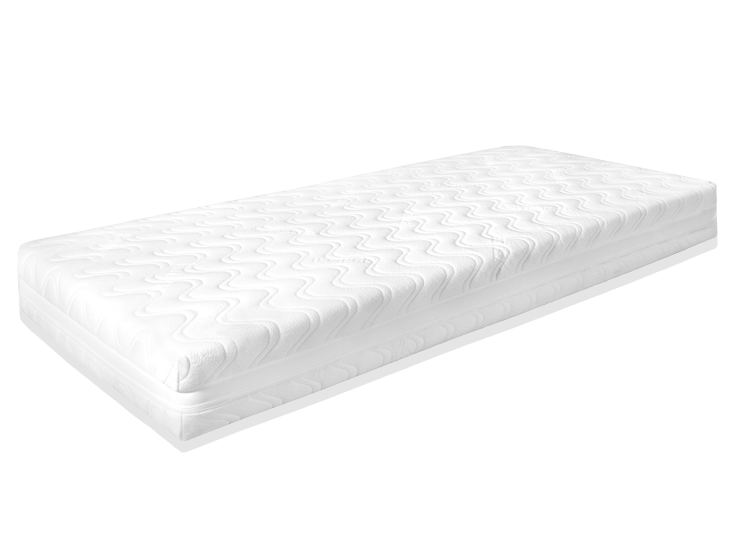
A modern mattress is not a single material but a precisely engineered stack of layers, each performing a specific function. Understanding these layers — and the materials used in each — is the foundation of understanding mattress manufacturing and mattress quality.
From the bottom up, a typical innerspring mattress consists of the following components:
1. The Foundation / Boxspring
The box spring or foundation sits beneath the mattress, resting on the bed frame. Its primary functions are to provide a stable, elevated sleeping surface and to absorb some of the mechanical energy from the mattress above, extending the mattress’s service life. Traditional box springs contain a wooden frame with coil springs—typically a spiked coil configuration, narrow at the base and wider at the top—covered with a thin layer of upholstery and encased in a matching fabric cover. Modern low-profile foundations often replace the springs with a wooden slat or metal grid platform for a firmer, more stable base.
2. The Innerspring Unit — The Core of the Mattress
The innerspring unit is the structural core of a traditional mattress, providing the primary load-bearing support that keeps the sleeper’s body correctly positioned through the night. A typical mattress contains between 250 and 1,000 individual coil springs, connected into a unified unit. The four most commonly used coil types in modern mattresses are:
- Bonnell coils: The oldest and still widely used design — hourglass-shaped springs, knotted at both top and bottom, connected by helical (corkscrew) wires running along the top and bottom of the unit. Bonnell springs offer firm, durable support at relatively low cost.
- Offset coils: A refinement of the Bonnell design—also hourglass-shaped, but with flattened top and bottom sections that create a hinging action between adjacent coils. Offset coils conform more closely to body contours than Bonnell coils, providing more adaptive support.
- Continuous wire (LFK) coils: The entire innerspring unit is formed from a single continuous strand of steel wire, configured into S-shaped individual coil units connected laterally. Continuous wire systems are highly durable, as the absence of individual coil joins eliminates a common failure point.
- Pocket coils (pocketed springs): Each individual spring is encased in its own fabric pocket, and the pockets are connected to each other to form the unit. Pocket coils respond independently to pressure — a feature that minimizes motion transfer between sleeping partners and allows each coil to conform precisely to local body weight. Pocket coil systems are standard in premium and luxury mattress constructions.
The gauge (thickness) of the steel wire used in the springs directly affects the firmness and durability of the mattress—heavier gauge wire (lower gauge number) produces a firmer, more durable spring; lighter gauge wire produces a softer, more conforming feel. A full innerspring unit can require as much as 600 meters of steel wire.
3. The Insulator — Bridging Spring and Comfort
The insulator layer sits directly on top of the innerspring unit, providing a barrier between the coils and the comfort layers above. Without an insulator, the cushioning materials above the springs would gradually mold into the gaps between the coils—reducing comfort and creating uneven surface pressure points. The insulator also prevents fiber or foam from working down between the coils over time.
Insulators are typically made from semi-rigid fiber pads — often needle punch nonwoven polyester felt or a firm coir (coconut fiber) mat — that are stiff enough to bridge across the spring gaps without sagging but flexible enough to conform to the overall shape of the spring unit. Polyester felt insulators produced from recycled polyester fiber are an increasingly common and sustainable choice, combining adequate stiffness with good durability and cost-efficiency.
4. The Cushioning Layers — Defining Comfort
The cushioning layers are where the feel and comfort character of the mattress are primarily determined. These layers sit above the insulator and below the quilted cover and can number anywhere from two to eight individual layers, totaling 2.5 to 12 centimeters of total cushioning depth, depending on the mattress’s target comfort profile. Common cushioning materials include:
- Polyester fiber batting: Thermally bonded or needle-punched polyester fiber batting is one of the most widely used cushioning materials in mattress construction. Polyester fiber batting is resilient, lightweight, hypoallergenic, washability-friendly, and available in a wide range of densities and thicknesses to deliver different comfort profiles. Virgin and recycled polyester fiber batting both perform well in this application; recycled variants are increasingly specified for sustainability positioning.
- Polyurethane foam: Open-cell foam, available in a wide range of densities and firmness ratings, provides conforming support and good pressure relief. Foam layers are often used in combination with fiber layers to deliver a graduated comfort profile—soft at the surface, progressively firmer toward the core.
- Memory foam (visco-elastic foam): Temperature-sensitive foam that softens under body heat and conforms closely to the sleeper’s body contours, distributing pressure very evenly. Memory foam is a defining feature of premium-comfort mattresses and responds slowly to pressure changes—producing the characteristic ‘slow recovery’ feel.
- Latex: Natural or synthetic latex provides a resilient, springy comfort feel distinctly different from memory foam—latex compresses under pressure and immediately recovers when pressure is released, providing a more responsive, buoyant sleeping surface. Natural latex is derived from rubber tree sap and is both durable and naturally antimicrobial.
- Wool fiber: Wool batting layers provide natural temperature regulation — wool fibers absorb and release moisture in response to body temperature fluctuations, helping maintain a comfortable microclimate at the sleep surface. Wool also has natural flame resistance, reducing the need for chemical fire retardant treatments in mattresses that use it.
- Cotton fiber batting: Traditional cotton batting provides a firm, flat cushioning layer with good breathability. Cotton compresses more permanently than polyester over time, making it more commonly found in mid-range mattresses where initial firmness rather than long-term resilience is the priority.
- Felt layers: Polyester or wool felt — either needle punch or thermally bonded — is used as a firm transition layer between softer cushioning materials and the innerspring, providing shape support and noise reduction. Felt helps prevent the soft materials above from working toward the edges of the mattress or creating surface irregularities over time.
5. The Pillow Top — Premium Surface Comfort
High-quality mattresses often feature a pillowtop—an additional pre-quilted panel of soft upholstery materials attached to the top surface of the mattress. The pillow top creates a distinctly lofty, plush sleeping surface that is visually and tactilely premium. Pillow top fill materials include high-loft polyester fiberfill (typically hollow conjugated siliconized fiber — HCS fiber), memory foam, natural latex, and wool or cotton batting. The pillow top is taped to the main mattress body at its edges, creating the characteristic raised, cushion-like appearance.
6. The Quilted Cover (Ticking)
The quilted cover — called the ticking — forms the exterior of the mattress, visible on the top, bottom, and sides. It consists of an outer decorative fabric quilted to a layer of backing material (foam or fiber) using a computer-controlled quilting machine. The quilting stitching pattern serves both a structural function (preventing the cover from shifting over the cushioning layers) and an aesthetic one (creating the decorative surface pattern that consumers see and feel at the point of sale).
The outer fabric of the ticking is typically a woven or knitted polyester or polyester-blend fabric, selected for durability, texture, and visual appeal. The backing material beneath the outer fabric is usually a thin layer of polyester fiber batting or foam that adds surface softness and provides the material for the quilting needles to stitch through. The ticking is made separately from the mattress body—on industrial quilting machines—and then cut into panels that are assembled around the completed mattress in the closing operation.
Border tape — a heavy-duty woven fabric tape — is used to bind the top, bottom, and side panels of the ticking together along the mattress edges, creating a clean, durable finished edge. Side panels sometimes incorporate ventilation eyelets that allow air to circulate through the mattress interior, preventing moisture buildup and maintaining freshness.
Mattress Types and Their Construction Differences
While the innerspring mattress with polyester and foam cushioning layers is the dominant construction globally, the modern mattress market encompasses several distinct construction types, each with its own material and manufacturing profile:
Mattress Type | Core Construction | Comfort Layer Materials |
Innerspring | Steel coil unit (Bonnell, offset, continuous, or pocket coils) | Polyester fiber batting, foam, felt, wool, cotton, pillow top |
Memory Foam | High-density polyurethane foam base | Multiple visco-elastic foam layers of varying density |
Latex | Natural or synthetic latex core | Latex layers, sometimes with wool or cotton comfort layers |
Hybrid | Pocket coil innerspring + thick foam or latex above | Memory foam, latex, polyester fiber, wool, pillow top |
Pocket Spring | Individual fabric-encased pocket coils | Polyester fiber, foam, latex, wool, pillow top |
Airbed | Air chambers (adjustable firmness) | Foam and/or fiber comfort layers; fabric cover |
Waterbed | Water-filled vinyl bladder | Fiber batting, foam, fabric cover |
Futon | Solid fiber or foam pad (no spring core) | Cotton, polyester, or blended fiber batting throughout |
Step-by-Step: The Mattress Manufacturing Process
The assembly of a modern mattress is a multi-stage industrial process combining specialized machinery, skilled manual operations, and rigorous quality control. Here is how a standard innerspring mattress is produced from raw materials to finished product:
Stage 1: Receiving and Inspecting the Innerspring Unit
Most mattress manufacturers subcontract the production of the innerspring unit to specialist spring manufacturers, who deliver completed, assembled coil units to the mattress plant. Upon receipt, the spring units are inspected for correct coil count, gauge, height, and overall dimensional accuracy. Any units outside specification are rejected before entering the production line—a defective spring unit cannot be corrected later in the process without disassembling the entire mattress.
Stage 2: Building Up the Comfort Layers
With the approved spring unit on the production bench, workers begin building up the comfort layers from the bottom up. First, the insulator pad is manually positioned and applied directly on top of the spring unit, covering the coils evenly across the full mattress surface. The insulator is typically secured at the edges to prevent movement during subsequent operations.
Next, the cushioning layers are applied in sequence — the specific combination, thickness, and density of these layers having been determined by the mattress’s target comfort specification. In a mid-range mattress, this might be two or three layers of polyester fiber batting totaling 4–6 cm. In a premium mattress, it might include a firm foam transition layer, a memory foam conforming layer, a high-loft polyester fiber layer, and a wool batting surface layer—each positioned, aligned, and secured in turn.
The fiber and foam layers used in this stage are pre-cut to the correct mattress dimensions—typically at a cutting station elsewhere in the plant—and brought to the assembly line in pre-sorted stacks for efficient assembly.
Stage 3: Making the Quilted Cover on the Quilting Machine
While the mattress body is being built up at one station, the quilted cover is produced in parallel at the quilting department. Industrial mattress quilting machines — computer-controlled systems with dozens or hundreds of stitching needles — simultaneously stitch the outer decorative fabric to its backing layer of foam or fiber batting, creating the quilted panel in one continuous pass.
The stitching pattern — which determines the visual texture and decorative appearance of the mattress surface — is programmed into the quilting machine’s computer control system. Different patterns create different surface textures: tighter, smaller patterns produce a firmer, denser quilted surface; larger, more open patterns produce a softer, loftier surface. The chosen pattern must also provide sufficient mechanical anchoring of the outer fabric to the backing to prevent slippage in use.
Once quilted, the fabric is cut into top panels, bottom panels, and side border panels to the correct dimensions for the mattress size being produced. Handles and ventilation eyelets are attached to the side panels at this stage, before the panels are brought to the closing station.
Stage 4: Attaching the Flanges and Hog Rings
Flanges — narrow strips of sturdy fabric — are attached to the perimeter edges of the top and bottom quilted panels using specialized industrial sewing machines. The flanges provide the attachment point between the quilted panels and the innerspring unit: large, round metal staples called hog rings are driven through the flanges and around the perimeter border wire of the spring unit, mechanically securing the top and bottom panels to the spring core.
This hog ring attachment is a critical structural connection—it prevents the quilted cover from separating from the spring unit during use. The number and spacing of hog rings are specified in the product design, and quality inspectors verify correct hog ring placement and closure before the mattress proceeds to closing.
Stage 5: The Closing Operation — Bringing It All Together
The closing operation is widely regarded as the most skilled and critical step in mattress manufacturing. In this stage, the top panel, bottom panel, side border panels, and heavy-duty border tape are all assembled and sewn together simultaneously as the machine travels around the perimeter of the mattress.
The closing machine consists of a powered sewing head mounted on a track that runs around the mattress. Tape edge operators — typically the most experienced workers on the production line — manually guide the top panel, side border, and binding tape into the sewing head as it moves. The operator must feed the correct amount of each material into the machine continuously, maintaining consistent tension and alignment to produce a clean, professional, structurally sound seam all the way around the mattress.
This operation requires genuine skill: too little material fed produces a tight, puckered seam; too much produces a loose, uneven edge. The closing operation determines the visual quality of the finished mattress edge — the most visible quality indicator to consumers — and the structural integrity of the entire cover assembly.
Stage 6: Adding the Pillow Top (Premium Mattresses)
For premium mattresses with a pillow top, an additional pre-quilted panel — filled with high-loft polyester fiberfill, memory foam, or other premium comfort materials — is attached to the top surface of the closed mattress. The pillow top panel is pre-made on the quilting machine, then taped to the mattress body using the same heavy-duty border tape used in the closing operation. The result is the characteristic raised, cushion-like surface profile of a pillow-top mattress.
Stage 7: Producing the Boxspring / Foundation
The boxspring is assembled in parallel with or separately from the mattress. For a traditional coil-spring box spring, individual spiked coil springs are stapled to a flat wooden base frame, then a wire grid is positioned on top of the springs and locked to them. A thin upholstery layer is applied to the top surface, and the entire assembly is encased in a pre-sewn fabric cover that matches the mattress exterior. A dust cover is attached to the bottom face. For non-spring platform foundations, a built-up wooden frame (with or without upholstery) is simply inserted into its cover.
Stage 8: Inspection, Labeling, and Packaging
Completed mattresses are inspected at a dedicated quality control station before they proceed to packaging. Inspectors check the visual quality of the quilting and tape edge, verify correct dimensions and height, check for surface defects, and test the firmness consistency across the mattress surface. Any unit with a defect that can be corrected—a loose stitch, a minor surface issue—is returned for rework; units with structural defects are removed from the line.
Approved mattresses are labeled with the legally required content tag — a requirement in most jurisdictions that itemizes the materials inside the mattress so consumers are correctly informed about what they are purchasing. The finished mattress is then wrapped in protective plastic or paper packaging, labeled with product information, warranty terms, and care instructions, and transported to the dispatch area for shipment to retailers or direct customers.
The Role of Fiber Materials in Mattress Quality
Among all the materials that go into a modern mattress, fiber—and particularly polyester fiber and felt—plays a central and often underappreciated role in determining the comfort, durability, and sustainability of the finished product. Understanding the fiber materials used in mattresses helps explain why different mattresses feel and perform the way they do.
Polyester Fiber Batting — The Most Versatile Cushioning Material
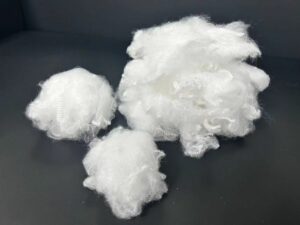
Thermally bonded polyester fiber batting is used across virtually every tier of the mattress market—from entry-level to premium—as a cushioning, comfort, and quilting layer. Its combination of resilience, hypoallergenic properties, washability, consistency, and cost-efficiency make it the dominant fiber material in modern mattress construction.
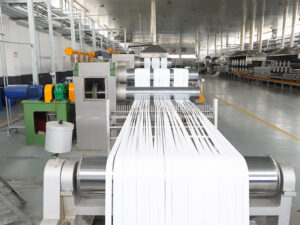
Polyester fiber batting for mattresses is typically produced by blending solid or hollow polyester staple fiber with a proportion of low melt bicomponent fiber (LMF), then heating the blend in a hot-air oven to activate the LMF and thermally bond the structure into a stable, coherent batting. The density and thickness of the batting, the denier of the polyester fiber used, and the proportion of LMF are all controlled to achieve specific comfort and resilience targets.
- Fine denier (1.5–3 denier) polyester batting produces a soft, silky surface feel ideal for the uppermost comfort layers and quilting layers directly beneath the ticking fabric.
- Medium denier (4–6 denier) batting provides a balance of softness and body, suitable for middle comfort layers.
- Coarser denier (6–15 denier) fiber produces firmer, denser batting suitable for transition layers and insulator applications.
Hollow Conjugated Siliconized (HCS) Fiber — Premium Fill
For pillow tops and premium comfort layers, hollow conjugated siliconized (HCS) fiber — the same material used in premium pillow fill — delivers the maximum loft, softness, and resilience available in polyester fiber. HCS fiber’s three-dimensional spiral crimp, hollow cross-section, and silicone finish combine to produce a fill material that is exceptionally light, recovers quickly from compression, and maintains its loft through years of use—making it the material of choice for premium pillow tops and luxury mattress comfort layers.
Felt Layers — Structural Support and Noise Reduction
Polyester felt—needle-punched or thermally bonded—is used in mattresses as an insulator pad above the spring unit and as a firm transition layer between the spring core and softer comfort materials. Felt’s role in a mattress is primarily structural: it bridges the gaps between spring coils, prevents softer materials from working into the spring voids, provides dimensional stability to the mattress cross-section, and reduces the noise of spring movement. Recycled polyester felt — made from post-consumer rPET fiber — delivers equivalent performance to virgin felt and is increasingly specified by mattress manufacturers with sustainability commitments.
Natural Fibers — Wool and Cotton
Wool batting is used in premium mattresses for its natural temperature-regulating and moisture-management properties. Wool fibers absorb and release moisture vapor actively — a property called hygroscopic buffering — helping maintain a comfortable sleep microclimate as body temperature fluctuates through the night. Wool also has a natural flame resistance that can reduce the quantity of chemical flame retardant required in the mattress construction.
Cotton batting provides a firm, breathable comfort layer with good initial softness. Cotton compresses more permanently over time than polyester or wool, which is why it is more commonly found in mattresses where initial firmness is a selling point rather than long-term resilience. Natural cotton is fully biodegradable — an advantage for environmentally conscious consumers — but requires more water in its production than synthetic alternatives.
Recycled Fiber in Mattresses — Sustainability Without Compromise
The mattress industry is one of the largest consumers of polyester fiber globally, and the shift toward recycled polyester fiber—produced from post-consumer PET bottles—is accelerating as manufacturers respond to growing consumer and regulatory pressure on sustainability. Recycled polyester batting and felt perform equivalently to virgin equivalents in all mattress comfort and durability applications while reducing the carbon footprint of the mattress by 30–60% for the fiber content.
GRS (Global Recycled Standard) certified recycled polyester fiber enables mattress brands to make verified, third-party-audited recycled content claims — an increasingly important differentiator in a market where sustainability is moving from a niche premium to a mainstream expectation.
Standard Mattress Sizes
The mattress industry standardized its dimensions to ensure compatibility between mattress and bed frame manufacturers. The standard sizes used in most markets are:
Size Name | Width (inches) | Length (inches) | Typical Use |
Twin / Single | 39″ | 74″ | Children, single sleepers, small rooms |
Full / Double | 54″ | 74″ | Single adult, guest room, teenager |
Queen | 60″ | 80″ | Most popular—couples or single adults wanting more space |
King | 76″ | 80″ | Couples wanting maximum space |
California King | 72″ | 84″ | Taller individuals are narrower but longer than standard King |
Quality Control in Mattress Manufacturing
Quality control in mattress manufacturing is primarily visual and dimensional — the finished product is assessed for appearance, construction integrity, and dimensional accuracy rather than through destructive testing. Most manufacturers implement quality inspections at three critical stages:
- After spring unit receipt: Verifying coil count, wire gauge, assembled height, and dimensional accuracy of the spring unit before it enters the production line.
- Before closing: Verifying that all comfort layers are correctly positioned and secured, that the hog rings are properly placed, and that the quilted panels are correctly cut and prepared.
- After closing, before packaging: Full visual inspection of the finished mattress—quilting quality, tape edge quality, dimensional accuracy, and surface defects—and functional checks, including firmness assessment.
Fire safety is a specific and legally mandated quality requirement in most major markets. In the United States, federal regulations require mattresses to resist ignition by smoldering cigarettes (16 CFR Part 1632) and open flame (16 CFR Part 1633). Compliance is typically achieved through the use of flame-resistant fiber barriers — often made from inherently flame-resistant fibers such as modacrylic or treated polyester — positioned as a layer between the comfort materials and the ticking fabric.
The Future of Mattress Manufacturing
Mattress manufacturing is evolving rapidly in response to four major forces: consumer demand for premium sleep science, sustainability requirements, e-commerce disruption, and material innovation.
Sleep Science and Comfort Engineering
As the scientific understanding of sleep’s role in health deepens — through research linking sleep quality to cardiovascular health, cognitive performance, immune function, and mental well-being — consumers are increasingly willing to invest in sleep quality. This is driving premiumization across the mattress market: more pocket spring systems, more memory foam and latex layers, more pillow tops, and more sophisticated comfort engineering in products at every price point.
Sustainability and Recycled Materials
The mattress industry generates significant end-of-life waste — a king-size mattress can weigh 40–60 kg, and disposal is logistically challenging. Regulatory pressure and consumer awareness are pushing manufacturers toward more recyclable constructions, greater use of recycled and natural materials, and product take-back programs. Recycled polyester fiber and recycled foam are the most immediately available sustainable material substitutions—delivering equivalent performance while reducing the embodied carbon of the mattress significantly.
Bed-in-a-Box and Direct-to-Consumer
The bed-in-a-box revolution—delivering a compressed, vacuum-rolled mattress directly to consumers through e-commerce—has fundamentally changed the distribution economics of the mattress market and driven a significant shift toward all-foam constructions (which compress and roll more easily than innerspring). This has expanded the use of polyurethane and memory foam while creating new engineering challenges around foam recovery time and long-term performance.
Material Innovation
Ongoing material innovation is introducing new options into mattress construction: bio-based foams derived from plant oils instead of petroleum; graphene-infused memory foam for enhanced thermal conductivity; copper-infused fiber with antimicrobial properties; phase change material (PCM) microcapsules embedded in fiber batting for active temperature regulation; and aerogel insulation layers for exceptional thermal performance at minimal thickness.
Conclusion: The Science and Craft Behind Every Night’s Sleep
A mattress is the product of a surprisingly complex manufacturing process — one that combines metallurgy, polymer science, fiber engineering, textile manufacturing, and skilled manual assembly in service of what seems like a simple goal: a good night’s sleep. From the selection of coil type and wire gauge to the specification of fiber batting density, quilting pattern depth, and border tape weight, every decision in the mattress manufacturing process has a direct consequence for the comfort, durability, and value of the finished product.
For manufacturers and suppliers in the mattress industry, understanding these interconnections—how the choice of fiber batting affects the feel of the quilted panel, how felt layers affect the acoustic performance of the spring system, and how the density of the comfort stack determines the mattress’s longevity—is the foundation of producing consistently high-quality products. For consumers, this understanding helps explain why mattress prices vary so widely and what the real differences between a budget, mid-range, and premium mattress actually are.
At VNPOLYFIBER, we supply the fiber materials that go into high-quality mattresses—including virgin and recycled polyester fiber batting, hollow conjugated siliconized (HCS) fill fiber for pillow tops and comfort layers, polyester felt for insulators and transition layers, and low melt bicomponent fiber for thermally bonded batting production. We invite mattress manufacturers and bedding brands to contact our technical team to discuss fiber specifications, sample requests, and sustainable material options for your production requirements.