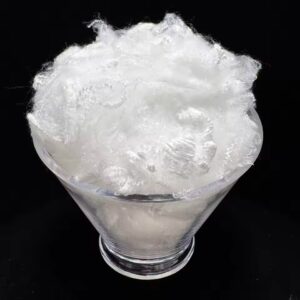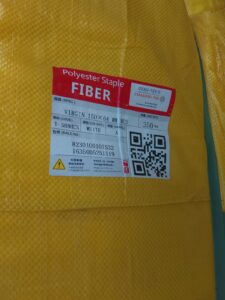
When shopping for a duvet, pillow, sleeping bag, or puffer jacket, the fill material inside determines almost everything: warmth, weight, feel, durability, and price. Yet most consumers and even many buyers in the textile industry have only a surface-level understanding of the differences between the three dominant fill types: hollow fiber (hollowfiber), down, and feather.
Each comes from a completely different source, works through a different physical mechanism, and is best suited to different applications. This guide explains all three clearly, compares them honestly, and helps you make well-informed decisions—whether you are a manufacturer sourcing fill material, a brand developing a new product, or a consumer trying to understand what you are actually paying for.
What Is Hollow Fiber?
Hollow fiber—also written as “hollowfibre”—is a synthetic insulation material made from polyester staple fiber (PSF) engineered with one or more air channels running through the core of each individual filament. Derived from polyethylene terephthalate (PET) polymer, it is the synthetic world’s answer to natural down: lightweight, warm, and soft, but man-made and fully controllable in its production.
The hollow core is the key engineering feature. Still air trapped inside each filament acts as a thermal barrier—the same principle that makes natural down so warm. By building that air pocket directly into the fiber itself, hollow polyester fiber achieves warmth-to-weight performance that solid polyester simply cannot match.
Most synthetic insulation fills are broadly made from hollow fiber polyester. They fall into two main categories: block insulation, which is a sheet of wadded synthetic fibers used in most sleeping bags and jackets; and loose fills, which are silky tufts of synthetic fibers closer in characteristics to natural down, which can be blown into baffles just like down.
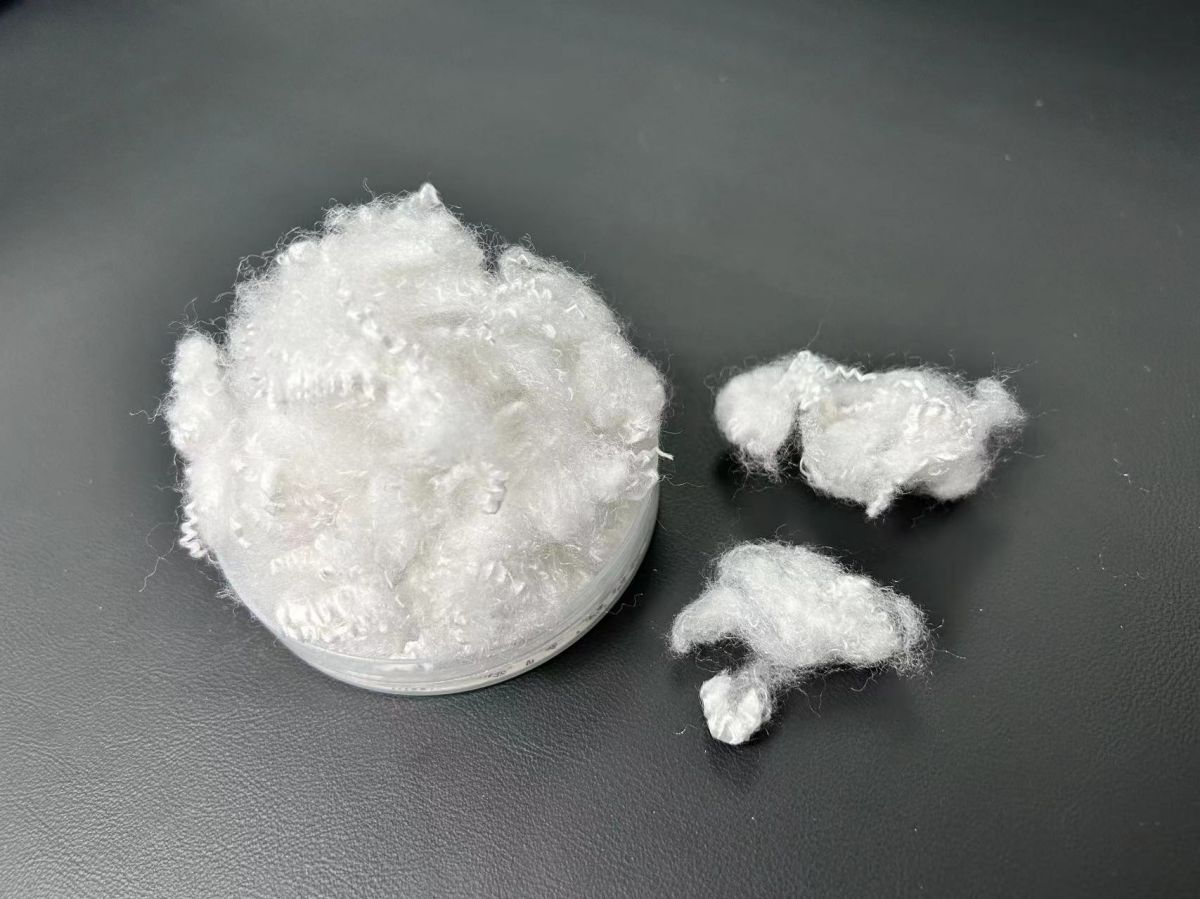

In the bedding industry, hollow conjugated siliconized fiber (HCS) is the most common hollow fiber type—its conjugated spiral crimp gives it resilience and loft recovery, while the silicone surface finish prevents tangling and enables smooth processing on filling machines. For premium down-alternative applications, hollow microfiber (0.9D–1.2D) takes hollow fiber performance to its highest level, delivering a hand feel and loft-to-weight ratio that closely approaches natural down.
Hollow fiber’s greatest commercial advantage is its behavior in wet conditions. Typically made of polyester, synthetic fill is quick-drying and insulates even if wet — something down struggles to do. Because polyester does not absorb water, hollow fiber maintains its loft and warmth when soaked — a critical advantage for outdoor gear, sports products, and bedding used in humid environments. Add to this that it is fully machine washable, hypoallergenic, significantly less expensive than natural down, and now available in recycled rPET grades, and it is easy to understand why hollowfibre dominates the global bedding fill market by volume.
Its honest limitations deserve mention too. Hollow fiber’s warmth-to-weight ratio does not reach the peak levels of premium goose down for ultralight applications. And with heavy use over many years, hollow fiber gradually loses some loft; it cannot fully recover—a durability gap compared to high-quality down, which can last decades with proper care.
What Is Down?
A common misconception should be corrected upfront: down is not feathers. They come from the same birds—primarily geese and ducks—but they are fundamentally different materials.
Down is the layer underneath the feathers of waterfowl like geese and ducks, whose main purpose is to keep the birds warm. Unlike regular feathers, which have long, poky quills in the middle, down is usually ultra-soft and fluffy with fibers that fan out in all directions.
Each down cluster is a three-dimensional structure—thousands of ultra-fine filaments radiating outward from a central point like a tiny starburst, trapping enormous volumes of still air relative to their weight. In every ounce of down, some two million filaments crisscross in all directions, creating air pockets that trap the bird’s body heat for warmth. This extraordinary structure is what gives natural down its unmatched warmth-to-weight performance—no synthetic material has yet fully replicated it.
Understanding Fill Power
The single most important number when evaluating down is fill power (FP). Down fill power measures the loft and insulation efficiency of down—specifically, how many cubic inches one ounce of down can fill. Higher fill power traps more air and provides better warmth with less weight, making it a top choice for cold-weather outdoor gear.
In practical terms, a sleeping bag or jacket filled with 800 FP down will be lighter than an equivalently warm product filled with 600 FP down, because the higher fill power down needs less material to achieve the same warmth. This is why serious outdoor gear brands publish fill power prominently—it is the quality benchmark that matters most.
General fill power grades for commercial products:
Fill Power | Grade | Typical Use |
300–450 FP | Economy | Budget bedding, entry-level pillows |
500–600 FP | Standard | Mid-market duvets, general outerwear |
650–750 FP | Premium | Premium bedding, quality outdoor gear |
800–900 FP | Superior | Performance outdoor gear, luxury bedding |
900+ FP | Ultra-premium | Elite sleeping bags, top-tier hotel bedding |
Fill power measures quality — how efficiently each ounce insulates. Fill weight measures quantity — how many ounces of down are actually in the product. Both numbers matter: a jacket with 800 FP but only 2 oz of fill will be less warm than one with 650 FP and 6 oz of fill. Always look for both when evaluating down products.
Goose Down vs. Duck Down
The main difference between duck down and goose down is the size and fill power of clusters. Geese generally have warmer down clusters with higher fill power compared to ducks because geese are larger, and their down clusters are generally bigger.
Goose down clusters—particularly from mature white geese—can achieve fill powers of 900 FP and beyond, making them the specification for luxury bedding and elite outdoor gear. Duck down clusters are smaller, typically topping out at 550–700 FP, but are more abundant and significantly less expensive since more ducks are raised globally for food. For mid-market bedding and general outdoor products, quality duck down at 500–650 FP delivers excellent value without the price premium of goose.
Both types of down insulate equally well and share essentially the same structure that makes down such an astonishingly good insulator. Both maintain their loft and warmth for many years, if not decades, when properly cared for. The choice between them ultimately comes down to the application’s warmth-to-weight requirements and budget.
Down’s main weaknesses are well known. The most common criticism of down insulation is its tendency to clump up and lose loft when it gets wet, thereby losing its insulation properties. It is also difficult to wash at home, expensive, and comes with ethical sourcing considerations that increasing numbers of consumers and retailers care about. The Responsible Down Standard (RDS) is the globally recognized certification ensuring down is sourced only as a byproduct of the food industry, not from live-plucked birds—and is increasingly required by major retailers in Europe and North America.
What Is Feather?
Feather is the outer protective covering of ducks and geese—the firm, quill-bearing structure that gives birds their shape and waterproofing. It is fundamentally different from down and does a fundamentally different job in fill products.
Ounce per ounce, down is the most efficient insulator for bedding products. It is not only lighter weight but also has the unique ability to breathe, allowing excess heat and humidity to escape. A comforter filled with feathers would feel quite heavy and wouldn’t offer the same insulation as down.
Where down provides warmth and loft, feathers provide support and firmness. A higher feather content in a pillow means a denser, more moldable, more supportive product. A higher down content means a softer, lighter, warmer one. This is why most commercial “down” products are actually a down-to-feather blend, expressed as a ratio:
Ratio (Down:Feather) | Character |
70:30 | Heavier, firmer, more affordable |
80:20 | Good balance of warmth and cost |
90:10 | Lightweight, lofty, premium quality |
95:5 or 100:0 | Maximum loft and warmth, highest cost |
The first number represents the percentage of down, and the second number represents the percentage of feathers. Generally speaking, a higher first number means a higher quality and more expensive product. While down costs more, it is a much better insulator than feathers and thus is preferred in well-insulated products.
Pure feather fill is primarily used in pillows and featherbeds where physical moldability and head support are the priority. The trade-off is weight—feather pillows are noticeably heavier than down or hollow fiber equivalents—and the occasional quill poke-through, which is a common complaint with low-quality feather products that use thin shell fabrics.
Hollow Fiber vs. Down vs. Feather: Head to Head
Factor | Hollow fiber | Goose Down | Duck Down | Feather |
Warmth-to-weight | Good | Excellent | Very good | Poor |
Wet performance | Excellent | Poor | Poor | Poor |
Compressibility | Good | Excellent | Very good | Poor |
Softness | Very good | Excellent | Excellent | Moderate |
Support / firmness | Low | Low | Low | High |
Durability | 3–7 years | 15–20+ years | 10–15 years | 5–10 years |
Washability | Machine wash | Specialist care | Specialist care | Moderate |
Hypoallergenic | Yes | Needs treatment | Needs treatment | No |
Ethical concerns | None | RDS certification needed | RDS certification needed | RDS certification needed |
Sustainability | Recycled rPET available | RDS certified options | RDS-certified options | RDS certified options |
Price | Low–Moderate | High | Moderate | Low–Moderate |
Best use | Bedding, all-weather outdoor, healthcare | Luxury bedding, premium outdoor | Mid-market bedding, outdoor | Supportive pillows, featherbeds |

Which Fill Should You Choose?
The honest answer is that there is no universal winner—the right fill depends entirely on your application, market, and customer.
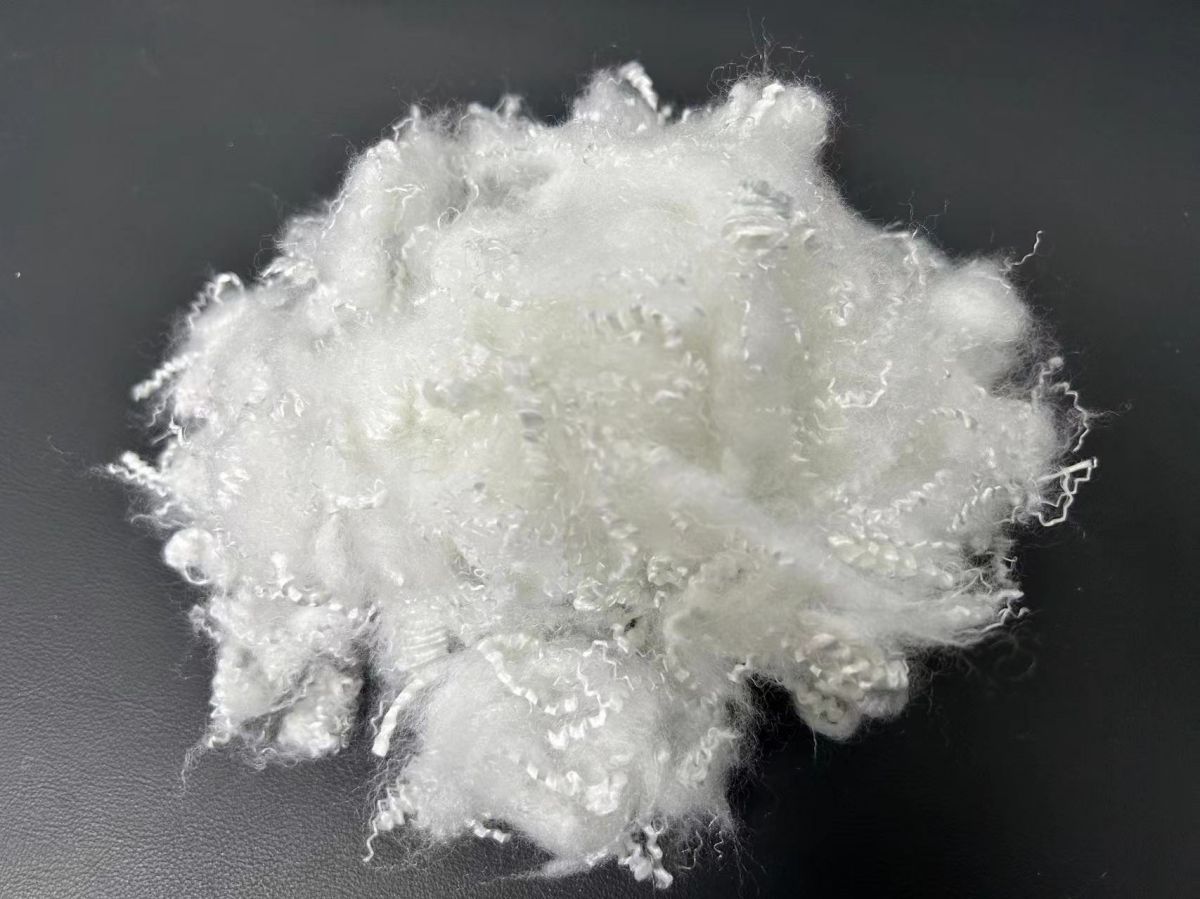
For budget to mid-market bedding—pillows, comforters, duvets, and cushions—hollowfibre is the commercially logical choice. It delivers the required warmth, loft, and softness at a stable, predictable cost, with machine-washability and hypoallergenic properties that natural down cannot match. For allergy-sensitive consumers, healthcare and hospitality products, and children’s bedding, hollow polyester fiber is the only practical answer.
For premium and luxury bedding, natural down—particularly white goose down at 750+ FP—delivers a hand feel, loft, and warmth that hollow fiber currently cannot fully replicate. Consumers willing to pay for it will notice the difference.
For outdoor gear in wet or variable conditions, hollow fiber wins outright. Its retention of insulating properties when wet is a genuine safety and performance advantage that no amount of DWR-treated down can entirely overcome.
For dry, cold, weight-critical alpine applications—elite sleeping bags, high-performance puffer jackets, expedition outerwear—premium goose down remains the best insulator available, full stop.
For supportive pillows where moldability and head-neck support are more important than warmth, a high-feather-content blend (70:30 or 80:20) gives consumers exactly what they want from a traditional pillow.
Understanding these distinctions is what separates well-specified products that earn repeat customers from generic fill decisions that miss the mark.
VNPolyfiber: Hollow Fiber, Down, and Feather—One Supplier
VNPolyfiber supplies a full range of fill materials for bedding manufacturers, outdoor gear brands, and home textile producers. Our hollow polyester fiber range covers standard HCS, hollow microfiber, hollow antimicrobial fiber, and hollow slick fiber—in virgin and recycled rPET grades, across all standard deniers (6D–15D) and cut lengths (32mm–76mm). We also supply natural down and feather through our partner network for customers who produce both synthetic and natural fill products.
Request a Quote | View All Products | Contact Our Team
Related reading: Hollow Conjugated Fiber HCS | Microfiber — Down-Like Fiber | Down, Microfiber Fill and Cluster Fiber Fill