Why Hygiene Has Become the New Standard in Bedding Fill
Sleep hygiene has moved from a niche concern to a mainstream purchasing priority. Consumers today are not just asking whether a pillow is soft—they are asking whether it is clean, whether it stays clean, and how long it stays that way between washes. Hotels, hospitals, childcare facilities, and premium home textile brands are all responding to the same demand: bedding that is not just comfortable but actively resistant to the bacteria that accumulate in warm, humid sleeping environments.
Pillows provide bacteria with the perfect environment for growth and can quickly develop unpleasant odors and inflame allergens. Research suggests that only 28% of people change their bedding the recommended once a week.
The global bedding market is projected to grow from USD 89.55 billion in 2024 to USD 132.61 billion in 2032, growing at a CAGR of 5.03%, driven by rising disposable incomes, urbanization, and an increasing consumer focus on sleep health and wellness.
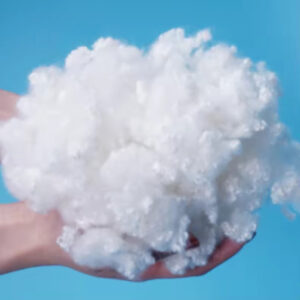
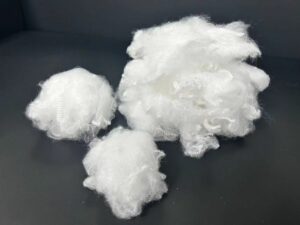
At the intersection of these two trends — functional performance and hygiene — sits one of the most technically sophisticated polyester fiber products available today: hollow antimicrobial polyester staple fiber. This is the fill material that gives premium pillows, quilts, comforters, and cushions their cloud-soft loft while actively fighting the bacteria that conventional fills simply trap and harbor.
What Is Hollow Antimicrobial Polyester Fiber?
Hollow antimicrobial polyester fiber is a specialized form of polyester staple fiber (PSF) that combines two distinct engineering innovations in a single filament:
First: the hollow structure. Unlike solid polyester fiber where the cross-section is completely filled with polymer, hollow fiber has one or more air channels running through the length of each filament. This trapped air core dramatically reduces the fiber’s weight while dramatically increasing its thermal insulation — the same principle behind a goose down cluster, engineered synthetically into a polyester fiber.
Second: the antimicrobial function. During the manufacturing process, antibacterial agents—most commonly nanoscale silver ions, zinc oxide particles, or ceramic compounds containing silver and copper—are permanently embedded into the polymer matrix of the fiber itself. This is not a surface coating or spray-on treatment. The agents are part of the fiber structure, bonded at the molecular level, and cannot be washed out.
The result is a hollow polyester fiber that insulates like down, feels luxuriously soft, and actively neutralizes bacteria—before they have a chance to multiply, generate odors, or trigger allergies.
Hollow antimicrobial polyester fibers offer a number of superior performance features. They not only inherit the excellent properties of natural fibers but also have the excellent physical properties of synthetic fibers. These fibers can be blended with natural and synthetic fibers to create fabrics with excellent stability, wrinkle resistance, breathability, moisture permeability, drape, and stretch.
The Science Behind the Antimicrobial Function
Understanding how the antibacterial mechanism works is essential for manufacturers making product claims and buyers evaluating specifications. There are two production methods and several active agent types in commercial use:
Two Methods of Producing Antimicrobial Polyester Fiber
Method 1 — Blended Spinning (Melt Blending)
This is the superior and more durable approach. The blended spinning method obtains antibacterial fibers by blending the antibacterial agent with the polymer by techniques such as solution spinning or wet spinning. The mixed-type preparation involves blending heat-resistant inorganic antibacterial agents—such as ceramic powder containing silver, copper, and zinc ions—into polyester for spinning.
Because the antibacterial agents are incorporated into the molten polymer before extrusion, they become a permanent part of the fiber’s internal structure. DAK Fibers’ SteriPur® AM antimicrobial polyester staple fiber incorporates AlphaSan® antimicrobial resin — a zirconium phosphate-based ceramic ion exchange resin containing silver — into the fibers during the polymer stage of manufacturing, creating permanent antimicrobial properties.
Method 2 — Post-Treatment (Surface Application)
The post-treatment type entails adding antibacterial agents to polyester fibers after production. While easier and less expensive to produce, this method results in antimicrobial properties that may diminish over repeated washing cycles as the surface treatment gradually wears away.
For premium bedding applications where the claim of permanent antibacterial protection is part of the product’s value proposition, melt-blended production is the industry standard.
The Three Main Antibacterial Agents Used in Polyester Fiber
Product characteristics include a comprehensive range of silver ions, zinc oxide, and elemental copper’s antibacterial properties. The fiber is white in color, can be dyed, and endures wash cycles without compromising its permanent antibacterial attributes.
Silver Ions (Ag⁺) The most widely used and well-researched antibacterial agent in textile applications. Silver particles are permanently infused with polyester molecules. The negatively charged bacteria are attracted to the silver’s positive charge. The silver ions break down the cell walls and destroy the odor-causing bacteria as soon as they come in contact. Silver ion technology is used by brands including SILVERbac, Ionic+, and Polygiene StayFresh.
Zinc Oxide (ZnO) Nanoparticles Zinc oxide offers broad-spectrum antibacterial activity and is particularly effective against both gram-positive and gram-negative bacteria. ZnO nanoparticles disrupt bacterial cell membranes and interfere with cellular metabolism, preventing reproduction. They also offer UV-blocking properties as a secondary benefit — useful in sun-exposed textiles.
Nano-Scale Ceramic Compounds Ceramic powders incorporating combinations of silver, copper, and zinc ions provide multi-mechanism antibacterial protection. Antibacterial effects are usually achieved by interfering with bacterial DNA, protein synthesis, or the activity of enzymes involved in bacterial cell metabolism. Antibacterial surfaces kill bacteria by releasing agents, directly contacting cell membranes, or expressing cationic polymers.
The Ozone Mechanism: Contact-Free Bacteria Elimination
One additional mechanism found in advanced hollow antimicrobial polyester fiber products is particularly noteworthy: the ability to convert ambient oxygen into ozone in the immediate vicinity of the fiber surface. Ozone (O₃) is a powerful oxidizing agent that eliminates bacteria, viruses, and mold spores without requiring direct contact. This means the fiber can neutralize airborne microorganisms in the fill—not just bacteria on the fiber surface—creating a genuinely hygienic fill environment throughout the product’s lifespan.
The Hollow Structure: Why It Matters for Performance
The antimicrobial function addresses hygiene. The hollow structure addresses comfort, warmth, and loft—the three performance properties that determine whether a consumer buys a pillow a second time.
How Hollow Polyester Fiber Works
Each hollow polyester staple fiber filament contains one or more longitudinal air channels running through its core. Still air is the most effective thermal insulator known—the same principle that makes natural down so warm despite its negligible weight. By engineering an air pocket into each individual filament, hollow polyester fiber achieves warmth-to-weight ratios that solid polyester simply cannot match.
The lightweight properties of hollow fibers together with excellent thermal insulation make these materials ideal for bedding, outerwear, and industrial insulation products. The growth of anti-allergy and environmentally friendly bedding products is increasing the use of hollow polyester fibers.
Three-Dimensional Spiral Crimping Technology
Premium hollow antimicrobial polyester fiber is produced using advanced three-dimensional spiral crimping technology — a manufacturing process that introduces a complex, spring-like crimp structure into the fiber rather than the simple two-dimensional crimp of standard polyester. This three-dimensional structure:
- Dramatically increases the fiber’s natural loft and bulk
- Improves resilience and recovery after compression—the fiber springs back to its original volume when pressure is released
- Creates more air-trapping spaces between individual filaments, enhancing thermal insulation
- Gives the finished fill product a fuller, more luxurious hand feel
The combination of hollow cross-section and 3D spiral crimp is what gives premium hollow antimicrobial polyester fiber its exceptional warmth, resilience, and durability compared to standard hollow conjugated fiber.
Key Properties and Specifications
For textile manufacturers and product developers sourcing hollow antimicrobial polyester staple fiber, here are the key parameters to specify and verify:
Property | Typical Specification | Why It Matters |
Denier | 6D–15D | Determines fill density and softness — finer = softer feel |
Hollow ratio | 15–35% | A higher hollow ratio = lighter weight and better insulation |
Crimp type | 3D spiral | Superior loft and resilience vs. standard 2D crimp |
Antibacterial agent | Silver ions / ZnO / nanoceramic | Silver most durable; ZnO has the broadest spectrum |
Incorporation method | Melt-blended | Permanent — does not wash out |
Antibacterial efficacy | ≥99% reduction (E. coli, S. aureus) | Industry standard test bacteria |
Test standard | ISO 20743, ISO 22196, AATCC 100 | International and US testing standards |
Certification | SGS / Oeko-Tex / REACH compliant | Required for most EU and US markets |
Wash durability | Permanent (50+ wash cycles) | Critical for consumer product claims |
Color | White / Optical White | Standard for bedding fill applications |
Finish | Siliconized (slick) | Prevents fiber tangling; improves fill distribution |
Antibacterial Efficacy Standards
Common test methods used to assess antibacterial fabric include ISO 20743 (JIS L 1902) or ISO 22196 (JIS Z 2801). The most common antibacterial additives used to treat fabric for end uses such as apparel and home textiles are zinc pyrithione, silver, silane quaternary ammonia compounds, and polyhexamethylene biguanide (PHMB). Ultra-Fresh
For your product specifications and marketing materials, the two most important test bacteria to certify against are the following:
- Escherichia coli (E. coli)—a gram-negative pathogen, representing the harder-to-kill bacterial class
- Staphylococcus aureus (S. aureus)—a gram-positive pathogen and the most common cause of skin infections and textile-transmitted illness
SGS certification confirming ≥99% reduction against both of these bacteria is the credible, internationally recognized standard for antimicrobial polyester fiber claims in home textile applications.
Why Hollow Antimicrobial Polyester Fiber Outperforms the Alternatives
Hollow Antimicrobial Polyester Fiber vs. Standard Hollow Polyester Fiber (Non-Antimicrobial)
Standard hollow polyester staple fiber—including HCS (Hollow Conjugated Siliconized) fiber—offers excellent loft, resilience, and warmth but provides no protection against bacterial growth. Over time, the warm, humid microclimate inside a pillow or comforter filled with standard hollow fiber creates ideal conditions for bacteria, dust mites, and mold to multiply. Antimicrobial hollow fiber addresses this limitation without any compromise on the physical performance that makes hollow fiber the preferred fill for premium bedding.
Hollow Antimicrobial Polyester Fiber vs. Natural Down
Natural goose or duck down is the traditional luxury fill standard. However, it carries significant disadvantages in hygiene-sensitive applications: it can harbor dust mites and allergens within its cluster structure, it requires specialist dry cleaning or professional washing, it is not suitable for allergy sufferers, and its organic protein structure provides a nutrient-rich medium for bacteria. Bacteria have been shown to live on cotton and polyester fabrics for weeks and even months. Laundering alone is not effective enough, as there is no residual protection against further contamination. With natural down, this problem is amplified by the difficulty of thorough cleaning. Hollow antimicrobial polyester fiber is fully machine washable, dries quickly, and maintains its antibacterial efficacy through every wash cycle.
Hollow Antimicrobial Polyester Fiber vs. Surface-Treated Antimicrobial Fills
Some lower-cost antimicrobial bedding products use a surface finish or spray treatment to achieve antibacterial claims. Antimicrobial additives could be melt blended into the polymer during processing and provide a resistant treatment to control germs or fungus—a superior approach versus surface application, which may wear off over repeated washing. U-long melt-blended hollow antimicrobial polyester fiber maintains its antibacterial properties permanently, regardless of washing frequency—a critical distinction for consumer-facing product claims and hospitality applications.
Applications: Where Hollow Antimicrobial Polyester Fiber Is Used
Premium Bedding — Pillows, Quilts, and Comforters
This is the primary and most commercially significant application. Antibacterial pillows leverage advanced additive technologies to resist bacterial growth and ensure pillows stay fresher for longer. Bacteria are responsible for many of the unpleasant odors that develop in textiles and thrive in damp, warm environments such as bedding. By neutralizing bacteria, antibacterial technology keeps pillows smelling fresher for longer, reducing the need for frequent washing.
Healthcare and institutional bedding needs to be designed with antibacterial, hypoallergenic, and flame-resistant materials to secure the customer’s hygiene and safety. Antibacterial bedding fabric and hybrid mattress designs remain popular.
For bedding manufacturers, hollow antimicrobial polyester fiber enables a genuine product upgrade story — from standard fill to hygiene-certified, premium fill — without changing the product’s physical structure or production process. The fiber fills, processes, and behaves identically to standard hollow polyester staple fiber on carding and filling lines.
Hospitality Industry
Hotels face a unique challenge: bedding that is in intimate contact with many different guests, laundered at industrial frequency, and expected to maintain hygiene standards between wash cycles. Hollow antimicrobial polyester fiber fill addresses all three requirements. Its machine-washability at high temperatures, permanent antibacterial properties, and excellent loft recovery make it the ideal specification for hotel pillows, duvet inserts, and mattress toppers.
Healthcare and Medical Facilities
The antimicrobial pillow is the most sought-after pillow for medical use. Its primary feature is the treated antimicrobial polyester fill, which keeps germs from inside the pillow. It actively prevents germs, bacteria, and microbes from accumulating inside it.
In hospitals, rehabilitation centers, and aged care facilities, pillow hygiene is a genuine infection control issue. Hollow antimicrobial polyester fiber provides a fill that actively prevents bacterial proliferation between cleanings—reducing cross-contamination risk without requiring more frequent or more aggressive laundering protocols.
Children’s Products
Children’s bedding, stuffed toys, and cushions come into close, repeated contact with children’s skin. Parents increasingly seek hypoallergenic, easy-wash, bacteria-resistant fills for children’s sleep products. Hollow antimicrobial polyester staple fiber — certified safe against harmful substances (OEKO-TEX Standard 100) and proven antibacterial — is ideally positioned for this market.
Sports and Travel Products
Sleeping bags, travel pillows, and portable bedding for outdoor use expose the fill to higher-than-average moisture and bacterial load from perspiration. Hollow antimicrobial polyester fiber is an excellent specification for these applications—its moisture resistance, quick-dry properties, and permanent antibacterial function address the specific challenges of high-activity sleep environments.
Market Context: The Antimicrobial Textile Opportunity
The demand signal from the global bedding market is clear. Self-cleaning fabric innovations are set to transform the bed linen industry by providing customers with low-maintenance and hygienic solutions. These developments mainly use nanotechnology and antimicrobial chemicals to produce materials resistant to dirt and bacteria. Bed linens with silver-infused technology — which can eliminate up to 99.9% of bacteria — have been offered by multiple companies, and the cloth laced with silver also aids in temperature regulation, creating a dry and cool sleeping environment.
Approximately 45% of premium bed sheet brands focus on sustainable packaging and antimicrobial finishes. Around 40% of new product launches in 2024–2025 featured OEKO-TEX certification, ensuring safety and quality standards.
For manufacturers and brands sourcing fill fiber, this creates a clear commercial opportunity: hollow antimicrobial polyester fiber allows you to participate in the fastest-growing segment of the bedding market—health and hygiene-focused premium products—using an established, well-understood production process. The fiber processes identically to standard hollow HCS fiber on existing filling lines. The upgrade is entirely in the raw material specification, not in your factory.
Hollow Antimicrobial vs. Standard Hollow Fiber: A Side-by-Side Summary
Feature | Standard Hollow Fiber (HCS) | Hollow Antimicrobial Polyester Fiber |
Structure | Hollow core, conjugated crimp | Hollow core, 3D spiral crimp |
Thermal insulation | Excellent | Excellent |
Loft and resilience | Excellent | Excellent (enhanced by 3D crimp) |
Antibacterial | None | Permanent — ≥99% reduction (E. coli, S. aureus) |
Odor resistance | Standard | Enhanced — bacteria causing odors are neutralized |
Allergen control | Hypoallergenic | Hypoallergenic + active bacterial suppression |
Wash durability | Excellent | Excellent (melt-blended agents are permanent) |
Certifications | OEKO-TEX, GRS | OEKO-TEX, SGS antibacterial, GRS |
Target market | Standard to premium bedding | Premium, healthcare, hospitality, children’s products |
Price premium | Baseline | 15–30% above standard hollow fiber |
Blending Hollow Antimicrobial Polyester Fiber
One of the most flexible aspects of hollow antimicrobial polyester staple fiber is its compatibility with other fiber types. Hollow antibacterial polyester fiber can be blended with a variety of other fibers. Its unique physical and chemical properties and functionality make the products have excellent wear properties.
Common blending approaches for premium products include:
- Hollow antimicrobial PSF + standard HCS fiber—blending 30–50% antimicrobial with standard hollow fiber reduces material cost while maintaining meaningful antibacterial performance
- Hollow antimicrobial PSF + microfiber—combining antimicrobial bulk fill with ultra-fine microfiber creates a product with both antibacterial protection and exceptional down-like softness
- Hollow antimicrobial PSF + low-melt fiber enables thermally bonded wadding production for quilts and mattress toppers that maintains shape without stitching
Certification and Testing: What to Look For When Sourcing
For buyers sourcing hollow antimicrobial polyester fiber, the following certifications and test reports are the minimum acceptable standard for premium and healthcare applications:
SGS Antibacterial Test Report — confirms ≥99% reduction against E. coli and S. aureus under ISO 20743 or AATCC 100 methodology. This is the industry standard cited by manufacturers globally.
OEKO-TEX Standard 100 confirms the fiber contains no harmful substances at levels that could be dangerous to human health. Essential for direct skin-contact applications and children’s products.
GRS (Global Recycled Standard)—for recycled polyester fiber versions, confirms the recycled content claim and supply chain traceability.
REACH Compliance — required for products sold into the European Union, confirming compliance with chemical substance regulations.
Wash Durability Testing — confirm the number of wash cycles after which antibacterial efficacy is retained. For melt-blended products, this should be 50+ cycles with no significant reduction in performance.
VNPolyfiber: Hollow Antimicrobial Polyester Fiber for Home Textile Manufacturers
VNPolyfiber supplies hollow antimicrobial polyester staple fiber through our network of verified factory partners, with full SGS antibacterial certification and OEKO-TEX compliance. Our hollow antimicrobial polyester fiber is available in standard hollow and 3D spiral crimp configurations in the denier and cut length specifications required by your filling and carding lines.
We also supply the full range of complementary polyester fiber products — standard HCS, microfiber, low-melt fiber, and solid polyester staple fiber — enabling you to source complete fill specifications from a single, reliable partner.
Typical specifications available:
- Denier: 6D, 7D, 12D, 15D
- Cut length: 32mm, 38mm, 51mm, 64mm
- Finish: Siliconized, slick
- Crimp: Standard conjugated / 3D spiral
- Grade: Virgin / Recycled rPET
- Certification: SGS antibacterial, OEKO-TEX, GRS available
👉 Request a Sample or Quote | Contact Our Team | View All Fiber Products
Frequently Asked Questions
Is the antibacterial function permanent, or does it wash out? For melt-blended hollow antimicrobial polyester fiber, the antibacterial agents are embedded within the polymer matrix — not on the surface — and cannot be washed out. SGS-certified products maintain ≥99% antibacterial efficacy after 50+ wash cycles.
Is hollow antimicrobial polyester fiber safe for children and sensitive skin? Yes—when certified to OEKO-TEX Standard 100 and REACH compliant. The antibacterial agents used (silver ions, ZnO, ceramic compounds) are well-established, skin-safe materials with decades of use in medical textiles. Polygiene StayFresh antibacterial technology has been thoroughly tested and approved and is completely safe for individuals who suffer from sensitive skin, dermatological issues, or allergies.
Can it be processed on standard filling equipment? Yes. Hollow antimicrobial polyester staple fiber processes identically to standard hollow HCS polyester fiber on carding, opening, and filling equipment. No machine modifications are required.
What is the difference between hollow antimicrobial fiber and standard HCS fiber? Both share the hollow cross-section structure. The antimicrobial version adds permanently embedded antibacterial agents and typically uses an advanced 3D spiral crimp for better loft recovery. The price premium reflects the antibacterial masterbatch cost and the more sophisticated crimping technology.
Can it be blended with natural fibers? Yes. Hollow antimicrobial polyester fiber blends well with cotton, wool, and other natural and synthetic fibers. The antibacterial function is retained in the polyester fiber component of the blend.
Conclusion: The Fiber That Addresses What Consumers Actually Worry About at Night
The bedding industry’s shift toward functional, health-focused products is not a trend — it is a permanent structural change in what consumers expect from the products they sleep on. Bacteria, allergens, odors, and hygiene are no longer secondary concerns. They are primary purchase drivers, especially in healthcare, hospitality, and premium residential markets.
Hollow antimicrobial polyester staple fiber answers these concerns at the raw material level—before the product is even made. Its hollow structure delivers the warmth and loft that consumers associate with quality bedding. Its permanently embedded antibacterial agents eliminate the bacteria that conventional fillings simply accumulate. And its certification by SGS and compliance with OEKO-TEX give brands the credible, verifiable claims that today’s informed consumers and institutional buyers demand.
For manufacturers looking to elevate their product range, enter the health and hygiene bedding segment, or supply the hospitality and healthcare markets, hollow antimicrobial polyester fiber is the fill material that makes it possible.
Contact VNPolyfiber to discuss specifications, samples, and pricing.