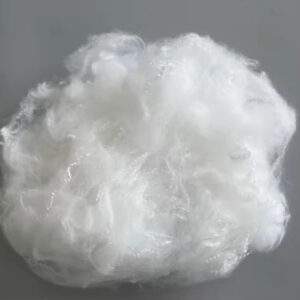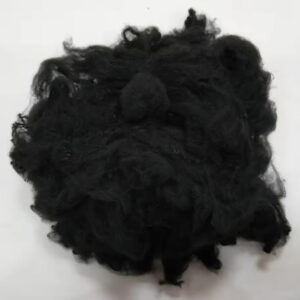
Flame retardant polyester fiber is one of the most versatile and widely used fire-safe materials in textiles and construction. Its combination of affordability, durability, and broad regulatory compliance makes it the practical choice for a huge range of applications. But like every material, it has limitations—and understanding those limitations before you specify FR polyester is essential for choosing the right solution for your project.
This article covers the four most important limitations of FR polyester fiber and explains how each one should influence your material selection.
1. Heat retention and breathability
All polyester fiber — FR or otherwise — retains more body heat than natural fibers like cotton or wool. Polyester is hydrophobic: it repels moisture rather than absorbing it, which means sweat cannot be wicked away from the body effectively. In protective workwear, this heat retention can be a meaningful comfort issue, particularly for workers in hot climates or physically demanding roles who wear FR garments for full shifts.
This limitation is well understood by the industry, and the most common solution is blending. FR polyester is frequently combined with FR cotton or other breathable fibers in workwear fabrics to balance the durability and cost advantages of polyester with the moisture management and comfort of cotton. If your application involves garments worn against the skin in warm or demanding conditions, a blend is almost always preferable to 100% FR polyester.
For non-clothing applications—upholstery filling, insulation, mattress batting—breathability is less of a concern, and FR polyester’s heat retention characteristics are largely irrelevant to performance.
2. Wash durability in treated FR polyester
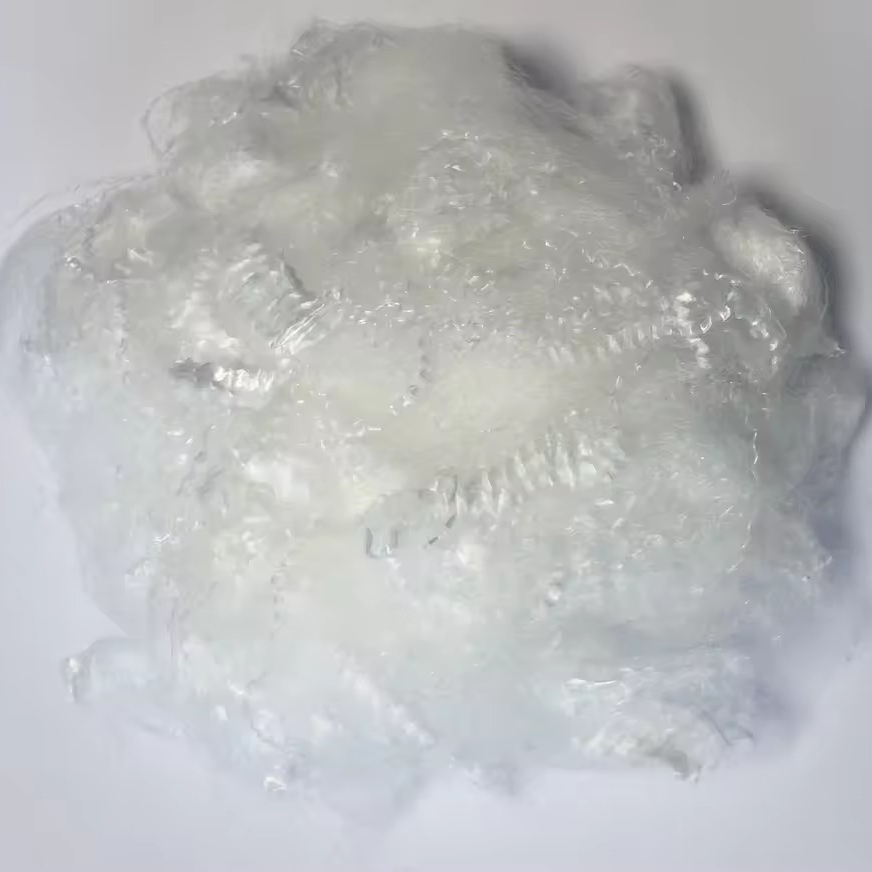
This limitation applies specifically to topically treated FR polyester rather than inherently FR (IFR) polyester. When FR chemicals are applied as a surface treatment rather than built into the polymer, they can be gradually removed through repeated laundering. The rate of degradation depends on the specific FR chemistry, the treatment method, water temperature, detergent type, and mechanical agitation.
Most treated FR polyester products are certified to a specific number of wash cycles — commonly 25, 50, or 100 — after which fire resistance can no longer be guaranteed without retesting or retreatment. Several factors accelerate this degradation: fabric softeners leave residues that impair FR finishes, hot water temperatures stress the treatment, and harsh detergents strip the fiber surface more aggressively than gentle alternatives.
For products that will be washed frequently and are expected to maintain certified fire resistance throughout their service life, inherently FR polyester is the appropriate specification. For products with predictable replacement cycles or low laundering frequency, treated FR polyester remains a practical and cost-effective choice.
3. Smoke and combustion by products
FR polyester is engineered to resist ignition and limit flame spread—but it is not fireproof. When FR polyester does combust, it produces smoke and combustion gases. Polyester in general can generate dense smoke and carbon monoxide, as well as other potentially toxic compounds depending on the specific FR chemistry and the temperature of combustion. This is a meaningful consideration in enclosed, high-occupancy environments such as aircraft cabins, rail carriages, underground transit stations, and high-rise buildings where smoke inhalation is a primary cause of fire fatalities.
For applications in these environments, it is important to evaluate not just the ignition and flame spread performance of the FR fiber, but also its smoke density and toxicity characteristics. Some FR standards and regulatory frameworks — particularly those governing aviation and rail — include smoke density and toxicity requirements in addition to basic flame resistance testing. Confirm that your FR polyester meets all relevant requirements for your specific application environment, not just the flame performance criteria.
4. Environmental and chemical safety considerations
The environmental profile of FR polyester depends heavily on the type of FR chemistry used. Older halogen-based FR systems — particularly certain brominated flame retardants — have been identified as persistent environmental pollutants and potential endocrine disruptors. Several of these compounds have been restricted or banned under European REACH regulations and are subject to increasing scrutiny in other markets.
The textile industry has substantially transitioned toward phosphorus-based and non-halogenated FR systems in recent years, which offer comparable fire performance with a significantly more favorable environmental and toxicological profile. However, the transition is not universal, and some lower-cost FR polyester products — particularly from certain manufacturing origins — may still use older chemistry systems.
For applications where product safety for sensitive users is a priority—children’s products, healthcare textiles, skin-contact workwear—always verify that the FR polyester you are sourcing uses a non-halogenated FR system and holds OEKO-TEX Standard 100 certification. For products entering the European market, confirm REACH compliance with your supplier as a minimum requirement.
Putting it in perspective
These limitations are real, but they are also manageable with informed material selection. Blend FR polyester with breathable fibers for comfort-critical garments. Specify IFR polyester where wash durability is essential. Evaluate smoke characteristics for enclosed-environment applications. And verify FR chemistry compliance for sensitive or regulated end uses.
FR polyester remains one of the most practical and cost-effective flame retardant materials available across a wide range of applications—understanding its limitations simply helps you deploy it in the right contexts.
For a full overview of FR polyester fiber—including how it works, its types, applications, and compliance standards—visit our product: Flame Retardant Polyester Staple Fiber
Click here to visit Part 4: Flame Retardant Fiber Safety Standards—NFPA 701, UL 94, EN 13501 & More