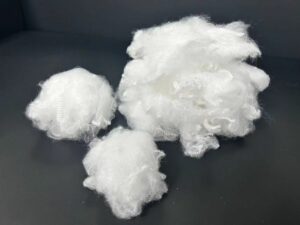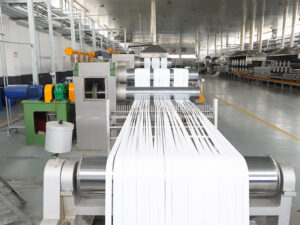
What are bicomponent fibers?
Highly praised for their unique characteristics, two-component fibers surpass the capabilities of single-component fibers. By choosing the right mix of materials and designs, we can tailor the fibers’ abilities to meet specific needs, like how well they absorb, their strength, softness, heat resistance, and how well they block things. Innovative technologies widely process non-woven fabrics, including baby diapers, women’s sanitary napkins, adult diapers, and masks. The unique structure of dual-component fibers can improve liquid management, breathability, and filtration efficiency in these applications.
What is low melting fiber?
Low-melting fiber can be melted at temperatures between about 100 and 200°C, which lets it stick to other fibers without harmful glues, unlike regular polyester fiber that needs higher temperatures over 280°C. This property subsidizes environmental preservation by producing low heat and carbon dioxide. It finds application in several areas such as door trims, automotive car interiors, ceiling materials, headliners, construction, furniture, and the industrial sector.
Low-melting fiber is referred to as a bi-component fiber, which has strong bonding properties. The low-melting fiber is used in the spinning of durable yarns. Moreover, this fiber is used as excellent insulating material in the automotive and construction industries due to its complex structure. Furthermore, this fiber is blended with solid recycled material or solid polyester fibers, which are then used for car molding. The low-melting fiber provides easy bonding and high elasticity and thus is used for the production of interior parts of cars, mattresses, and medical goods, among others.
“Low melting fiber” refers to a bi-component fiber used as a thermal bonding fiber, and its structure is typically a sheath/core type. It is composed of a sheath polymer and a core polymer. The melting point of the sheath polymer is lower than that of the core polymer.
The low-melting fiber offers various benefits, such as low melting points, durability, and high bonding strength. Moreover, it is blended with other types of fibers and is used to manufacture padding, interlining, and high-quality mattresses. Furthermore, it is used to manufacture sanitary and medical products. Thus, the different benefits of low-melting fiber are likely to boost the product demand across the globe.
COVID-19 Impact on Global Low Melting Fiber Market
The occurrence of novel coronavirus disease has obstructed the global economy. Leading countries across the globe announced the lockdown situations; most of the key players in the global low-melting fiber market were forced to shut down their production plants and sales as well as the production of automotive and construction components, which has directly affected the target market industry. Lockdowns and disruptions in the supply chain significantly impacted major industries worldwide. However, the key suppliers are resuming work to accomplish their previous order by following government norms. The COVID-19 situation is resolving gradually, and most of the industries are starting their facilities at full capacity. The global low-melting fiber industry is expected to grow in the post-COVID era at a significant rate.
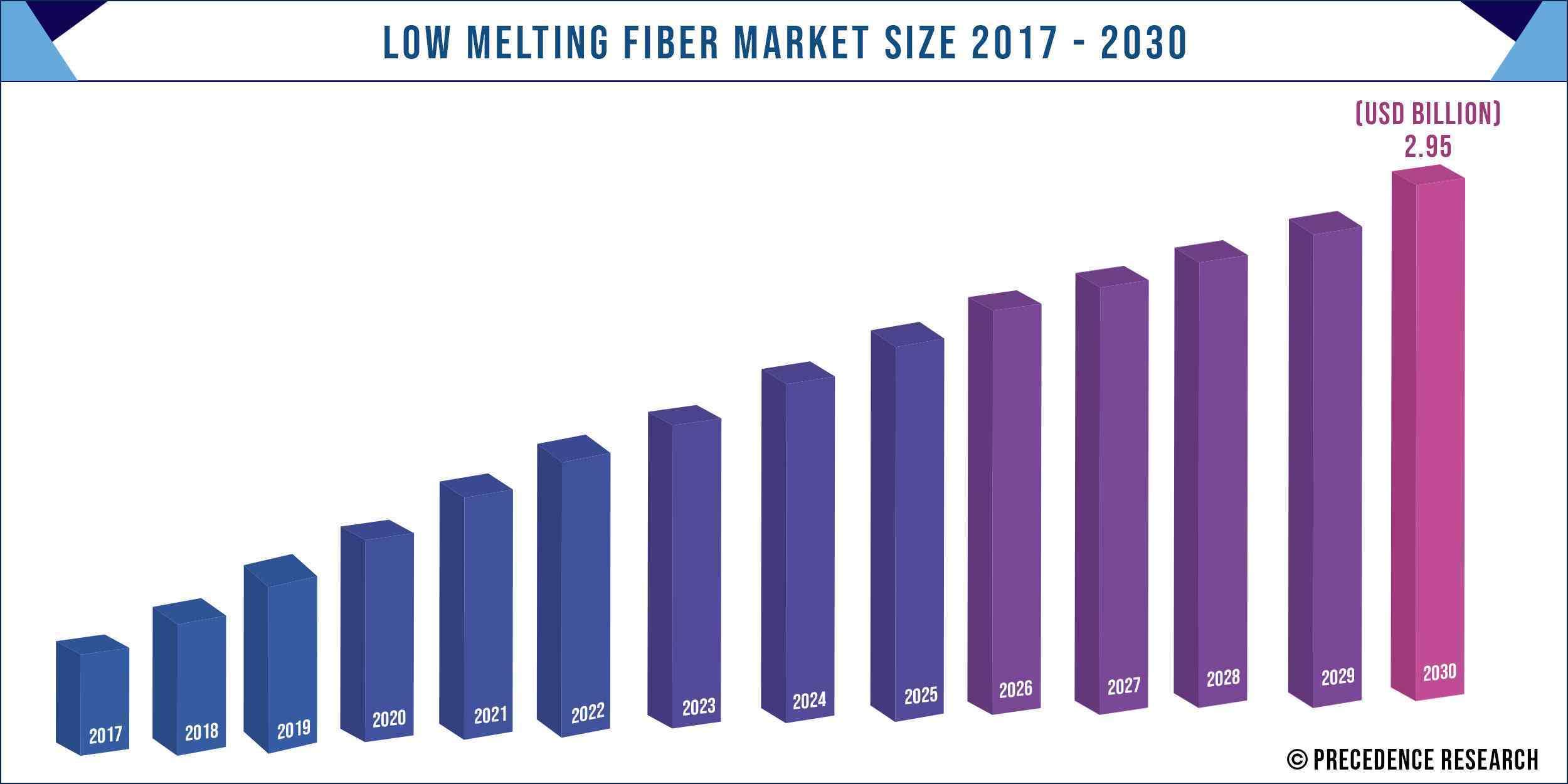
The outbreak of COVID-19 significantly disrupted the bicomponent fiber market, leading to extensive disturbances in global supply chains and a notable decline in demand for products and services across various industries, including the bicomponent fiber market. Particularly in the first half of 2020, consumer spending was significantly impacted due to lockdowns and social distancing measures in numerous countries, resulting in reduced non-essential purchases and subsequently affecting market demand.
Moreover, COVID-19 severely disrupted manufacturing and supply chain operations, leading to production shutdowns and delays for many manufacturers due to workforce shortages, transportation constraints, and raw material scarcities. Consequently, the supply of bicomponent fiber products significantly decreased, exacerbating the market’s challenges.
However, with the implementation of vaccination programs and the gradual relaxation of restrictions in many countries, positive signs of recovery are emerging for the bicomponent fiber market. To keep up with the changing market, many companies are using digital transformation strategies to become more flexible and competitive, which should help the bicomponent fiber market slowly recover.
“In conclusion, while COVID-19 had a significant impact on the bicomponent fiber market, businesses are adapting to the changing market conditions and implementing measures to recover and thrive in the post-pandemic world.”
Global Low Melting Fiber Market 2024 by Manufacturers, Regions, Type and Application: Forecast to 2030
According to our (Global Info Research’s) latest study, the global market for low-melting fiber was valued at USD 1975.6 million in 2023 and is forecast to reach a readjusted size of USD 3373.3 million by 2030 with a CAGR of 7.9% during the review period. Global low-melting fiber key players include Huvis, Toray Advanced Materials Korea, Far Eastern New Century, Nan You Plastics, etc. The global top four manufacturers hold a share of about 70%. China is the largest market, with a share over 45 percent, followed by Korea and North America, both of which have a share over 45 percent. In terms of application, the largest application is the bedding industry, followed by the automotive industry, Construction, etc.
North America and Europe are experiencing steady growth, driven by government initiatives and increasing consumer awareness. Asia-Pacific, particularly China, leads the global low-melting fiber market, with robust domestic demand, supportive policies, and a strong manufacturing base.
Future of Global Low Melting Fiber Market
Increasing focus on the manufacturing of the vehicles is expected to fuel growth in the global low-melting fiber industry in the near future. Heavy investment from global EVs as well as automakers is expected to drive growth in the automotive industry and, in turn, the global low-melting fiber industry in the near future. Low-melting fiber plays a vital role in manufacturing automotive components, including ceiling materials, engine hoods, and trucks. The emergence of COVID has increased usage of the heightened hygienic products, and low melting fiber is used in the production of such a variety of hygiene products, including sanitary pads and diapers, which is expected to fuel the target market industry in the near future. Further, in the post-COVID world, the bedding & furniture industry is anticipated to register a significant growth rate owing to increasing adoption of end-use products like sofas and mattresses. This trend can have a positive impact on the target industry growth over the forecast period of time.
Melting point ≤130 Segment Reported Major Market Share in 2020
On the basis of types, the low melting fiber market is classified into melting point >130 and melting point ≤130. Among these types, the melting point ≤130 segment is projected to garner considerable market share during the forecast period. This product is ecological and obeys low temperatures. It further has outstanding bonding, improved mixing characteristics, and high resiliency, which drive its demand across various application sectors.
Rising demand for low-melting fiber in the automotive industry
The automotive industry utilizes low-melting fiber in various materials, including ceiling materials, engine hoods, and more. Moreover, low-melting fiber has improved mixing properties, high resiliency, and outstanding bonding, which further proliferates the product demand. Furthermore, low-melting fiber has a wide range of applications, such as in car door trims, headliners, and others, and its versatility is expected to offer lucrative growth opportunities across the global market players.
Fluctuating raw material prices hampering the market growth
The volatile prices of petroleum are likely to vary the raw material prices; their impact is further limiting the global low-melting fiber market’s growth. Moreover, low-melting fiber is not biodegradable as compared to natural fibers such as cotton, silk, hemp, and wool, among others. Furthermore, the lifespan of fibers has reduced, resulting in discarding non-woven low-melting fibers as litter in the landfills. Owing to this, there are several environmental issues that have occurred, which are hindering the product demand. Nevertheless, the growing demand for recyclable low-melting fiber is projected to accelerate the market growth during the forecast period.
Mattresses are projected to govern the low-melting fiber market revenue.
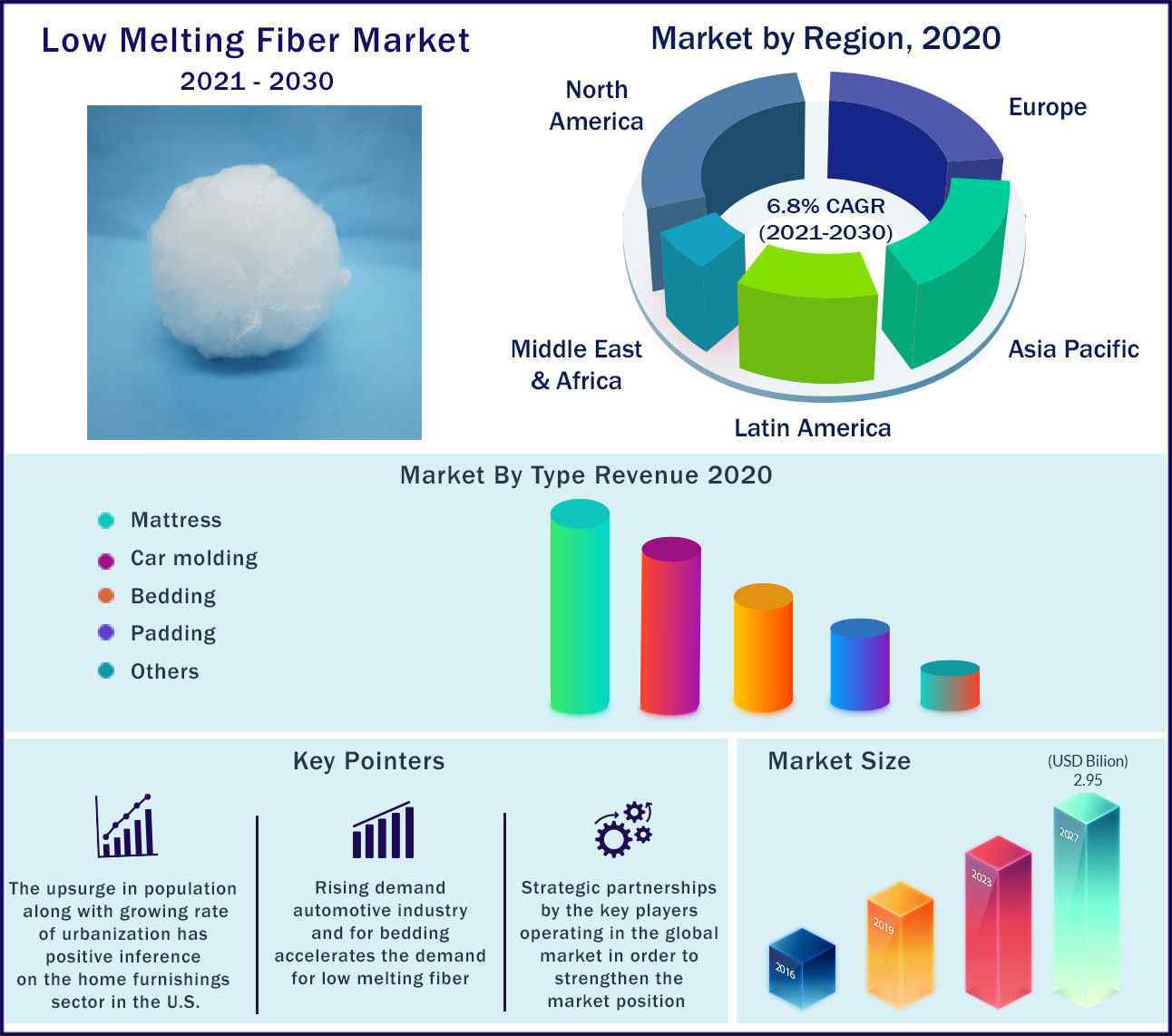
Among various applications of low-melting fiber, the mattress segment dominated the market in terms of both volume and value in 2020. Households and institutional and commercial sectors, such as education, hospitals, and the corporate segment, drive the high growth of the mattress segment. The development of the hospitality segment is helping to boost the advancement of the mattress market. There is an augmented requirement for mattresses that offer outstanding coziness and sound sleep. Non-woven low-melt fibers avert bedbug infestations; hence, they are widely employed in mattresses.
North America is estimated to be the largest market for low-melting fiber.
The low-melting fiber market research report covers crucial trends and predictions for low-melting fiber products across diverse geographical regions, such as North America, Asia-Pacific, Europe, Latin America, and the Middle East and Africa. China is the fastest-advancing segment for low-melting fiber across the globe. China accounted for a considerable share of the global low-melting fiber production in 2020. Furthermore, in 2016, it was the significant importer of low-melting fiber due to the growing textile and carpet sectors and intensifying construction activities. China produced over 20 million tons of low-melting fiber in 2010. China is the second-largest user of petroleum, and derivatives of petroleum distillation that are the feeder material for low-melting fiber are likewise accessible in huge quantities.
The North American market also offers noteworthy growth due to the speedy growth of home furnishing industries and the automotive sector. Further, the rising bedding sector, which is among the foremost sectors that employ low-metal fiber, drives the market demand in this region.
Some of the companies that are top players contending in the market:
- FiberVisions Corporation
- Kolon
- Huvis
- Hyosung
- Far Eastern New Century
- Dupont
- Toray Advanced Materials Korea
- RadiciGroup
- Mitsubishi Chemical
- Jiangnan High Polymer Fiber
- FiberVisions Corporation
- Nan Ya Plastics
- XiangLu Chemical Fibers
- Yangzhou Tianfulong
- Ningbo Dafa
- ECER
- Beaulieu
- VNPOLYFIBER
Currently, Huvis is the global leader and grasps over 30% market share in terms of production. Huvis is the largest polyester company in Korea and was formed in 2000 when Samyang Corporation and SK Chemical divided their fabric divisions. Currently, the world’s largest low-melt fiber company manufactures around 40% of low-melt fiber across the globe and exports to nearly 80 countries, such as those in North America and Europe. The global low-melting fiber sector has a high concentration. China and Korea, including Toray Chemical Korea, Huvis, Far Eastern New Century, XiangLu Chemical Fibers, and Nan Ya Plastics, are the main manufacturers.
Huvis, a leading key player in the global low-melting fiber industry, established its joint venture in the United States along with Indorama Ventures in the year 2018. We attribute this joint venture to our goal of achieving a leading position in the low-melting fiber industry in the near future.
VNPOLYFIBER plays a role as a new player who can cater to small and medium customers’ needs, as we take pride in our excellent customer service.
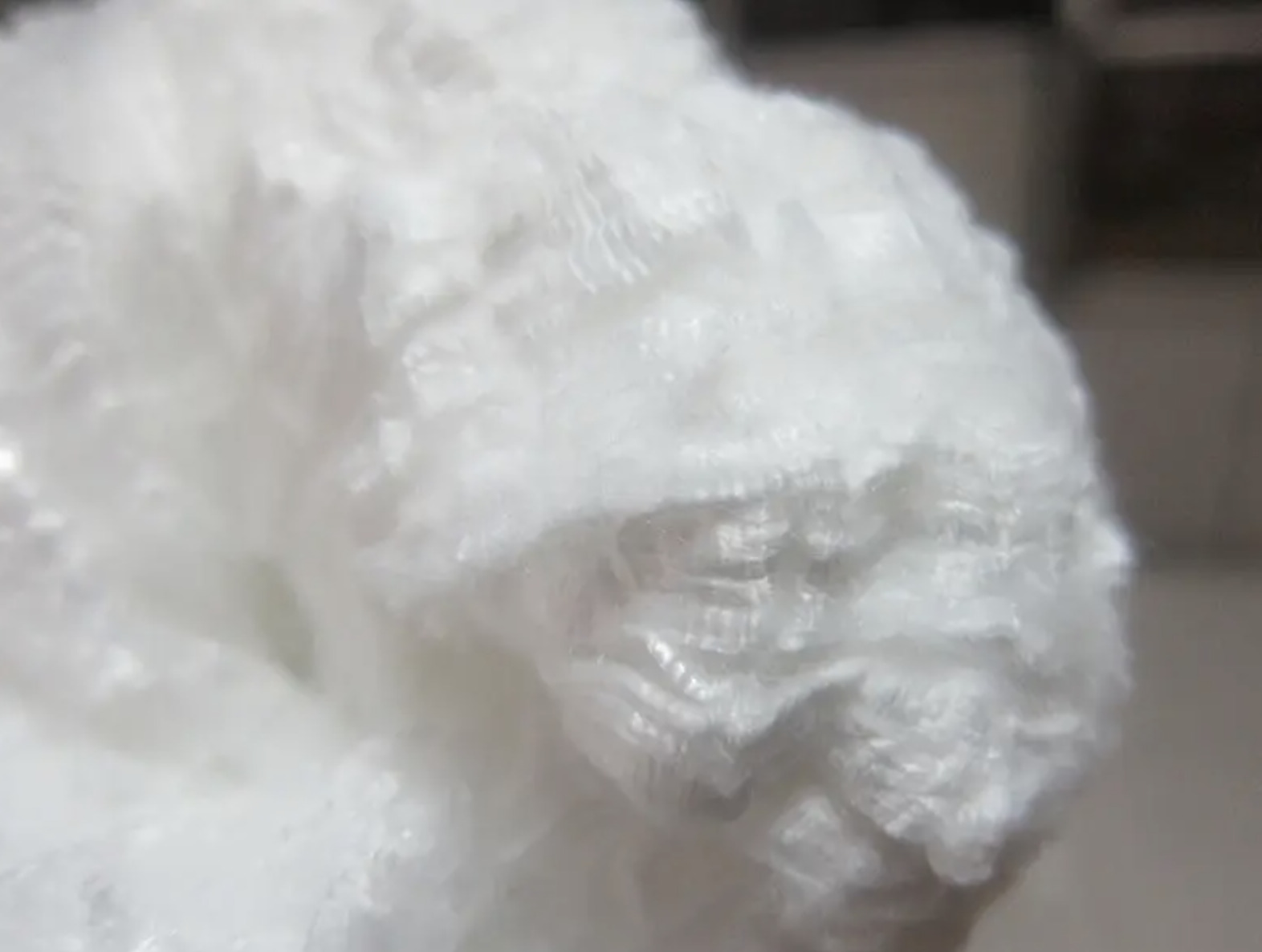
A photo of our low-melting fiber is below:
Major Market Segments Covered:
By Type
- Melting Point 130
- Melting Point > 130
By Application
- Mattress
- Automotive
- Construction
- Bedding
- Others
By Geography
- North America
- U.S.
- Canada
- Europe
- Germany
- France
- United Kingdom
- Rest of Europe
- Asia Pacific
- China
- Japan
- India
- Southeast Asia
- Rest of Asia Pacific
- Latin America
- Brazil
- Rest of Latin America
- Middle East & Africa (MEA)
- GCC
- North Africa
- South Africa
- Rest of Middle East & Africa
Global Bicomponent Fiber Market Report Segments:
The market is segmented by type (PE/PP, PE/PET, and Co-PET/PET) and by application (hygiene, textiles, automotive, and construction).
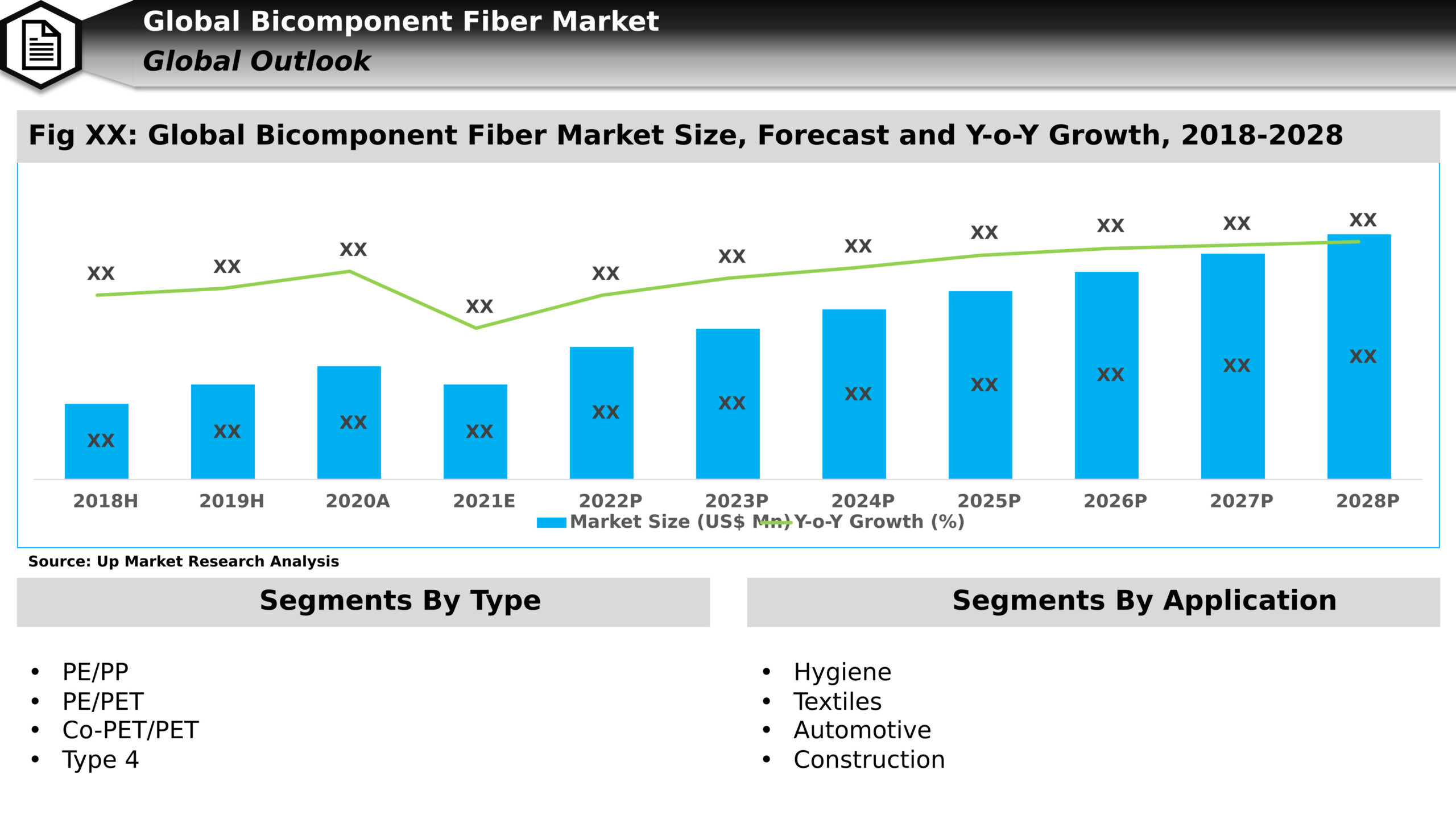
The Bicomponent Fiber Market research report closely monitors leading competitors, providing strategic analysis, micro- and macro-market trends and scenarios, pricing analysis, and a comprehensive overview of market conditions during the forecast period. It is a professional and detailed report, focusing on primary and secondary drivers, market share, leading segments, and geographical analysis. The report also reviews key players, major collaborations, mergers and acquisitions, as well as trending innovations and business policies.
Key Benefits for Industry Participants & Stakeholders:
- Industry drivers, restraints, and opportunities covered in the study
- Neutral perspective on the market performance
- Recent industry trends and developments
- Competitive landscape & strategies of key players
- Potential & niche segments and regions exhibiting promising growth covered
- Historical, current, and projected market size, in terms of value
- In-depth analysis of the Bicomponent Fiber Market
Overview of the regional outlook of the Bicomponent Fiber Market:
Bicomponent fibers, also known as conjugate fibers, are composed of two different fiber-forming polymers or similar fiber-forming polymers of different properties. Since the two components contained in the fiber complement each other, the performance of the composite fiber is generally superior to that of the conventional synthetic fiber and has various uses.
According to our latest study, the global market for bicomponent fibers was valued at USD 3,956 million in 2022 and is forecast to a readjusted size of USD 6,073.7 million by 2029 with a CAGR of 6.3 percent during the review period. We took into account the impact of COVID-19 and the Russia-Ukraine War when estimating market sizes.
The major manufacturers are concentrated in Korea and China, such as FiberVisions Corporation, Kolon, Huvis, Hyosung, Toray Chemical Korea, etc. At present, Huvis is the world leader, holding about 19 percent of the market share for production in 2019. VNPOLYFIBER can offer alternative bicomponent fiber options that are more affordable while still maintaining a high level of quality.
In 2019, China led the global market for bicomponent fiber consumption, accounting for about 38 percent of the world’s total consumption of this fiber.
Based on region, the market is segmented into North America, Europe, Asia Pacific, Latin America and the Middle East & Africa (MEA). The North American region is further bifurcated into countries such as the U.S. and Canada. The European region is further categorized into the U.K., France, Germany, Italy, Spain, Russia, and the Rest of Europe. Asia Pacific is further segmented into China, Japan, South Korea, India, Australia, Southeast Asia, and the Rest of Asia Pacific. The Latin America region is further segmented into Brazil, Mexico, and the Rest of Latin America, and the MEA region is further divided into GCC, Turkey, South Africa, and the Rest of MEA.
Highlights of The Bicomponent Fiber Market Report:
- The market structure and projections for the coming years.
- Drivers, restraints, opportunities, and current trends of the bicomponent fiber market.
- Historical data and forecast.
- Estimations for the forecast period 2028.
- Developments and trends in the market.
What are the types of bicomponent fibers available in the market?
- Co-PET/PET
- PE/PP
- PE/PET
What are the factors driving applications of the bicomponent fiber market?
- Hygiene
- Textiles
- Automotive
- Construction
Market scenario by region, sub-region, and country.
Market share of the market players, company profiles, product specifications, SWOT analysis, and competitive landscape.
Analysis regarding upstream raw materials, downstream demand, and current market dynamics.
The report also includes government policies and macro- & microeconomic factors.
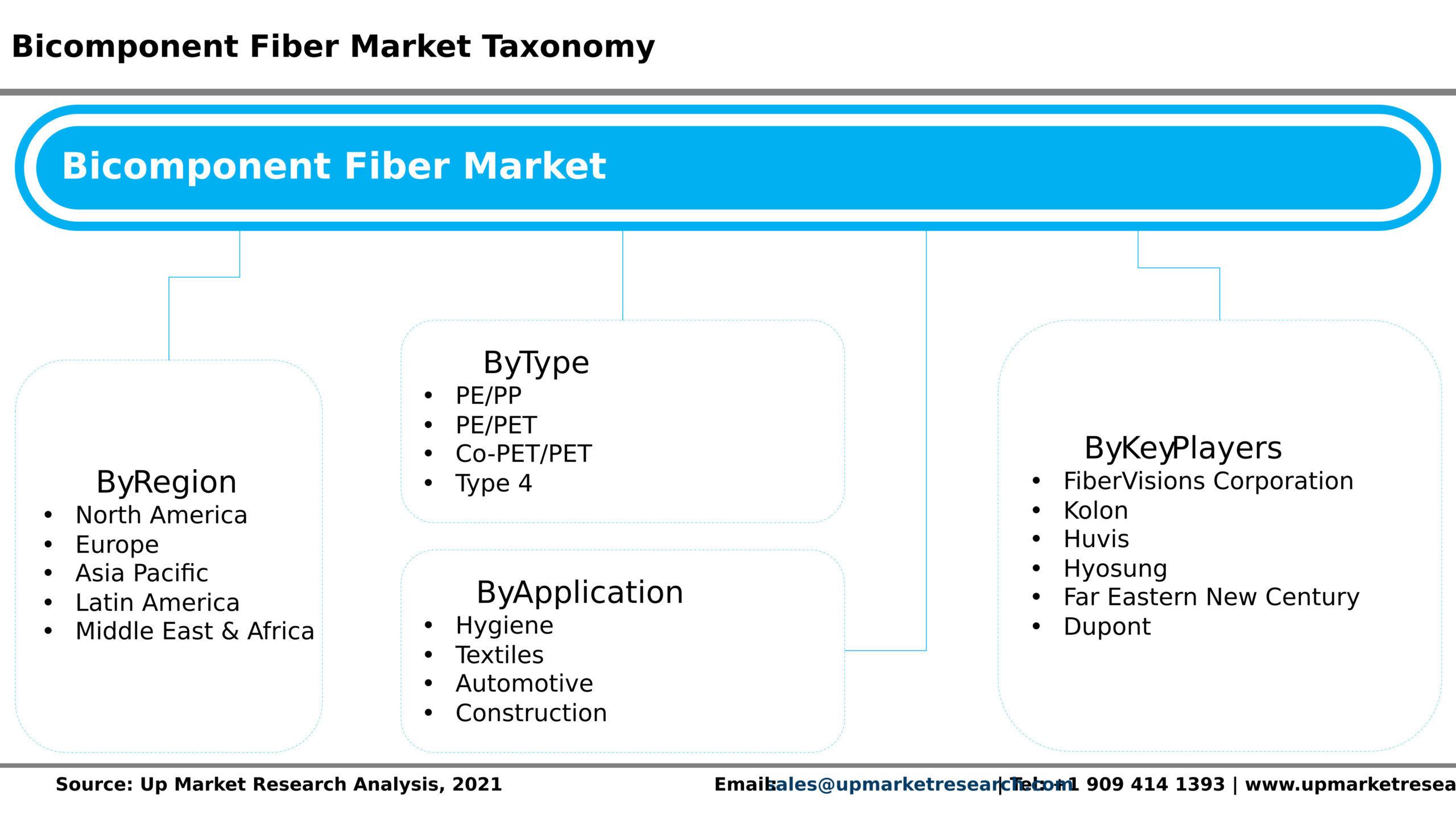
We have studied the Bicomponent Fiber Market from all angles. both primary and secondary research methodologies. This helped us build an understanding of the current market dynamics, the supply-demand gap, pricing trends, product preferences, consumer patterns, and so on. We further validated the findings through primary research with industry experts and opinion leaders across countries. The data is further compiled & validated through various market estimation & data validation methodologies. Further, we also have our in-house data forecasting model to predict market growth up to 2028.
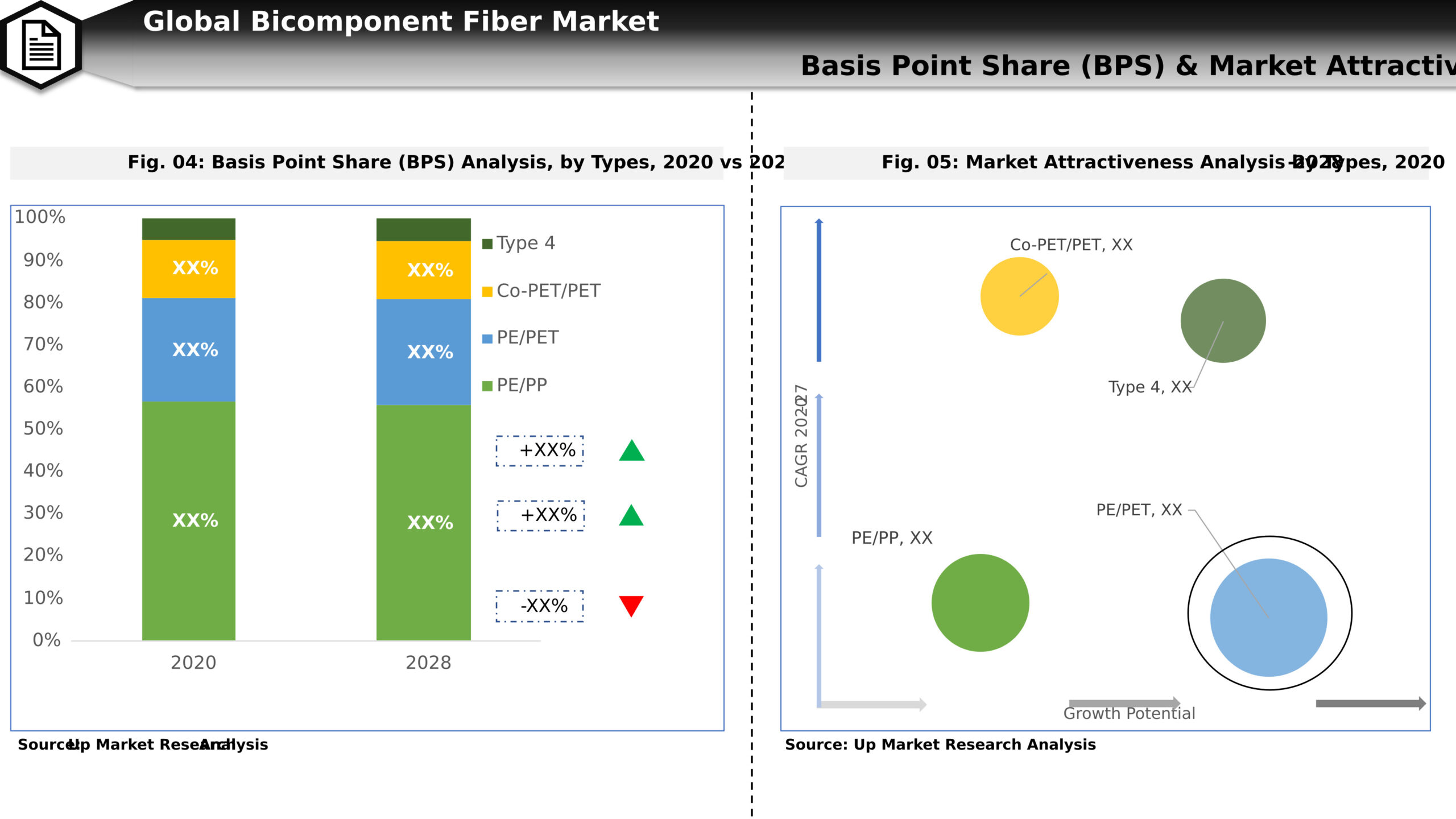
Which regions are leading the bicomponent fiber market?
North America
Europe
Asia-Pacific
Middle East and Africa
South America
If you want to buy low-melting fiber and bicomponent fiber, please feel free to contact us via email or WhatsApp. Our people will reply within 24 hours.