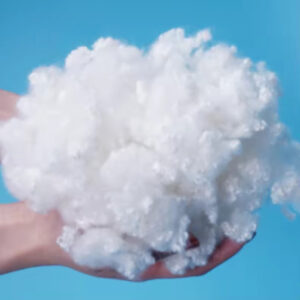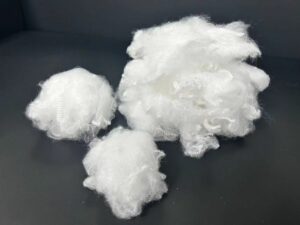
It feels like cotton. It drapes like silk. It breathes like linen. Yet viscose staple fiber—commonly known as rayon—is none of these things. It is a semi-synthetic fiber engineered from one of the most abundant natural materials on earth: wood pulp cellulose. And it is quietly one of the most important fibers in the global textile industry.
Viscose staple fiber (VSF) is the third most widely used fiber in the world after polyester and cotton, with global production exceeding 6 million tonnes annually. It is found in the T-shirt against your skin, the wet wipe in your bathroom cabinet, the lining of your jacket, the nonwoven fabric of a surgical mask, and the soft filling of a baby wipe. Its combination of natural cellulosic comfort properties with the processing flexibility of a synthetic fiber gives it a unique commercial position that no other material quite replicates.
But viscose also sits at the center of one of textiles’ most important sustainability debates—because the chemical process that transforms natural wood pulp into a silky, spinnable fiber has serious environmental implications when done poorly. This guide covers everything you need to know about viscose staple fiber: what it is, how it is made, its key properties, its full range of applications, how it compares to alternatives, and the genuine path toward cleaner, more sustainable viscose production.
What Is Viscose Staple Fiber (VSF)? A Clear Definition
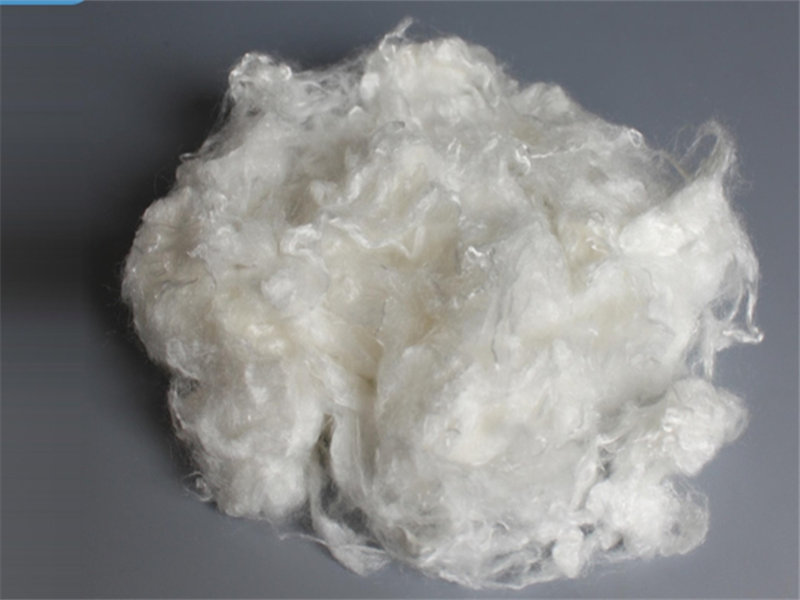
Viscose staple fiber (VSF) is a regenerated cellulose fiber—meaning it is derived from a natural cellulosic raw material (primarily wood pulp, but also bamboo, cotton linters, or sugarcane bagasse) that is dissolved into a liquid solution and then re-extruded through a spinneret into fiber form. The term ‘regenerated’ distinguishes it from truly natural fibers like cotton or wool (which grow directly as fibers in nature) and from fully synthetic fibers like polyester or nylon (which are made entirely from petrochemicals).
The fiber is called ‘viscose’ after the viscous, honey-like liquid intermediate—cellulose xanthate dissolved in caustic soda—that is formed during the manufacturing process. ‘Rayon’ is the alternative name used primarily in North America and some Asian markets. ‘Staple fiber’ refers to the cut-length format of the fiber—individual short strands of defined length (typically 32–51 mm for textile applications) that must be spun into yarn, as opposed to continuous filament viscose (viscose filament yarn), which is not cut.
Viscose staple fiber sits at a unique crossroads: it has the comfort and breathability of a natural fiber (cotton-like absorbency, silk-like drape, and linen-like breathability) with the production flexibility and dyeability of a manufactured fiber—making it highly valued across apparel, home textiles, and nonwoven applications.
The global VSF market was valued at approximately 6,295 thousand tonnes in 2024 and is projected to grow at a compound annual growth rate of 5.77% through 2035, driven by rising demand for sustainable fiber alternatives to synthetic polyester and expanding hygiene product markets across Asia-Pacific.
How Is Viscose Staple Fiber Made? The Manufacturing Process
The production of viscose staple fiber is a multi-stage chemical process that transforms solid wood pulp into a liquid, then re-solidifies it as a continuous filament, which is cut into staple fiber length. Each stage of the process has meaningful implications for the fiber’s quality and the environmental footprint of production.
Stage 1: Cellulose Extraction and Purification
The process begins with wood pulp — typically sourced from fast-growing plantation trees such as eucalyptus, beech, pine, or bamboo. The pulp must be of high cellulose purity (typically 90%+ alpha-cellulose content) to produce quality fiber. Lower-purity pulp produces weaker fiber with inconsistent properties. The quality and sustainability of pulp sourcing are the first—and arguably most important—environmental decision points in VSF production.
Stage 2: Steeping in Caustic Soda — Creating Alkali Cellulose
The purified cellulose sheets are immersed in a caustic soda (sodium hydroxide) solution—a process called mercerization or steeping. This converts the cellulose into sodium cellulose, or ‘alkali cellulose. ‘The alkali cellulose is then pressed to remove excess caustic soda, producing sheets called ‘white crumb. ‘ Pressing is carefully controlled—the amount of caustic soda retained in the white crumb affects the molecular weight of the final fiber and therefore its strength and elongation properties.
Stage 3: Aging
The white crumb is aged in a controlled environment—exposed to oxygen at specific temperature and humidity conditions for a defined period. Aging reduces the degree of polymerization (chain length) of the cellulose to a level that will give the optimal viscosity for spinning. Precise control of aging conditions is critical for batch-to-batch consistency of fiber properties.
Stage 4: Xanthation — The Critical Carbon Disulfide Step
The aged white crumb is reacted with carbon disulfide (CS₂) in a sealed reactor, converting the alkali cellulose into cellulose xanthate—an orange-yellow compound called ‘yellow crumb.’ This is the most chemically significant and environmentally critical step in the viscose process. Carbon disulfide is a volatile, toxic chemical that must be carefully controlled and recovered during production. Inadequate recovery of CS2 during this stage is the primary source of the air and water pollution that has historically plagued viscose mills with poor environmental controls.
Stage 5: Dissolution — Creating the Viscose Solution
The yellow crumb is dissolved in a dilute caustic soda solution to create the viscose solution—a thick, amber-colored, viscous liquid (hence the name ‘viscose’) with the consistency of honey. This solution is filtered to remove undissolved particles and de-aerated (vacuum-treated to remove gas bubbles) before spinning. The ripening of the viscose solution during this stage continues to adjust its viscosity and reactivity to optimal spinning conditions.
Stage 6: Wet Spinning Through Spinnerets
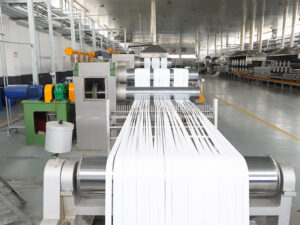
The viscose solution is pumped through spinnerets—metal plates containing thousands of tiny holes—directly into a coagulation bath containing sulfuric acid, sodium sulfate, and zinc sulfate. As the viscose solution contacts the acid bath, a chemical reaction regenerates the cellulose—the xanthate groups are cleaved off and the cellulose re-solidifies into continuous filaments. The diameter of the spinneret holes determines the fiber’s denier (fineness). The filaments from many spinnerets are gathered into a large tow bundle for subsequent processing.
Stage 7: Stretching, Washing, Cutting, and Finishing
The coagulated tow is mechanically stretched to orient the cellulose chains and develop tensile strength, then washed thoroughly in multiple stages to remove residual sulfuric acid, sulfate salts, and carbon disulfide. Desulfurization removes residual sulfur compounds. Bleaching (with hydrogen peroxide or sodium hypochlorite) produces the bright white color required for most textile applications. Softening agents are applied to improve fiber processability. Finally, the continuous tow is cut to the target staple length—typically 32–38 mm for spinning applications and 38–51 mm for nonwoven applications—and dried to the specified moisture content before baling.
Key Properties of Viscose Staple Fiber
VSF’s commercial success is rooted in a combination of comfort properties derived from its cellulosic origin and processing flexibility derived from its manufactured character. Here are the defining properties that make VSF valuable across so many applications:
Property | Detail & Significance |
Moisture Absorption | VSF absorbs 11–12% moisture by weight at standard conditions — significantly more than polyester (0.4%) and comparable to cotton (8%). This high absorbency gives VSF its comfortable, non-clammy feel against skin. |
Breathability | The cellulose fiber structure allows excellent air circulation, making VSF fabrics cooler and more comfortable than polyester equivalents—particularly important in warm climates and active wear. |
Softness and Drape | VSF fibers are naturally smooth and soft, producing fabrics with excellent drape—the ability to flow and conform to body contours. This silk-like drape is one of VSF’s most commercially valued aesthetic properties. |
Dyeability | VSF accepts reactive and direct dyes with exceptional ease—producing vibrant, deep colors with high fastness ratings. Its dyeability is superior to cotton and dramatically better than polyester. |
Antistatic Properties | Unlike polyester, VSF does not accumulate static electricity—an important comfort and processing advantage in textile applications. |
Biodegradability | VSF is fully biodegradable — being a regenerated cellulose, it is susceptible to the same microbial enzymes that break down natural cellulosic fibers. This is a meaningful end-of-life advantage over synthetic alternatives. |
Blendability | VSF blends well with cotton, wool, polyester, and other fibers—each blend combination producing distinct property improvements (VSF+cotton for improved drape; VSF+polyester for wrinkle resistance; VSF+wool for softness and luster). |
Wet Strength | VSF loses approximately 50–60% of its tensile strength when wet—a known limitation that affects its suitability for applications subject to mechanical stress when wet. High Wet Modulus (HWM) viscose grades are engineered to address this limitation. |
Denier Range | VSF is produced across a wide denier range — 1.2D (very fine, for ultra-soft textiles and hygiene products) to 6D and above (for nonwoven applications). Fine denier VSF (1.2–1.5D) is the dominant specification for apparel. |
Types of Viscose Fiber: From Standard to Specialty Grades
Not all viscose fiber is the same. The VSF family includes several distinct grades and variants, each engineered for specific applications:
Regular/Standard Viscose Staple Fiber
Standard VSF — the most widely produced grade — is a bright white, soft, highly absorbent fiber used in mainstream apparel, home textiles, and standard nonwoven applications. Available in a range of deniers (1.2D–6D) and staple lengths (32–51 mm), it is the workhorse of the viscose fiber market, accounting for approximately 60% of global VSF production.
High Wet Modulus (HWM) Viscose — Modal Fiber
High wet modulus viscose—commercially known as Modal—is a refined grade engineered to retain significantly more of its strength when wet (typically 80–90% of dry strength, versus 40–50% for standard VSF). This is achieved through modifications to the spinning process that produce a fiber with higher cellulose crystallinity and a denser fiber structure. Modal fiber is softer, finer, and more durable than standard VSF, making it the premium choice for intimate apparel, sportswear, and bed linen where repeated laundering is required. Lenzing’s Modal is the most recognized brand in this category.
Lyocell Fiber (Tencel)
Lyocell is a distinct generation of cellulosic fiber that uses a fundamentally different, closed-loop solvent spinning process—using N-Methylmorpholine N-oxide (NMMO) rather than carbon disulfide—that recovers more than 99% of the solvent for reuse, producing virtually no chemical waste stream. Lyocell is significantly more environmentally benign in production than standard viscose and produces a fiber with superior wet strength, a unique fibrillation character that creates peach-skin surface effects, and excellent biodegradability. Tencel (by Lenzing) is the dominant commercial brand. Lyocell is positioned as a premium, sustainable alternative to both standard VSF and cotton.
Bamboo Viscose
Bamboo viscose is produced by the same viscose process as wood-pulp VSF, but using bamboo pulp as the cellulose source. The bamboo plant itself is highly sustainable — it grows rapidly without pesticides or irrigation, sequesters carbon efficiently, and regenerates naturally from its root system after harvest. However, the viscose process used to convert bamboo pulp into fiber uses the same carbon disulfide chemistry as standard wood-pulp viscose, with the same potential for pollution if not properly controlled. A product labeled ‘bamboo’ fabric or fiber is almost invariably produced by the viscose process—and should be evaluated on the environmental standards of the producing mill, not just the bamboo plant’s sustainability credentials.
Colored / Dope-Dyed Viscose
Dope-dyed viscose — in which pigments or dyes are added to the viscose solution before spinning, rather than dyeing the fiber after production — produces deeply colored, highly colorfast fiber without a separate dyeing step. This eliminates the water consumption and chemical use of the dyeing process, producing a fiber with excellent light fastness, wash fastness, and color uniformity at significantly lower environmental cost than conventionally dyed VSF.
Applications of Viscose Staple Fiber
VSF’s unique combination of cellulosic comfort properties, processing versatility, and cost position makes it valuable across a remarkably broad range of applications:
Apparel and Fashion
Apparel is the largest single market for VSF, accounting for approximately 70% of global consumption. VSF is used in dresses, blouses, skirts, T-shirts, underwear, linings, and knitwear — wherever a soft, breathable, fluid-draping fabric is desired at a price point below silk or premium cotton. VSF’s excellent dyeability enables the rich, vibrant colors favored in fashion apparel, and its ability to blend with cotton, polyester, and elastane allows manufacturers to engineer specific performance profiles for different garment types.
The underwear and intimate apparel segment is particularly significant for fine-denier VSF—its softness, breathability, and moisture management make it highly valued for skin-contact garments where comfort is the primary purchasing criterion.
Home Textiles
VSF is used in bedding (sheets, pillowcases, duvet covers), curtains, upholstery fabrics, and decorative textiles where its drape, softness, and dyeability add aesthetic and comfort value. VSF-cotton blends are common in mid-range bedding products, offering improved drape and softness compared to 100% cotton at a comparable cost.
Hygiene and Nonwoven Products
The hygiene and nonwoven sector is the fastest-growing market for VSF. Its combination of high absorbency, biodegradability, and skin safety makes VSF the preferred fiber for wet wipes, dry wipes, baby wipes, cosmetic cotton pads, facial masks, feminine hygiene products, and adult incontinence products. The fiber is ideal for hydroentangled (spunlace) nonwoven production — the wet-laid or dry-laid fiber webs bond readily under high-pressure water jets to produce soft, strong wipes with the excellent absorbency required for hygiene applications.
Biodegradability is a particularly important attribute in this segment: with regulatory pressure growing in Europe and other markets to ban or restrict non-biodegradable single-use wet wipes (primarily those made from polyester), VSF’s natural biodegradability is a powerful commercial differentiator. VSF-based wet wipes break down readily in composting and some sewage treatment conditions — a genuine end-of-life advantage over synthetic alternatives.
Medical Textiles
VSF’s high absorbency, softness, and biodegradability are valued in medical and healthcare textile applications, including wound dressings, surgical gauze, medical swabs, and cotton wool substitutes. High-purity VSF grades, processed without residual chemical contamination, are used in products that contact wounds or are applied to sensitive skin. The fiber’s cellulosic origin makes it biocompatible — less likely to cause skin reactions than synthetic alternatives.
Industrial and Technical Applications
In industrial applications, VSF is used in specialty filtration media, technical felts, reinforcement fibers for composite materials, and absorbent industrial wipers. The fiber’s low VOC content and biodegradability are advantages in some industrial filtration and environmental remediation applications.
VSF vs. Cotton vs. Polyester vs. Lyocell: How Do They Compare?
Property | VSF (Viscose) | Cotton | Polyester | Lyocell |
Softness | ★★★★★ | ★★★★☆ | ★★★☆☆ | ★★★★★ |
Drape | ★★★★★ | ★★★☆☆ | ★★☆☆☆ | ★★★★★ |
Breathability | ★★★★☆ | ★★★★★ | ★★☆☆☆ | ★★★★☆ |
Moisture absorption | ★★★★☆ | ★★★★★ | ★☆☆☆☆ | ★★★★☆ |
Wet strength | ★★☆☆☆ | ★★★★☆ | ★★★★★ | ★★★★☆ |
Wrinkle resistance | ★★☆☆☆ | ★★☆☆☆ | ★★★★★ | ★★★☆☆ |
Dyeability | ★★★★★ | ★★★★☆ | ★★★☆☆ | ★★★★★ |
Biodegradability | ★★★★★ | ★★★★★ | ★☆☆☆☆ | ★★★★★ |
Production env. impact | ★★☆☆☆ | ★★★☆☆ | ★★☆☆☆ | ★★★★☆ |
Cost | $$ | $$$ | $ | $$$$ |
The Sustainability of Viscose: Honest Assessment
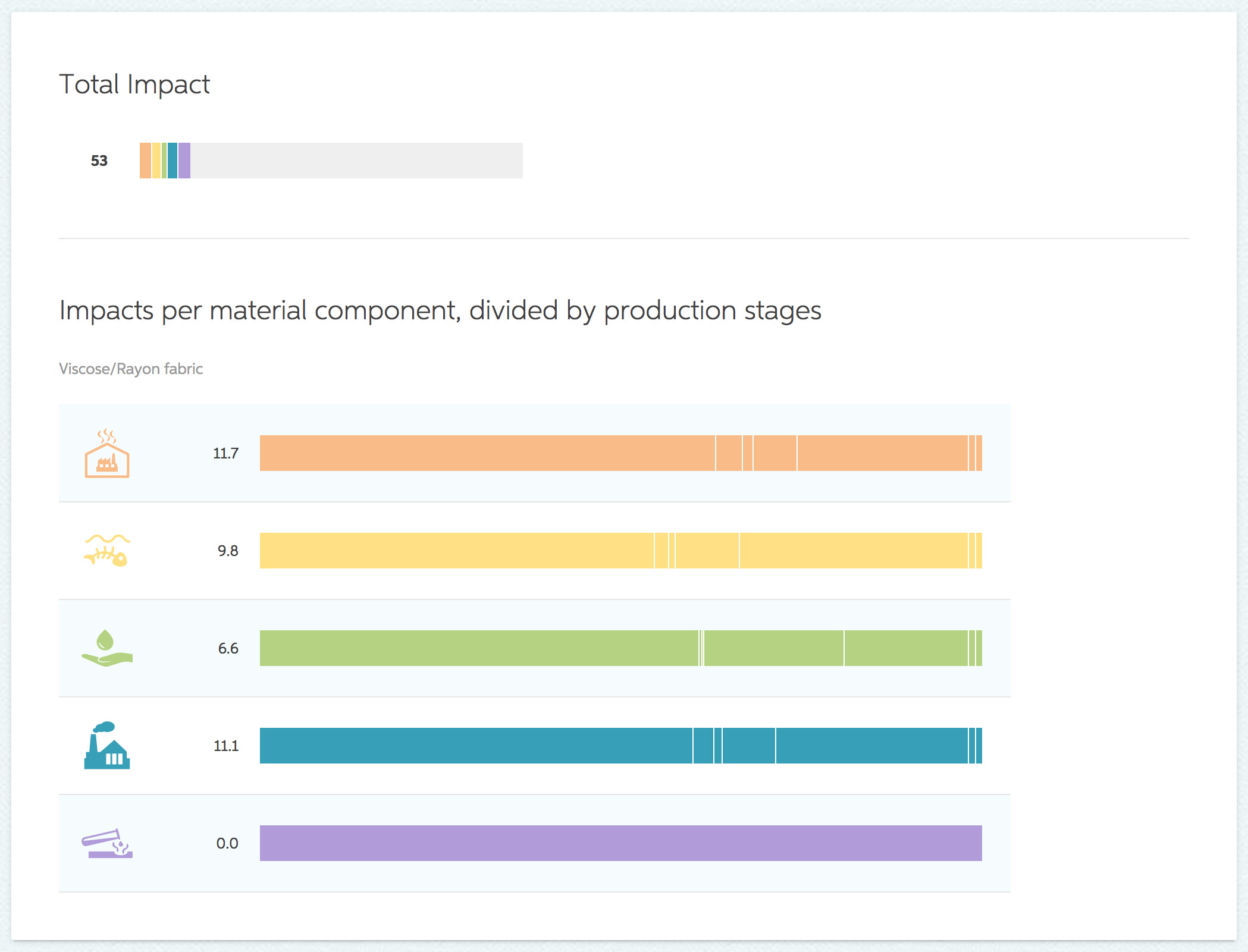
Viscose staple fiber presents one of the textile industry’s most nuanced sustainability stories. Its cellulosic origin gives it genuine environmental advantages over synthetic fibers. But its chemical production process—when practiced poorly—creates serious pollution problems. The honest picture requires acknowledging both sides.
The Environmental Challenges of Conventional Viscose
- Pulp sourcing from endangered forests: According to the environmental organization Canopy, approximately half of the 6.5 million tons of viscose pulp produced annually has historically been sourced from ancient and endangered forests—including peatlands and old-growth boreal forests—threatening biodiversity and carbon storage.
- Carbon disulfide toxicity: CS₂ is a volatile, toxic chemical. Workers exposed to high concentrations face risks of neurological damage. Poorly controlled emissions pollute surrounding communities. The viscose process can be run with high CS₂ recovery (>95%)—but this requires investment in closed-loop equipment that not all mills have made.
- Wastewater pollution: Mills without adequate wastewater treatment discharge untreated or inadequately treated effluent containing residual chemicals, heavy metals (including zinc from the spin bath), and sulfur compounds into waterways. Documented cases of severe water pollution from viscose mills in China, India, and Indonesia have attracted significant regulatory and NGO attention.
- Higher greenhouse gas emissions: VSF production generates more greenhouse gas emissions than cotton growing on a per-kilogram basis, primarily from the energy-intensive chemical processing stages.
The Path to Cleaner Viscose
The encouraging reality is that viscose can be produced cleanly. Closed-loop production systems that recover and reuse CS2 at high efficiency (>95%), combined with modern wastewater treatment infrastructure, can reduce VSF’s environmental impact dramatically. The market concentration of viscose production—just 10 producers make 80% of global VSF—means that a relatively small number of facilities upgrading to best-available technology could transform the industry’s overall environmental profile.
- CanopyStyle: The environmental nonprofit Canopy has secured commitments from brands and viscose producers to eliminate sourcing from ancient and endangered forests and to increase use of alternative raw materials, including agricultural residues and recycled textiles.
- Lenzing EcoVero: Lenzing’s EcoVero viscose brand is produced to verified environmental standards—using certified sustainable wood sources, a closed-loop production process, and full supply chain transparency—achieving a significantly lower carbon and water footprint than standard viscose.
- Birla Eco Viscose: Aditya Birla Group’s Liva brand uses wood from sustainably managed forests and has committed to improving manufacturing environmental standards across its mills.
- Lyocell as a benchmark: Lenzing’s Tencel lyocell process demonstrates that cellulosic fiber production can be genuinely closed-loop—recovering >99% of solvent—setting the environmental benchmark that viscose producers should be measured against.
Key Certifications to Look For
- FSC (Forest Stewardship Council): Certifies that wood pulp used in viscose production comes from responsibly managed forests—addressing the pulp sourcing concern.
- ECOVERO / Lenzing Verified: Lenzing’s own brand certification for viscose produced to verified environmental standards, including pulp source, chemical recovery, and carbon footprint.
- Oeko-Tex Standard 100: Certifies the absence of harmful chemical residues in the finished fiber—important for skin-contact applications.
- GOTS (Global Organic Textile Standard): For VSF blended with certified organic cotton or other organic fibers; covers processing standards.
- Bluesign: A responsible production standard covering chemical management, resource efficiency, and worker safety across the VSF production chain.
The Future of Viscose Staple Fiber
The VSF market is evolving on multiple fronts simultaneously—driven by sustainability pressure, technological innovation, and shifting demand patterns:
- Next-generation cellulosics: Beyond lyocell, new processes are emerging that use alternative solvents (ionic liquids, deep eutectic solvents) to dissolve and re-spin cellulose with even lower environmental impact than the Lyocell NMMO process.
- Recycled cellulosic feedstocks: Companies including Renewlane, Evrnu, and Infinited Fiber are commercializing processes that dissolve used cotton and viscose textiles and re-spin them into new cellulosic fiber—creating a circular raw material stream that reduces dependence on virgin wood pulp.
- Hygiene market growth: The global wet wipe and hygiene product market is expanding rapidly across Asia-Pacific and emerging economies, creating sustained demand growth for biodegradable VSF in nonwoven applications.
- Lyocell-VSF hybrid products: Blending VSF with lyocell or bamboo cellulose in nonwoven applications creates value-added products with improved performance and a stronger sustainability story than standard VSF alone.
- Regulatory tailwinds: EU regulations restricting non-biodegradable wet wipes and growing extended producer responsibility (EPR) frameworks for textiles are creating regulatory pull for biodegradable VSF over polyester in key application segments.
Conclusion: Viscose Staple Fiber’s Enduring Importance
Viscose staple fiber occupies a unique and commercially irreplaceable position in the global fiber market—combining the comfort properties of natural cellulosic fibers with the production flexibility and cost position of a manufactured fiber. Its softness, drape, breathability, absorbency, biodegradability, and exceptional dyeability give it advantages that synthetic alternatives cannot fully replicate and that natural cotton and linen cannot always match in drape and production efficiency.
The sustainability challenges of conventional viscose are real and must be taken seriously by producers, brands, and buyers. But they are not inherent to the fiber’s cellulosic chemistry—they are consequences of inadequate chemical management and pulp sourcing practices that can be, and are being, addressed. Choosing VSF from producers who invest in closed-loop chemical recovery, sustainably certified pulp, and transparent supply chains is the most direct way to access VSF’s genuine comfort and biodegradability advantages while minimizing its environmental footprint.
For textile manufacturers, nonwoven producers, and apparel brands seeking to reduce their dependence on petroleum-derived synthetic fiber without sacrificing comfort or performance, high-quality, responsibly produced viscose staple fiber—and its more advanced cousins Modal and Lyocell—represent the most commercially mature and scalable sustainable cellulosic fiber options available today.
The world’s top viscose fiber manufacturers in 2026:
VNPOLYFIBER is a prominent exporter of viscose staple fiber from China, providing high-quality products to esteemed buyers worldwide. Our Viscose Staple Fiber is available in different deniers, such as 1.2D, 1.4D, and 1.5D, with cut lengths ranging from 32mm to 36mm. It can be supplied in raw white or in various colors and packaged in bales, meeting the specifications of the best-quality VSF from China.
Below is a list of viscose fiber factories that VNPOLYFIBER is working with:
Allmed Medical Products Co., Ltd.
Anhui Hanlian Color Spun Co., Ltd.
Anhui Golden Spring Nonwoven Fabrics Co., Ltd.
Anhui Yuhua Textile Limited Company
Bazhou Jinfu Special Yarn Industry Co., Ltd.
Bofin Textile Co., Ltd.
Changzhou Texhong Textile Co., Ltd.
Dalian Ruiguang Nonwoven Group Co., Ltd.
Great United New Material (Suzhou) Co., Ltd.
Da Yuan Development Non-Woven Fabric Tian Jin Co., Ltd.
Danyang Dansheng Textile Co., Ltd.
Dezhou Aiku Import and Export Co., Ltd.
Dezhou Hengfeng Group Co., Ltd.
De Zhou Hua Yuan Eco-Technology Co., Ltd.
Eastex Industrial Science and Technology Co., Ltd.
Fuding Aolaite Nonwoven Co., Ltd.
Fujian Changle Jinyuan Textile Co., Ltd.
Fujian Long Yuan Textile Co., Ltd.
Fujian Nanfang Textile Co., Ltd.
Fujian Sanming Textile Co., Ltd.
Fujian Changle Second Cotton Textile Factory
Fujian Changle Changyuan Textile Co., Ltd.
Fujian Changle Jinyuan Textile Co., Ltd.
Fujian Changle Zhengxin Textile Co., Ltd.
Fujian Shunyuan Textile Co., Ltd.
Fujian Xiangyuan Textile Co., Ltd.
Fujian Yi Lai Shi Ye Co., Ltd.
Fujian Changle Changyuan Textile Co., Ltd.
Fuzhou Development Zone Zhengtai Textile Co., Ltd.
Fuzhou Xianglong Textile Co., Ltd.
Fuxin Fu Zhi Yuan Textile Co., Ltd.
Gaoan Wei Xin Textile Co., Ltd.
Hainan Xinlong-Nonwovens Inc., Ltd.
Hangzhou Chun Hui Textile Co., Ltd.
Hangzhou Da Jia Textile Co., Ltd.
Hangzhou Dong Feng Textile Co., Ltd.
Hangzhou Guo Jin Textile Co., Ltd.
Hangzhou Hongfeng Textile Group Co., Ltd.
Hangzhou Nbond Nonwovens Co., Ltd.
Hangzhou Xiaoshan Linfen Textile Co., Ltd.
Hangzhou X-Yuan Spinning Co., Ltd.
Hangzhou Yi Jing Textile Co., Ltd.
Hebei Xue Yang Textile Co., Ltd.
Henan No. 1 Textile Co., Ltd.
Henan Pingmian Textile Group Co., Ltd.
Henan Yuzhou Shenyu Textile Co., Ltd.
HENGFENG GROUP
Hongyang Holding Group Co., Ltd.
High-tech branch of Hunan Yunjin Group Co., Ltd.
Huafu Fashion Co., Ltd.
Huixian Jinyu Textile Co., Ltd.
Jilin Four Seasons Harvest Textile Co., Ltd.
Jihua 3542 Textile Co., Ltd.
Jiamusi Tian He Textile Co., Ltd.
Jiaxing Heng Rui Textile Co., Ltd.
Jiaxing Tianzhihau Textile Co., Ltd.
Jiangsu Bao Da Textile Co., Ltd.
Jiangsu Dasheng Group Co., Ltd.
Jiangsu Dong Hua Textile Co., Ltd.
JIANGSU JIN MILAN TEXTILE CO., LTD.
Jiangsu Kangni Group Co., Ltd.
Jiangsu Shazhou Printing And Dyeing Group
Jiangsu Tianhua Color Spinning Co., Ltd.
JINLAN TOP DYED MELANGE
Jiangsu Xinfu Fiber Technology Co., Ltd.
JIANGSU YDTEX GROUP CO., LTD.
Jiangxi Da Jia Natural Special Fiber Co., Ltd.
HUA CHUAN COLORED SPINNING TEXTILE Co., Ltd.
Jiangsu Jinyuan Textile Co., Ltd.
Jiangyin Shuang Yuan Nonwoven Co., Ltd.
Jiangyin Tian Hua Yarn Co., Ltd.
Wujiang Jingyi Special Fiber Co., Ltd.
Jingzhou AODA Textile Co., Ltd.
Lan Sha Suzhou Technology Co., Ltd.
Linz Textile Holding Co., Ltd.
Linyi Kaihang Nonwovens New Material Co., Ltd.
Linyi Jinling Textile Co., Ltd.
Shandong Mengyin Huifeng Textile Co., Ltd.
Nantong Textile Group Co., Ltd.
Nantong Shuanghong Textile Co., Ltd.
Nanyang Textile Group Co., Ltd.
Ningxia Ruyi Technology & Fashion Industry Co., Ltd.
Peixian Longsheng Textile Co., Ltd.
Peixian New Silk Road Textile Co., Ltd.
Qilu Hongye Textile Group Co., Ltd.
Qingdao Textile Group Co., Ltd.
Qingzhou Yinlong Textile Co., Ltd.
Quanzhou Ming Hen Textile Co., Ltd.
Rugao City Dingyan Textile Co., Ltd.
Shandong Binzhou Jinyuan Textile Co., Ltd.
Shandong Chaoyue Textile Co., Ltd.
Dahai Group Co., Ltd.
Shandong Derun New Material Technology Co., Ltd.
Shandong Dashing Cashmere Textile Co., Ltd.
Shandong Heyue Nonwoven Material Co., Ltd.
Shandong Hongtai Textile Technology Co.,Ltd.
Shandong Longhua Textile Co., Ltd.
Shandong Huaxing Textile Group Co., Ltd.
Shandong Long Run Textile Co., Ltd.
Shandong Mengyin Huifeng Textile Co., Ltd.
Shandong Mingsheng Textile (Group) Co., Ltd.
Shandong Ruyi Technology Group Co.,Ltd.
Shandong Gaomi Kangtai Textile Co., Ltd.
Shandong Yongxin Nonwoven Material Co., Ltd.
Shandong Shenghe Textile Co.,Ltd.
Shandong Shuaike New Material Technology Co., Ltd.
Shandong Wenshang Ruyi Runfa Textile Co., Ltd.
Shandong Xinguang Co.,Ltd.
Shandong Yanggu Shunda Textile Co., Ltd.
Shandong Zhenkai New Material Co.,Ltd.
Shanghai Textile Group Dafeng Textile Co., Ltd.
Shaoxing Chengsheng Textile Co., Ltd.
Shaoxing Weisheng Color Spinning Co., Ltd.
Shaoxing Shujieya Nonwoven Material Co., Ltd.
Siping Xingda Textile Co., Ltd.
Su Zhou Pu Re-Fiber Textile Technology Co., Ltd.
Suzhou Sishon Bio-Cellulose Co., Ltd.
Suzhou Shunjie Spunlaced Composite Material Co., Ltd.
Suzhou Yongjinda Textile Co., Ltd.
Su Zhou Zhenlun Spinning Co., Ltd.
Texhong Textile Group Co., Ltd.
Taifeng Textile Co., Ltd.
Weiqiao Textile Co., Ltd.
Weifang Hengjin Nonwoven Material Co., Ltd.
Wuxi Si-Mian Textile Co., Ltd.
Wuxi No.1 Cotton Mill Textile Group Co., Ltd.
Wujiang Jingyi Special Fiber Co., Ltd.
Wujiang City Zhenzhou Air-Jet Loom Factory
Five Rings (Group) Shareholding Co., Ltd.
Wuhan Yudahua Textile and Garment Group Co., Ltd.
Xiajin Fengrun Co., Ltd.
Xiajin Ruixin Textile Co., Ltd.
Xinhuayuan Textile Co., Ltd.
Xin Jiang Fulizhenlun Spinning Co., Ltd.
Xinxiang Guanghua Textile Co., Ltd.
Xinxiang Longbo Textile Co., Ltd.
Xuzhou Huasheng Textile Co., Ltd.
Xuzhou Jiaxin Textile Co., Ltd.
Xuzhou Jinye Textile Technology Co., Ltd.
Yichun Jiayi Textile Co., Ltd.
Yibin Boyang Textile Technology Co., Ltd.
Intel-Tex (Suzhou) New Textile Materials Technology Co., Ltd.
Binzhou Yuyue Home Textile Co., Ltd.
Far Spinning Industry (Wuxi) Co., Ltd.
Zhangjiagang Hezhong Textile Co., Ltd.
Zhangjiagang Zhongshi Textile Co., Ltd.
Changchun Oriental Textile Group Co., Ltd.
Zhejiang Bailian Nonwoven Technology Co., Ltd.
Zhejiang Chunyuan Technology Textiles Co., Ltd.
Zhejiang Dongfei Textile Co., Ltd.
Zhejiang Hongyang Nonwoven Material Co.,Ltd.
Weida Textile Group Co., Ltd.
Husheng Non-Woven Fabric Co., Ltd.
Zhejiang Jinfan Textile Co., Ltd.
Zhejiang Junfei Textile Co., Ltd.
Zhejiang Longyouanda Textile Co., Ltd.
Zhejiang Mingshengda Medical Technology Co., Ltd.
Zhejiang Senlong Textile Co., Ltd.
Zhejiang Wang Jin Nonwovens Co.,Ltd.
Hangzhou Zhengda Textile Co., Ltd.
Zhucheng Fufu Textile Technology Co., Ltd.
Chinatex G-Way Textiles Co., Ltd.
Zibo Yinshilai Textile (Group) Co., Ltd.