One year ago, Textile Exchange challenged over 50 textile, apparel, and retail companies, including Adidas, H&M, Gap, and Ikea, to increase their use of recycled polyester by 25 percent by 2020. The challenge was successful, and last month, the organization issued a statement celebrating that signatories have not only met the goal two years before the deadline, but they have actually exceeded it by upping their use of recycled polyester by 36 percent. In addition, twelve more companies have pledged to join the challenge this year. The organization forecasts that 20 percent of all polyester will be recycled by 2030.
It’s encouraging to see companies taking steps to reduce their environmental impact and embrace more sustainable practices. By increasing the use of recycled polyester, we can help to reduce plastic waste and protect our planet’s oceans. It’s important to be mindful of the environmental impact of our clothing choices and consider more sustainable options when possible.
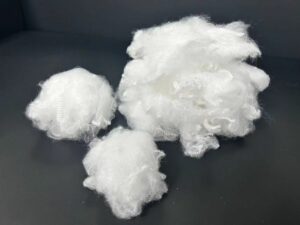
Recycled polyester, commonly referred to as rPET, is produced by melting down pre-existing plastic and transforming it into fresh polyester fiber. While there is often a focus on rPET derived from plastic bottles and containers discarded by consumers, it is important to note that polyethylene terephthalate can be recycled from both industrial and consumer sources. For instance, five soda bottles can provide enough fiber for a single extra-large T-shirt.
Advantages of recycled polyester
Addressing the issue of plastic waste
Recycled polyester provides a sustainable solution for diverting non-biodegradable materials away from landfills and the ocean. Research from the NGO Ocean Conservancy highlights the alarming amount of plastic entering marine environments annually, with projections indicating a potential imbalance between plastic debris and marine life by 2050. The impact of plastic pollution is evident in the detrimental effects on seabirds and sea turtles, as they often mistake plastic for food.
Furthermore, statistics from the United States Environmental Protection Agency and the European Union underscore the significant volume of plastic waste generated and disposed of in landfills each year. The fashion industry contributes to this problem, with reports estimating a substantial amount of clothing ending up in landfills annually. Karla Magruder, a board member of Textile Exchange, emphasizes the importance of repurposing plastic waste into valuable materials for the benefit of both humans and the environment.
rPET, or recycled polyester, is a sustainable alternative to virgin polyester, offering similar quality with significant environmental benefits.
A study by the Swiss Federal Office for the Environment found that rPET production uses 59 percent less energy compared to virgin polyester. Additionally, WRAP estimates that rPET production reduces CO2 emissions by 32 percent in comparison to regular polyester.
Not only does using recycled polyester help to conserve resources and reduce energy consumption, but it also minimizes our reliance on petroleum-based raw materials. Brands like Patagonia emphasize the positive impact of using recycled polyester in terms of waste reduction, landfill preservation, and promoting new recycling practices for old polyester clothing.
Polyester makes up a large part of the world’s PET production. Brands like Nau are pushing for a non-virgin supply chain for polyester fiber, which could greatly lower the amount of energy and resources needed around the world.

Disadvantages of recycled polyester
Recycling in the textile industry faces challenges due to the composition of garments, as many are made from blends of polyester and other materials, making recycling more difficult or even impossible. Certain finishes and laminations on fabrics can further complicate the recycling process.
Even garments made from 100 percent polyester have limitations in terms of recyclability. The process of recycling PET (polyethylene terephthalate) can be done mechanically or chemically, with mechanical recycling being the more common and cost-effective method. However, mechanical recycling can result in a loss of strength in the fiber, necessitating a blend with virgin fiber.
There is a misconception that plastics, including polyester, can be infinitely recycled without degradation. However, each recycling process degrades the polymer, leading to the production of lower quality products over time. Despite claims from organizations like Textile Exchange that recycled polyester garments can be continuously recycled without a loss of quality, there are concerns about the overall sustainability of polyester production and recycling.
Some experts argue for a reduction in the use of plastic in general, urging a shift toward natural fibers like cotton, hemp, and wool, which have lower environmental impacts compared to polyester. While recycled polyester (rPET) does have a lower energy footprint than virgin polyester, it still requires more energy than natural fibers.
In light of these considerations, there is a growing call for fashion brands and consumers to prioritize sustainable materials and production methods, moving away from an over-reliance on polyester and disposable plastic goods. Despite the potential for recycled polyester to play a role in a circular economy, the broader impact of polyester production and recycling processes should be carefully evaluated.
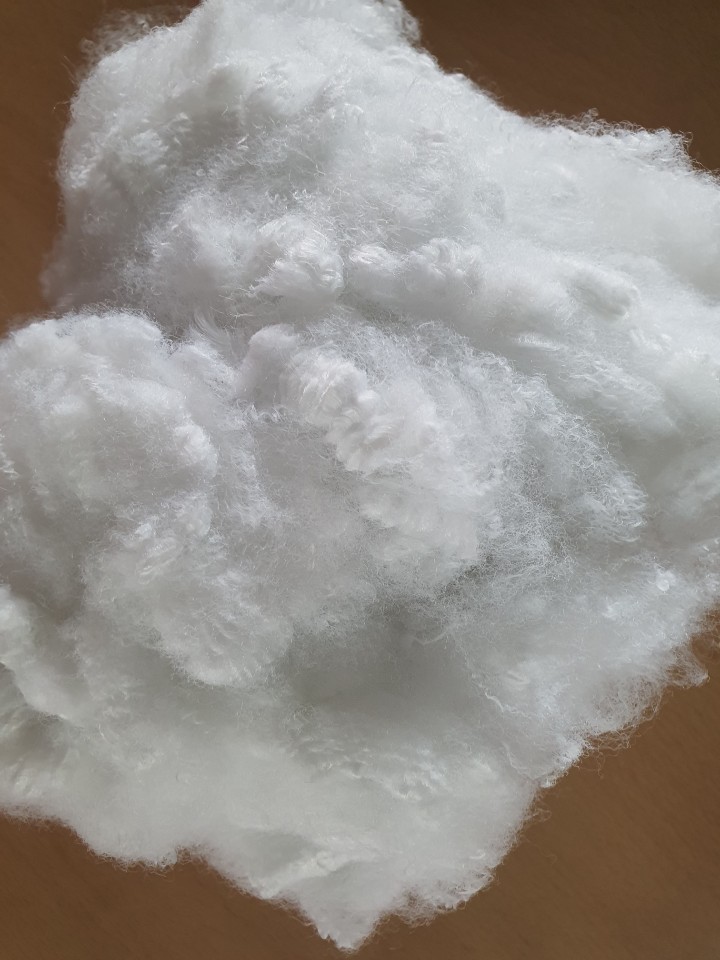
The environmental impact of the recycling process for PET materials is a topic of concern.
It has been noted that the chips produced through mechanical recycling can vary in color, leading to challenges in achieving consistent coloration. This inconsistency may result in dyers resorting to chlorine-based bleaches to whiten the material, increasing water, energy, and chemical usage in the process.
Additionally, there have been studies indicating that PET bottles may release antimony, a substance with potential carcinogenic properties. While health agencies assert that the quantities are too minimal to pose a threat (500 mg/kg PET), finding alternatives to antimony remains a key challenge in the recycling of PET materials.
Furthermore, there is ongoing discussion in the academic community regarding the calculation of CO₂ emissions when comparing virgin polyester with recycled PET. The current assessment methods do not account for the environmental impact of the fiber’s initial production, which could potentially alter the results. The Swiss Federal Office for the Environment has highlighted this issue in a report.
Potential Environmental Impact of Recycled Polyester
Additionally, it is important to consider the potential impact of recycled polyester on the environment. Some argue that recycled polyester may not completely prevent plastic waste from entering the ocean, as man-made fabrics have the potential to release microscopic plastic fibers known as microplastics. A study done by Plymouth University in the UK found that one cycle of a washing machine can release more than 700,000 plastic fibers into the environment. Furthermore, a study published in the journal Environmental Science Technology in 2011 revealed that microfibers account for 85 percent of human-made debris found on shorelines worldwide. Both virgin and recycled polyester fabrics can contribute to the issue of microplastic pollution.
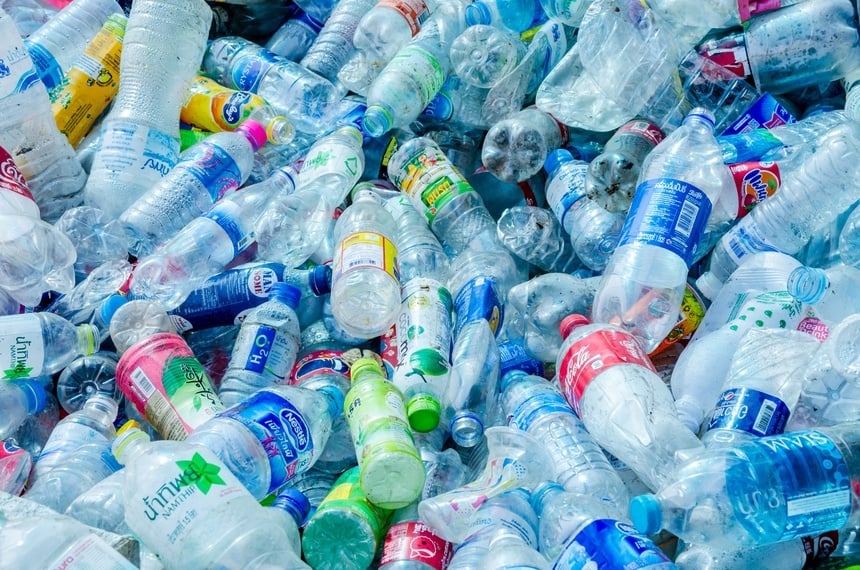
Advantages of Recycled Polyester
Recycling polyester helps prevent plastics from going to landfills and the ocean. Every year, 8 million metric tons of plastics enter the ocean, on top of the estimated 150 million metric tons that currently circulate in marine environments. If we continue at this pace, by 2050 there will be more plastic in the ocean than fish.
Recycled polyester is a sustainable textile option that is almost the same as virgin polyester in terms of quality, but its production requires 59 percent less energy compared to virgin polyester. Manufacturers of recycled polyester aim to reduce CO₂ emissions by 32 percent in comparison to regular polyester. In addition, recycled polyester can contribute to reducing the extraction of crude oil and natural gas from the Earth to make more plastic.
It’s important to be mindful of the environmental impact of our clothing choices and consider more sustainable options when possible. By choosing recycled polyester, we can help to reduce plastic waste and protect our planet’s oceans.
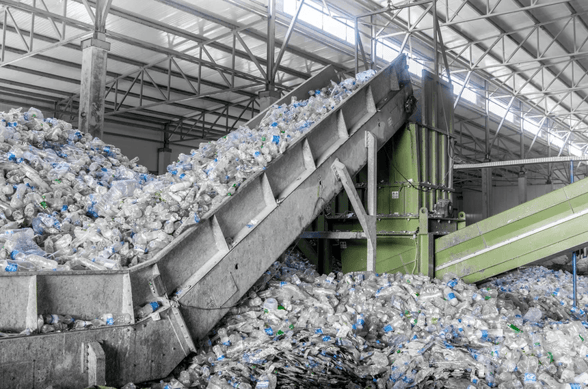
Disadvantages and Limitations of Recycled Polyester
Recycling polyester is a sustainable textile option that helps to reduce plastic waste and lower the environmental impact of apparel production and consumption. However, recycling plastic has its limitations. Many garments are not made from polyester alone but rather a blend of polyester and other materials. In that case, it is more difficult, if not impossible, to recycle them. Even clothes that are 100 percent polyester can’t be recycled forever. There are two ways to recycle PET: mechanically and chemically. Mechanical recycling is taking a plastic bottle, washing it, shredding it and then turning it back into a polyester chip, which then goes through the traditional fiber-making process. Chemical recycling is taking a waste plastic product and returning it to its original monomers, which are indistinguishable from virgin polyester. Those can then go back into the regular polyester manufacturing system. Most recycled polyester is obtained through mechanical recycling, as it is the less costly of the two processes and it requires no chemicals other than the detergents needed to clean the input materials. However, through the mechanical process, the fiber can lose its strength and thus needs to be mixed with virgin fiber.
Many garments are not made from polyester alone but rather a blend of polyester and other materials. In that case, it is more difficult, if not impossible, to recycle them. Even clothes that are 100 percent polyester can’t be recycled forever. There are two ways to recycle PET: mechanically and chemically. Mechanical recycling is taking a plastic bottle, washing it, shredding it and then turning it back into a polyester chip, which then goes through the traditional fiber-making process. Chemical recycling is taking a waste plastic product and returning it to its original monomers, which are indistinguishable from virgin polyester. Those can then go back into the regular polyester manufacturing system. Most recycled polyester is obtained through mechanical recycling, as it is the less costly of the two processes and it requires no chemicals other than the detergents needed to clean the input materials. However, through the mechanical process, the fiber can lose its strength and thus needs to be mixed with virgin fiber.
The polyester chips generated by mechanical recycling can vary in color: some turn out crispy white, while others are creamy yellow, making color consistency difficult to achieve. Some dyers find it hard to get a white, so they’re using chlorine-based bleaches to whiten the base. The inconsistency of dye uptake makes it hard to get good batch-to-batch color consistency and this can lead to high levels of re-dyeing, which requires high water, energy and chemical use
While recycled polyester is a more sustainable option compared to virgin polyester fibers manufactured from raw materials, it is not a perfect solution. Recycled polyester can still release microplastics, which are small plastic particles that can travel through our air, soil, and waterways. According to a recent study by a team from Plymouth University in the UK, each cycle of a washing machine could release more than 700,000 plastic fibers into the environment. These microplastics can be harmful to the environment and can be ingested by marine life, which can have serious health consequences