The Modifier-Carrier Relationship: Why They Cannot Be Chosen Independently
Modified bitumen membranes come in two main polymer types: SBS (Styrene-Butadiene-Styrene) and APP (Atactic Polypropylene). Most buyers of nonwoven reinforcement know this. What many do not fully appreciate is that the choice of polymer modifier and the choice of carrier material are deeply interconnected—and choosing the wrong combination creates membranes that underperform, fail prematurely, or create installation problems.
This guide explains the relationship clearly, drawing on how the world’s leading membrane manufacturers — including Johns Manville and Freudenberg — engineer their carrier-modifier combinations.
SBS vs. APP: What the Modifier Does
SBS — The Rubber Modifier
SBS polymer gives modified bitumen its rubber-like elasticity. An SBS membrane can stretch significantly under load and return to its original shape—making it ideal for climates with wide temperature swings, for dynamic structures, and for cold-climate applications where flexibility at low temperatures is critical.
DIBITEN is a superior APP-modified bitumen membrane reinforced with a high-quality nonwoven polyester mat and is one of the finest heat-weld-applied modified bitumen membranes produced for residential, commercial, and industrial roofing. The pairing of a polyester carrier with an SBS or APP modifier is consistent across premium membrane brands globally.
APP — The Plastic Modifier
APP creates a thermoplastic structure in the bitumen—stiffer, with excellent UV resistance and high-temperature stability. APP membranes are widely specified in hot, sunny climates where UV degradation and heat softening are the primary concerns and where the torch-on installation method is dominant.
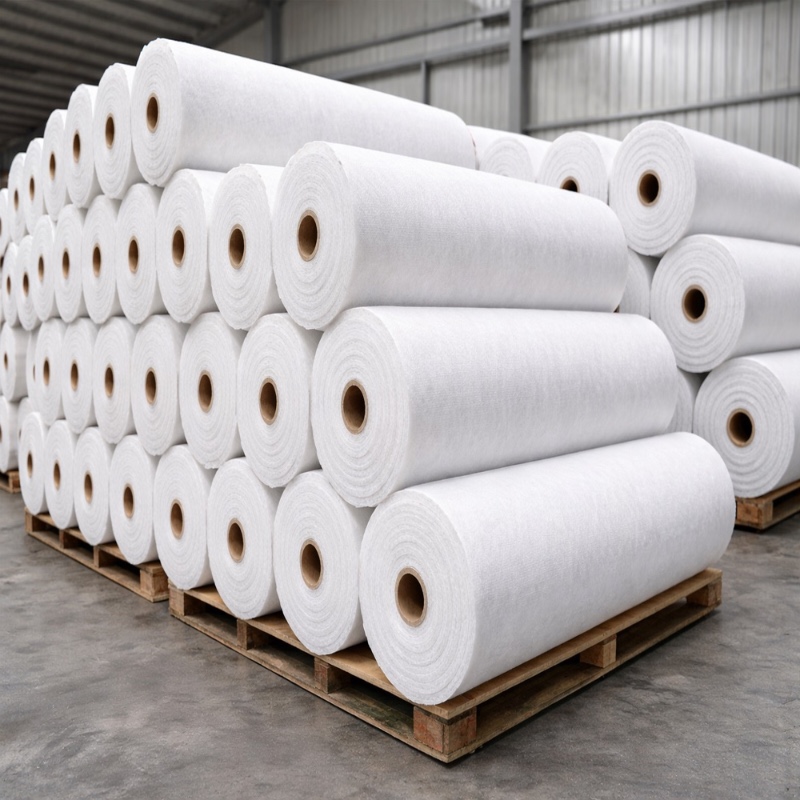
Why SBS Pairs with Polyester Mat
SBS membranes are valued for their flexibility and elongation. Their carrier should match — a stiff, brittle carrier would negate the SBS modifier’s key benefit. Polyester mat’s 25–40% elongation complements SBS perfectly: the membrane as a whole can flex and recover, protecting buildings from the cracking and delamination that occurs when rigid membranes are applied to dynamic substrates.
Evalith® 032 and 033—continuous filament calendered polyester nonwovens manufactured using spunbond technology, needle-punched for mechanical integrity and chemically bonded to increase stiffness—are suited as sealing for flat roofs, bridges, foundations, and tunnels as carriers for bituminous membranes.
Johns Manville’s polyester-reinforced SBS base sheets are specifically engineered to deliver robust tear strength and puncture resistance alongside the dimensional stability needed for reliable long-term performance. The polyester carrier supports the membrane through thermal cycling and mechanical loading—exactly the stresses that SBS systems are designed to handle.
Why APP Pairs with Fiberglass Mat — and Its Limitations
APP membranes are applied by torch—direct flame heats the underside of the roll, melting the APP compound as the roll is unrolled and bonded to the substrate. This process exposes the carrier to temperatures that approach or exceed 200°C. Fiberglass has a melting point thousands of degrees above this—it is completely unaffected by torch-on application temperatures.
Polyester, by contrast, softens at elevated temperatures and has some thermal memory—it wants to return to its pre-installation dimensions after heating. On a static substrate, this can cause slight wrinkling or rippling as the membrane cools after torch-on application.
However, fiberglass’s rigidity is a significant limitation for substrates that experience any movement. Fiberglass mats reduce the relaxation time of a fiberglass-reinforced roofing sheet during installation, making roof installations more durable and preventing differential movements—but this benefit applies specifically to static structures.
The Composite Solution for Demanding Applications
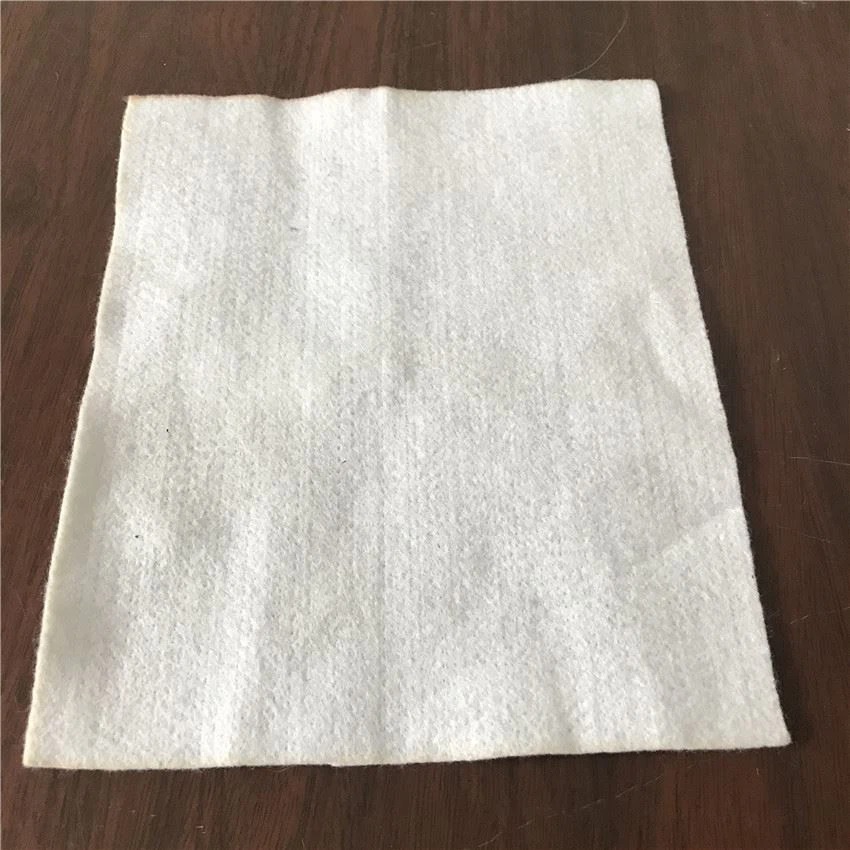
For membrane producers who need the benefits of both—polyester’s elongation and fiberglass’s dimensional stability—the composite carrier (reinforced polyester mat with fiberglass scrim or yarn) provides the engineering answer.
The carrier reinforced with fiberglass filaments gives the bituminous membrane outstanding dimensional stability and resistance over time. Using the fiberglass reinforcement also eliminates the phenomenon of thermal memory: once applied to roofs, the membrane is shrink-free even when temperatures fluctuate. The Colback portfolio of nonwovens has been designed for use across a broad range of hot impregnation and coating processes that require a strong fabric with high dimensional stability and reinforcement capacity, making it the perfect carrier for bituminous membranes. Colback membranes have the same physical properties in all directions, so they are easy to handle in applications like roofing membranes and underlayment, foundation waterproofing membranes, and bridge deck and mine waterproofing.
Practical Selection Decision Tree
Is your membrane SBS or APP?
├── SBS → Is the substrate dynamic (bridge, parking, expansion joints)?
│ ├── Yes → Pure polyester mat (highest elongation)
│ └── No → Polyester mat or composite mat (adds dimensional stability)
└── APP → Is fire resistance a primary specification?
├── Yes → Fiberglass mat or composite mat
└── No → Is the substrate dynamic?
├── Yes → Composite mat (polyester elongation + fiberglass stability)
└── No → Fiberglass mat (most cost-effective for static APP applications)
Fiberglass Reinforced Polyester Mat: The Premium Specification
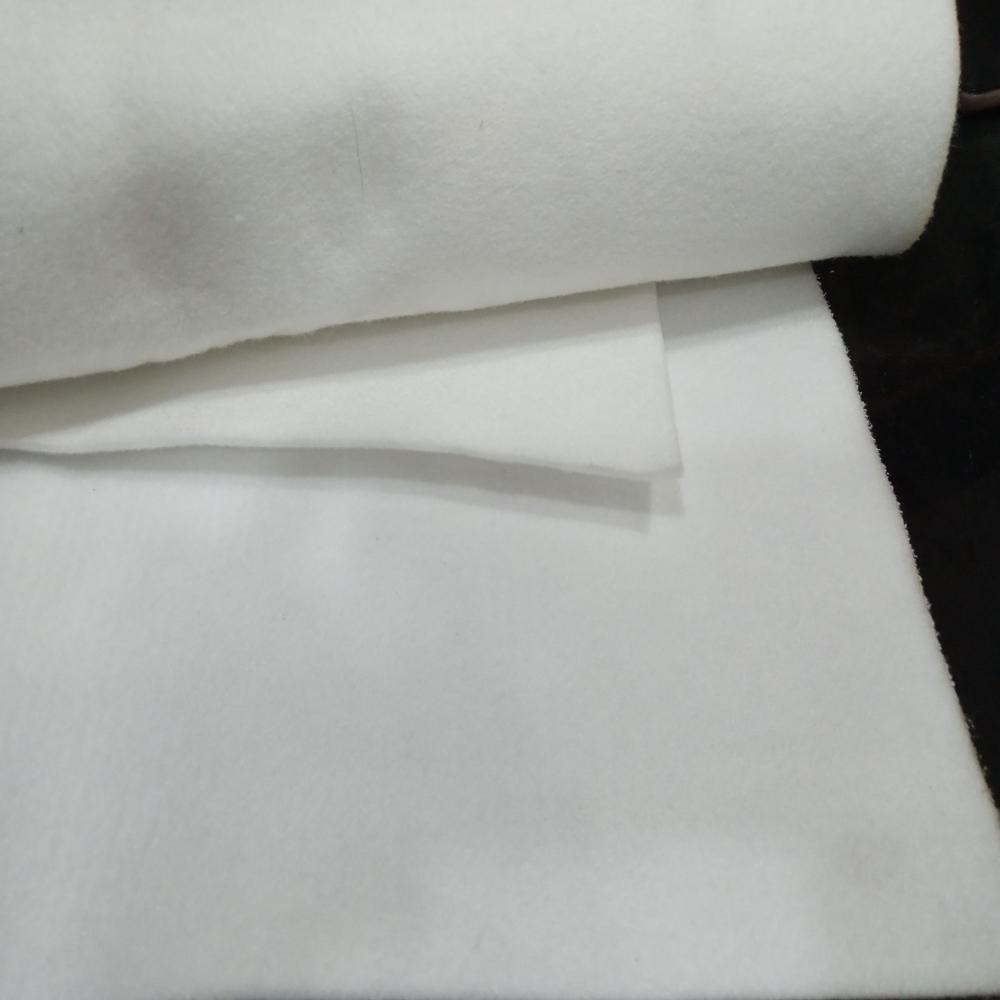
For membrane manufacturers targeting the premium infrastructure segment—highways, airport runways, bridge decks, tunnels, and high-rise commercial buildings—the fiberglass-reinforced polyester mat combines the best of both worlds:
- Polyester elongation (5–15%, better than pure fiberglass)
- Fiberglass dimensional stability (near-zero thermal memory)
- Higher tensile strength in the machine direction from the glass yarns
- Excellent runnability on high-speed production lines
Because of fiberglass yarn reinforcement, the polyester mat has high tensile strength in the warp direction, so it can bear the faster speeds of bitumen membrane production machines. It is an advanced substrate for APP or SBS-modified bitumen membranes with characteristics including high heat resistance, ability to bear faster production speeds, increased tensile and tear strength, and extended life of the waterproof membrane. Available in weights from 90 g/m² to 250 g/m²; in 4×4, 5×5, 6×6, and 7×7 grid configurations; and in leno weave variants, composite carriers offer the flexibility to match virtually any demanding specification.
VNPolyfiber: Your Partner for Nonwoven Reinforcement
VNPolyfiber supplies the full carrier range for both SBS and APP membrane production through our factory network—pure polyester mat (spunbond and needle-punched staple), fiberglass tissue, and fiberglass-reinforced composite base mats. We also supply polyester staple fiber raw material to nonwoven mat producers.
Our bitumen membrane manufacturer partners benefit from consistent quality, flexible specifications, competitive pricing, and responsive technical support.