The Two Carrier Types That Dominate the Global Waterproofing Industry
Every modified bitumen waterproofing membrane is made using one of two types of nonwoven reinforcement carriers: fiberglass mat or polyester mat. The choice between them is the single most important technical decision in membrane design—and yet it is surprisingly poorly understood outside the specialist waterproofing manufacturing community.
This post gives membrane manufacturers, construction specifiers, and materials buyers the complete picture.
What Is Fiberglass Mat?
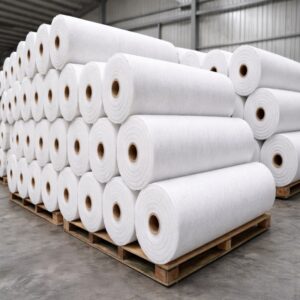
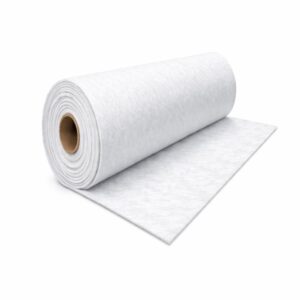
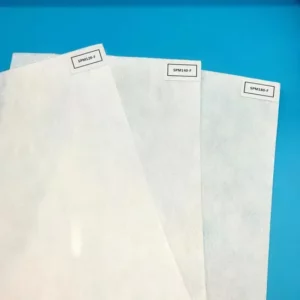
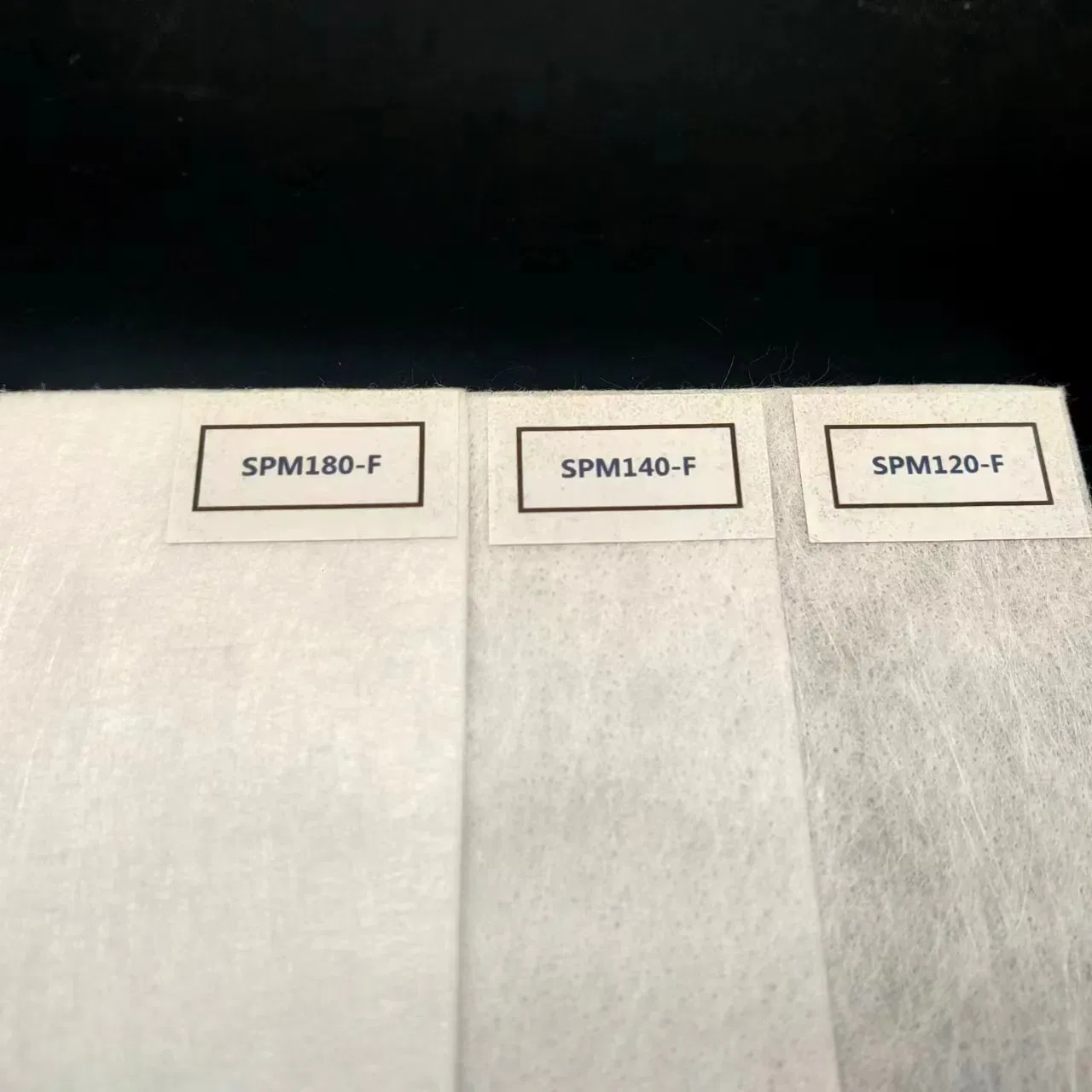
A fiberglass mat (also called glass veil or glass nonwoven) is a flat fabric composed of chopped fiberglass oriented in a random pattern and bonded together. Originally invented to replace cardboard in waterproofing membranes, fiberglass mats have long since conquered additional applications such as commercial and residential construction, energy storage, and automotive.
Fiberglass mats are used as carriers in bituminous roofing applications to provide dimensional stability and tensile strength to a flat roof system. As they do not have a thermal memory, the relaxation time of a fiberglass-reinforced roofing sheet is decreased, which makes roof installations more durable and prevents differential movements.
The glass fiber used in roofing mats is typically chopped into short lengths (typically 10–25 mm), dispersed in water, and laid into a wet web—similar to papermaking—before being bonded with a resinous binder and dried.
Key Properties: Where Each Material Wins
Dimensional Stability — Fiberglass Wins
Fiberglass has virtually zero thermal expansion or shrinkage. When used as a membrane carrier, it prevents the finished membrane from shrinking after torch-on application, eliminating the phenomenon known as “thermal memory.” Johns Manville offers Evalith® fiberglass mat in various weights and thicknesses depending on the roofing application, providing dimensional stability that prevents differential movements after installation.
For APP membrane production—where the mat passes through a heated bitumen bath and then torch-on installation exposes it to direct flame—dimensional stability is critical. Polyester, by contrast, has some thermal memory and may exhibit slight shrinkage under repeated temperature cycling unless reinforced with fiberglass.
Elongation and Flexibility — Polyester Wins Decisively
Fiberglass is rigid. It has an elongation at break of only 2–3%, meaning it will crack and fracture under the mechanical movement that buildings naturally experience—thermal expansion and contraction, wind uplift, seismic activity, and differential settlement. The polyester mat offers 25–40% elongation, allowing the membrane to flex and recover without losing integrity.
This is why polyester is specified for dynamic structures—bridges, parking decks, and expansion joints—and why fiberglass is limited to structurally stable, static substrates like flat roofs on concrete buildings.
Tear Resistance — Polyester Wins
The interlocked fiber network of polyester mat resists tear propagation significantly better than fiberglass, which fractures cleanly along the break line. For roofing systems that will experience foot traffic, hail impact, or mechanical fastening, polyester carriers provide substantially better long-term integrity.
Fire Resistance — Fiberglass Has a Natural Advantage
Glass fibers are inherently non-combustible. Fiberglass mat carriers contribute to the fire resistance of the finished membrane system. Evalith® 051 is a mechanically- and binder-bonded polyester spunbond in combination with a glass fiber nonwoven. Due to the glass nonwoven, excellent dimensional stability and fire-retardant properties are achieved. Johns Manville Polyester is combustible; achieving equivalent fire ratings with polyester carriers requires additional treatment or composite construction.
Production Speed — Fiberglass-Reinforced Carriers Raise the Bar
Because of fiberglass yarn reinforcement, the polyester mat has high tensile strength in the warp direction, so it can bear faster speeds of bitumen membrane production machines. This is a significant operational advantage for high-output membrane factories: faster line speed means higher throughput and lower cost per square meter.
The Definitive Comparison Table
Factor | Fiberglass Mat | Polyester Mat | Composite (Fiberglass + Polyester) |
Elongation at break | 2–3% | 25–40% | 5–15% |
Dimensional stability | Excellent | Good | Very good |
Tear resistance | Low | Excellent | Very good |
Fire resistance | Inherently good | Requires treatment | Good |
Production line speed | High | High (spunbond) | High |
Best modifier pairing | APP | SBS | Both |
Cold temperature performance | Brittle | Excellent | Good |
Waterproofing applications | Static structures | Dynamic structures | Demanding multi-condition |
Weight range available | 45–90 g/m² | 80–250 g/m² | 90–250 g/m² |
Price | Lower | Moderate | Higher |
Real-World Application Matching
Flat roofing on concrete buildings (static, stable substrate): Fiberglass mat is the cost-effective choice. Dimensional stability matters most, elongation is less critical, and fire resistance is an advantage.
Bridge deck waterproofing: Polyester mat is mandatory. Bridges experience constant dynamic loading, thermal cycling across extreme ranges, and vibration. Fiberglass would fracture within years.
Underground and foundation waterproofing: Polyester mat preferred. Elongation accommodates ground movement and hydrostatic pressure fluctuations over decades.
Green roofs: Composite reinforcement—combining the tensile strength, toughness, and puncture resistance of polyester mat with the dimensional stability and lay-flat characteristics of fiberglass—is suited as sealing for flat roofs, bridges, foundations, and tunnels.
Asphalt shingles: Fiberglass mat is the global standard. Its dimensional stability and light weight are ideal for the steep-slope application, and its cost advantage matters at a residential scale.
VNPolyfiber Supplies Both
Through our manufacturing network, VNPolyfiber can supply both fiberglass tissue and polyester mat, as well as composite base mats combining both. We also supply the polyester staple fiber raw material used in needle-punched mat production to nonwoven manufacturers across Asia.
Contact us to discuss which carrier type best suits your membrane production requirements.