Polypropylene Staple Fiber (PP Fiber): Complete Guide to Types, Properties, Specifications and Applications
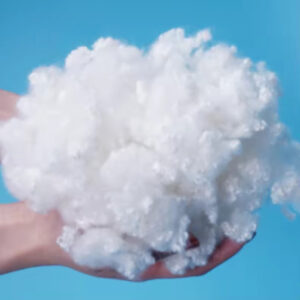
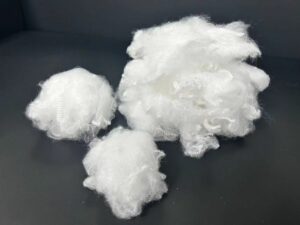
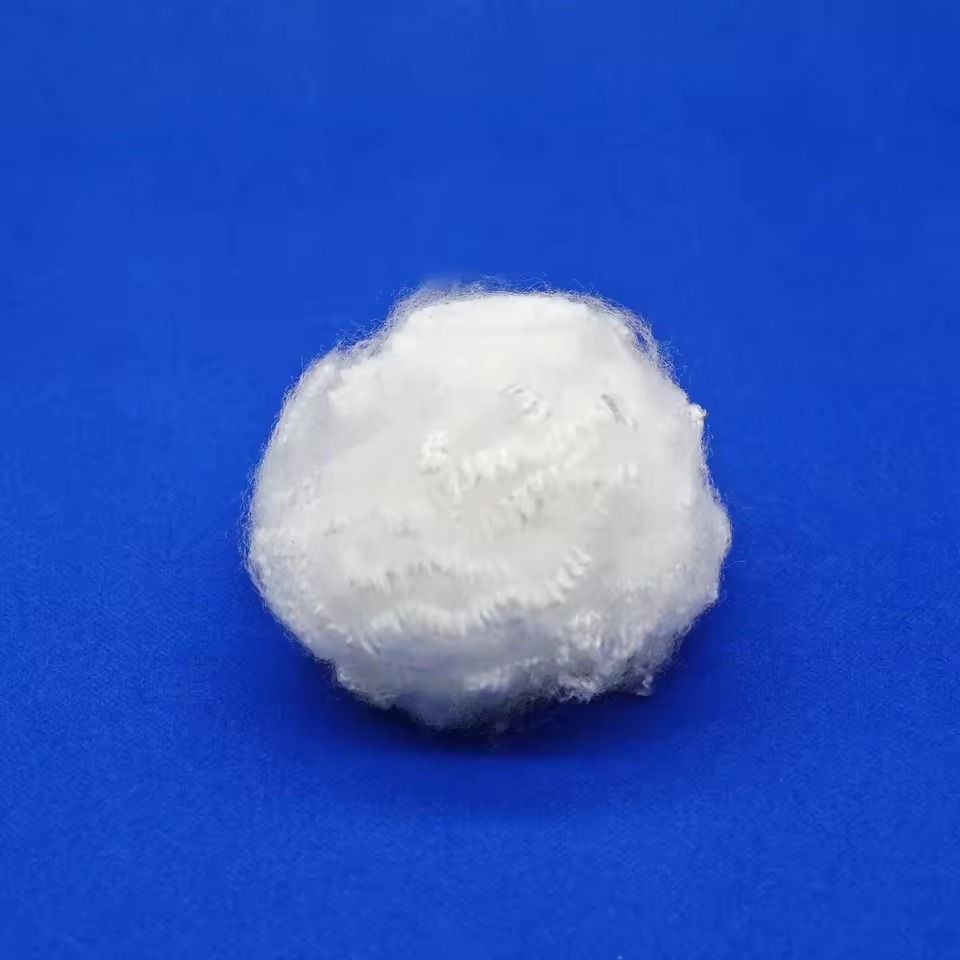
Polypropylene staple fiber (PP fiber) is one of the most technically interesting and commercially versatile synthetic fibers — and one of the most misunderstood. It is often described simply as ‘the lightest synthetic fiber’ or ‘the chemical-resistant fiber,’ but its commercial importance spans two almost entirely separate markets that have very different buyers, very different specifications, and very different application contexts.
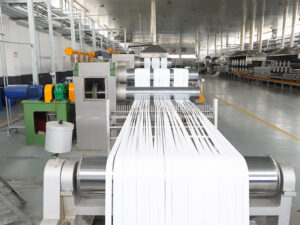
The first market is construction: short-cut PP fiber (6–19 mm) mixed directly into concrete and mortar to control plastic shrinkage cracking, improve impact resistance, and extend structural service life. The second market is nonwoven and textile: longer PP staple fiber (38–76 mm) processed through carding and needlepunching (or spunbond extrusion) into geotextiles, filtration fabrics, hygiene components, and technical textiles.
These two markets use different fiber specifications, serve completely different buyers, and are rarely discussed together — yet they share the same fundamental polymer chemistry. This guide covers both markets comprehensively, with clear specifications for each application category, an honest comparison with polyester staple fiber, and the complete PP fiber property profile.
Polypropylene: The Polymer Foundation
Polypropylene (PP) is a semi-crystalline thermoplastic polymer produced by Ziegler-Natta or metallocene-catalyzed polymerization of propylene monomer. Among the major commodity thermoplastics, PP holds a unique position in fiber production because of its combination of properties that are not found in any other standard textile fiber polymer:
- Lower density than water: PP density is 0.91 g/cm³ — lighter than water (1.0 g/cm³), making PP the only commercial textile fiber that floats. This gives PP fiber the lowest weight per unit volume of any standard fiber, producing very lightweight fabrics per gsm unit.
- Essentially zero moisture absorption: PP absorbs approximately 0.01–0.05% moisture — effectively zero. This means PP fiber retains 100% of its strength when wet (unlike cotton which weakens slightly), dries instantly, cannot harbor mold or bacteria through moisture retention, and does not swell in water.
- Outstanding chemical resistance: PP resists virtually all acids (including strong mineral acids), bases (including concentrated NaOH), and most organic solvents at moderate temperatures. This chemical resistance is exceptional among standard textile fibers and makes PP the material of choice wherever chemical exposure is expected.
- Cannot be conventionally dyed: PP’s non-polar, highly crystalline surface provides no sites for dye molecules to bond — PP cannot be dyed by any standard textile dyeing process. PP fiber must be solution-dyed (color masterbatch added to the polymer melt before spinning) if color is required. This limits aesthetic flexibility but produces extremely colorfast results.
PP Fiber Types and Specifications
| Type | Fiber Spec | Market and Application |
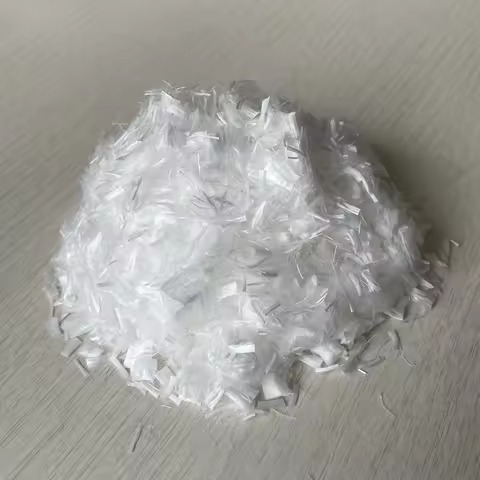
| Micro PP fiber (concrete) | 0.9D–3D, 6–12 mm | Concrete and mortar crack control. Mixed at 0.6–2.0 kg/m³ dosage. Very fine — increases surface area for better cement matrix bonding. Standard for residential concrete slabs, screeds, and renders. |
| Standard PP fiber (concrete) | 3D–15D, 12–19 mm | Structural concrete reinforcement. Higher dosage (1.5–4.0 kg/m³). Coarser for better mechanical anchoring in concrete matrix. Used in industrial flooring, precast panels, and infrastructure. |
| Monofilament PP (concrete) | Single filament, 0.2–0.6 mm diameter, 12–54 mm | Stiffer single filament for applications requiring defined orientation in the concrete matrix. Better crack bridging than fibrillated film fiber. |
| Fibrillated PP tape fiber | Flat tape split to fibrils, 12–54 mm | Legacy product for concrete — a flat PP tape that fibrillates into a network structure. Lower performance than monofilament; declining market share. Still used in some geotextile applications. |
| Textile PP staple (nonwoven) | 4D–17D, 38–76 mm | Carded into webs for needlepunched geotextile, carpet underlay, automotive fabric. Same equipment and process as polyester needlepunch but with PP polymer properties. |
| Fine PP staple (hygiene/spunlace) | 1.5D–3D, 38–51 mm | Fine PP for carded web formation in some hygiene nonwoven applications; also for PP spunlace. Less common than PET or viscose in spunlace; used where chemical resistance is required. |
| PP bico (thermal bond) | 4D–6D PE/PP or PP/PP, 38–51 mm | Bicomponent PP/PE fiber for thermal bonding — PE sheath melts at 130°C, PP core structural. Used in hygiene nonwoven through-air bonding where PET/co-PET bico is not specified. |
Market 1: PP Fiber for Concrete Reinforcement
PP fiber for concrete reinforcement is the largest single-application market for short-cut PP fiber globally, and it serves a buyer profile completely different from any textile application — construction engineers, ready-mix concrete producers, precast manufacturers, and civil engineering specification writers. Understanding this market requires understanding why concrete needs fiber reinforcement in the first place.
Why Concrete Needs Fiber
Concrete is strong in compression but weak in tension — it cracks when tensile stresses develop during curing (plastic shrinkage cracking in the first few hours after placement) and during service (thermal movement, structural loading, impact). Traditional steel rebar addresses structural reinforcement for load-bearing applications, but it cannot prevent the fine surface cracking that develops during the plastic phase of concrete curing — when the concrete is still semi-fluid and shrinking as it loses bleed water. This is exactly where PP fiber provides its primary benefit.
How PP Fiber Works in Concrete
When PP fiber is mixed into fresh concrete at the batching plant or site mixer, the individual fibers disperse uniformly throughout the concrete matrix. During the critical first 24 hours of curing, as the cement paste shrinks, the fibers bridge across developing micro-cracks — the fiber tensile strength resists crack opening and distributes the shrinkage stress over many bridged micro-cracks rather than allowing stress to concentrate in fewer large cracks.
The result: concrete with PP fiber reinforcement typically shows significantly reduced crack width and frequency compared to unreinforced concrete of the same mix design. Secondary benefits include improved impact resistance (the fiber network absorbs energy from impact rather than allowing brittle fracture), improved fire spalling resistance in high-performance concrete (PP fibers melt during fire exposure, creating channels in the concrete structure that allow steam pressure to dissipate rather than causing explosive spalling), and improved frost resistance in freeze-thaw cycling.
PP Concrete Fiber Specifications and Standards
| Specification Parameter | Typical Values and Significance |
| Fiber length | 6–12 mm for crack control in screeds and renders; 12–19 mm for structural concrete; up to 54 mm for some structural applications. Longer fibers have better crack bridging but are harder to disperse uniformly. |
| Fiber diameter | 0.9D–3D (denier) equivalent, or 0.02–0.05 mm diameter for standard fiber. Finer fibers provide more fiber count per kg dosage (more crack bridging points); coarser fibers provide better anchoring in the cement matrix. |
| Dosage rate | 0.6–1.0 kg/m³ for plastic shrinkage crack control (standard residential); 1.5–4.0 kg/m³ for structural enhancement and impact resistance. Dosage is specified by weight per cubic metre of concrete. |
| Tensile strength | Minimum 450 MPa — lower than steel (500+ MPa) but adequate for crack bridging function. High-tenacity PP can reach 600+ MPa. |
| Melting point | ~165°C — significantly below concrete fire temperatures (~300°C+). PP fibers melt during fire and leave channels for steam pressure relief — reducing explosive spalling in high-performance concrete. |
| Alkali resistance | Excellent — PP is fully resistant to the highly alkaline cement pore solution (pH 12–13). Unlike glass fiber, PP does not corrode or lose strength in alkaline concrete environments. |
| Standards | EN 14889-2 (European standard for polymer fibers for concrete); ASTM C1116 (American standard); EN 206 specifies fiber dosage as performance class requirement in some European national standards. |
Key applications for concrete PP fiber: residential and commercial concrete slabs-on-grade; industrial and warehouse flooring; screeds and renders (particularly internal lightweight screeds); swimming pools and water retaining structures; tunnel linings; precast concrete panels; shotcrete for slope stabilization and underground support.
Market 2: PP Staple Fiber for Nonwoven and Textile
PP staple fiber in the 38–76 mm textile length range is processed through the same carding and needlepunching systems as polyester staple fiber, producing needlepunched nonwoven fabrics with PP’s distinctive property profile. The choice between PP and PET staple fiber for nonwoven is determined by the application’s specific requirements:
| Property | PP Staple Fiber | PET Staple Fiber |
| Density | 0.91 g/cm³ — lighter than water; lightest standard textile fiber | 1.38 g/cm³ — heavier; denser fabric for same gsm |
| Chemical resistance | Outstanding — resists strong acids AND strong bases | Good — resists acids; limited alkali resistance above pH 10–11 |
| UV resistance | Poor without stabilizer — degrades rapidly outdoors | Good — inherently more UV-stable than PP |
| Melting point | ~165°C — low; limits high-temperature applications | ~255–265°C — much higher heat tolerance |
| Dyeability | Cannot be dyed conventionally — solution-dyed only | Good — disperse dye system; wide colour range |
| Tensile strength | Good (3.5–6.0 cN/dtex) | Higher (4.5–7.0 cN/dtex) — better for structural geotextile |
| Cost | Generally lower — PP chips typically cheaper than PET | Slightly higher — PET chips more expensive |
| Best for | Aggressive chemical environments; applications requiring neutrality to both acid and base; cost-driven applications | UV exposure; higher strength requirements; where colour variety is needed |
PP Nonwoven Applications
- Geotextile in aggressive soil environments: Where soil pH is highly acidic (mine tailings, peat soils, acidic industrial fill) or highly alkaline (lime-stabilized fill, concrete waste), PP’s resistance to both acids and bases makes it the preferred geotextile fiber over PET, which can suffer hydrolytic degradation at pH extremes over long service lives.
- Chemical filtration: PP needlepunched filter bags and filter cloth for industrial liquid filtration where the process stream is strongly acidic or basic — PP’s chemical resistance allows it to handle streams that would degrade PET or nylon.
- Hygiene nonwoven (PP bico): PE/PP bicomponent fiber (ES fiber) is the standard binder fiber for through-air bonded hygiene coverstock — the PE sheath melts at ~130°C bonding the PP or PET structural fibers. The resulting through-air bonded fabric is the standard diaper top sheet construction.
- Agricultural textile: UV-stabilized PP needle-punched nonwoven for weed control mulch, crop protection, and tree guards — PP’s moisture-free character and chemical resistance make it stable in soil environments.
PP Fiber vs PET Fiber: When to Choose PP
The decision between PP and PET staple fiber is not simply ‘which is cheaper’ — it is a technically informed choice based on the specific application requirements:
- Choose PP when: chemical resistance to both acids and bases is required; the application is in highly acidic soil (pH <5) or highly alkaline environments (pH >11); weight reduction is critical and the lightest possible fiber is needed; the product is used in agricultural or marine applications where moisture absorption would be a problem; cost is the primary driver and colour range is not required.
- Choose PET when: UV resistance is needed for outdoor long-term exposure without UV stabilizer cost; higher tensile strength is required for structural geotextile applications; dyeability and colour variety are important; heat resistance above 130°C is needed; GRS-certified recycled content is required (rPET infrastructure is commercially established; recycled PP is less developed).
Specification Guide for PP Staple Fiber
When sourcing PP staple fiber for specific applications, specify these parameters:
- Application category: Concrete reinforcement (specify fiber length in mm and dosage rate kg/m³) or textile/nonwoven (specify denier and staple length in mm)
- Fiber denier and staple length: For concrete: 0.9D–15D, 6–19 mm. For nonwoven: 4D–17D, 38–76 mm. For hygiene bico: 4D PE/PP, 38–51 mm
- UV stabilization: Required for any outdoor or long-term buried application. Specify minimum UV retention (typically 70% tensile strength retained after 500 hours Xenon arc exposure per EN 12224)
- Color: Natural (grey-white) for concrete applications; solution-dyed for textile applications where color is required (specify RAL or Pantone reference)
- Tenacity: For structural applications: minimum 450 MPa (concrete) or minimum 3.5 cN/dtex (textile). Higher tenacity available for geosynthetic reinforcement applications
- Standard compliance: For concrete fiber: EN 14889-2 or ASTM C1116. For geotextile fiber: material for EN 13249/13250 application
Conclusion
Polypropylene staple fiber’s unique combination of properties — zero moisture absorption, outstanding chemical resistance to both acids and bases, lowest density of any standard textile fiber, and good mechanical strength — makes it genuinely irreplaceable in the specific applications where these properties are critical. No other standard fiber is lighter than water, no other standard fiber resists both strong acids and strong bases effectively, and no other standard fiber melts in a fire to create anti-spalling channels in concrete.
Understanding PP fiber as two distinct market applications — the concrete reinforcement market (short-cut fiber, construction buyers, dosage-rate specification) and the nonwoven/textile market (textile staple, nonwoven manufacturers, denier and gsm specification) — is the foundation for working with PP fiber accurately and for making the right choice between PP and PET in applications where both are technically viable. The PP vs PET decision is always a technical trade-off, not simply a cost decision, and the right answer depends on the specific chemical, thermal, and structural requirements of each application.