Synthetic Leather: How Polyester and Nylon Microfiber Become Suede — Complete Guide from Sea-Island Fiber to Finished Product
The global synthetic leather market exceeds USD 50 billion annually and is growing faster than genuine leather — driven by animal welfare concerns, sustainability demands, cost advantages, and the specific performance requirements of key markets including automotive interiors, luxury goods, fashion, and footwear. Yet the term ‘synthetic leather’ covers a spectrum of materials with fundamentally different structures, production processes, and performance profiles — from simple PVC-coated fabric to sophisticated microfiber suede that challenges genuine leather in performance and appearance.
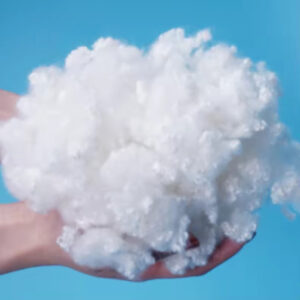
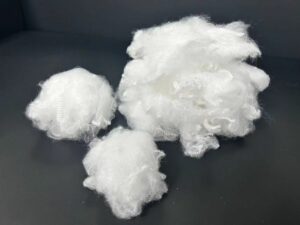
For VNPOLYFIBER, the synthetic leather topic is not peripheral — it connects directly to two core product categories: the fine solid polyester staple fiber (2D–4D) that feeds the needlepunched nonwoven substrate at the heart of premium microfiber leather, and the sea-island (islands-in-the-sea) bicomponent fiber technology that produces the ultrafine microfilaments that give microfiber suede its distinctive properties. This guide explains the complete synthetic leather landscape from the fiber level up — providing the supply chain context that fiber buyers, nonwoven manufacturers, and leather goods producers need.
The Three Types of Synthetic Leather
‘Synthetic leather’ encompasses three structurally distinct product categories that should not be confused with each other:
| Type | Structure, Production and Properties |
| PVC (vinyl) leather | A layer of PVC (polyvinyl chloride) film or foam-backed film laminated to a woven or knit fabric substrate. The oldest and simplest synthetic leather. Inexpensive, highly durable surface, available in unlimited colors and textures. Limitation: PVC contains plasticizers (phthalates) that migrate and cause cracking over time; environmental concerns around PVC production and disposal; stiff, plastic feel that does not approach leather in drape or breathability. Declining market share in premium applications; still dominant in low-cost goods. |
| PU (polyurethane) leather | A layer of polyurethane coating applied to a woven fabric, knit fabric, or nonwoven backing. More flexible and more leather-like in feel than PVC leather; available in water-based PU (more environmentally friendly) and solvent-based PU. The most common synthetic leather in fashion, accessories, and mid-market automotive. The backing fabric determines structural properties; the PU coating determines surface appearance and durability. Can be embossed, printed, and textured to closely mimic natural leather grain patterns. |
| Microfiber synthetic suede (premium) | The most technically sophisticated synthetic leather — a three-dimensional structure of ultrafine microfilaments (produced from sea-island bicomponent fiber) embedded in and bonded by a polyurethane matrix. Produced by needlepunching fine polyester or nylon fiber into a dense nonwoven substrate, impregnating with PU resin, dissolving the ‘sea’ component of sea-island fiber to release ultrafine ‘island’ filaments, and buffing the surface to create a suede nap. Commercial examples: Alcantara (Toray, Italy), Ultrasuede (Toray, Japan), and equivalents. |
Sea-Island (Islands-in-the-Sea) Bicomponent Fiber: The Microfiber Foundation
Understanding premium microfiber synthetic leather begins with understanding sea-island (IIS) bicomponent fiber — the raw material technology that makes it possible to produce filaments far finer than any conventional spinning process can achieve.
What Is Sea-Island Bicomponent Fiber?
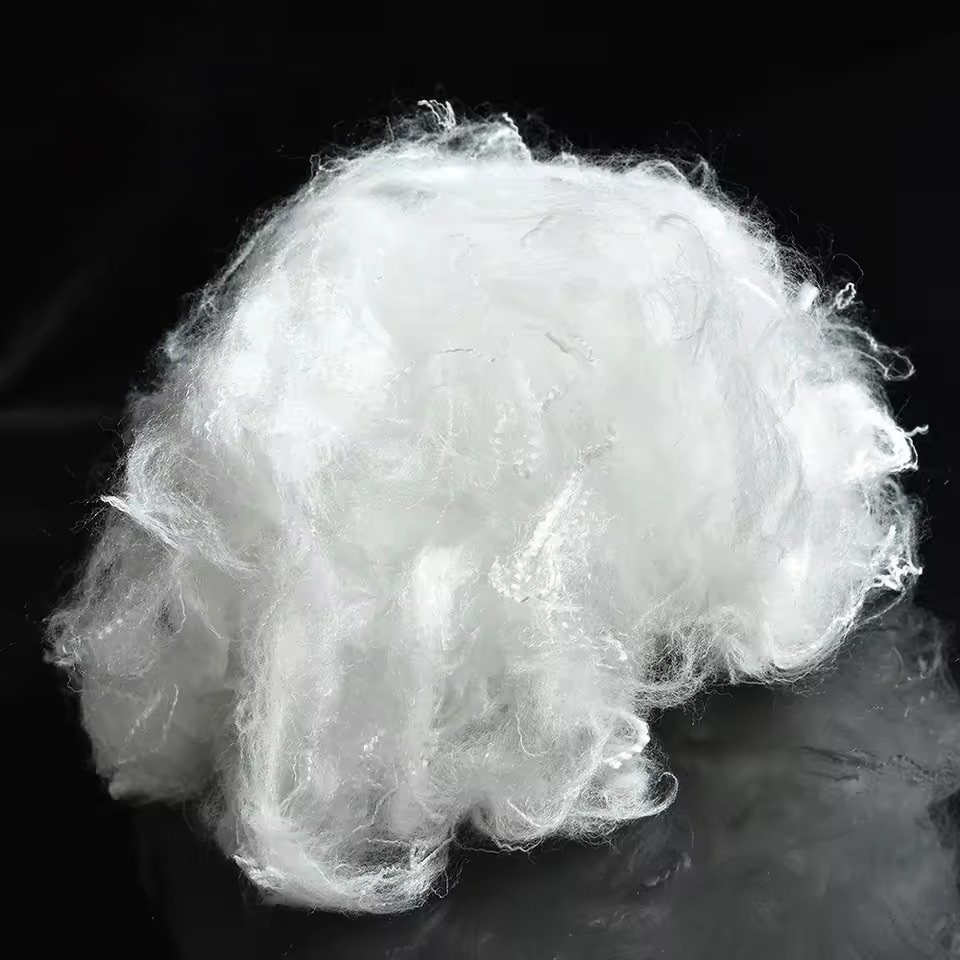
Sea-island fiber is a bicomponent fiber in which many ultrafine ‘island’ polymer filaments are embedded within a continuous ‘sea’ polymer matrix, both spun simultaneously through a specialized spinneret that creates this multi-component cross-section. The two polymers — island and sea — are selected for their mutual incompatibility (they do not bond to each other) and for the solubility difference that allows the sea to be selectively dissolved later.
In a typical sea-island construction for synthetic leather: the island polymer is nylon (PA6 or PA66) or polyester (PET) — these form the valuable ultrafine filaments. The sea polymer is modified polyester (COPET), polystyrene, or polyethylene — chosen because it can be dissolved by specific solvents or alkali treatment without attacking the island filaments. A single sea-island fiber may contain 16, 36, 64, or more island filaments within one fiber.
Producing Ultrafine Filaments from IIS Fiber
The process of releasing the island filaments from the sea-island structure is called ‘sea dissolution’ or ‘splitting’:
- Needlepunching: Sea-island fiber staple (typically 2D–6D total fiber denier, 38–51 mm staple length, with 16–64 islands per fiber) is processed through a card and needlepunch machine into a dense, tightly entangled nonwoven substrate. The bulk denier of the sea-island fiber makes it processable on standard textile equipment.
- PU impregnation: The needlepunched nonwoven is impregnated with polyurethane resin in DMF (dimethylformamide) solution, which permeates the fiber structure and coagulates to form the three-dimensional PU matrix that will bind the released microfilaments after sea dissolution.
- Sea dissolution: The PU-impregnated fabric is treated with the appropriate solvent for the sea polymer — typically hot NaOH (sodium hydroxide) solution for COPET sea, or toluene/methyl ethyl ketone for polystyrene sea. The sea polymer dissolves away entirely, leaving only the island filaments and the surrounding PU matrix.
- Surface finishing: After sea dissolution, the released island filaments project slightly from the surface of the fabric. Buffing with fine-grit abrasive rollers raises and aligns these protruding filaments into the characteristic dense, short nap of suede — mimicking the natural suede’s split grain surface at a microscopic level that only the extreme fineness of the island filaments makes possible.
The released island filaments are typically 0.001–0.1 denier per filament — far finer than any conventional PSF or filament yarn. This extreme fineness is what gives microfiber suede its distinctive properties: extreme softness (finer filaments = softer surface), very high surface area per unit weight (more filaments = more total surface = better light absorption and more suede-like appearance), and the ability to create the dense, uniform nap surface that defines premium synthetic suede quality.
The Complete Microfiber Suede Production Chain
| Stage | Process Detail and Fiber / Material Specification |
| Fiber production | Sea-island bicomponent fiber spun from nylon or PET island polymer in COPET or PS sea polymer. Typical specification: 2D–6D total, 36–64 islands per fiber, 38–51 mm staple length. Virgin or recycled nylon island for performance and sustainability options. |
| Opening and blending | Sea-island fiber bales opened and blended for uniformity. Standard fiber opening equipment. Blend ratio may include regular fine PSF (2D–4D) as component in some formulations. |
| Carding | Fiber processed through carding machine to form uniform batt. Weight uniformity critical for consistent final suede surface. Cross-lapping builds target weight (typically 250–600 gsm base weight). |
| Needlepunching | Multiple passes through needle looms to achieve target density — typically 600–1,200 punches/cm² for synthetic leather grade. Very high needle density creates the tight entanglement needed for structural integrity after sea dissolution. Needle gauge and barb configuration optimized for fine fiber. |
| PU impregnation | Polyurethane resin in DMF solvent impregnates the nonwoven structure by padding and wet coagulation. PU content typically 25–40% of final fabric weight. PU type, concentration, and coagulation conditions determine final hand and durability. |
| Sea dissolution | COPET sea: hot NaOH solution (10–15%, 80–95°C) dissolves the sea polymer. The needlepunched structure and PU matrix hold the released island filaments in place. Weight loss corresponds to the sea polymer content (typically 25–35% weight loss). |
| Dyeing | Nylon island filaments: dyed with acid dyes in jet dyeing machine. Polyester island filaments: disperse dye at high temperature. Deep dyeing capability of fine filaments produces intense, uniform coloration. |
| Buffing and napping | Surface buffed with progressively finer abrasive to raise and align the island filament nap. Multiple passes control nap height and density. The buffed surface defines the final suede character. |
| Finishing | Optional: anti-static treatment; water and stain repellent finish (DWR or fluorocarbon); flame retardant finish for automotive specification; embossing for texture variation. |
Microfiber Suede vs Genuine Leather: The Complete Comparison
| Property | Genuine Leather | Microfiber Suede (Alcantara-type) |
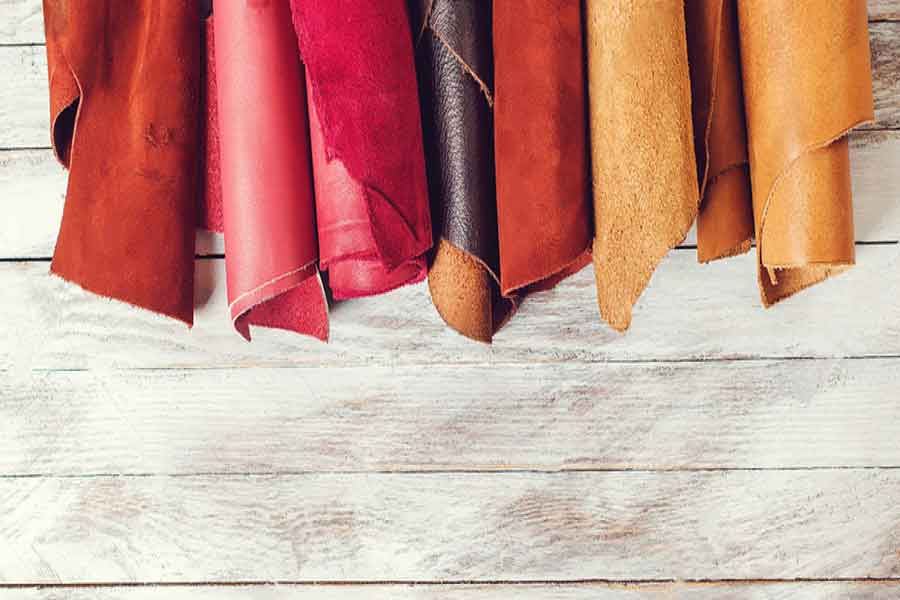
| Surface feel | Distinctive natural leather texture — varies significantly between hides | Extremely consistent, uniform suede surface — no hide-to-hide variation |
| Softness | Good — varies by tannage and type | Excellent — ultra-fine filaments produce exceptional softness |
| Durability | Good but varies — natural collagen degrades over time; cracks if not conditioned | Excellent — PU/nylon composite resists cracking; maintains performance through decades of use |
| Colour consistency | High variation between hides — challenging for large color-matched products | Excellent consistency — uniform throughout production batch |
| Water resistance | Low (untreated) to moderate (treated) | Good — PU matrix and DWR treatment provide moisture resistance |
| Cleanability | Moderate — stains can be difficult to remove from suede | Very good — PU matrix makes cleaning easier than genuine suede |
| Breathability | Good — natural fiber structure allows vapor transport | Moderate — microfiber structure provides some breathability; better than PVC leather |
| Weight | Heavy — varies by thickness and hide | Lighter — PU/microfiber is lighter per unit area than equivalent leather |
| Sustainability | Complex — animal welfare concerns; tanning uses chromium and other chemicals; not biodegradable when chrome-tanned | Complex — petroleum-based polymer; not biodegradable; but no animal use; no toxic tanning chemicals |
| Fire performance | Burns with animal hair characteristics — self-extinguishes | FR-treated grades available meeting automotive fire standards (FMVSS 302) |
| Cost | High and variable (hide scarcity) | Lower and consistent — industrial production eliminates supply volatility |
| Available dimensions | Limited by hide size (typically max 3–5 m²) | Unlimited — roll goods to any width and length; no join marks |
PU Leather: The Standard Synthetic Option
While microfiber suede represents the premium end of synthetic leather, PU (polyurethane) leather is the dominant commercial synthetic leather used in fashion accessories, furniture, automotive (economy and mid-range), and footwear. Understanding PU leather production is important for both buyers and for understanding VNPOLYFIBER’s position in the supply chain.
PU leather consists of a backing fabric (woven, knit, or nonwoven) coated with one or more layers of polyurethane. The backing determines structural properties (tear strength, dimensional stability, thickness); the PU coating determines surface appearance, texture, durability, and the ‘leather-like’ quality. Needlepunched polyester nonwoven is commonly used as the backing fabric for mid-range PU leather — providing the dimensional stability and surface texture that makes the PU coating adhere and perform well.
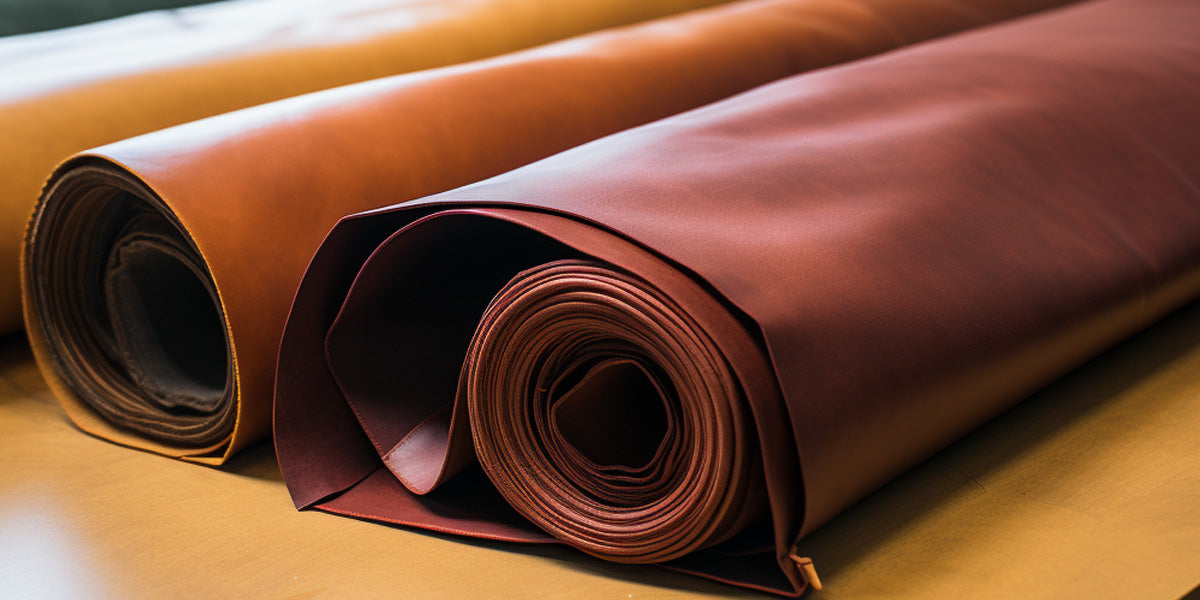
- Dry process PU leather: PU film is cast onto release paper, dried, then laminated to the fabric backing with adhesive. Produces a very smooth, consistent surface. Standard for fashion accessories and shoes.
- Wet process PU leather: PU solution is applied directly to the fabric backing and coagulated in water, producing an open-cell PU structure. More breathable than dry process; preferred for apparel and automotive applications. The coagulated PU structure more closely mimics the cellular structure of genuine leather.
- Water-based PU leather: Eliminates solvent use in coating — replacing DMF-based PU with water-dispersed PU systems. Significantly lower VOC emissions; preferred by sustainability-focused brands; now commercially mature. Stella McCartney and Patagonia specifications require water-based PU.
Applications by Market Sector
Automotive — The Largest Market
Automotive is the largest and most technically demanding application for synthetic leather, particularly microfiber suede. The reasons: genuine leather at automotive scale is prohibitively expensive and has significant quality consistency challenges; PVC leather is declining due to plasticizer migration and VOC emissions in enclosed cabin environments; microfiber suede (Alcantara-type) has become the premium standard for EV interiors specifically.
The EV boom is a major growth driver for synthetic leather — EV brands including Tesla, BYD, Lucid, and NIO use synthetic suede extensively in their premium interior offerings, driven by the vegan positioning that EV buyers often favor and the FR performance requirements for EV battery fire scenarios. Alcantara specifically has long-term supply agreements with major EV manufacturers.
Automotive synthetic leather specifications are highly demanding: FMVSS 302 flame resistance mandatory; VOC emission limits (VDA 278 / Volkswagen PV3015); UV resistance (minimum 400 hours Xenon arc test); abrasion resistance (Martindale >50,000 cycles for seat fabric); cold crack resistance (-30°C flexing test).
Luxury Goods and Fashion
Luxury leather goods brands increasingly use microfiber synthetic leather for interior lining, stitching panels, and logo areas where animal leather would require costly hand-cutting and fitting. The color consistency and cut efficiency of roll-goods synthetic leather also make it commercially attractive for high-volume production. Brands including Stella McCartney (entire collections built on VEGEA mushroom and PU leather), Gucci (partial collection), and mass market brands using vegan credentials as a mainstream differentiator.
Footwear
Footwear is the highest-volume synthetic leather application by surface area — the upper of a typical athletic shoe, boot, or fashion shoe uses far more material per unit than any automotive or accessory application. PU leather dominates in mid-market footwear; microfiber suede is specified for premium footwear where the look and feel of genuine suede is desired without the care requirements.
PSF Supply Chain Connection: VNPOLYFIBER’s Role
VNPOLYFIBER’s products connect to the synthetic leather supply chain at two stages:
- Fine solid PSF for needlepunch substrate: The needlepunched nonwoven substrate for PU leather requires fine solid polyester staple fiber — typically 2D–4D × 38–51 mm, tightly needled (600–1,200 punches/cm²) to create the dense structure that PU coating adheres to and the tight surface that can be buffed for suede nap. VNPOLYFIBER solid fiber in this specification range is suitable for synthetic leather substrate production.
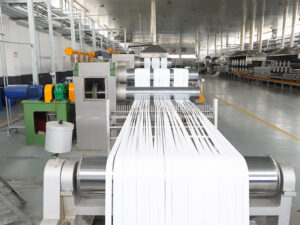
- Needlepunched nonwoven fabric: Where we supply needlepunched nonwoven fabric directly, synthetic leather substrate is a high-value application — the nonwoven substrate commands significantly higher value than standard geotextile needlepunch due to the precision specification and quality requirements.
Contact VNPOLYFIBER for specifications and quotations on fine solid polyester staple fiber for synthetic leather substrate applications and needlepunched nonwoven fabric for PU leather backing.
Conclusion
Synthetic leather spans from commodity PVC-coated fabric to sophisticated microfiber suede whose production is one of the most technically complex nonwoven-based processes in the textile industry. The sea-island bicomponent fiber technology — releasing ultrafine microfilaments through selective dissolution of the sea polymer — is the key innovation that makes premium microfiber suede possible, and it represents a unique intersection of specialty bicomponent fiber science and high-precision needlepunch nonwoven processing.
For fiber and nonwoven suppliers, the synthetic leather market is a high-value, technically demanding application that rewards precision specification and quality consistency. For brands and product developers, understanding the three types of synthetic leather — PVC, PU leather, and microfiber suede — and their respective properties, production processes, and sustainability profiles is the foundation for making informed material choices across automotive, luxury goods, fashion, and footwear applications.