Specialty and Technical Yarns: BCF, Polypropylene, PBT, High Tenacity and Monofilament — Complete Guide
Beyond the commodity polyester and nylon yarn categories that dominate global textile production by volume, a range of specialty and technical yarn types serve defined market niches where standard polyester or nylon cannot provide the required performance. BCF yarn dominates carpet manufacturing. Polypropylene yarn holds a unique position in filtration, geotextile, and sports applications. PBT yarn provides stretch apparel fabrics with exceptional dimensional stability. Monofilament serves precision filtration, brush manufacturing, and industrial weaving. High-tenacity yarn reinforces safety-critical industrial products.
This guide profiles each specialty yarn category with precision—defining what each yarn is, how it is produced, what properties make it suitable for its applications, and how to specify it correctly. For buyers and product developers who encounter these yarns in textile supply chains, this reference provides the technical grounding to work with them accurately.
BCF Yarn — Bulked Continuous Filament: The Carpet Standard
What BCF Yarn Is
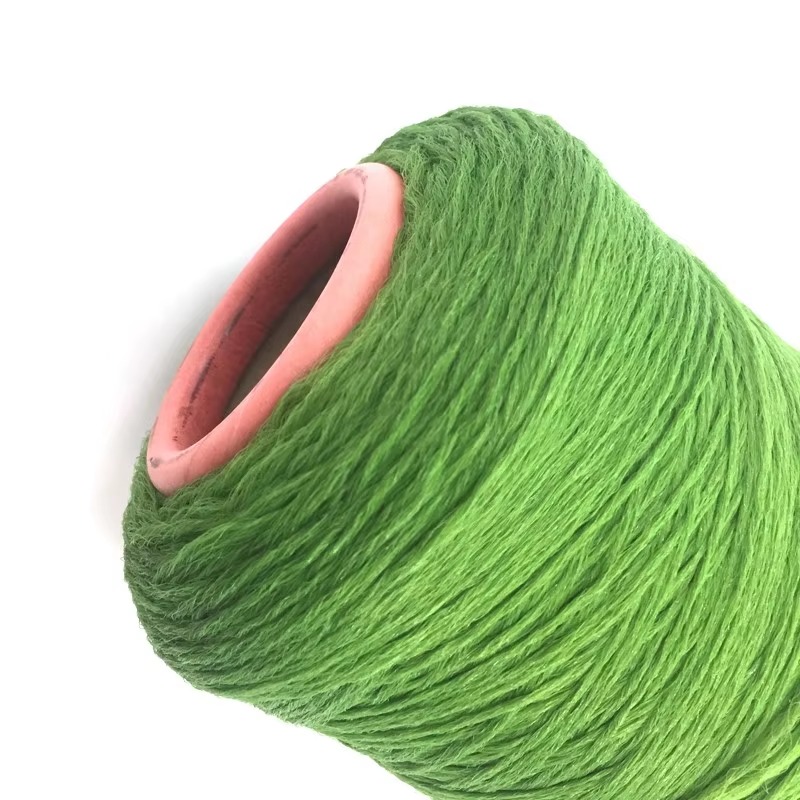
Bulked Continuous Filament (BCF) yarn is a multifilament yarn that has been bulked — given a permanent three-dimensional bulk and crimp — through a hot-air bulking or stuffer-box texturizing process during spinning. Unlike DTY (which uses a false-twist texturizing process), BCF bulking creates a coarser, more stable crimp that gives the yarn its characteristic springy, resilient character—exactly what is needed for carpet pile.
BCF is produced directly from polymer melt in an integrated spin-bulk-wind process—the polymer is extruded through spinnerets, the filaments are cooled and then passed through a hot-air jet or stuffer-box bulking device, and the bulked yarn is wound. This integrated one-step process makes BCF production highly efficient. BCF is not produced from POY — it is a finished yarn produced in a single pass from polymer to bulked yarn.
BCF Yarn Polymers
Polymer | BCF Properties and Market Position |
Nylon 6 BCF | Premium carpet — softest hand, best stain resistance, highest resilience. The standard for luxury residential and high-end hospitality carpet. Highest price of BCF types. |
Nylon 66 BCF | Premium-to-commercial carpet—slightly higher heat resistance and hardness than Nylon 6. Used in demanding commercial applications (airports, contract carpet). High price. |
Polyester (PET) BCF | Mid-market residential carpet—excellent color vibrancy, inherent stain resistance (hydrophobic surface), and softer hand than polypropylene. Lower cost than nylon. Growing share of residential carpet market. |
Polypropylene (PP) BCF | Value carpet and rugs—lowest cost, inherent solution dyeing, UV-stable, moisture-proof. Standard for outdoor carpet, kitchen/bathroom carpet, promotional rugs, marine carpet. Limited high-end market appeal. |
PBT BCF | Specialty premium carpet—PBT’s superior resilience and elastic recovery (better than PET BCF) provide outstanding pile recovery after compression. Niche premium market. |
BCF Yarn Specifications
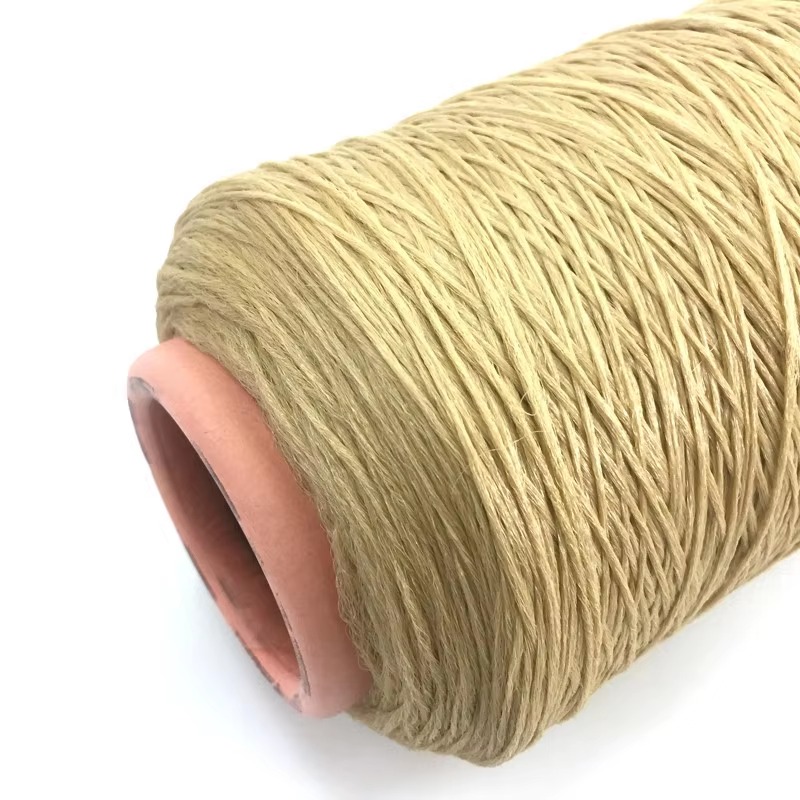
- Denier range: Typically 1000D to 20,000D for carpet BCF — far coarser than apparel yarns. Carpet denier is determined by the pile height and carpet style. Cut pile (plush) carpets use 1200–2000D typically; loop pile (Berber) uses a similar range; commercial contract carpet uses heavier deniers for durability.
- Filament count: Specified as total denier / filament count—e.g., ‘1500D/100F’ means 1500 denier total weight, 100 filaments, making each individual filament 15 denier. More filaments = softer appearance; fewer filaments = firmer, more defined pile.
- Luster: Semi-dull (most common for residential carpet), bright (produces high-sheen effect carpet), or solution-dyed (color integral to the polymer—the standard for outdoor and automotive carpet where UV fastness is critical).
- BCF vs. spun staple: BCF dominates commercial carpet production because continuous filaments cannot pill out of the carpet pile—a key advantage over spun staple carpet yarn, where individual fiber ends can work free and create a pilling appearance over time.
Polypropylene (PP) Yarn — The Specialist Polymer
Why PP Yarn Is Different
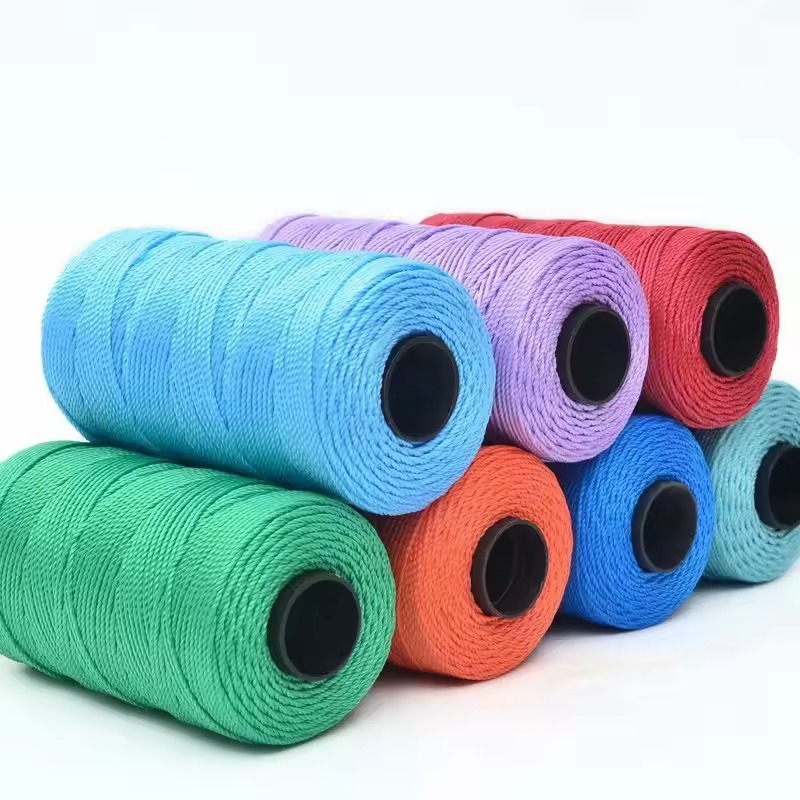
Polypropylene (PP) yarn occupies a unique position in technical textile markets because of its combination of properties that no other major textile fiber shares: it is the only commercial textile fiber lighter than water (density 0.91 g/cm³, versus water’s 1.0); it absorbs essentially zero moisture (0.01% moisture regain—lower than any other standard textile fiber); and it has outstanding chemical resistance across the full pH range from strong acids to strong alkalis.
These properties make PP yarn indispensable in applications where polyester, nylon, or cotton would be damaged, degraded, or simply inappropriate. However, PP also has significant limitations—it cannot be conventionally dyed (must be solution-dyed), it has a relatively low melting point (165°C), and it has lower UV resistance than polyester without additives.
PP Yarn Properties
Property | Detail and Commercial Significance |
Density | 0.91 g/cm³ — lightest commercial textile fiber (lighter than water). Fabrics are lightweight per unit coverage; ropes float on water. |
Moisture absorption | ~0.01% — essentially nil. Stays dry against skin, dries instantly, does not support mold or bacterial growth, and maintains strength when wet. |
Chemical resistance | Outstanding—resists virtually all acids, bases, and organic solvents at moderate temperatures. Cannot be damaged by most industrial chemicals. |
Melting point | ~165°C — significantly lower than polyester (265°C) or nylon 66 (265°C). Cannot be exposed to high-temperature processing, ironing, or autoclave sterilization. |
Dyeability | Cannot be conventionally dyed — must be solution-dyed (color masterbatch added to polymer melt before spinning). Limited color range but excellent colorfast properties. |
UV resistance | Poor without stabilizers. Must be UV-stabilized for outdoor use — UV-stabilized PP yarn is standard for outdoor applications. |
Tenacity | 3.5–8.0 cN/dtex—adequate for most applications; high-tenacity PP available for geotextile and industrial rope applications. |
Electrical resistance | Very high — PP is an excellent electrical insulator. Creates static charge in dry conditions — anti-static treatment may be required for processing. |
Thermal bonding | PP can be thermally bonded in bicomponent fiber constructions (PP sheath / PP or PE core). A lower melting point makes PP suitable as a binder fiber in nonwoven manufacture. |
PP Yarn Applications
- Geotextile fabrics: PP woven geotextile (from flat tape or multifilament yarn) and needlepunched nonwoven geotextile (from PP staple fiber) are widely used for road construction subbase separation, slope erosion control, drainage filtration, and retaining wall reinforcement. PP’s resistance to soil acids, alkalis, and biological degradation gives it excellent longevity in buried applications.
- Filtration fabrics: PP multifilament and monofilament woven filter cloth for industrial liquid and air filtration — chemical resistance is the critical property when filtering acidic or alkaline process streams.
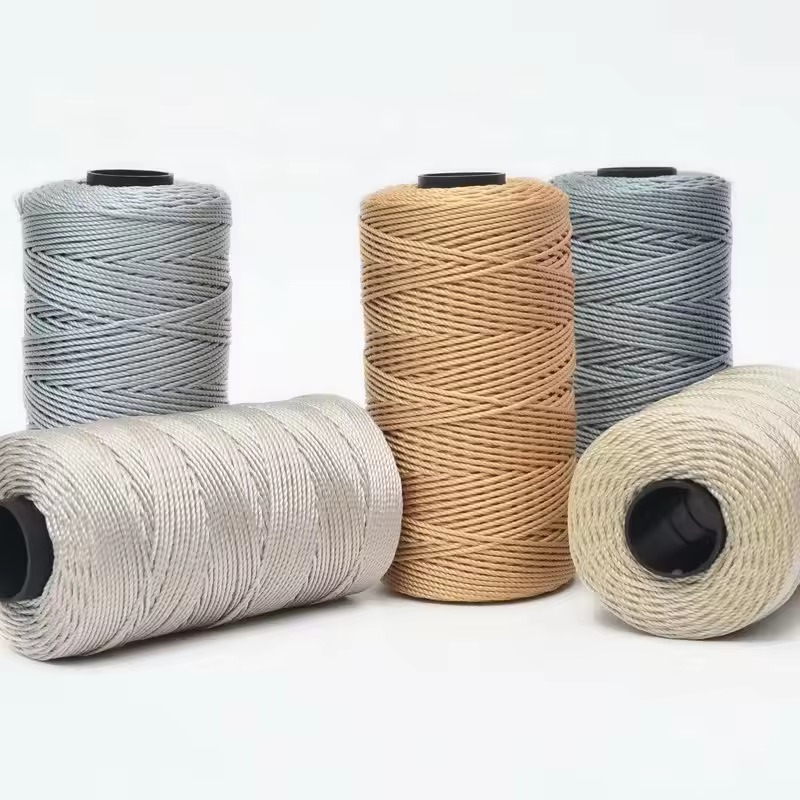
- Marine and outdoor rope: PP rope floats on water (the only major rope material that does), is unaffected by salt water, and is significantly lower cost than nylon. Standard for boat fender lines, buoy mooring, and agricultural applications.
- Sports and performance socks: PP’s near-zero moisture absorption keeps feet dry by pushing moisture to the outer sock layer rather than absorbing it—used in running and hiking sock constructions for blister prevention through dryness.
- Carpet BCF (PP BCF): As noted in the BCF section, the value tier of carpet production, particularly for outdoor, kitchen, and budget residential applications where low cost and moisture resistance are priorities.
- Hygiene nonwovens: PP spunbond and meltblown are the dominant materials for disposable hygiene products—diaper top sheets, feminine hygiene covers, and surgical masks. PP’s hydrophobicity provides fluid barrier properties; meltblown PP is the filtration layer in N95 respirators.
PBT Yarn — Polybutylene Terephthalate: The Stretch Specialist
What PBT Yarn Is
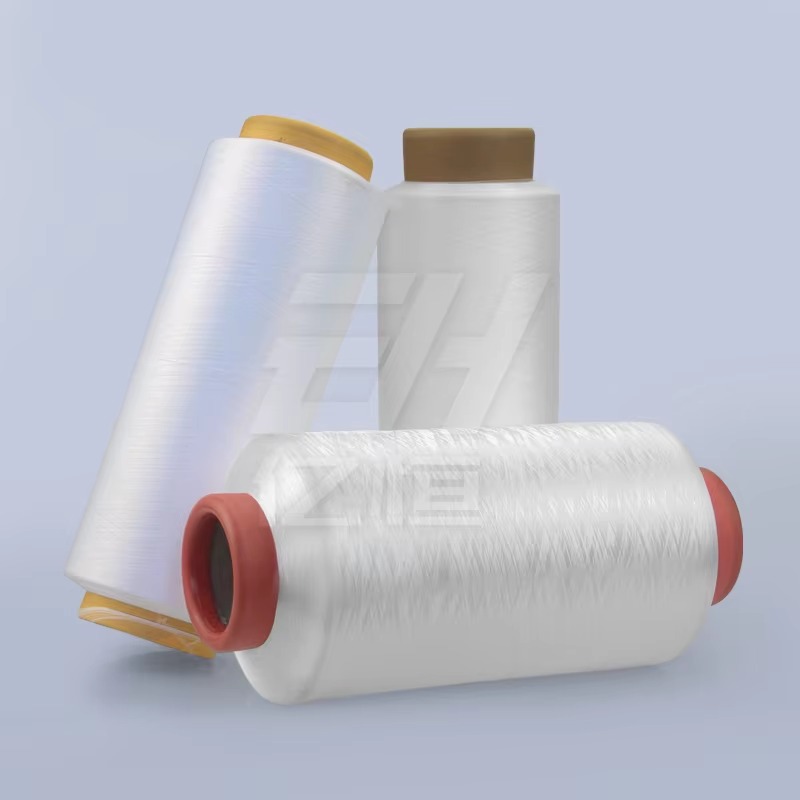
PBT (polybutylene terephthalate) yarn is produced from PBT polymer—a polyester family member that uses 1,4-butanediol instead of monoethylene glycol in the polymer backbone. This subtle change in chemistry gives PBT fundamentally different mechanical properties from standard PET polyester: PBT has a naturally crimped molecular structure that provides inherent elasticity without the addition of spandex, and it has exceptional elastic recovery after repeated stretching.
PBT yarn is sometimes described as ‘the elastic polyester’—it provides 15–30% stretch and high elastic recovery from conventional polyester-system processing (disperse dye, standard temperatures), without the processing complications and cost of spandex-containing yarn systems. It is particularly valuable in applications where spandex presents durability or processing challenges.
PBT vs PET vs Spandex for Stretch Applications
Property | PBT Yarn | PET + Spandex | Standard PET |
Inherent stretch | 15–30% (no spandex needed) | 400–700% (spandex component) | <5% |
Elastic recovery | Excellent | Excellent | Poor |
Dyeing system | Standard disperse 100–115°C | Complex — two-stage (disperse + careful spandex handling) | Standard disperse 130°C |
Chlorine resistance | Good | Poor (spandex degrades with chlorine) | Good |
Moisture absorption | ~0.4% (hydrophobic, same as PET) | Varies by blend ratio | ~0.4% |
Processing complexity | Standard polyester processing | Additional care for spandex tension and heat | Standard |
Cost | Mid-premium (above PET, below spandex blend) | Higher (spandex cost + processing) | Lowest |
Best for | Stretch apparel (hosiery, knitwear, seamless) where spandex durability is a concern | Maximum stretch (swimwear, compression) | Non-stretch apparel and technical |
PBT Applications
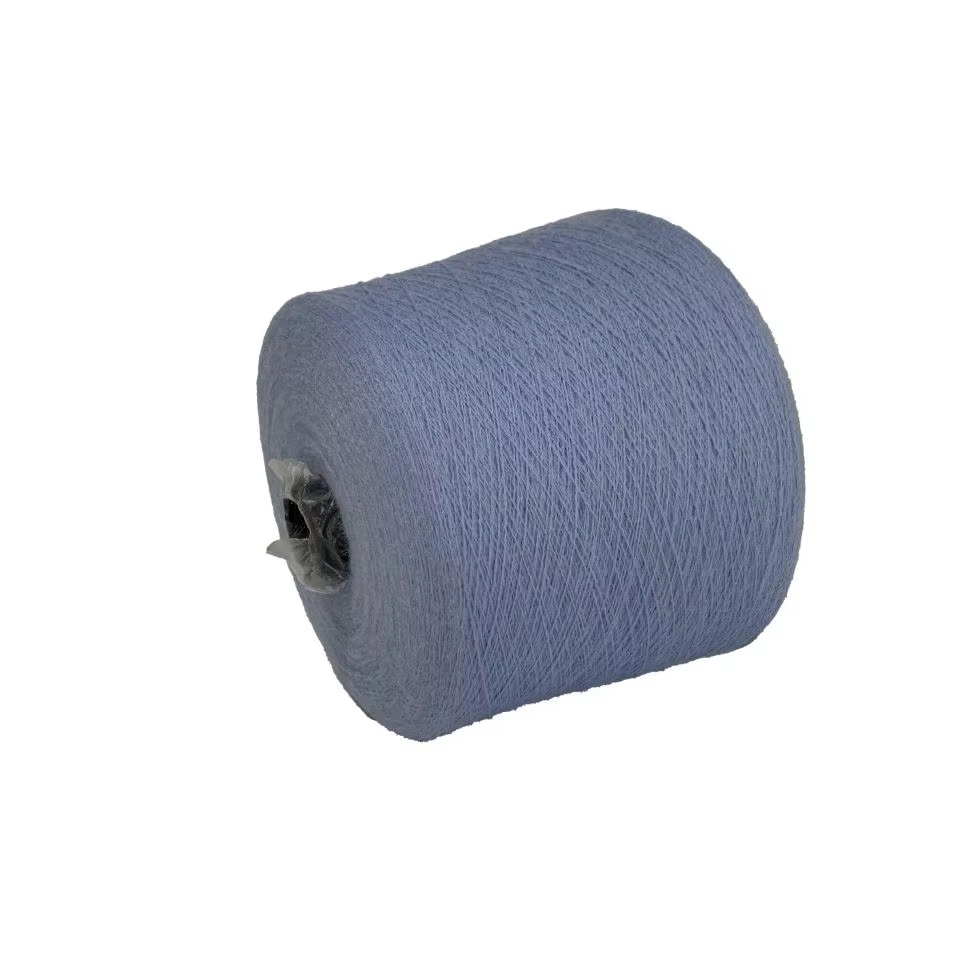
- Hosiery and seamless knitting: PBT yarn’s inherent elasticity allows seamless knitting machines to produce seamless garments with comfortable body-conforming stretch without spandex—simplifying the dyeing process and improving durability compared to spandex-containing yarn.
- Flat-knit sweaters and knitwear: PBT’s elasticity and excellent color absorption (superior to standard PET) make it preferred for premium knit apparel where both aesthetics and comfort-stretch are required.
- Carpet BCF (PBT): PBT’s superior elastic recovery versus PET makes it better at restoring pile height after compression — a key quality parameter for premium residential carpet.
- Automotive textiles: PBT’s combination of dimensional stability, color vibrancy, and resistance to both UV and chemical exposure makes it suitable for automotive interior fabric (seat covers, headliners) where PET’s properties are adequate but PBT’s superior recovery is advantageous for seat fabrics that must recover from prolonged occupancy compression.
Monofilament Yarn — One Filament, Maximum Precision
What Monofilament Is
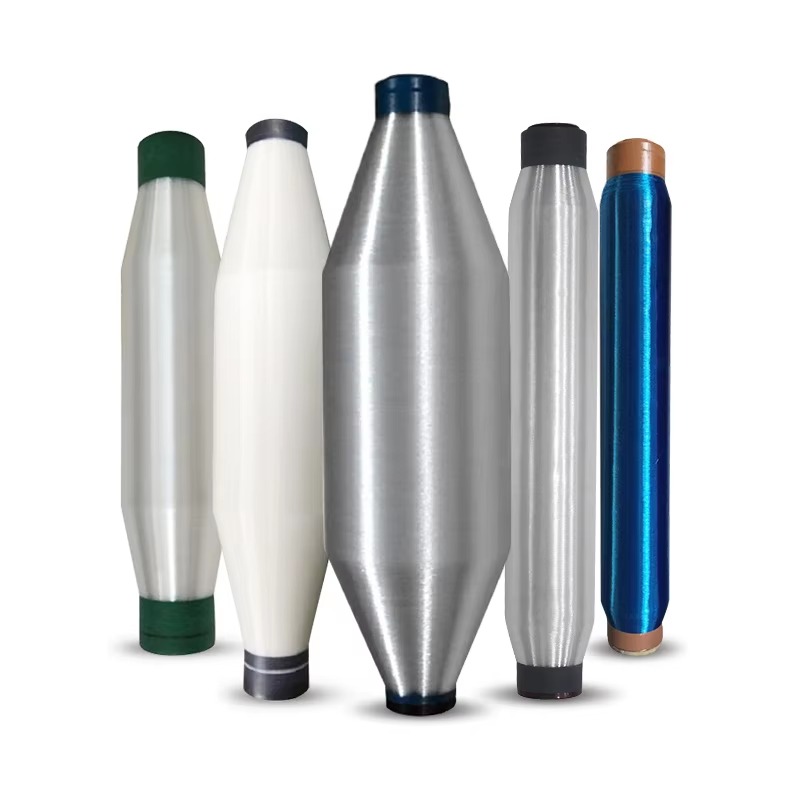
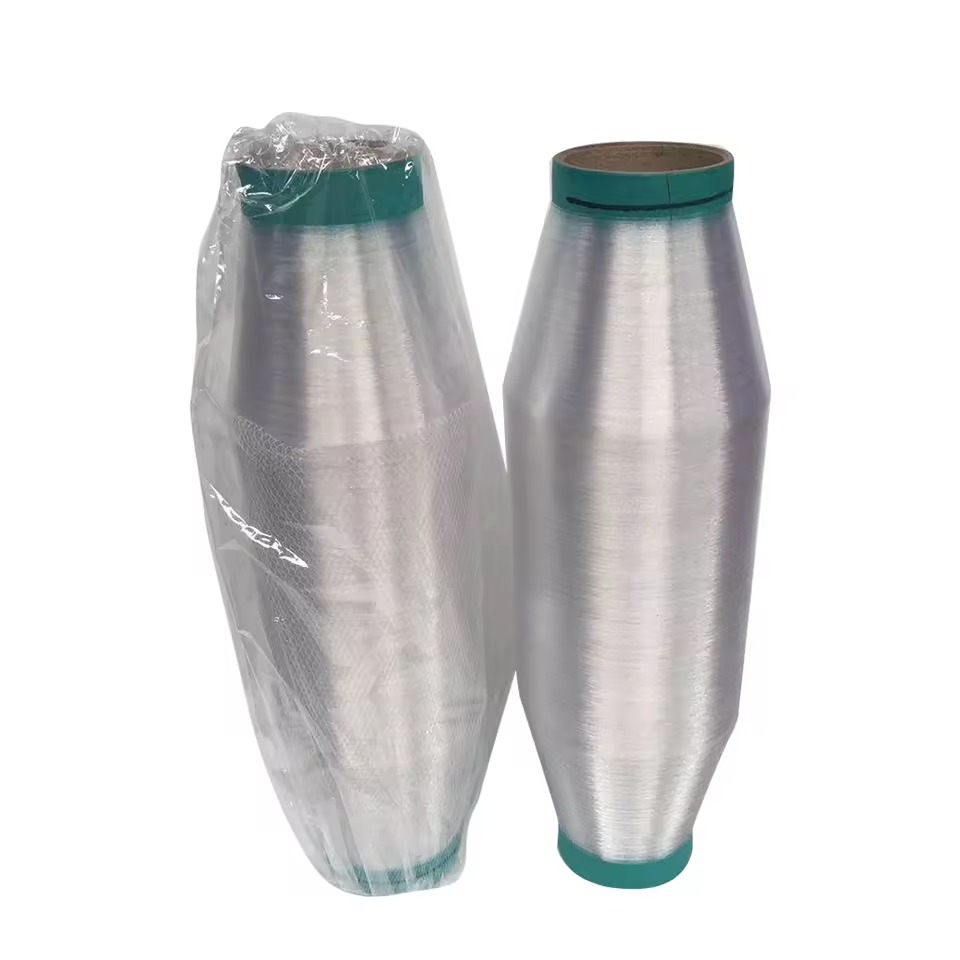
Monofilament yarn consists of a single unjoined filament — one continuous strand of polymer without the multiple parallel filaments of multifilament yarn or the twisted short fibers of spun yarn. This gives monofilament its characteristic properties: a rigid, transparent or translucent profile (at finer gauges), maximum stiffness for a given denier, precise dimensional control, and no fiber-to-fiber slippage.
Monofilament is specified by diameter in millimeters (rather than by denier, as with multifilament) because the stiffness and application performance of monofilament are determined primarily by its diameter. It is produced by melt-extrusion through a single-hole spinneret and drawing—a simpler process than multifilament production but requiring precise control of extrusion temperature, die geometry, and draw ratio for consistent diameter and properties.
Monofilament by Polymer
Polymer | Diameter Range | Key Properties and Applications |
PET Monofilament | 0.10–0.32 mm | High dimensional stability, good chemical resistance, and a transparent (clear) option. Velcro fastener hooks, industrial weaving, filter cloth weft, embroidery backing mesh, ribbon. Excellent dye uptake (all colors, including dope-dyed). |
Nylon 6 Monofilament | 0.23–0.57 mm | Highest flexibility and toughness among standard monofilaments. Fishing line and net (dominant application), scouring nets, brush filament (softer brush applications). Absorbs water slightly — performance changes in wet conditions. |
Nylon 66 Monofilament | 0.10–0.32 mm | Higher stiffness and heat resistance than N6. Velcro hooks (N66 standard for most Velcro manufacturing), industrial mesh for filtration and paper machine forming fabrics, and sewing applications. |
PBT Monofilament | 0.07–0.23 mm | Highly flexible and resilient — springs back after bending without fatigue failure. Cosmetic brush filament (foundation, eyeshadow, and powder brushes—PBT’s soft tip and spring-back are ideal), toothbrush bristles, and art brushes. Available in complex cross-section geometries (tapered tips, wavy crimps) for specialist brush applications. |
PP Monofilament | 0.20–0.60 mm | Chemical resistance, very low moisture absorption, and lightest density. Aquaculture nets (saltwater exposure), chemical filtration fabric, and concrete reinforcement microfibers (short-cut PP monofilament delays plastic shrinkage cracking). |
PBT monofilament deserves special attention: its unique combination of softness at the filament tip, spring-back recovery, and taperability makes it the dominant material for premium cosmetic brushes worldwide—from fine makeup brushes used in luxury cosmetics to mass-market synthetic brush products. The soft rounded tip mimics natural animal hair better than any other synthetic material, and PBT’s properties can be tuned through diameter selection and cross-section geometry.
High Tenacity Yarn (HTY) — Industrial Strength
High tenacity yarn was covered in depth in the POY/FDY/DTY guide and the nylon yarn guide for their respective polymers. Here is the consolidated cross-polymer reference for technical buyers:
HTY Type | Tenacity Range | Denier Range | Primary Applications |
Polyester HTY (PET) | 60–90 cN/tex | 44D–1890D | Tire cord (passenger car), seat belt webbing, conveyor belt (coal mining), fire hose fabric, geosynthetic reinforcement, heavy-duty rope and net, high-strength sewing thread |
Nylon 66 HTY | 70–90 cN/tex | 210D–1890D | Truck and aircraft tire cord, airbag fabric, high-impact applications where energy absorption outweighs PET’s dimensional stability advantage |
Nylon 6 HTY | 65–85 cN/tex | 210D–1890D | Fishing net and rope, industrial canvas, UV-protected outdoor applications |
Polypropylene HTY | 40–70 cN/tex | 500D–3000D | Geotextile reinforcement, marine rope (floating), construction safety net, industrial packaging material (PP woven sack fabric) |
Aramid (Kevlar / Nomex) | 200–300 cN/tex | 200D–3000D | Extreme performance: ballistic protection, fireproof protective clothing, aerospace composites. Not a polyester or nylon—aromatic polyamide. |
Specialty Yarn Selection Framework
Choosing the right specialty or technical yarn requires matching the polymer’s distinctive properties to the specific application requirement:
Application Requirement | Recommended Specialty Yarn |
Carpet pile—premium, soft, resilient | Nylon 6 or Nylon 66 BCF—highest resilience and soil resistance |
Carpet — value tier or outdoor | PP BCF — lowest cost, moisture-proof, UV-stable (solution-dyed) |
Carpet — mid-market residential | PET BCF — excellent color, inherent stain resistance, lower cost than nylon |
Filtration of acid or alkali liquids | PP multifilament or monofilament woven—chemical resistance is definitive |
Geotextile for buried application | PP woven or needlepunch—biologically stable; PET also suitable if soil pH neutral |
Marine rope or net (must float) | PP HTY rope—the only standard rope material lighter than water |
Stretch knitwear without spandex | PBT DTY or BCF — inherent elasticity and excellent color absorption |
Premium cosmetic brush filament | PBT monofilament—unmatched softness, spring-back, and taper-ability |
Toothbrush bristle | PBT or nylon monofilament—softness, flexibility, tip-rounding capability |
Fishing line / fishing net | Nylon 6 monofilament or HTY multifilament—toughness, UV resistance with stabilizer |
Automotive seat belt webbing | Polyester HTY (flat woven) — strength, dimensional stability, heat resistance |
Tire cord—passenger car | Polyester HTY—dimensional stability under heat better than nylon for passenger tires |
Tire cord—truck or aircraft | Nylon 66 HTY — toughness and energy absorption for high-impact loads |
Airbag fabric reinforcement | Nylon 66 HTY — high-temperature deployment performance mandatory |
Industrial sewing thread (heavy duty) | Polyester HTY (fine range) or nylon core-spun—strength plus sewability |
Conclusion
Specialty and technical yarns exist because the commodity polyester and nylon yarns that serve most apparel and home textile applications simply cannot meet the specific performance requirements of carpet, geotextiles, filtration, brush manufacturing, safety products, and other technically demanding applications. BCF yarn’s resilience, PP yarn’s chemical resistance, PBT yarn’s inherent elasticity, monofilament’s precision, and HTY’s strength are each genuinely unique properties that have driven these materials into their respective dominant market positions.
For buyers and specification engineers working with these materials, the starting point is always the specific property that the application requires — not the polymer name or the commercial reputation of the material. Matching application requirements to material properties with precision is what distinguishes accurate specifications from guesswork and what prevents the costly downstream failures that follow incorrect yarn selection.