Cotton vs. Polyester Fiber: The Definitive Comparison Guide for Every Application
Cotton and polyester are the two most produced textile fibers on Earth — together accounting for well over 80% of all fiber consumed globally. Cotton has been cultivated for over 7,000 years; polyester was commercialized in the 1950s. Both are used in clothing, bedding, upholstery, and technical textiles — and both have devoted advocates and persistent critics. The question ‘cotton or polyester?’ is asked by designers, manufacturers, sustainability teams, brand buyers, and consumers every day, and it rarely has a simple answer.
The honest answer is that neither fiber is universally superior. They have genuinely different — and in many ways complementary — properties that make each the right choice for specific applications. Understanding those differences with precision, rather than relying on fiber marketing claims or broad generalizations, is what enables better sourcing decisions, better product development, and more credible sustainability communication.
This complete guide covers every dimension that matters for the cotton vs. polyester decision: their origins and structures, a full 20-dimension head-to-head comparison, performance in specific application categories, poly-cotton blend options, sustainability comparison, and a practical application-matching framework.
Origins and Structure: Where Each Fiber Comes From
Cotton: The Plant Fiber
Cotton fiber grows in the protective case (boll) surrounding the seeds of plants in the genus Gossypium, family Malvaceae. The four commercially important cotton species are Gossypium hirsutum (Upland cotton — ~90% of global production), Gossypium barbadense (Egyptian, Pima, and Sea Island cotton — premium long-staple varieties), Gossypium arboreum, and Gossypium herbaceum. Cotton bolls are harvested mechanically (in developed markets) or by hand (in most of South Asia), then ginned to separate the fibers from the seeds.
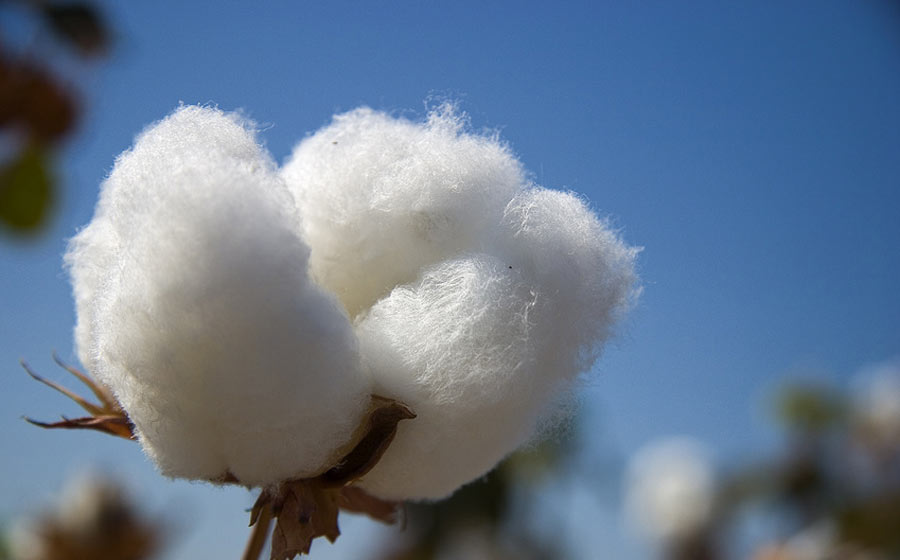
At the molecular level, cotton fiber is almost pure cellulose — approximately 90% cellulose polymer with a small amount of waxes, proteins, pectin, and water. The cellulose chains are organized in a complex hierarchical structure: elementary fibrils → microfibrils → fibrils → cell wall layers → the overall fiber. This hierarchical structure, with its combination of crystalline (ordered) and amorphous (disordered) cellulose regions, gives cotton its characteristic combination of strength, flexibility, and — critically — its high moisture absorption (8% moisture regain under standard conditions).
Cotton staple length — the average fiber length — is the primary cotton quality indicator that determines its end-use and price. Short staple (less than 25 mm): lower quality, coarser yarns. Medium staple (25–32 mm): standard apparel and home textiles. Long staple (32–45 mm): premium apparel fabrics. Extra-long staple (45 mm+): luxury fabrics. The lumen — the hollow channel in the center of mature cotton fiber — collapses when the boll dries, causing the fiber to twist and crimp, which gives cotton its natural spinning properties.
Polyester Staple Fiber: The Synthetic Fiber
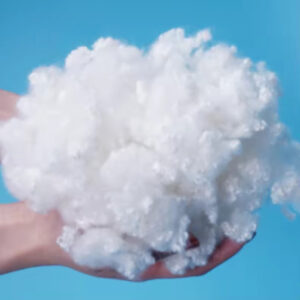
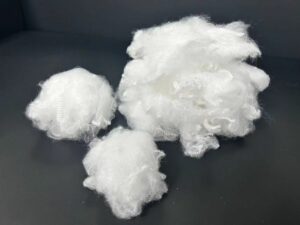
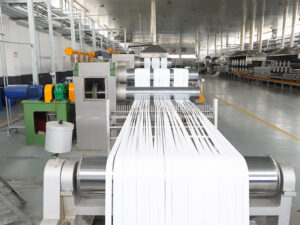
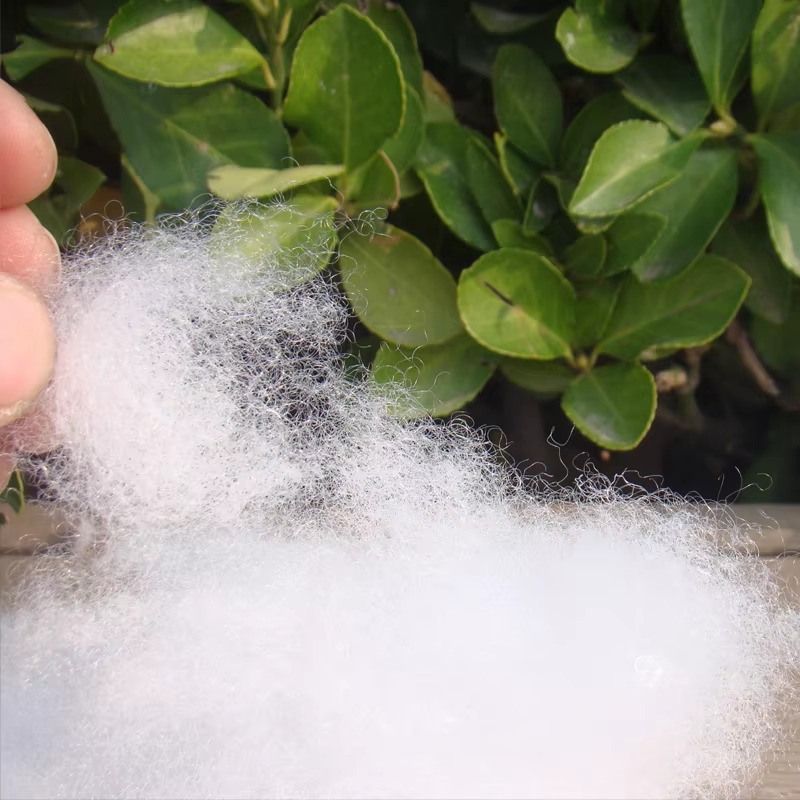
Polyester staple fiber (PSF) is produced from polyethylene terephthalate (PET) — a synthetic polymer built by the condensation polymerization of purified terephthalic acid (PTA) and monoethylene glycol (MEG), both petroleum-derived. The PET melt is extruded through spinnerets, quenched by cooling air, drawn to develop tensile properties, crimped to add bulk and processability, cut to the target staple length, and baled. The target staple length is chosen to match the downstream spinning system — 32–38 mm for cotton ring-spinning; 51–76 mm for nonwoven and specialty applications.
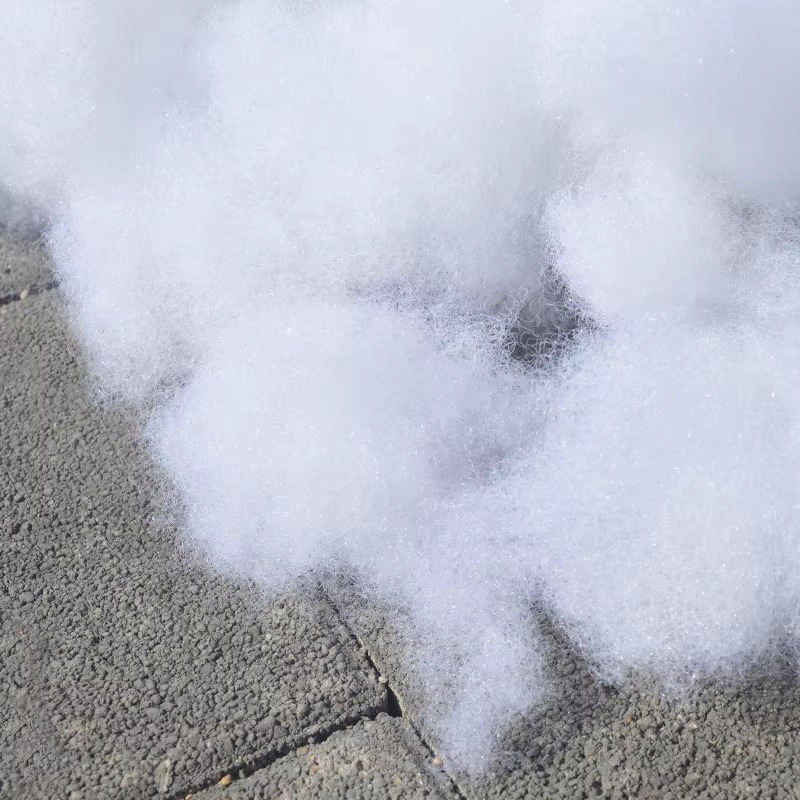
At the molecular level, polyester fiber is a hydrophobic synthetic polymer — the ester linkages in PET’s backbone do not interact with water molecules, giving polyester its characteristic 0.4% moisture regain (versus cotton’s 8%). The polymer chains are organized into crystalline and amorphous domains during the drawing process — the drawing-induced orientation of crystalline domains along the fiber axis is what gives polyester its high tensile strength and dimensional stability. Unlike cotton’s natural irregular structure, polyester can be manufactured with precisely controlled cross-sectional shapes (round, hollow, trilobal, 4-hole) and surface finishes (silicone for softness, hydrophilic for wicking) — giving PSF a degree of engineering flexibility that natural fibers cannot match.
The Complete Head-to-Head Comparison: 20 Dimensions
Dimension | Cotton | Polyester Staple Fiber |
Origin | Natural plant fiber — seed hair of Gossypium plant | Synthetic — melt-spun from petroleum-derived PET polymer |
Polymer | Cellulose (natural biopolymer — same as wood and paper) | Polyethylene terephthalate (PET — 100% synthetic) |
Moisture absorption | High — 8% moisture regain under standard conditions; absorbs sweat and environmental humidity | Very low — 0.4% moisture regain; essentially hydrophobic surface |
Breathability | Excellent — open fiber structure allows air circulation; ideal for warm weather and skin contact | Lower — traps more heat and moisture unless moisture-wicking finish is applied |
Softness | Natural soft hand feel; premium varieties (Egyptian, Pima) exceptionally smooth | Variable — solid fiber can feel stiff; fine-denier microfiber can approach cotton softness; hollow siliconized is very soft |
Tensile strength | 3–5 cN/dtex dry; slightly stronger wet (unique among common fibers) | 3.5–9 cN/dtex depending on grade — high-tenacity grades far exceed cotton; wet strength = dry strength |
Durability / abrasion | Good — fibres eventually break under repeated friction; pilling on lower-quality yarns | Excellent — resists abrasion more effectively than cotton; maintains structure through more wash cycles |
Wrinkle resistance | Poor — cotton creases readily and requires ironing for many applications | Excellent — returns to smooth appearance after washing; little or no ironing needed |
Dimensional stability | Moderate — can shrink up to 10% in first wash if not pre-shrunk; swells when wet | Outstanding — negligible shrinkage; maintains exact dimensions through repeated laundering |
Quick-drying | Slow — retains absorbed moisture; drying time measured in hours | Very fast — moisture sits on fiber surface and evaporates rapidly; dries in fraction of cotton’s time |
UV resistance | Moderate — degrades with prolonged UV without treatment | Good to excellent — inherently more UV-stable than cotton without additives |
Heat resistance | Tolerates higher temperatures in use (up to 200°C iron); chars rather than melts | Softens above 80°C; melts at 255–265°C; iron at low-medium heat only; thermoplastic |
Dyeability | Excellent — wide dye class compatibility (reactive, direct, vat, pigment) at atmospheric pressure | Requires disperse dyes at 130°C under pressure (standard); CDP grades dye at atmospheric pressure |
Colour fastness | Good but can fade with repeated washing and UV exposure | Very high — particularly dope-dyed grades; excellent wash and light fastness |
Biodegradability | Fully biodegradable — decomposes naturally in soil | Not biodegradable — persists in environment for decades to centuries |
Microplastic shedding | None — cotton fibres are biodegradable if shed | Yes — sheds persistent synthetic microfibers during washing |
Agricultural water use | High — 10,000–25,000 litres per kg of cotton (conventional irrigation-heavy) | None — industrial process; very low water consumption (~4–17 L/kg) |
Pesticide / chemical inputs | High — conventional cotton uses ~4% of global pesticides on ~3% of farmland | None in production — but petroleum extraction has its own environmental footprint |
Carbon footprint | ~3.5–5.5 kg CO₂e/kg (conventional); ~2.5–3.5 kg (organic) | ~5.5 kg CO₂e/kg (virgin); ~1.5–2.5 kg (recycled rPET) |
Cost | Variable — commodity cotton affordable; premium grades (Egyptian, Pima) significantly higher | Generally lower — PSF is a commodity industrial product with stable pricing |
Performance in Key Application Categories
The general comparison above must be translated into specific application guidance — because the ‘right’ fiber changes dramatically based on what you are making and what your customer needs:
Apparel: When to Choose Each
Garment Type | Cotton Preferred | Polyester Preferred |
Underwear / base layer | ✅ Superior skin comfort; natural absorbency; no static | ⚠️ Can feel clammy; some use moisture-wicking PSF but cotton standard |
T-shirts / casual tops | ✅ Soft, breathable, comfortable; preferred by most consumers | ✅ Budget casual, printable, wrinkle-free; recycled PSF increasingly specified |
Dress shirts / formal | ✅ Traditional; breathable; iron-crisp appearance | ⚠️ Wrinkle-free appeal but less breathable; poly-cotton blends common |
Performance sportswear | ⚠️ Absorbs sweat but stays wet and heavy | ✅ Moisture-wicking; quick-dry; maintains performance feel |
Swimwear | ⚠️ Absorbs water; slow drying; degrades with chlorine | ✅ Chlorine-resistant; quick-dry; shape retention; polyester-spandex standard |
Outdoor / workwear | ✅ Comfortable; natural insulation; flame resistance | ✅ Durability; colour fastness; wrinkle resistance; poly-cotton blends dominate |
Children’s sleepwear | ✅ Soft, natural, breathable; preferred for infants | ⚠️ FR-treated PSF meets safety standards but cotton preferred for comfort |
Winter outerwear (fill) | ⚠️ Cotton fill absorbs moisture; loses insulation when wet | ✅ HCS polyester fill — warm, washable, hypoallergenic, affordable |
Home Textiles: The Category Where Polyester PSF Dominates
Polyester staple fiber holds the dominant position in home textile fill applications — a role that cotton once occupied but which has largely transitioned to PSF due to cost, performance, and washability advantages:
- Pillow fill: Hollow conjugated siliconized (HCS) polyester has almost entirely displaced cotton (and kapok) as the global standard for pillow fill. Cotton batting used as pillow fill flattens quickly, is heavy when wet, and is a potential dust mite habitat without treatment. Polyester HCS fill maintains loft, is machine washable and quick-drying, is hypoallergenic, and is available with OEKO-TEX and GRS certification for sustainability requirements.
- Duvet and comforter fill: Polyester batting and cluster fiber fill are the standard for mid-market duvets globally. Cotton batting duvets exist but have a much smaller market share due to weight, moisture retention, and eventual flattening.
- Mattresses: Both materials are used — cotton quilting layers (valued for natural breathability and comfort in premium mattresses) and polyester wadding and border fiber (for structural definition, cost efficiency, and consistent bonding behavior). High-end natural mattresses use cotton; mainstream and budget production uses polyester.
- Bedding fabrics: Cotton and cotton-polyester blends dominate sheet and pillowcase fabric — cotton for the soft, breathable skin-contact experience; poly-cotton for easy care and reduced cost. 100% polyester microfiber sheets compete at the budget end and in hotel/hospitality applications where laundering durability is prioritized.
- Stuffed toys: Polyester HCS fill is the global standard for stuffed toy filling. OEKO-TEX Class I certification ensures safety for children’s products. Cotton toy fill is available but represents a small niche premium segment.
Nonwovens and Technical Textiles
In nonwoven and technical textile applications, polyester staple fiber dominates almost completely:
- Geotextiles: polyester needle-punch and woven for road stabilization, slope protection, drainage filtration
- Automotive textiles: polyester carpet, acoustic insulation, headliner, door panel fabrics
- Filtration: polyester needle-felt filter bags, HVAC media, liquid filtration
- Wadding and batting: thermally bonded polyester for mattress toppers, quilts, and jackets
Cotton nonwovens exist (cotton hydroentangled spunlace for medical wipes, cosmetic pads, feminine hygiene) but represent a small fraction of the total nonwoven market. For most technical nonwoven applications, polyester’s engineering control, processability, and cost efficiency make it the clear choice.
The Poly-Cotton Blend: Getting the Best of Both
The most commercially important response to the cotton vs. polyester trade-off is the poly-cotton blend — combining both fibers in a single yarn or fabric to access the complementary strengths of each material. Poly-cotton blends are among the most produced fabrics globally, and understanding the properties of different blend ratios is commercially important:
Blend Ratio | Properties and Best Applications |
65% Polyester / 35% Cotton | Maximum easy-care: wrinkle-resistant, quick-drying, dimensionally stable, colour-fast. Sacrifices some comfort and breathability for performance. Standard for: workwear, uniforms, school apparel, hospitality linen that must survive commercial laundering. |
50% Polyester / 50% Cotton | Balanced blend: moderate breathability and comfort from cotton; moderate durability and easy-care from polyester. Standard for: everyday T-shirts, casual shirts, general-purpose apparel, printed promotional garments. |
35% Polyester / 65% Cotton (CVC) | Cotton-rich: significantly better comfort and breathability; still improved over 100% cotton for wrinkle resistance and drying time. Standard for: quality T-shirts, children’s clothing, apparel where comfort is the priority but easy-care is valued. |
20% Polyester / 80% Cotton | Near-cotton feel with a modest durability and easy-care improvement. Fabric approaches 100% cotton in comfort. Used in premium casual apparel where natural feel is paramount but some dimensional stability is desired. |
Polyester / Cotton Interlock Knit | For knitwear, the same principle applies — higher polyester for sportswear durability; higher cotton for comfort-focused garments. Athletic performance knits often use 50/50 or 60/40 for moisture management with comfort. |
Sustainability: The Most Complex Comparison
The sustainability comparison between cotton and polyester is genuinely complex — there is no winner across all dimensions, and the honest answer depends on which environmental impact category you weight most heavily. The key dimensions:
Where Cotton Has a Clear Advantage
- Biodegradability: cotton decomposes naturally — at end of life, cotton products in landfill eventually break down. Polyester persists for decades to centuries.
- Microplastics: cotton does not shed persistent synthetic microplastics. Polyester does — washing synthetic garments is one of the largest sources of primary microplastic pollution to the ocean.
- Renewable raw material: cotton is a renewable agricultural crop — the feedstock is regenerated by each growing season. Polyester requires fossil fuel extraction.
Where Polyester Has a Clear Advantage
- Water consumption: conventional cotton requires 10,000–25,000 liters per kilogram — polyester production uses approximately 4–17 liters per kilogram. The difference is enormous and particularly significant in water-stressed cotton-growing regions.
- Land use: polyester requires no agricultural land. Cotton requires fertile farmland that competes with food production.
- Pesticide use: conventional cotton uses ~4% of global pesticides. Polyester production requires none at the fiber level.
- Recycled polyester carbon footprint: GRS-certified rPET delivers approximately 60–70% lower GHG emissions than virgin polyester — and is competitive with organic cotton on carbon per kilogram.
The Honest Middle Ground
The most defensible sustainable sourcing position is: organic or Better Cotton Initiative (BCI) cotton where soil contact, breathability, and biodegradability matter most (underwear, skin-contact garments, children’s products); and GRS-certified recycled polyester where fill performance, durability, wash resistance, and technical application needs drive the specification. The binary ‘cotton = natural = good; polyester = synthetic = bad’ framing is too simple for credible sustainability communication.
Care Guide: Washing Cotton and Polyester
Care Step | Cotton | Polyester Staple Fiber |
Wash temperature | 30–60°C standard; hot wash (60°C+) safe for white cottons; causes shrinkage in first washes | 30–40°C maximum; hot washing causes dimensional distortion and locks in wrinkles permanently |
Detergent | Standard laundry detergent; alkaline detergents safe (cotton is alkali-resistant) | Mild or neutral detergent; avoid strong alkalis. Liquid preferred over powder for synthetic fabrics |
Bleaching | Chlorine bleach safe for white cotton; avoid on colored | Avoid chlorine bleach — damages polyester. Oxygen-based bleach acceptable if needed |
Tumble drying | Medium heat acceptable; cotton shrinks initially so size down or pre-wash before cutting | Low heat only — high-temperature tumble drying causes permanent distortion. Air dry when possible |
Ironing | High heat (200°C cotton setting); steam beneficial; iron slightly damp | Low to medium heat only (110–150°C). Never iron polyester on high — melts or glazes the surface |
Dry cleaning | Not required for most cotton; fine for structured cotton garments | Most polyester does not require dry cleaning; machine wash is standard and preferred |
Microplastic mitigation | N/A — cotton is biodegradable | Use Guppyfriend bag or in-machine filter; wash at lower temperature; reduce wash frequency |
Quick Decision Framework: Which to Choose?
Your Priority | Choose Cotton | Choose Polyester PSF |
Skin comfort and breathability | ✅ Always | ⚠️ With moisture-wicking finish |
Easy care / no ironing | ⚠️ Blends or wrinkle-resist finish | ✅ Always |
Durability / abrasion resistance | ⚠️ Long-staple varieties | ✅ Always |
Pillow and duvet fill performance | ❌ Heavy, flattens, holds moisture | ✅ HCS — light, washable, recovers |
Quick-drying sportswear or swimwear | ❌ Absorbs water, stays heavy | ✅ Always |
Natural biodegradable material | ✅ Always | ❌ Not biodegradable |
Lowest microplastic impact | ✅ No microplastics | ❌ Sheds microplastics |
Lowest water use | ❌ Very high water demand | ✅ Very low water use |
GRS certified recycled content | ❌ Not applicable | ✅ rPET with GRS certification |
Children’s skin-contact products | ✅ Preferred (organic cotton ideal) | ✅ With OEKO-TEX Class I certification |
Lowest cost at scale | ⚠️ Commodity cotton competitive | ✅ Commodity PSF generally lower |
Technical nonwoven applications | ⚠️ Limited nonwoven use | ✅ Standard choice for all nonwovens |
Conclusion: Complementary, Not Competing
Cotton and polyester are not rivals so much as they are fiber industry complements — each occupying application categories where its distinctive properties provide genuine, irreplaceable value. Cotton’s combination of breathability, moisture absorption, biodegradability, and natural comfort makes it the right choice for skin-contact apparel, premium bedding fabric, and any application where the natural fiber experience is the product value. Polyester staple fiber’s combination of engineered performance, washability, durability, fill performance, and recyclability makes it the right choice for fill applications, technical textiles, performance apparel, and nonwovens.
The most commercially sophisticated approach — and the most honest sustainability position — is not to declare one fiber superior to the other, but to understand both well enough to specify each where it performs best: cotton where its natural properties are genuinely the right fit, GRS-certified recycled polyester where PSF’s engineered performance and sustainability certification meet your product and market requirements.
VNPOLYFIBER specializes in the full range of polyester staple fiber — from hollow conjugated siliconized fill fiber to solid, dope-dyed, and specialty grades — in both virgin and GRS-certified recycled grades. Our products are OEKO-TEX Standard 100 certified (Class I for children’s applications) and available with full GRS chain-of-custody documentation for sustainability reporting. Contact us for specifications and quotations for your fill, nonwoven, or technical PSF requirements.