Polyester Fabric: Complete Guide to Types, Weaves, Characteristics, Uses & Care
Pick up almost any garment, reach for any bedsheet, sit on any upholstered sofa, or unzip any piece of luggage—and there is a strong probability that polyester fabric is in your hands. As the textile produced from the world’s most manufactured fiber, polyester fabric spans an astonishing range of forms: from the sheerness of chiffon to the bulk of fleece, from the technical precision of ripstop to the softness of microsuede, and from the structure of Oxford weave to the stretch of jersey knit.
Understanding polyester fabric—not just the fiber it comes from, but the full diversity of fabric constructions it enables—is essential for anyone working in fashion design, textile sourcing, home textile manufacturing, outdoor gear production, or technical textiles. The same polyester polymer that produces a stiff geotextile can, with different spinning, weaving, and finishing processes, produce a fabric virtually indistinguishable from silk. This complete guide explains how that transformation happens, what the resulting fabric types are, how they perform, and how to work with them.
This guide focuses on polyester fabric—the finished textile product made from polyester fiber. It covers how fiber becomes fabric, the major fabric types and their constructions, performance characteristics, applications by sector, how polyester fabric compares to cotton fabric, care guidance, and sustainable alternatives. For a deep dive into polyester fiber itself—the raw material that feeds fabric production—see our companion guide: What Is Polyester Fiber? Complete Guide to PET Fiber Types, Properties & rPET.
From Fiber to Fabric: How Polyester Becomes a Textile
Step 1: Fiber to Yarn
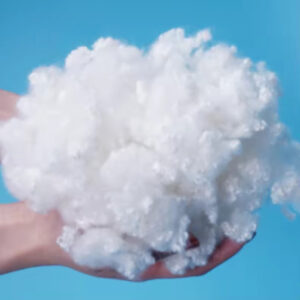
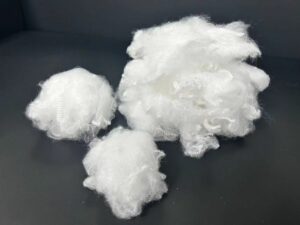
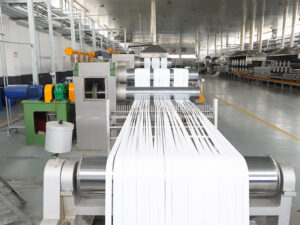
Polyester fabric begins with polyester fiber — either continuous filament yarn (CFY) or staple fiber spun into yarn. These two fiber forms produce fundamentally different fabric characters:
- Filament yarn: Continuous unbroken strands of polyester, wound directly from the spinning process. Fabrics made from filament yarn are smooth, lustrous, and uniform — the basis of chiffon, taffeta, satin, georgette, and technical fabrics. Filament yarn produces the characteristic ‘synthetic’ sheen that many people associate with polyester.
- Spun yarn: Short polyester staple fibers (cut from tow) twisted together into yarn—mimicking the way cotton or wool fibers are processed. Fabrics from spun polyester yarn have a matte, slightly textured surface with a softer, more natural-looking character. Spun polyester can be processed on cotton ring-spinning or open-end spinning systems, making it highly compatible with natural fiber blending.
- Textured (DTY) yarn: Filament yarn that has been false-twist textured — a process that permanently crimps and bulks the filaments, adding stretch, softness, and a more opaque, fabric-friendly character. DTY (draw-textured yarn) is the basis of most knitted polyester fabrics, including fleece, jersey, and performance sportswear.
Step 2: Yarn to Fabric — Weaving vs. Knitting
Polyester yarn is converted into fabric by two fundamentally different processes, each producing fabrics with different stretch, structure, and application profiles:
- Weaving: Two sets of yarn — warp (lengthwise) and weft (widthwise) — are interlaced at right angles on a loom. Woven polyester fabrics have low stretch (primarily on the bias diagonal), stable dimensions, and a structured character. They are the basis of apparel suiting, shirting, home furnishing fabrics, technical coatings, and industrial textiles.
- Knitting: Yarn is formed into interconnecting loops, producing fabric with inherent stretch in all directions and excellent drape. Knitted polyester is the basis of most activewear, sportswear, t-shirt fabric, fleece, and any application requiring body-conforming stretch without added spandex.
The choice of weave pattern (plain, twill, or satin) or knit structure (jersey, interlock, or warp knit) is as determinative of the final fabric’s properties as the yarn type—two fabrics made from identical polyester yarn can look, feel, and perform completely differently depending on their construction.
Weave Constructions: How Structure Shapes Performance
Plain Weave
The simplest weave—warp and weft threads interlace alternately, one over, one under. This produces the most stable, fray-resistant structure with the highest thread count possible for any given yarn weight. Plain weave polyester is durable and dimensionally stable and the foundation for a huge number of everyday fabrics, including taffeta, chiffon, organza, and basic shirting.
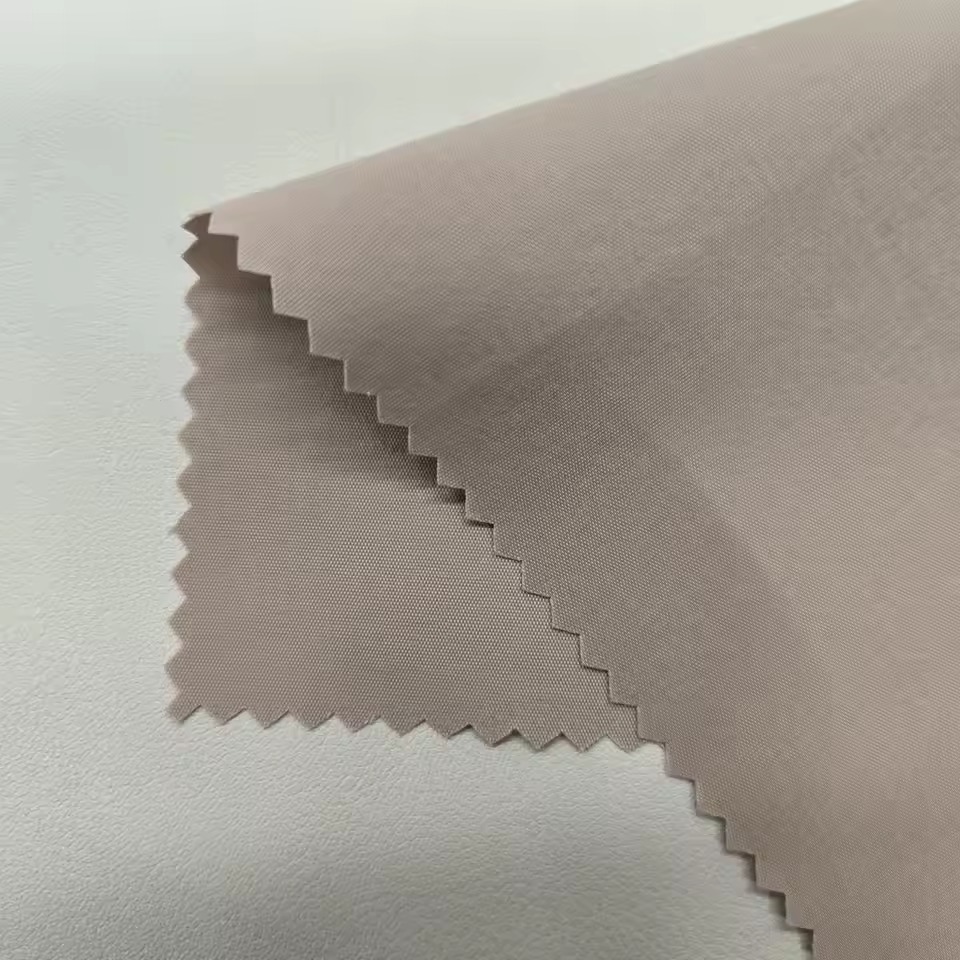
- Strong and durable — maximum interlacing creates a firm, stable structure
- Less smooth surface than twill or satin—the frequent interlacing creates a slightly textured face
- Used in: polyester taffeta (linings, evening wear, outdoor gear), chiffon (sheer fashion fabrics), basic woven shirting, nonwoven base fabrics
Twill Weave
In twill weave, warp threads pass over two or more weft threads before going under one, creating a characteristic diagonal rib pattern on the fabric face. Twill produces a fabric that is softer and more drapeable than plain weave at equivalent weight, with a distinctive angled surface texture. Denim is the most recognized twill fabric globally, and polyester twill is one of the most widely used workwear and uniform fabrics worldwide.
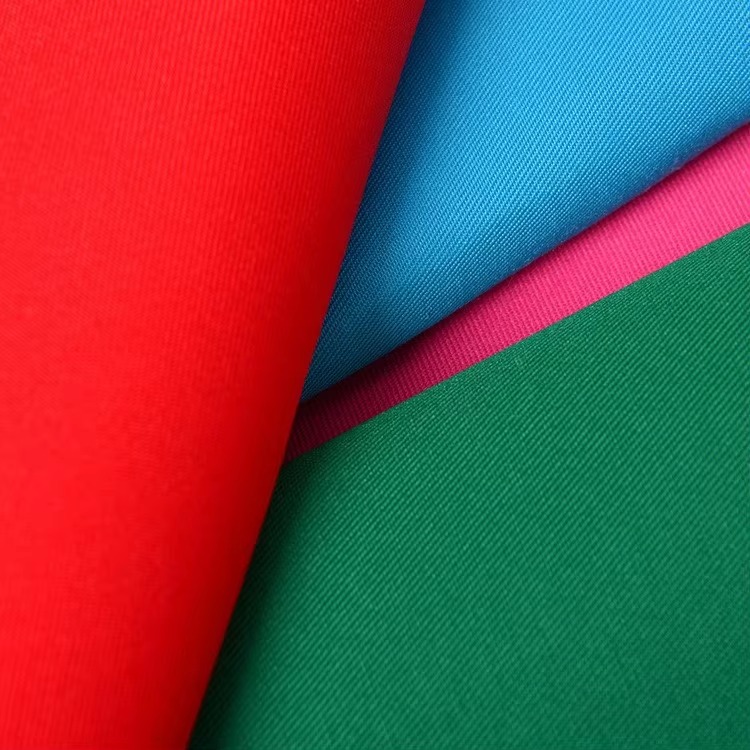
- More flexible and better drape than plain weave—the longer interlacing floats give the fabric more freedom of movement
- Better abrasion resistance than plain weave—the diagonal construction distributes wear forces more evenly
- Used in workwear and uniforms (polyester-cotton twill), chino-style trousers, bags and backpacks, automotive seating fabrics, outdoor gear panels
Satin Weave
In satin weave, warp threads float over four or more weft threads before interlacing, producing a smooth, reflective surface where the long warp floats dominate the fabric face. Polyester satin produces one of the most lustrous, silky-surfaced fabrics achievable in textile manufacturing — at a fraction of the cost of natural silk satin.
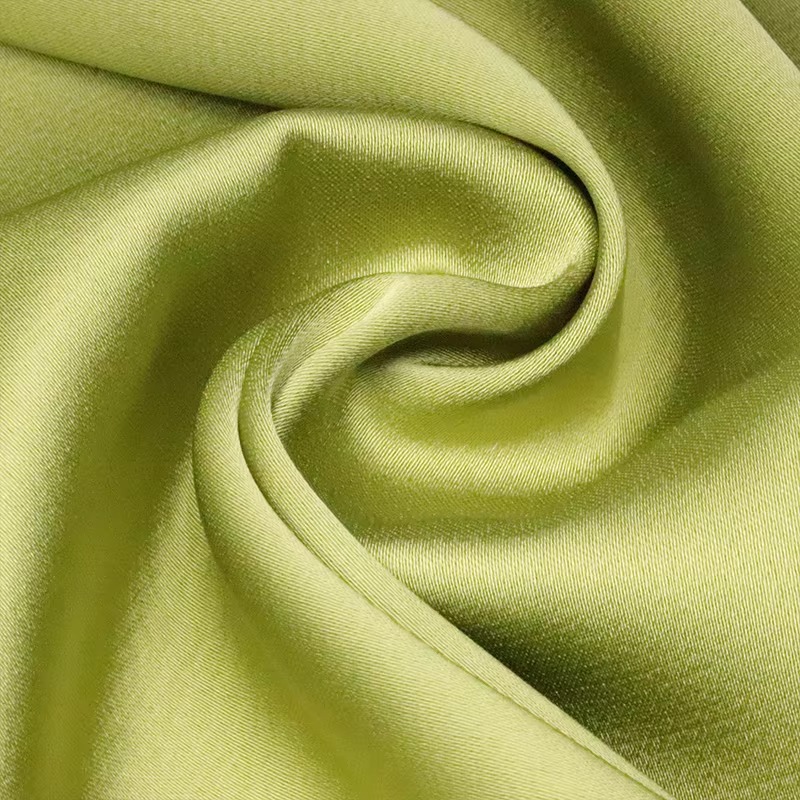
- Maximum surface smoothness and luster—the long floats create a mirror-like reflective surface
- Excellent drape—the long floats allow fabric to flow and pool elegantly
- More prone to snagging than plain or twill — the long floats can catch and pull
- Used in: evening wear and bridal fabric, lingerie, lining fabric, home textile duvet covers, decorative cushion fabric
Oxford Weave
Oxford weave is a basket variant of plain weave where two or more warp yarns are woven together as one, creating a heavier, more textured fabric with a characteristic rectangular basketwork pattern. Polyester Oxford fabric — particularly in the 300D, 600D, and 1680D weights — is one of the most widely used technical fabrics globally for bags, backpacks, luggage, tents, and protective covers.
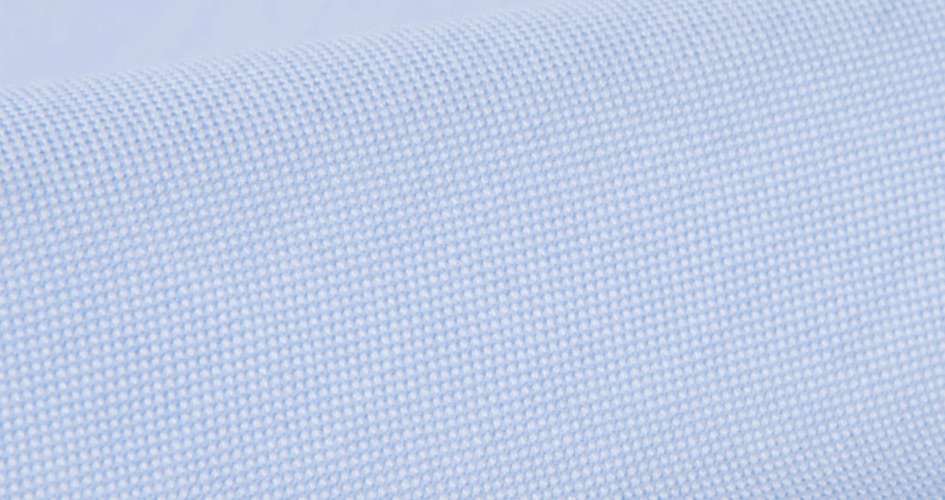
- High abrasion resistance — the thicker yarn bundles withstand heavy use and mechanical abrasion
- Excellent dimensional stability — woven from high-tenacity polyester filament with PU or PVC coating for water resistance
- Available in a wide denier range (150D to 1680D) governing weight, stiffness, and strength
- Used in: backpacks and luggage, tents and tarps, protective equipment covers, tool bags, outdoor furniture fabric
Ripstop Weave
Ripstop is a reinforced plain weave where thicker reinforcing threads are woven in a grid pattern at regular intervals (typically 5–10 mm), creating a distinctive crosshatch grid visible on the fabric surface. The reinforcing grid arrests the propagation of tears—a rip that begins at a point cannot spread beyond the next grid intersection. Ripstop polyester is essential in any application where tear strength and light weight are simultaneously required.
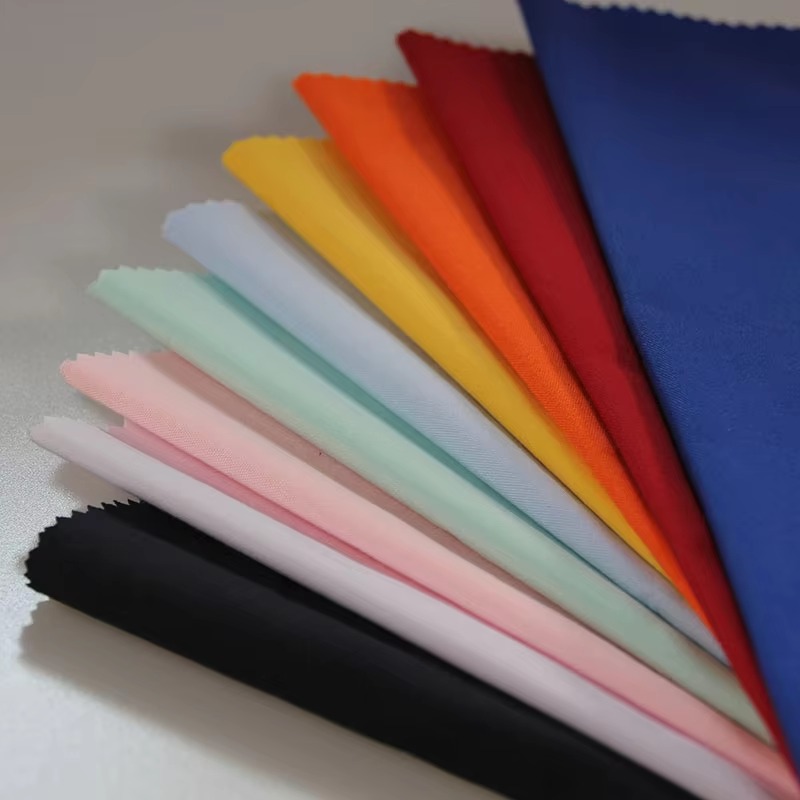
- Exceptional tear resistance — rips are contained by the reinforcing grid, preventing catastrophic failure
- Lightweight — the grid reinforcement adds strength without adding significant weight to the base fabric
- Used in: outdoor gear (tents, sleeping bags, down jackets), flags and banners, parachute-adjacent applications, kite fabric, ultralight backpacking equipment
Knit Constructions: Stretch and Softness
Jersey Knit
Jersey is the most common knit structure — a single-face knit where yarn forms a series of interlocking loops, with the characteristic smooth face and slightly textured back. Polyester jersey is the dominant fabric for t-shirts, casual tops, performance sportswear linings, and stretch linings. It stretches primarily in the width direction and has excellent drape.
Interlock Knit
Interlock is a double-faced jersey where two jersey fabrics are interknitted together, producing a fabric that is identical on both faces, thicker and more stable than single jersey, with less tendency to curl at edges. Polyester interlock is used in performance athletic wear, polo shirts, and any knit application requiring better dimensional stability than single jersey.
Fleece (Brushed Knit)
Polyester fleece begins as a knitted fabric (typically knitted from DTY textured yarn) that is then mechanically raised on one or both faces — the raising process pulls fiber loops to the surface and cuts them, creating a dense, insulating pile of soft fiber ends. The resulting fleece fabric has outstanding thermal insulation, excellent moisture management (the knit backing channels moisture away from skin while the raised face provides warmth), and is machine washable and quick-drying. Polyester fleece is available in a wide range of pile heights and weights from lightweight microfleece to heavy sherpa-pile constructions.
Mesh / Net Knit
Open-structure warp knits produce mesh and net fabrics with defined apertures that provide ventilation, light weight, and visibility. Polyester mesh is the dominant fabric for athletic vests and shorts (ventilation), sports bags (visibility and drainage), protective netting, and technical applications requiring air or fluid permeability.
The Major Polyester Fabric Types: A Complete Reference
Fabric Name | Construction | Key Character | Primary Applications |
Chiffon | Plain weave, fine filament | Sheer, floaty, lightweight | Evening wear, blouses, scarves, overlays, bridal |
Taffeta | Plain weave, filament | Crisp, rustling, structured | Lining fabric, evening wear, gift wrapping, formal fashion |
Georgette | Plain weave, creped filament | Matte, slightly textured, drapeable | Blouses, dresses, draped fashion garments |
Satin / Charmeuse | Satin weave, filament | Lustrous face, soft drape | Lingerie, evening wear, duvet covers, lining fabric |
Organza | Plain weave, stiff filament | Very sheer, stiff, holds shape | Bridal overlays, structured fashion, decorative elements |
Jersey | Weft knit, spun or DTY | Stretchy, soft, drapes well | T-shirts, casual tops, sportswear base layers, knit dresses |
Interlock | Double-face weft knit | Stable, smooth both sides, moderate stretch | Polo shirts, athletic wear, corporate knit apparel |
Fleece | Raised weft knit | Warm, soft, insulating, quick-dry | Outerwear mid-layers, blankets, soft toys, hats and gloves |
Microfiber fabric | Plain or twill weave, ultra-fine DTY | Incredibly soft, smooth, absorbent | Cleaning cloths, premium bedding, luxury apparel fabrics |
Microsuede | Woven or nonwoven, raised finish | Suede-like texture, soft, durable | Upholstery, bags, shoes, accessories, fashion fabrics |
Oxford cloth | Oxford weave, high-tenacity filament | Structured, durable, slightly textured | Bags, luggage, backpacks, tents, protective covers |
Ripstop | Reinforced plain weave | Lightweight, high tear resistance | Outdoor gear, tents, ultralight packs, flags and kites |
Twill | Twill weave, spun or filament | Diagonal rib, soft, drapes well | Workwear, chinos, uniforms, bags, automotive upholstery |
Velvet | Cut pile on woven base | Dense pile, rich texture, lustrous | Formal fashion, upholstery, curtains, accessories |
Mesh | Open warp or weft knit | Breathable, open structure | Sportswear, bags, netting, technical ventilation applications |
Polar fleece | Heavy raised knit | Thick, very warm, soft pile | Outdoor mid-layers, blankets, stuffed animals, winter accessories |
Spun polyester fabric | Plain or twill weave, spun yarn | Matte, cotton-like surface texture | Home textiles, workwear, tablecloths, budget apparel |
Polyester Blended Fabrics: Best of Both Worlds
Because polyester’s strengths (durability, wrinkle resistance, dimensional stability, easy care) complement the strengths of natural fibers (comfort, breathability, moisture absorption, natural feel), blended fabrics are among the most commercially important products in the textile industry. The most significant blends:
Polyester-Cotton (Poly-Cotton / CVC / PC)
The world’s most widely produced blended fabric. Combining polyester’s wrinkle resistance, durability, and dimensional stability with cotton’s breathability, softness, and moisture absorption produces a fabric that outperforms either component alone for everyday apparel, workwear, and home textiles. Standard blends include 65/35 polyester-cotton (maximum easy care), 50/50 (balanced), and cotton-rich CVC (chief value cotton) blends of 60/40 or 80/20 cotton-polyester for softer, more cotton-like character.
- Wrinkle resistant — polyester component prevents the severe creasing of 100% cotton
- More breathable than 100% polyester—the cotton component allows improved air circulation
- Faster drying than 100% cotton—polyester reduces moisture retention
- Excellent printability — widely used for screen-printed and sublimation-printed garments
- Applications: shirts, school uniforms, workwear, bedding, T-shirts, canvas bags
Polyester-Viscose (Poly-Viscose)
Blending polyester with viscose (rayon) combines polyester’s strength and easy-care with viscose’s silky drape, softness, and excellent moisture absorption. Poly-viscose blends produce fabrics with excellent drape and a semi-natural feel—widely used in mid-market fashion apparel, tropical weight suiting, and blouse fabrics. Common blends: 55/45 or 65/35 polyester-viscose.
Polyester-Wool (Polyester-Wool)
Adding polyester to wool reduces cost, improves crease recovery (wool alone can crease significantly), and adds dimensional stability. The classic ’55/45 polyester-wool’ blend that dominated business suiting from the 1960s through the 1980s remains widely used in mid-market suiting and uniform fabric. Polyester helps the fabric maintain a pressed appearance through a working day—the ‘permanent press’ quality that made polyester-wool blends commercially dominant in corporate workwear.
Polyester-Spandex (Polyester-Elastane)
Adding 5–20% spandex (elastane/Lycra) to polyester fabric creates a stretch fabric with the performance properties of polyester (quick-drying, durable, and color-retentive) plus the body-conforming stretch and shape recovery of elastomeric fiber. Polyester-spandex is the standard construction for compression sportswear, yoga wear, leggings, swimwear, and any form-fitting athletic or activewear product. The polyester component contributes moisture-wicking and durability; the spandex contributes stretch and recovery.
Polyester Fabric Characteristics: The Full Performance Profile
Property | Performance | Practical Significance |
Strength and durability | Very high—polyester fiber has tensile strength approximately twice that of cotton at equivalent weight. Fabrics retain structural integrity through years of use and repeated laundering. | Products made from polyester fabric outlast cotton equivalents in most everyday use conditions. Workwear, activewear, and outdoor fabrics benefit most. |
Wrinkle resistance | Excellent — polyester’s high elastic modulus allows fabric to recover from creasing. 100% polyester fabrics return to smooth appearance after being compressed or washed, requiring no ironing in most applications. | A defining commercial advantage for travel clothing, office wear, uniforms, and home textiles is a reduced garment care burden for consumers. |
Dimensional stability | Outstanding — polyester absorbs only 0.4% moisture, so fabrics do not swell, stretch, or distort when wet. Minimal shrinkage through repeated laundering. | Garments maintain their fit and shape over time. Size consistency after multiple washes — a practical advantage over cotton’s tendency to shrink. |
Moisture management | Variable — polyester fibers are hydrophobic (water-repellent). Fabrics do not absorb sweat but can wick it by capillary action through fine-denier or moisture-wicking finished constructions. Less breathable than cotton in warm conditions. | Standard polyester can feel clammy against skin in warm weather. Moisture-wicking finishes and fine-denier constructions significantly improve comfort in activewear. |
Quick-drying | Excellent — because polyester does not absorb water into the fiber structure, moisture dries by evaporation from the fiber surface rapidly. Polyester garments dry in a fraction of cotton’s drying time. | Important for travel clothing, sportswear, and swimwear. Also reduces tumble-drying energy use. |
Colour retention (dyeability) | Good—polyester accepts disperse dyes at high temperatures, producing vivid, wash-fast colors. However, standard polyester cannot be piece-dyed at atmospheric pressure; high-temperature (130°C) processing is required. | Excellent long-term color fastness compared to many natural fibers. Dope-dyed (solution-dyed) polyester achieves exceptional fade resistance for outdoor and automotive applications. |
UV resistance | Good to excellent — polyester’s molecular structure is more UV-stable than nylon or viscose without additives. UV-stabilized grades for outdoor applications maintain tensile strength through years of sun exposure. | Suitable for outdoor furniture fabric, awnings, geotextiles, and garden textiles without the UV additive requirements of some competing synthetics. |
Chemical resistance | Excellent—polyester resists most acids, alkalis, solvents, and oils at normal conditions. Damaged by prolonged exposure to strong alkalis at elevated temperatures. | Important for industrial applications, filter fabrics, chemical protective clothing, and food-contact textiles. |
Heat sensitivity | Moderate — softens above ~80°C and melts at 255–265°C. Burns when ignited (melts and burns, producing toxic fumes). Heat-settable above Tg, enabling permanent pleats and embossed textures. | Requires care with iron temperature (medium heat, never high). Flame retardant treatment is required for some applications. Heat-setting enables decorative fabric constructions. |
Static electricity | Tends to accumulate static charge — causes fabrics to cling, attract lint, and produce static shocks. More pronounced in dry conditions and low-humidity environments. | Antistatic finishes and fiber-level antistatic treatments address this. Blending with natural fibers reduces static tendency significantly. |
Pilling | Tendency to pill (form small surface fiber balls) in areas of repeated abrasion—particularly in looser knit constructions and fabrics with loose fiber ends. | Low-pill grades (with reduced tenacity to allow pills to break off rather than anchor) address this. Higher-quality constructions and tighter weaves reduce pilling. |
Polyester Fabric vs. Cotton Fabric: The Essential Comparison
Polyester and cotton are the world’s two most produced textile materials, and the comparison between them drives more consumer and buyer decision-making than any other fabric question. The honest answer is that neither is universally superior — their properties are genuinely complementary, which is why poly-cotton blends dominate so many market categories.
Dimension | Polyester Fabric | Cotton Fabric |
Feel against skin | Smooth, slightly slippery. Can feel clammy in warm conditions. | Soft, breathable, comfortable. Natural warmth. |
Moisture absorption | Very low hydrophobic surface. Water beads and evaporates. | High — absorbs sweat into fiber. Feels damp when saturated. |
Breathability | Lower synthetic fiber traps more heat. Ventilation depends on construction. | Excellent—open fiber structure allows air circulation. |
Wrinkle resistance | ★★★★★ — excellent. Returns to smooth after washing. | ★★☆☆☆ — poor. Wrinkles readily; requires ironing. |
Durability | ★★★★★ — very high. Resists abrasion and repeated washing. | ★★★☆☆ — moderate. Fibers break down over time. |
Dimensional stability | ★★★★★ — minimal shrinkage after washing. | ★★★☆☆ — can shrink significantly without pre-washing. |
Quick drying | ★★★★★ — dries very fast. Minimal moisture retained. | ★★☆☆☆ — slow. Retains absorbed moisture. |
Colour vibrancy | Very high disperse dyes produce vivid, long-lasting colors. | Good—excellent dye compatibility but some fading over time. |
UV resistance | Good — polyester is inherently more UV-stable than cotton. | Moderate — degrades faster outdoors without treatment. |
Biodegradability | Not biodegradable—persists in landfills for decades. | Fully biodegradable — decomposes naturally. |
Microplastic shedding | Yes, it sheds synthetic microfibers during washing. | No — no persistent synthetic microplastics. |
Sustainable option | Recycled rPET fabric reduces GHG 60–70% vs. virgin. | Organic cotton significantly reduces pesticide and water impact. |
Cost | Generally lower—commodity synthetic production. | Variable—conventional affordable; organic premium. |
Best applications | Activewear, easy-care apparel, outdoor fabrics, upholstery, and industrial. | Underwear, summer wear, skin-contact garments, bedding, and premium fashion. |
Applications of Polyester Fabric by Sector
Apparel
Polyester fabric accounts for the largest share of global apparel fabric consumption, either as 100% polyester or in blends. Its dominant positions:
- Activewear and sportswear: Polyester jersey, interlock, and mesh are the standard fabrics for performance athletic clothing. Moisture-wicking finishes, four-way stretch (with spandex), antimicrobial treatments, and UV protection are all applied to polyester base fabrics. The entire global activewear market — estimated at over USD 300 billion — is built substantially on polyester fabric.
- Outdoor and performance wear: Softshell fabrics (stretch woven polyester with bonded fleece backing), hardshell fabrics (tightly woven ripstop with membrane laminate), fleece mid-layers, and quilted insulation fabrics are all polyester-based. The outdoor gear industry’s performance requirements—lightweight, durable, weather-resistant, and packable—are met most efficiently by polyester.
- Workwear and uniforms: 65/35 polyester-cotton twill is the global standard for workwear and corporate uniform fabric—balancing easy care (polyester’s contribution) with comfort (cotton’s contribution). The wrinkle resistance and color retention of polyester make it practical for professional uniforms.
- Fashion apparel: Polyester chiffon, georgette, satin, and velvet are standard materials for eveningwear and occasion fashion. Polyester’s ability to accept vibrant print and embossing makes it a staple of fast fashion manufacturing. Microfiber polyester produces premium-feeling fabric at significantly lower cost than comparable natural alternatives.
Home Textiles
Polyester fabric dominates the mid-market and budget segments of home textiles:
- Bedding: Polyester-cotton percale and sateen for sheets and pillowcases; 100% polyester microfiber for duvet covers; polyester satin for decorative duvet covers
- Curtains and drapery: Polyester voile for sheer curtains; blackout polyester for room-darkening applications; outdoor polyester for sun-resistant window treatments
- Upholstery: Polyester velvet, microsuede, and woven polyester for sofa and chair fabric—valued for durability, stain resistance, and wide colour range
- Rugs and carpets: Polyester carpet face yarn for cut-pile and loop-pile constructions; BCF polyester for commercial carpet applications
Technical and Industrial Textiles
Beyond consumer products, polyester fabric serves critical industrial functions:
- Geotextiles: Needle-punch and woven polyester nonwovens for road sub-base stabilization, slope erosion control, and drainage filtration in civil engineering
- Filtration: Polyester fabric filter bags for industrial dust collection, liquid filtration in food processing and water treatment, and HVAC air filtration
- Protective clothing: Woven polyester base fabrics for high-visibility workwear, chemical protective garments, and flame-retardant PPE applications
- Automotive textiles: Woven and knitted polyester for seat fabric, headliners, door panels, and carpet—approximately 20–30 kg of textile per vehicle
Finishing Treatments That Transform Polyester Fabric
The performance of polyester fabric in consumer and technical applications is shaped as much by finishing treatments applied after weaving or knitting as by the fabric construction itself:
Finish | What It Does & Why It Matters |
Moisture-wicking (hydrophilic finish) | Applies hydrophilic surfactants to the fiber surface, converting hydrophobic polyester into a fabric that actively draws moisture from the skin surface through capillary action. Essential for performance sportswear — converts polyester’s greatest comfort weakness (moisture trapping) into a genuine advantage (efficient wicking). |
DWR (Durable Water Repellency) | Fluorocarbon or non-fluorocarbon treatments that cause water to bead and roll off the fabric surface. Standard on outdoor jackets, anoraks, and performance outerwear. Note: DWR is a surface treatment that fades with use and must be renewed; it is not the same as waterproofing, which requires a membrane or coating. |
Anti-pilling treatment | Chemical or physical treatment that reduces the tendency of polyester fabric to form surface pills (small fiber balls) in areas of repeated abrasion. Important for fleece, jersey, and any fabric that will experience sustained surface friction in wear. |
Antimicrobial / antibacterial finish | Silver-ion, zinc-based, or other treatments that inhibit bacterial growth on the fabric surface—preventing odor formation from bacterial breakdown of sweat in activewear and sportswear. Available as wash-durable treatments or as fiber-level additives. |
Flame retardant (FR) finish | Chemical FR finishes or inherently FR fiber provides the flame resistance required by law for public-space upholstery, children’s sleepwear, aircraft interiors, and institutional bedding. FR-finished polyester self-extinguishes when the flame source is removed. |
Heat setting | Not a chemical treatment but a physical process: passing polyester fabric over heated rollers or through a stenter oven at above the glass transition temperature (80°C) permanently fixes the fabric dimensions, eliminates residual shrinkage, and can imprint permanent texture or embossed patterns. |
Calendering / Embossing | Passing fabric through heated rollers under pressure smooths the surface (calendering) or imprints a permanent raised pattern (embossing). Both treatments exploit polyester’s thermoplasticity—properties that cannot be achieved with natural fibers at practical processing temperatures. |
Peach-skin / Sand-wash finish | Mechanical raising or light sanding of the fabric surface creates a soft, slightly napped microsuede-like texture on standard woven polyester. Common on blouse and dress fabrics to reduce the characteristic ‘synthetic’ sheen and create a more natural, premium-feeling surface. |
Recycled Polyester Fabric: The Sustainable Alternative
Recycled polyester fabric (rPET fabric) is produced from polyester fiber made from post-consumer PET bottles — exactly the same fiber as virgin polyester in composition and performance, but with a 60–70% lower greenhouse gas footprint per kilogram, verified by the GRS (Global Recycled Standard) chain-of-custody certification.
Every performance property of recycled polyester fabric is equivalent to virgin for standard fabric applications—the same wrinkle resistance, durability, quick-drying, color retention, and dimensional stability. The only difference is in the feedstock origin and the environmental impact of production. GRS-certified recycled polyester fabric is commercially available across virtually all fabric types — fleece, jersey, Oxford, taffeta, and microfiber fabrics are all routinely produced in 100% recycled grades.
- Major brands using rPET fabric: Patagonia (rPET fleece since 1993), Adidas (100% recycled polyester commitment), H&M, The North Face, Lululemon, Decathlon — across sportswear, outdoor gear, and fashion apparel.
- EU regulation: The EU Textile Strategy 2030 includes mandatory minimum recycled content requirements for synthetic textiles, making GRS-certified recycled polyester fabric increasingly a compliance requirement rather than purely a marketing choice for brands selling into European markets.
Polyester Fabric Care Guide
Polyester fabric is among the easiest of all textile materials to care for — this ease of maintenance is one of its defining commercial advantages. General care guidance:
- Wash temperature: 30–40°C on a gentle or synthetics cycle. Higher temperatures (60°C+) can cause shrinkage, dimensional distortion, and locking of wrinkles into thermoplastic fiber. The low moisture absorption of polyester means cold washing cleans effectively—high temperatures are unnecessary and potentially damaging.
- Tumble drying: Low heat setting only. High-heat tumble drying is the most common cause of polyester fabric damage—the thermoplastic fiber softens and can be permanently distorted under heat and mechanical agitation. Air drying is always the safest option and very fast given polyester’s minimal moisture absorption.
- Ironing: Medium (polyester) setting only, never high heat. Use a pressing cloth between iron and fabric for sensitive or finished surfaces. Many polyester fabrics require no ironing after machine washing and low-temperature tumble drying.
- Dry cleaning: Most polyester fabrics do not require dry cleaning — machine washing is standard. Some structured garments with complex construction may benefit from dry cleaning to preserve shape. Check the care label.
- Microplastic mitigation: Polyester fabric sheds microfibers during washing. To reduce microplastic release, use a lower-temperature wash (reduces fiber shedding), a Guppyfriend wash bag or Cora Ball microplastic filter, a front-loading machine (less mechanical agitation than top-loaders), and liquid detergent rather than powder.
- Static and lint: If static or lint attraction is a problem, fabric softener or dryer sheets reduce static buildup. Anti-static sprays are available for persistent static issues, particularly in very dry conditions.
Conclusion: The Fabric That Does Everything
Polyester fabric is not one material—it is a family of hundreds of distinct textiles united by their polymer origin and separated by virtually every other property: texture, weight, stretch, opacity, drape, surface character, and performance profile. From the gossamer sheerness of chiffon to the dense warmth of polar fleece, from the rugged abrasion resistance of Oxford cloth to the yielding softness of microsuede, polyester’s combination of engineering flexibility and manufacturing efficiency has made it the foundation of modern textile production across every application sector.
The key to understanding and working with polyester fabric is recognizing that fiber type (filament vs. spun vs. textured), construction method (weave structure vs. knit pattern), denier, and finishing treatments each contribute independent and combinable dimensions of performance control. No other fiber family allows this degree of engineered customization—which is why polyester fabric is simultaneously everywhere and enormously diverse.
For manufacturers and brands sourcing polyester fabric, the most impactful decisions now extend beyond construction and performance to include recycled content verification (GRS certification), responsible production documentation (OEKO-TEX, Bluesign), and transparency in supply chain provenance—dimensions that increasingly determine market access, regulatory compliance, and brand positioning in sustainability-aware markets.