What Is Polyamide Fiber (Nylon)? Complete Guide to PA6, PA66, Properties, Uses & Sustainability
In 1938, the world’s first fully synthetic fiber was introduced to a stunned public at the World’s Fair in New York: nylon, produced by DuPont’s chemist Wallace Carothers. It was marketed as a fiber made “from coal, air, and water” — stronger than steel, finer than silk, and with the resilience of a spider’s web. The first nylon stockings sold out across the United States within hours of going on sale in 1940.
Eight decades later, polyamide fiber — the chemical family name for nylon — remains one of the most technically important synthetic fibers in the world. It is not the largest by volume (polyester holds that position), but it is arguably the most technically sophisticated of the commodity synthetic fibers — uniquely combining high tensile strength, outstanding abrasion resistance, inherent flexibility, and excellent elastic recovery in a single material.
Today, polyamide fiber is found in the hosiery on your legs, the airbag protecting your life in a car crash, the rope a climber trusts on a mountain face, the toothbrush bristles you use twice a day, and the fishing net that pulled the fish on your dinner plate from the ocean. This complete guide covers what polyamide fiber is, how it is made, the critical differences between nylon 6 and nylon 66, all major properties and applications, how it compares to polyester and other competitors, and the evolving sustainability story of recycled nylon.
What Is Polyamide Fiber? Definition and Chemistry
Polyamide (PA) is a generic term for a family of polymers characterized by repeating amide linkages (–CO–NH–) in their molecular backbone. Fibers made from polyamide polymers are commercially known as nylon — a trade name originally registered by DuPont but now a generic term in most markets. Polyamide fibers are distinguished from aramid fibers (which also contain amide linkages but include aromatic rings in the backbone, giving dramatically different properties) by having entirely aliphatic (non-aromatic) carbon chains between their amide groups.
The amide linkage is the key to nylon’s distinctive properties. The C=O and N–H groups of adjacent amide groups on neighboring polymer chains form hydrogen bonds — strong inter-chain attractions that pull the polymer chains into tight, ordered arrangements. This hydrogen bonding is responsible for nylon’s combination of high crystallinity, high melting point for a flexible polymer, exceptional toughness and fatigue resistance, and unique moisture absorption behavior.
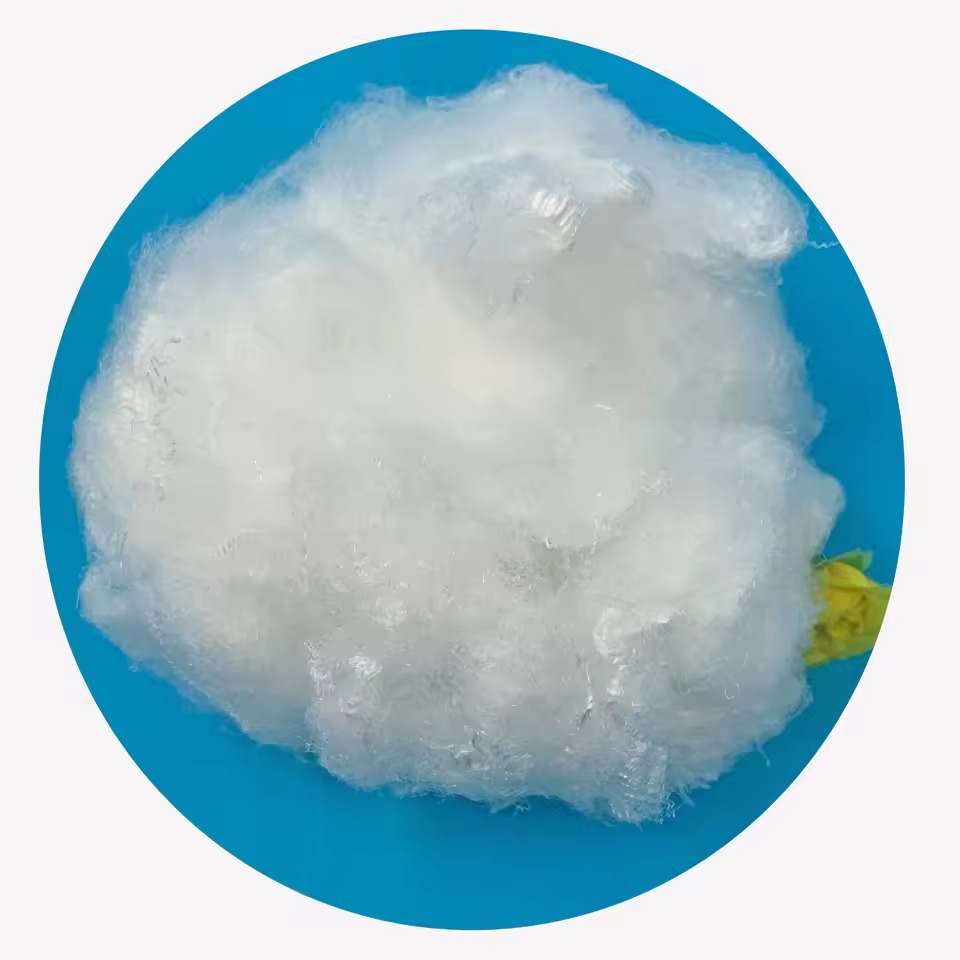
Polyamide (nylon) fiber is the world’s first fully synthetic fiber, developed by DuPont chemist Wallace Carothers in 1935 and commercialized in 1938. Its introduction transformed the textile industry, establishing the proof of concept that petrochemicals could be engineered into fibers with properties surpassing natural alternatives.
The Two Dominant Types: Nylon 6 vs Nylon 66 (PA6 vs PA66)
When people talk about nylon fiber, they are almost always referring to one of two polymer types: Nylon 6 (PA6) and Nylon 66 (PA66). Together, these two grades account for approximately 70% of global polyamide production. Understanding the difference between them is essential for anyone specifying nylon fiber for technical applications.
Nylon 6 (PA6, Polycaprolactam)
Nylon 6 is produced by ring-opening polymerization of a single monomer: caprolactam, a cyclic compound with 6 carbon atoms. This single-monomer process produces a polymer with a slightly less regular (less symmetric) chain structure than nylon 66. Nylon 6 was first commercialized in Germany by IG Farben in 1939, under the brand name Perlon, as a lower-cost alternative to DuPont’s nylon 66.
Nylon 6’s slightly less crystalline structure gives it lower stiffness and a lower melting point (220–225°C) than nylon 66, but greater flexibility, impact resistance, and ease of processing. It absorbs slightly more moisture than nylon 66, which affects its dimensional stability in humid environments but also gives it a marginally softer, more comfortable feel in textile applications. Its lower melting point makes it more suitable for processing at lower temperatures and for dyeing using conventional atmospheric-pressure processes, whereas nylon 66 requires higher-temperature dyeing.
Nylon 66 (PA66, Polyhexamethylene Adipamide)
Nylon 66 is produced by condensation polymerization of two monomers: adipic acid and hexamethylene diamine — each containing 6 carbon atoms, hence the designation ’66.’ This two-monomer polycondensation produces a polymer with greater chain symmetry and regularity than nylon 6, leading to higher crystallinity, a higher melting point (255–265°C), superior tensile strength (approximately 20% higher than nylon 6 at equivalent formulation), and better resistance to deformation under sustained load (creep resistance).
Nylon 66 was the original DuPont nylon, commercialized in 1938. Its higher melting point and superior mechanical properties make it the preferred grade for demanding engineering applications — automotive under-hood components, high-performance industrial textiles, military parachute fabric, and high-tenacity tire cord — where nylon 6’s lower thermal stability would be a limitation.
Nylon 6 vs Nylon 66: Head-to-Head Comparison
Property | Nylon 6 (PA6) | Nylon 66 (PA66) |
Monomer(s) | Single: caprolactam (6 carbons) | Two: adipic acid + hexamethylene diamine (6+6 carbons) |
Polymerization method | Ring-opening polymerization | Condensation (step-growth) polymerization |
Melting point | 220–225°C — lower | 255–265°C — approximately 40°C higher |
Tensile strength | Good — baseline reference | ~20% higher than PA6 at equivalent grade |
Flexibility / impact resistance | Higher — better for high-flex applications | Lower — stiffer, more rigid |
Moisture absorption | Slightly higher (~2.7% at 50% RH) | Slightly lower (~2.5% at 50% RH) — better dimensional stability |
Crystallinity | Lower — less symmetric chain | Higher — more regular, tighter packing |
Heat resistance | Good — limited above 100°C sustained | Better — preferred for elevated temperature applications |
Creep resistance (sustained load) | Moderate — more prone to deformation | Better — preferred for structural applications under constant load |
Dyeability | Easier — atmospheric pressure dyeing | Requires higher pressure/temperature dyeing |
Processing temperature | Lower — faster cycles, lower energy | Higher — more demanding molding conditions |
Recyclability | Recycled nylon 6 has established loop (Econyl) | Recycled nylon 66 also available but less commercialized |
Cost | Generally slightly lower | Generally slightly higher |
Primary textile applications | Hosiery, lingerie, swimwear, carpet | High-tenacity textile, industrial fabric, tire cord, parachute |
Primary engineering applications | Automotive interior, consumer electronics | Automotive under-hood, structural parts, precision components |
Other Important Polyamide Types
Beyond nylon 6 and nylon 66, a range of specialty polyamide grades serve important niche applications:
Nylon 6,10 and Nylon 6,12 (PA610, PA612)
Produced from hexamethylene diamine and sebacic acid (C10) or dodecanedioic acid (C12). The longer carbon chain between amide groups reduces moisture absorption compared to nylon 6 or 66 — PA610 absorbs approximately 1.5% moisture vs. 2.7% for PA6 — making these grades attractive for precision components where dimensional stability in humid conditions is critical. PA610 has historical sustainability interest because sebacic acid can be derived from castor oil, a renewable feedstock. Used in fuel line tubing, electrical connector components, monofilament for toothbrush bristles, and fine wire coating.
Nylon 11 and Nylon 12 (PA11, PA12)
Long-chain polyamides with only 1 amide group per 11 or 12 carbon atoms — the lowest amide density of any commercial polyamide. This dramatically reduces moisture absorption (PA11: ~1.0%; PA12: ~0.7%), giving outstanding dimensional stability in humid conditions, flexibility at low temperatures, and excellent chemical resistance. PA11 has the additional sustainability advantage of being produced entirely from castor oil (a bio-based, non-food renewable feedstock) — making it one of the few high-performance engineering polymers with a bio-based origin. Used in flexible hydraulic and pneumatic tubing, automotive fuel lines, powder coating, and 3D printing powders.
Aramid Fibers (High-Performance Polyamides)
Aramids — including para-aramid (Kevlar, Twaron) and meta-aramid (Nomex, Conex) — are technically polyamide fibers, but their polymer chains contain aromatic rings in the backbone rather than the purely aliphatic chains of nylon. This aromatic structure gives aramids properties far beyond standard nylons: tensile strength 5 times that of steel by weight (para-aramid), thermal stability without melting or burning (meta-aramid), and outstanding cut and ballistic resistance. Aramids are discussed separately in technical literature because their properties and applications are so different from aliphatic nylons that grouping them together is misleading for practical purposes.
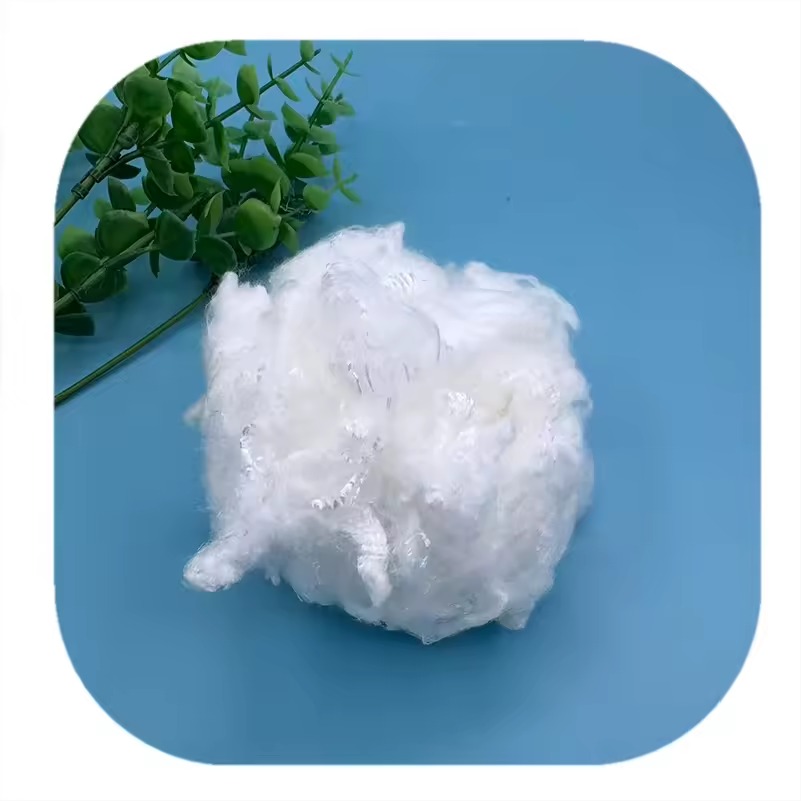
How Polyamide Fiber Is Manufactured
Step 1: Polymer Production
For nylon 6, caprolactam is polymerized in the presence of water (which initiates the ring-opening) at temperatures of 230–270°C. The degree of polymerization (chain length) is controlled by temperature, water content, and reaction time. For nylon 66, adipic acid and hexamethylene diamine are combined in aqueous solution to form a salt (nylon 66 salt or AH salt), which is then polymerized by evaporating the water and raising the temperature to 270–300°C. Both processes produce polymer melt that is extruded into strands, cooled in a water bath, and cut into pellets (chips) for fiber spinning.
Step 2: Chip Drying
Nylon pellets are hygroscopic — they absorb atmospheric moisture that must be removed before melt spinning to prevent hydrolytic degradation of the polymer chains during processing. Both PA6 and PA66 chips are dried to a maximum moisture content of 0.2% before spinning, typically in desiccant dryers at 80–110°C. This drying step is critical — inadequately dried chips produce fiber with reduced molecular weight, lower tensile strength, and surface defects.
Step 3: Melt Spinning
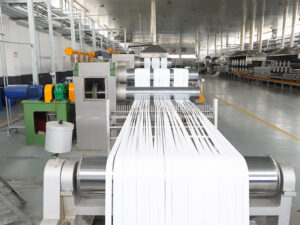
Dried nylon chips are melted in a screw extruder and pumped under pressure through a spinneret — a metal plate containing many precisely sized holes (typically 0.2–0.8 mm depending on target denier). The extruded filaments are quenched by cross-flow air cooling and collected on godets. The spinneret geometry and polymer melt temperature determine the fiber’s cross-sectional shape — round spinnerets produce circular fibers; trilobal spinnerets produce the triangular-cross-section fiber that gives nylon 66 carpet its characteristic light-scattering luster.
Step 4: Drawing and Texturing
As-spun nylon filaments have low tensile strength. Drawing — stretching the filaments under controlled tension at temperatures above the glass transition temperature (typically 50–80°C for nylon) — orients the polymer chains and crystalline domains along the fiber axis, increasing tensile strength and modulus while reducing elongation to the target range. For staple fiber production, the drawn tow is then crimped and cut. For filament yarn applications, texturing (false-twist or air-jet texturing) adds bulk and stretch recovery.
Key Properties of Polyamide Fiber
Property | Detail & Commercial Significance |
Outstanding Abrasion Resistance | Polyamide fiber has the highest abrasion resistance of all standard textile fibers — approximately 10 times greater than cotton and 20 times greater than wool. This exceptional wear resistance makes nylon the default choice for any application subject to repeated mechanical friction: hosiery, activewear, carpet, rope, and industrial conveyor belts. Products made from nylon simply outlast alternatives in abrasive service conditions. |
High Tensile Strength | PA66 fiber achieves tensile strengths of 5–9 g/denier — among the highest of standard textile fibers. High-tenacity nylon grades for industrial applications reach 8–9 g/denier, making nylon rope, webbing, and tire cord reliable under the mechanical loads they must sustain. |
Excellent Elastic Recovery | Nylon fiber has outstanding elastic recovery — when stretched to moderate extensions (3–6%), it recovers essentially 100% of its original length. This inherent springiness gives nylon textiles their characteristic resilience: hosiery that snaps back, carpet that recovers footprint marks, and sportswear that returns to shape after stretching. |
Moderate Moisture Absorption | Nylon absorbs 2.5–4.5% moisture by weight depending on grade and relative humidity — significantly more than polyester (0.4%) but less than cotton (8%). This moderate moisture absorption gives nylon better comfort against skin than polyester in warm conditions, while the absorbed moisture acts as a plasticizer that improves flexibility and impact resistance. |
Good Dyeability | Nylon accepts acid dyes and reactive dyes readily, producing vivid colors with good wash and light fastness. Its dyeability is superior to polyester for many dye classes. Nylon 6 dyes more easily than nylon 66 at atmospheric pressure; nylon 66 requires higher-temperature dyeing to achieve equivalent dye penetration. |
Lightweight | Nylon fiber has a density of approximately 1.14 g/cm³ — lighter than polyester (1.38 g/cm³) and much lighter than steel or glass, making it highly efficient for weight-sensitive applications in aerospace, automotive, and outdoor equipment. |
UV Sensitivity | Standard nylon degrades under UV exposure — the amide linkage absorbs UV radiation, leading to photooxidation and yellowing. UV-stabilizing additives and UV-absorbing dyestuffs can significantly extend the outdoor service life of nylon products, but nylon is generally less UV-stable than polyester without stabilization. |
Heat Sensitivity | Nylon softens and eventually melts under sustained heat — PA6 at 220–225°C; PA66 at 255–265°C. At temperatures well below the melting point, sustained heat causes creep (slow deformation under load) that must be accounted for in engineering applications. This heat sensitivity limits nylon’s use in high-temperature environments compared to aramid or glass fiber. |
Chemical Resistance | Nylon is resistant to most organic solvents, oils, and hydrocarbons. It is generally alkali-resistant. Its weakness is strong acids — the amide bond is susceptible to acid hydrolysis, which cleaves the polymer chain and reduces molecular weight and fiber strength. This limits nylon in acidic chemical environments. |
Flammability | Standard nylon is flammable — it melts then burns, producing toxic fumes. Flame-retardant nylon grades (with FR additives or inherently flame-resistant polymer modifications) are available for applications with fire safety requirements. Nylon 66 has better inherent flame resistance than nylon 6 due to its higher crystallinity. |
Applications of Polyamide Fiber
1. Hosiery and Legwear — The Original Application
Nylon’s first commercial application — replacing silk in women’s stockings — remains one of its most visible today. The combination of fine denier capability, excellent elastic recovery, sheerness, and durability makes nylon the standard fiber for tights, stockings, and fine hosiery. Nylon 6 is the dominant fiber in European hosiery markets; nylon 66 in North American markets, reflecting the legacy of DuPont’s dominance in the US market.
Hosiery nylon is produced in extremely fine deniers — 7, 10, or 15 denier for sheer stockings — requiring exquisite control of spinning and drawing conditions to produce perfectly uniform filaments without defects that would be visible in the finished product. The elastic recovery of nylon ensures that hosiery maintains its shape and fit through repeated wearing and washing without permanent distortion.
2. Lingerie, Activewear, and Swimwear
Nylon’s combination of softness against skin, excellent elastic recovery (especially when blended with spandex/elastane), quick drying, and durability under repeated laundering makes it the premier fiber for intimate apparel, sportswear, and swimwear. Nylon-spandex (typically 80% nylon / 20% spandex) is the standard construction for performance leggings, yoga wear, sports bras, and competitive swimwear.
The quick-drying character of nylon — it does not absorb water into the fiber structure, only onto the fiber surface — is particularly valued in swimwear that must transition comfortably between pool/beach and dry environments. Nylon swimwear dries in minutes rather than the hours required by cotton equivalents. UV-stabilized nylon grades resist the combination of chlorine, UV, and mechanical abrasion that degrades swimwear prematurely.
3. Carpet and Floor Coverings
Nylon is the premium fiber for commercial and high-end residential carpet — chosen for its combination of abrasion resistance, elastic recovery from foot compression, dyeability, and long-term appearance retention in high-traffic environments. Nylon 66 BCF (Bulked Continuous Filament) yarn dominates the North American commercial carpet market, where its 20% higher tensile strength and greater resilience compared to nylon 6 justify its premium price in demanding hospitality, office, and retail environments.
Nylon carpet resists crushing and matting through elastic recovery — the carpet fibers spring back after being compressed by foot traffic, maintaining the carpet’s appearance far longer than polypropylene or polyester alternatives. Nylon carpet treated with stain-resist chemistry (fluorocarbon or other soil-resist finishes) can maintain appearance for 15–20 years in commercial applications.
4. Industrial and Technical Textiles
High-tenacity nylon fiber (8–9 g/denier) is the backbone of many critical technical textile applications where mechanical performance under sustained loading is essential:
- Tire cord: Nylon tire cord — woven from high-tenacity nylon yarn and embedded in rubber — provides the tensile reinforcement that allows pneumatic tires to withstand the internal air pressure, vehicle weight, and dynamic loading of normal use. Nylon 66 tire cord has largely replaced nylon 6 in passenger car tires for its better heat resistance and creep resistance under the sustained loads of highway driving.
- Parachute fabric: Nylon 6 and 66 ripstop fabric is the standard material for parachute canopies, deployable aerospace deceleration systems, and paragliding. Its combination of high strength-to-weight ratio, excellent impact resistance (critical during parachute deployment shock), and flexibility at low temperatures (critical for high-altitude deployments) makes it irreplaceable for these life-safety applications.
- Safety harnesses and webbing: Nylon webbing — woven from high-tenacity nylon yarn — is the standard material for climbing harnesses, safety lanyards, seatbelt webbing, and cargo restraint straps. Its elongation under load (5–20% at break) absorbs energy during fall arrest, reducing the peak force transmitted to the user compared to lower-elongation alternatives like polyester.
- Ropes and cordage: Nylon rope is the standard for dynamic rope applications — climbing, marine mooring, towing — where its high elongation acts as a shock absorber. Its buoyancy (it sinks, unlike polypropylene) and UV resistance requirements are managed through appropriate grade selection and UV stabilization.
5. Automotive Applications
The automotive industry is one of the largest consumers of polyamide engineering materials. While much automotive nylon is in molded plastic components (intake manifolds, electrical connectors, gear components), nylon fiber is also critical in:
- Airbag fabric: Nylon 66 woven fabric is the standard construction for automotive airbag cushions. The fabric must withstand the explosive deployment forces (60–200 km/h bag inflation in 20–40 milliseconds), retain structural integrity to protect occupants, and remain packaged reliably for years without degradation. Nylon 66’s combination of high strength, high elongation (for energy absorption), and resistance to heat from the inflation gas make it the only fiber currently qualified for primary airbag applications.
- Seatbelt webbing: High-tenacity polyester has largely replaced nylon in seatbelt webbing (better UV and heat resistance), but nylon remains specified for some seatbelt applications, particularly retractor springs and tensioner components.
- Carpet and acoustic nonwovens: Nylon BCF carpet face yarn for automotive floor carpets, combined with nylon/polyester nonwoven padding layers for acoustic and thermal insulation.
6. Medical and Hygiene Applications
Nylon’s biocompatibility, strength, and ability to be sterilized by standard medical techniques (autoclave, gamma radiation, ethylene oxide) make it valuable in several medical applications. Non-absorbable nylon monofilament sutures (Ethicon’s Ethilon and Monocryl families) are used for wound closure in procedures where permanent suture strength is required — cardiovascular surgery, neurosurgery, and ophthalmic surgery. Nylon sutures provide excellent knot security and very low tissue reactivity.
Nylon brush bristles — extruded monofilament of defined stiffness and diameter — are the standard material for toothbrush heads globally. The combination of controlled stiffness (determined by monofilament diameter and draw ratio), rounded tips (processed by abrasive rounding to prevent gum damage), and durability through daily wet/dry cycling makes nylon the universally specified toothbrush bristle material.
7. Filtration
Nylon monofilament is the standard material for woven precision filtration fabrics — screens and meshes with precisely controlled aperture sizes for liquid and air filtration. Nylon’s chemical resistance (particularly in non-acidic environments), excellent abrasion resistance, and consistent monofilament diameter (produced by precision melt spinning) make nylon mesh the benchmark for food processing filtration, pharmaceutical liquid filtration, industrial paint and ink filtration, and hydraulic oil filtration.
Polyamide vs Polyester: The Most Important Comparison
Nylon and polyester are the two dominant synthetic fibers in textiles. They are often used interchangeably in some applications but have genuinely different strengths that determine which is the better choice for specific uses.
Dimension | Polyamide / Nylon | Polyester (PET) |
Abrasion resistance | ★★★★★ — best of all standard textiles | ★★★★☆ — excellent but inferior to nylon |
Tensile strength | ★★★★★ — very high, especially PA66 | ★★★★☆ — very high but slightly lower than nylon |
Elastic recovery | ★★★★★ — outstanding springback | ★★★☆☆ — good but less springy than nylon |
Moisture absorption | ★★★☆☆ — moderate (2.5–4.5%); better skin comfort | ★★☆☆☆ — very low (0.4%); quick-dry but less comfort |
Dyeability | ★★★★☆ — excellent; acid dyes; atmospheric for PA6 | ★★★☆☆ — good; disperse dyes; high temp required |
UV resistance | ★★☆☆☆ — poor without stabilizers; yellows outdoors | ★★★★☆ — good inherent resistance; less additive-dependent |
Heat resistance | ★★★☆☆ — PA6: 220°C; PA66: 265°C melting | ★★★★☆ — 255°C melting; better sustained heat stability |
Chemical resistance | ★★★★☆ — excellent except strong acids | ★★★★☆ — excellent; slightly better acid resistance |
Density / weight | 1.14 g/cm³ — lighter than polyester | 1.38 g/cm³ — heavier; more material per unit volume |
Cost | Higher — especially PA66 | Lower — polyester is the most affordable synthetic fiber |
Recyclability | Recycled nylon (Econyl from fishing nets) established | Excellent — rPET from bottles is globally commercialized |
Best for | Hosiery, activewear, swimwear, carpet, rope, airbags | Apparel fill, home textiles, nonwovens, industrial fiber |
The Sustainability of Polyamide Fiber
Nylon’s environmental profile is one of the most complex of any synthetic fiber — with serious production-stage challenges, a high-value recyclability story, and a growing bio-based option that adds an important sustainability dimension.
Production-Stage Challenges
- Nitrous oxide (N2O) from adipic acid synthesis: The production of adipic acid — one of the two monomers for nylon 66 — generates nitrous oxide (N2O) as a by-product of the nitric acid oxidation step. N2O is a greenhouse gas approximately 300 times more potent than CO2 per molecule. Abatement technology (catalytic decomposition of N2O) is now widely installed at major adipic acid plants, dramatically reducing (by 90%+) but not eliminating this emission.
- High energy consumption in production: Both nylon 6 and nylon 66 production are energy-intensive, contributing to their higher carbon footprint per kilogram compared to polyester. Estimates place nylon’s production carbon footprint at approximately 5–7 kg CO2e per kg of fiber — roughly 2–3 times higher than polyester.
- Petroleum feedstock dependence: Standard nylon is produced from caprolactam (for PA6) or adipic acid and hexamethylene diamine (for PA66), all derived from benzene and cyclohexane — petrochemical feedstocks from oil refining. This fossil fuel dependence connects nylon to all the environmental consequences of petroleum extraction.
Recycled Nylon — The Good News
Nylon has one of the most compelling and commercially mature recycled fiber stories of any synthetic material. Unlike polyester recycling, which primarily uses bottle-grade PET, recycled nylon addresses a specific and significant environmental problem: derelict fishing nets.
- Econyl (by Aquafil): The most recognized recycled nylon brand. Aquafil’s process collects discarded fishing nets, carpet waste, and industrial nylon scrap, depolymerizes the nylon back to caprolactam monomer (for nylon 6), and re-polymerizes it into virgin-equivalent nylon 6 fiber. Econyl is infinitely recyclable through this closed chemical loop. Brands including Speedo, Adidas, Stella McCartney, Patagonia, and Prada have used Econyl in swimwear, activewear, and luxury goods.
- Fishing net recovery: Abandoned, lost, and discarded fishing gear (ALDFG) — known as ‘ghost nets’ — is one of the most damaging forms of ocean plastic pollution, entangling and killing marine wildlife. Recovering these nets for Econyl and similar recycled nylon programs simultaneously reduces ocean pollution and provides a valuable recycled fiber feedstock — a genuinely double-positive environmental outcome.
- GRS (Global Recycled Standard): Certifies recycled nylon content from source through finished product, enabling brands to make verified recycled content claims for sustainability reporting and marketing.
Bio-Based Polyamide — The Emerging Option
Bio-based nylons — produced from renewable biological feedstocks rather than fossil fuels — are an important and growing sustainability development:
- PA11 (Rilsan by Arkema): Produced entirely from castor oil — a non-food crop that grows in marginal land without irrigation. PA11 is 100% bio-based, has a significantly lower carbon footprint than fossil-derived nylons, and is certified biodegradable under industrial composting conditions. Used in flexible automotive tubing, powder coating, and 3D printing.
- Bio-based PA66 and PA6: Partial bio-based versions using bio-adipic acid (from glucose fermentation) and bio-hexamethylene diamine (from lysine) are in development and early commercialization — potentially enabling the dominant nylon grades to use renewable feedstocks for a portion of their monomer inputs.
- Bio-based PA410: Sebacic acid derived from castor oil combined with synthetic hexamethylene diamine — a partially bio-based option available commercially from DSM (EcoPaXX) with 70% bio-based carbon content.
Care Guide for Nylon / Polyamide Textiles
Polyamide fiber requires specific care to maintain its properties and appearance through its service life:
- Wash at low temperatures: Nylon is sensitive to heat. Machine wash at 30–40°C on a gentle cycle. Hot washing causes progressive shrinkage, loss of shape, and dye fading in nylon textiles.
- Avoid bleach: Chlorine bleach attacks the amide linkage and degrades nylon fiber strength and causes permanent yellowing. Use only oxygen-based bleach if whitening is needed.
- Dry at low temperature: Tumble dry on low heat setting only. High heat causes nylon to shrink and can permanently distort the fabric structure. Air drying is safest for nylon hosiery and delicate items.
- Iron at very low temperature: Nylon has a relatively low melting point — iron at the lowest setting (below 120°C) and always use a pressing cloth between the iron and the nylon fabric. Direct high-heat ironing will melt or distort nylon fabric.
- Keep away from fire and sparks: Standard nylon is flammable and melts under heat — keep away from open flames, spark sources, and cigarettes during wear.
- Protect from prolonged UV: Standard nylon yellows and weakens under prolonged direct sunlight exposure. Store nylon items away from direct sunlight; UV-stabilized nylon grades are available for outdoor applications.
Conclusion: Polyamide Fiber’s Enduring Technical Leadership
Polyamide fiber — nylon — has been the benchmark for synthetic fiber mechanical performance for nearly ninety years. Its unmatched abrasion resistance, outstanding elastic recovery, high strength-to-weight ratio, and excellent dyeability give it a competitive position in demanding technical and consumer textile applications that no other standard synthetic fiber fully replicates.
The distinction between nylon 6 and nylon 66 matters significantly for technical applications: PA66’s superior strength, heat resistance, and creep resistance make it the engineering grade for airbags, tire cord, and high-performance industrial textiles; PA6’s better impact resistance, processability, and compatibility with atmospheric dyeing make it the commercial grade for hosiery, activewear, and commercial carpet.
Nylon’s sustainability story is evolving meaningfully. Recycled nylon through Econyl and similar programs addresses ocean plastic pollution while producing fiber equivalent in performance to virgin material. Bio-based PA11 demonstrates that a high-performance polyamide can be produced entirely from renewable feedstocks. These innovations position polyamide as a fiber capable of meeting both the performance standards that technical applications demand and the sustainability standards that consumers and brands increasingly require.