What Is Polypropylene Staple Fiber (PP Fiber)? Complete Guide to Properties, Types & Applications
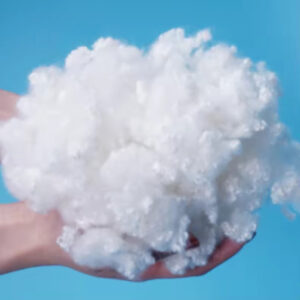
Polypropylene staple fiber — commonly abbreviated as PP fiber — is one of the most versatile and widely used synthetic fibers in the world, yet it is far less recognized by consumers than polyester or nylon. This is because PP fiber’s greatest strengths lie not in fashion apparel but in a range of industrial, construction, and technical applications where its unique combination of ultra-low density, outstanding chemical resistance, complete hydrophobicity, and production cost-efficiency makes it the preferred material choice over all competing fibers.
PP fiber reinforces concrete structures against cracking. It filters water in millions of diapers and hygiene products. It stabilizes road embankments and prevents soil erosion in geotextiles. It forms the nonwoven backing of carpets across the world. It insulates loft spaces and filters industrial air and liquids. From the foundations of highway infrastructure to the absorbent core of medical dressings, polypropylene staple fiber is embedded in the built and material environment in ways that are rarely visible but consistently critical.
This complete guide covers what polypropylene staple fiber is, its chemistry and production process, its full range of physical and chemical properties, all major application sectors with technical detail, its key product types and specifications, how it compares to polyester fiber as its closest commercial rival, and its environmental profile.
What Is Polypropylene Staple Fiber? Definition and Chemistry
Polypropylene staple fiber is a synthetic fiber produced by melt-spinning isotactic polypropylene polymer—a semi-crystalline thermoplastic derived from the polymerization of propylene monomer (CH₂=CHCH₃), which is itself a by-product of petroleum refining and natural gas processing. The polymer is formed into solid pellets or chips, melted, extruded through spinnerets, cooled, stretched, crimped, and cut to defined staple lengths to produce the finished fiber.
Polypropylene (PP) belongs to the polyolefin family of polymers—alongside polyethylene (PE)—characterized by their simple repeating carbon-hydrogen chain structure with no polar chemical groups. This structural simplicity is directly responsible for PP fiber’s most distinctive physical property: it is the only major commercial textile fiber with a density below 1.0 g/cm³ (approximately 0.91 g/cm³), meaning it is lighter than water and will float. This lowest-density characteristic of all commercial synthetic fibers has significant practical consequences for every application where weight efficiency matters.
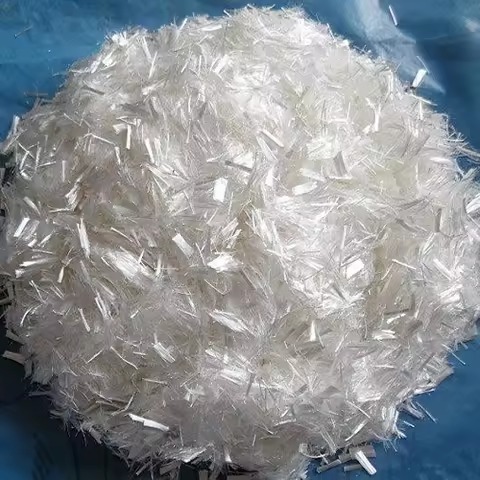
Polypropylene dominates the nonwoven sector globally, accounting for approximately 63% of all fibers used in nonwoven fabric production — more than polyester, nylon, and all other fiber types combined. Its combination of low cost, chemical inertness, hydrophobicity, and processability in standard nonwoven lines makes it the nonwoven industry’s default raw material.
The stereoregularity of the polypropylene polymer chain — the spatial arrangement of the methyl side groups — determines many of its properties. Isotactic polypropylene (where all methyl groups are aligned on the same side of the chain backbone) is the commercially dominant form, providing the crystallinity and mechanical strength required for fiber applications. Syndiotactic and atactic forms are less crystalline and less suitable for fiber production.
How Polypropylene Staple Fiber Is Made: Manufacturing Process
Step 1: Polypropylene Polymerization
Polypropylene polymer is produced by catalytic polymerization of propylene monomer using Ziegler-Natta catalysts or, more recently, metallocene catalysts. The choice of catalyst system determines the polymer’s tacticity (isotactic vs. syndiotactic vs. atactic), molecular weight, and molecular weight distribution — all of which influence the fiber’s mechanical properties. Modern metallocene catalysts allow more precise control of polymer architecture than traditional Ziegler-Natta systems, enabling tailor-made polymer grades for specific fiber applications.
Step 2: Compounding and Additive Incorporation
The base PP resin is compounded with additives before spinning. These additives are critical to fiber performance and include UV stabilizers (typically HALS—Hindered Amine Light Stabilizers—which compensate for PP’s inherent UV sensitivity), antioxidants (to prevent thermal degradation during high-temperature melt processing), color masterbatches (dope-dyeing, since PP does not accept conventional aqueous dyestuffs), antimicrobial agents, and surface-treatment modifiers. The additive package is tailored to the intended application—geotextile fiber requires UV stabilization; hygiene fiber requires skin-safety certification; concrete fiber requires no additives beyond processing stabilizers.
Step 3: Melt Spinning
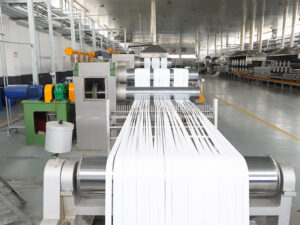
The compounded PP resin is melted in an extruder at approximately 220–280°C and pumped under pressure through a spinneret plate containing many small holes (typically 0.3–1.0 mm diameter, depending on target denier). The molten polymer emerges as continuous filaments that are immediately quenched by a controlled stream of cooling air, solidifying the melt into solid filaments. The spinning speed and spinneret hole diameter determine the fiber’s denier—a higher spinning speed produces finer fiber at equivalent spinneret diameter.
Step 4: Drawing and Orientation
As-spun PP filaments are relatively weak and extensible. Drawing—stretching the filaments between godets (rollers) at a defined draw ratio (typically 3:1 to 6:1) at elevated temperature—orients the polymer chains along the fiber axis, dramatically increasing tensile strength and stiffness while reducing elongation to the target range. Drawing is the key step that converts the amorphous as-spun filaments into high-strength oriented fiber with the mechanical properties required for technical applications.
Step 5: Crimping, Cutting, and Finishing
After drawing, the filaments are passed through a stuffer-box crimper—a mechanical device that compresses the tow into a box, forcing it to buckle into a regular zig-zag crimp pattern. Crimping is essential for staple fiber processability: it creates the interfiber entanglement that allows the fiber to be carded, lapped, and needle-punched in nonwoven production and gives the fiber cohesion for spinning into yarn. After crimping, the continuous tow is cut to the target staple length by a rotary cutter. Surface finishing agents — typically silicone or hydrophilic finishes depending on application — are applied before baling.
Key Properties of Polypropylene Staple Fiber
Property | Detail & Commercial Significance |
Lowest Density of Any Commercial Fiber | PP fiber has a density of approximately 0.91 g/cm³ — lower than water (1.0 g/cm³) and 34% lighter than polyester (1.38 g/cm³). This delivers better area coverage per kilogram of fiber, making PP more cost-efficient by weight for area-based products like geotextiles and nonwovens. |
Complete Hydrophobicity (Zero Moisture Absorption) | PP absorbs essentially zero moisture (moisture regain < 0.1%); it is completely hydrophobic. This gives PP fiber outstanding performance in wet environments: it does not swell, lose strength, or support microbial growth when exposed to water, chemicals, or bodily fluids. Critical for hygiene, geotextile, and filtration applications. |
Outstanding Chemical Resistance | PP resists virtually all acids, alkalis, salts, and organic solvents at ambient temperature. It is unaffected by most industrial chemicals, making it the fiber of choice for chemical filtration, marine applications, and environments where chemical exposure is significant. Limitation: degraded by strong oxidizing agents (nitric acid, chlorine) at elevated temperatures. |
High Tensile Strength | PP fiber tensile strength ranges from 3.5 to 8.0 g/denier depending on draw ratio and grade—sufficient for demanding mechanical applications in geotextiles, concrete reinforcement, and rope. High-tenacity grades approach the strength of standard polyester and exceed that of standard acrylic. |
Inherent UV Sensitivity (Requires Stabilization) | Unstabilized PP degrades rapidly under UV exposure — the polymer chain breaks down through photooxidation, reducing tensile strength and causing embrittlement. This is PP’s primary technical limitation for outdoor applications. It is addressed by incorporating HALS UV stabilizers during compounding, which can extend outdoor service life to 25+ years in geotextile applications when properly formulated. |
Good Abrasion Resistance | PP fiber has good surface hardness and resistance to mechanical abrasion — important for carpet backing, geotextile durability, and rope applications where repeated mechanical contact is unavoidable. |
Excellent Chemical Inertness in Biological Environments | PP is not biodegradable, does not absorb water, and does not support bacterial or fungal growth — making it ideal for long-term underground geotextile applications, subsurface drainage, and medical applications requiring non-reactive, non-absorbable materials. |
Low Melting Point (Compared to Polyester) | PP melts at approximately 160–165°C—significantly lower than polyester (255°C) and nylon (220°C). This lower melting point makes PP more susceptible to heat damage in high-temperature applications but also enables easier thermal bonding in nonwoven manufacturing using low-temperature bonding ovens. |
Dyeing Limitation | Standard PP fiber cannot be dyed after production using conventional aqueous dyestuffs because its non-polar, hydrophobic structure prevents dye penetration. It must be colored by dope-dyeing (adding pigment masterbatch to the polymer melt before spinning), producing solution-dyed fiber with excellent color fastness but limiting color flexibility for small production runs. |
Excellent Electrical Insulation | PP is an excellent electrical insulator with a very low dielectric constant and high volume resistivity—valuable in technical nonwoven applications requiring electrical insulation. |
Types of Polypropylene Fiber by Form and Construction
Polypropylene Staple Fiber
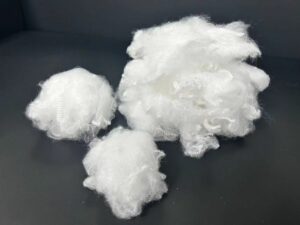
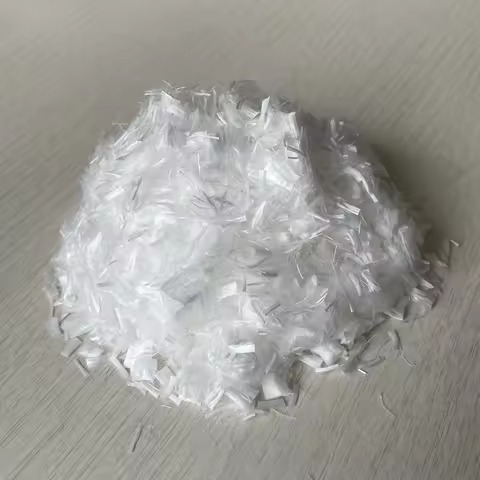
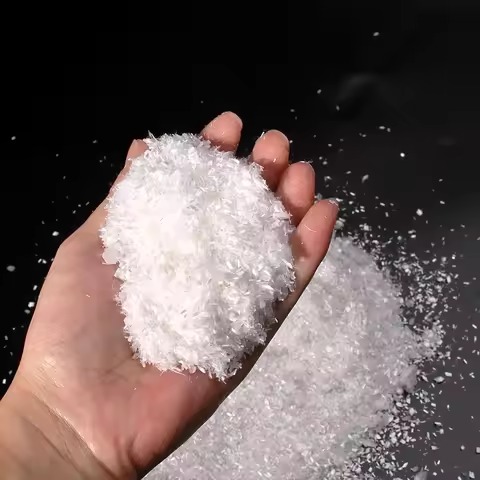
Cut to defined lengths (typically 6–150 mm depending on application), PP staple fiber is the primary form for nonwoven geotextile production, hygiene product manufacture, and concrete reinforcement. The combination of crimp, cut length, and denier determines how the fiber processes on carding, air laying, and needle-punching lines.
Polypropylene Filament Yarn (Continuous Filament)
Continuous PP filaments—not cut into staple—are used for woven geotextiles, rope and cordage, carpet yarn (BCF—Bulked Continuous Filament), and technical yarn applications. Continuous filament provides higher tensile efficiency per unit weight than staple fiber because there are no fiber-end weak points.
Spunbond PP Nonwoven (Spunlaid)
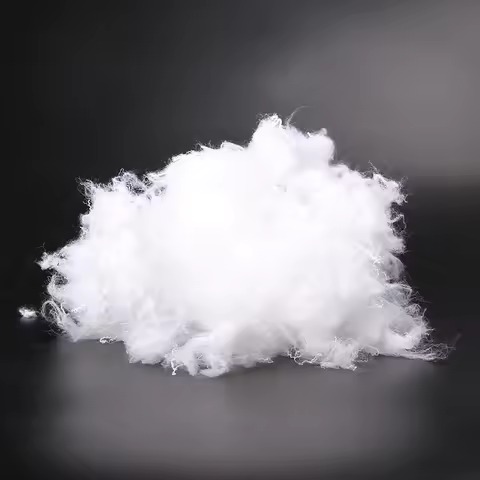
Spunbond polypropylene is produced by a continuous process where the polymer is melted, extruded through a spinneret, attenuated by high-velocity air jets, and laid directly onto a moving belt to form a web — which is then thermally bonded. Spunbond PP is not a staple fiber product (it uses continuous filaments), but it is the dominant PP nonwoven format for hygiene (diaper top sheets, backing sheets), medical (surgical gowns, drapes), and agricultural (crop covers) applications.
Meltblown PP Fiber
Meltblown polypropylene uses extremely high-velocity hot air to attenuate the molten polymer into very fine fibers (typically 1–5 microns) that are collected directly as a nonwoven web. Meltblown PP is not a staple fiber—it is produced and bonded in a single continuous step—but it forms the critical filtration layer in N95 and surgical masks, liquid filtration media, and battery separators. The combination of spunbond and meltblown layers (SMS — Spunbond-Meltblown-Spunbond) is the standard construction for high-performance hygiene and medical nonwovens.
Short-Cut PP Fiber for Concrete Reinforcement
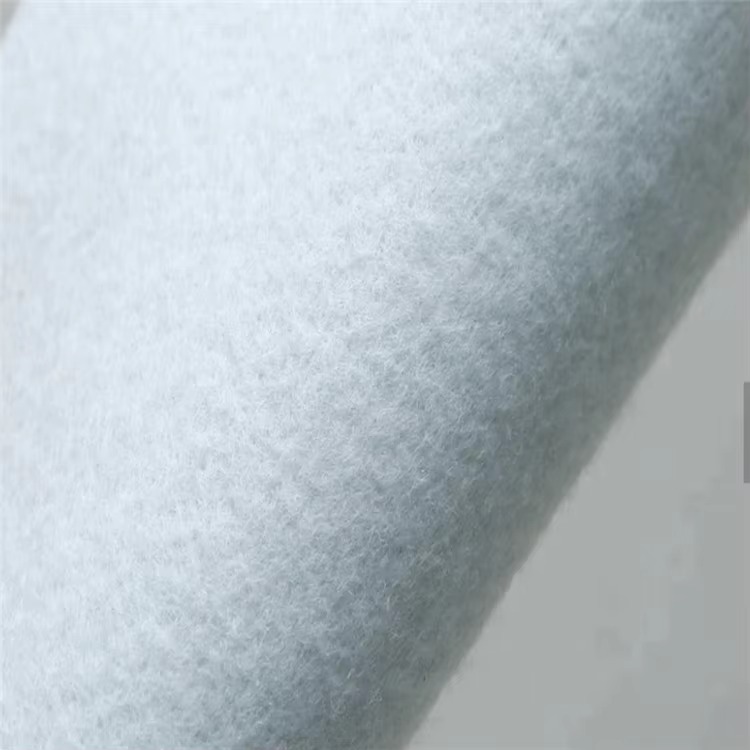
For concrete and construction applications, PP fiber is cut to very short lengths — typically 6, 12, 19, or 54 mm — and classified as either micro-fiber (monofilament or fibrillated, fine denier) or macro-fiber (coarser, higher denier). These short lengths are designed for dispersion in the concrete mix during batching, producing distributed reinforcement throughout the full concrete volume.
Applications of Polypropylene Staple Fiber
1. Geotextiles — The Largest Technical Application
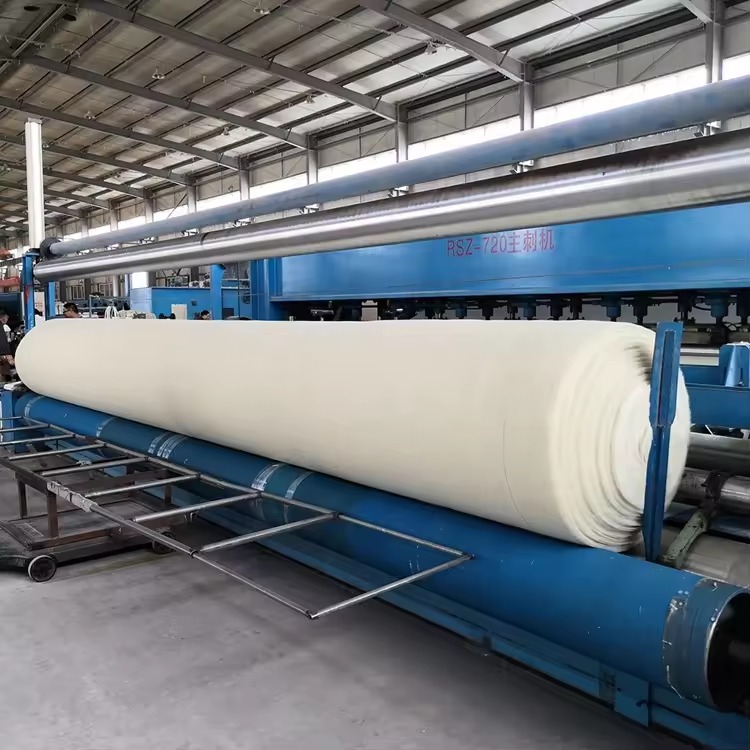
Polypropylene staple fiber is the dominant raw material for needle-punched nonwoven geotextiles—permeable engineering fabrics used in civil engineering infrastructure projects worldwide. PP geotextile production involves the same carding, lapping, and needle-punching process used for other technical nonwovens, but with UV-stabilized fiber formulations designed for decades of service in soil contact.
Geotextiles perform five critical engineering functions in civil construction:
- Separation: Preventing the mixing of different soil or aggregate layers in road sub-bases, railway trackbeds, and embankments—maintaining the structural integrity of the layered construction over time.
- Filtration: Allowing water to flow freely through the geotextile while retaining fine soil particles—preventing piping (the erosion of fine soil into drainage layers) in embankments, retaining walls, and drainage applications.
- Drainage: Providing a permeable layer that transmits water in the plane of the fabric — used in blanket drains, edge drains, and subsurface drainage systems.
- Reinforcement: Adding tensile strength to weak soils in embankments over soft ground, steep-slope constructions, and retaining wall backfill—redistributing stress and preventing soil failure.
- Erosion control: Protecting soil surfaces from wind and water erosion on embankment slopes, stream banks, and coastal areas until vegetation establishes.
PP geotextile is preferred over polyester for many civil engineering applications because of its superior chemical resistance in aggressive soil conditions (high pH, acid soils, industrial contamination) and its better performance under sustained loading (lower creep) in geomembrane interface applications. UV-stabilized PP geotextiles with HALS additives are specified for exposed surface applications with design service lives of 25 years or more.
2. Concrete and Mortar Reinforcement
Polypropylene fiber is the most widely used synthetic fiber for concrete and mortar reinforcement—added during batching at dosage rates of 0.6–1.8 kg per cubic meter to create distributed three-dimensional reinforcement throughout the concrete volume. This application exploits PP’s combination of chemical inertness in the highly alkaline concrete environment (pH 12–13), where other fibers may degrade.
PP fiber reinforcement in concrete addresses several distinct performance objectives:
- Plastic shrinkage crack control: The most important function of micro-PP fibers. During the first hours after casting, fresh concrete is vulnerable to cracking driven by rapid surface evaporation. PP microfibers (6–12 mm, 3–18 denier) distributed throughout the mix provide internal restraint against this early-age shrinkage, dramatically reducing plastic shrinkage crack formation.
- Drying shrinkage crack resistance: As concrete dries over weeks and months, volume reduction from moisture loss creates tensile stresses that cause shrinkage cracking. PP fibers—especially macrofibers (30–54 mm, high denier)—provide post-crack tensile capacity that limits crack width and maintains structural integrity.
- Spalling resistance under fire: PP fiber’s low melting point (160–165°C) is an advantage in fire-resistance applications: the fibers melt and create micro-channels in the concrete that allow steam pressure to escape, preventing explosive spalling of concrete in tunnel linings, parking structures, and other fire-exposed applications.
- Impact and abrasion resistance: PP fiber reinforcement improves concrete’s energy absorption under impact loading — relevant for industrial floors, pavements, and blast-resistant structures.
PP fibers used in concrete are available as monofilaments (round cross-section, uniform diameter), fibrillated fibers (flat tape that splits into a network during mixing, providing better mechanical bonding with the cement paste), and twisted macro-fibers (high-denier structural fibers for post-crack load transfer). Standard dosage for plastic shrinkage control is 0.9–1.2 kg/m³; structural macro-fiber applications may use 3–8 kg/m³.
3. Hygiene and Medical Nonwovens
Polypropylene’s complete hydrophobicity, skin safety, and low cost make it the dominant fiber for the outer layers of disposable hygiene products—the top sheet (the skin-contact layer that must feel dry) and backsheet (the liquid-barrier outer layer) of diapers, adult incontinence products, and feminine care items. The top sheet requires a hydrophilic surface treatment to allow liquid to pass through to the absorbent core, despite the PP fiber’s inherently hydrophobic character—achieved through surfactant finishing during production.
In medical and healthcare nonwovens, PP spunbond is the standard material for disposable surgical gowns, drapes, face masks (outer and inner layers of SMS mask constructions), sterilization wrap, and wound care product covers. PP’s non-reactivity with biological systems, resistance to microbial growth, and absence of toxic leachables make it safe for direct skin and wound contact in these applications.
4. Carpet Backing and Floor Coverings
Polypropylene is the standard fiber for needle-punched carpet backing, primary and secondary carpet backings, carpet tiles, and indoor-outdoor carpet face yarns. For carpet face yarns, BCF (Bulked Continuous Filament) PP yarn is heat-set to produce the permanent crimp that gives carpet its texture and resilience. PP carpet yarn offers excellent stain resistance (its hydrophobic surface repels water-based stains), good colorfast performance (solution-dyed), and competitive cost compared to nylon.
In needle-punched carpet for automotive applications—the carpet in car floors, boot liners, and luggage compartments—PP staple fiber is the dominant material. Its resistance to the humidity, chemical exposure (road salt, engine oil, automotive fluids), and mechanical abrasion of automotive interior environments makes it the standard specification for OEM automotive carpet worldwide.
5. Filtration — Liquid and Air
PP fiber’s chemical resistance across the full pH range (0–14), hydrophobicity, and ability to be produced in very fine deniers make it the preferred fiber for liquid filtration applications. PP filter media—produced as needle-punched nonwoven, wet-laid, or meltblown fabric—is used for industrial liquid filtration (process water, wastewater, and chemical filtration), pool and spa filtration, beverage filtration, and industrial bag filters.
For air filtration, PP meltblown fiber—particularly electret-charged meltblown (where the PP microfibers carry a permanent electrostatic charge that dramatically improves fine particle capture)—is the critical filtration medium in N95 respirators, surgical masks, HVAC filters, and automotive cabin air filters. The electret charging of PP meltblown creates a filter that captures particles both by mechanical interception and electrostatic attraction—achieving much higher filtration efficiency per unit of air resistance than uncharged fiber media of equivalent density.
6. Agricultural and Horticultural Applications
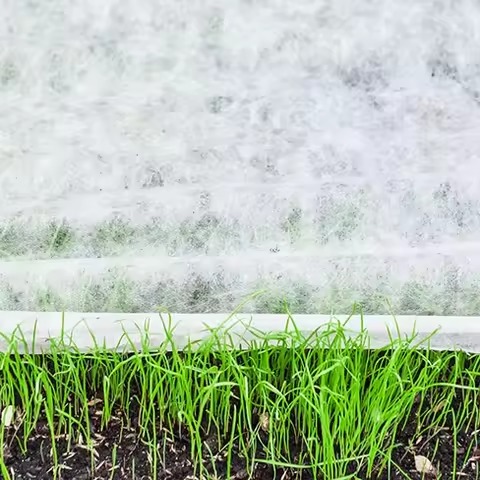
PP nonwoven fabrics — typically spunbond in weights of 15–50 g/m² — are widely used in agriculture as crop protection fabrics (floating row covers), weed control membranes (landscape fabric / ground cover), and fruit protection bags. The fiber’s UV stability (with appropriate additive packages), chemical resistance to agricultural inputs (fertilizers, pesticides), and low cost make PP the standard agricultural nonwoven material globally.
7. Industrial Rope, Cordage, and Marine Applications
PP continuous filament yarn is the dominant fiber for general-purpose rope, twine, and cordage—from packaging twine to marine mooring lines. PP rope floats (density below water)—a critical safety and practicality advantage in marine applications. Its resistance to rot, marine organisms, and seawater, combined with good mechanical properties and low cost, makes PP the standard material for fishing nets, marine rope, and aquaculture applications where contact with seawater, fish, and marine biology is continuous.
8. Thermal and Acoustic Insulation
PP staple fiber—typically in coarser deniers (15–40D)—is used in thermally bonded insulation batts for building insulation, automotive noise reduction panels, and HVAC duct insulation. PP’s low thermal conductivity and ability to trap still air in a bulky fiber matrix provide useful insulating performance. For automotive acoustic insulation—absorbing engine and road noise in door panels, headliners, and floor coverings—PP fiber provides effective sound absorption at low weight and cost, with excellent dimensional stability and humidity resistance in the demanding automotive environment.
PP Fiber vs. Polyester Fiber: Key Comparison
PP fiber and polyester (PET) fiber are the two dominant synthetic staple fibers in technical and nonwoven applications. Their properties overlap significantly but differ in critical dimensions that determine which is preferred for specific uses:
Property | Polypropylene (PP) Fiber | Polyester (PET) Fiber |
Density | 0.91 g/cm³ — lightest commercial fiber; floats on water | 1.38 g/cm³ — 52% heavier than PP per unit volume |
Moisture absorption | < 0.1% — essentially zero; completely hydrophobic | 0.4% — very low but not zero; slightly hygroscopic |
Chemical resistance | Excellent across full pH range; resists most acids, alkalis, solvents | Very good; slightly inferior to PP in high-pH alkaline environments |
UV resistance | Poor without stabilizers; requires HALS additive package | Good inherent UV resistance; less additive-dependent than PP |
Tensile strength | 3.5–8.0 g/den (draw-ratio dependent); slightly lower than PET | 4.0–9.0 g/den; generally slightly stronger than PP at equivalent denier |
Melting point | ~160–165°C — lower; limits high-temp applications; enables fire spalling resistance in concrete | ~255°C — much higher; better for high-temperature applications |
Dyeability | Cannot be conventionally dyed; requires solution/dope dyeing only | Excellent—disperse dyes at atmospheric or pressure conditions |
Color options | Limited to dope-dyed colors set at production; less flexible | Wide range; can be dyed after fabric/nonwoven production |
Cost | Generally lower — PP resin is one of cheapest commodity polymers | Slightly higher—PET feedstock costs more than PP |
Recyclability | Technically recyclable; separate collection needed | Well-established mechanical and chemical recycling (rPET) |
Best applications | Geotextiles (chemical resistance), concrete reinforcement (alkaline), hygiene nonwovens (cost), marine/rope (floatation), agricultural cover | Home textiles; pillow/duvet fill (HCS fiber); automotive acoustics (heat stability); filtration; apparel blends (dyeability) |
PP Fiber Technical Specifications
Polypropylene staple fiber is produced across a wide range of specifications to match the requirements of different application sectors. The key parameters to specify when sourcing PP fiber are the following:
Specification | Typical Range | Notes |
Denier (linear density) | 1.5D to 70D | Fine (1.5–3D): hygiene, mask filtration. Standard (6–15D): geotextile, carpet. Coarse (20–70D): concrete macro-fiber, rope, insulation |
Staple (cut) length | 6 mm to 150 mm | 6–20 mm: concrete microfiber. 25–64 mm: carding for nonwoven/geotextile. 64–150 mm: specialty and long-staple applications |
Tensile strength | >3.5 g/denier | Higher-tenacity grades available for demanding geotextile and structural applications |
Elongation at break | >70% | Higher elongation aids fiber processability in carding; lower elongation gives better tensile efficiency |
Crimp frequency | 3–8 crimps/cm | Higher crimp: better cohesion in carding; lower crimp: improved tensile alignment |
UV stabilization | None, standard, or high UV | Specify HALS level based on outdoor service life requirement: standard for 10-year; high for 25-year geotextile service life |
Color | Natural white or dope-dyed | Specify color at ordering—cannot be changed after production. Natural white is standard for most technical applications |
Surface finish | Standard; hydrophilic; siliconized | Hydrophilic finish for hygiene top-sheet; siliconized for certain nonwoven bonding applications |
Denier type | Monofilament or fibrillated | Fibrillated fiber splits into a network during mixing—better mechanical bonding in concrete. Monofilament for cleaner reinforcement geometry |
Sustainability of Polypropylene Fiber
Polypropylene fiber’s environmental profile has both significant advantages and important limitations that must be honestly assessed:
Genuine Environmental Advantages
- Lowest carbon footprint per area among synthetic fibers: PP’s low density means more area coverage per kilogram of fiber produced—reducing the absolute quantity of polymer needed for area-based products like geotextiles and nonwovens compared to denser alternatives.
- No solvents or chemical reagents in production: PP is produced entirely by melt processing — melting, extruding, and cooling. Unlike cellulosic fibers (which require chemical solvents) or nylon (whose production generates N₂O), PP fiber production involves no chemical reagents beyond the polymer and additives, generating no chemical waste streams.
- Long service life in infrastructure applications: PP geotextiles with proper UV stabilization perform reliably for 25–50 years in subsurface civil engineering applications — a long service life that amortizes the production carbon footprint over decades.
- No dye process required: Solution-dyed PP eliminates the water and chemical consumption of conventional fiber dyeing — a significant environmental advantage for colored applications.
- Technically recyclable: Polypropylene is a single-polymer thermoplastic that can be mechanically recycled (re-melted and re-extruded) without chemical reprocessing. PP is accepted in many plastic recycling streams.
Genuine Environmental Limitations
- Fossil fuel-derived: PP is produced from propylene, a petroleum/natural gas by-product. Its production contributes to fossil fuel extraction and consumption, generating greenhouse gas emissions at the feedstock level.
- Not biodegradable: PP does not biodegrade under natural conditions. PP products reaching landfill or the environment persist for decades to centuries. PP’s hydrophobic nature means it can accumulate organic pollutants from the aquatic environment.
- Microplastic generation: Like all synthetic polymer fibers, PP can fragment into microplastics through mechanical degradation. PP microplastics have been detected in marine environments, freshwater, and soils globally.
- Mixed recyclability in practice: While technically recyclable, PP fiber in blended products (composite geotextiles, carpets with multiple polymer layers, and SMS nonwovens) is difficult to separate for recycling—and most PP fiber products in hygiene applications are disposed of in household waste rather than recycled.
- Challenging to produce from renewable feedstocks: Bio-based polypropylene from bio-naphtha or bio-LPG (bio-PP) is technically available and chemically identical to fossil-derived PP but remains a niche, higher-cost product. Commercial bio-PP fiber for staple fiber applications is in early development.
Conclusion: Polypropylene Staple Fiber’s Unique Market Position
Polypropylene staple fiber occupies a unique and commercially essential position in the global fiber market—defined by properties that no other commercial fiber combines in the same way. Its ultra-low density, complete chemical inertness, zero moisture absorption, excellent processability on standard nonwoven and spinning equipment, and low production cost create a performance and economic profile that makes it the default choice across the technical textile and construction fiber segments it dominates.
For geotextile engineers, the chemical resistance and UV-stabilizable durability of PP fiber make it the specified material for aggressive soil environments and long-service-life drainage and filtration applications. For concrete producers, PP’s alkaline inertness and fire-spalling performance through fiber melting are irreplaceable. For hygiene product manufacturers, PP’s skin safety, hydrophobicity, and cost efficiency make it the foundation of the global nonwoven hygiene industry. For rope and marine applications, PP’s flotation—its density below water—is a fundamental functional requirement.
The sustainability limitations of PP fiber are real and should not be minimized — its fossil fuel origin, non-biodegradability, and microplastic generation are genuine environmental challenges that the industry must address through longer product service lives, improved end-of-life collection and recycling systems, and the progressive introduction of bio-based PP feedstocks as they become commercially viable at scale.
For buyers sourcing polypropylene staple fiber for technical, construction, or nonwoven applications, VNP POLYFIBER supplies a comprehensive range of PP fiber specifications, including fine denier (1.5–6D) for hygiene and filtration; standard denier (6–20D) for geotextile and nonwoven production; and coarse denier (20–70D) for concrete reinforcement and industrial applications—with UV stabilization levels, color options, and surface finishes matched to your specific end-use requirements.