
Types of Pillows Explained: Shapes, Sizes, Firmness & How to Choose the Right One
Walk into any bedding store or scroll through any sleep retailer’s website, and the pillow options are genuinely overwhelming. Standard, queen, king, euro, body, cervical, wedge, contour, lumbar, travel, pregnancy, throw — and that’s before you even start thinking about fill material or firmness. Most people pick a pillow based on what looks familiar or what’s on sale, then spend years sleeping on something that doesn’t quite work for them.
The right pillow is not a luxury — it is a health decision. Your pillow determines whether your head and neck stay in neutral alignment with your spine through the night or whether they flex, extend, or rotate into positions that cause the stiffness, soreness, and poor sleep quality that millions of people attribute to other causes. Get the pillow right, and sleep can transform. Get it wrong, and even a perfect mattress won’t save you.
This complete guide covers every type of pillow—by shape, by size, by firmness, and by intended use—and gives you the specific, practical guidance you need to match the right pillow to your sleep position, body type, and needs.
Why Your Pillow Type Matters for Sleep Quality
A pillow has one primary functional job during sleep: to fill the space between your head and the mattress in a way that keeps your cervical spine (the neck vertebrae) in neutral alignment with the rest of your spine. When that alignment is maintained, muscles relax, nerves are not compressed, blood flows freely, and you sleep deeply and wake without pain.
When alignment is lost—because the pillow is too high, too low, too firm, or the wrong shape for your sleep position—muscles in the neck and shoulders work throughout the night to compensate. The result is the stiff neck, shoulder tension, or headache that many people feel upon waking. Over time, consistently poor pillow support contributes to chronic neck pain, shoulder problems, and even disrupted sleep architecture from the micro-arousals that muscular tension creates.

The ‘right’ pillow is not the same for everyone. It depends on your sleep position, shoulder width, mattress firmness, body weight, and whether you have any specific neck or shoulder conditions. There is no single best pillow—only the best pillow for you.
Understanding the Key Pillow Dimensions
Before exploring specific pillow types, it helps to understand the four key dimensions that define any pillow:
Loft (Height / Thickness)
Loft is the height of the pillow when lying flat—typically measured in inches. It is the most critical specification for spinal alignment. Too much loft pushes the head upward, forcing the neck to flex (chin toward chest). Too little loft allows the head to drop downward, forcing the neck to extend (chin away from chest). The correct loft keeps the ear, shoulder, and hip in a straight horizontal line when lying on your side or the face parallel to the ceiling when lying on your back.
- Low loft: Under 3 inches — suited to stomach sleepers and petite individuals
- Medium loft: 3–5 inches — suited to back sleepers and average-build individuals
- High loft: 5 inches and above — suited to side sleepers and broader-shouldered individuals
Firmness
Firmness describes how much resistance the pillow provides to compression under the weight of the head. It is related to but distinct from a loft—a soft pillow compresses significantly under the head’s weight, so its ‘sleeping loft’ is lower than its ‘resting loft.” A firm pillow maintains close to its resting height under the head’s weight.
- Soft: Compresses easily — best for stomach sleepers and those who prefer a cradled, sinking feeling
- Medium: Balanced support — versatile across positions for average-weight sleepers
- Firm: Maintains height under compression—essential for side sleepers who need consistent gap-filling between ear and shoulder
Shape
Pillow shape—rectangular, contoured, wedge, cylindrical, or specialty—determines how it positions the head and neck and what type of support it provides. Standard rectangular pillows are the most versatile; specialty shapes address specific sleep positions, health conditions, or use cases.
Size
Pillow size determines how much of the bed the pillow occupies and how much space the head has to move during the night. Standard sizes coordinate with mattress sizes for aesthetic harmony — though the functional size for sleep purposes is primarily about the pillow’s width and length in relation to your shoulder width and preferred sleeping posture.
Pillow Types by Shape and Function
1. Standard / Rectangular Pillow
The standard rectangular pillow is the most universal pillow type — the shape most people visualize when they think of a pillow. It is designed for sleeping, providing a cushioned surface for the head to rest on during the night, and is available in every size from toddler to king. Standard pillows work across all sleep positions when the appropriate fill material and loft are chosen, making them the versatile foundation of any pillow purchase decision.

Standard rectangular pillows rely entirely on their fill material, loft, and firmness to determine their support character—they have no built-in contour or shape advantage. This makes fill selection (discussed in detail in our companion Pillow Filling Types guide) the most important decision for standard pillow buyers.
- Best for: All sleep positions (with appropriate fill and loft), general bed use, everyday sleeping
- Available in: Standard, Queen, King, European, and other sizes
- Fill options: Down, polyester HCS, memory foam, latex, wool, buckwheat, and all other fill types
2. Cervical / Contour Pillow
A cervical pillow — also called a contour pillow or orthopedic pillow — has a shaped profile that is specifically engineered to support the natural curve of the cervical spine. The most common design features a higher loft at the edges (to support the neck) and a lower, scooped center (to cradle the head), though designs vary by manufacturer and intended sleep position.
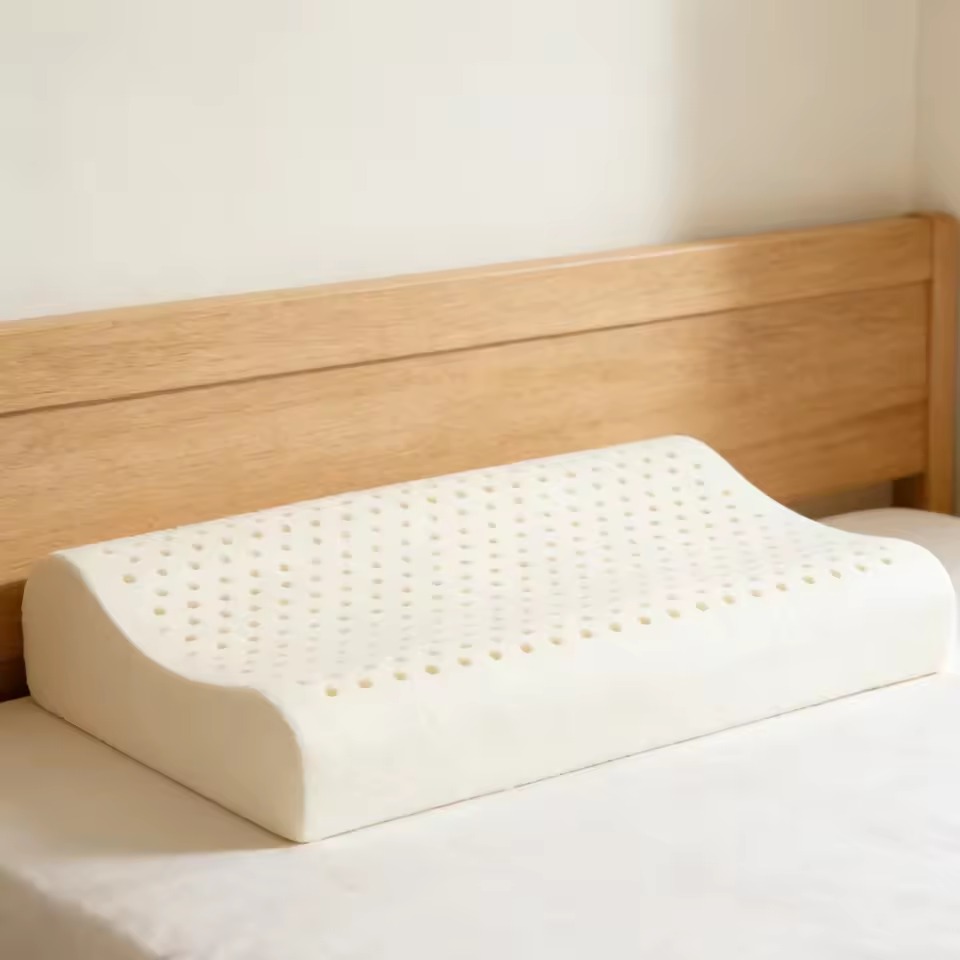
Unlike standard flat pillows that passively fill space, cervical pillows actively position the head and neck in a defined relationship—making them more prescriptive in their support. They are most effective for people with specific neck alignment issues, recovering from neck injuries, or those who know they need precise cervical support. They require some adjustment period as the head learns the intended position.
- Best for: Back sleepers with neck pain or cervical alignment issues; people recovering from whiplash or neck injury; those who have been recommended a cervical support pillow by a healthcare provider
- Fill: Usually memory foam (solid contoured block) or shredded memory foam in a contoured shape; some latex variants
- Important: Cervical pillow sizing matters significantly — a pillow sized for the wrong shoulder width will position the neck incorrectly. Follow manufacturer sizing guides carefully
3. Body Pillow
A body pillow is a long, cylindrical or rectangular pillow designed to be hugged or positioned along the full length of the body during sleep. Body pillows are typically 48–54 inches long (sometimes longer for pregnancy variants), extending from the head to the knees or beyond. They prevent the body from rolling into a face-down position and provide something for the top arm and knee to rest against—preventing the top shoulder and hip from rolling forward and twisting the spine.
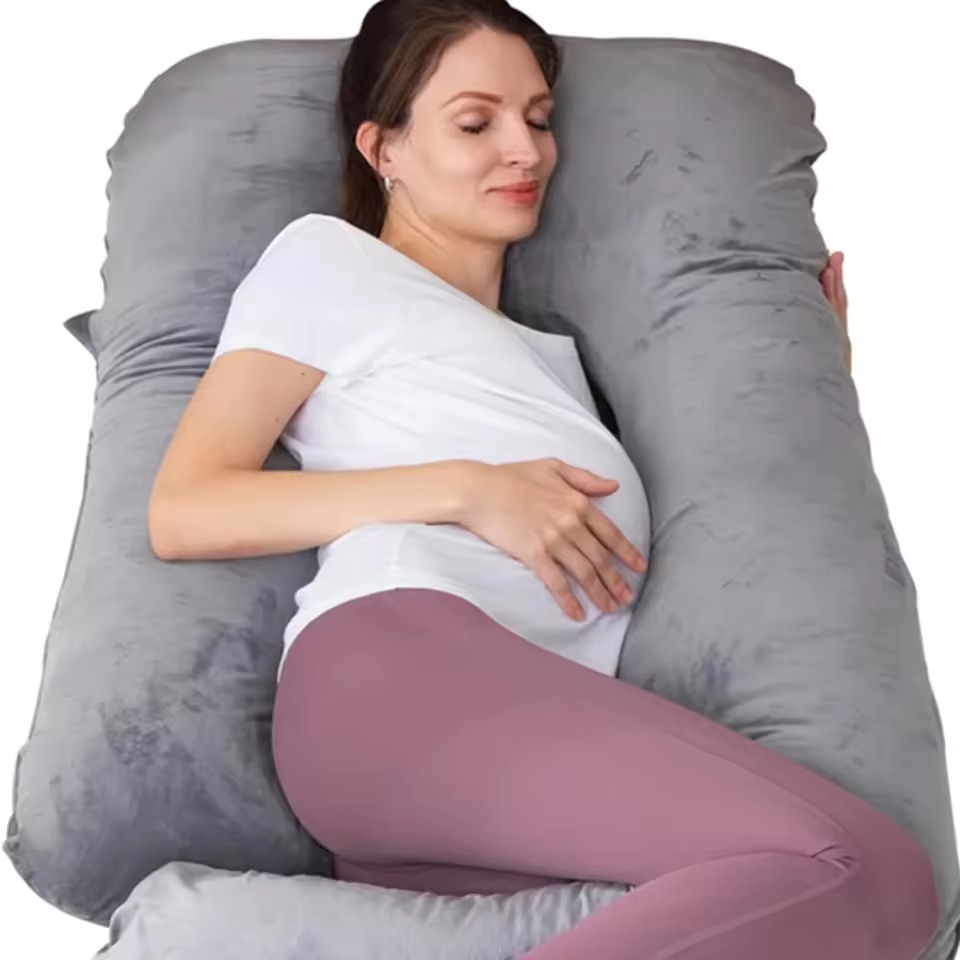
Body pillows are particularly valuable for side sleepers who find that their top knee drops forward and their top shoulder pulls inward during sleep—common positions that create spinal rotation and hip misalignment. Placing the body pillow between the knees and hugging it with the top arm maintains neutral lateral alignment through the night.
- Best for: Side sleepers who experience hip or shoulder discomfort; people who tend to roll from their side to their stomach; those who sleep better with physical contact throughout the body
- Fill: Polyester HCS fill is the most common (lightweight, washable); down-alternative for premium versions; microbeads for a moldable variant
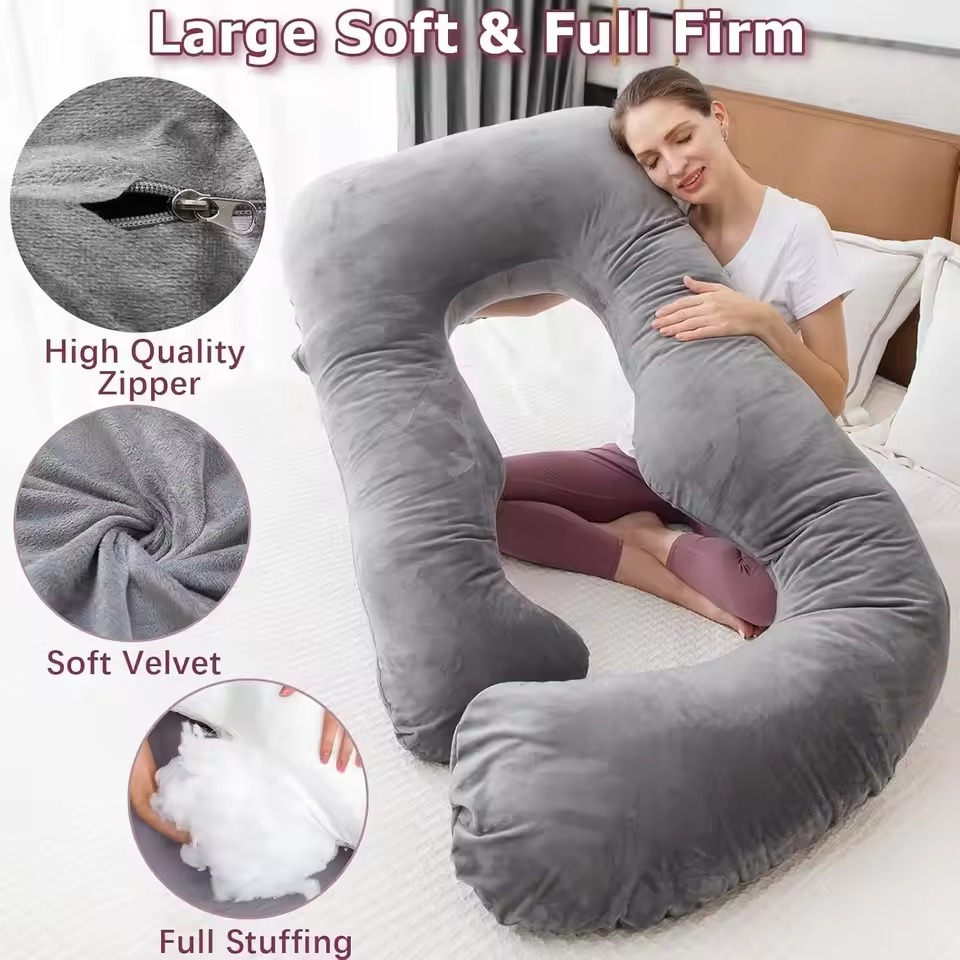
- Special variants: C-shaped and U-shaped pregnancy pillows that wrap around both front and back simultaneously — the gold standard for pregnancy sleep support
4. Wedge Pillow
A wedge pillow is a triangular foam block (or foam-cored with a fabric cover) that elevates the upper body or the legs at a defined angle. Unlike standard pillows that sit flat on the mattress, a wedge creates a sloped surface that positions the body at an incline without the instability of stacked pillows.
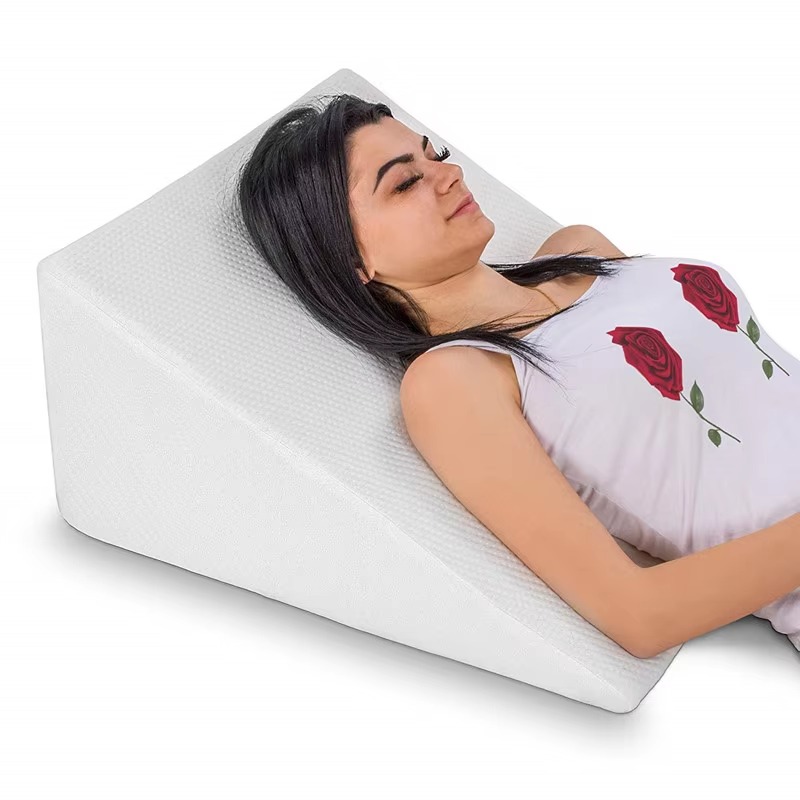
Upper-body wedge pillows (elevating the head, neck, and chest) are used primarily for acid reflux (GERD) management—gravity helps keep stomach acid in the stomach when the upper body is elevated 30–45 degrees—and for respiratory conditions like sleep apnea, snoring, and post-nasal drip, where elevating the head reduces airway obstruction. They are also used for reading in bed and for post-surgical recovery when lying flat is contraindicated.
Leg wedge pillows (placed under the knees) are used to reduce lower back pressure for back sleepers—elevating the knees takes tension off the lumbar spine—and for leg circulation issues, varicose vein management, and post-surgical lower limb elevation.
- Best for: Acid reflux/GERD sufferers; snorers; sleep apnea patients (used with or without CPAP); post-surgical recovery; those who prefer elevated reading position
- Fill: Typically high-density memory foam or HR (high-resilience) foam that maintains the wedge shape under sustained body weight
- Angle options: 7, 10, 12, 15, or 30+ degree inclines depending on intended use
5. Pregnancy Pillow
Pregnancy pillows are specialty support pillows designed for the specific comfort and postural challenges of pregnancy—particularly the second and third trimesters, when growing belly size makes standard side sleeping increasingly uncomfortable. They are available in several configurations:
- C-shaped: Wraps around one side of the body—supporting the head at the top, the back in the curve, and the knees at the bottom end. Compact and easy to reposition.
- U-shaped: Wraps around both sides simultaneously, supporting the head at the top and providing cushioning for both the back and the belly simultaneously. Full surround support but requires a larger bed.
- J-shaped / L-shaped: Longer body pillow with a curve at the top — supports head, back, and one knee.
- Wedge pregnancy pillow: Small wedge placed under the belly for belly support without a full-length pillow — good for those who want targeted belly support without bulk.
- Best for: Second and third trimester pregnancy; those with hip pain or pubic symphysis dysfunction during pregnancy; those who need back support while side sleeping
6. Lumbar / Back Support Pillow
Lumbar pillows are small, curved or cylindrical pillows designed to support the lower back’s natural inward curve (the lumbar lordosis) when sitting or in semi-reclined positions. They are not typically used for sleeping but are essential equipment for those who spend long hours sitting at a desk, in a car, on a plane, or in any seat that does not provide adequate lumbar support.
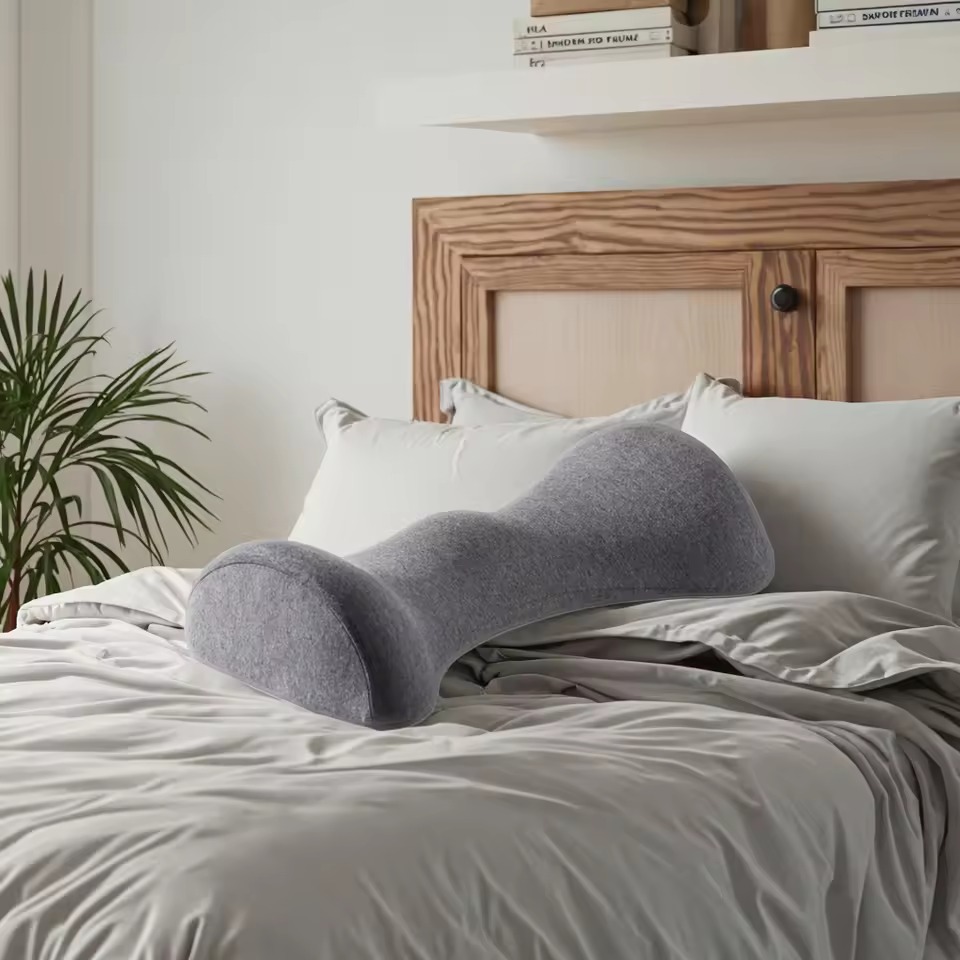
For those who experience lower back pain when sleeping on their back, a small lumbar pillow or a rolled towel placed under the lower back can help maintain the lumbar curve and reduce spinal pressure. However, a properly chosen sleep pillow for the head and neck, combined with placing a pillow under the knees, is usually more effective for back sleepers with lumbar pain.
- Best for: Office use, travel, car seats, any prolonged seated position; supplementary support for back pain sufferers in reclined reading positions
7. Travel Pillow
Travel pillows are compact, portable pillow designs intended for use during transportation—plane, train, car, or bus journeys, where sleeping in a seated or semi-reclined position is necessary. The classic travel pillow is U-shaped to wrap around the back of the neck, preventing the head from falling to either side during sleep. However, this design has known limitations—it does not support the chin from dropping forward, and many people find the standard neck-wrap design uncomfortable for longer journeys.
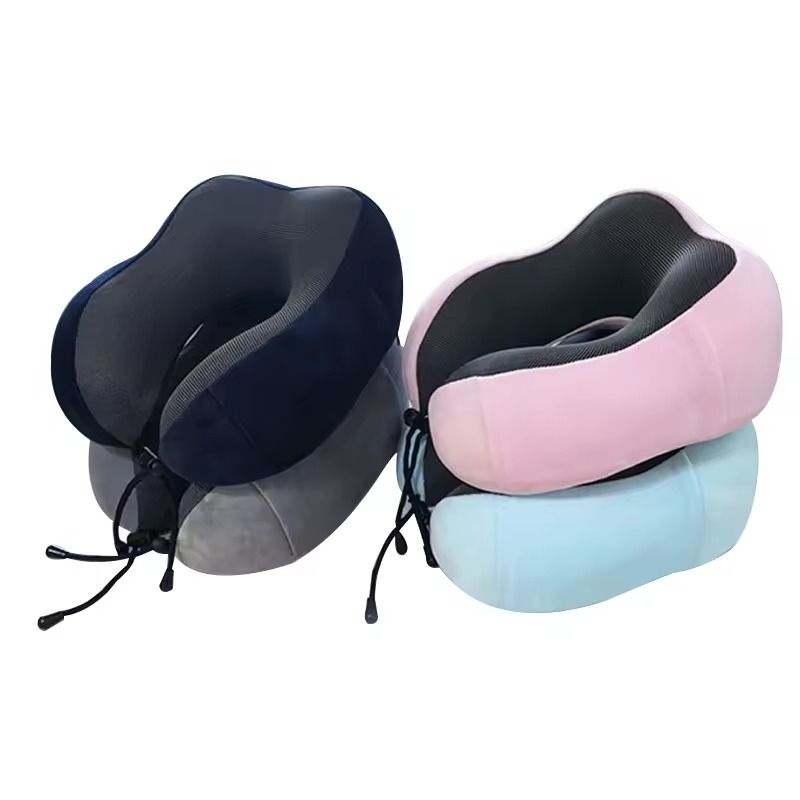
Improved travel pillow designs include chin-supporting variants, front-facing j-shaped pillows that hook over the tray table, and inflatable full-support pillows that create a more head-encompassing cradle. Memory foam travel pillows provide better contouring than polyester or microbead alternatives for shorter journeys.
- Best for: Air travel, train journeys, car passengers, any situation requiring seated sleep
- Fill: Memory foam (best support), polyester fiberfill (lightweight), microbeads (moldable), inflatable (most compact for packing)
8. Throw Pillow / Decorative Pillow
Throw pillows—also called accent pillows, scatter cushions, or decorative pillows—are primarily aesthetic objects that dress a bed, sofa, or chair rather than providing functional sleep support. They come in an enormous variety of shapes (square, rectangular, round, bolster, and novelty); sizes (from 12×12 inches to 24×24 inches or beyond); and cover fabrics that coordinate with room decor.
While throw pillows sit on the bed, they are removed before sleep in most cases. The fill of a throw pillow prioritizes shape retention and appearance over sleep-specific performance—firm fills that hold a neat square shape (polyester stuffing, foam inserts, and feathers/down) are preferred over lofty fills that look deflated.
- Best fill for throw pillows: Down-feather blend (luxurious, moldable, plump appearance), polyester fiberfill (affordable, shape-retaining, washable), foam insert (firmest, most structured appearance)
- Sizing: Match to furniture scale — smaller pillows (12×12 or 16×16 inches) for chairs and small sofas; larger pillows (18×18 to 24×24 inches) for standard sofas and beds
9. Bolster Pillow
A bolster pillow is a long, cylindrical pillow—typically 6–8 inches in diameter and 18–36 inches long. Historically, bolsters were placed at the head of the bed across the full width as a back support for reading. In modern use, they serve as neck rolls, knee supports (placed under the knees for back sleepers), ankle elevators, and decorative accents at the head of a made bed.
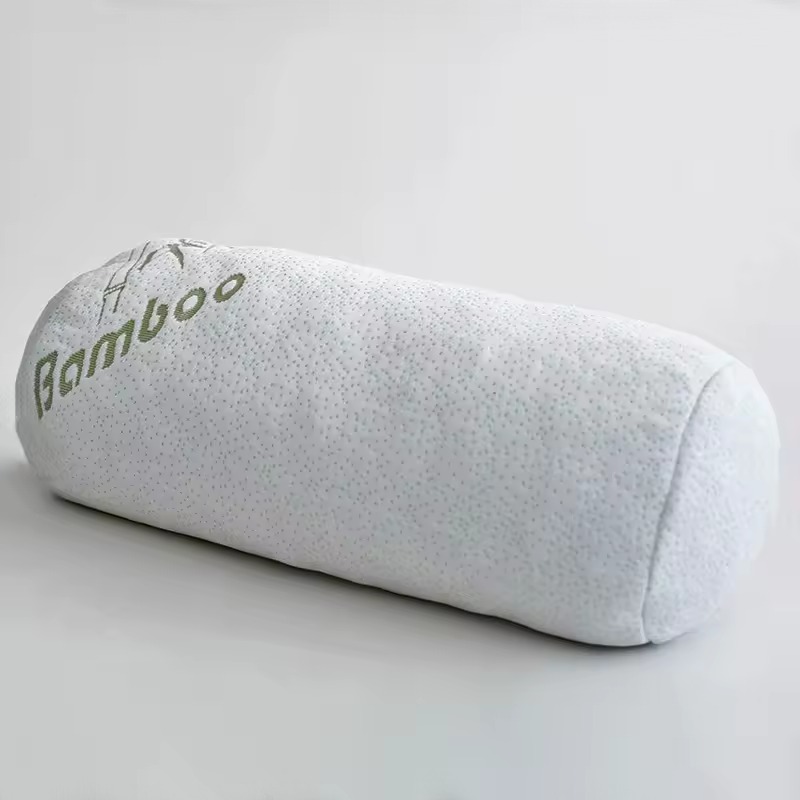
In therapeutic and yoga contexts, bolsters are used as props to support the body in restorative poses. The cylindrical shape provides targeted support to specific body parts — under the knees, behind the knees, under the ankles, or beneath the lower back — in a way that flat pillows cannot.
10. Wedge Knee Pillow
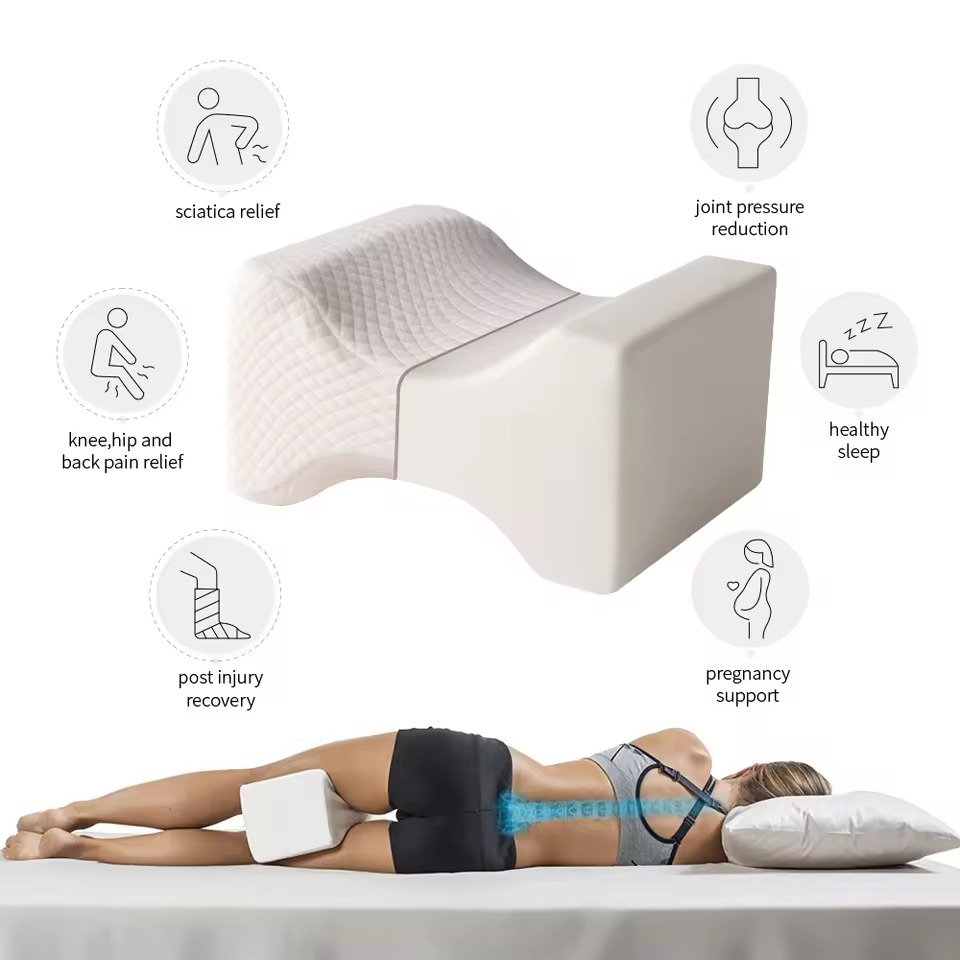
A knee wedge pillow is a small, contoured foam pillow designed to be placed between the knees of side sleepers or under the knees of back sleepers. For side sleepers, it prevents the top leg from crossing over and pulling the pelvis into spinal rotation—one of the most common causes of lower back and hip pain during side sleeping. For back sleepers, raising the knees slightly reduces tension in the lumbar spine.
- Best for: Side sleepers with hip pain, lower back pain, or sciatica; back sleepers with lumbar tension; post-hip or knee surgery recovery
- Fill: High-density memory foam or molded foam that maintains shape under sustained compression
Standard Pillow Sizes: US, UK, and International
Pillow Name | US Size | Approx. EU/UK Size | Best Matched With / Notes |
Standard | 20″ × 26″ | 50 × 65 cm | Twin and full mattresses; 2 fit side-by-side on a full/double |
Queen | 20″ × 30″ | 50 × 75 cm | Queen mattresses are slightly longer than standard for more headroom. |
King | 20″ × 36″ | 50 × 90 cm | King mattresses fit king-size pillowcases, one per side for couples |
European / Euro | 26″ × 26″ | 65 × 65 cm | Primarily decorative use on European beds, stacked at head of bed |
Body Pillow | 20″ × 54″ | 50 × 135 cm | Side sleepers, pregnancy, full-body support, requires body pillowcase |
Toddler / Baby | 13″ × 18″ | 35 × 45 cm | Toddler beds and cots sized for small heads and developing spines |
Travel | 10″ × 12″ | Variable | U-neck wrap or compact rectangle for transportation use |
Boudoir / Breakfast | 12″ × 16″ | 30 × 40 cm | Decorative accent; small throw pillow for beds and sofas |
How to Choose the Right Pillow: A Step-by-Step Guide
Choosing the right pillow is a process of elimination — working through a series of questions that narrow down the right combination of type, size, loft, firmness, and fill for your specific situation.
Step 1: Determine Your Primary Sleep Position
Your sleep position is the single most important factor in pillow selection. If you sleep in multiple positions, focus on the position in which you spend the most time, or choose an adjustable pillow that adapts to different positions:
Sleep Position | Ideal Loft | Ideal Firmness | Best Pillow Types |
Side sleeper | High (5–7″) | Medium-firm to Firm | Standard with firm fill (memory foam, firm latex, or high-loft HCS); knee pillow between knees |
Back sleeper | Medium (3–5″) | Medium | Standard with medium fill (down, medium HCS, or shredded latex); cervical pillow if neck pain present; knee wedge optional |
Stomach sleeper | Low (1–3″) | Soft | Standard with soft, flat fill (soft polyester, thin cotton, or no pillow); very thin memory foam |
Combination sleeper | Adjustable | Medium | Shredded fill (shredded foam, shredded latex, or buckwheat) that moves with position changes; mid-loft standard pillow |
Step 2: Factor in Your Body Build
Your shoulder width and body weight influence the ideal pillow loft even within the same sleep position:
- Narrow shoulders (side sleeper): The gap between ear and mattress is smaller—a medium-loft pillow may be sufficient rather than high-loft
- Broad shoulders (side sleeper): Larger gap between ear and mattress—high loft and firm fill are essential to maintain spinal alignment
- Higher body weight: Softer mattresses compress more under body weight, reducing the effective gap—may require slightly lower pillow loft than expected
- Lower body weight: Firmer mattresses do not compress as much—the gap between shoulder and mattress may be larger, requiring higher loft
Step 3: Consider Any Specific Health Needs
- Neck pain or cervical spine issues: Consider a cervical/contour pillow; consult a physiotherapist or doctor for specific recommendations
- Acid reflux or GERD: Use a wedge pillow to elevate the upper body 6–8 inches; this is more effective than stacking standard pillows, which shift during sleep
- Snoring or mild sleep apnea: Elevate head slightly (wedge pillow or extra pillow); side sleeping position reduces snoring
- Shoulder pain: Side sleepers with shoulder pain should avoid sleeping directly on the painful shoulder; a body pillow can help prevent rolling onto the affected side
- Hip pain (side sleepers): A knee wedge pillow between the knees prevents the top hip from rotating forward and straining the hip joint
- Pregnancy: A C-shaped or U-shaped pregnancy pillow provides full-body support without requiring multiple separate pillows
- Allergies to dust mites or feathers: Choose hypoallergenic fill—polyester HCS, natural latex, wool, or buckwheat; use allergen-barrier pillowcase covers
Step 4: Consider Temperature and Sleep Environment
- Hot sleepers: Choose fills with good airflow—buckwheat (best), latex (good), wool (temperature-regulating); avoid memory foam (retains heat)
- Cold sleepers: Down and high-fill polyester provide the most warmth; wool actively warms in cool conditions
- Humid climates: Wool and latex resist moisture and mold; down requires very dry storage conditions; polyester is moisture-resistant.
Step 5: Set Your Budget and Maintenance Expectations
Budget | Price Range | Best Options | Tradeoffs |
Entry level | $10–$30 | Polyester HCS fiberfill standard pillow | Loses loft faster; may need replacement in 1–2 years |
Mid-range | $30–$80 | Quality polyester HCS, kapok, basic memory foam, basic latex | Good balance of performance and longevity |
Premium | $80–$200 | High-quality memory foam, shredded latex, wool, quality down blend | Long-lasting; better support; more specialized |
Luxury | $200+ | Premium goose down, natural latex, specialty fills | Best materials; longest lifespan; highest comfort potential |
How to Test Whether Your Current Pillow Is Right
Not sure if your current pillow is the problem? These simple tests reveal whether it is working for you:
- The fold test: Fold your pillow in half and hold it. If it springs back open, it still has life. If it stays folded, the fill has collapsed, and the pillow needs replacing.
- The morning check: If you wake up with neck stiffness, shoulder pain, or headache that eases within 30 minutes of getting up, your pillow is likely the cause. Note if the symptoms are worse after particular nights or positions.
- The loft assessment: Lie on your side and have someone check your head and neck position. Your ear should be directly above your shoulder, with your nose pointed straight ahead (not up or down). If your head tilts up or down, adjust the loft accordingly.
- The spine check: Lie on your back and feel whether your neck is supported in its natural curve. There should be gentle support under the neck—not a gap (pillow too flat) and not a push forward (pillow too thick).
Pillow Care and Replacement Guide
How Often Should You Replace Your Pillow?
Most sleep health experts recommend replacing standard polyester fiberfill pillows every 1–2 years and higher-quality fills every 2–5 years. Signs that replacement is needed:
- The pillow does not recover when folded in half (fold test fails)
- Visible lumps, flat spots, or uneven fill distribution that cannot be corrected by fluffing
- Persistent odor that does not resolve after washing
- Visible staining that penetrates through the pillowcase
- Waking with neck pain or stiffness that was not present with a newer pillow
How to Care for Your Pillow
- Use a pillow protector underneath your pillowcase—this extends pillow life significantly by preventing moisture, oil, and allergen penetration into the fill
- Wash polyester fiberfill pillows every 3–6 months on a warm gentle cycle; tumble dry low with dryer balls to restore loft
- Air your pillow regularly—even pillows that cannot be machine washed benefit from being aired in direct sunlight periodically
- Fluff daily—especially for down, down-alternative, and polyester fill—to redistribute fill and restore loft
- Check manufacturer care labels—memory foam, solid latex, and specialty fills may have specific care requirements (spot clean only, air dry only)
Quick Reference: Pillow Type by Use Case
Use Case | Recommended Pillow Type | Key Priority |
Everyday sleeping (side) | High-loft standard or cervical pillow | Spinal alignment, firm support |
Everyday sleeping (back) | Medium-loft standard or contour pillow | Neck curve support, medium firmness |
Everyday sleeping (stomach) | Low-loft soft standard pillow or no pillow | Minimal elevation to reduce neck rotation |
Acid reflux / GERD | Wedge pillow (6–8 inch elevation) | Upper body elevation, stable incline |
Pregnancy (2nd/3rd trimester) | C-shaped or U-shaped pregnancy pillow | Full-body support, belly and back positioning |
Neck pain recovery | Cervical / contour pillow | Precise cervical spine alignment |
Hip/lower back pain (side) | Standard + knee wedge between knees | Prevents hip rotation and spinal twist |
Hot sleeper | Buckwheat, wool, or breathable latex pillow | Airflow and temperature regulation |
Allergy sufferer | Polyester HCS, latex, wool, or buckwheat | Hypoallergenic fill, allergen cover |
Travel | U-neck travel pillow or compact memory foam | Portability, neck support in seated position |
Bed decoration | Throw pillow in coordinating cover | Shape retention and aesthetic |
Reading in bed | Wedge pillow or large euro pillow | Back support in elevated reclined position |
Conclusion: The Right Pillow Is Worth the Investment
A pillow is not a commodity purchase — it is a piece of sleep equipment that shapes the quality of roughly a third of your life. The difference between a pillow that is right for your sleep position and body and one that is subtly wrong is the difference between waking refreshed and waking stiff, between sleeping through the night and waking repeatedly, and between protecting your cervical spine and gradually straining it.
The good news is that with the right information—which sleep position you are in, what loft and firmness your position needs, what fill material suits your temperature preferences and health priorities, and what shape addresses your specific use case—choosing the right pillow is straightforward. It does not require the most expensive option on the shelf; it requires the option that is genuinely right for you.
For pillow manufacturers, bedding brands, and home textile producers, understanding this full picture of pillow types — and communicating it clearly to end consumers — is what builds the trust and the product reputation that drives repeat purchases and brand loyalty. At VNPOLYFIBER, we supply the high-quality hollow conjugated siliconized polyester fiber, recycled HCS fiber, and specialty fill materials that go into quality pillows across every category—from budget standard pillows to premium down-alternative products. Contact us to discuss fill material specifications for your pillow range.