What Is Cashmere? The Complete Guide to Cashmere Fiber, Quality, Sustainability & Buying Tips
Cashmere is the textile world’s most coveted fiber—softer than the finest merino wool, warmer than cotton, lighter than conventional wool, and refined by centuries of artisanal tradition into a material that defines luxury across cultures and seasons. A single cashmere sweater requires the fiber from four goats’ entire annual yield. That biological reality — one year, four animals, one garment — is the foundation of everything that makes cashmere what it is: the scarcity, the price, the extraordinary softness, and the growing environmental crisis that now threatens the very ecosystems where it is produced.
This complete guide covers what cashmere is, how it is produced, what defines quality, how it compares to other luxury fibers, its full and honest sustainability picture, and what responsible cashmere purchasing looks like in 2025.
What Is Cashmere? Definition and Biological Origin
Cashmere is a natural animal fiber harvested from the fine, soft undercoat of cashmere goats—primarily of the Capra hircus laniger breed, though several local varieties exist across the main producing regions. The word ‘cashmere’ derives from the historical name for the Kashmir region, where European traders first encountered the fiber through the trade in Kashmiri shawls in the 18th and 19th centuries.
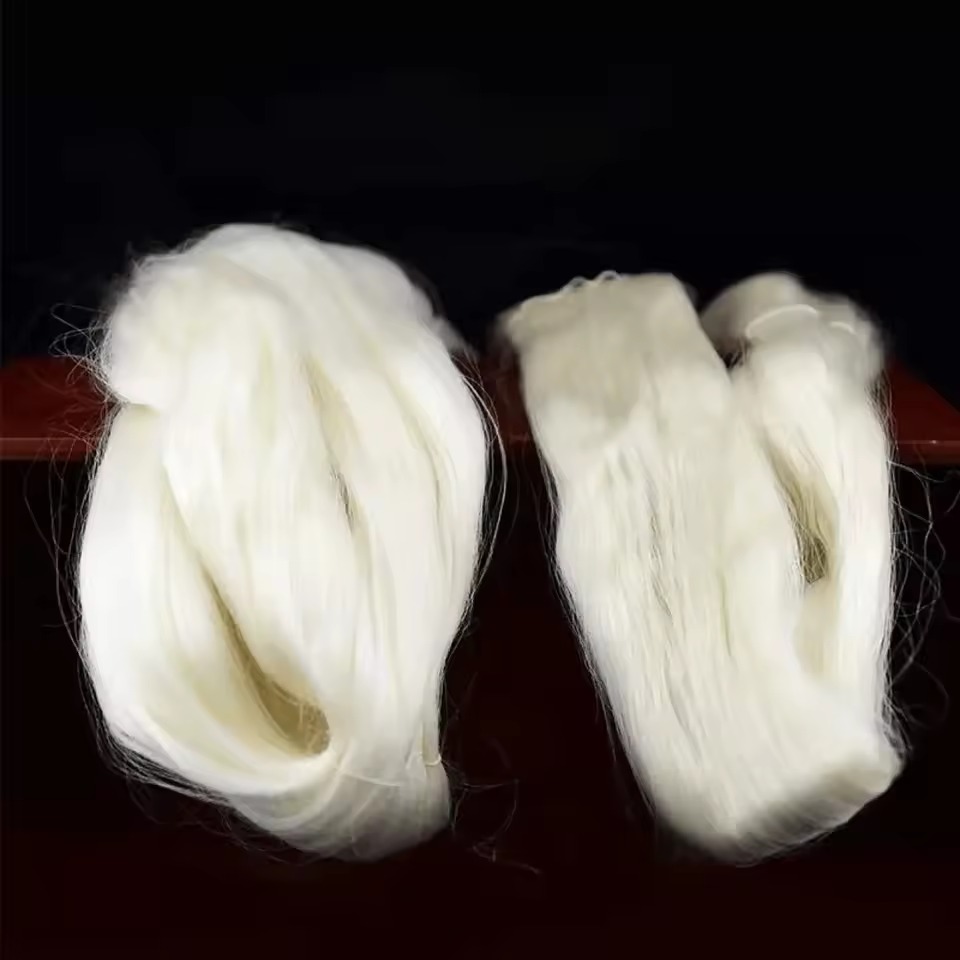
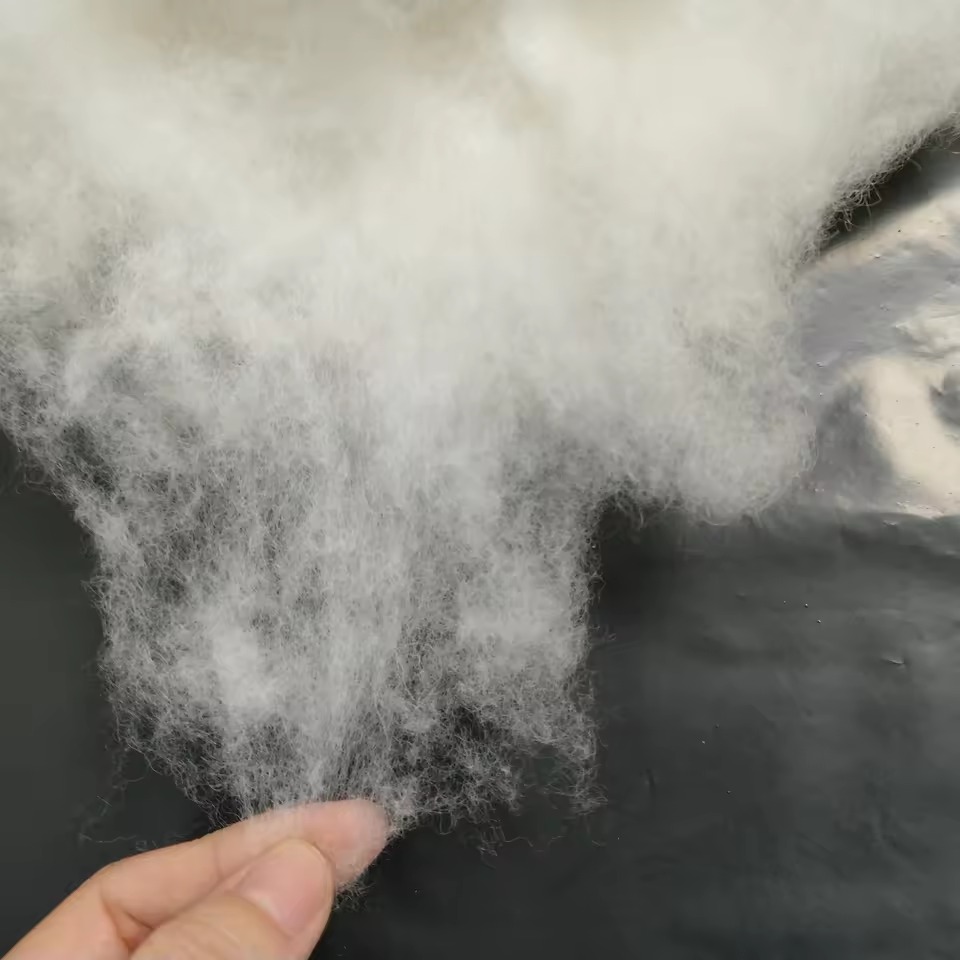
The cashmere fiber itself is not the goat’s outer coat—it is the downy undercoat that grows beneath the coarser outer guard hairs, providing insulation for the goat through harsh Central Asian winters. In spring, as the weather warms, the goat naturally sheds this undercoat. Cashmere producers either comb or clip the fiber during this spring molt, then separate the fine underdown from the coarser guard hairs through a process called dehairing.
It takes the annual fiber yield of four cashmere goats to produce a single sweater—compared to one sheep producing enough wool for five sweaters in the same period. This scarcity is intrinsic to cashmere’s value, not a marketing construct.
Only a small percentage of each goat’s total fiber is the fine cashmere underdown—typically 100–200 grams of dehaired cashmere per goat per year, after the coarser guard hair is removed. Globally, approximately 6,500 tonnes of dehaired cashmere are produced annually—a tiny fraction of the 1.1 million tonnes of clean sheep’s wool produced worldwide, which is why cashmere commands prices 10–30 times higher than standard wool.
Where Is Cashmere Produced?
Cashmere production is highly geographically concentrated. Four countries dominate global output:
- China: The world’s largest cashmere producer, accounting for approximately 70% of global output. Chinese cashmere — particularly from Inner Mongolia — is renowned for producing the finest white cashmere fibers, which command the highest prices on international markets.
- Mongolia (Outer Mongolia): The second-largest producer, contributing 15–20% of global output. Mongolian cashmere is prized for its length and quality, though it tends toward a slightly less white natural color than Inner Mongolian fiber.
- Iran and Afghanistan: Combined, these two countries contribute 10–15% of global output. Iranian and Afghan cashmere tends to be darker in natural color, coarser in diameter, and shorter in staple length than Chinese or Mongolian—and is generally lower in price.
- Other producers: Smaller volumes from India (Kashmir region), Nepal, Pakistan, and Central Asian states.
The geographic concentration of cashmere production in the high-altitude steppes and grasslands of Central Asia is not coincidental—these cold, arid environments stimulate the development of the thick, fine undercoat that makes cashmere fiber valuable. Cashmere goats raised in warmer climates produce thinner, less valuable fleeces.
How Is Cashmere Fiber Produced?
Fiber Collection: Combing vs. Shearing
Cashmere fiber is collected in spring, when the goats naturally shed their winter undercoat. There are two primary collection methods: combing and shearing. Combing—drawing a wide-toothed comb through the goat’s fleece to collect the loosening underdown—is the more labor-intensive method but produces cleaner fiber with less guard hair contamination and is gentler on the animal. Shearing — clipping the entire fleece with scissors or mechanical shears — is faster but yields a higher proportion of coarse guard hair that must be removed during dehairing.
In premium cashmere-producing communities, hand-combing is the traditional and preferred method—both for fiber quality and animal welfare reasons. Large-scale industrial operations more commonly use shearing.
Sorting and Dehairing
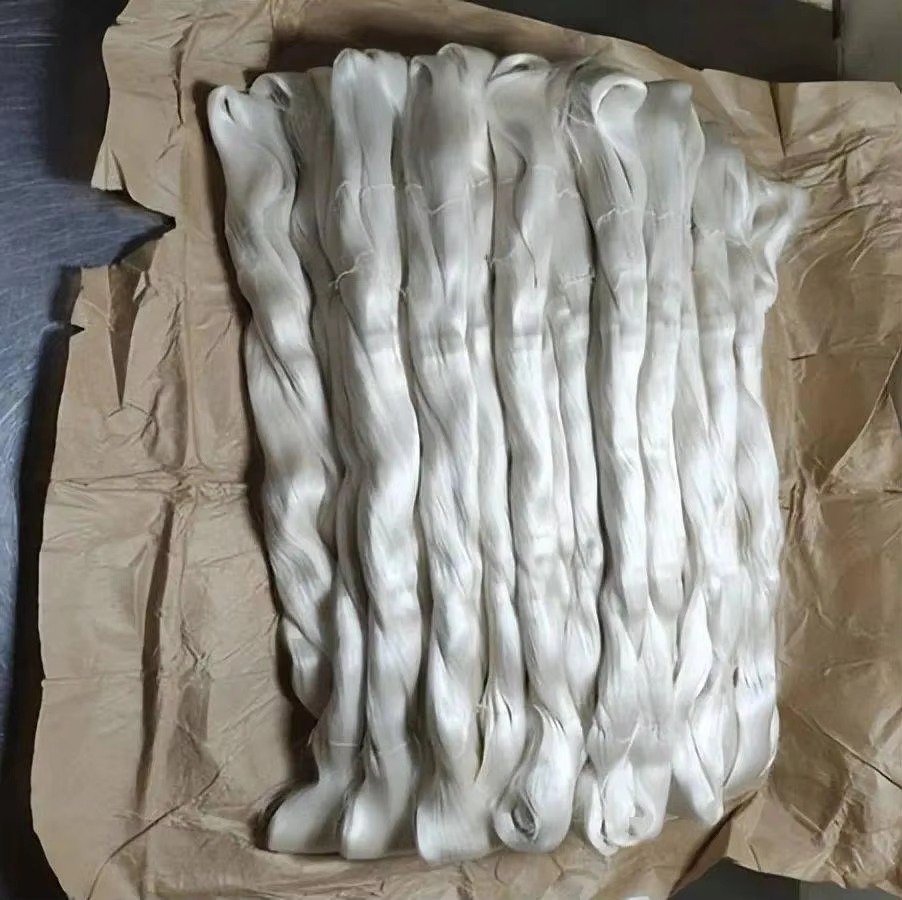
Raw cashmere fleece contains both the fine underdown and the coarser outer guard hair. After collection, the raw fiber is sorted by color (white, brown, and grey) and quality grade, then processed through dehairing machines that use mechanical combs and air jets to separate the fine underdown from the coarse guard hair by diameter difference. The dehaired cashmere is the commercial product—with the coarse hair fraction typically used in less valuable applications or discarded.
The efficiency and precision of dehairing are critical: inadequate dehairing leaves coarse guard hair mixed with the fine fiber, producing a scratchy, lower-value yarn. Over-sheared fiber may suffer mechanical damage to the fine fibers. The best cashmere processing combines mechanical dehairing with hand-sorting to achieve maximum purity.
Scouring, Dyeing, and Spinning
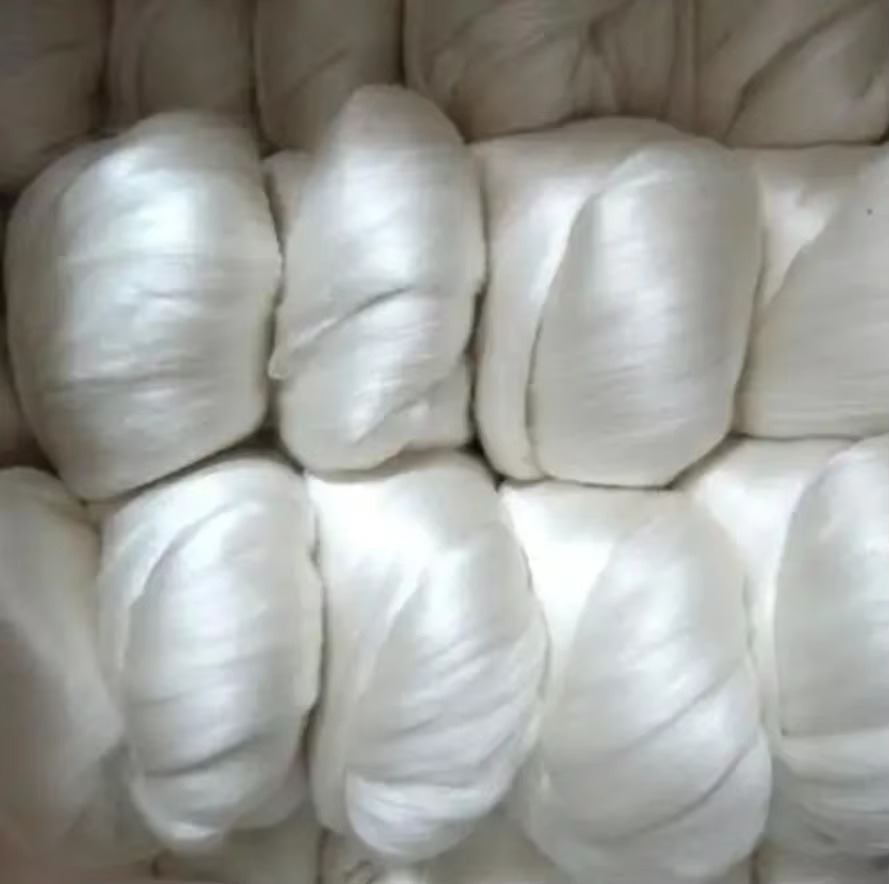
Dehaired cashmere is scoured (washed) to remove natural oils, dirt, and vegetable matter, then dyed—cashmere accepts dyes readily and produces colors of exceptional depth and uniformity. The dyed fiber is blended for color and quality consistency, then spun into yarn. Cashmere spinning requires careful handling to protect the delicate, short-staple fibers from breakage—fine cashmere yarns require slow, gentle spinning on specialized equipment. The finished yarn is knitted or woven into garments and accessories.
What Makes Cashmere Special? Key Properties
Property | What It Means in Practice |
Exceptional Softness | Cashmere fibers are among the finest of any natural animal fiber — typically 14–19 microns in diameter, compared to 20–25 microns for fine merino wool and 30+ microns for standard wool. This fineness produces the characteristic buttery softness that distinguishes quality cashmere from all other wool-type fibers. |
Warmth-to-Weight | Cashmere provides approximately 8 times the insulating warmth of sheep’s wool at equivalent weight. This extraordinary thermal efficiency at low weight is cashmere’s defining functional advantage—a thin cashmere sweater outperforms a thick standard wool sweater for warmth. |
Lightweight | The combination of fine fiber diameter and the natural crimped structure of cashmere underdown creates a fabric that is remarkably light for its warmth. Cashmere knitwear feels almost weightless compared to equivalent garments in standard wool. |
Breathability | Like all natural protein fibers, cashmere is breathable — it regulates temperature by absorbing and releasing moisture vapor in response to humidity changes, maintaining a comfortable microclimate around the body across a wider range of temperatures than synthetic alternatives. |
Hypoallergenic | The fine diameter of cashmere fibers means they are less likely to cause the prickling sensation that coarser wool fibers can produce against skin. Most people who react to standard wool find cashmere comfortable for direct skin contact—making it one of the few warm-weather-suitable luxury fibers for sensitive skin. |
Durability with Care | High-quality cashmere, properly cared for, can last decades — improving in softness with gentle washing over years of use. Lower-quality cashmere (coarser fibers, short staple length) pills quickly and degrades with washing. The range in quality within cashmere products sold at similar price points is significant. |
Pilling Tendency | All cashmere pills to some degree—the short fiber staple length means surface fibers can loosen and form pills with friction. Lower-quality cashmere (shorter fibers, more loosely spun yarns) pills much more aggressively. Pilling in the first few wears is a quality indicator—it should diminish after the initial loose fibers are removed. |
Understanding Cashmere Quality: How to Tell Good from Bad
The cashmere market spans an enormous quality range—from genuine, long-fiber, fine-grade cashmere to cheap, coarse, or adulterated products that may not meet quality standards or even contain genuine cashmere at all. Understanding the key quality indicators helps buyers make informed decisions:
Fiber Diameter (Micron Count)
The single most important quality indicator for cashmere is fiber diameter, measured in microns. Premium cashmere fiber measures 14–16 microns—exceptionally fine, producing a silky-smooth texture with minimal pilling. Standard commercial cashmere grades are 17–19 microns. Any fiber above 19 microns is technically not cashmere by the most stringent international standards (though some markets allow up to 19 microns). A product labeled “cashmere” that feels rough or causes skin prickling likely contains coarser fibers, guard hair contamination, or blended non-cashmere fiber.
Fiber Length (Staple Length)
Longer cashmere fibers (staple length 36–44 mm) produce stronger, more durable yarn that pills less than short-staple fiber (25–32 mm). Long-staple cashmere is more expensive — it requires more careful dehairing and spinning — but produces a significantly more durable finished garment. This is why some budget cashmere products pill aggressively within weeks: they use short-staple fiber that cannot be spun into a durable yarn without pilling.
Ply and Yarn Construction
The ply of a cashmere product refers to the number of yarn strands twisted together. Two-ply cashmere (two yarns twisted together) is more durable and pill-resistant than single-ply. Higher-ply constructions (four-ply, six-ply) produce heavier, more structured garments suitable for colder weather but at higher cost. The ply alone does not determine quality—the underlying fiber quality matters more than ply count.
Country of Origin and Fiber Grade
Chinese (Inner Mongolian) white cashmere is generally regarded as the finest quality—the coldest climate and longest winters in the primary production regions stimulate the growth of the finest, longest underdown fibers. Mongolian cashmere is very close in quality. Iranian and Afghan cashmere tends to be coarser and darker — suitable for blending and lower-grade products. The color of undyed cashmere (white, beige, grey, and brown) directly affects its dyeability and value—fine white cashmere accepts the widest range of colors most vibrantly.
Dimension | Quality Cashmere | Budget / Low-Quality Cashmere |
Fiber diameter | 14–16 microns — very fine | 18–22+ microns—coarser, may itch |
Staple length | 36–44 mm—long, strong fibers | Under 32 mm—short, pills quickly |
Guard hair content | <1% — thoroughly dehaired | Higher—scratchy feel, reduced softness |
Pilling behavior | Minimal after initial wear | Heavy pilling within weeks of use |
Price indication | $150–$500+ for sweater | Under $50–100—red flag for quality |
Feel | Buttery, soft, does not itch | May feel rough or cause skin prickling |
Durability | Lasts decades with proper care | Degrades significantly within 1–2 seasons |

Cashmere vs. Other Luxury Fibers
Property | Cashmere | Merino Wool | Alpaca | Silk |
Softness | ★★★★★ | ★★★★☆ | ★★★★☆ | ★★★★★ |
Warmth/weight | ★★★★★ | ★★★★☆ | ★★★★★ | ★★★☆☆ |
Durability | ★★★★☆ | ★★★★★ | ★★★★☆ | ★★★★☆ |
Hypoallergenic | ★★★★★ | ★★★★☆ | ★★★★★ | ★★★★★ |
Moisture management | ★★★★☆ | ★★★★★ | ★★★★☆ | ★★★★☆ |
Pilling risk | Moderate | Low | Low | Very Low |
Sustainability | Concerns | Good | Good | Mixed |
Price | Very High | Medium | Medium-High | Very High |
The Sustainability Crisis of Cashmere — And the Solutions
The global cashmere industry faces one of the most serious environmental sustainability challenges of any luxury fiber—rooted in the fundamental biology of cashmere goats and the economic pressures driving herd expansion.
The Overgrazing Problem
Cashmere goats graze differently from sheep: they pull grass and other plants out by the roots rather than cutting them at the stem. This rooting behavior, combined with their sharp hooves that break up topsoil, means that overgrazing by cashmere goats causes soil degradation that is far more difficult to reverse than damage from sheep or cattle overgrazing. Once the root system is destroyed, the soil erodes, loses its moisture-holding capacity, and in extreme cases becomes desert.
The scale of this problem in Mongolia — the world’s second-largest cashmere producer — is alarming. In 1990, cashmere goats comprised 19% of Mongolian livestock. By 2024, they constitute over 60% of all livestock. Mongolian herders now manage more than 71 million goats, up from around 14 million in 1990. According to a Nature Conservancy study, approximately 70% of Mongolian pastureland is now compromised by overgrazing. The goat population has grown faster than the land can sustainably support—driven by rising global cashmere demand, particularly from fast-fashion brands offering cashmere at prices that require maximum fiber volume at minimum cost.
Climate Change Amplification
Climate change is compounding the overgrazing crisis. Mongolia experiences periodic catastrophic winter weather events called “dzud”—extreme cold and ice that prevents livestock from grazing and causes mass animal deaths. Climate change is increasing dzud frequency and severity, killing millions of goats in severe years and further destabilizing the herding communities that depend on them. Simultaneously, warming spring and summer temperatures are stressing the native grassland vegetation that both goats and wild animals depend upon.

The Solutions: Responsible Cashmere in 2025
The good news is that the cashmere industry is increasingly aware of this crisis, and active solutions are emerging:
- Good Cashmere Standard (GCS): Launched in 2020, the GCS covers the five freedoms of animal welfare for cashmere goats, sustainable herding and land management practices, and fair economic and social conditions for herding communities. It is the most comprehensive farm-level standard for responsible cashmere.
- Sustainable Fiber Alliance (SFA): An NGO working in Mongolia to educate herders in sustainable grazing rotation practices that allow grassland recovery between grazing seasons—directly addressing the root cause of degradation.
- Recycled cashmere: Cashmere recovered from pre-consumer factory offcuts and post-consumer used garments is increasingly processed into recycled cashmere fiber, certified under the Global Recycled Standard (GRS). In 2025, many 2025 luxury collections feature 70–100% recycled cashmere options. Recycled cashmere eliminates the goat-farming environmental footprint for the fiber it replaces—making it the most immediately impactful sustainability choice for buyers who want cashmere without contributing to overgrazing pressure.
- Regenerative grazing pilots: In late 2024 and early 2025, several Mongolian herding cooperatives adopted regenerative grazing methods—using rotational grazing systems modeled on sustainable pastoralism—that allow grassland recovery and actively restore degraded pastures.
- Cashmere alternatives: Italian producer Re. VerSo has developed a recycled cashmere material from pre-consumer factory leftovers. Litrax Natural Bamboo offers a bamboo-derived fiber with a cashmere-comparable hand feel produced through mechanically and enzymatically processed (not chemical-viscose) methods.
How to Care for Cashmere
- Hand wash in cool water: Use lukewarm water (maximum 30°C) and a gentle, pH-neutral cashmere or wool detergent. Immerse and gently squeeze—do not rub, wring, or scrub.
- Rinse thoroughly: Remove all detergent residue — leftover detergent attracts moths and weakens fibers.
- Dry flat: Never hang wet cashmere — it will stretch and lose shape. Lay flat on a clean towel, reshape gently, and allow to air dry away from direct heat or sunlight.
- Store folded with cedar: Store clean cashmere folded (never on hangers, which cause shoulder distortion). Use cedar blocks or lavender sachets to repel moths—the primary enemy of stored cashmere.
- Remove pills gently: Use a cashmere comb or fabric shaver to remove pills periodically. Never pull pills off by hand, which pulls surrounding fibers loose and creates more pilling.
- Rest between wears: Allow cashmere garments to rest and recover their shape for at least a day between wears—the fiber benefits from recovery time.
Conclusion: Cashmere’s Future — Luxury With Responsibility
Cashmere’s extraordinary properties—the incomparable softness, the lightweight warmth, and the decades-long durability of high-quality pieces—represent genuine value that justifies its premium position in the luxury fiber market. But that value is increasingly inseparable from the environmental and social responsibility of how it is produced.
The overgrazing crisis in Mongolia and China is real, serious, and directly connected to consumer demand for cheap cashmere. The most direct individual contribution to addressing it is choosing quality over quantity — buying one well-made cashmere piece that will last 20 years rather than three cheap ones that pill and degrade within a season. Seeking out GCS-certified responsible cashmere, GRS-certified recycled cashmere, or brands with verifiable supply chain transparency is the next level of responsible purchasing.
Cashmere’s future as a sustainable luxury fiber depends on whether the industry—brands, retailers, herders, and consumers together—can align around quality, traceability, and ecosystem stewardship before the grasslands that produce it are irreversibly lost.