When procurement managers and production directors source polyester staple fiber for bedding fill, the choice between hollow fiber and microfiber is not simply a question of price per kilogram. It is a specification decision that affects fill weight targets, carding and filling machine behavior, finished product hand feel, loft recovery after washing, and ultimately the consumer experience that determines whether your customer buys again.
This guide cuts through the commercial noise and addresses the technical factors that actually matter when specifying fill fiber for pillow, duvet, comforter, and cushion production.
Understanding the Structural Difference at the Fiber Level
The fundamental difference between hollow fiber and microfiber polyester staple fiber is structural — and it drives every downstream performance difference.
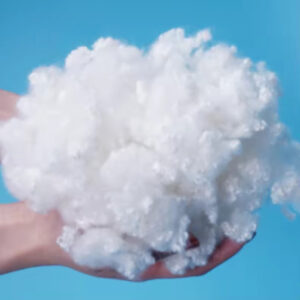
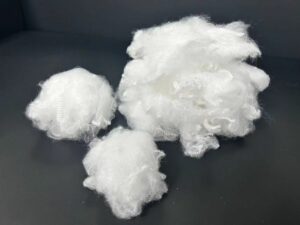
Hollow fiber (HCS—Hollow Conjugated Siliconized) is produced with one or more continuous air channels running through the length of each filament. The hollow cross-section, combined with a conjugated three-dimensional spiral crimp, gives the fiber its characteristic springiness, resilience, and loft recovery. The hollow polyester staple fiber is lighter by 20% than ordinary solid fiber. It makes no air convection in the fiber to keep warm, trapping warm air and isolating cold air. The fiber is light and effective at keeping warm.
Microfiber is a solid-core polyester staple fiber with an extremely fine diameter—typically 0.7D to 1.2D, finer than any natural fiber. Rather than relying on a hollow air core for insulation, microfiber achieves its performance through sheer filament count: the enormous number of ultra-fine fibers per unit area creates a dense web of tiny air pockets between filaments. Super Microfiber is manufactured using a very fine denier of polyester fiber and a specific length engineered to create the precise dimensions of real down.
These are genuinely different engineering approaches to the same goal—lightweight thermal insulation, and they produce materially different results on the production line and in the finished product.
Key Specification Parameters and What They Mean in Production
Denier — The Primary Selection Variable
Denier is the weight in grams of 9,000 meters of fiber. It determines the thickness of each individual filament and is the single most important specification variable for bedding fill.
For hollow fiber, standard commercial grades run from 3D to 15D. Each denier range serves a different application:
Denier | Feel | Best Application |
3D | Softest, finest—approaches microfiber feel | Premium pillows, high-end comforters, down-alternative fill |
6D–7D | Soft, excellent loft-to-weight balance | Standard pillows, mid-market duvets, cushions |
10D–15D | Firmer, more structured, high resilience | Furniture cushions, mattress toppers, wadding, toys |
7 Denier (7D): A finer fiber used for a softer touch. 7D 64mm siliconized polyester fiber for cushion and pillow filling is the preferred choice for premium bed pillows. 15 Denier (15D): This term refers to a robust fiber thickness. A 15D fiber provides the structural integrity needed for furniture cushions that must withstand significant weight.
For microfiber, the denier range sits between 0.7D and 1.2D — an entirely different scale. The most common commercial grades for bedding fill are 0.9D, 1.1D, and 1.2D. At these deniers, the fiber is too fine to be processed on standard hollow fiber carding lines without adjustment—equipment settings for feed rate, cylinder speed, and doffer gap must be optimized for the finer, lighter material.
Cut Length — Matching Fiber to Machine
Cut length must be matched to your carding and filling equipment. Standard options for both hollow fiber and microfiber PSF are the following:
- 32mm — suited to fine-opening carding machines; common in nonwoven and some pillow filling lines
- 51mm — the most widely used cut length for pillow and duvet filling; works on the broadest range of industrial carding and blowing equipment
- 64mm — longer staple for filling machines that prefer better fiber interlocking; common in furniture cushion fill and high-resilience pillow applications
- 76mm — used in specialty wadding and insulation applications
The cut length usually is between 32 mm and 64 mm, and it has to conform with the machinery and the process requirements.
Oil Pickup (OPU) — The Processing Quality Indicator
OPU is the percentage (by weight) of silicone finish applied to the fiber surface. This is perhaps the most important and most commonly overlooked quality parameter in fill fiber specification.
Oil Pickup: minimum 0.20% to 0.35%
OPU controls two critical production behaviors. Too low (below 0.15%), the fiber generates static electricity on carding lines, clumps, and distributes unevenly—the primary cause of cold spots and lumpiness in finished pillows and duvets. Too high (above 0.40%) and the fiber becomes excessively slippery, making fill weight control unreliable as the fiber flows too freely through blowing and filling systems.
The 0.20%–0.35% range represents the commercial sweet spot for most pillow and duvet filling applications. Always request OPU test certificates from fiber suppliers — this value is the parameter most commonly compromised in lower-cost supply chains.
Crimp per Centimeter (CPC) — Loft and Resilience
Crimps: 3 to 5 per cm
Crimp frequency determines how much the fiber springs back after compression — the performance characteristic that consumers experience as “loft recovery” when they shake out a pillow or duvet. Higher crimp per cm means better resilience and loft recovery but can make the fiber slightly more difficult to process on fine-opening equipment. Standard hollow fiber at 3–5 crimps per cm provides excellent loft for most bedding applications.
Microfiber’s crimp is finer and less pronounced—its loft comes primarily from the high filament count rather than mechanical crimp resilience.
Tensile Strength — Production Line Integrity
Tensile strength: 3.5 to 4.5 gm/Denier; Elongation: 40 to 60%
Tensile strength determines whether the fiber breaks during high-speed carding. Fiber breakage creates short fiber debris that accumulates in equipment, reduces fill quality, and increases maintenance downtime. The 3.5–4.5 g/denier range is the industry standard for bedding fill; specify and test this parameter on incoming bales, particularly for recycled rPET fiber where quality can vary between production runs.
Hollow Fiber vs. Microfiber: Production and Performance Comparison
Specification | Hollow Fiber (HCS) | Microfiber |
Denier range | 3D–15D | 0.7D–1.2D |
Fiber structure | Hollow core, conjugated crimp | Solid core, fine diameter |
Cut length | 32mm–76mm | 32mm–51mm |
OPU standard | 0.20%–0.35% | 0.15%–0.35% |
Tensile strength | 3.5–4.5 g/denier | 3.5–4.5 g/denier |
Crimp | 3–5 per cm | Finer, less pronounced |
Loft mechanism | Air core + crimp resilience | Filament count density |
Processing on standard lines | Straightforward | Requires equipment adjustment |
Fill weight for equivalent warmth | Higher (coarser denier = less insulation per gram) | Lower (more insulation per gram due to density) |
Hand feel | Springy, resilient, bouncy | Silky, soft, down-like |
Breathability | Higher, hollow spaces allow airflow | Lower, denser fiber web traps more heat |
Moisture wicking | Good | Excellent—fine fibers wick more efficiently |
Loft recovery after washing | Excellent (conjugate crimp) | Good |
Suitable for blending with low-melt fiber | Excellent | Good |
Cost | Lower | Higher |
Best finished product | Standard to premium pillows, comforters, duvets, cushions, toys | Premium down-alternative pillows, high-end duvets, luxury bedding fill |
Fiber Selection by Product Application
Standard Pillow (mid-market): 6D or 7D HCS, 51mm or 64mm cut length, siliconized. Fill weight is typically 800g–1,000g per standard pillow depending on the firmness target. The 7D grade at 64 mm is the global workhorse for this application—7D 64 mm siliconized polyester fiber for cushion and pillow filling has become the gold standard for high-end comfort.
Premium Down-Alternative Pillow: 3D HCS or microfiber (0.9D–1.2D), 51mm cut length, siliconized. Lower fill weight needed than standard hollow fiber due to higher insulation efficiency per gram. Hand feel approaches naturally downward.
Standard duvet/comforter: 6D or 7D HCS, 51mm cut length. Fill weight varies by tog/warmth rating, with a target of 300 g/m² for summer weight, 400–500 g/m² for all-season, and 600 g/m² and above for winter weight.
Luxury / Down-Alternative Duvet: Microfiber (0.9D–1.2D) or 3D hollow microfiber blend. Produces a noticeably softer, draping duvet that is closer to natural down in hand feel. Higher raw material cost but commands premium retail positioning.
Furniture Cushions and Seat Pads: 10D–15D HCS. The coarser denier provides the structural resilience needed to support body weight repeatedly without permanent compression. It does not wrinkle or flatten permanently, ensuring that soft pillows stay lofty.
Mattress Toppers: 6D–10D HCS, often thermally bonded with low-melt fiber. The conjugated crimp gives excellent pressure recovery. A siliconized finish prevents fiber migration within the bonded layer.
Toys and Stuffed Animals: 6D–7D HCS, 32mm–51mm cut length. Safety certifications (OEKO-TEX Standard 100) are required for children’s products in most markets.
Virgin vs. Recycled rPET Hollow Fiber: What Manufacturers Need to Know
Both virgin and recycled grades of hollow polyester staple fiber are commercially viable for bedding fill — but they are not identical, and understanding the differences matters for quality management.
Virgin HCS fiber is produced from PTA (purified terephthalic acid) and MEG (monoethylene glycol) through first-use polymerization. Consistency batch-to-batch is highest, color is the brightest white, and dyeability is the most predictable. The specification for virgin fiber is easier to hold tightly across production runs.
Recycled rPET hollow fiber is produced from post-consumer PET bottles that are sorted, cleaned, flaked, re-polymerized, and extruded. Making recycled polyester staple fiber from consumed PET bottles does not need petrochemical raw materials; it saves natural resources, power and water; reduces CO₂ emissions; and reduces environmental impact.
Modern AAA-grade recycled HCS from advanced manufacturing facilities in China and Southeast Asia matches virgin fiber in OPU, crimp, and tensile strength. However, quality varies significantly between suppliers—incoming quality control (IQC) testing of OPU, crimp frequency, and color whiteness on each incoming bale is essential when sourcing recycled grades.
GRS (Global Recycled Standard) certification is increasingly required by retail buyers in North America and Europe for products making recycled content claims. Confirm GRS certification status with your fiber supplier before committing volumes.
Processing Tips: Getting the Best Performance from Hollow Fiber Fill
Opening and blending: Use a gentle fiber opening sequence — multiple-stage opening with reduced beater speed on the first stage. Aggressive opening damages the hollow core and reduces fill loft by up to 15%.
Carding: Set cylinder-to-doffer gap slightly wider for 3D and microfiber grades to prevent fiber wrap. Higher denier (10D–15D) can tolerate tighter settings.
Fill weight control: Weigh pillow shells before and after filling on a calibrated scale. Target fill weight ±5% of the specification. OPU variations in the incoming fiber will affect how freely the fiber flows through blowing systems—recalibrate when switching fiber lots.
Washing instructions for finished products: Hollow polyester staple fiber can discharge moisture quickly from the body’s skin and keep it dry and warm, reducing the uncomfortable sticky feeling. Advise consumers to machine wash at 40–60°C and tumble dry on low heat. Tennis balls in the dryer during drying help restore loft after washing.
Summary
Choose hollow fiber (HCS) when your product requires springy resilience and loft, your production runs on standard hollow fiber carding equipment, budget efficiency is important, or your target market is mid-market to standard premium bedding.
Choose microfiber when your product positioning targets a genuine down alternative or luxury feel, your customers are willing to pay a price premium for superior softness, or you are supplying high-end hospitality or premium retail accounts where hand feel differentiates your product.
Consider blending both when you want to balance down-like softness with the processing ease and cost efficiency of standard hollow fiber—a 30% microfiber / 70% HCS blend is a proven approach for mid-premium pillow and duvet fill applications.
VNPolyfiber supplies both hollow fiber and microfiber polyester staple fiber in virgin and recycled rPET grades, with consistent OPU, crimp, and tenacity specifications. Request samples and technical datasheets | Contact our team | View all products