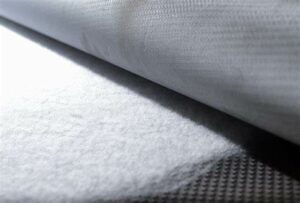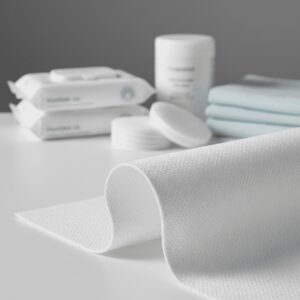
What is Air Through Bonding Nonwoven?
Air-Through Bonding (ATB) is a highly specialized thermal bonding technique that produces nonwoven textiles with unique performance properties. It is renowned for its exact control over heat application.
In order to establish web integrity, ATB, a particular kind of thermal bonding, applies hot air to a nonwoven fabric’s surface. ATB’s special air circulation system is what makes it stand out. The ATB method uses a system of negative pressure or suction, in contrast to traditional hot ovens that force heated air through the material. As the nonwoven web moves through the oven, this suction actively draws warm air through an open conveyor apron that supports it. An important technical design decision that allows for better thermal management is this “pulling” action. Throughout the nonwoven material’s whole cross-section, this mechanism guarantees quick and astonishingly uniform heat transfer. One characteristic that sets ATB apart is its uniform temperature exposure, which avoids localized overheating or underheating that could jeopardize material integrity. The delicate web structure may be smoothly bonded into a stable product without compromising its outstanding softness and high-lofted character thanks to this exact heat control, which reduces nonwoven material deformation. Maintaining these sensitive qualities, which could be compromised by mechanical compression or less controlled heat application, highlights ATB’s primary competitive edge.
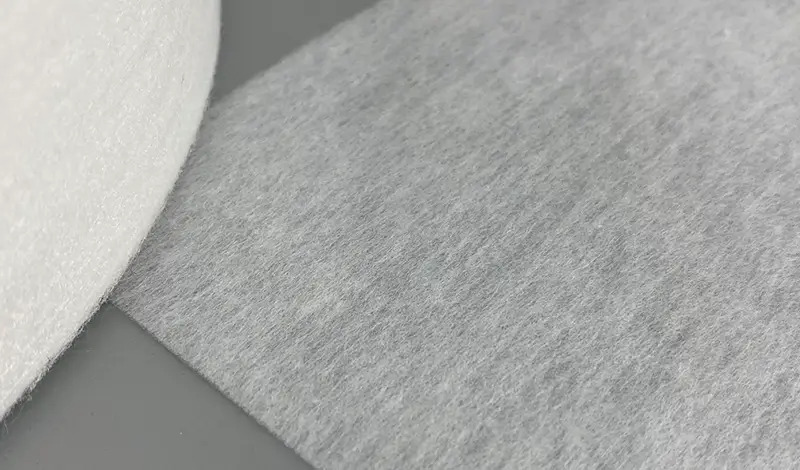
The Role of Binding Agents
The strategic application of crystalline binder fibers and powders is the main method used to create bonding in ATB nonwovens. The binding agents melt as the nonwoven web that contains them travels through the hot air. They congregate at fiber contact points to generate molten droplets that are dispersed throughout the cross-section of the nonwoven material. These liquid droplets solidify as the material leaves the heated zone and cools, successfully joining the fibers at these places of contact to form a cohesive and stable fabric. The fact that the ATB method usually does not rely on chemical binders is an important and unique feature. By removing the need to handle and prepare chemical solutions, this intentional avoidance of chemical adhesives offers significant advantages and contributes to a considerably safer production process and working environment. Additionally, the final product is thought to be safer for the environment, matching the technology with “green technologies” and eco-friendly solutions that adhere to the circular economy’s tenets. Beyond just improving process efficiency, this deliberate choice to exclude chemical binders presents ATB technology as intrinsically more sustainable and health-conscious. This “clean” manufacturing strategy becomes a strong differentiator in industries like hygiene and medicine, where consumer interaction and environmental impact are critical. In addition to reducing waste and operating risks, it satisfies consumer demand for safe and ecologically friendly products, which may have an impact on consumer choices and legal frameworks.
3. The ATB Manufacturing Process: A Detailed Overview
A well planned multi-stage process is used in the production of ATB nonwovens in order to maximize fiber handling, web creation, and thermal bonding for exceptional product quality.
3.1. Preparing Fibers and Creating Webs
Precise fiber preparation is the first step in the creation of an ATB nonwoven.
Opening and Blending: Raw fibers are acquired in bales and may contain cotton, polyester, rayon, bi-component fibers, or polylactic acid generated from plants (like TERRAMAC). These fibers are separated by opening, and then they are blended to create a uniform mixture. The fibers are distributed evenly as they move toward the web forming thanks to this meticulous preparation. Manufacturers such as ANDRITZ emphasize their proficiency in this first phase, stressing its importance in attaining ideal fiber opening, enabling rapid fiber batch changes, guaranteeing precise blending ratios, and eventually resulting in significant cost savings.
Carding: The prepared fibers are pneumatically transported to carding machines after blending. The crucial process of carding involves aligning and untangling fibers to create a consistent web. The final product’s performance and consistency are directly impacted by this web’s quality. For example, ANDRITZ’s carding machines are acknowledged as essential to attaining “perfect web uniformity and comfort”. These devices enable for the modification of web characteristics to satisfy certain product requirements by offering a variety of configurations, such as single or double card setups, different web structure solutions, and changing quantities of doffers.
3.2. The System of Air-Through Bonding Ovens
The real bonding takes place in the specialized oven system, which is the center of the ATB process.
Mechanism of Bonding: The delicate, unbonded nonwoven web enters the ATB oven after it is produced. The low-melt polymers in the fiber matrix are activated inside by carefully directing hot air. These polymers congregate at the many sites of contact between individual fibers as they soften and flow. These molten spots solidify after cooling, forming robust, long-lasting connections that unite the entire web into a sturdy nonwoven fabric.
Oven Types and Airflow: Manufacturers provide a range of oven systems to suit varied web structures and production requirements. A defining element of ATB processes in the hygiene sector is one-sided, air-through ventilation, which is incorporated into both flat and Omega oven designs. Both direct heating techniques (using natural or liquid gas) and indirect heating techniques (such as electrical power or thermal oil) can power these ovens.
Flat Oven technology: This technology moves the nonwoven web through the heating zone using an air-permeable conveyor belt. In order to guarantee that even the most delicate fiber blends retain their high loft and exceptional softness following the bonding process, advanced features like ANDRITZ’s SoftJet air guidance system are incorporated into flat ovens.
Omega Oven System: This alternate method uses a drum surface covered in sieve fabric or perforations for web transport.
Temperature and Air-flow Uniformity: The ability of both oven types to guarantee the “highest uniformity of temperature and air-flow” is a key advantage. In order to produce nonwovens with consistent quality, it is essential to maintain uniformity in the material’s bulk, strength, and softness.
3.3. Treatments After Bonding and Conversion
The nonwoven material goes through additional processing to refine its qualities and get it ready for usage after the first bonding in the oven.
Cooling and Finishing: A mild cooling-down phase is crucial after the heating phase. This is followed by a number of finishing procedures intended to guarantee that the nonwoven web will always maintain its intended resilience and final qualities, like loft and softness.
Calendering: Calendering, a smoothing procedure that entails running the bonded material through rollers, is a typical post-bonding treatment. A thinner cloth is usually the outcome of hot roll calendering. A thicker material is produced by cold calendering. The ATB material is made to stay extensible and flexible, retaining its intended drape and stretch characteristics regardless of the calendering technique.
Converting: After the nonwoven fabric is completed, it is wound into big rolls. After that, these rolls are ready for packing, shipment, and slitting into smaller widths. This frequently entails integration with specialized converting lines for hygiene-related applications, which turn the nonwoven into finished goods including adult care products, infant diapers, and feminine hygiene items.
The bonding oven alone is not responsible for the exceptional performance and reliable quality of ATB nonwovens; rather, they are the result of an integrated manufacturing line that has been carefully adjusted. It is essential that fiber preparation, homogeneous web generation, regulated heat bonding, and customized finishing procedures interact precisely. Regardless of the oven’s efficiency, any concession made at an earlier step, like poor fiber blending or uneven carding, will unavoidably lower the quality of the finished product. This emphasizes the necessity of a comprehensive approach to process engineering and equipment synergy in order to achieve top-tier ATB material, highlighting the significance of system suppliers that can offer complete, integrated solutions rather than just individual machines.
Key Stages of the ATB Manufacturing Process
| Process Stage | Key Equipment/Technology | Purpose/Function | Impact on Product Quality |
|---|---|---|---|
| Opening & Blending | Weighing hopper, Pre-opener, Blender, Fine opener | Prepare and homogenize raw fibers | Optimum fiber opening, accurate blending, cost savings |
| Carding | Carding machines (e.g., ANDRITZ eXcelle card) | Untangle and align fibers, form uniform web | Perfect web uniformity, consistent web qualities |
| Bonding (Oven) | Flat Oven, Omega Oven, SoftJet air guidance | Activate low-melt binders, fuse fibers | Superior softness, high loft, uniform temperature/airflow |
| Cooling | Air cooling systems | Gently cool bonded web | Permanently retains desired resiliency and characteristics |
| Calendering | Hot roll calender, Cold calender | Smooth and adjust thickness | Thinner or thicker fabric, maintains flexibility/extensibility |
| Converting | Winder, Slitting machines, Diatec converting lines | Wind into rolls, prepare for end-use applications | Ready for packaging, tailored for specific product formats |

Manufacturing Procedure
In a through-air bonding process, it is a long distance from fiber to nonwoven, and each chain link needs to be carefully considered.
The primary raw materials used to create our hot air by bonding nonwovens are 0.6-2.0 dtex ES fibers.
Fiber opening and blending: To guarantee a homogenous mixture, the fibers are opened and blended, assisting in the creation of individual fiber stands prepared for web construction.
In order to generate a uniform fiber distribution, the opened and mixed fibers are carded in order to align and layer them into a web structure. In order to create a loose fiber web that forms the foundation for the bonding process, the carded fibers are placed on a conveyor belt or screen.
Heat application involves blowing hot air through the fiber web as it passes through an oven or heated chamber. The ATB technique pulls hot air through an open conveyor apron that holds the nonwoven fabric using suction or negative pressure. Heat may be transmitted quickly and evenly using this technique.
In order to melt low-melting-point binder fibers without damaging higher-melting-point carrier fibers, the temperature of the hot air is carefully regulated. Molten droplets are created throughout the fabric as the binder melts.
Cooling and bonding: The molten binder solidifies at the points of contact between the fibers as the web cools, forming strong bonds that keep the fabric together. A soft, robust, and extensible nonwoven fabric is the end product of this bonding procedure.
After bonding, the cloth may go through further finishing procedures including calendering to modify its thickness and texture. Cold calendering yields thicker materials, whilst hot roll calendering yields thinner fabrics. To improve particular qualities, additional treatments could be perforating or embossing.
After being cut and rolled up, nonwovens are examined by cameras for quality control. They are then rolled onto shafts in big jumbo rolls, slit into the necessary smaller width rolls, and packaged in accordance with customer specifications.
4. ATB Nonwovens’ Special Qualities and Performance Features
Nonwoven textiles are given a unique set of mechanical, functional, and physical characteristics by the Air-Through Bonding technique, which makes them extremely desirable for particular, demanding applications.
4.1. Mechanical and Physical Features
Because they don’t require chemical stiffening or mechanical compression, ATB nonwovens are known for their remarkable mechanical and physical properties, which are directly caused by careful heat control and binder activation.
Softness: Often referred to as “superior softness,” softness is a defining characteristic. Advanced technologies like ANDRITZ’s SoftJet air steering system often improve this feature, guaranteeing an opulent sensation.
Bulkiness/Loftiness: “bulky” and “lofty” are characteristics of ATB nonwovens. Comfort and absorbency depend on the process’s ability to retain a high-lofted character even after bonding.
Open Structure: The “open” structure of these textiles greatly enhances their breathability and absorbency qualities.
High Strength/Durability: ATB nonwovens have “high strength” and “tensile strength” despite their natural bulk and softness. Durability for a range of demanding applications is ensured by this combination.
Extensibility/Flexibility: Even after production and post-bonding procedures like calendering, the material’s “flexibility and extensibility” are maintained.
ATB nonwovens are designed to be “resilient,” which means they can revert to their original shape. After the heating and cooling stages, the bonding process guarantees that this intended resilience is permanently preserved.
High Uniformity: “Perfect web uniformity” and a “consistent and even structure” are consistently produced throughout the fabric by the manufacturing process.
Lower Basis Weights: ATB technology makes it possible to produce high-performance textiles with lower material densities, preserving desired performance while possibly using less material.
4.2. Functional Characteristics
ATB nonwovens have important functional benefits in addition to their structural qualities.
Breathability: ATB nonwovens are extremely breathable due to their open structure, which guarantees superior air permeability. This is an essential feature for both good filtering system performance and user comfort in hygiene products.
Absorbency: ATB nonwovens can efficiently absorb and hold onto moisture, depending on the type of fiber utilized. This absorbent capacity is naturally increased by their large, open structure.
High Filtration Capacity: Materials with high filtration capacities can be produced using ATB technology. For example, Texol’s “Hot Air Cotton,” which is based on ATB technology, is made especially for high-loft wearing comfort masks, like FFP2, while successfully maintaining their filtering effectiveness.
4.3. Benefits to the Environment
The expanding market preference for ATB nonwovens is largely due to its environmental profile, which also complies with increased regulatory requirements.
No Chemical Binders: The lack of chemical binders during the bonding process is one of ATB’s most notable environmental advantages. This leads to a product that is “safer for the environment” as well as a “safer production process” by doing away with the need to prepare dangerous chemicals.
Lightweight: The inherent lightweight nature of ATB nonwovens can result in decreased material usage and transportation expenses, which further enhances their environmental appeal.
Alignment with Green Technologies: Top producers specifically market ATB products as “green technologies” and “environmentally friendly solutions,” highlighting how they adhere to the circular economy’s tenets.
Biodegradable Options: The nonwoven industry as a whole is shifting toward ecologically friendly raw materials, however this is not exclusive to ATB. For instance, Unitika uses biodegradable plant-derived polylactic acid (TERRAMAC) to make nonwovens, suggesting that ATB may use similar sustainable fibers.
Softness, bulkiness, and breathability come together in ATB nonwovens as a synergistic combination that is strategically significant, especially for the hygiene market. Bulkiness allows for better absorbency and cushioning, softness guarantees comfort against sensitive skin, and breathability is crucial for avoiding pain and skin irritation. This special combination of qualities, which is produced by the exact ATB process without the use of chemical binders, makes ATB an excellent material option for delicate applications where user comfort and skin health are crucial. This demonstrates a clear connection between the particular process technology, the synergy of qualities that results, and ATB’s dominance in high-value, delicate consumer product categories.
Table : Key Properties and Benefits of ATB Nonwovens
Technology
It is a one-step, integrated procedure that uses thermal bonding technology and hot air. When compared to conventional spunbond nonwovens, it produces superior softness.
We have created functional air through bonding nonwoven with different levels of softness to satisfy the demands of various markets by utilizing our current hot air through bonding technology platform, vast experience, and innovative approach.
A variety of functional needs are met by the VNPOLYFIBER hot air via bonding nonwovens range, including low melting point, weak acid, quick penetration, antibacterial, extremely soft, extremely dry, and natural skin-friendly series. Plant extracts such as green tea, chamomile, aloe vera, and olive oil can also be added to hydrate the skin, treat sensitive skin gently, and improve skin disorders.
We employ our cutting-edge technology and superior ES fibers when specific qualities like smooth, quick penetration, or robust shielding are needed. The product’s upper and lower layers are composed of distinct fibers that, when combined, will serve unique purposes.
We deal with a comprehensive list of general qualities of our nonwovens, regardless of the product you require.

Quality Control
Our working procedures and nine inspection procedures have been codified. We have created a system that guarantees top-notch logistics, product quality, and quality assurance.
1.0 mm2 is the minimal detectable defect size with an in-line inspection camera.
Selecting and recording in the slitting connection, real-time transmission and monitoring, and daily spot checks.
To guarantee the sustainable and stable quality of the equipment process and product quality, real-time monitoring of the stability of the test performance of the production process and experimental objects is necessary.
As a result, every stage of the production process—from raw materials to final delivery—is accountable and traceable.
Philosophy
We have the necessary equipment and technology, but it’s the conscientious and responsible workers at each stage of the value chain that guarantee our clients the superior quality they want from our goods and services.
To surpass our clients’ expectations, we must make constant improvements.
Policy
We guarantee adherence to pertinent laws and statutory requirements while upholding consumer expectations regarding our goods and services.
In order to improve our competitiveness and solidify our market position, we are dedicated to:
Working with ongoing enhancements
Surpassing our clients’ expectations and demands
Determining and informing our suppliers about the quality of raw materials
Sustaining superior quality across the whole value chain
By providing knowledge, instruction, and training, we hope to guarantee that every employee:
are accountable for their own job and have a concern for quality
possess the duty and right to respond to flaws