Wool vs. Down: Key Differences, Performance Comparison & Sustainability Guide
Wool and down are the two most important natural insulation materials in the world—used in everything from winter jackets and sleeping bags to duvets, pillows, and mattress toppers. Both have been trusted for centuries, both are renewable and biodegradable, and both deliver genuine warmth and comfort that synthetic alternatives struggle to replicate. But they work very differently, perform better in different conditions, carry different care requirements, and raise different sustainability questions.
Choosing between wool and down is not a matter of one being universally better than the other. It is a matter of understanding where each material excels and making the right choice for your specific application, climate, use case, and values. This complete guide covers what wool and down actually are, how they insulate, how they compare across every major performance dimension, and how responsible sourcing and certification standards are transforming the sustainability story of both materials.
What Is Wool?
Wool is a natural protein fiber harvested from the fleece of sheep and certain other animals, including goats (cashmere, mohair), rabbits (angora), camelids (alpaca, vicuña), and musk oxen (qiviut). The vast majority of commercial wool comes from sheep—predominantly Merino sheep for fine, soft wool used in apparel and a wide variety of other breeds for coarser wool grades used in carpets, felt, and industrial textiles.
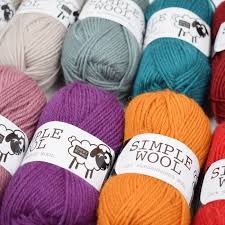
Each wool fiber is a complex biological structure: a protein filament (keratin) covered in microscopic scales that overlap like roof shingles. These scales give wool its unique moisture-management ability — they allow moisture vapor to pass through the fiber while repelling liquid water from the surface. The natural crimp (wave) built into every wool fiber creates countless tiny air pockets within the fiber mass, providing thermal insulation even when the fiber is compressed.
Wool’s key fiber properties — insulation, moisture management, natural odor resistance, fire resistance, and biodegradability — make it one of the most versatile natural materials available. Merino wool, in particular, has seen explosive growth in apparel, outdoor, and bedding applications over the past two decades for its combination of superfine softness and outstanding functional performance.
What Is Down?
Down is the soft, fluffy underlayer of feathers found beneath the outer feathers of ducks and geese. Unlike regular feathers—which have a rigid central quill—down clusters have no quill at all. Instead, each cluster consists of thousands of tiny filaments radiating from a central point in a three-dimensional spherical structure, like a tiny dandelion head made of feather filaments.
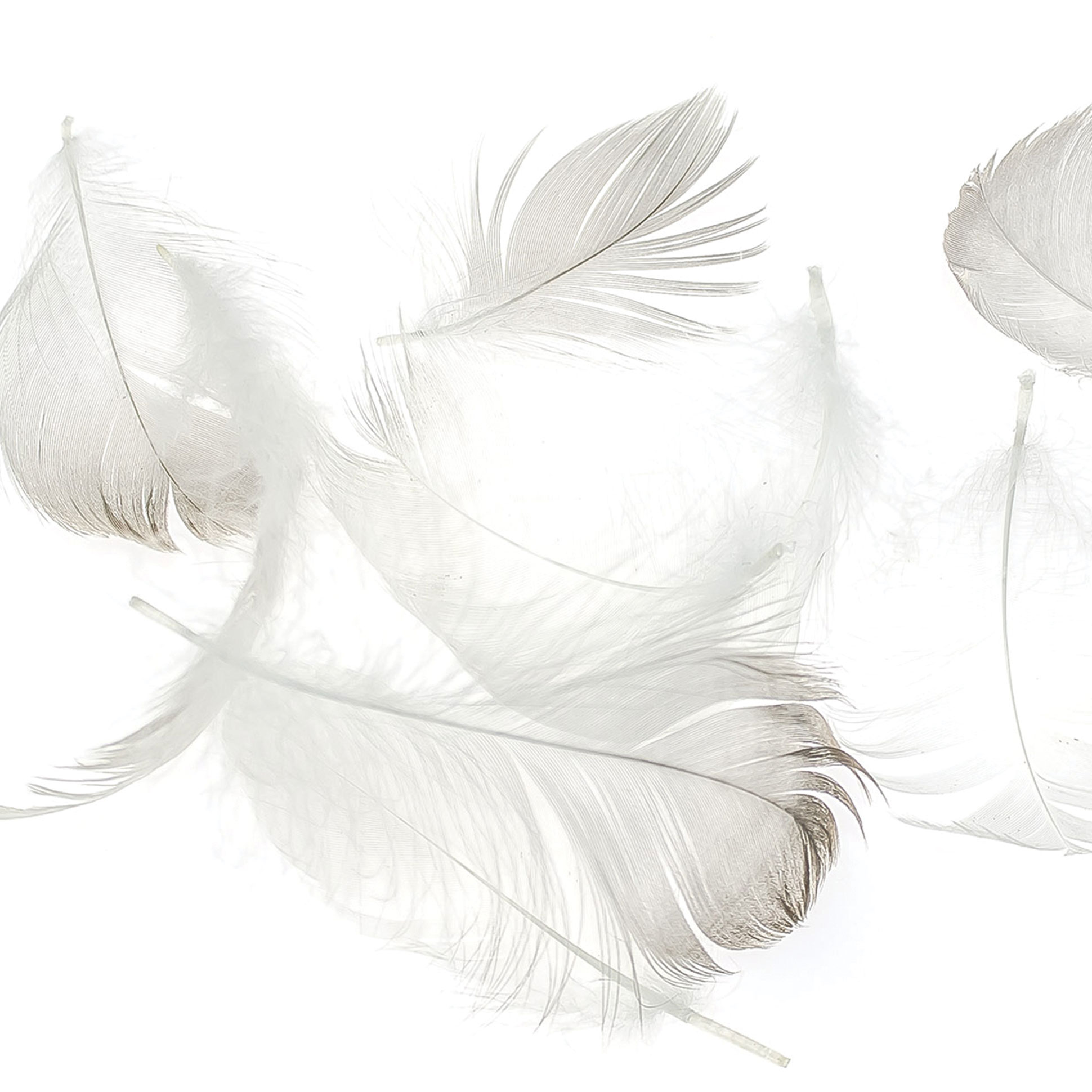
This unique three-dimensional cluster structure is the source of down’s extraordinary insulating power. When a mass of down clusters is uncompressed, the interlocking clusters trap enormous volumes of still air within their structure—and still air is one of the most effective thermal insulators known. The ability of a given weight of down to trap air is measured by fill power, expressed in cubic inches per ounce (or cubic centimeters per gram). Higher fill power means more air trapped per unit weight — lighter, more packable insulation with equivalent or superior warmth.
Fill power ranges from around 400 (budget down) to 900+ (premium goose down). An 800-fill-power down jacket or duvet will be dramatically lighter and more packable than a 500-fill equivalent while delivering the same warmth.
Commercial down is sourced from ducks (the most common and affordable) and geese (generally larger clusters, higher fill power, and premium pricing). The best down comes from mature birds raised in cold climates—the cold conditions stimulate the development of larger, higher-loft down clusters as a natural response to the birds’ need for insulation.
How Each Material Insulates: The Science
Both wool and down insulate by the same fundamental mechanism — trapping still air close to the body, creating a thermal barrier between the body and the cold environment. No material generates heat; insulation works by slowing the loss of body heat to the surrounding air. But the way each material traps that air is structurally different, and those structural differences produce the distinct performance characteristics of each:
- Down: Insulates through loft — the three-dimensional expansion of down clusters that fills a large volume with trapped air relative to the weight of down used. Down’s loft is extremely high, which is why it delivers an outstanding warmth-to-weight ratio. The weakness is that loft collapses when wet—compressed, wet-down clusters clump together and lose their three-dimensional structure, dramatically reducing insulation.
- Wool: Insulates through the combination of fiber crimp (the wave structure that creates air pockets between fibers) and the fiber’s unique ability to absorb and manage moisture actively. Wool can absorb up to 35% of its weight in moisture vapor without feeling damp, and the chemical process of moisture absorption actually generates heat through hygroscopic action. Crucially, wool retains a significant portion of its insulating ability even when wet—the crimped fiber structure maintains air pockets even when moisture is present.
Wool vs. Down: Head-to-Head Performance Comparison
Warmth and Insulation Efficiency
In terms of pure warmth-to-weight ratio — how much warmth a given weight of material delivers — high-fill-power down is the clear winner. Premium goose down (800+ fill power) delivers more warmth per gram than any other natural insulation material. This is why down is the preferred fill for ultralight backpacking sleeping bags, high-altitude mountaineering jackets, and premium duvets where maximum warmth at minimum weight is the priority.
Wool insulates effectively but requires more fiber mass to achieve equivalent warmth to down. A wool comforter will typically be heavier than a down comforter of the same thermal rating. However, wool’s warmth is more consistent in variable conditions — particularly in humid environments — making the real-world warmth comparison more nuanced than the warmth-to-weight ratio alone suggests.
Performance When Wet
This is the most important practical difference between wool and down and the one most relevant to purchasing decisions. Down’s insulating performance collapses dramatically when wet. When down clusters become wet, their three-dimensional structure clumps and collapses—the air pockets disappear, and the down ceases to insulate effectively. This is a serious limitation in wet weather, high-humidity environments, or any situation where the insulation might get damp through perspiration or precipitation.
Hydrophobic (water-resistant) down treatments — in which down clusters are coated with a durable water repellent (DWR) treatment — significantly improve down’s wet performance and slow the rate of moisture absorption. However, even hydrophobic down will eventually become saturated if exposed to sustained moisture, and once saturated, its insulation fails substantially.
Wool, by contrast, retains approximately 70–80% of its insulating ability even when significantly wet. The fiber’s scale structure and crimped geometry maintain air pockets even when moisture is present. Wool can absorb large amounts of moisture vapor without feeling damp — and the exothermic (heat-releasing) process of moisture absorption actually generates a small but meaningful amount of warmth. For wet climates, high-humidity sleeping environments, or high-output activities where perspiration is significant, wool’s wet-weather performance is a meaningful practical advantage.
Breathability and Temperature Regulation
Wool is the superior temperature regulator of the two materials. Its active moisture management — absorbing and releasing moisture vapor in response to the humidity of the surrounding microclimate — creates a natural buffering effect that helps maintain a comfortable temperature range in both warm and cool conditions. This is why wool is described as working in both directions: warm when cold, and cooling when warm. A wool duvet, for example, will feel comfortable across a wider range of sleeping temperatures than an equivalent down duvet.
Down is an excellent insulator in cold, dry conditions but offers less active temperature regulation than wool. In warm conditions or during high-output activities, down can feel stuffy or overheating—it insulates effectively but does not actively manage moisture buildup the way wool does. This makes wool the preferred choice for bedding in variable climates and for active outdoor use where the wearer will generate significant body heat.
Weight and Packability
Down wins clearly on weight and packability. High-fill-power down compresses to a remarkably small volume—an 800-fill-power sleeping bag rated to -10°C can compress to the size of a large water bottle. Down jackets and gilets pack into their own pockets. This compressibility and low weight make down the dominant choice for backpacking, travel, and any application where pack size and weight matter.
Wool cannot match down’s packability. Wool insulation is denser and less compressible — a wool jacket will pack to perhaps twice or three times the volume of an equivalent down jacket. For bedding applications where packability is less critical, this disadvantage matters less; for travel and outdoor use, it is a significant practical consideration.
Odor Resistance
Wool has a natural and well-documented advantage in odor resistance. The protein structure of wool fiber is naturally antimicrobial—it resists the bacterial growth that produces body odor. Wool garments and bedding can be worn or used for extended periods between washing without developing unpleasant odors, making wool particularly valued for multi-day outdoor use, travel, and applications where regular laundering is impractical.
Down does not have the same natural odor resistance. Wet down can develop an unpleasant smell—often described as ‘wet dog’—particularly if not dried promptly and thoroughly after exposure to moisture. Well-washed and maintained down bedding and garments do not typically have significant odor issues in normal use, but wool’s advantage in this dimension is clear.
Care and Maintenance
Down requires careful laundering—typically machine washing on a gentle cycle with a specialist down wash product, followed by tumble drying with tennis balls or dryer balls to break up clumping and restore loft. Improper drying of down products (insufficient heat or not fully drying before storage) leads to mold, mildew, and permanent odor issues. Down products that are stored damp can develop bacterial growth that permanently degrades the down clusters. Down must be stored uncompressed (or with minimal compression) to preserve loft over time.
Wool is generally easier to care for than its reputation suggests. Modern wool products — particularly those made from Merino wool or processed with shrink-resist treatments — can be machine washed on a wool or delicate cycle with cool water. Wool dries naturally and does not require the careful drying management that down demands. Wool is more forgiving of imperfect storage than down, though it should be stored clean (to prevent moth damage) and away from direct sunlight.
Cost
Both materials span a wide price range depending on quality grade. Premium goose down (800+ fill power, responsibly sourced, and certified RDS) commands the highest prices in the down category—high-quality down comforters can range from several hundred to well over a thousand dollars. Duck down products are generally more affordable than goose down at equivalent fill power.
Quality wool products — particularly those using certified Merino or certified organic wool — are also positioned at a premium compared to synthetic alternatives, but the price range is somewhat more accessible than premium down for bedding applications. For apparel, fine Merino wool garments can be priced comparably to premium down-insulated pieces.
Performance Dimension | Wool | Down |
Warmth-to-weight ratio | Good—requires more mass for equivalent warmth | Excellent — unmatched at premium fill power |
Wet weather performance | Excellent — retains ~70–80% insulation when wet | Poor–Good—collapses when wet; hydrophobic treatment helps |
Temperature regulation | Excellent — actively manages moisture, works in both directions | Good—insulates well but less active regulation |
Breathability | Excellent—moisture vapor actively absorbed and released | Good — breathable but passive |
Weight & packability | Moderate — heavier and bulkier than down | Excellent — compresses to very small volume |
Odor resistance | Excellent — naturally antimicrobial | Moderate — can develop odor when wet |
Care & washing | Relatively easy—wool cycle, air or cool tumble dry | More demanding—requires careful washing and thorough drying |
Durability | Very good—fiber resists compression set | Very good—high-quality down maintains loft for years |
Fire resistance | Naturally flame-resistant—does not melt | Not flame-resistant — requires FR treatment for some uses |
Biodegradability | Fully biodegradable — returns to soil safely | Fully biodegradable — natural protein fiber |
Hypoallergenic | Generally hypoallergenic; some sensitivity to lanolin | Can trigger feather/bird protein allergies in sensitive people |
Cost (premium grades) | High-certified Merino, organic wool | Very High — premium goose down (800+ fill power) |
Best applications | Bedding, base layers, wet-climate outerwear, travel | Ultra-light outerwear, sleeping bags, dry-climate duvets |
Wool vs. Down for Bedding: Which Should You Choose?
The wool vs. down question is particularly relevant in bedding—duvets, comforters, mattress toppers, and pillows—where the choice has a direct impact on sleep quality and comfort.
Choose Wool Bedding If:
- You sleep hot or sweat during the night—wool’s active moisture management prevents the clammy, damp feeling that can disrupt sleep
- You live in a variable or humid climate where nighttime temperatures fluctuate—wool’s temperature-regulating properties buffer these changes more effectively than down
- You share a bed with a partner who sleeps at a different temperature—wool works across a wider comfort range
- You or a family member has allergies to feathers or bird proteins—wool is naturally hypoallergenic
- You want easy care—wool duvets and toppers are generally easier to launder than down
- Sustainability is a priority—responsibly sourced wool is renewable, biodegradable, and (with RWS or organic certification) produced to high animal welfare and environmental standards
Choose Down Bedding If
- You sleep cold and want maximum warmth—premium down delivers more warmth per kilogram than any other natural fill
- You prefer an ultra-light, cloud-like feel—high-fill-power down produces incomparable loft and lightness
- You live in a dry climate with cold, consistent winters—down performs at its best in low-humidity conditions
- You want the most luxurious, traditional bedding experience—fine goose down has an incomparable softness and drape
- You are willing to follow careful care instructions to maintain the product—down repays attentive maintenance with years of excellent performance
Sustainability: Responsible Wool and Responsible Down
Both wool and down are natural, renewable, and biodegradable materials — significant advantages over petroleum-derived synthetic insulation. But conventional production of both materials raises legitimate animal welfare, land management, and environmental concerns that the responsible sourcing movement is actively addressing.
Responsible Wool and the RWS
Conventional wool production has faced criticism for practices including mulesing (a surgical procedure used in Australia to prevent fly strike), intensive grazing that degrades land, and the use of chemical dips to control parasites in sheep. The Responsible Wool Standard (RWS), developed by Textile Exchange, is the leading independent certification addressing these concerns.
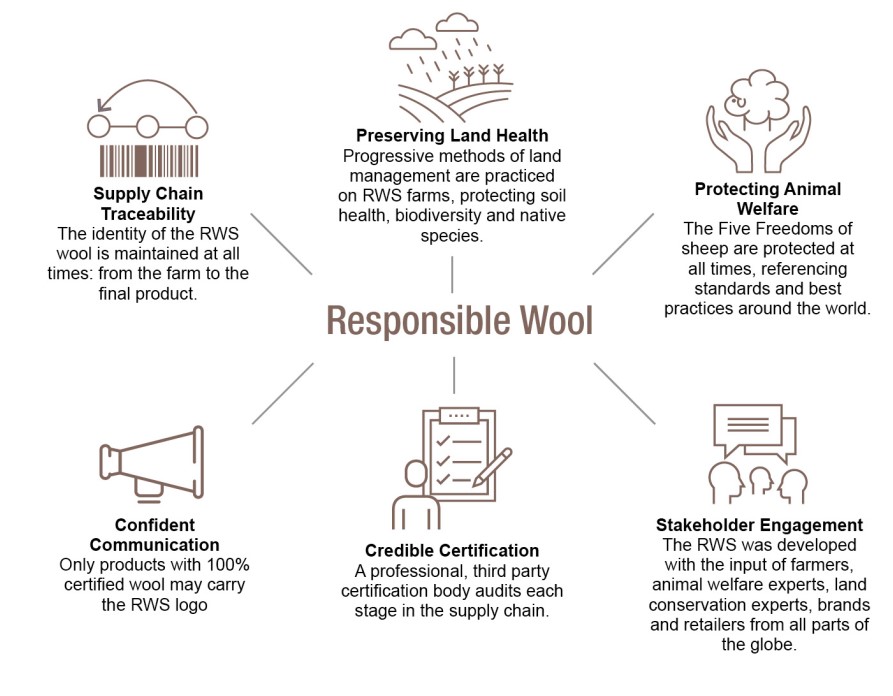
RWS certification verifies that farms uphold sheep welfare according to the Five Freedoms framework — freedom from hunger and thirst, freedom from discomfort, freedom from pain and disease, freedom to express normal behavior, and freedom from fear and distress. It also verifies best practices in land management to protect soil health, biodiversity, and water resources. Throughout the supply chain, RWS certification ensures that wool from certified farms is properly identified and tracked, preventing mixing with uncertified material.
Look for the RWS label on wool products—it is the most widely recognized and credible assurance that the wool was produced to high animal welfare and environmental standards. Brands including Patagonia, The North Face, Icebreaker, and many others now use RWS-certified wool across significant portions of their product ranges.
Organic Wool and GOTS
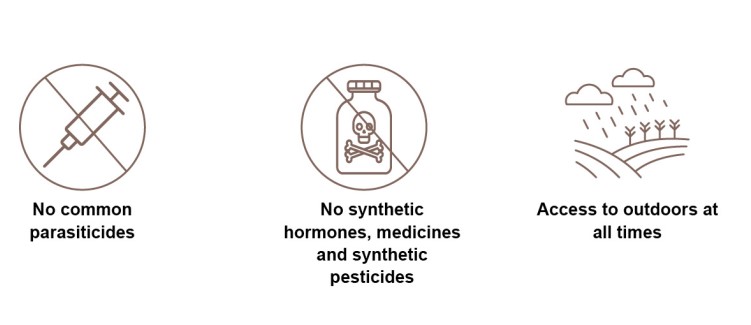
Organic wool takes responsible production a step further: certified organic wool prohibits the use of synthetic pesticides and parasiticides on pastureland and on the sheep themselves, prohibits the use of synthetic growth hormones, and requires that sheep have continuous access to the outdoors. Organic wool also requires that all processing and manufacturing steps meet organic standards—eliminating many of the hazardous chemicals used in conventional wool scouring and finishing.
The Global Organic Textile Standard (GOTS) is currently the primary certification body for organic wool, covering both the farming standards and the full processing supply chain. Organic wool makes up approximately 1% of global wool production — a small but growing niche driven by premium brands and sustainability-conscious consumers. Certified organic wool commands a significant price premium but offers the highest available assurance of both environmental and animal welfare standards.
Recycled Wool: Extending the Circular Economy
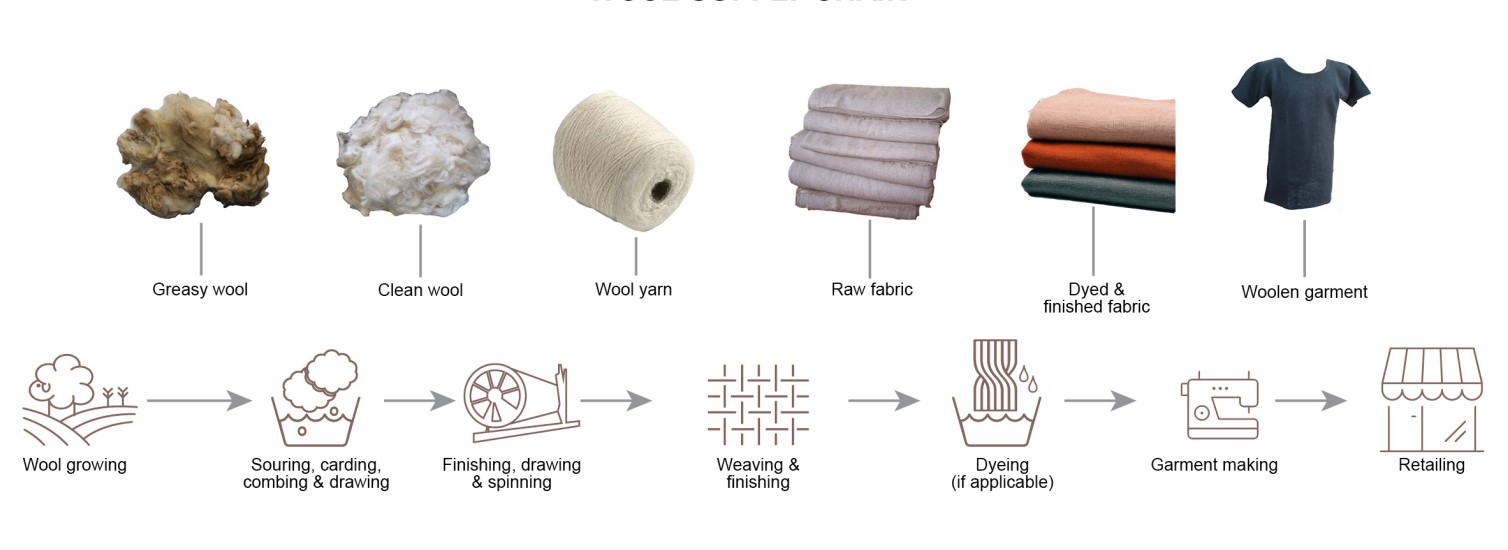
Recycled wool — produced by mechanically shredding used wool garments, blankets, and textile manufacturing waste into fiber for re-spinning — is a compelling sustainability option for applications where fiber length requirements are less stringent. Producing one kilogram of recycled wool saves approximately 11 kg of CO₂ and 500 liters of water compared to virgin wool production. Recycled wool also diverts used garments from landfill and reduces the land use, water consumption, and chemical inputs associated with sheep farming.
Recycled wool is certified by the Recycled Claim Standard (RCS), the Global Recycled Standard (GRS), and the SCS Recycled Content Certification — all of which provide third-party verification that the recycled content claim is accurate and that chain-of-custody traceability is maintained.
Responsible Down and the RDS
Down sourcing has faced significant criticism over two specific practices: live plucking (removing feathers from live birds, which causes pain and distress) and force-feeding (used in foie gras production, which is associated with significant animal suffering). The Responsible Down Standard (RDS), developed by Textile Exchange and administered by Control Union, is the leading certification addressing these concerns.
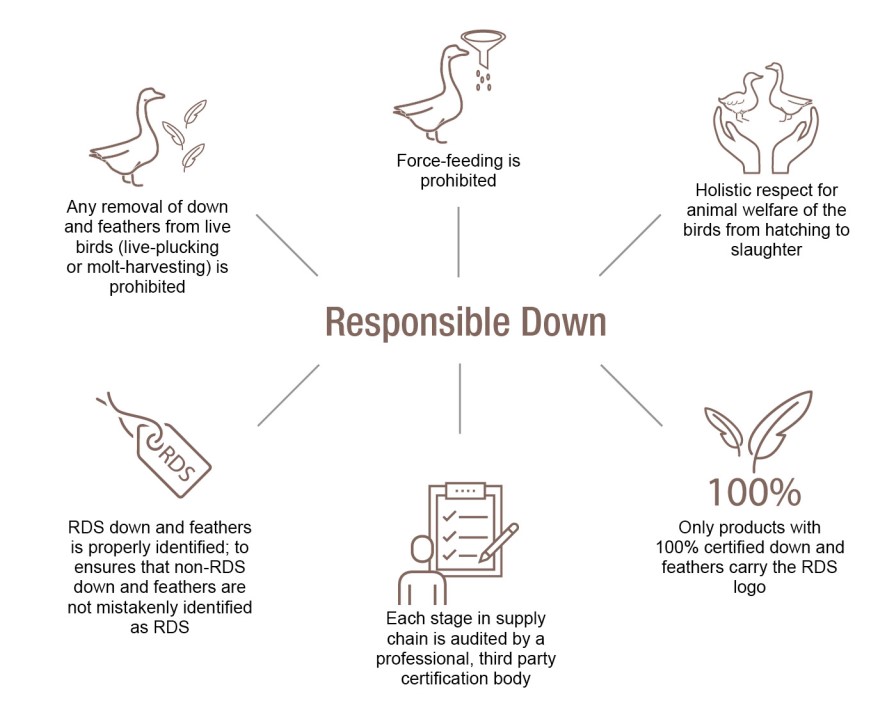
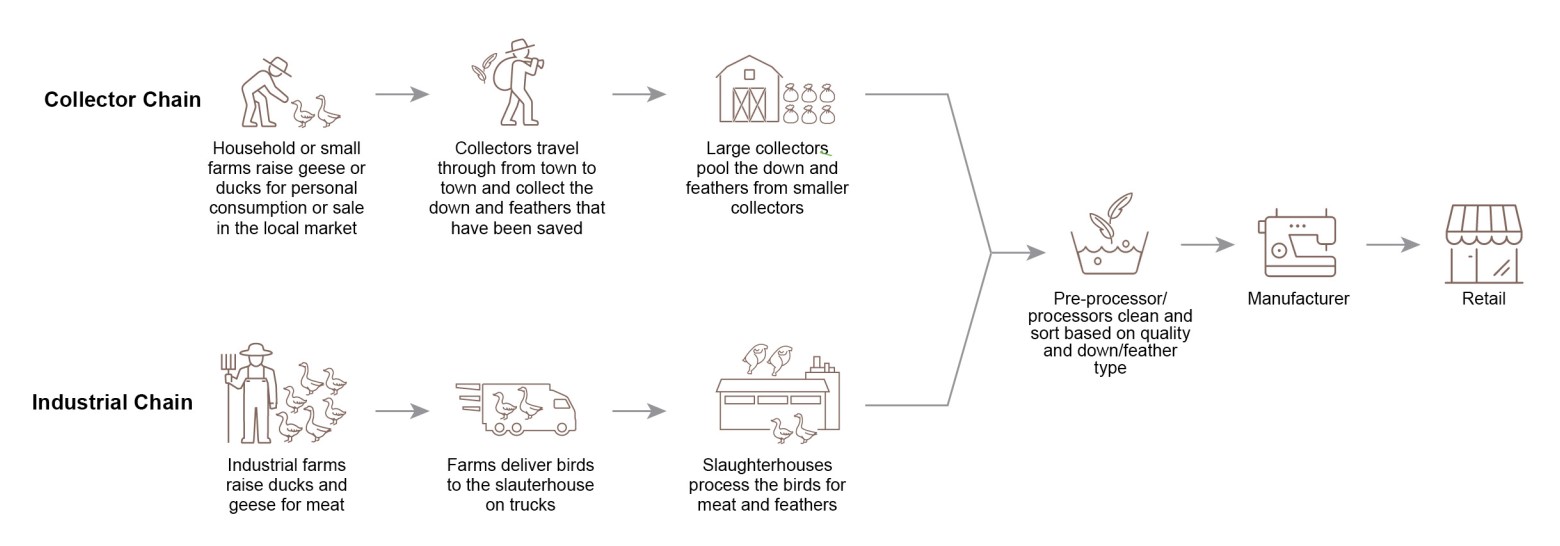
RDS certification guarantees that down and feathers originate from animals that have not been subjected to live plucking or force-feeding. It requires that farms and processing facilities meet defined animal welfare standards throughout the supply chain and provides full chain-of-custody traceability from farm to finished product—enabling brands and consumers to make accurate claims about the welfare standards of the down in their products.
The RDS has been adopted by many of the world’s leading outdoor and bedding brands, including The North Face, Patagonia, REI, and Fjällräven. When purchasing down products, look for the RDS certification mark—it is the most credible available assurance that the birds providing the down were treated humanely.
Recycled Down
An emerging and rapidly growing category is recycled down—down recovered from used duvets, pillows, sleeping bags, and other end-of-life products, thoroughly cleaned, sanitized, and reprocessed for use in new products. Recycled down eliminates the need for new bird farming entirely for the down content it replaces, dramatically reducing the carbon footprint and animal welfare concerns associated with down production. Several brands now offer products with GRS-certified recycled down content, and the quality of responsibly processed recycled down is equivalent to virgin down of similar cluster grades.
Can You Use Wool and Down Together?
An interesting development in the premium insulation market is the deliberate combination of wool and down in a single product—leveraging the complementary strengths of both materials. Some sleeping bag and jacket manufacturers blend approximately 70% down with 30% wool, finding that the wool content absorbs moisture that would otherwise degrade the down’s loft, keeping the down drier and maintaining its insulating performance longer in humid conditions. The wool acts as a natural moisture buffer for the down — a smart functional combination that reflects a deep understanding of how each material behaves.
In bedding, layering a wool underlay or mattress topper with a down duvet above is a popular combination in premium sleep environments — the wool manages moisture at the sleep surface while the down provides lightweight warmth above. This layering approach captures the active temperature regulation of wool and the unmatched lightness and loft of down simultaneously.
Quick Guide: Which Should You Choose?
Your Situation | Best Choice | Why |
Cold, dry climate — maximum warmth at minimum weight | Down | Unmatched warmth-to-weight in dry conditions |
Wet, humid, or variable climate | Wool | Retains insulation when wet; active temperature regulation |
Hot sleeper / sweating at night | Wool | Active moisture management prevents clammy feeling |
Lightweight travel / backpacking | Down | Compresses to fraction of wool’s volume |
Allergy to feathers or bird proteins | Wool | Naturally hypoallergenic |
Multi-day outdoor use without washing | Wool | Natural odor resistance outperforms down |
Highest warmth for winter bedding | Down or Down+Wool | Down for dry rooms; wool or combo for variable sleepers |
Sustainability is the top priority | Certified RWS Wool or RDS/Recycled Down | Both certifications ensure ethical animal welfare & sourcing |
Budget is a significant constraint | Wool (mid-grade) | Quality wool bedding more accessible than premium goose down |
Conclusion: Two Outstanding Natural Materials — Each With Its Place
Wool and down are both extraordinary natural insulation materials with centuries of proven performance behind them. Neither is categorically superior—they excel in different conditions, for different uses, and for different sleepers and wearers.
Down wins on warmth-to-weight ratio and packability—it remains the gold standard for lightweight, ultra-warm insulation in dry conditions, from premium sleeping bags to luxury duvets. Wool wins on wet-weather performance, active temperature regulation, natural odor resistance, and versatility across a wider range of sleeping temperatures and activity levels.
The sustainability picture for both materials is genuinely improving. The Responsible Wool Standard (RWS), certified organic wool (GOTS), and recycled wool programs are raising the bar for wool production. The Responsible Down Standard (RDS) and the growing market for recycled down are doing the same for the down industry. Consumers and brands that prioritize certified, responsibly sourced materials — whichever they choose — are driving meaningful improvements in the welfare standards and environmental practices of both supply chains.
For manufacturers, bedding brands, and retailers making sourcing decisions, understanding the genuine performance differences between wool and down — and communicating them honestly to consumers — is the foundation of building products that deliver on their promises and earn lasting customer trust.