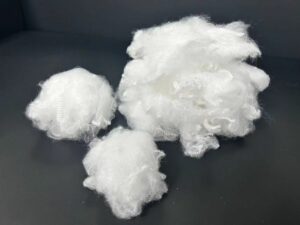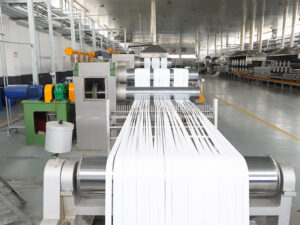
What Is Denier? Complete Guide to Fiber Fineness — Denier, Decitex, Ne and Tex Conversion Table
Denier is the single most important number on any polyester staple fiber specification sheet — and one of the most frequently misunderstood measurements in textile procurement. Every PSF product, every yarn specification, every nonwoven fabric technical data sheet includes a denier or decitex value. Yet buyers routinely confuse denier with decitex, mistake denier for diameter in millimetres, or specify the wrong denier for their application simply because the unit has never been explained clearly.
This complete guide defines denier precisely, explains the physical measurement it represents, covers all four yarn count systems in use globally (denier, decitex, Ne, Tex) with a full conversion table, explains what different denier values mean in practice for PSF fill and nonwoven applications, and provides the denier reference guide for VNPOLYFIBER’s complete product range.
What Denier Is: The Precise Definition
Denier is a unit of measurement for the linear mass density of fibers and yarns. It is defined as the mass in grams of 9,000 metres of a single fiber or yarn.
Written as a formula: Denier = (mass in grams / length in metres) × 9,000
This means: a fiber that weighs 1 gram per 9,000 metres of its length is defined as 1 denier (1D). A fiber that weighs 3 grams per 9,000 metres is 3 denier (3D). A fiber that weighs 7 grams per 9,000 metres is 7 denier (7D).
The critical insight: higher denier = heavier, thicker, coarser fiber. Lower denier = lighter, finer fiber. A 1D fiber is much finer than a 7D fiber, just as a 1-gram-per-9km thread is much thinner than a 7-gram-per-9km thread. Denier is an indirect measure of fineness — it measures mass per length, which is proportional to cross-sectional area for fibers of the same polymer density.
The number 9,000 metres is a historical convention — it was the standard skein length used in early silk and synthetic fiber manufacturing, and the unit became standardized around this reference length. There is no scientific significance to 9,000; it is simply an agreed reference that has been used since the early twentieth century. Decitex (dtex) uses 10,000 metres as its reference length, which is why denier and decitex values differ.
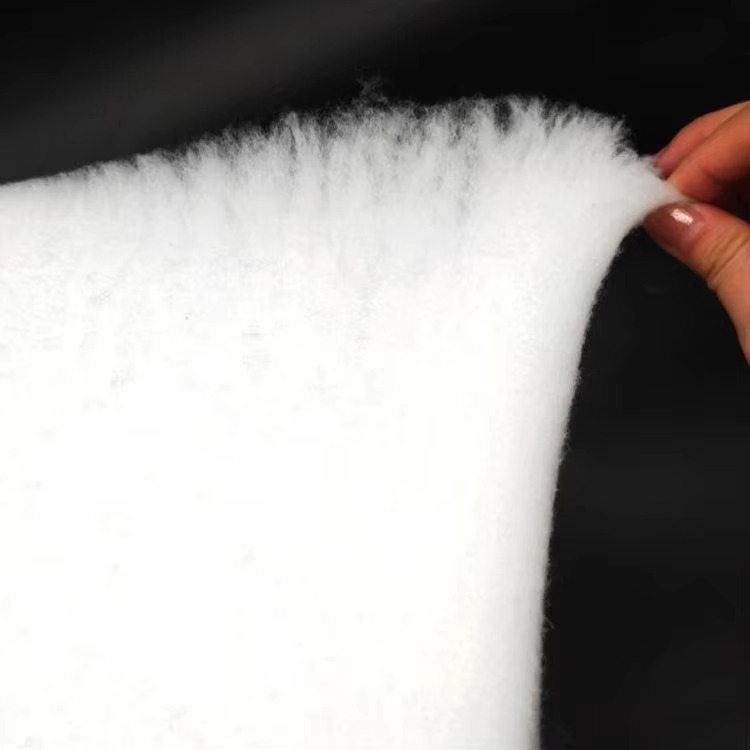
Why Denier Is Not a Direct Measurement of Fiber Diameter
The most common misconception about denier is that it directly tells you the physical diameter of the fiber in millimetres or microns. It does not — at least not without knowing the fiber’s density.
Denier measures mass per unit length. Two fibers of identical denier but different polymer densities will have different physical diameters. A 3D nylon fiber (density 1.14 g/cm³) has a larger cross-section than a 3D polyester fiber (density 1.38 g/cm³) at the same denier, because the lighter nylon requires more volume to achieve the same mass per 9,000 metres.
The approximate diameter formula for round fibers: diameter (microns) = 11.89 × √(denier / density in g/cm³)
| Denier | Polymer | Approx. Diameter | Comparison Reference |
| 0.5D | PET polyester | ~5.0 µm | Finer than the finest human hair (~60 µm). Below the lower limit of human visual resolution. Ultra-premium microfiber. |
| 1.0D | PET polyester | ~7.1 µm | Still invisible to the naked eye as individual fiber. Premium microfiber and fine nonwoven grade. |
| 1.5D | PET polyester | ~8.7 µm | Fine fiber — very soft, fine textile grade. Standard spunlace and hygiene nonwoven fiber. |
| 3D | PET polyester | ~12.3 µm | Standard fine-to-medium PSF. Most common fill and nonwoven grade. Visible as a fine, soft fiber end. |
| 7D | PET polyester | ~18.8 µm | Medium-coarse. Standard pillow fill. Clearly visible as individual fiber. |
| 15D | PET polyester | ~27.5 µm | Coarse. Industrial and technical applications. Clearly visible and firm to touch. |
| Human hair (reference) | Keratin | 60–80 µm | Reference: a single human hair is 20–10× thicker than a 3D polyester fiber. |
The Four Yarn Count Systems: Denier, Decitex, Ne and Tex
Four different yarn count and fiber fineness systems are in commercial use globally, and buyers regularly encounter all four across different product categories and markets. Understanding the relationships between them — and having a conversion reference — eliminates the most common sourcing errors:
1. Denier (D or den)
Reference length: 9,000 metres. Mass measured in grams. Higher number = coarser fiber. Used globally for synthetic fibers (polyester, nylon, acrylic) and for silk. The dominant system in PSF specification worldwide.
2. Decitex (dtex)
Reference length: 10,000 metres. Mass measured in grams. Higher number = coarser fiber. The SI (International System) standard unit — technically more rational than denier. Used extensively in European markets and in technical textile standards. Most European fiber datasheets specify both denier and dtex.
Conversion: dtex = denier × 1.111 (or denier = dtex × 0.9)
3. Ne — English Cotton Count
Inverse system: higher Ne number = finer yarn. Ne measures the number of 840-yard (768-metre) hanks per pound of yarn. Ne is the standard for cotton, cotton-system spun polyester yarn, and most staple fiber yarns. It is confusingly inverse to denier — a Ne 40 yarn is finer than a Ne 20 yarn.
Approximate conversion: Ne = 5,315 / denier (for single-ply yarn)
4. Tex
Reference length: 1,000 metres. Mass in grams. Higher number = coarser. A rationalized metric system used primarily in Europe and in ISO standards. Less common in commercial practice than denier or Ne but appears in technical specifications and academic papers.
Conversion: Tex = denier / 9
| Denier | Decitex (dtex) | Tex | Approx. Ne | Practical Meaning |
| 0.5D | 0.56 dtex | 0.056 tex | Ne 106 | Ultra-fine microfiber — premium fill, fine cleaning cloth, high-precision nonwoven |
| 0.9D | 1.0 dtex | 0.10 tex | Ne 59 | Fine microfiber — premium pillow fill, fine spunlace, down-alternative insulation |
| 1.5D | 1.67 dtex | 0.17 tex | Ne 35 | Fine fiber — hygiene nonwoven coverstock, spunlace, fine fill application |
| 2D | 2.22 dtex | 0.22 tex | Ne 27 | Fine-medium — premium fine fill, fine thermal bond nonwoven |
| 3D | 3.33 dtex | 0.33 tex | Ne 18 | Standard — fine denier PSF boundary (safeguard scope limit at 3.3 dtex), HCS standard grade, fill fiber |
| 4D | 4.44 dtex | 0.44 tex | Ne 13 | Standard — most common HCS fill grade; standard nonwoven fiber; polyester spun yarn at Ne 13 |
| 6D | 6.67 dtex | 0.67 tex | Ne 9 | Medium — value fill fiber, wadding, standard needlepunch |
| 7D | 7.78 dtex | 0.78 tex | Ne 8 | Medium-coarse — standard hotel pillow and institutional fill grade |
| 10D | 11.1 dtex | 1.1 tex | Ne 5 | Coarse — firm fill, structural nonwoven, geotextile |
| 15D | 16.7 dtex | 1.67 tex | Ne 4 | Very coarse — industrial nonwoven, automotive insulation, heavy geotextile |
| 17D | 18.9 dtex | 1.89 tex | Ne 3 | Coarsest standard PSF grade — heavy geotextile, concrete reinforcement fiber |
What Denier Values Mean in Practice: The PSF Application Guide
Denier specification for PSF is not a simple ‘finer is better’ or ‘coarser is better’ decision — it is a matching exercise between the fiber’s fineness and the downstream application’s specific requirements. Here is the commercial meaning of each denier range for PSF applications:
Microfiber (0.5D–1.5D) — Ultra-Fine, Ultra-Soft, Maximum Performance
PSF below 1.5D is classified as microfiber — fiber significantly finer than standard textile grades. Microfiber has higher total surface area per gram than coarser fiber, which produces softer touch (more fiber contacts per unit area), higher warmth-to-weight ratio (more air-trapping surface per gram), and finer pore structure in nonwoven applications.
- Fill applications: Ultra-premium down-alternative sleeping bags and duvets. Luxury pillow fill. Closest synthetic fill to natural down in softness and warmth-to-weight ratio. Significantly more expensive than standard 4D–7D HCS.
- Nonwoven applications: Fine hygiene coverstock, premium spunlace for cosmetic and medical applications, fine filtration media.
Fine (2D–3D) — Premium Fill and Fine Nonwoven
The 2D–3D range is the premium fill fiber zone — producing exceptionally soft, lightweight, high-loft fill with good warmth-to-weight ratio. The 3D boundary is also commercially significant: the US Section 201 safeguard scope covers PSF below 3.3 decitex (3 denier) — a regulatory distinction that directly affects US market trade terms for fine denier PSF.
- Fill applications: Premium branded pillow fill. Down-alternative duvet fill in lighter tog ratings. Children’s products requiring maximum softness. Outerwear insulation in mid-weight garments.
- Nonwoven applications: Fine thermal bond coverstock. Premium spunlace blends. Fine airlaid constructions.
Standard (4D–7D) — The Core Commercial Range
The 4D–7D range accounts for the majority of global PSF consumption by volume — it is the standard specification for most pillow fill, duvet fill, wadding, and nonwoven applications. VNPOLYFIBER’s highest-volume products are in this range.
- 4D: The most commonly specified HCS fill grade — best balance of softness, loft, loft recovery, and cost for standard consumer pillows and duvets.
- 6D: Value-mid fill grade — slightly firmer feel, good loft. Wadding for mid-weight outerwear insulation.
- 7D: Standard institutional and hotel pillow fill grade — durable through commercial laundering, medium-firm feel, most cost-effective mainstream fill specification.
Medium-Coarse (10D–15D) — Technical and Industrial
PSF above 10D produces progressively firmer, denser, more structurally robust fiber. Applications shift from comfort fill toward structural and technical nonwoven functions:
- Needlepunch geotextile: 10D–17D solid fiber for road subbase stabilization, slope erosion control, and drainage filtration. Higher denier provides better fiber entanglement and mechanical strength in the needlepunch process.
- Automotive nonwoven: 10D–12D for trunk liners, door panel backing, and acoustic insulation — where structural firmness matters alongside thermal performance.
- Industrial filter bags: 10D–12D solid fiber for dust collection filter bags — good dimensional stability under pulse-jet cleaning cycles.
- Firm fill applications: 10D–15D for orthopedic pillows specifically marketed as firm, or for furniture seat padding where compression resistance is required.
Denier Per Filament (dpf) vs Total Denier in Multifilament Yarn
For multifilament yarns (FDY, DTY, POY), denier is typically expressed as both a total denier and a filament count — giving buyers the denier per filament (dpf) value that indicates individual filament fineness:
Example: ‘150D/48F’ means total yarn denier of 150D with 48 individual filaments. Each individual filament is 150/48 = 3.1 dpf. This is standard fine-denier filament yarn for apparel fabric.
Example: ‘300D/96F’ means total yarn denier of 300D with 96 filaments. Each filament is 300/96 = 3.1 dpf — same individual filament fineness as the above example, but twice the total yarn denier.
For PSF (polyester staple fiber), the denier value refers directly to the individual fiber — PSF is cut from a continuous tow and each fiber is a single filament, so the PSF denier IS the denier per filament. A ‘4D PSF’ contains individual fibers each weighing 4 grams per 9,000 metres.
Common buyer error: specifying a total yarn denier value as if it were a PSF fiber denier. A ‘150D filament yarn’ is very different from a ‘150D PSF’ — which does not exist commercially (150D would be an extremely coarse single fiber far beyond any textile application). PSF denier values are typically 0.5D–17D; filament yarn total denier values are typically 15D–1890D.
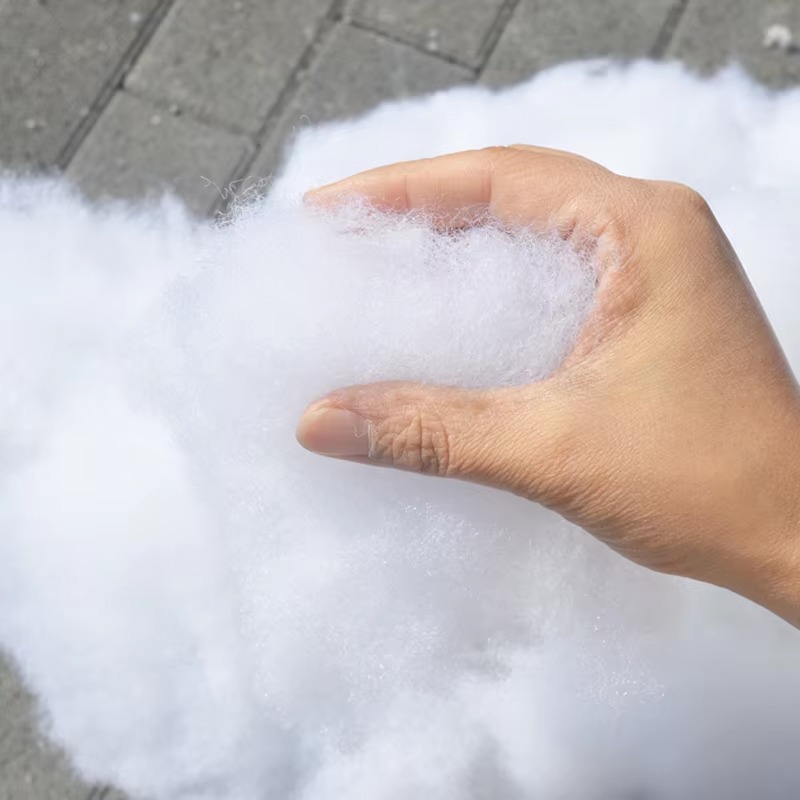
Denier in Different Fiber Types: The Same Denier Is Not the Same Size
Because different polymers have different densities, a 3D polyester fiber and a 3D nylon fiber have different physical diameters even though they have the same denier:
| Fiber Type | Polymer Density | Diameter at 3D | Practical Implication |
| Polyester (PET) | 1.38 g/cm³ | ~12.3 µm | Reference density for synthetic fibers |
| Nylon 6 (PA6) | 1.14 g/cm³ | ~13.5 µm | Slightly larger diameter than PET at same denier — softer feel |
| Polypropylene (PP) | 0.91 g/cm³ | ~15.1 µm | Largest diameter at same denier — lightest fiber per unit volume |
| Viscose / Rayon | 1.52 g/cm³ | ~11.7 µm | Slightly smaller than PET at same denier — denser fiber |
| Cotton | 1.54 g/cm³ | ~11.6 µm | Similar to viscose — cotton ‘denier equivalent’ rarely used |
| Wool | 1.31 g/cm³ | ~12.7 µm | Similar to PET — wool fineness usually expressed in microns directly |
VNPOLYFIBER Product Range by Denier
| Denier | VNPOLYFIBER Product | Standard Applications |
| 0.9D–1.5D | Microfiber PSF (HCS or solid) | Ultra-premium down-alternative fill. Fine spunlace nonwoven. Premium cosmetic pad substrate. |
| 2D–3D | Fine HCS Siliconized PSF | Premium pillow and duvet fill. Children’s product fill (OEKO-TEX Class I). Down-alternative outerwear insulation. |
| 4D | HCS Siliconized PSF (standard premium) | Standard premium pillow fill. Duvet batting. Stuffed toy fill. Most widely specified VNPOLYFIBER fill grade. |
| 6D | HCS Siliconized PSF (value) | Value-mid pillow and duvet fill. Standard wadding. Budget outerwear insulation. |
| 7D | HCS Siliconized PSF (institutional) | Hotel and institutional pillow fill. Commercial laundering rated. Medium-firm feel. |
| 7D–10D | Hollow Slick / Solid PSF | Firm fill applications. Mattress quilting layer (as thermally bonded wadding with LMF). |
| 4D–6D | LMF Bicomponent (sheath-core) | Thermal bonding binder fiber for wadding and nonwoven production. Blended at 15–25% with HCS. |
| 6D–12D | Solid PSF (nonwoven grades) | Needlepunch geotextile. Automotive nonwoven. Filtration nonwoven. Spunlace substrate (finer grades). |
| 10D–17D | Solid PSF (technical grades) | Heavy geotextile. Concrete reinforcement fiber. Industrial nonwoven. Coarsest standard PSF. |
Quick Reference: Common Denier Conversions
| To Convert FROM | To Convert TO | Multiply By | Example |
| Denier | Decitex (dtex) | 1.111 | 3D × 1.111 = 3.33 dtex |
| Decitex (dtex) | Denier | 0.900 | 3.33 dtex × 0.9 = 3D |
| Denier | Tex | 0.111 | 3D × 0.111 = 0.333 tex |
| Tex | Denier | 9.000 | 0.333 tex × 9 = 3D |
| Denier | Ne (approx., single ply yarn) | 5315 / denier | 5315 / 3D ≈ Ne 1772 (not meaningful for PSF — Ne applies to spun yarn) |
| Ne (spun yarn) | Denier (approx., single ply) | 5315 / Ne | 5315 / Ne 40 ≈ 133D total yarn denier |
| Denier | Microns (diameter, PET only) | 11.89 × √(D/1.38) | 3D → 11.89 × √(2.17) = ~17.5 µm diameter |
Conclusion
Denier is the foundational measurement of fiber fineness — the single number that most directly determines how a fiber feels, performs, and is priced in every application from premium pillow fill to heavy geotextile. Understanding denier precisely — its definition, its relationship to fiber diameter, its conversion to dtex, Ne, and Tex, and what different values mean for practical PSF applications — is the essential foundation for accurate fiber specification.
When ordering PSF from VNPOLYFIBER, denier is always the first specification parameter to confirm — along with fiber type (HCS, hollow slick, solid), staple length, siliconization level, and certification requirements. Our technical team can advise on the correct denier for your specific application if you provide the end product and performance requirements.