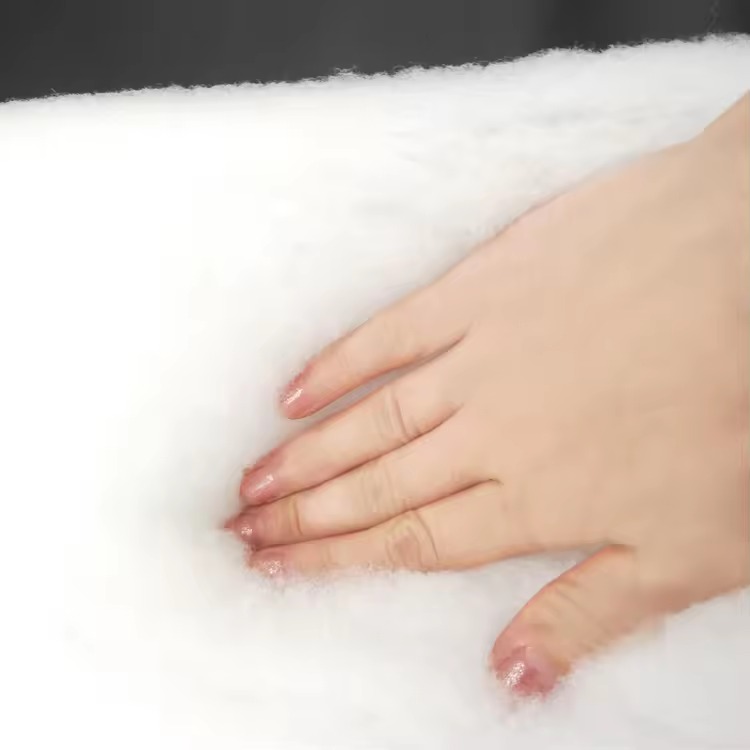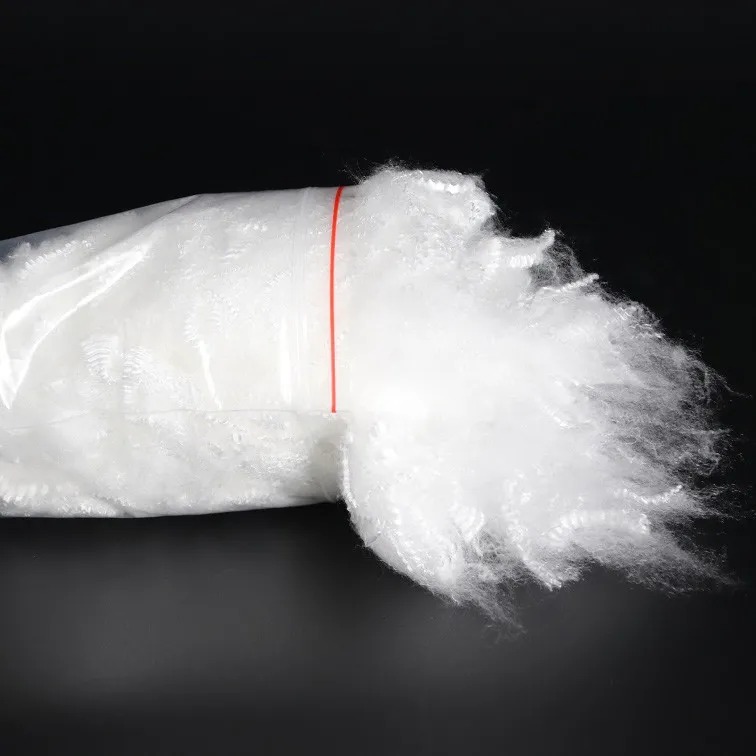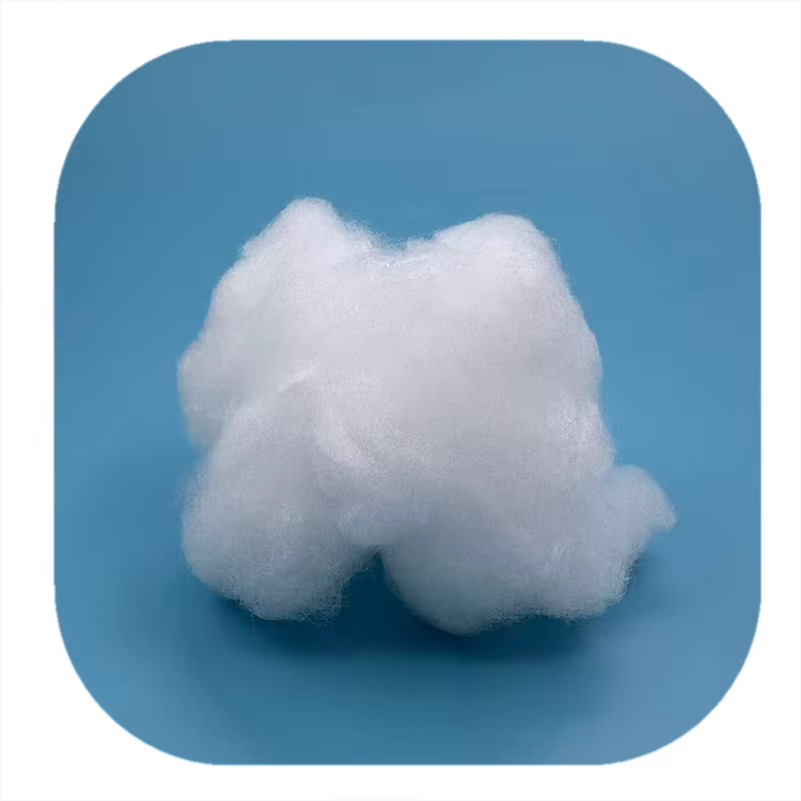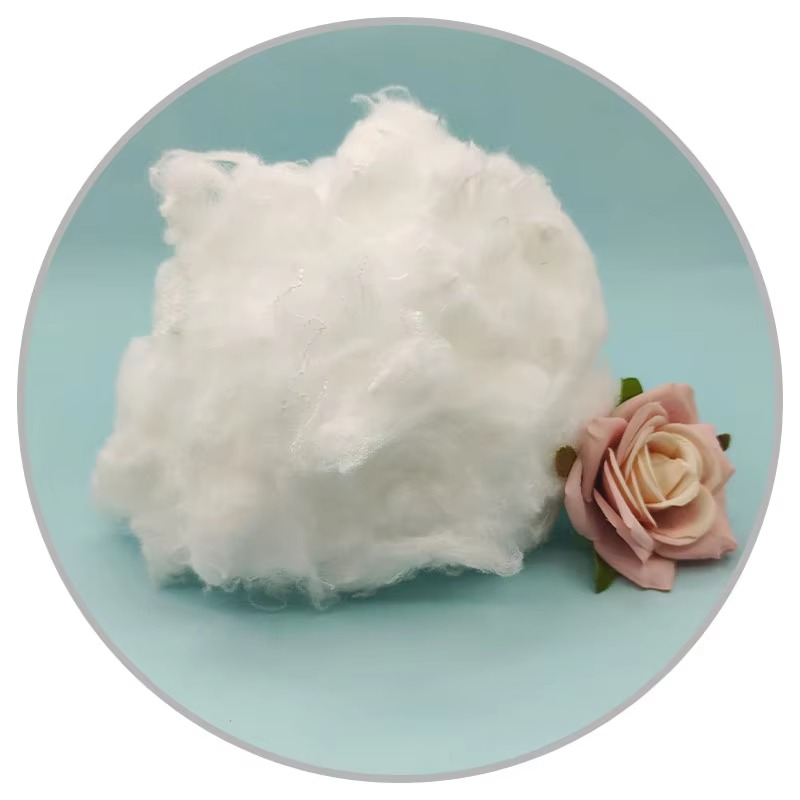
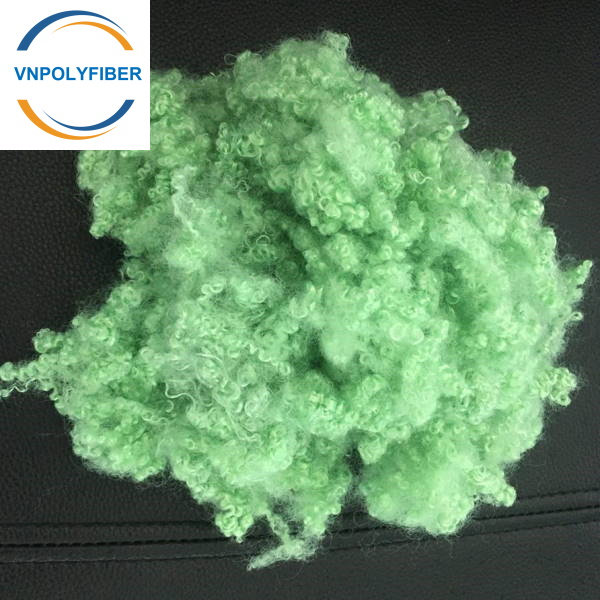
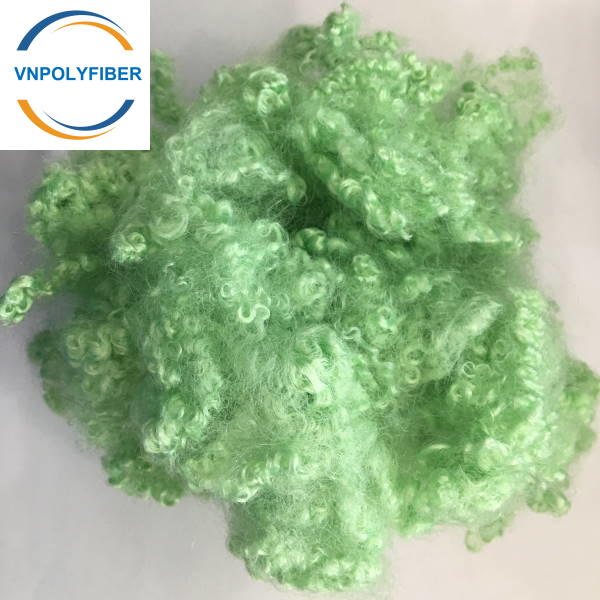
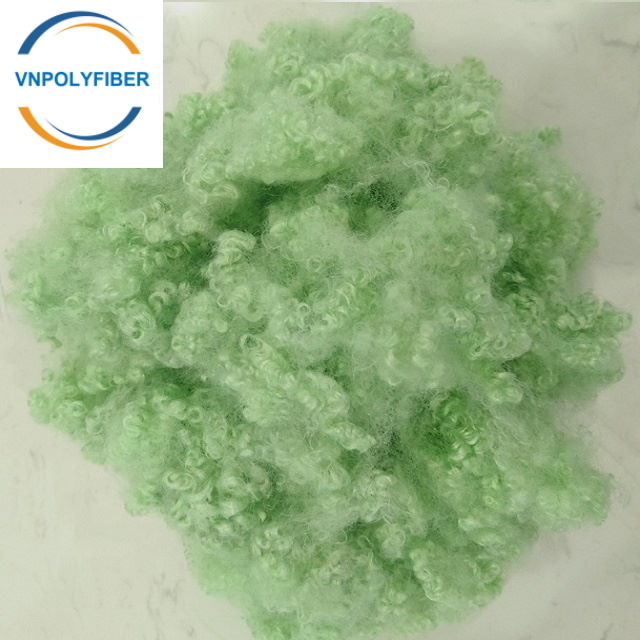
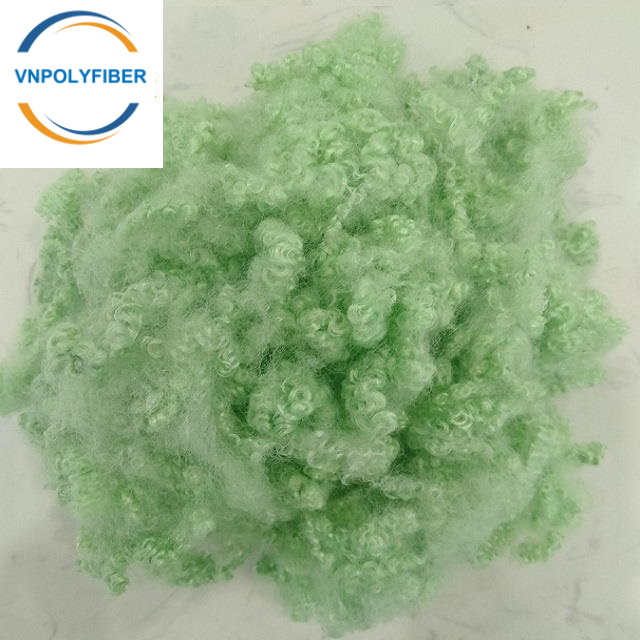
Recycled Green Polyester Fiberfill
- Loft, Resilience, and Shape Retention
- Hypoallergenic and Moisture Resistant Nature
- Thermal Insulation and Lightweight Design
- Industrial Durability and Maintenance
PRODUCT DETAIL
The Ultimate Guide to Polyester Fiberfill
Polyester fiberfill, which was first created through a significant collaboration between Imperial Chemical Industries (ICI) and DuPont, has changed from a scientific breakthrough into a crucial material in the textile and manufacturing industries worldwide. Often nestled unseen within our pillows, furniture cushions, and stuffed toys, this fluffy and resilient material is a foundational component of modern life. A unique combination of extreme versatility, cost-effectiveness, and high-performance properties that natural materials struggle to match underpins its enduring popularity.
Fiberfill is a man-made filling made from thin, crinkly polyester fibers, designed to be light, fluffy, and strong. This structure provides a consistent level of cushioning, support, and thermal insulation across thousands of consumer and industrial products. Unlike natural fills such as down or feathers, polyester fiberfill is inherently hypoallergenic, resistant to moisture-borne decay, and remarkably simple to maintain, making it the premier choice for the high-volume markets of South East Asia and China.
How Polyester Fiberfill is Manufactured
The journey of polyester fiberfill begins with the polymerization of PTA and MEG into high-purity PET chips. These chips are melted and extruded through precision spinnerets, but the process for fiberfill involves a specialized mechanical crimping stage. Crimping creates a wave-like or spiral shape in the fibers, which is the mechanical secret behind their bulk and resilience. This texture allows the fibers to interlock and trap air, resulting in the “loft” that consumers associate with comfort.
Following the extrusion and crimping stages, the fibers are frequently siliconized. This process involves coating the filaments with a specialized silicone finish to enhance softness and ensure a “slick” hand feel. This treatment allows the fibers to slide past each other without clumping, maintaining the product’s smooth consistency over years of heavy use. Once processed into a loose, fluffy fill, the material is baled and prepared for diverse industrial applications.
Key Performance Properties of Polyester Fiberfill
The superior mechanical and chemical properties justify the widespread adoption of polyester fiberfill.
Loft, Resilience, and Shape Retention The primary advantage of crimped polyester is its ability to spring back into shape after compression. This resilience ensures that pillows and furniture cushions maintain their bulk and support profile over time, preventing the “flattening” effect common in lower-grade materials.
Hypoallergenic and Moisture-Resistant Nature Polyester is inherently hydrophobic, meaning it does not absorb water. This moisture resistance inhibits the growth of mold and mildew, making it a safer and more hygienic choice for individuals with respiratory sensitivities or allergies.
Thermal Insulation and Lightweight Design The air trapped within the crimped fiber matrix acts as a highly effective thermal insulator. Despite this high level of warmth retention, the material remains remarkably lightweight, which simplifies logistics for manufacturers and enhances comfort for the end-user.
Industrial Durability and Maintenance Polyester fibers are exceptionally strong, ensuring that the fill maintains its structural integrity even after repeated industrial washing and drying cycles. This “easy care” characteristic is a critical selling point for the hospitality and healthcare sectors.
Diverse Applications Across Global Industries
The versatility of polyester fiberfill allows it to transcend traditional bedding and touch almost every aspect of modern manufacturing:
Home and Hotel Textiles From premium pillows and comforters to mattress toppers and high-loft quilts, the bedding industry relies on fiberfill for its consistent quality and hypoallergenic safety. It provides the “sink-in” comfort required for luxury sleep products while remaining cost-effective for mass-market distribution.
Furniture and Automotive Interiors In the upholstery sector, fiberfill is utilized for sofa cushions, armrest padding, and furniture wadding. Similarly, the automotive industry utilizes specialized grades of fiberfill for seat cushions, headrests, and interior sound-dampening components, where durability and fire-safety standards are paramount.
Toys, Crafts, and Outdoor Gear Because it is soft, safe, and durable, fiberfill is the primary filling material for stuffed animals and dolls globally. In the outdoor sector, its moisture resistance and warmth-to-weight ratio make it the ideal choice for high-performance sleeping bags and camping pillows that must perform in damp environments.
Strategic Advantages for Manufacturers
For production directors considering polyester staple fiber (PSF) for their lines, the material offers several strategic benefits:
Dimensional Stability and Synergy Polyester does not warp, stretch, or shrink. It possesses a resilience that allows it to be combined with natural fibers like cotton or wool, increasing the quality of the final product. This allows manufacturers to create functional textiles that utilize the natural feel of cotton with the heavy-duty durability of polyester.
Consistent Quality and Cost-Effectiveness The automated manufacturing processes in Southeast Asia and China ensure that every bale of fiberfill meets strict performance markers. Compared to the volatile pricing of natural down or silk, polyester fiberfill remains an affordable and stable option, allowing for better budget forecasting and competitive retail pricing.
Innovation and the Future of Polyester Fiberfill
The industry aims to improve performance and minimize environmental impact in the future. Hollow Conjugated Siliconized (HCS) fiberfill is a primary example of this evolution, featuring a hollow core that further increases loft and warmth without adding weight. Additionally, the development of microfiber fill has allowed synthetic materials to mimic the ultra-soft, luxurious feel of high-end down.
One of the most significant shifts is the transition toward recycled polyester fill. By repurposing post-consumer PET bottles into high-tenacity fiber, manufacturers are significantly reducing the environmental impact of their products. Virgin polyester production relies on petroleum oil, which can be taxing on the planet; recycled fiber provides an eco-friendly alternative that maintains excellent filling power, anti-static properties, and a “feather-touch” feel.
Ongoing research into bio-based alternatives and thermal-bonding techniques continues to expand the capabilities of fiberfill. By blending polyester staple fibers with low-melt binder fibers, manufacturers can now create thermally bonded wadding and mattresses with improved structural integrity and resilience.
Conclusion: The Essential Material for Modern Comfort
Polyester fiberfill remains an indispensable staple of global industry. Its unique ability to combine hypoallergenic safety, industrial-grade durability, and affordable pricing ensures its continued dominance in the market. Whether used in high-tech filtration, luxury home textiles, or sustainable toy manufacturing, polyester fiberfill provides the soft, supportive, and resilient foundation that the world relies on for comfort. By sourcing high-quality HCS and recycled grades, brands can ensure they are delivering products that are both technically superior and environmentally responsible.
Technical Parameter
Polyester Staple Fiber used in Non-woven Industry
| Luster | Denier | Cross Section | End-Use |
| SD | 1.5, 1.7, 2, 3, 4, 6 & 15 | Solid | Nonwoven Interlining, Sanitary Material, Microfiber and Thermal Bonding |
| FBR (Black) | 1.5, 1.7 & 3 | Solid | Needlepunch, Resin Bonding & Fiberfill |
| SD | 1.5 & 4.5 | Solid | Dyeable Fabric & High-Pile |
| SD | 6, 8 & 15 | Hollow and Hollow-Siliconized | Resin Bonding, Needlepunch, Fiberfill, Flame Retardant Fabric, Anti Bacteria & Platinum Photon Fiber |
| SD, BR,OBBR | 0.7, 1.1, 1.2, 1.4, 2.0, 6, 8, 12, 15 & 20 | Solid | Low Pilling, Knitting, Fiberfill, Thermal Bonding, Needlepunch, Infrared Fiber & Resin Bonding |
| SD | 2, 3, 4.5, 7, 12 & 15 | Hollow Conjugate | Resin Bonding, Needlepunch & Fiberfill |
| SD | 7 | Hollow Conjugate | Anti-Bacteria |
Polyester Staple Fiber as per Direct End Use
| Type | Denier | Section | End Use |
| Anti Pilling | 1.4, 1.5, 2, 2.5 & 3 | Solid & Hollow | Sportswear, Underwear, Casual wear |
| Bamboo Charcoal | 1.5, 1.7 & 6 | Hollow | Bedding, Shoe pad, Cushion, Thermal Sock |
| Spinning Use | 1.3, 1.4, 1.5 & 1.7 1.5 | Solid Hollow | Sportwear, Casual Wear, Underwear |
| Dopedyed Black | 1.5, 2 & 3 | Solid | Nonwoven, Casual wear, Sport wear, Underwear |
| Flame Retardant | 1.4 | Solid | Home, Comfort & Clothing textiles |
| Micro Fiber | 0.8 – 1.0 | Solid | Cloth & Fleece |
| High Tenacity | 1.2 | Solid | Yarn, Cloth & Water transport |
| High Void Conjugate | 3, 7, 12 & 15 | Hollow | Toy Padding, Badding, Furniture Cushion, etc |
| Regular Fiber | 2, 2.5, 3, 6 & 15 | Solid | Nonwoven, Filter medics, Padding, etc. |
FAQ
1. What do you offer?
We supply a comprehensive range of fibers, including recycled hollow conjugated (both siliconized and non-siliconized) polyester staple fiber, hollow fiber, microfiber, virgin polyester staple fiber, and low-melt fiber.
2. What is it used for?
Our fibers are versatile and widely utilized across both the filling and non-woven industries, providing essential loft, durability, and texture for various consumer and industrial applications.
3. Are you a factory or a trading company?
We are primarily a manufacturer specializing in polyester staple fiber with years of industry expertise. To better serve our clients, we also operate a dedicated trading division that allows us to act as a one-stop solution provider.
In addition to our own fiber production, we source high-quality textile components (such as yarn and low-melt fibers) and finished goods (including foam, pillows, cushions, toys, and down/feather products) to ensure our customers have access to a comprehensive supply chain.
4. Where is your factory location?
To maintain a robust and flexible global supply chain, our manufacturing facilities are strategically located throughout Asia, specifically in Vietnam, China, Malaysia, Thailand, and Indonesia. If you would like to visit one of our sites, please contact your sales representative, and we will be happy to arrange transportation for you.
5. Can you accept free sample?
Yes, we provide free hand samples for quantities under 1 kilogram. Once a price is confirmed, we can prepare and dispatch your sample within 2–3 business days. Please note that while the sample is free, the freight costs are the responsibility of the client.
6. Can you provide ODM service?
Absolutely. We specialize in ODM (Original Design Manufacturing). This means we can customize the material composition, dimensions, quantity, packaging, and branding to meet your specific requirements. Your logo and unique specifications will be integrated into the final product.
7. How about your quality? What’s the minimum order Quantity (MOQ)?
We invite you to place a trial order to experience our quality firsthand. Our standard MOQ is 23,000 kilograms per order.
Regarding pricing, we maintain a no-bargain policy. We believe in transparency and efficiency, so we provide our most competitive offer upfront to save you time and ensure a straightforward procurement process.
8. Can I mix different items in one order?
Yes, for your convenience, we allow for a maximum of two different items to be mixed within a single container.
9. How can you guarantee the product quality?
Quality is the cornerstone of our business. We employ an experienced QC team that monitors every stage of production, from raw material inspection to the final manufacturing process. We utilize a range of advanced testing instruments to ensure our fibers meet strict industry standards.
Our business philosophy is simple: We aim to serve one customer 1,000 times, rather than 1,000 customers once. We prioritize long-term partnerships built on consistent excellence.
10. What’s the payment terms?
L/C at sight, 30% TT in advance are mostly accepted; other terms shall be negotiable by both sides
For more information, please feel free to contact :
Tony Tan
Mobile number: +84 90 466 5251 (Whatsapp/Wechat/Viber/Signal)